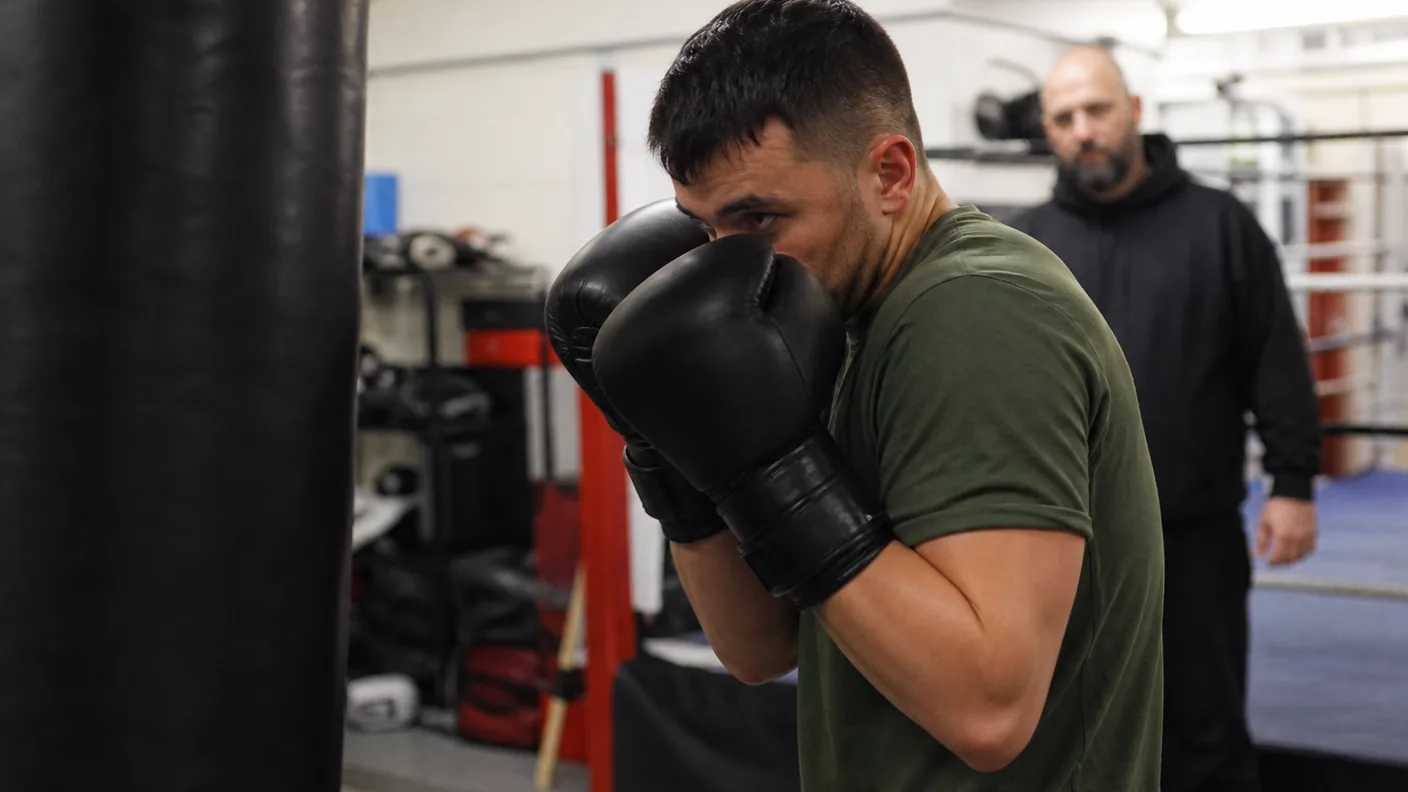
When a heavy bag gets too close, many beginners make the same mistake. They keep trying to throw long punches from a distance where long punches have no room to work.
The gloves get jammed against the bag, the elbows flare, the head drifts forward and the next punch becomes a shove. More effort does not solve it. You need to make enough space to punch properly, keep the guard in place, then choose a compact shot that suits the range.
The short drill below gives a useful way to practise that problem without turning it into a hard-contact partner exercise.
What smothering a punch actually means
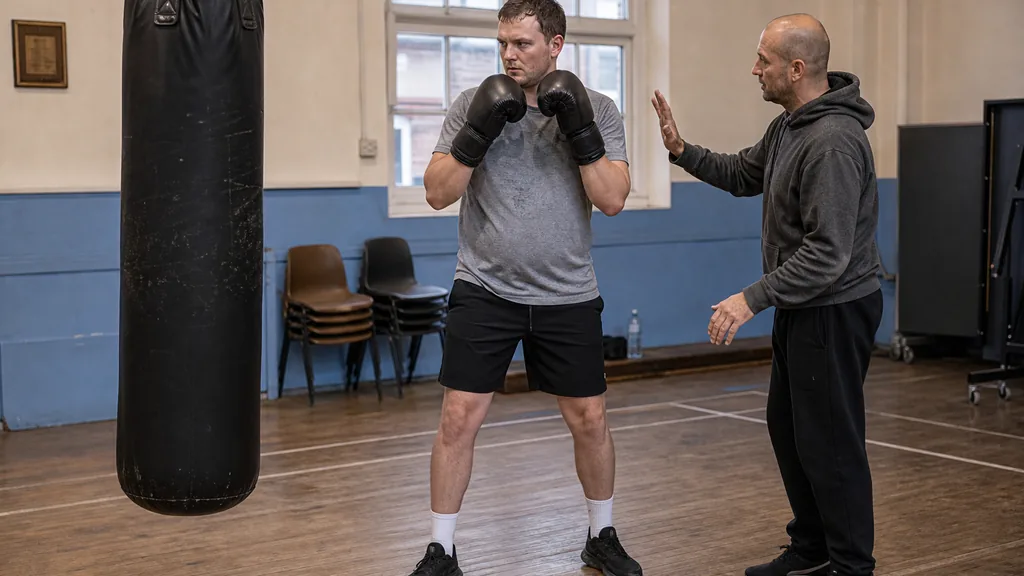
A punch is smothered when you are so close that the glove cannot travel on its proper line. A jab has no extension. A cross has no room to turn. A hook may still land, but only if the elbow, hip and feet are organised enough to make a short arc useful.
The temptation is to lean harder into the bag. That only makes the problem worse. Your chest gets close, your weight runs past the feet and the bag becomes something you are wrestling rather than striking.
A better question is: what range am I in now? If you are at long range, straight punches can travel. If you are close enough to touch the bag with your forearm, you need either a little more room or a shorter shot. Our guide to boxing range and choosing the right punch explains why the punch has to fit the distance rather than the other way round.
Use the forearm to make a small pocket of space
The first job is not to hit hard. It is to create a little room without dropping your hands or standing square.
Stand close to the bag in your normal boxing stance. Keep the chin down and both gloves high. Place the lead forearm or glove lightly against the bag, then make a small push to move it away just enough for your own stance to breathe. As the bag returns, do not wait with your hands by your sides. Bring the guard back to the cheeks and be ready to choose the next shot.
Think of this as making a pocket, not launching the bag across the gym. A big shove takes too long and pulls your shoulders forward. A small controlled push is enough to create a brief, honest punching distance.
England Boxing's coaching handbook treats a balanced stance and secure guard as the base for both movement and punching. That matters at close range. If the push leaves your feet crossed or your hands low, it has not bought you a useful position.
Pick a punch that belongs at close range
Once you have made a little room, do not immediately reach for the longest punch you know.
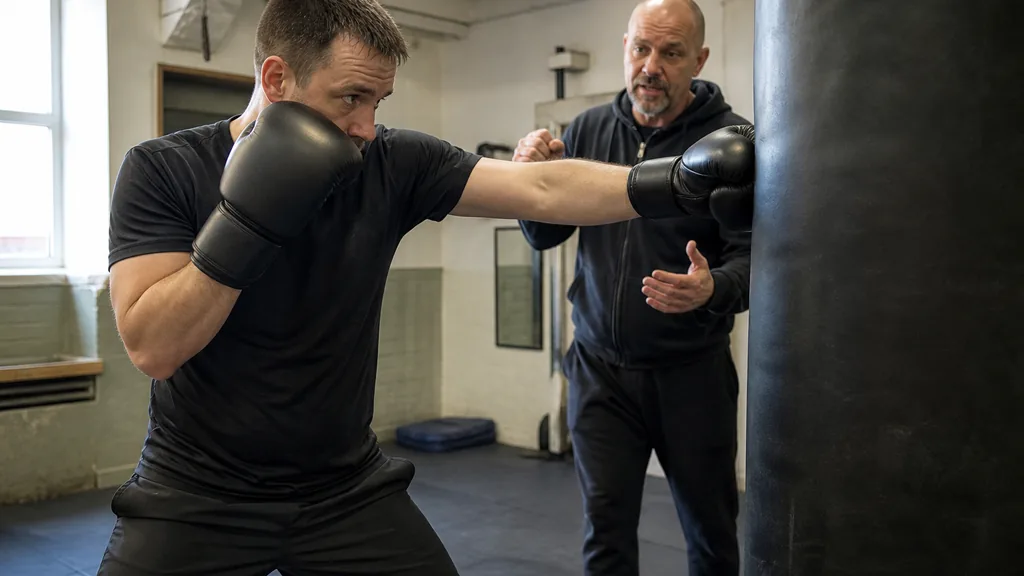
A short hook or a compact uppercut is often more honest at close range because it does not need full extension. The punch should come from the legs and hips, not from an arm flung away from the body. Keep the non-punching glove near the cheek and let the elbow stay compact enough that you can bring it home afterwards.
A short cross can work too, but only after you have created enough distance for the rear hip to turn. If the glove is still pressed against the bag as the cross starts, you are too close. Step away, make the pocket again, or choose a different shot.
A review of boxing performance describes punching, movement, defence and distance as connected parts of the same job (technical review). That is easy to see here. The bag may be a simple target, but the drill only transfers when your feet, guard and shot all agree on the distance.
The heavy bag drill: make space, punch, reset
Use a bag that is safely secured and start at a technical pace. You do not need a resistance band to learn the basic version. A coach can add external resistance only when they can see that the boxer is keeping a balanced stance and not yanking the bag towards themselves.
Round one: make the pocket
Stand close enough that a full jab would be crowded. With the guard high, use a light forearm frame or glove touch to move the bag a short distance away. Let it return. Reset your stance before repeating.
Do not throw punches in this round. The point is to feel the difference between leaning on the bag and making enough space to box. Check that the rear foot is still underneath you and the head has not travelled over the front knee.
Round two: add one short punch
Make the same small pocket, then throw one controlled lead hook or uppercut as the bag comes back into a suitable range. Return the hand to guard and take one small step out before the next repetition.
Keep the power moderate. A clean short shot tells you more than a loud one. If the hook turns into a wide swing or the uppercut lifts your chin, slow down and shorten the movement.
Round three: choose, do not recite
Now let the bag move naturally. Sometimes you may have room for the short hook. Sometimes the bag may swing far enough away for a jab or cross. Sometimes you will be too close and the right answer is to frame, step out and start again.
That last choice matters. The drill should teach you not to force a punch simply because it is your turn to throw. You are learning to recognise range while the target moves.
Keep the push separate from a shove
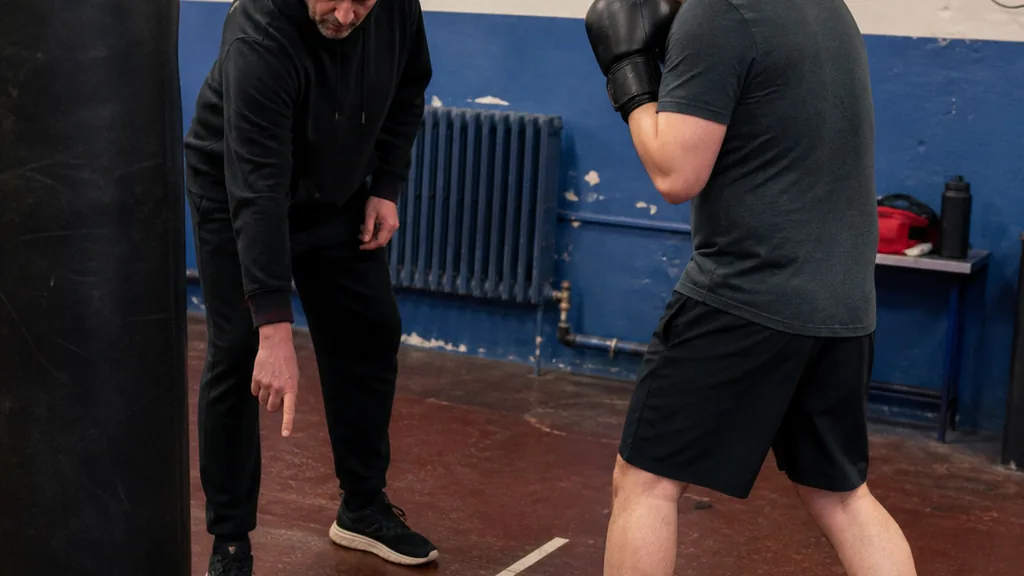
The word push can cause trouble here. You are not trying to use your gloves as a way to bully the bag around. The contact is a brief range adjustment, not a substitute for a punch.
If you leave the lead arm straight against the bag, the shoulder lifts and the chin becomes exposed. If you push with both hands and stand tall, you have removed your own guard. If you lean your whole body forward, you have lost the feet you need for the next shot.
The useful version is small: touch, make a little space, return to guard, punch only when the target distance is right. That is why it works better as a controlled drill than as an all-out bag round.
Our article on making space at close range covers the same decision when another boxer is in front of you. The bag version is not a replacement for coached partner work. It is a quiet way to learn what room a punch needs before another person is moving and answering.
Four errors to catch early
The first is pushing the bag and following it with your head. If the head chases the bag, you have made space for the bag but not for your punch. Keep the spine organised over the stance and let the feet carry any adjustment.
The second is dropping the rear hand while you frame. At close range, the non-working hand has an important job. Keep it near the cheek rather than letting it drift towards the ribs.
The third is throwing a long cross from a crowded position. A rear hand needs room to turn. If there is no room, use a short shot or move first.
The fourth is treating every return of the bag as a signal to punch. Sometimes the bag comes back too close. Sometimes it swings at an awkward line. Resetting is not lost work. It is the decision that stops a technical round becoming random swinging.
Where this belongs in your training
This drill belongs after you can hold a basic stance, return punches to guard and throw a compact hook without over-turning. It works well as a short technical round after a warm-up, before normal heavy bag combinations, or between pad rounds.
It does not require sparring. In fact, the value is that you can learn the close-range feeling without asking a partner to absorb contact. Once the shapes are clean, a coach can build the lesson into body-shield work or controlled partner drills with clear rules.
For adults in Greenwich, Kidbrooke and nearby, our Recreational Adults boxing classes teach heavy bag work as more than hard effort. You learn what each punch needs, how to make room for it and when to reset instead of forcing the next shot.
The coaching cue is simple: make room, stay covered, choose the short shot.
H&G Team
Writer at Honour & Glory Boxing Club, a community boxing gym in Kidbrooke, South East London.
KEEP READING
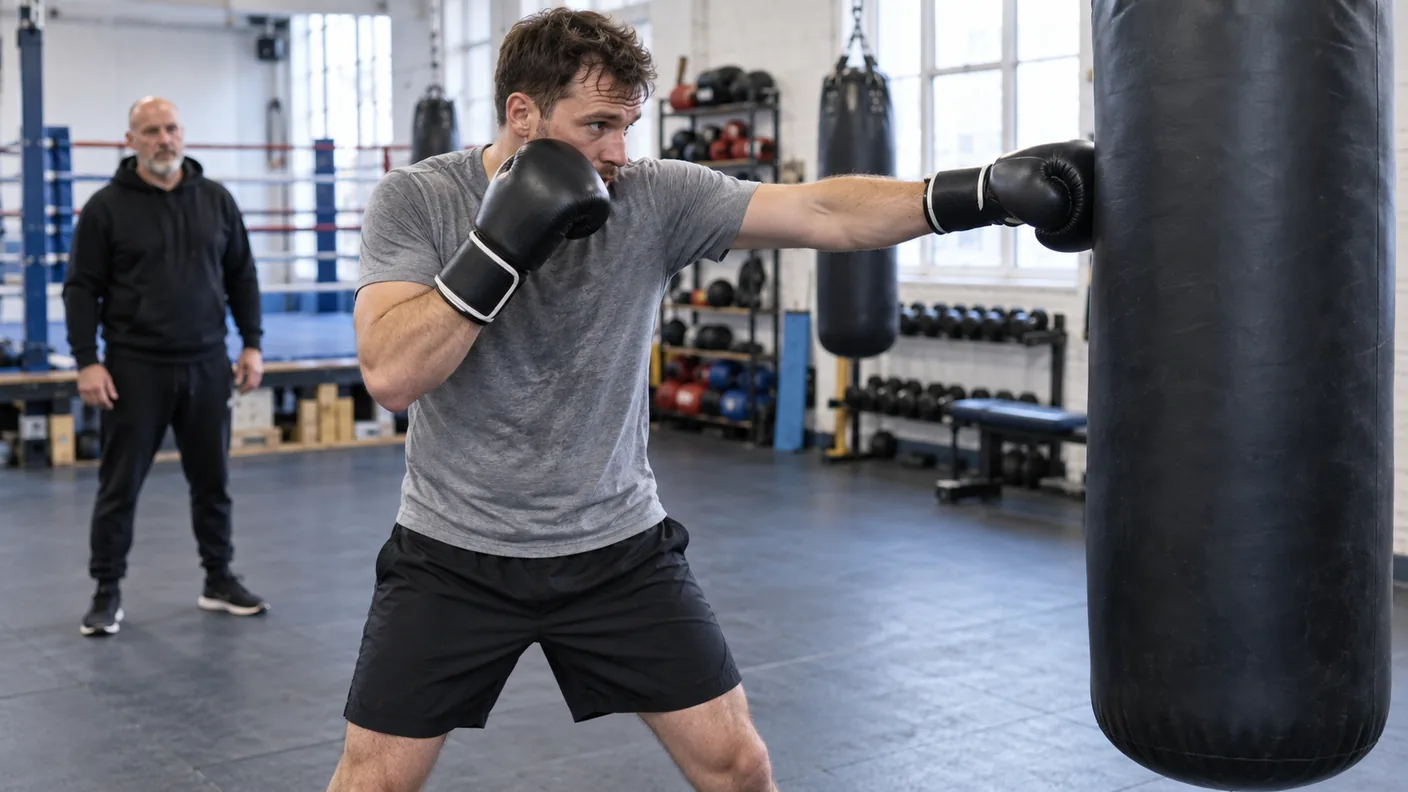
Three-Line Jab Drill for Better Heavy Bag Range
Use three simple floor markers to build a cleaner lead hand, steadier range and a more useful exit from the heavy bag.
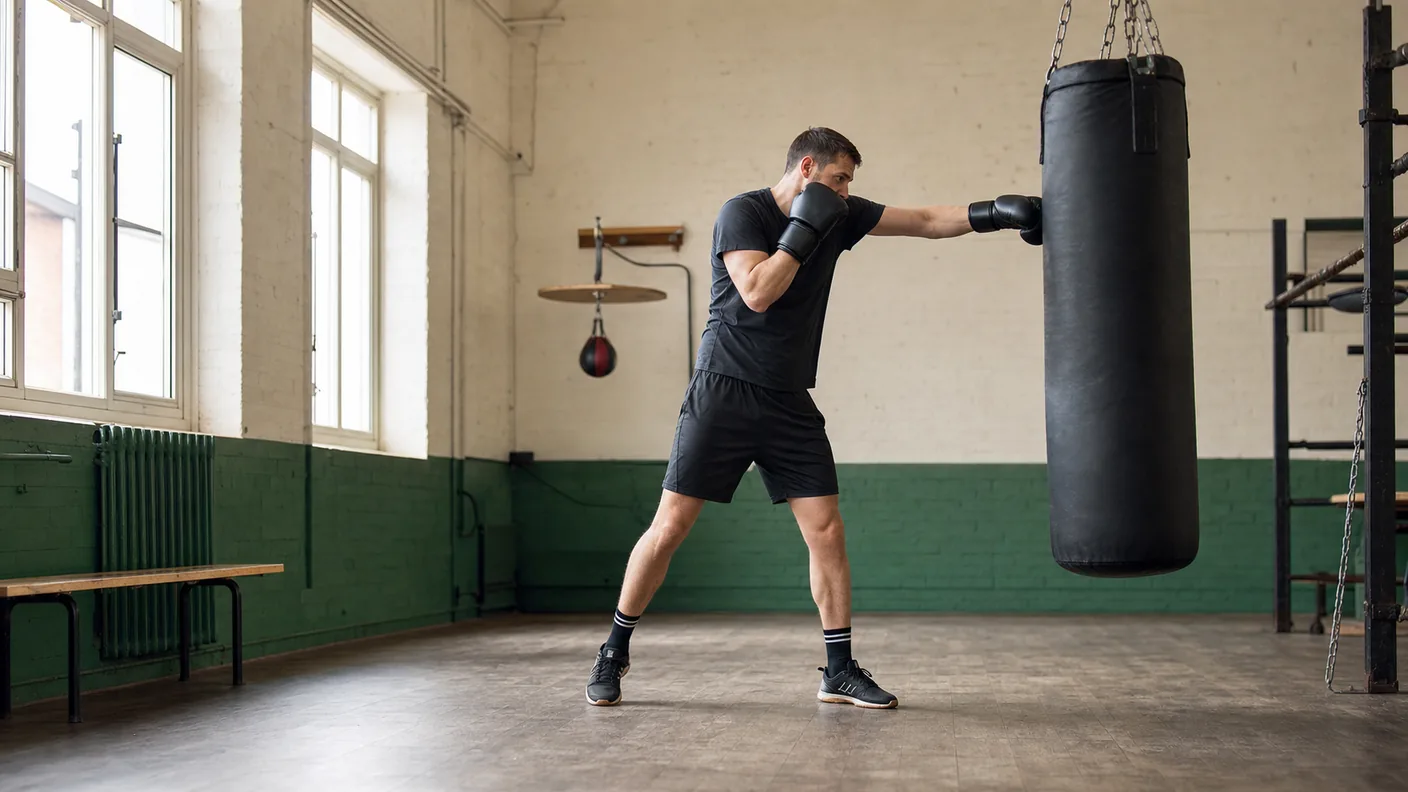
How Hard Should You Hit a Heavy Bag?
Most bag rounds do not need maximum force. Learn when to hit hard, when to stay light and how to keep boxing technique intact.
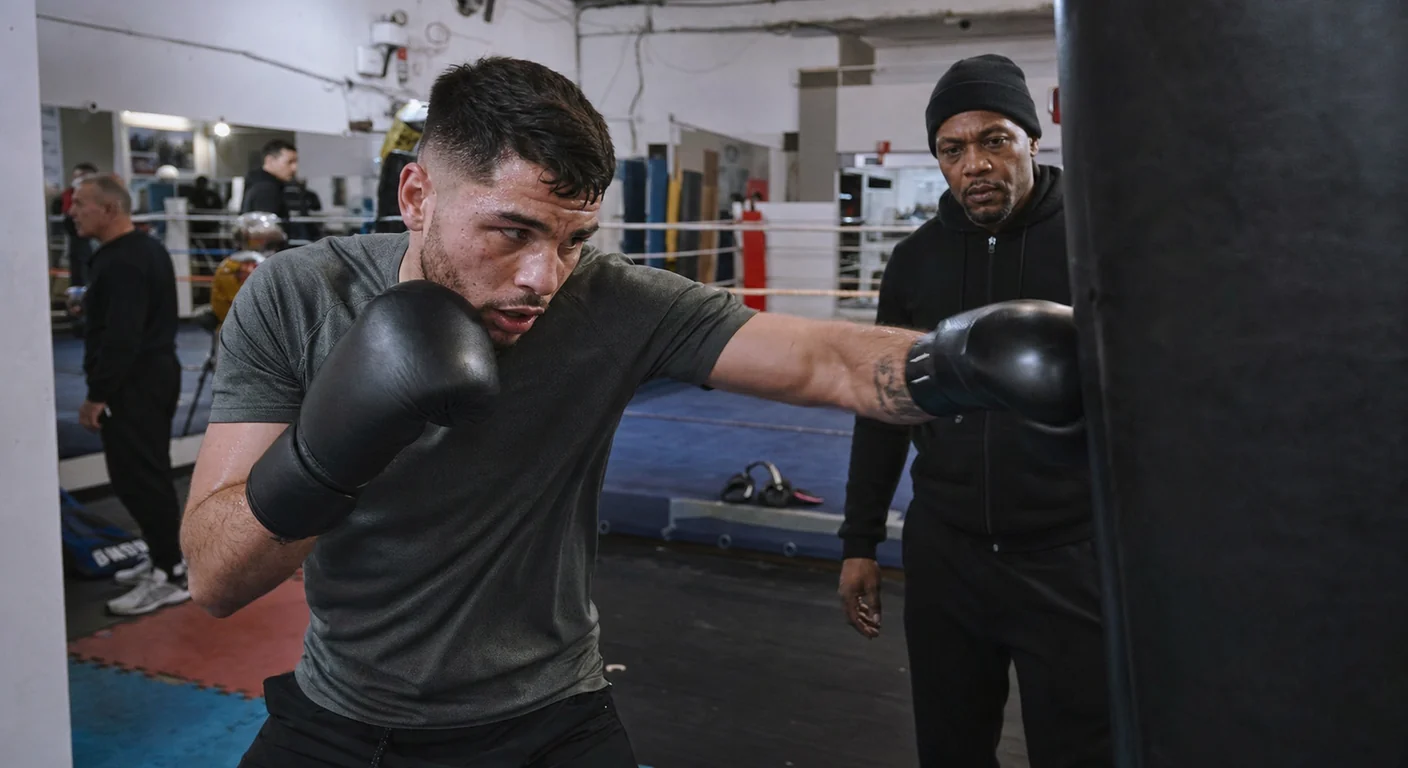
Heavy Bag Work That Transfers to Sparring
The heavy bag builds power, but only if you add defence, feints, distance and clean technique instead of treating it like furniture.
Was this page helpful?
It takes one tap, and it genuinely helps.
Choose your next step
Turn this article into the right action
Some readers are ready to book. Some need the class route first. Pick the route that matches what you actually want.