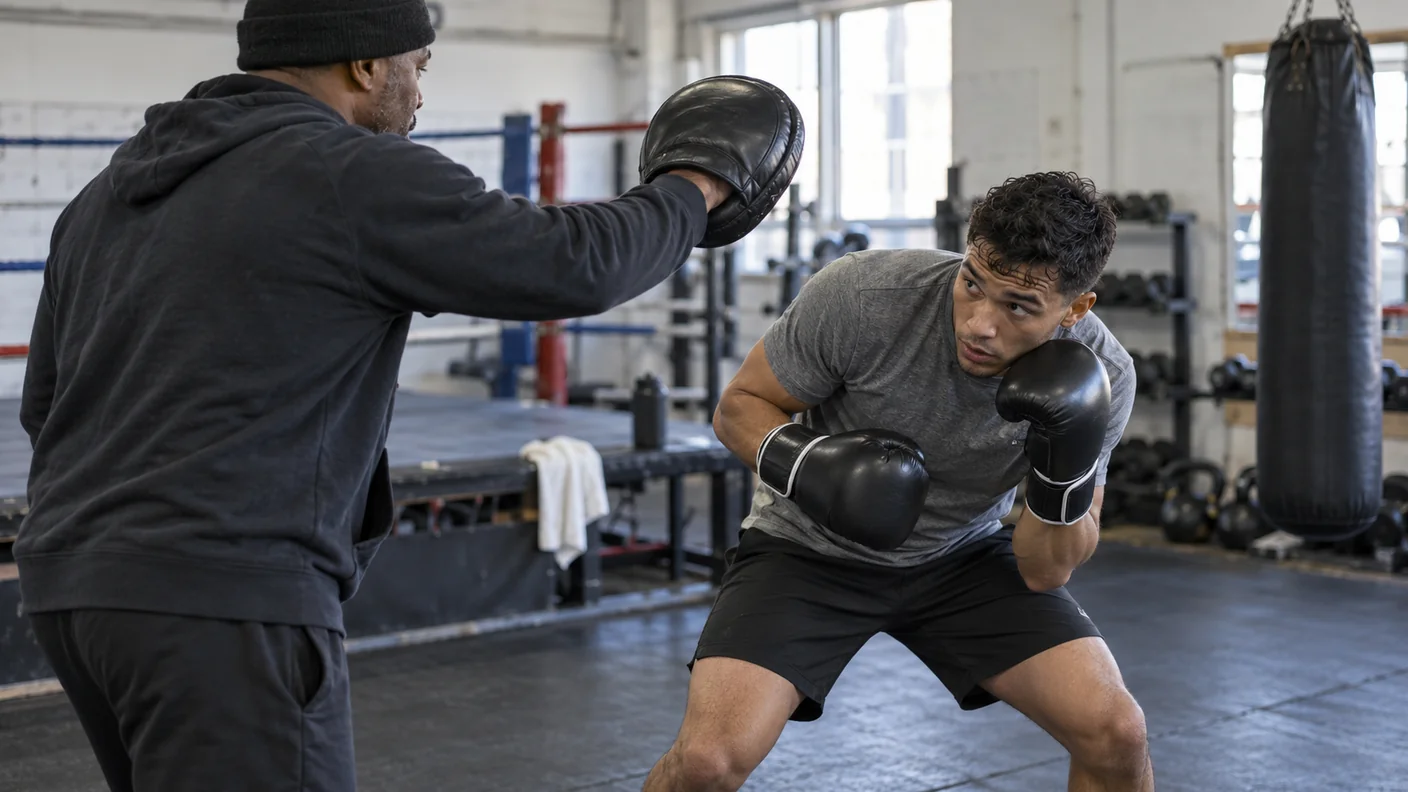
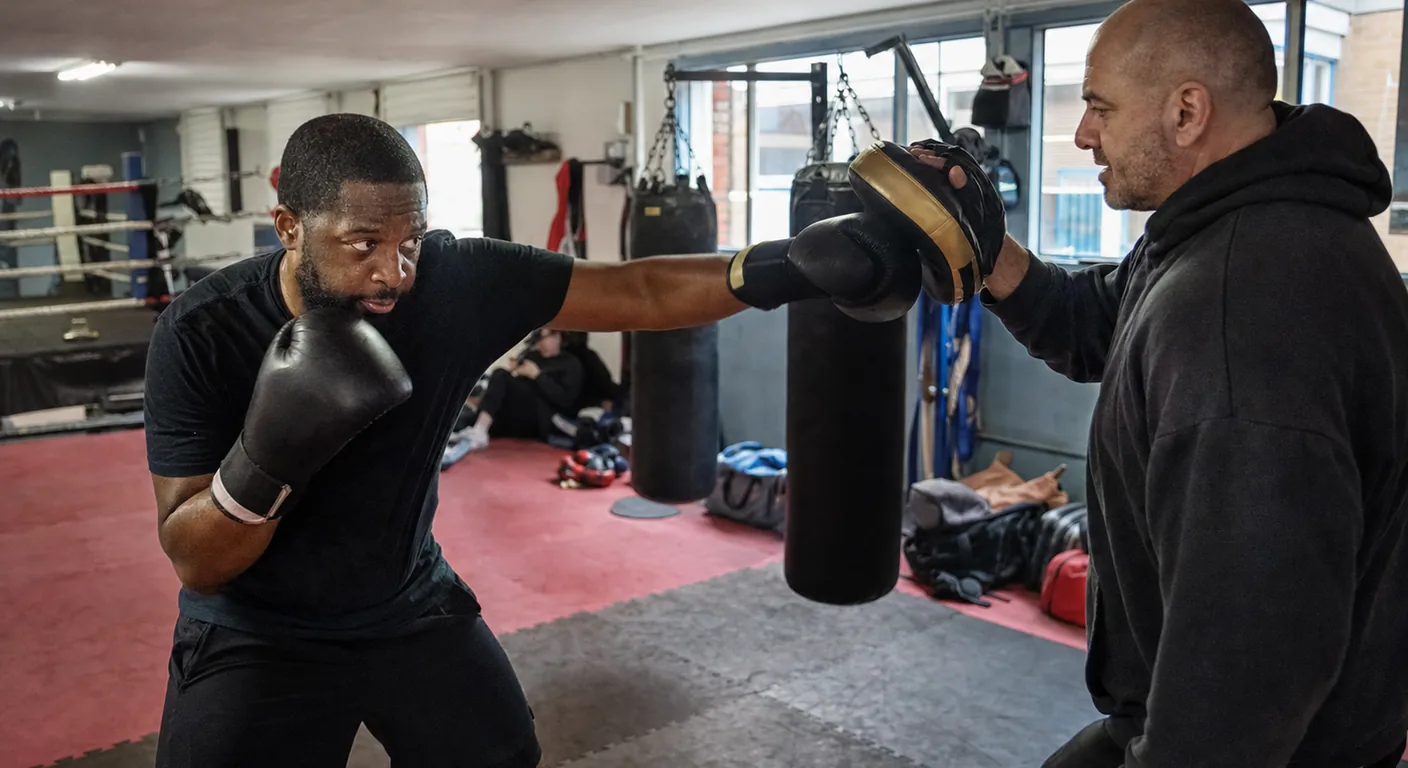
Good padwork should feel like a conversation, not a memory test. A coach shows a clear picture. You read it, make one sensible choice, finish in stance and wait for the next one.
That is very different from being shouted through ten punches as fast as possible. Long sequences can be satisfying when they go right, but they can also hide bad distance, a hand that never returns, or feet that have quietly stopped working. The useful sequence is the one that still leaves you able to see, cover or move.
The video below is a useful visual reference for how a pad holder can connect simple defensive cues and short answers. Watch the shape of each response, then keep your own first version much smaller.
Start with one cue and one answer
A cue is the clear picture that asks for a response. It might be one mitt at head height for a jab, a mitt angled to suggest a hook line, or a coach stepping slightly off centre so you need to turn and find them again.
The answer should be equally clear. If the coach shows the jab mitt, touch it with a measured jab and bring the glove home. If they show a slow hook cue, make the compact cover or roll you have agreed. Do not add a four-punch flourish because you remember it from another round.
This is where good padwork is more demanding than it looks. A review of anticipation in combat sports found that skilled athletes make better use of early visual information. In a gym, that means looking at the coach and the available target instead of reciting numbers before you have seen the next cue.
Make the cue visible before you make it quick
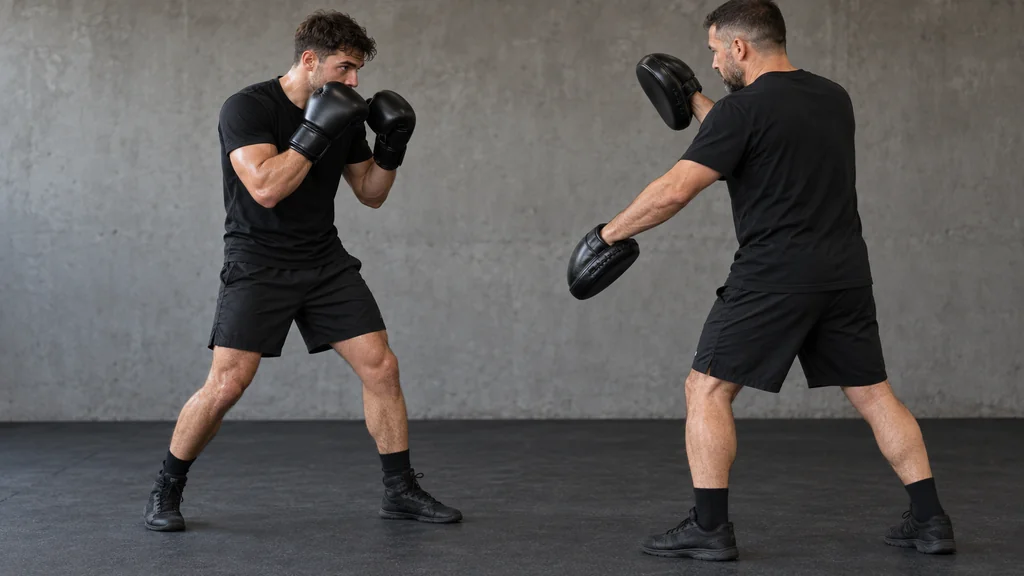
A new drill fails when the boxer has to guess. If the pad holder changes target, defence and foot position all at once, the boxer starts moving early, loses the stance and performs the sequence rather than reading it.
Begin with an obvious pause. The coach presents one target or one defensive line, holds it long enough to be seen, then lets the boxer make a single response. Only once that response stays tidy should the cue become quicker or less predictable.
The England Boxing coaching handbook puts a well-balanced stance, sound guard and controlled footwork at the base of technical development. That standard matters more than speed. If a boxer cannot stop after a response with eyes up, both hands available and feet in a sensible shape, the cue is already too complicated.
For a useful starting point, work through three one-minute rounds:
- One jab mitt, one jab, guard back.
- One slow hook cue, one compact cover or roll, then reset.
- One jab mitt, jab, then a second choice: the coach either repeats the target, shows a cover cue, or gives nothing at all.
The third round is where the learning starts. A second jab is not automatic. A cover is not automatic. If the coach gives no second cue, hold the stance and do nothing dramatic.
Connect a defence to a short return
Once a boxer can see one cue calmly, a defence can lead into one short return. Keep the order honest: first protect the line, then see whether the target is actually there.
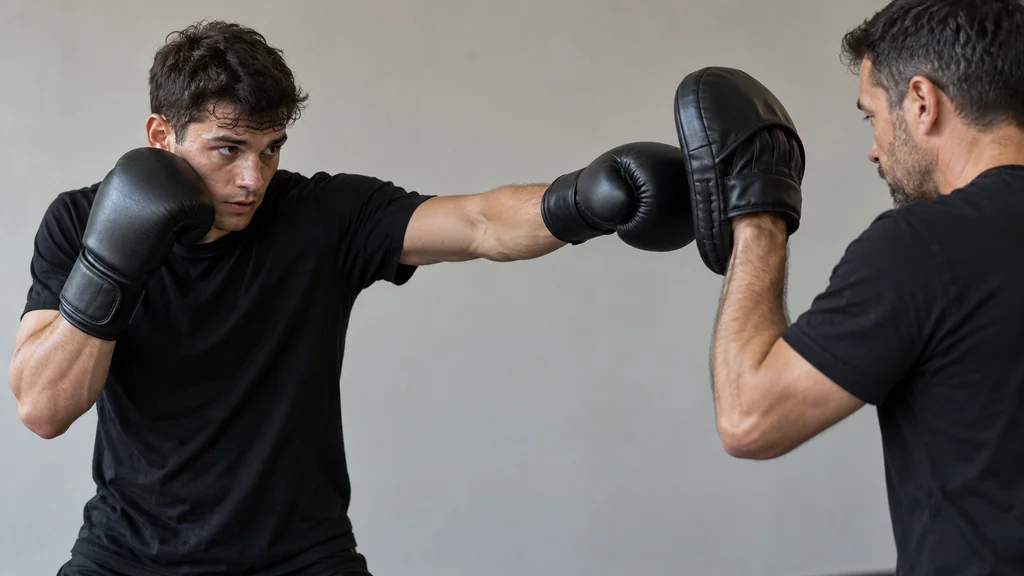
For example, a coach can show a slow jab line. The boxer makes a small outside slip and freezes. Only then does the coach show a rear-hand mitt at a proper distance. If the mitt appears, the boxer lands one measured cross. If it does not, the boxer brings both gloves home and resets.
This is much better than deciding that every slip earns a cross. A counter is not a reward for completing the first movement. It is a choice that depends on range, balance and what the coach has shown after the defence.
A biomechanics review of boxing punches describes punching as a connected action through the legs, trunk and upper body. That is easy to see on pads. When the defensive movement has pulled the chest over the front knee or turned the feet square, the follow-up becomes an arm punch. Remove the counter, fix the position, then add it back.
Finish every short sequence with a decision
The last cue should not always be another punch. Sometimes the coach should lower the pads and make the boxer hold guard. Sometimes they should take a small step away, making a chasing punch the wrong answer. Sometimes a high mitt can invite a final jab from a new range.
That is how padwork becomes useful outside the drill. The boxer learns that a sequence can end with a cover, an angle step or a quiet reset. The bag cannot make that distinction for you. A good pad holder can.
Try this four-part pattern at technical pace:
- Coach shows a jab mitt. Boxer throws one jab and recovers guard.
- Coach shows a slow hook cue. Boxer covers or rolls, keeping the eyes forward.
- Coach either presents a rear-hand mitt or steps out. Boxer throws the cross only at the mitt.
- Coach either holds a final jab mitt, shows a closed guard, or lowers both pads. Boxer jabs, covers, or resets according to the picture.
Run the pattern slowly enough that each finish can be checked. The goal is not to complete all four actions. The goal is to make four correct decisions.
Do not copy advanced padwork without the foundations
Fast, flowing pad rounds can look effortless because the coach and boxer know each other’s cues. They have spent time learning the individual parts, practising the transitions and making mistakes at a pace where both can see them.
Do not try to recreate that by calling long number strings over a beginner. Start with one reliable cue and one reliable answer. Add a second choice only when the first response does not damage the guard or stance.
This is also why good padwork needs a coach who can say stop. If your feet have crossed, your chin has lifted or a shot has become a reach, the round needs fewer actions, not more volume. For the pad holder, our guide to how to hold boxing pads safely covers the basic target, distance and safety rules. For the boxer, technical rounds with one job explains why a narrow focus usually produces better practice than a frantic checklist.
Four mistakes that make padwork empty
The first is calling a cue too late. If the mitt appears as the boxer is already committed to another action, you are testing reflexes rather than teaching a skill. Show the picture early enough for the boxer to make a real choice.
The second is rewarding every defence with a counter. The partner may have stepped away, covered or changed the line. A reset is often the correct response.
The third is letting the pad holder dictate impossible range. A mitt held too far away makes a boxer lean to land. Bring the target to the boxer’s honest range or let them use the feet before the punch.
The fourth is treating a hard round as proof that the technique worked. Heavy breathing can hide a poor guard for a minute. Finish with a calmer round where the coach checks whether the boxer can still see, defend and move after every cue.
For adults in Kidbrooke, our Recreational Adults boxing classes use coached pads, bags and controlled partner work to build these decisions in stages. You do not need to memorise a showreel. You need a stance, a guard and a clear answer to the picture in front of you.
The coaching cue is simple: see it, solve it, finish ready.
H&G Team
Writer at Honour & Glory Boxing Club, a community boxing gym in Kidbrooke, South East London.
KEEP READING
Boxing Defence: Use the Smallest Answer
Learn when a calm catch, cover or step is smarter than a large evasive move, then build sharper defensive choices in controlled drills.
Single-Punch Boxing Rounds: Choose Better Shots
Use single-punch boxing rounds to improve range, punch choice and recovery before long combinations hide the mistakes.
How to Punch in Bunches Without Getting Hit
Learn how to throw boxing combinations without pausing, reaching or leaving your chin available for the return shot.
Was this page helpful?
It takes one tap, and it genuinely helps.
Choose your next step
Turn this article into the right action
Some readers are ready to book. Some need the class route first. Pick the route that matches what you actually want.