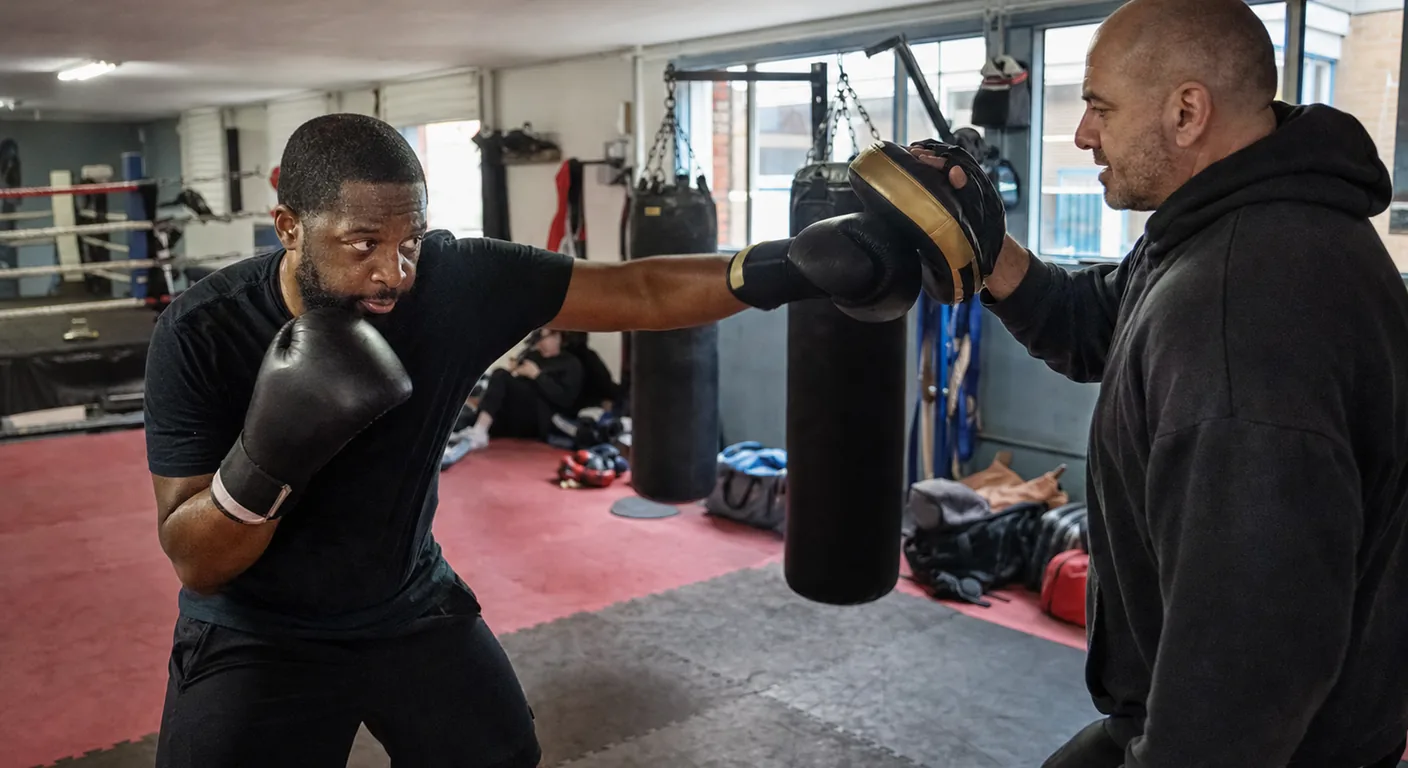
Most beginners treat combinations like a shopping list.
Jab. Pause. Cross. Pause. Hook. Admire it. Then wonder why the return punch lands straight down the middle.
That is not really punching in bunches. It is taking turns with gaps in between. A proper combination has rhythm, guard, shoulder cover and a finish. The punches are connected enough that your own work gives the opponent less room to answer, but tidy enough that you can still defend when the exchange comes back.
The short clip below shows the point clearly: when you are at medium or short range, the pause between punches is often where you get caught. Keep the work connected and the shoulders working, or the counter arrives before your hand comes home.
This matters because boxing is not only about who starts an exchange. A technical and tactical review of boxing performance describes punching, movement, defence, distance and tactical behaviour as connected parts of performance. That is exactly what a good combination should be: attack, protection and position in one sequence.
Here is how to punch in bunches without giving away your chin.
A combination is not a rush
Punching in bunches does not mean throwing as many punches as possible until your arms fall off.
A good bunch is a short connected group of punches with no lazy pause between them. It might be two punches. It might be three. It might be four if the range is right and the balance is still there. The number matters less than the connection between them.
The beginner mistake is speed without shape. They hear "let your hands go" and turn it into windmill punching. The chin lifts, the elbows flare, the feet stop, and the shoulders tense. It feels busy, but it is not hard to read.
The better version is calmer. Each punch leaves from guard, returns towards guard, and makes space for the next punch. The shoulder of the punching arm helps hide the chin. The other hand stays close enough to be useful. The hips and feet keep the body under control.
Use this cue: connect the punches, do not chase the punches.
If the third shot only lands because your head is falling past your front knee, stop at two. The combination is finished when your balance is finished.
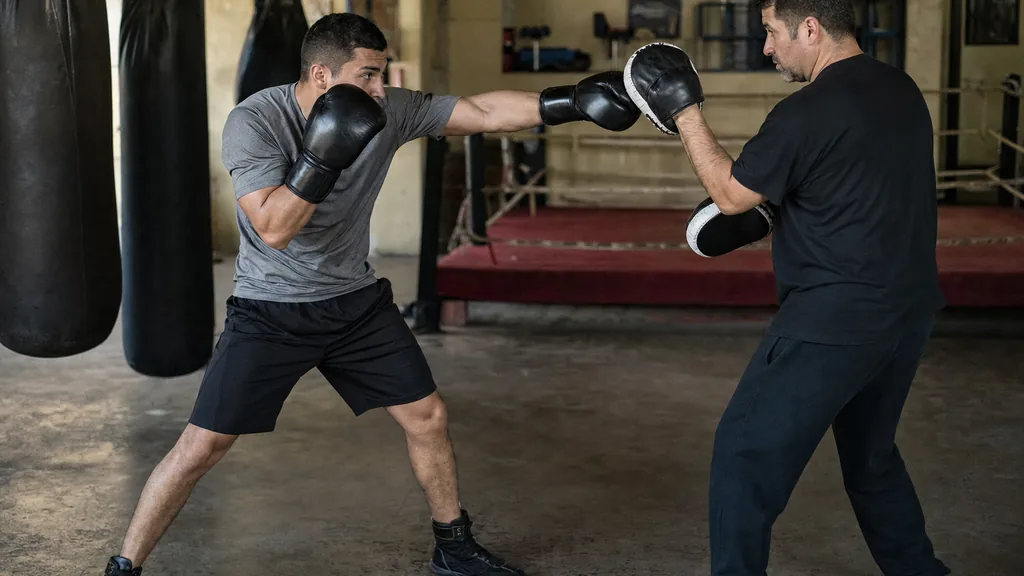
The dangerous gap is between punches
Most counters do not land because the first punch was terrible. They land because the pause after it was obvious.
A boxer jabs, drops the hand, and waits to see what happened. The opponent sees the gap and answers. A boxer throws a right hand, leaves the shoulder square, and admires the shot. The left hook comes back. A boxer hooks to the body, stays low too long, and the uppercut arrives.
The answer is not panic. The answer is linked work.
When one punch finishes, the next movement should already be beginning. That might be the next punch, a slip, a step out, a high guard, or a small pivot. What you cannot do is freeze in front of the other boxer with one hand halfway home.
That is why simple combinations are so useful. Jab-cross-jab. Jab-cross-left hook. Jab to the body, jab to the head. Cross-hook-cross. These patterns teach the hands to return while the next action starts. They also teach the body to rotate one way, then back the other way, instead of throwing everything from the shoulders.
Our guide to boxing combinations for beginners gives the basic punch patterns. This article is about making those patterns safer.
Let the shoulders protect the chin
The shoulder is not decoration. It is part of the defence.
When the jab goes out, the lead shoulder should rise enough to make the chin harder to hit. When the cross goes out, the rear shoulder comes through while the lead hand stays home. When the hook turns, the opposite hand should not drift down by the hip.
The common mistake is throwing punches with the head naked between them. The hand leaves, but the shoulder does not cover. The other glove drops, because the boxer is trying to add power. The punch may look big on the bag, but against a person it leaves a lane for the counter.
A useful drill is slow shadowboxing in the mirror. Throw jab-cross-hook at half speed. After each punch, freeze for one second and check three things:
- Is the chin still tucked?
- Is at least one glove close to the face?
- Are the shoulders turning rather than the arms swinging on their own?
If the answer is no, the combination is not ready to speed up.
A combat sports anticipation review found that skilled fighters are better at reading early movement cues. That cuts both ways. If your punch always leaves the same gap, a better boxer will read it. Cleaner shoulder cover makes your attack harder to time.
Keep the feet under the punches
Combinations fall apart when the feet stop doing their job.
At long range, beginners often reach. At short range, they often square up. Both create the same problem: the punches keep going after the stance has gone. Once the feet are too wide, too narrow or crossed, the hands become noisy rather than useful.
A safe bunch of punches keeps the stance alive. The lead foot can take a small piece of ground with the jab. The rear foot can catch up as the cross lands. The hook can turn from the hip without dragging the head outside the stance. If the opponent moves away, you step again before punching again. You do not lean after them.
Think of the feet as the brakes as much as the engine. They take you in, but they also decide when the attack has to stop.
Try this on the bag:
- Start just outside range.
- Step in with the jab.
- Let the rear foot recover as the cross lands.
- Add the hook only if your stance is still solid.
- Step out before the bag swings back into you.
That last step matters. A combination without an exit is only half a skill.
Do not throw the same bunch every time
A neat combination can still become predictable.
If every exchange is jab-cross-hook at the same pace, the other boxer gets a clear read. They know where the third punch is going. They know when your weight sits on the front foot. They know when to counter.
Vary the finish before you vary everything else. Jab-cross-hook, then step out. Jab-cross, then catch. Jab-cross-hook, then roll under. Jab to the head, jab to the body, then leave. You are keeping the base simple while changing the final picture.
This is where the three phases of a boxing exchange becomes useful. The first punch starts the conversation. The second and third punches keep it going. The finish decides whether you leave safely or stand there waiting to be answered.
Do not be the boxer who throws a decent combination and then parks in front of the return fire.
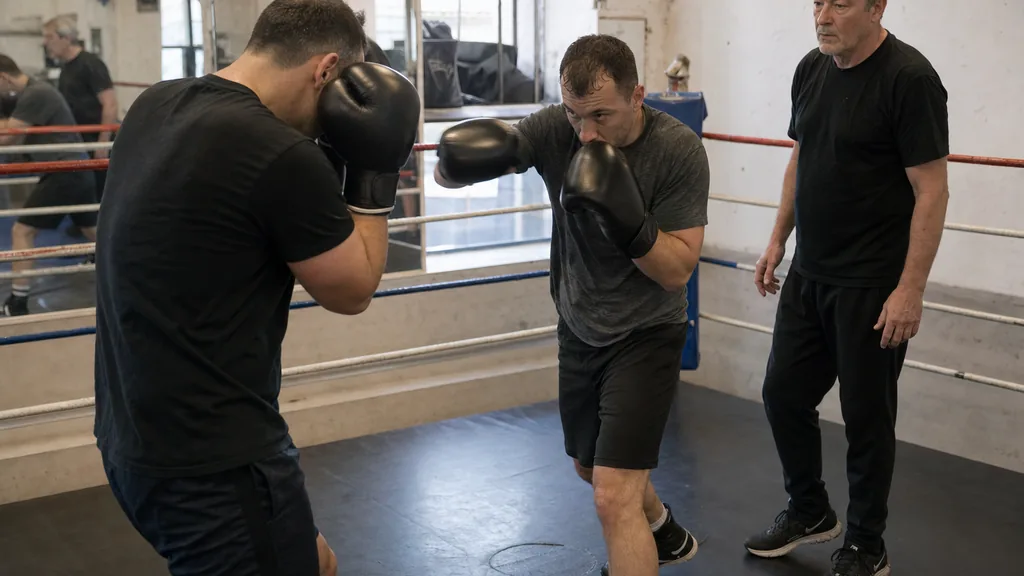
A three-round drill for safer combinations
Use this with a partner, on pads, or on the bag. Keep it honest. The goal is clean connection, not gym theatre.
Round 1: two punches, no pause
Throw jab-cross for two minutes. The jab comes straight back as the cross starts. The rear hand returns as the body resets. After every two punches, step out.
The coach should watch the space between punches. If the boxer pauses to look at the jab, slow the round down and rebuild the rhythm.
Round 2: three punches, shoulder cover
Add the lead hook. Jab-cross-hook, then high guard or step out. The hook should come from hip turn, not a long arm swing.
Freeze after each combination. Check the chin, guard and feet. If the freeze looks ugly, the moving version is worse.
Round 3: combination and answer
Now add a defensive finish. Pick one: jab-cross-hook and roll, jab-cross and catch, or jab-cross-jab and step out.
This round teaches the real lesson. Punching in bunches is not separate from defence. The defence is built into the way the punches finish.
Common mistakes
The first mistake is pausing after the first punch. If you want to throw one punch, throw one punch and leave. If you want a combination, the next action has to be ready.
The second is letting both hands drift away from the face. One hand punches. The other hand works. It guards, balances, frames or prepares the next shot.
The third is throwing past your feet. Once your stance breaks, the combination has stopped being useful.
The fourth is loading every punch. You do not need maximum power on every shot. Sometimes the first punch is there to blind, the second to move the guard, and the third to land properly.
The fifth is forgetting the finish. After the bunch, leave, angle, catch, roll or smother. Do something. Standing still after a combination is a written invitation.
The coaching cue
Punch in bunches, but finish in shape.
That is the standard. Connected punches. Shoulders working. Feet under you. No big pause for the counter to walk through.
If you train in Kidbrooke, Greenwich or nearby, our Recreational Adults boxing classes teach combinations through pads, partner drills and controlled rounds. You learn how to let your hands go without turning defence into an afterthought.
H&G Team
Writer at Honour & Glory Boxing Club, a community boxing gym in Kidbrooke, South East London.
KEEP READING
Boxing Combinations for Beginners
Learn the essential boxing combinations every beginner needs to know. From the basic 1-2 to more advanced sequences, these combos form the foundation of your offence.
How to Punch Without Dropping Your Guard
Learn how to keep your guard alive while punching, so combinations protect you instead of opening clean counters.
Why You Rush Boxing Combinations
Rushing makes combinations fall apart. Learn how to slow the first punch, keep your stance and build speed that still looks like boxing.
Was this page helpful?
It takes one tap, and it genuinely helps.
Choose your next step
Turn this article into the right action
Some readers are ready to book. Some need the class route first. Pick the route that matches what you actually want.