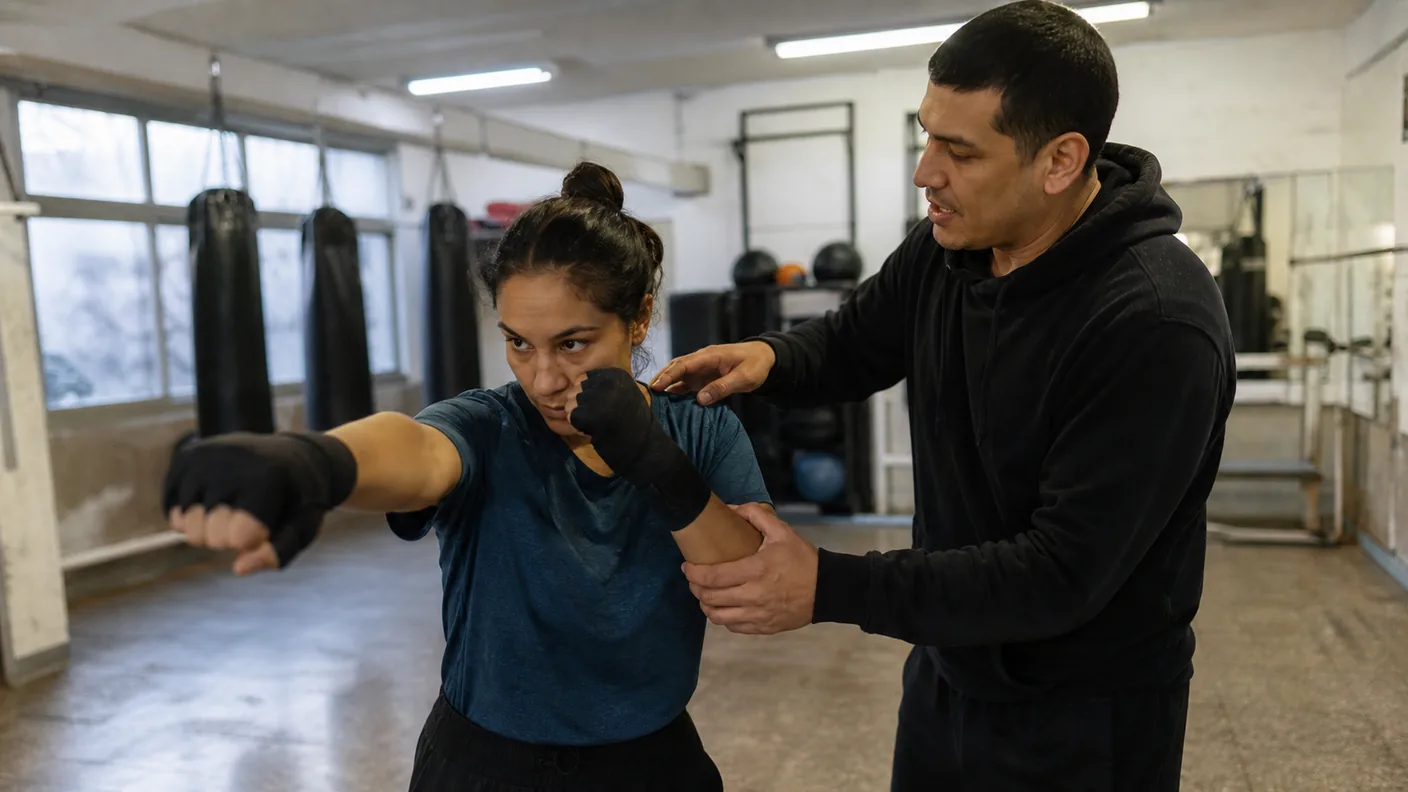
Muscle memory is one of those phrases that is useful and slightly wrong.
It is useful because every boxer understands the feeling. The first time you throw a jab, you think about everything: stance, guard, elbow, shoulder, chin, hip, balance, recovery. A few months later, the jab leaves without a committee meeting in your head. It feels stored somewhere.
The slightly wrong bit is the word muscle. Your biceps do not remember your jab. Your calves do not remember your footwork. What changes is the nervous system: the brain, spinal cord, nerves, sensory feedback and the way all of those parts coordinate movement under pressure.
For boxing, that matters. You are not just trying to get fitter. You are trying to make good decisions and clean movements fast enough that they still work when tired, crowded and under threat.
What Muscle Memory Actually Is
The more accurate term is procedural memory: memory for skills and actions rather than facts. It is the system that lets you ride a bike, type a password, skip, slip a punch or pivot out after a combination without consciously naming every step.
A 2021 review in Frontiers in Neurology describes motor skill learning as a process with three broad stages: acquisition, consolidation and retention. It also identifies the motor cortex, basal ganglia and cerebellum as major brain areas involved in learning movement skills (Frontiers in Neurology review).
In plain boxing language:
- the motor cortex helps send precise movement commands
- the cerebellum helps tune timing, balance and error correction
- the basal ganglia help turn repeated actions into more automatic routines
- sensory feedback tells you whether the punch, step or defence matched the target
That is why a beginner can understand a correction but still fail to do it. Knowing the instruction is not the same as owning the movement.
A coach can say, "bring the right hand back to your cheek." The boxer can agree. Then under fatigue, the hand drops again. The problem is not attitude. The old movement pattern is still stronger than the corrected one.
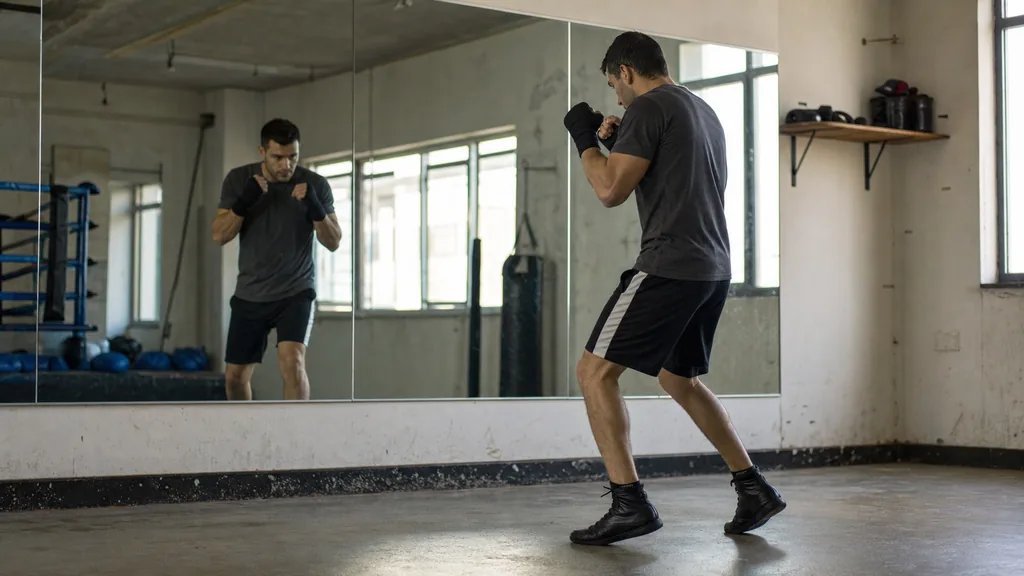
Repetition Builds the Circuit, Correction Builds the Right Circuit
Repetition is necessary, but repetition by itself is not enough.
If you throw a thousand lazy jabs with your chin high, you have not built a jab. You have built a chin-high jab habit. The nervous system does not care whether the movement is technically good. It adapts to what you repeat.
This is why early coaching matters. The first weeks of boxing should not be about smashing pads as hard as possible. They should be about creating a clean enough template: stance, guard, balance, straight punches, recovery, breathing and foot position.
Skill learning changes the brain structurally as well as behaviourally. A human MRI study on motor skill acquisition found experience-dependent changes in myelin water fraction after four weeks of visuomotor training, suggesting that skilled practice can alter white-matter properties in task-relevant brain regions (Neural Plasticity study).
Myelin is the insulating layer around nerve fibres. It helps signals travel efficiently. That does not mean one jab session wraps your brain in magic insulation. It means repeated, skilled practice can be associated with measurable nervous-system adaptation.
That is the real science behind the phrase muscle memory: your body becomes better at sending, timing and correcting the signals required for a movement.
Why Slow Practice Works
Beginners often want speed first. That is backwards.
Speed is built on a pattern. If the pattern is poor, speed just hides the problem until pressure exposes it. A rushed beginner combination usually looks busy but disconnected: shoulders tense, feet stuck, hands late returning, eyes flinching, breath held.
Slow practice gives the nervous system a cleaner signal. You can feel whether the back heel turns, whether the shoulder protects the chin, whether the rear hand stays home, whether the weight returns to a usable position.
At H&G, we use this constantly. A boxer might drill a jab-cross at half speed, then add the step, then add the exit, then add light pressure. The aim is not to look impressive in the first round. The aim is to build a movement that survives round four.
This is also why boxing personal training can be useful early on. More coach feedback means fewer poor repetitions slipping through unnoticed. Group classes are excellent for volume and rhythm, but the fastest technical improvements often come when a coach can correct the exact mistake as it happens.
The Brain Learns Better When Practice Changes
There is a catch. If you repeat one movement in one perfect setting forever, you may get good at that exact setting and still struggle when the situation changes.
Boxing is not a typing test. Your opponent moves, your distance changes, your balance is disturbed, and your target disappears. That is why useful muscle memory needs variation.
Research on contextual interference compares blocked practice, where you repeat one task again and again, with more varied or random practice. A 2024 systematic review and meta-analysis in Scientific Reports found that high contextual interference had a beneficial effect on retention overall, although effects were stronger in laboratory settings than applied sport settings (Scientific Reports meta-analysis).
Translated for boxing: start blocked, then make it messier.
A beginner may need ten clean minutes of jab mechanics. But once the basic shape is there, the drill should change:
- jab while stepping in
- jab while stepping out
- jab after a feint
- jab after a slip
- jab while the pad holder changes range
- jab, miss, reset without panicking
That variation is what turns a gym movement into a boxing movement.
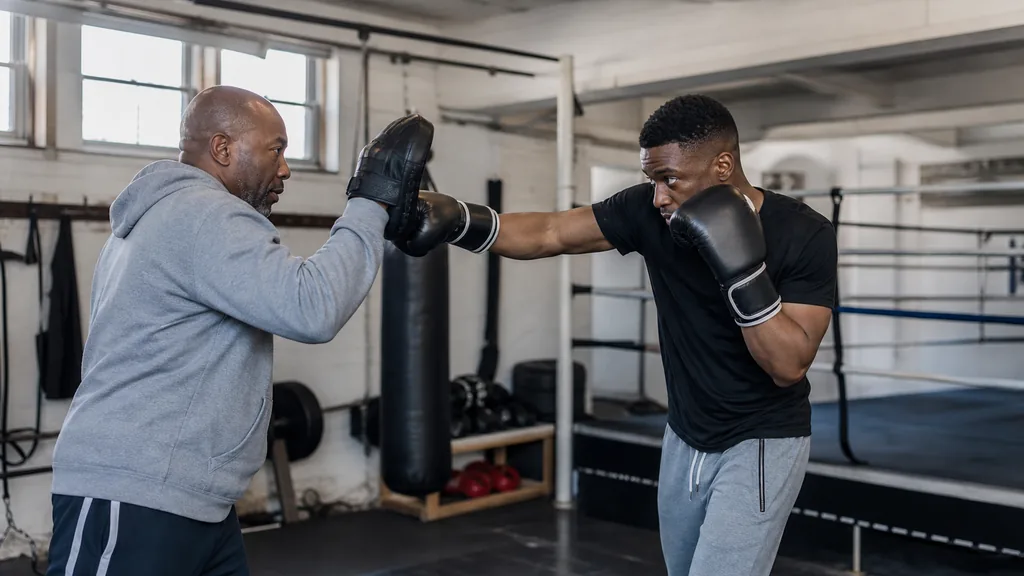
Sleep Is Part of Skill Practice
People like to think the work happens only in the gym. It does not.
After practice, the brain still has work to do. Motor memories need consolidation: the unstable new pattern has to become more stable and usable later. Sleep appears to play an important role in this process.
A study in the journal SLEEP found sleep-dependent gains after both physical practice and motor imagery of a finger movement sequence, compared with a no-sleep daytime control group (SLEEP motor memory study).
Boxing is more complex than a finger-tapping sequence, so we should not overclaim. But the principle fits what coaches see every week. A boxer learns a movement badly when exhausted, sleeps poorly, comes back flat, and wonders why nothing sticks. Another boxer trains hard, sleeps properly, returns fresh, and the movement looks more available.
If you want your training to stay with you, recovery is not optional. Our sleep and boxing recovery guide goes into this in more detail, but the simple version is: sleep after technical learning matters.
Visualisation Helps, but It Is Not a Replacement for Rounds
Mental rehearsal has a place in boxing. Shadow boxing in your head, seeing the counter before you throw it, rehearsing a walk-in and first exchange: these can strengthen the same general learning process when used properly.
A 2025 systematic review and multilevel meta-analysis found that imagery practice can improve athletic performance, although the evidence base had limitations and the best results came when imagery was combined with other psychological skills rather than used alone (imagery practice meta-analysis).
That fits the honest coaching answer. Visualisation helps most when it supports real practice. It cannot replace pad work, sparring, footwork rounds or the awkward feedback of another person in front of you.
A useful boxing version is simple: before training, spend two minutes seeing one technical theme clearly. For example: jab, shoulder high, rear hand home, step out to the left. Then practise that theme physically. After training, replay two good reps and one mistake you want to fix next time.
That is enough. You do not need to turn it into theatre.
Why Technique Breaks Under Pressure
A movement is not truly learned because it works when you are calm. It is learned when it works while you are tired, watched, hit, rushed or frustrated.
Under pressure, attention narrows. Breathing changes. The body wants to protect itself. Old habits come back because they are easier to access than new ones.
This is why boxing has to move from simple practice to representative pressure. A boxer who can slip a jab in a line drill still has to learn to slip when the jab is coming from an actual person, at an uncertain time, with consequences attached.
The goal is not mindless movement. Good boxers think. But they do not think about every joint in the middle of an exchange. They use attention for tactics, rhythm, timing and opponent reading because the basic mechanics have become reliable enough to run in the background.
This is where counter punching basics become interesting. A beginner thinks, "slip, then throw." A better boxer starts to feel the slip and counter as one connected answer.
Coaching Cues Matter
How a coach talks can change what the boxer learns.
Research on attentional focus has often found that cues aimed at the effect of the movement can work better than cues that make the athlete over-monitor body parts. One study on children learning a football throw-in found that frequent external-focus feedback improved learning more than internal-focus feedback in that setting (Frontiers in Psychology study).
Boxing still needs body cues sometimes. A beginner may need to hear, "turn the hip" or "keep the elbow in." But once they understand the shape, external cues often land better:
- send the jab through the target
- bring the hand back to the phone
- step off the train tracks
- make the pad pop, then disappear
- show the shoulder, hide the chin
The cue should make the movement cleaner without filling the boxer's head with twenty instructions.
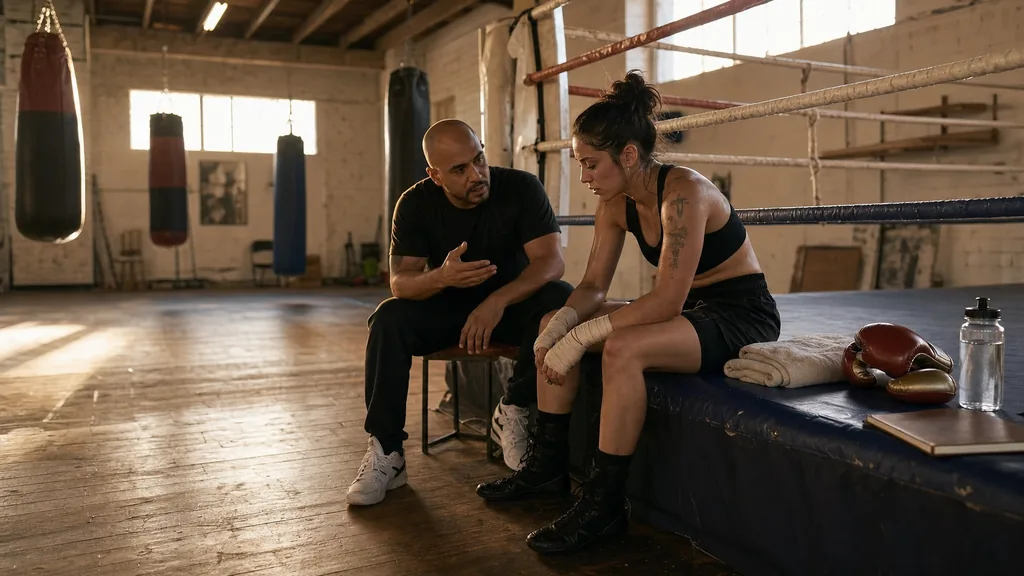
The Practical Formula for Boxing Muscle Memory
Here is the short version we would use with a beginner or intermediate boxer.
First, learn the movement slowly enough that you can perform it cleanly. Speed comes later.
Second, get correction early. Bad reps count. If the same mistake appears every round, do not ignore it and hope volume fixes it.
Third, repeat the corrected version enough times that it starts to feel normal. This is where regular boxing training beats occasional bursts of enthusiasm.
Fourth, vary the setting. Once the basic jab is there, use it while moving, after a feint, under light pressure, when tired, and when the partner changes range.
Fifth, protect recovery. Sleep, food and sensible training frequency help the nervous system keep what it learned.
Sixth, test the skill honestly. Pads are useful. Bags are useful. Shadow boxing is useful. But a boxing movement eventually has to work with another human being reacting to it.
What Beginners Usually Get Wrong
The common mistake is chasing intensity before ownership.
A hard session feels productive. Sweat is visible. Soreness is obvious. Skill is quieter. It shows up when the boxer no longer lifts the chin on the jab, no longer crosses the feet under pressure, no longer drops both hands after a combination.
That is why good boxing coaching can feel repetitive. The coach is not trying to bore you. They are trying to make the right pattern more available than the wrong one.
This is also why two or three sessions per week usually beat one heroic session. The nervous system needs repeated exposures, but each exposure needs enough quality to be worth keeping.
The Bottom Line
Muscle memory is not magic. It is adaptation.
Your nervous system learns what you ask it to repeat. If you repeat rushed, sloppy movement, that becomes familiar. If you repeat corrected movement often enough, then vary it under realistic conditions, it becomes usable boxing.
That is the science and the coaching point. The brain builds the pattern. The body expresses it. The gym is where you earn the reps.
If you want to build proper boxing habits from the start, come to a recreational adult boxing class or book a free trial session at H&G in Kidbrooke. If you are nearby, see our Kidbrooke boxing club guide for travel and local training details.
H&G Team
Writer at Honour & Glory Boxing Club, a community boxing gym in Kidbrooke, South East London.
KEEP READING
Does Boxing Build Muscle? What to Expect
Will boxing training build muscle? Yes, but probably not the kind you are imagining. Here is what actually happens to your body when you train boxing regularly.

Boxing and Abs: How Boxing Builds a Six Pack
Boxing works your abs harder than most gym routines. Here is exactly how it happens, which muscles are involved, and why crunches are the wrong approach.

The Best Boxing Books Ever Written
Coaches, champions, historians and novelists have all written about boxing. These are the books that actually repay the time you put into them.
Was this page helpful?
It takes one tap, and it genuinely helps.
Choose your next step
Turn this article into the right action
Some readers are ready to book. Some need the class route first. Pick the route that matches what you actually want.