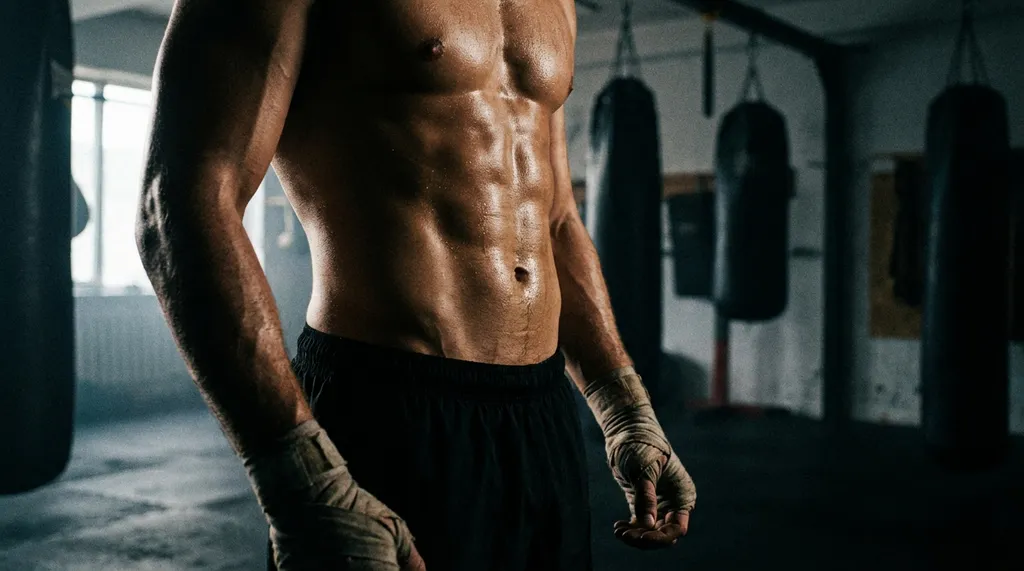
If you are searching "how to get a six pack" and you have not considered boxing, you are missing the most effective ab workout that most people never think of.
This is not marketing. Boxing engages your core on every single punch, every defensive movement, and every second you spend on your feet. A typical boxing session works your abs harder than a dedicated ab workout at a gym, and it does it while also building cardiovascular fitness, coordination, and functional strength.
Here is exactly how.
Why boxing works your abs differently
Most ab exercises are isolated. Crunches, sit-ups, leg raises. You lie on the floor, contract your rectus abdominis (the "six pack" muscle), and repeat. The muscle gets worked, but in a way that has almost nothing to do with how your body actually uses it.
Boxing works your abs the way they are designed to function: as stabilisers and force transmitters. Every punch you throw involves rotation through the torso, which means your obliques (the muscles on the sides of your waist) and your transverse abdominis (the deep muscle that wraps around your midsection like a corset) are firing constantly.
A 2013 study in the Journal of Sports Science and Medicine found that rotational movements produced significantly higher muscle activation in the obliques and deep core muscles than traditional isolation exercises. Boxing is fundamentally a rotational sport.
The muscles boxing actually builds
Rectus abdominis (the six pack)
This is the muscle everyone wants to see. It runs vertically from your ribs to your pelvis and creates the visible "blocks" when body fat is low enough.
Boxing engages it in two ways. First, isometrically: your rectus abdominis braces your torso every time you throw or absorb a punch. Second, dynamically: movements like slipping, bobbing, and weaving require rapid flexion and extension that works the muscle through its full range.
A study published in the Journal of Physical Therapy Science found that dynamic stability exercises produced greater rectus abdominis activation than static ones. Boxing is entirely dynamic.
Obliques (internal and external)
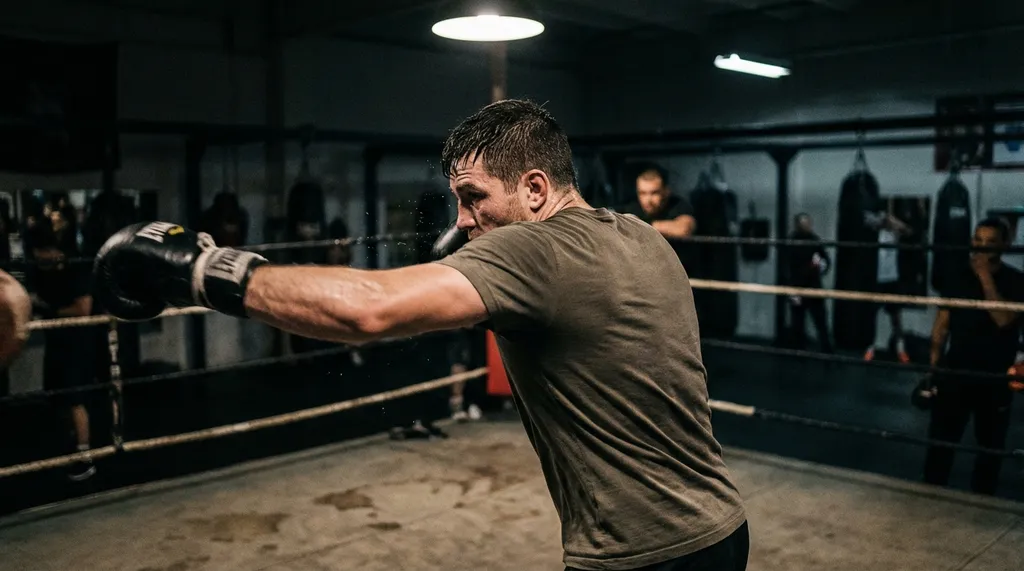
The obliques are responsible for torso rotation. Every hook, every uppercut, every body shot involves twisting through the hips and trunk. The external obliques drive the rotation; the internal obliques decelerate it.
If you throw 200 punches in a session (a conservative estimate for a moderate workout), your obliques contract forcefully 200 times. No gym exercise replicates this volume of rotational work at this intensity.
Transverse abdominis (the deep corset)
This is the muscle most people ignore and it is arguably the most important for both appearance and function. The transverse abdominis wraps around your midsection horizontally. When it is strong, it pulls everything in, creating a tighter, flatter waist even before you lose body fat.
Boxing trains it constantly. Every time you brace for a punch, exhale sharply on impact, or hold your guard, the transverse abdominis contracts. Over weeks and months of training, this creates genuine core compression that makes your waist visually tighter.
Hip flexors and lower abs
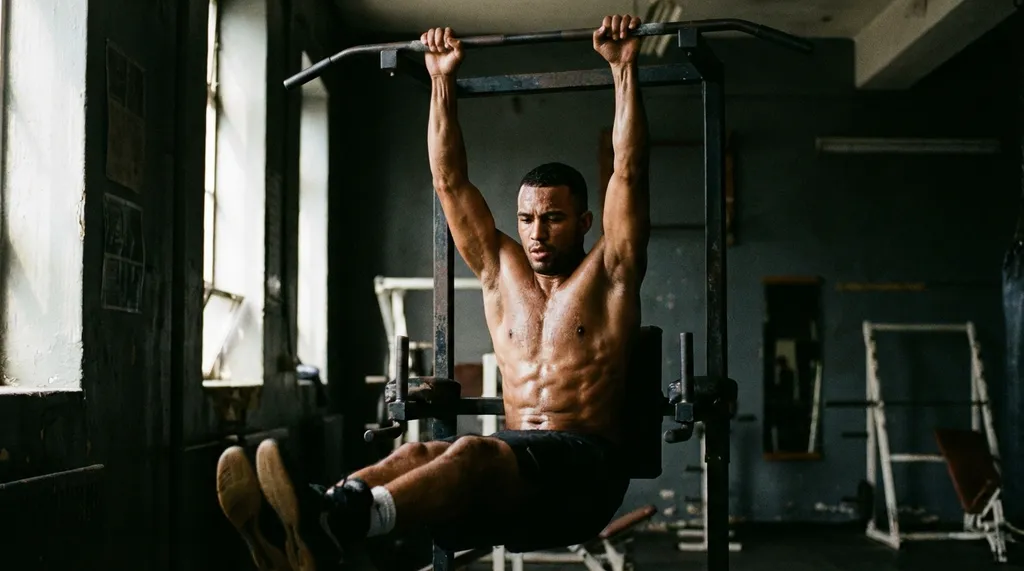
Footwork drills, knee raises during conditioning, and the constant shifting of weight from foot to foot all target the lower portion of the abs and the hip flexors. These are the muscles that create definition below the navel, the area most people find hardest to develop.
Why crunches are a waste of time (for boxers)
Crunches work the rectus abdominis in isolation, through a limited range, with zero rotational component. They do not train the obliques meaningfully. They do not engage the transverse abdominis. They do not develop anti-rotation stability.
For a boxer, crunches are the equivalent of practising a punch by moving only your fist. The power and the definition both come from the entire system working together.
A systematic review in Sports Medicine found that multi-joint, whole-body exercises produced comparable or superior core muscle activation to isolation exercises, while also providing cardiovascular and metabolic benefits. Boxing is the definition of a multi-joint, whole-body exercise.
The body fat question
Here is the honest part. You cannot see abs at 20 percent body fat, regardless of how strong they are. Visible abs typically require body fat below 15 percent for men and below 20 percent for women. The muscle has to be there, but the fat covering it has to be gone.
Boxing can help both sides of the equation: regular movement and stronger core habits. Energy expenditure varies by person and session, and visible abs still depend heavily on nutrition, genetics and consistency.
This is why boxers have visible abs almost universally. It is not genetics. It is the training.
What a session looks like in practice
A typical adult boxing session at Honour and Glory lasts 90 minutes. Here is how each segment works your abs:
- Skipping warm-up (10 min): Constant low-level core engagement to maintain posture and rhythm. Burns calories, primes the core.
- Shadow boxing (10 min): Full rotational work on every punch. Your abs are the engine driving every movement.
- Bag work (20 min): Heavy bag rounds combine rotation with impact absorption. The force you generate passes through your core. High calorie burn.
- Pad work (15 min): Rapid-fire combinations with a coach. Intense rotational demand with the added requirement of defensive movement.
- Conditioning circuits (15 min): Planks, mountain climbers, medicine ball throws, ab wheel rollouts. Direct core work integrated into a high-intensity circuit.
- Cool down (10 min): Stretching the hip flexors and obliques, which tighten from the rotational work.
By the end, your core has been working for 90 minutes across multiple planes of motion, at varying intensities, while simultaneously burning significant calories. No amount of floor crunches comes close.
How long until you see results
If you train consistently (three sessions per week), expect:
- Week 2-3: Your core feels noticeably tighter. Posture improves. You stand differently.
- Week 4-6: Obliques start to become visible, especially with overhead lighting. Waist measurement drops.
- Week 8-12: Visible rectus abdominis definition if body fat is trending downward. The "six pack" begins to emerge.
This timeline assumes reasonable nutrition (you do not need a special diet, just not eating significantly more than you burn). Our free nutrition programme covers fuelling for boxing in detail if you want guidance.
The practical step
If you want abs that actually work, not just abs that look good in a mirror, boxing is the most efficient path. You build the muscle while burning the fat, in the same session, while also learning a skill that has value beyond aesthetics.
Honour and Glory Boxing Club runs sessions for all levels from complete beginner. Your first session is free. No gym experience needed, no equipment to buy, no contract to sign.
Come and find out what 90 minutes of real core work feels like. Your abs will tell you.
More honest abs and boxing guides
For a safer, more realistic view of body goals, read can boxing give you abs? and how long does it take to get a six pack from boxing?. If you are studying, boxing for students and young adults gives the wider route.
H&G Team
Writer at Honour & Glory Boxing Club, a community boxing gym in Kidbrooke, South East London.
KEEP READING
Boxing Body Transformation: What 12 Weeks Actually Changes
Twelve weeks of boxing does not produce one kind of result. It produces several, arriving at different times and in an order that surprises most beginners.
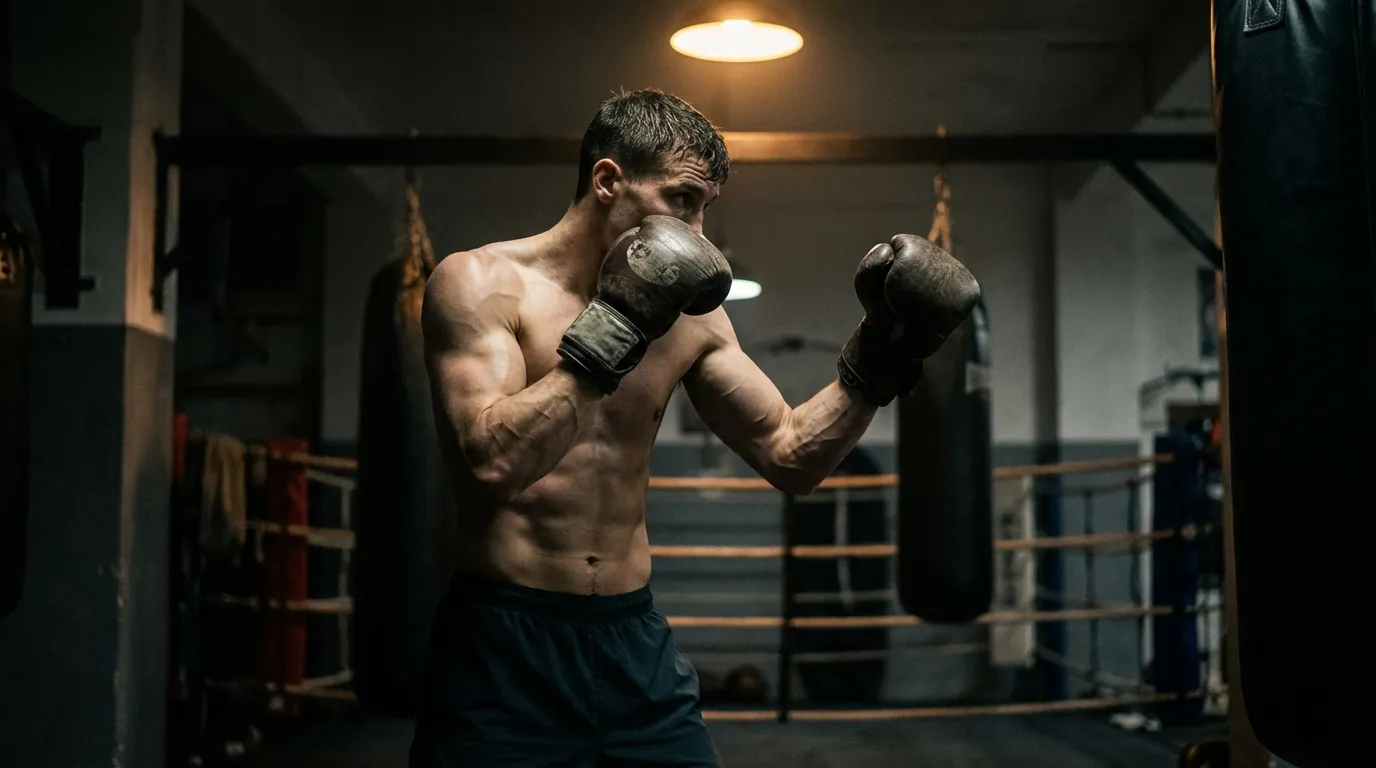
Does Boxing Build Muscle? What to Expect
Will boxing training build muscle? Yes, but probably not the kind you are imagining. Here is what actually happens to your body when you train boxing regularly.
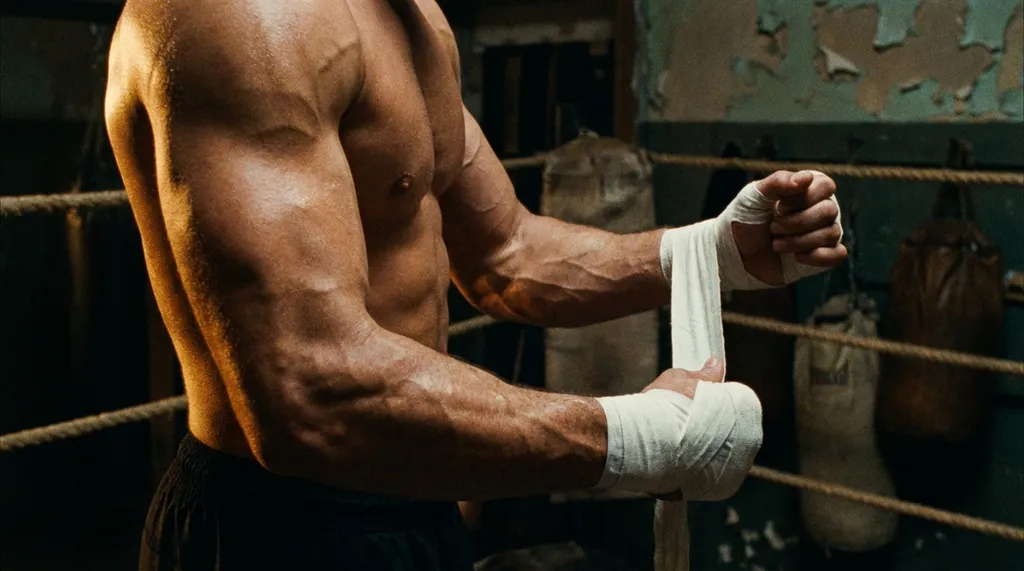
Boxing and Arms: Biceps, Triceps and Shoulders
Boxing builds arms differently from the gym. Here is exactly which muscles get worked, how, and what kind of arms boxing actually gives you.
Was this page helpful?
It takes one tap, and it genuinely helps.
Choose your next step
Turn this article into the right action
Some readers are ready to book. Some need the class route first. Pick the route that matches what you actually want.