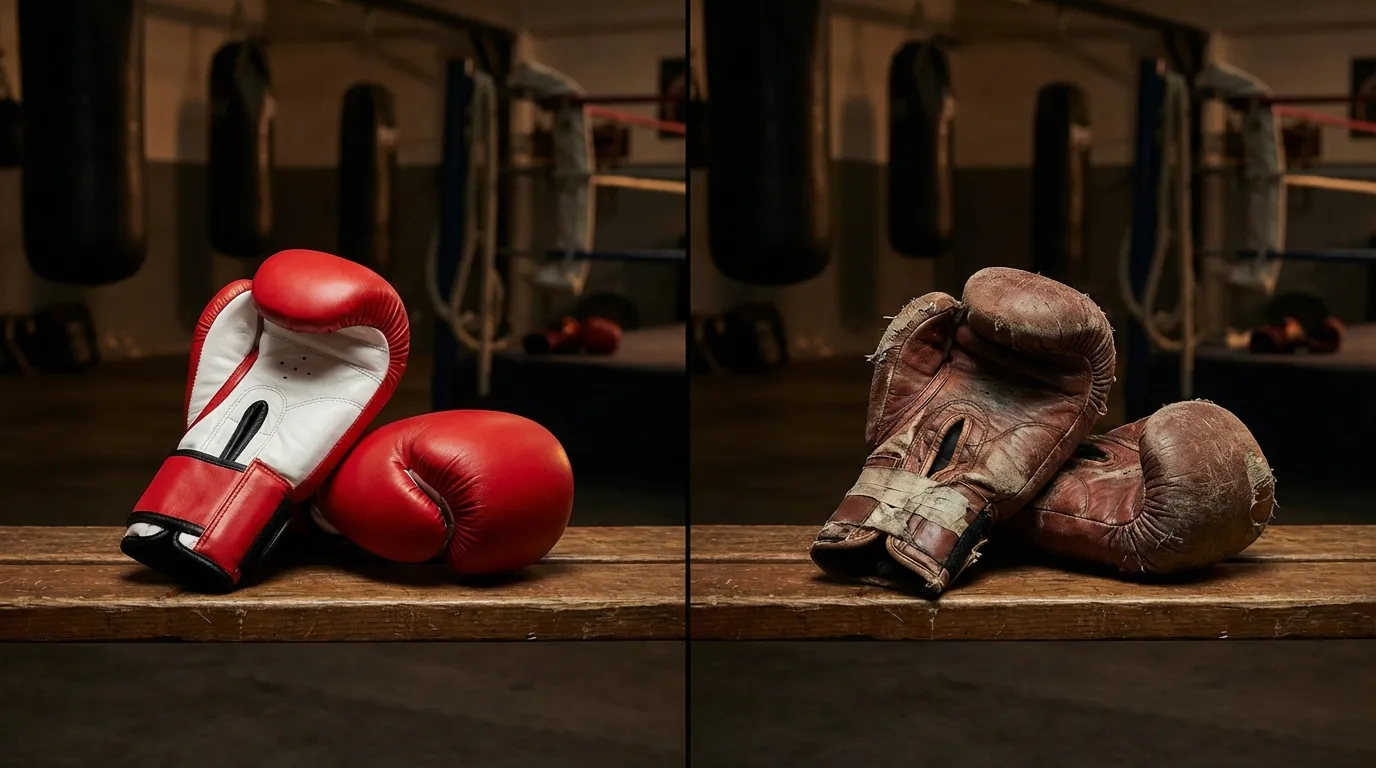
England Boxing's development pathway structures amateur progression through a series of graded competitions, giving a measurable framework for tracking improvement. Research on motor learning in combat sports suggests that technically complex skills like boxing typically require 6-12 months of consistent training before automatic execution begins.
"How long until I am good at boxing?"
It is the first question most beginners ask. And it is frustrating because the honest answer is: it depends.
But let me give you something more useful than that. Here is a realistic timeline of how long it takes to learn boxing, what "good" actually means, and what affects your progress.
Define "Good" First
Before we can answer how long, we need to define what "good" means to you.
Good enough to... hold a proper guard? About a month.
Good enough to... throw smooth combinations? Three to six months.
Good enough to... spar without panicking? Six months to a year.
Good enough to... compete in amateur boxing? One to two years minimum.
Good enough to... beat experienced fighters? Years. Maybe never, depending on where you start.
Most people asking this question mean something like: "How long until I feel competent and confident in the gym?"
That is achievable within a year of consistent training.
The First Month: Awkward and Confused
Let us be honest about what the first few weeks look like.
Your stance feels unnatural. Your guard drops constantly. Combinations come out wrong. Your feet do the opposite of what your brain wants.
Everything is awkward.
This is completely normal. Your body has never moved this way before. Neural pathways need to form. Muscle memory needs to develop.
During month one, you will learn:
- The basic stance and guard
- How to move forwards, backwards, and laterally
- The jab, cross, hook, and maybe uppercut
- Simple two and three punch combinations
- How to wrap your hands properly
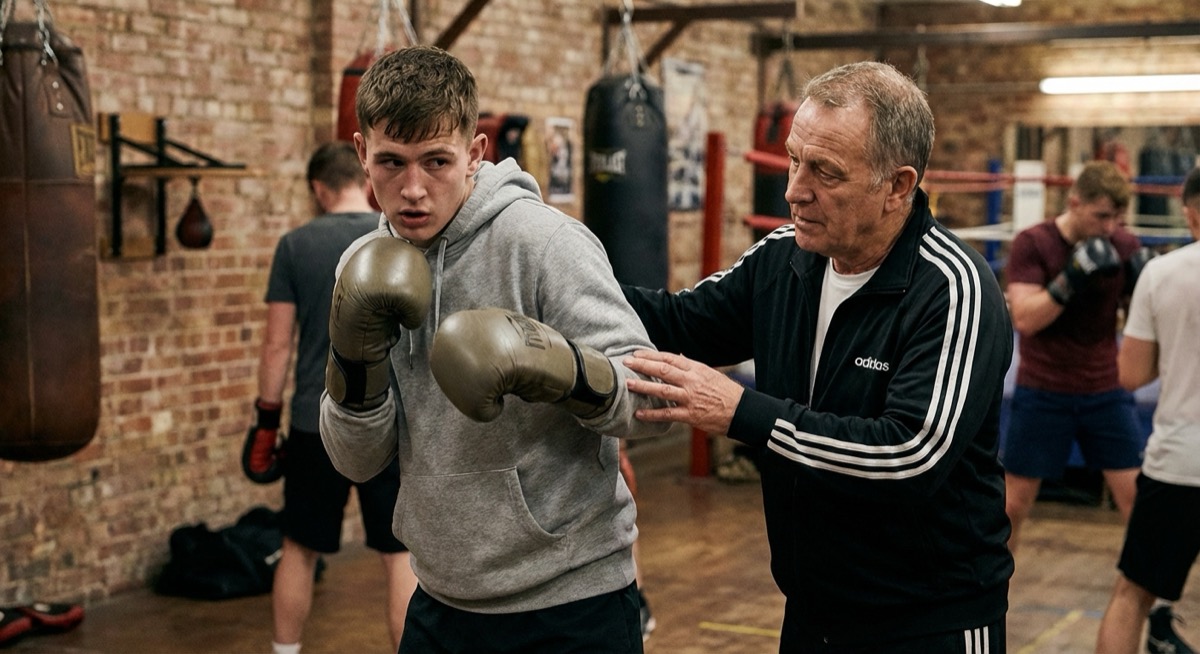
You will not be good at any of it yet. But you will understand the basics.
Months Two to Three: Building Foundations
This is where things start feeling slightly less chaotic.
Your stance becomes more natural. You stop thinking about where your hands go because they just go there. Basic combinations begin flowing without conscious thought.
You will start noticing improvements in:
- Coordination between hands and feet
- Speed of combinations
- Defensive reactions (actually moving when punches come)
- General fitness and conditioning
At this point, you are still clearly a beginner. But you are a beginner who is improving. That is a significant shift in mindset.
Months Four to Six: Connecting the Dots
Now things get interesting.
Individual skills start connecting. You throw a jab and your feet move with it automatically. You see an opening and your hands respond without deliberate thought.
Pad work becomes more fluid. Your coach can call combinations and you execute them reasonably smoothly. The heavy bag does not feel like it is winning anymore.
Some milestones around this time:
- Throwing four and five punch combinations
- Moving while punching (not just standing still)
- Basic head movement and slipping
- Understanding defensive positioning
- Improved ring generalship (using space effectively)
If you have been training twice a week or more, you probably feel like you are actually boxing now, not just going through motions.
Six Months to One Year: Becoming Competent
Somewhere in this period, something shifts. You stop feeling like a beginner and start feeling like a boxer.
This does not mean you are an expert. Far from it. But the fundamentals are there. You have a base to build on.
At the one year mark with consistent training, you might:
- Spar confidently with other beginners
- Hold your own in pad work with experienced coaches
- Have a recognisable style starting to emerge
- Understand boxing concepts, not just techniques
- Train without conscious thought about basic movements
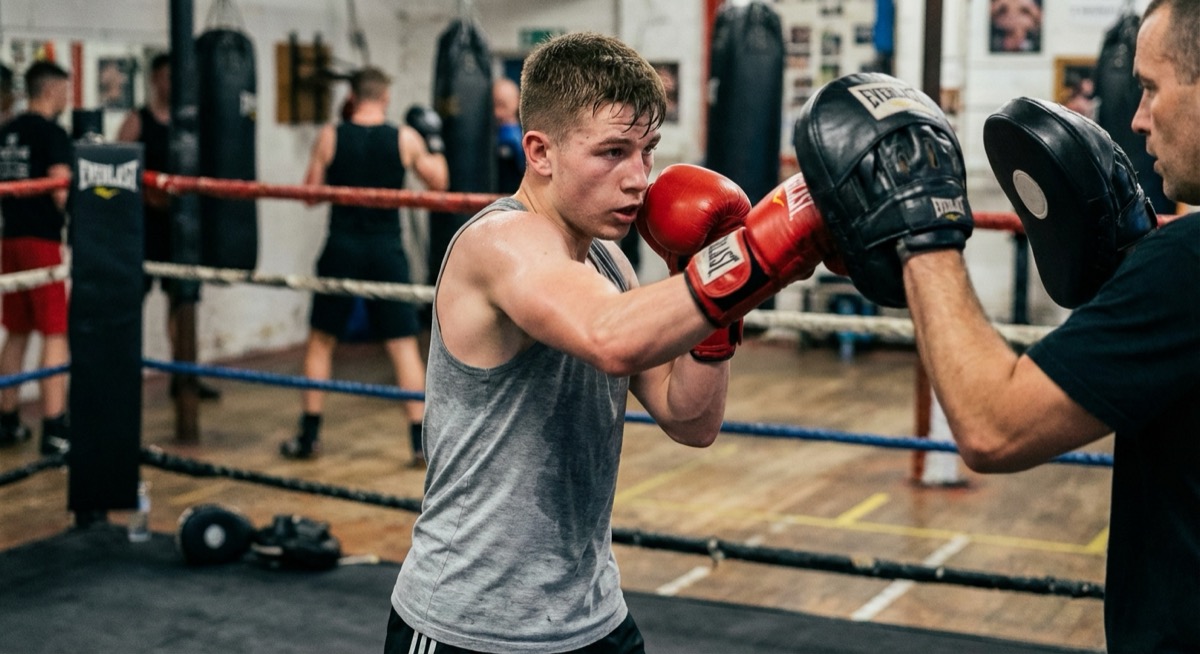
Most importantly, you will know what you do not know. You will see the gaps in your game and understand what to work on.
Beyond One Year: The Long Game
Here is where expectations get tricky.
After one year, you will not be fighting professional boxers. You probably will not be winning competitions. There is still enormous room for improvement.
Boxing is a sport where people train for decades and still learn new things. The ceiling is incredibly high.
Years two and three typically involve:
- Refining technique that seemed solid before
- Developing genuine boxing intelligence
- Building a complete defensive game
- Learning to adapt to different styles
- Getting comfortable in uncomfortable situations
Professional boxers have been training since childhood. Amateur champions usually have five to ten years of consistent practice. Keep your expectations realistic.
What Affects Your Learning Speed?
Several factors determine how quickly you progress:
- Training frequency. Someone training four times a week will improve faster than someone training once a week. This matters more than anything else.
- Quality of coaching. Good coaches accelerate learning dramatically. They spot issues you'd never notice and give corrections that make immediate differences.
- Athletic background. Previous sports experience helps. Especially anything involving footwork, hand-eye coordination, or similar movement patterns.
- Natural coordination. Some people pick up physical skills faster than others. This is genetic and not something to stress about.
- Age. Younger people generally learn faster, though adults can absolutely become skilled boxers. The brain remains adaptable throughout life.
- Focus during training. Someone who trains with full attention and actively works on weaknesses will progress faster than someone going through the motions.
The Two Session Per Week Rule
If you want to make real progress, train at least twice a week.
Once a week means you are constantly relearning what you forgot between sessions. Your body never fully adapts. Progress is painfully slow.
Twice a week is the minimum for consistent improvement. Your body retains learning between sessions. Skills actually stick.
Three times a week is even better if your schedule allows. Four or more and you are in serious training territory.
Anything less than weekly and you are essentially starting over each time.
Shortcuts That Do not Exist
Let me save you some time on things that do not work:
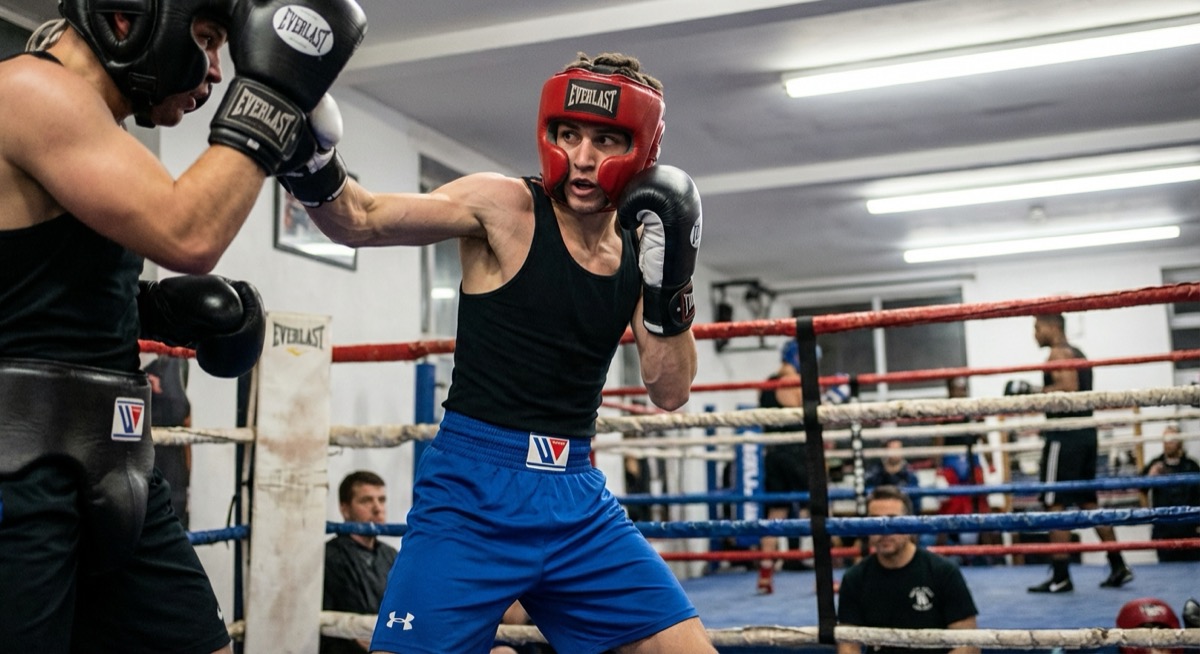
- YouTube is not enough. Watching technique videos helps but cannot replace coaching. You need someone to see your specific mistakes.
- Expensive equipment will not help. Better gloves do not make you a better boxer.
- Training harder will not beat training smarter. Going maximum intensity every session leads to burnout and injury, not faster progress.
- Natural talent only takes you so far. The talented person who trains once a week will lose to the average person who trains four times a week.
Comparing Yourself to Others
Do not.
The person next to you who seems to learn everything instantly might have trained before. Or they might have a dance background. Or twenty years of other martial arts.
You do not know their story. Comparing yourself only makes you frustrated.
Track your own progress. Are you better than last month? Good. Keep going.
Signs You are Improving
Progress in boxing is not always obvious. Here are markers that show you are moving forward:
- Combinations feel more natural
- Your coach gives fewer corrections on basics
- Sparring feels less overwhelming
- You notice mistakes in others that you used to make
- Your conditioning improves
- Techniques you struggled with become automatic
- You develop preferences (favourite combinations, defensive moves)
Sometimes progress happens in steps. You will plateau for weeks, then suddenly level up. This is normal.
Realistic Expectations Summary
- 1-3 months. Understand the basics, still very clunky.
- 3-6 months. Movements becoming fluid, starting to feel like boxing.
- 6-12 months. Competent beginner, can spar with others at similar level.
- 1-2 years. Intermediate boxer, solid foundation, good for recreational boxing.
- 2-5 years. Advanced recreational or entry-level competitive.
- 5+ years. Potentially competitive at amateur level depending on goals.
These are estimates for someone training two to three times per week with good coaching. Your timeline might be faster or slower.
The Best Time to Start Was Yesterday
You know what takes longer than learning boxing? Wishing you'd started learning boxing.
Every week you delay is a week you could have been improving. A year from now, you could be a year into your boxing journey. Or you could still be thinking about starting.
Progress is not linear and timelines are not guarantees. But people who show up consistently always improve. That is the closest thing to a guarantee boxing offers.
Start Your Journey
At Honour & Glory, we help complete beginners become confident boxers. Our coaches understand the learning curve and know how to guide you through it.
Claim a free trial session at Honour and Glory Boxing Club.
Adult beginner route
If you are deciding where to start, use the main adult beginner boxing guide. It compares the normal group-class route, women-only classes, weight-loss intent and private coaching for nervous or time-constrained beginners.
H&G Team
Writer at Honour & Glory Boxing Club, a community boxing gym in Kidbrooke, South East London.
KEEP READING
How Long Until You See Results From Boxing?
Boxing results follow a specific timeline that is different from what fitness marketing suggests. Here is when each type of change actually appears with consistent training.
How Long Should Beginner Boxing Rounds Be?
Beginner boxing rounds do not need to be three minutes. Learn how to choose a length that keeps your technique useful.
How to Start Boxing as a Complete Beginner
Ready to learn boxing for beginners? This no-nonsense guide covers everything you need to know before throwing your first punch.
Was this page helpful?
It takes one tap, and it genuinely helps.
Choose your next step
Turn this article into the right action
Some readers are ready to book. Some need the class route first. Pick the route that matches what you actually want.