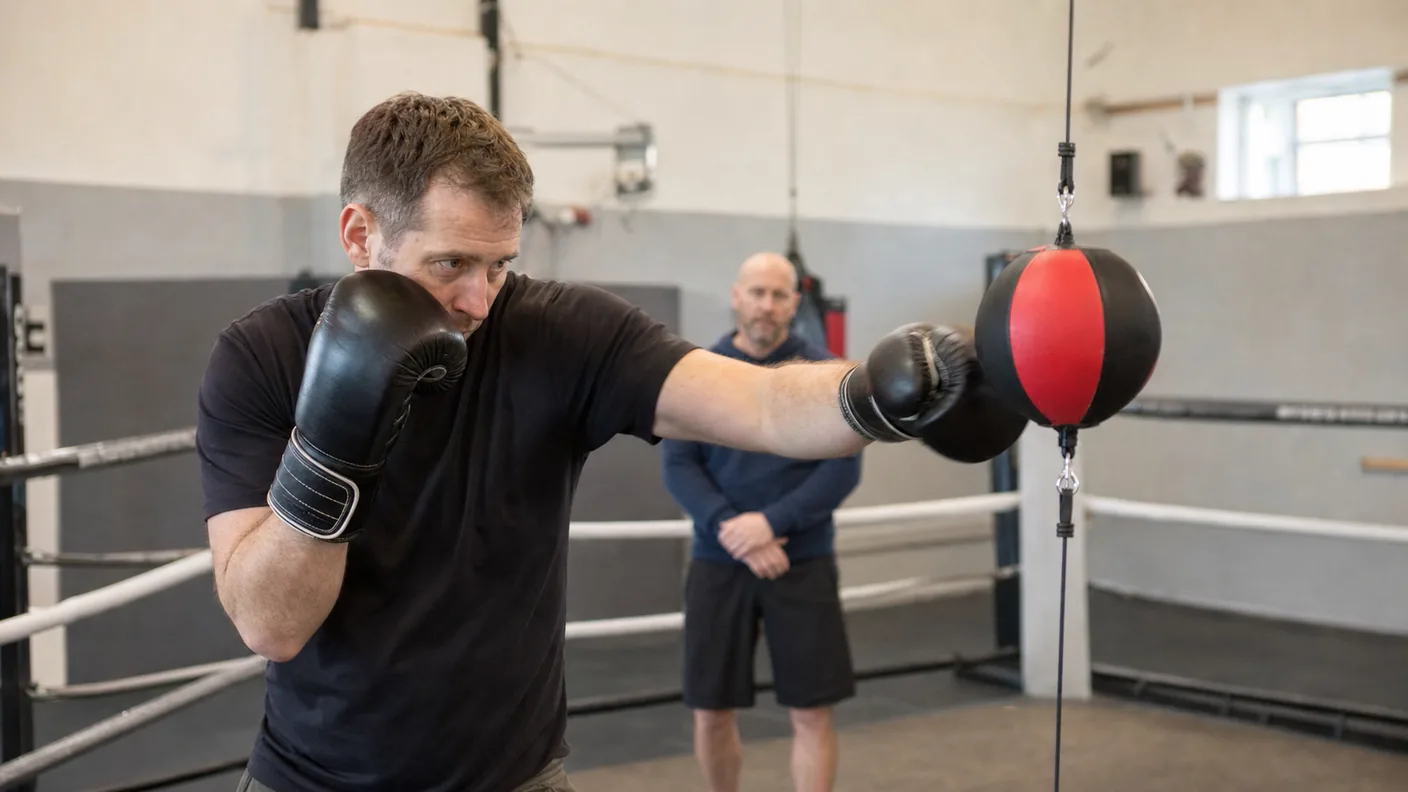
A floor-to-ceiling ball has a way of exposing rushed boxing.
It looks small, harmless and slightly old-fashioned. Then a beginner hits it too hard, the ball flies back at an odd angle, the hands drop and the feet stop moving. The tool is not the problem. The boxer is trying to win an argument with a moving target instead of learning its rhythm.
That is why it is useful. A floor-to-ceiling ball gives immediate feedback. Light, tidy punches keep it predictable. Wild shots make it awkward. You cannot hide a lazy guard or a stretched stance when the target returns before you have finished admiring the last punch.
Watch the short demonstration below, then use these coaching notes to make your first rounds productive.
What the floor-to-ceiling ball is for
The ball is a moving target attached by elastic cords at the top and bottom. Unlike a heavy bag, it does not reward you for simply hitting harder. It moves away, returns and changes the next punch you can throw.
That makes it useful for building three practical habits:
- keeping the eyes on a moving target
- returning each hand to a useful guard
- choosing the next punch without losing your stance
It is not a substitute for pads, bag work or coached partner drills. It is a separate tool. The heavy bag lets you feel impact. Pads let a coach show targets and give feedback. Partner work teaches you to read another person. The floor-to-ceiling ball sits in the middle: it gives you movement without asking you to trade punches with anyone.
The England Boxing Coaching Handbook treats stance, balance, guard and recovery as the base of beginner technique. Keep that in mind here. The ball is only useful if it makes those basics more reliable. If it turns you square, tense and careless, simplify the drill.
Set the ball and your stance before you start
Start with the ball around nose or eye level when it is still. If it is too low, you will fold forward. If it is too high, you will reach up and lose the shoulder position that protects your chin.
Stand close enough to touch the ball with a relaxed jab, but not so close that it is brushing your gloves before you punch. Your normal boxing stance still applies. Knees soft, feet apart, chin down, rear glove near the cheek and lead shoulder ready to cover the chin as the jab goes out.
Do not stand square to the ball because it feels easier. A square stance may let you slap it quickly for a moment, but it gives you no honest way to step, defend or return a straight punch. Keep your usual lead foot forward. Let the ball be the moving part, not your feet falling into a new shape every time it comes back.
The first rule is simple: touch it, do not blast it.
A firm, controlled jab is enough to begin. You want to see where the ball travels, how quickly it returns and whether your hand comes home before the next contact. Power can wait. The technical review of boxing performance describes a useful punch as a coordinated movement through the whole body, not a glove-only action. The floor-to-ceiling ball makes that obvious. If your feet, trunk and hands are not working together, the ball soon tells you.
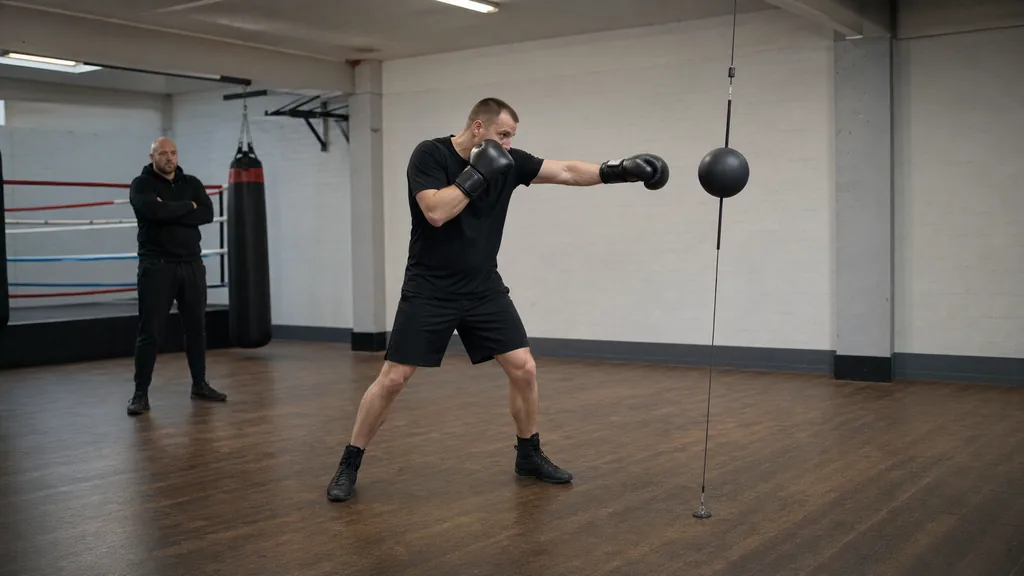
Begin with one jab and a full reset
The first drill should feel almost too easy.
Throw one light jab. Let the ball travel and return. Bring the jab back to guard before you decide whether to throw again. Do not chase it around the gym. Let it come back into your range.
Use three one-minute rounds:
- In round one, jab only. Your job is to land cleanly and recover the hand without moving your head towards the ball.
- In round two, jab once, take a small step back, then jab again when the ball returns. The feet should stay the same distance apart.
- In round three, jab once, bring the rear glove tight to the cheek and let the ball pass before you jab again. This teaches you that a punch has an ending, not just a launch.
The point is not the number of contacts. It is whether each jab leaves you in position to defend or move. If you miss, do not reach after the ball. Reset your feet, find the range again and start with a single punch. The ball should make you patient, not frantic.
If the jab itself is still new, start with our guide to throwing a proper boxing jab. The ball can sharpen a jab you understand. It cannot repair an elbow that lifts early, a chin that rises or a rear hand that disappears.
Add a simple one-two only when the jab is calm
Once the single jab is predictable, add the rear hand.
The useful pattern is jab, cross, reset. The jab starts the ball moving. The cross meets it as it comes into the next available line. You may need to wait longer than you expect. That wait is part of the drill.
Do not turn the one-two into a race. The cross should not be a big shove that sends the ball flying sideways. Throw it from the normal stance, let the rear hip turn, bring the rear hand home, then watch where the ball goes. If the ball comes back at an angle you did not expect, your answer is usually not another hard punch. It is a smaller punch, better range or a reset.
A good first target is five clean one-twos in a row. Not the fastest five. Five where the feet stay underneath you, the hands return and the ball remains manageable. Then pause for ten seconds and repeat.
This is where the tool connects to boxing range. You cannot land every punch just because the ball is moving towards you. The jab has a long range. The cross needs its own line. If the ball is too close, stay compact. If it is too far, move your feet before you reach with the head.
Use the return to practise a small defensive move
The ball can also teach you to finish an exchange with your guard awake.
Start with jab, cross. As the ball returns, make a very small slip outside its line or bring both gloves high and let it pass. Then reset. The movement should be small enough that you can still see the ball and remain ready to punch again.
Do not duck at the waist or throw a dramatic lean. The ball is light. You only need to move enough to stop it touching your face. If you bend so far that the rear hand leaves the cheek or your feet become wide and stuck, the defence has become worse than the problem it was meant to solve.
Try this progression with a coach watching the first few rounds:
- jab, cross, high guard, reset
- jab, cross, small slip, reset
- jab, cross, small step out, reset
Keep the choices separate at first. A beginner who tries to punch, slip, step and spin on every return usually learns none of them. Let one action become tidy before adding the next one.
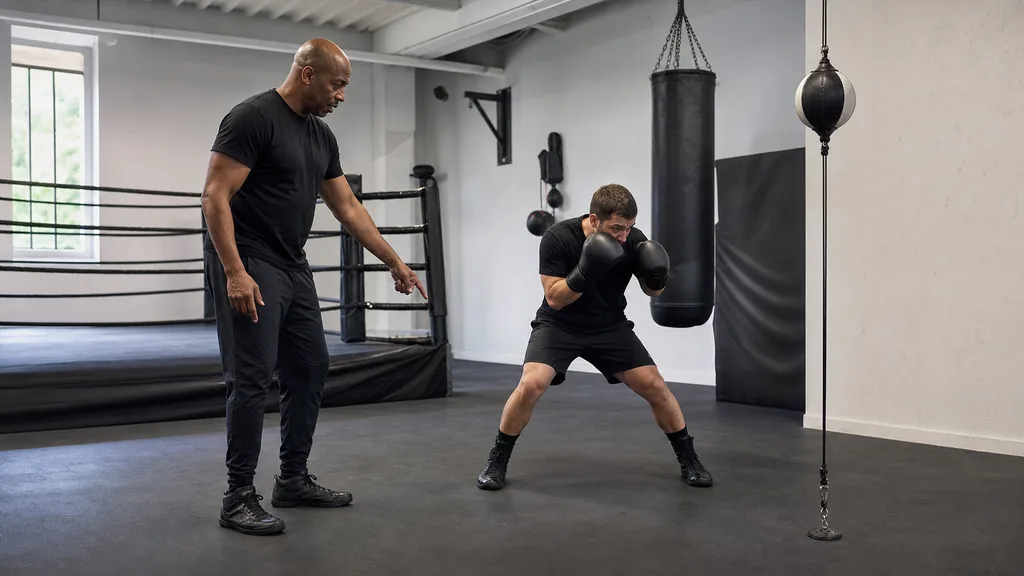
Common mistakes that make the drill useless
The first mistake is hitting too hard. Heavy contact makes the ball harder to read, pulls the shoulders tight and encourages you to chase the next bounce. Use enough force to keep a rhythm, not enough to prove anything.
The second is reaching with the face. When the ball drifts away, beginners often extend the arm and head together to catch it. That breaks the stance and leaves the chin in front of the lead knee. Move the feet or let the ball return. Do not borrow distance from your posture.
The third is treating the ball like a speed test. Fast hands are useful only when they are connected to position. If your gloves are flying but your rear hand never returns to guard, the drill is teaching a bad habit. Slow down until each hand has a clear route out and back.
The fourth is trying to use a moving target before your basics are ready. There is no embarrassment in returning to shadow boxing, the bag or simple mitt work. The ball should make your boxing clearer. It should not turn every round into a scramble.
A short round structure for class or home practice
Use this six-round block after a proper warm-up:
- One minute of single jabs, light contact.
- One minute of jab, reset, jab.
- One minute of jab-cross, reset.
- One minute of jab-cross, high guard, reset.
- One minute of jab-cross, small slip, reset.
- One minute of free work, with a rule that every combination ends in guard, a step or a small defensive movement.
Take 30 to 45 seconds between rounds. Stop early if the shoulders tense up so much that your punches become shoves, or if the ball is striking you often enough that you stop seeing it clearly. This drill rewards quality repetitions, not exhaustion.
The next step is not always a faster round. Sometimes it is a more honest one: fewer punches, cleaner feet and a proper reset after every exchange. That is what makes the ball worth using.
For another moving-target drill, our double-end bag guide explains how to use a different type of rebound bag without mistaking chaos for timing.
If you want coached help with the jab, guard, movement and timing behind this drill, our recreational adult boxing classes are built for adults learning the sport properly. We train in Kidbrooke, South East London.
H&G Team
Writer at Honour & Glory Boxing Club, a community boxing gym in Kidbrooke, South East London.
KEEP READING
Medicine Ball Wall Drill for Boxing
A simple wall-ball punching drill can sharpen speed, stance and shoulder endurance if you keep it light, tidy and controlled.
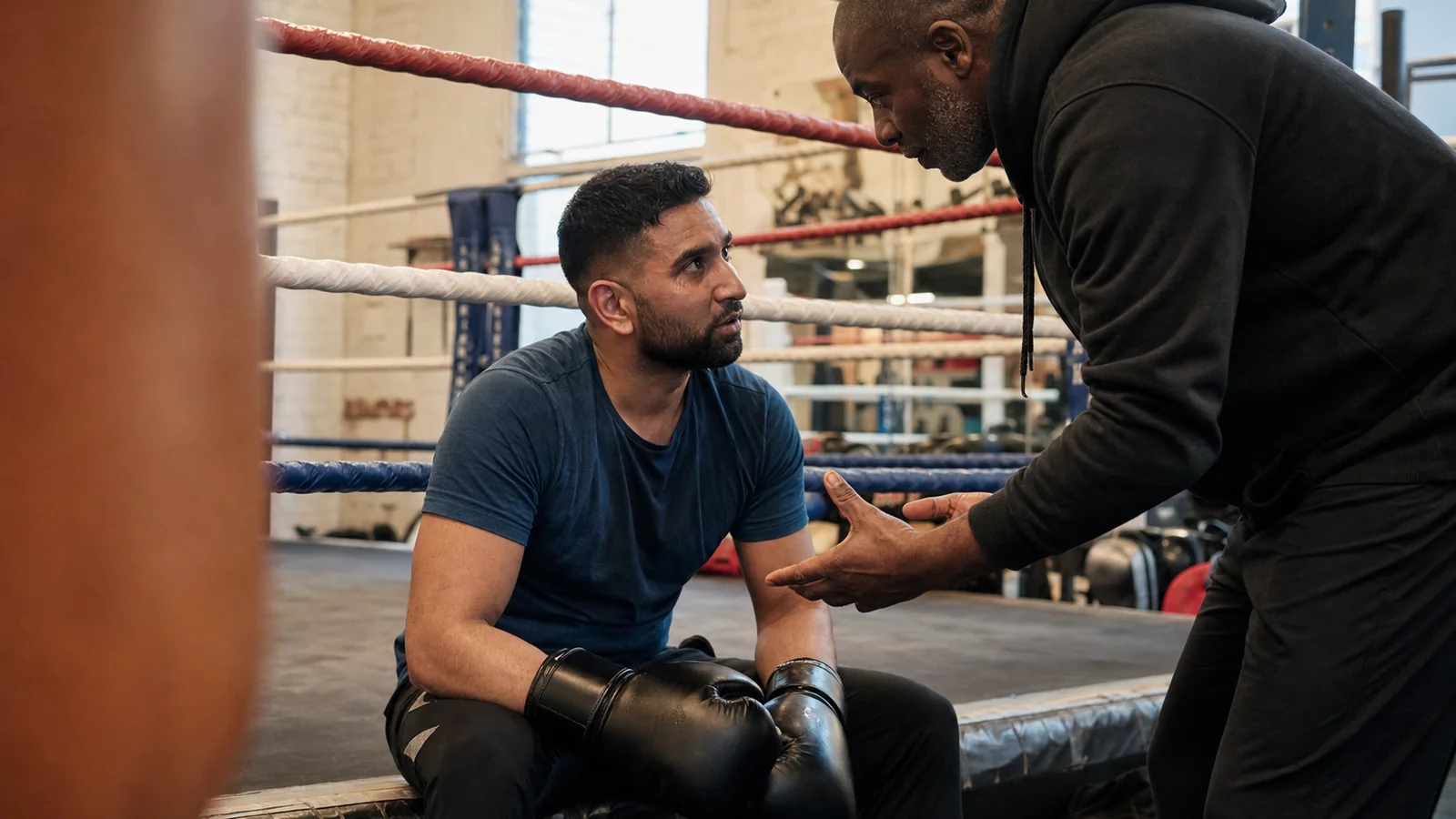
Boxing Lessons Beginners Learn the Hard Way
Most beginners chase power, big combinations and toughness. Better boxing usually comes from calmer breathing, cleaner feet, a sharper jab and fewer thoughts at once.
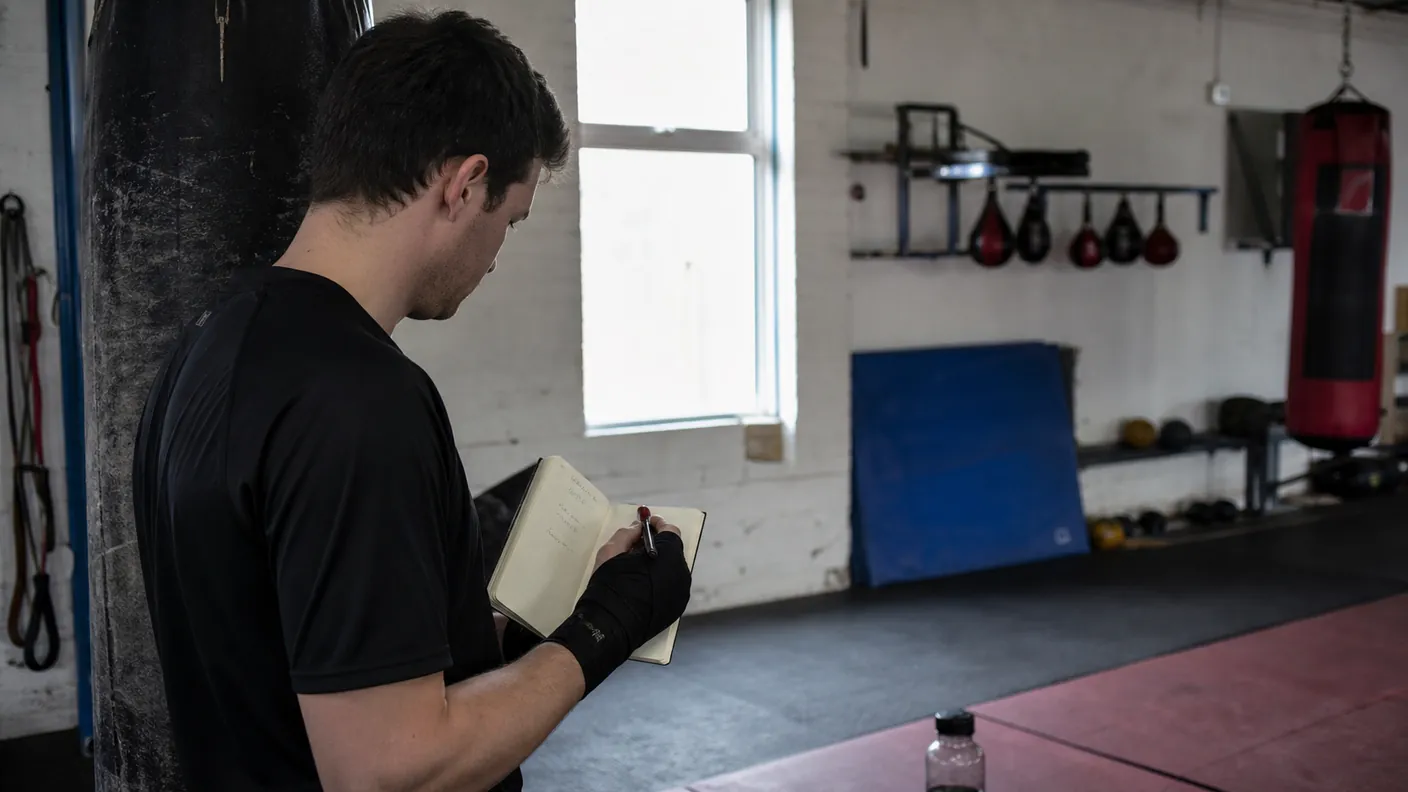
How to Use an Open Boxing Session Well
A simple plan for using open boxing sessions to improve one useful skill instead of drifting through bags, pads and conditioning.
Was this page helpful?
It takes one tap, and it genuinely helps.
Choose your next step
Turn this article into the right action
Some readers are ready to book. Some need the class route first. Pick the route that matches what you actually want.