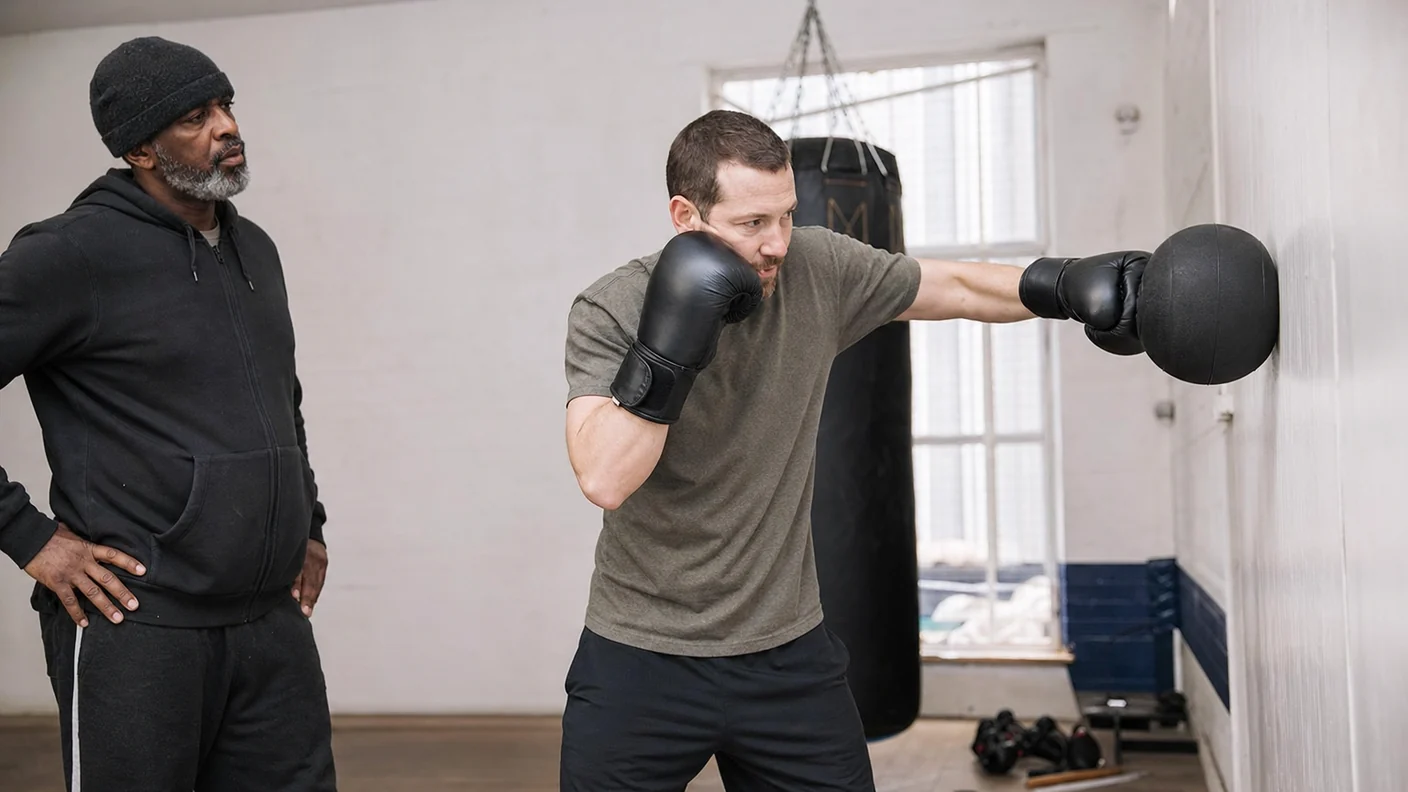
The medicine ball wall drill looks like a playground challenge until you try to do it properly.
You stand in stance, put a light medicine ball against a wall, and keep it there with short punches. Simple. Then the shoulders start burning, the feet start drifting, the chin lifts, and the boxer realises the drill is not really about the ball. It is about whether the hands can stay fast while the stance stays organised.
Used well, it is a tidy drill for hand speed, hand-eye control, shoulder endurance and foot position. Used badly, it becomes a shoulder-grinding contest where the boxer slaps at a heavy ball from a square stance.
Watch the short clip below for the basic idea, then use the coaching notes after it to make the drill safer and more useful.
What the drill is trying to teach
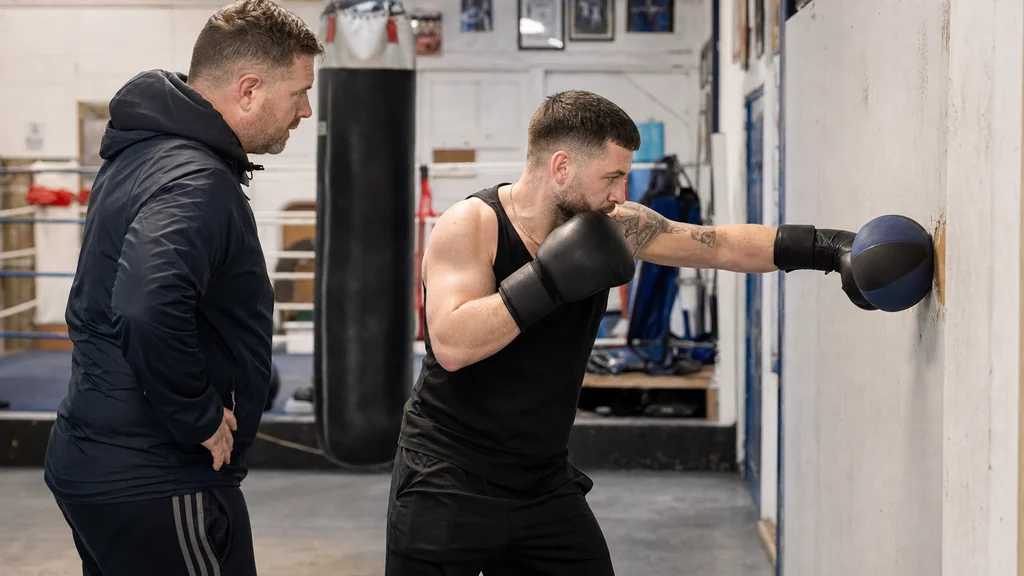
The drill teaches fast, repeatable contact without letting the rest of the body fall apart.
That matters because beginners often separate speed from shape. They can throw quickly for a few seconds, but the shoulders climb, the elbows flare, the feet come together and the hands stop returning to guard. The ball makes that visible. If your rhythm breaks, it drops. If your stance breaks, you chase it. If your shoulders tense too early, you gas out.
A medicine-ball throw study on upper-body power found that trained people can produce similar outcomes through different movement strategies, which is a useful warning for boxers (PubMed medicine-ball throw study). The ball does not automatically make the movement good. The coach has to decide whether the boxer is building useful habits or just surviving the rep.
The aim is not to hit as hard as possible. The aim is light, quick, clean touches from a boxing stance.
Keep the ball light
Use a lighter ball than your ego wants.
A six-pound ball is already enough for many adults. Some beginners should start lighter. The ball should be heavy enough to give feedback, but not so heavy that every punch turns into a shove. If the boxer has to lean their whole body into the wall to keep the ball up, the load is wrong.
The hand should still look like a boxing punch. Short path out, short path back. The shoulder can work, but it should not jam up around the ear. The elbow should not drift miles outside the body. The non-punching hand should still have a job.
There is no prize for using the heaviest ball in the gym. In this drill, heavy usually means slow, ugly and less transferable.
Start with stance before speed
Set the feet before you touch the ball.
Stand close enough that you can punch the ball without reaching, but far enough that your arm can extend. Keep the knees soft, the chin down and the eyes on the ball. The rear heel can be alive, but the feet should not bounce around for no reason.
Start with one hand. Light touches only. The ball should stay between glove and wall without the boxer pinning it there with bodyweight.
Then ask one question: could this boxer defend after the rep?
If the answer is no, slow it down. A fast drill that teaches a bad stance is not a speed drill. It is a mistake rehearsal. Our guide to setting your feet in boxing covers the same principle in normal punching: the hand only matters if the feet can carry it.
The first version: single-hand touches
Begin with the jab hand.
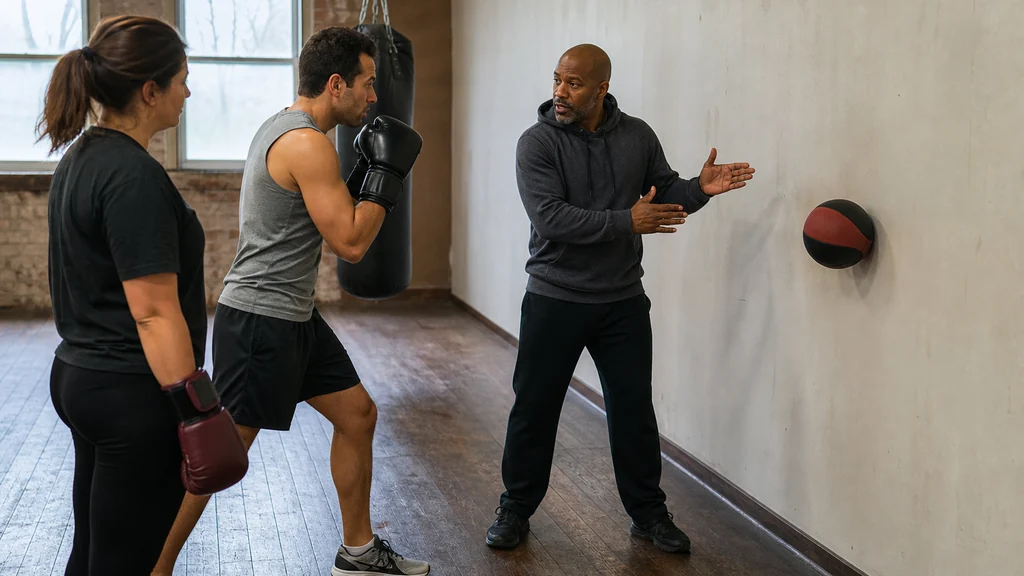
Put the ball at roughly shoulder height. Touch it with the front glove, recover the hand, then touch again. Do not slap. Do not push and hold. Think of small, sharp taps that keep the ball alive.
Work for 20 seconds, then rest for 20 seconds. That sounds short because it should be short. The quality drops quickly if a beginner turns the drill into a long burn.
The coach should watch four things:
- does the boxer keep the chin tucked?
- does the shoulder stay relaxed enough to repeat?
- does the hand come back toward guard?
- do the feet stay in stance?
If those four checks are solid, add a little speed. If one check breaks, remove speed.
The second version: one-two rhythm
Once the jab-hand version works, alternate hands.
The simple rhythm is left-right-left-right for an orthodox boxer, reversed for a southpaw. The ball should not be smashed flat into the wall. It should move just enough that the boxer has to track it and time the next touch.
This is where the drill starts to feel like boxing rather than arm exercise. The hips and shoulders rotate slightly. The eyes stay calm. The stance has to absorb a repeated rhythm without drifting square.
A recent study on boxing punch biomechanics reported that fatigue reduced punch force and affected lower-limb contribution across common punches (lower-limb boxing punch study). That is useful for a drill like this because fatigue is exactly when the feet disappear. The boxer who keeps foot position while the shoulders tire is building a better habit than the boxer who wins the longest-ball-against-wall contest.
Keep the first one-two rounds light. The wall is not a pad holder. It will not tell you when your chin is high.
Add movement carefully
Movement is useful only after the stationary version is clean.
Start with tiny steps. One or two inches left, one or two inches right. The ball stays alive while the boxer keeps their stance. Do not march across the wall. Do not let the feet cross. Do not turn it into a race.
A good moving version looks calm. The boxer taps, shifts, taps, shifts, then resets. The coach should be able to pause the drill at any moment and see a recognisable boxing stance.
This links naturally with the double end bag guide. Both drills punish lazy eyes and poor timing. The double end bag moves back at you. The wall-ball version is simpler, but it still asks the boxer to organise hands, eyes and feet together.
Common mistakes
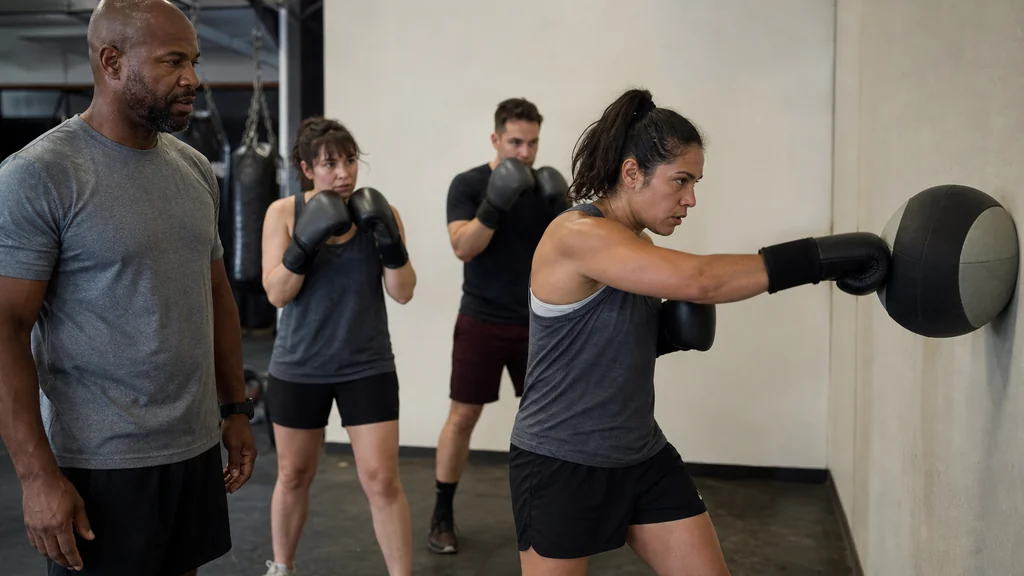
The first mistake is choosing a ball that is too heavy. The boxer starts pushing, not punching. Use a lighter ball and get the rhythm back.
The second mistake is standing too square. When the feet square up, the drill stops looking like boxing. Reset the stance before adding speed.
The third mistake is dropping the spare hand. Beginners focus so hard on the ball that the other glove floats around. Keep it near the cheek or chest line, depending on the range and coaching cue.
The fourth mistake is punching with locked shoulders. Tension feels strong for five seconds and then kills the drill. Fast hands need relaxed shoulders until the moment of contact.
The fifth mistake is treating fatigue as proof of quality. Burning shoulders do not automatically mean better boxing. The drill is only useful if the last ten seconds still look coached.
A three-round structure for beginners
Use this after a normal warm-up, not cold.
Round 1: single hand
20 seconds jab-hand touches, 20 seconds rest. Repeat three times. The aim is clean rhythm and hand recovery.
Round 2: alternating hands
20 seconds one-two rhythm, 20 seconds rest. Repeat three times. Keep the ball light against the wall and the stance honest.
Round 3: tiny movement
20 seconds alternating hands with small side steps, 20 seconds rest. Repeat three times. If the feet cross or the shoulders tense, go back to round two.
Finish before the drill gets ugly. You can always add another clean round next session.
Where it fits in training
The medicine ball wall drill is best used as a small technical-conditioning block.
It can sit after shadow boxing, before bag work, or as a station in a mixed class. It should not replace pads, bag rounds or partner drills. It gives a boxer a focused way to test speed and shoulder endurance while keeping the stance under control.
The NHS advises adults to do regular physical activity and include activities that strengthen muscles across the week (NHS adult activity guidance). Boxing training can contribute to that when it is coached sensibly. This drill is a good example: small, specific, tiring, but still technical.
If you are in Kidbrooke, Greenwich or nearby, our Recreational Adults boxing classes teach drills like this as part of a bigger session: stance, pads, bags, movement and controlled coaching. You do not need to be fast on day one. You need to learn how to stay organised while the pace rises.
For a broader speed session, pair this with our guide to improving boxing speed and reflexes. Keep the same rule everywhere: speed is only useful if your boxing shape survives it.
H&G Team
Writer at Honour & Glory Boxing Club, a community boxing gym in Kidbrooke, South East London.
KEEP READING
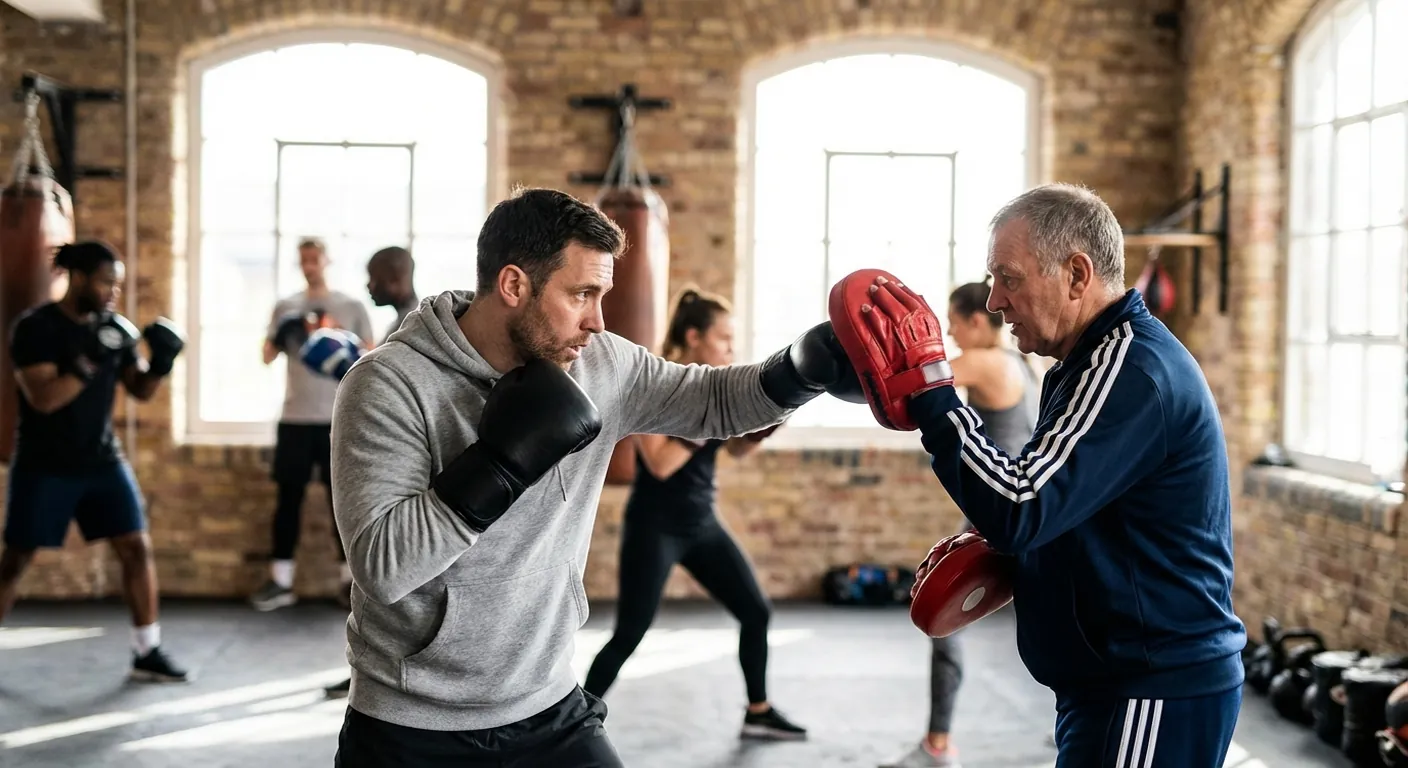
Does Boxing Improve Coordination?
Boxing is one of the quickest ways to sharpen coordination because every round forces your eyes, feet and hands to work together under pressure.
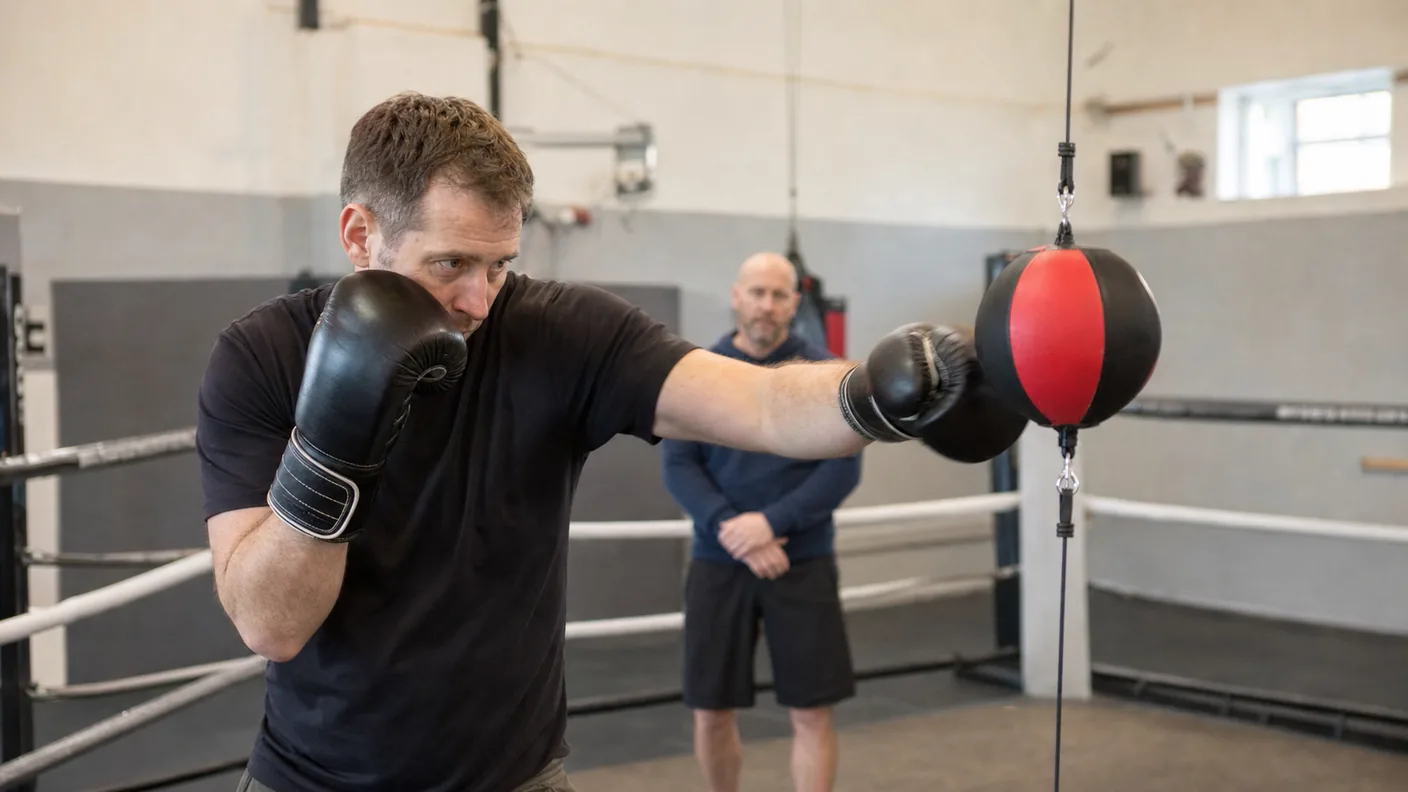
Floor-to-Ceiling Ball Boxing: A Beginner Drill
Learn to use a floor-to-ceiling ball with light punches, balanced feet and simple patterns that build calm timing.
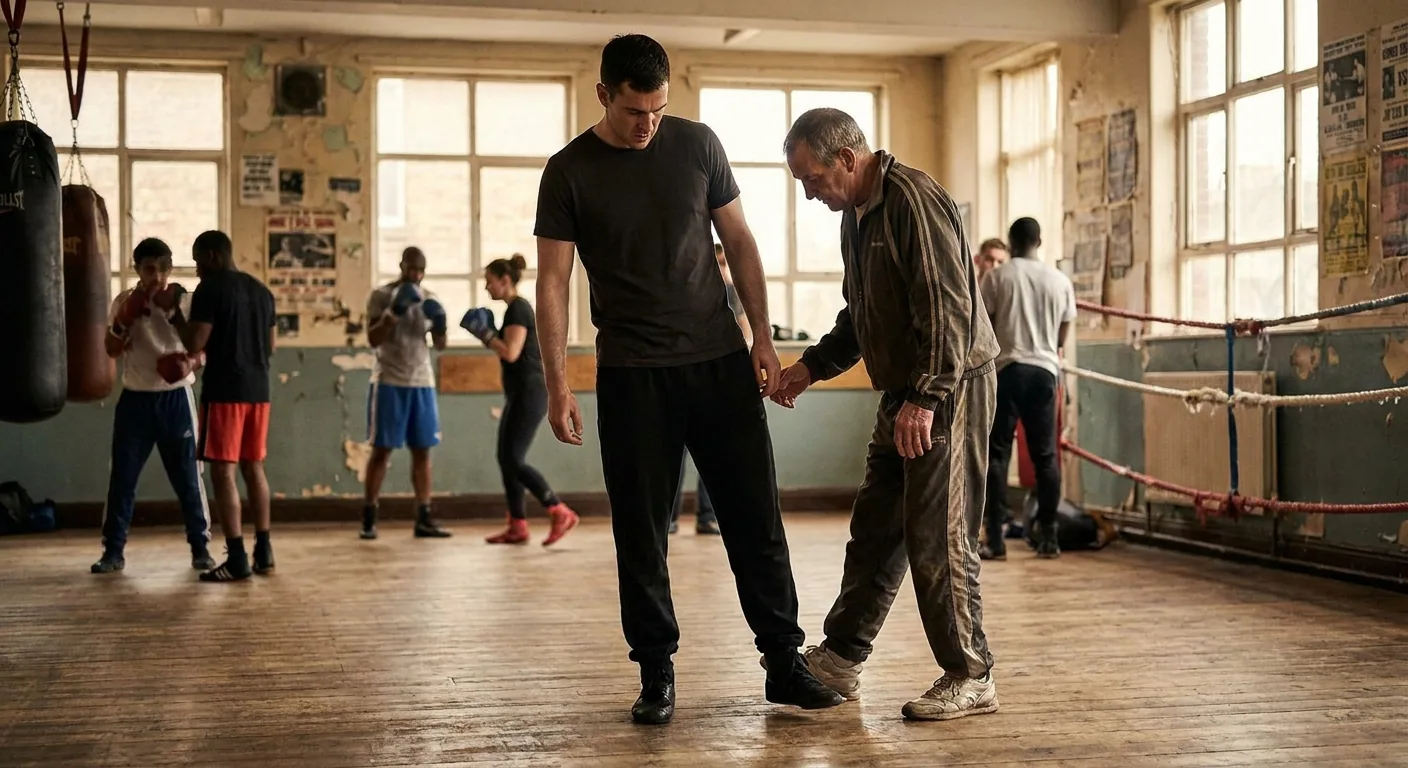
Boxing If You Are Clumsy: Why It Helps
Feel clumsy in the gym? Boxing gives adults a practical way to build rhythm, balance and body control without pretending to be elite.
Was this page helpful?
It takes one tap, and it genuinely helps.
Choose your next step
Turn this article into the right action
Some readers are ready to book. Some need the class route first. Pick the route that matches what you actually want.