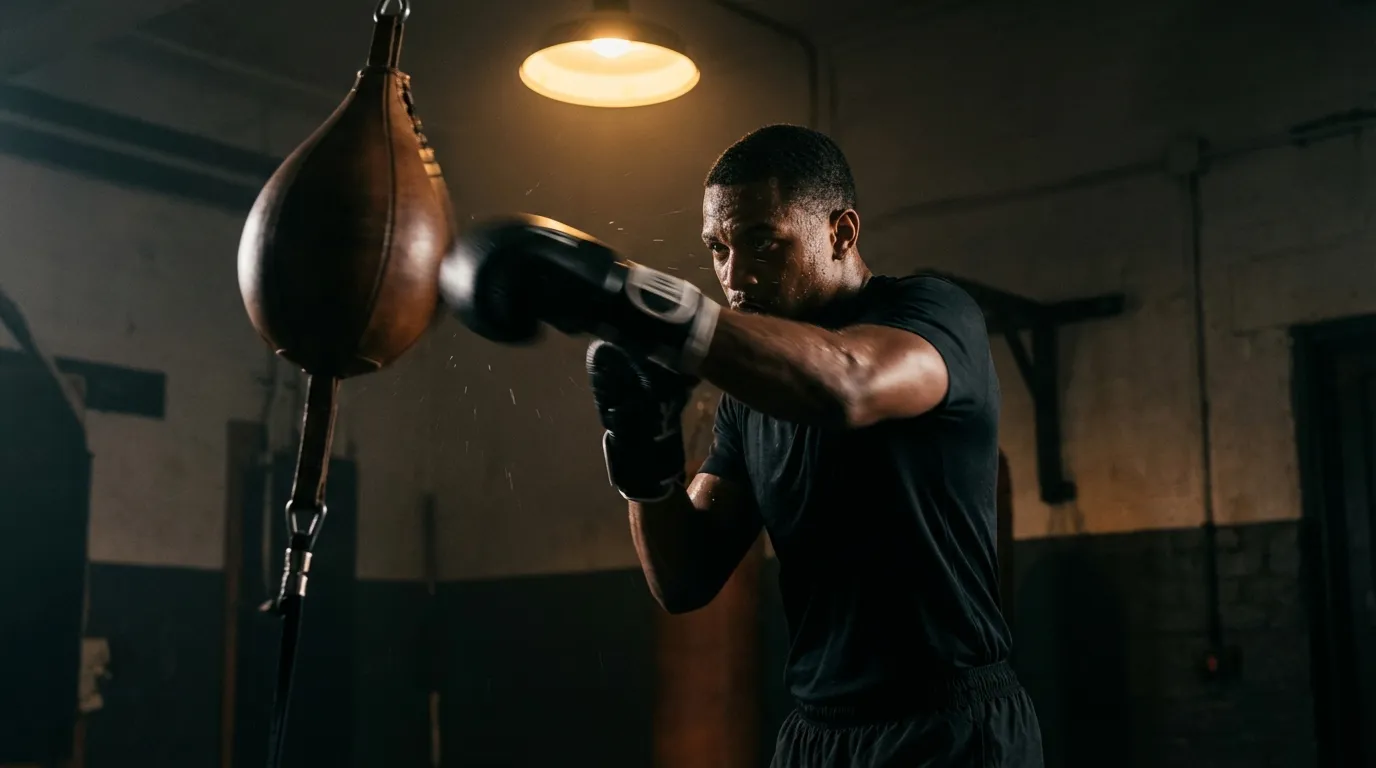
In boxing, speed kills. Not just hand speed - speed of reaction, speed of recovery, speed of thought. Boxing Science's research on rate of force development shows that genuine speed improvements come from improving the neural pathway between intention and execution - which is why specific speed drills outperform simply "moving faster" in training. A 2025 Applied Sciences study on plyometrics and boxing speed confirmed that lower-body explosive training directly improves punch speed through improved hip rotation and force transfer. The fastest boxers do not just hit first; they see opportunities first and take them before opponents can react.
The good news: speed can be trained. You are not stuck with whatever reflexes you were born with. Here is how to get faster in every aspect of your boxing.
Understanding Boxing Speed
Speed in boxing is not one thing - it is several:
Hand speed: How fast your punches travel from guard to target.
Foot speed: How quickly you can move your body around the ring.
Reaction speed: How fast you respond to incoming punches or openings.
Recovery speed: How quickly you return to guard position after throwing.
Mental speed: How fast you process what is happening and make decisions.
Training for boxing speed means working on all of these, not just throwing fast punches.
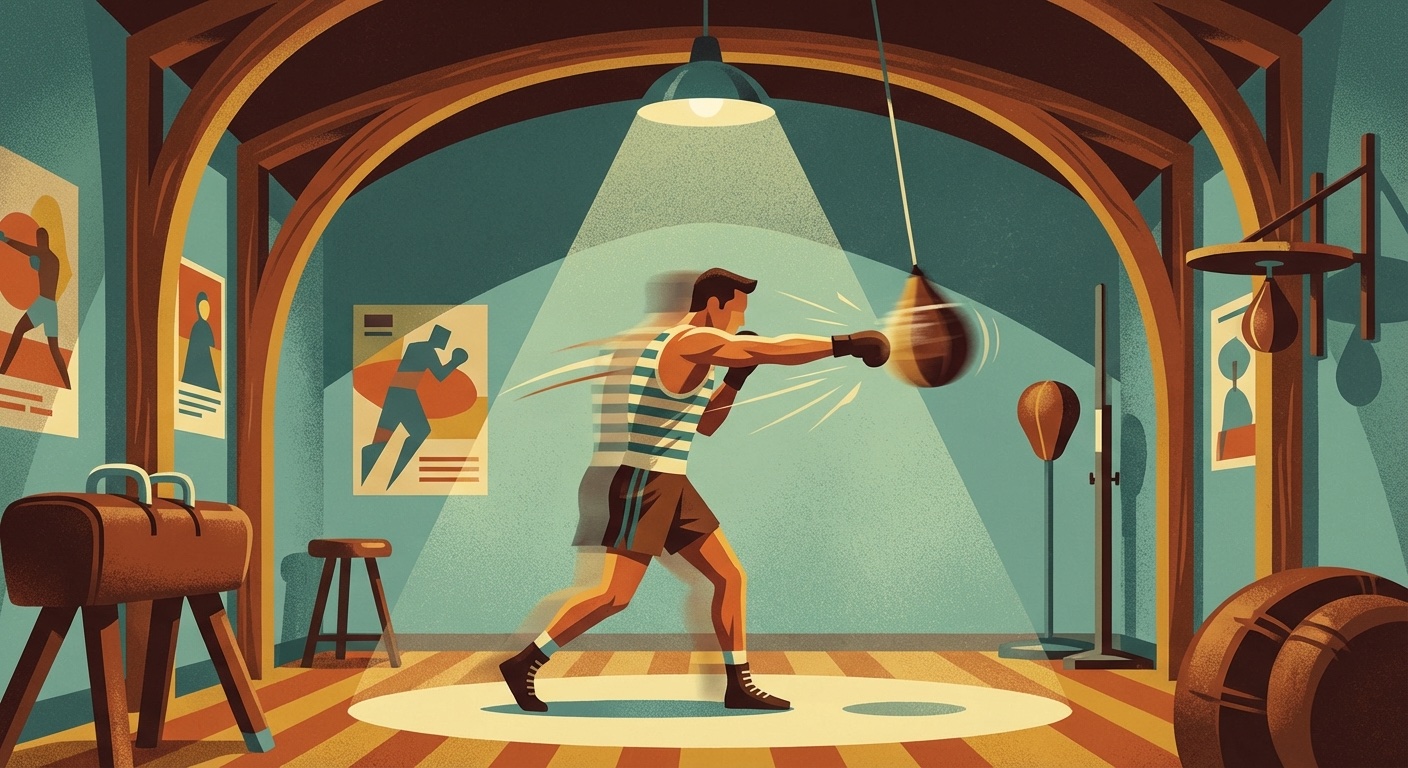
Why Technique Matters More Than Muscle
Here is something that surprises beginners: the fastest boxers are not usually the strongest. Speed comes from technique more than raw power.
When your mechanics are efficient, your punches travel the shortest possible distance with no wasted motion. When your mechanics are sloppy, you are fighting physics the whole way.
The relaxed principle: Tension is slow. Fast boxers stay relaxed until the moment of impact, then snap tight, then immediately relax again. If you are clenching your fists and tensing your shoulders constantly, you are slow.
The snap principle: Speed comes from acceleration, not constant force. Your punch should accelerate through the target and snap back. Think whip, not shove.
The economy principle: Everything unnecessary slows you down. That little wind-up before your jab? Cut it. That dip before your cross? Eliminate it. Shorter path equals faster arrival.
Drills to Improve Hand Speed
Speed Bag Work
The speed bag exists for a reason - it develops rhythm, timing, and fast hands. Start slow until you can hit it consistently, then gradually speed up. Three minutes on the speed bag at a solid pace leaves your arms burning.
If you do not have access to a speed bag, you can mimic the movement by punching rapidly in a controlled pattern.
Double-End Bag
This is the small bag attached to cords at the ceiling and floor. It moves unpredictably when hit, training both speed and accuracy. You learn to throw fast punches at a moving target - more realistic than a heavy bag.
Fast Shadow Boxing Rounds
Set a timer and throw as many punches as you can in 30 seconds. Do not sacrifice form - maintain proper technique but push the pace. Rest, then repeat.
Keep track of your count. Try to beat it each session. Measurable progress keeps you honest.
Focus Mitt Speed Drills
Have your partner call combinations and throw the mitts out quickly. Your job is to react and hit instantly. The faster they call, the faster you adapt.
The randomness matters - you should not know what is coming next.
Weighted Hand Drills (Use Carefully)
Shadow box with 1-2 pound weights in each hand for one round. Then immediately drop the weights and shadow box another round. Your hands will feel incredibly fast.
Warning: Do not overdo this. Heavy weights damage shoulder joints. Keep it light and infrequent.
Improving Reaction Speed
Ball Drop Drill
Have a partner hold a tennis ball at shoulder height and drop it randomly. Your job is to catch it before it bounces twice. Stand close at first, then gradually increase distance as you improve.
This trains pure reaction - you are not anticipating, you are responding.
Slip and Counter Drill
Your partner throws light jabs at your face (controlled, obviously). Your job is to slip and immediately counter. No thinking - see punch, slip, throw.
Start slow. As your reactions improve, your partner can speed up and add variety.
Double-End Bag Timing
Hit the double-end bag and keep hitting it as it bounces back at you. You have to react to its unpredictable movement constantly. Great for timing and reflexes.
Light Sparring
Nothing improves fight reactions like fighting. Controlled sparring where you are focused on timing and reaction rather than power teaches your nervous system to respond under pressure.
This needs to be with someone you trust who understands the purpose. It is training, not fighting.
Building Foot Speed
Jump Rope
Every boxer skips rope and there is a reason. It builds coordination, timing, and foot speed. Start with basic bouncing and progress to high knees, criss-cross, and double-unders.
Three rounds of rope work builds the quick, light feet that boxing demands.
Ladder Drills
Agility ladder drills translate directly to boxing footwork. Quick feet in and out of squares, lateral movements, high knees through the ladder. Even without an actual ladder, you can tape squares on the floor or just imagine them.
Cone Drills
Set up cones (or water bottles) in patterns and practice moving around them quickly. Maintain your stance as you move - no crossing feet, no losing balance.
Bounce Plyometrics
Box jumps, broad jumps, and lateral bounds build explosive power in your legs. The same muscles that make you jump high make you move fast in the ring.
Mental Speed Training
Visualisation
Mentally rehearse combinations, defensive movements, and fight scenarios. Your brain practices the same way your body does. Athletes who visualise measurably improve their performance.
Spend 5-10 minutes before sleep running through perfect boxing in your mind.
Pattern Recognition
Watch boxing footage and try to anticipate what happens next. Pause before exchanges and predict what each fighter will do. This trains your brain to read patterns.
Over time, you will start seeing openings and incoming punches earlier.
Reduce Hesitation
Often speed problems are actually decision problems. You see the opening but hesitate before taking it. By the time you throw, it is gone.
Practice committing. In sparring, force yourself to act on the first opportunity you see. You will miss some - that is fine. You are training decisiveness.
Putting It All Together
A speed-focused training session might look like this:
- Warm-up: 3 rounds shadow boxing
- Speed bag: 3 rounds
- Fast punching drill: 6 x 30-second max-effort rounds
- Jump rope: 3 rounds
- Reaction drill: Ball drops or slip-and-counter, 5 minutes
- Cool down: Light shadow boxing
Done twice a week alongside your regular training, you will notice improvements within a month.
Common Speed Killers
Watch out for these habits that slow you down:
Tension: Relaxed muscles move faster than tense ones. Breathe, shake out between rounds, consciously relax your shoulders.
Overthinking: Your conscious mind is slow. Train until movements become automatic, then trust your body.
Fatigue: Tired muscles are slow muscles. Build conditioning so you stay fast into the later rounds.
Telegraphing: If they see it coming, your speed does not matter. Eliminate the tells that give away your punches.
Poor positioning: You cannot be fast if you are off-balance. Fix your stance and footwork first.
Speed Takes Time
You will not become fast overnight. Speed development is gradual - small improvements that add up over months and years. Be patient, train consistently, and trust the process.
At Honour & Glory, our pad work and drills are designed to develop speed alongside power and technique. You will get real feedback on what is slowing you down and specific guidance on getting faster.
H&G Team
Writer at Honour & Glory Boxing Club, a community boxing gym in Kidbrooke, South East London.
KEEP READING
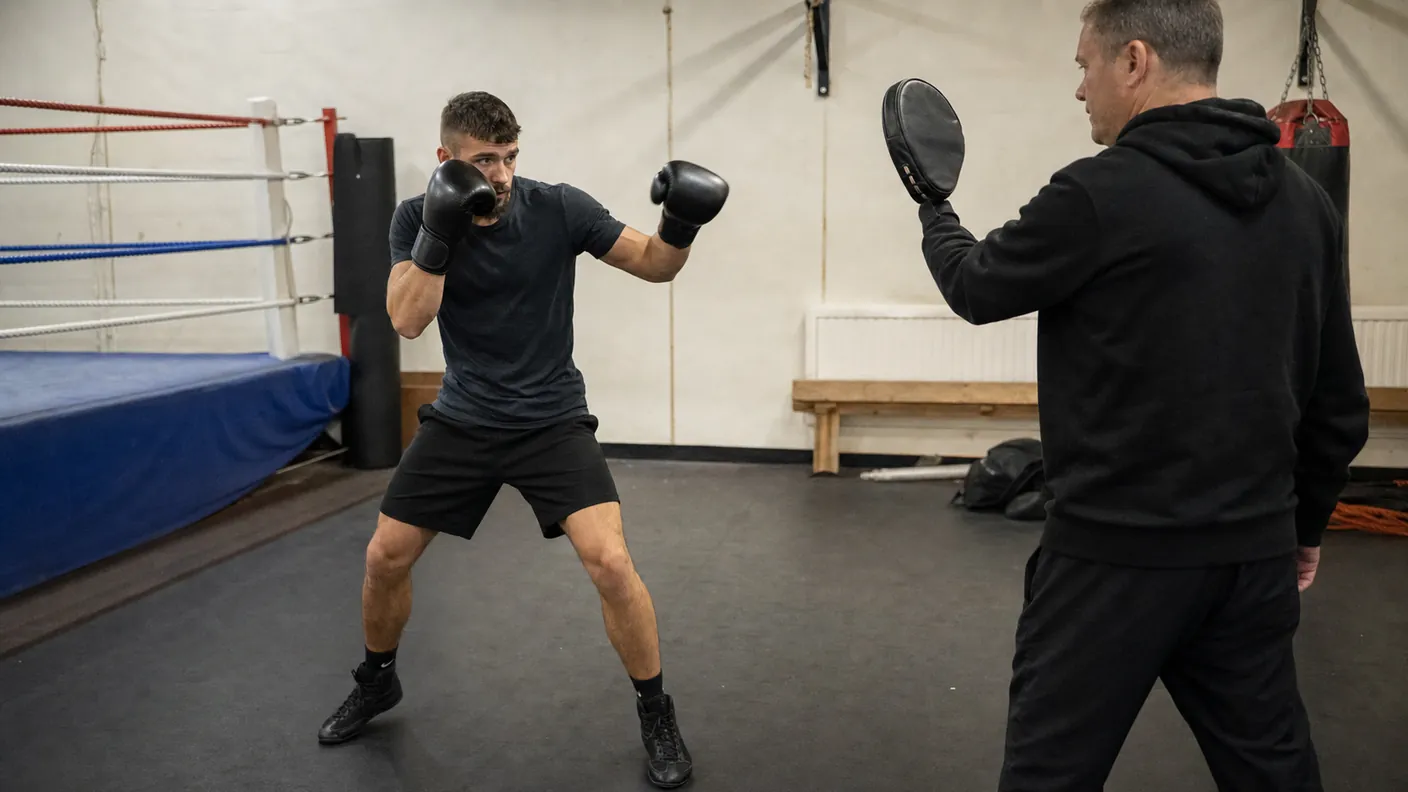
The Half-Jab: A Fast Boxing Range Finder
Use a half-jab to test distance, interrupt an opponent and set up your proper punches without reaching or overcommitting.
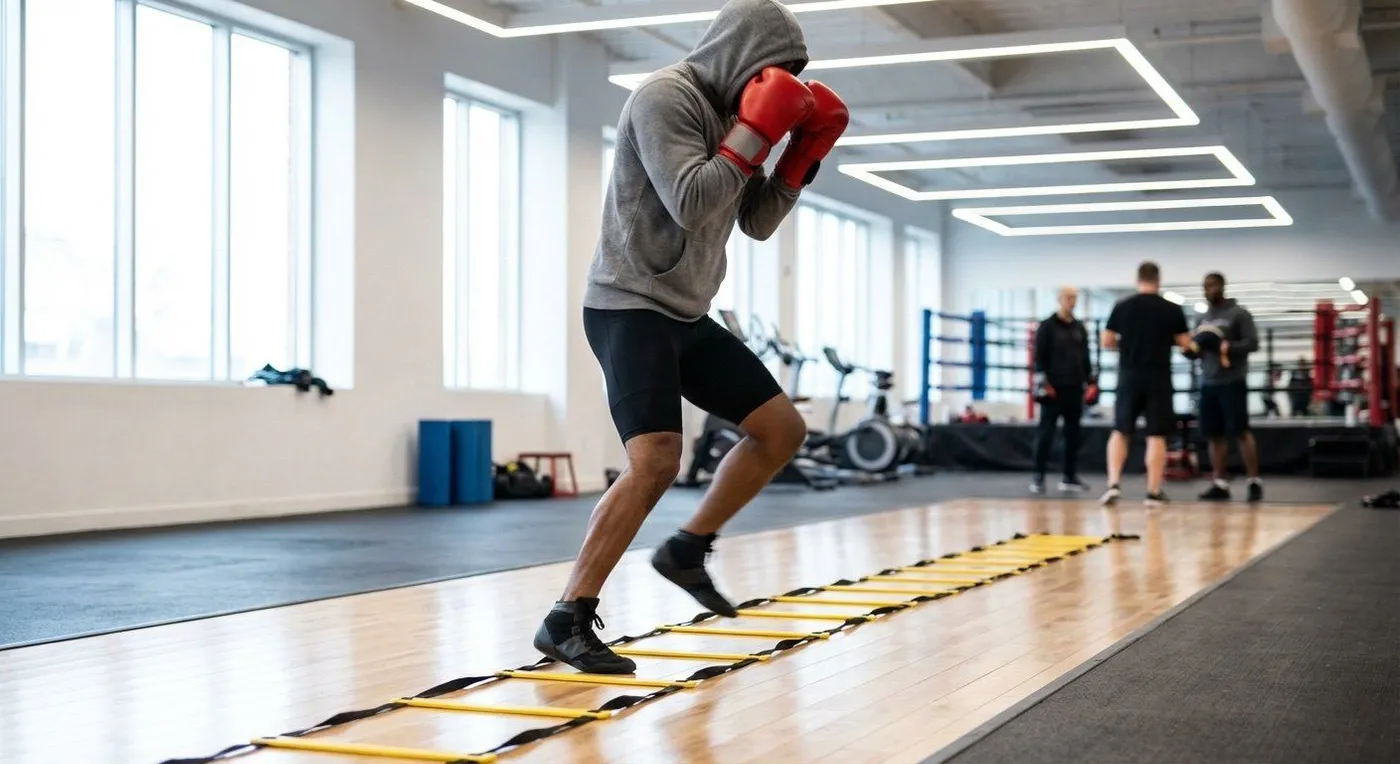
Best Ladder Drills for Boxers
The ladder can sharpen rhythm, balance and foot speed. These are the drills that actually help boxers, and the mistakes that waste your time.
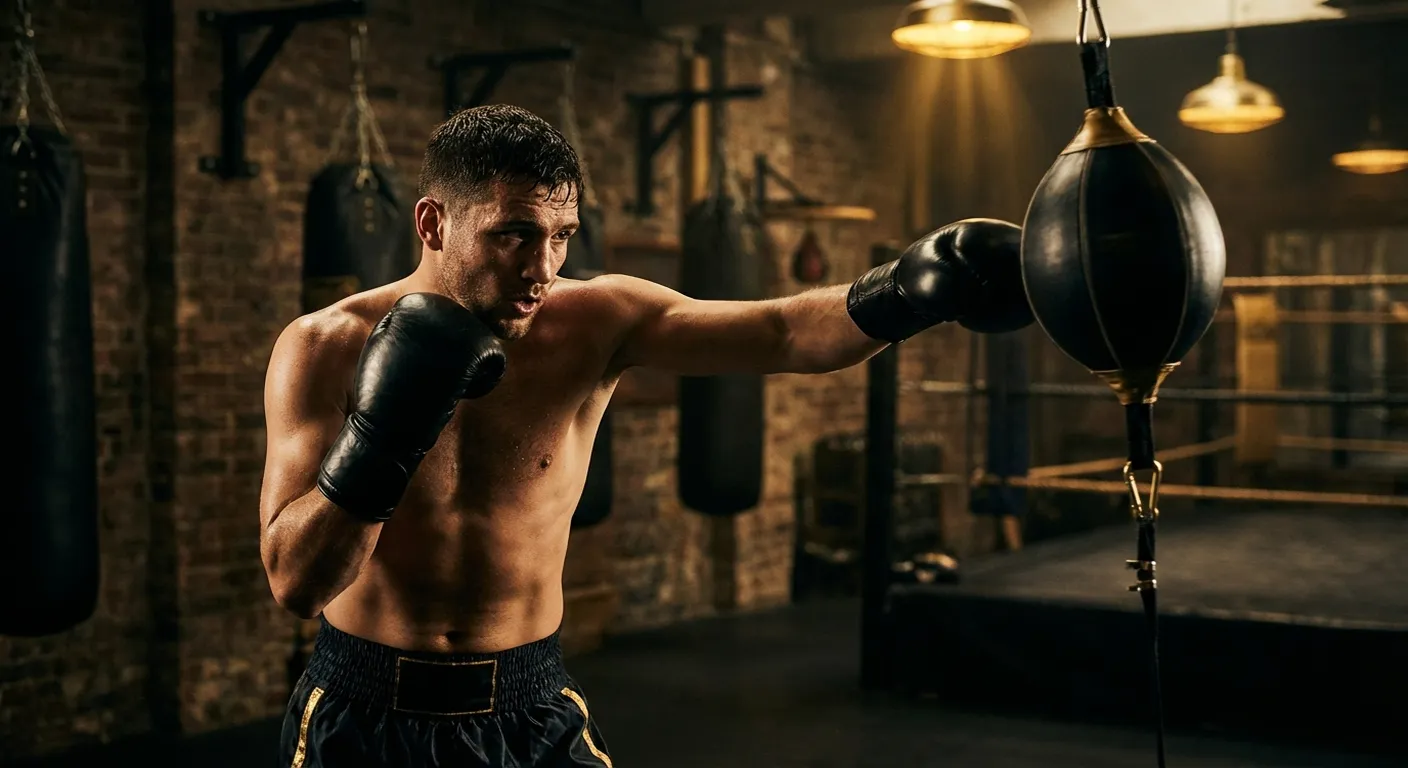
How to Improve Your Boxing Timing: Drills That Actually Work
Timing separates a boxer who looks good on the bag from one who performs under pressure. Here is how to build it properly.
Was this page helpful?
It takes one tap, and it genuinely helps.
Choose your next step
Turn this article into the right action
Some readers are ready to book. Some need the class route first. Pick the route that matches what you actually want.