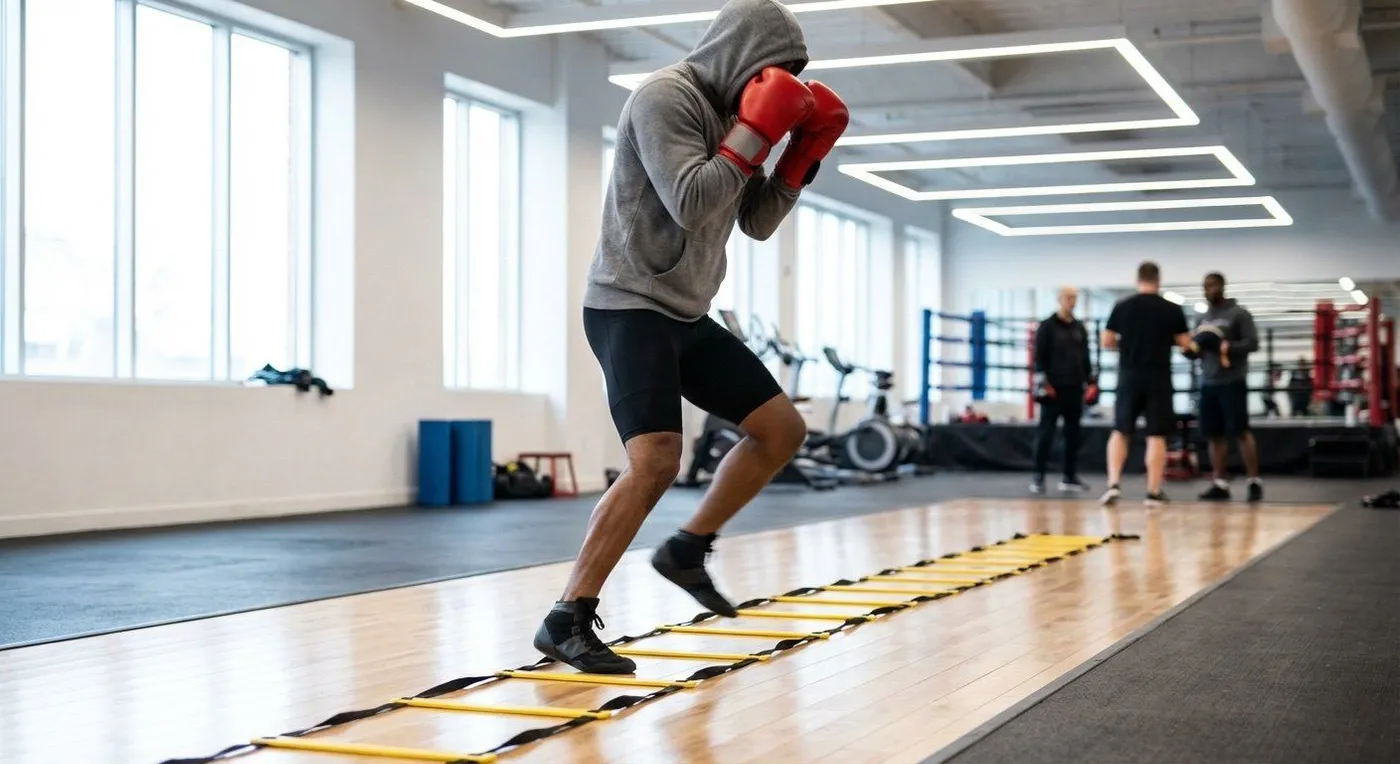
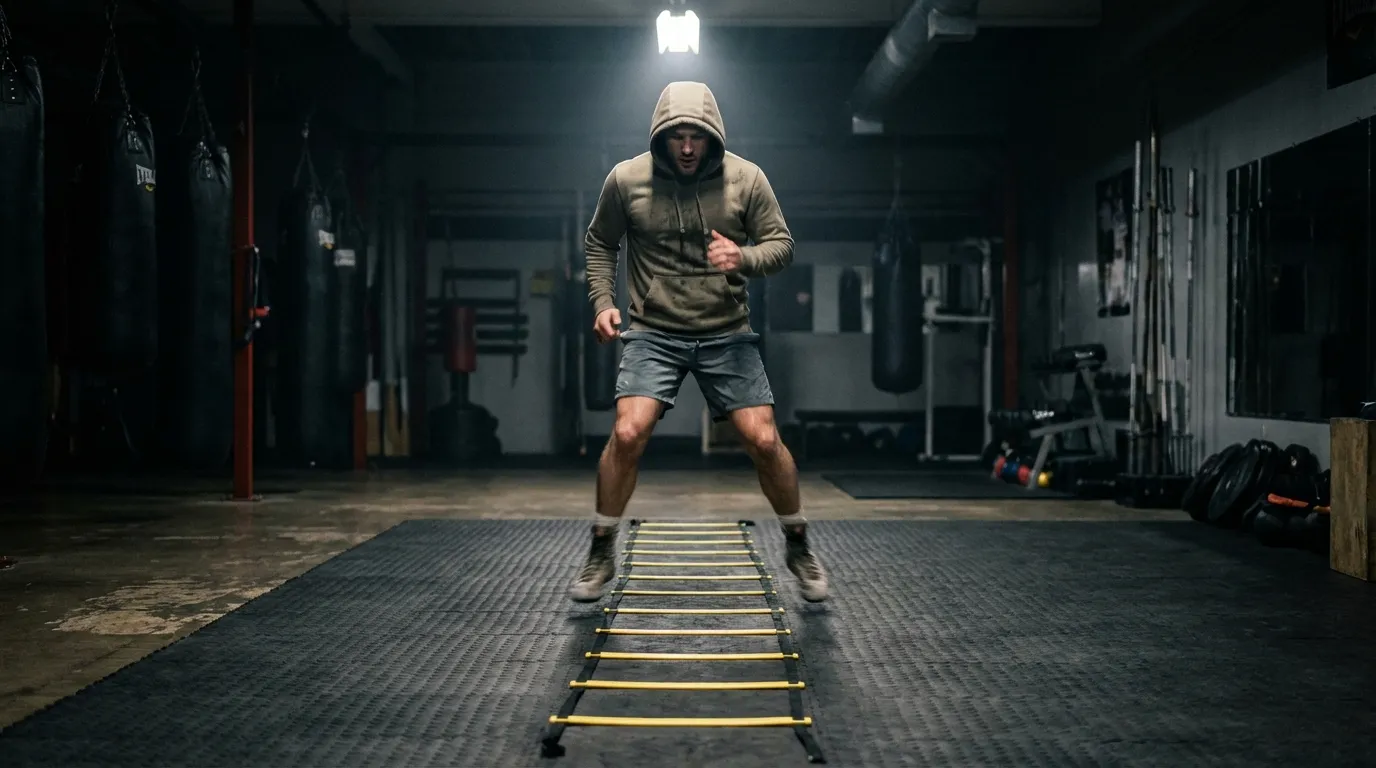
The agility ladder is one of those bits of kit that gets overhyped and underused at the same time.
Some people treat it like a magic shortcut to great footwork. It is not. A 2020 systematic review on agility ladders was pretty blunt: the research base is thin, the protocols are messy, and strong claims about broad athletic improvement are premature. That is worth saying upfront, because a lot of boxing content online talks as if ten minutes in a ladder will turn you into Willie Pep.
Still, dismissing it entirely would be silly. Used properly, the ladder is good for rhythm, coordination, balance under movement, and cleaning up sloppy feet in warm-ups and technical sessions. For boxers, that makes it useful. Just not magical.
At Honour and Glory in Kidbrooke, the best way to think about ladder drills is this: they are a support tool. They help sharpen your feet, but they do not replace shadow boxing, bag work, pad work, or live movement with another person. Boxing footwork is reactive. Sport science has been making that point for years. Research comparing pre-planned and reactive agility keeps finding that sport movement is not just about changing direction quickly, but about doing it in response to unpredictable cues (source).
So if you are going to use a ladder, use it for what it is good at. Here are the best ladder drills for boxers, what each one trains, and where people get them wrong.
What the ladder is actually good for in boxing
The ladder helps with three things in particular.
First, it improves rhythm. A lot of beginners have heavy, uneven feet. They either hop too much, freeze between steps, or let their stance width collapse every time they move. The ladder gives them a simple structure that forces cleaner timing.
Second, it improves coordination. That matters more than people think. Boxing is full of small adjustments: half-steps, exits, pivots, resets, and tiny changes in stance that keep you balanced enough to punch. The ladder can tidy up those mechanics.
Third, it wakes the nervous system up. That is why it works well in warm-ups. You can use it to get the feet moving before pads, bags, or sparring, much like coaches use skipping or short change-of-direction drills. ACE's exercise library breaks ladder work into simple patterns like forward linear drills, lateral shuffles, and multidirectional movements, which is basically the right starting point for most boxers (source).
What it does not do is teach ring movement on its own. It will not teach distance, timing against an opponent, or when to step outside the jab. That still comes from boxing.
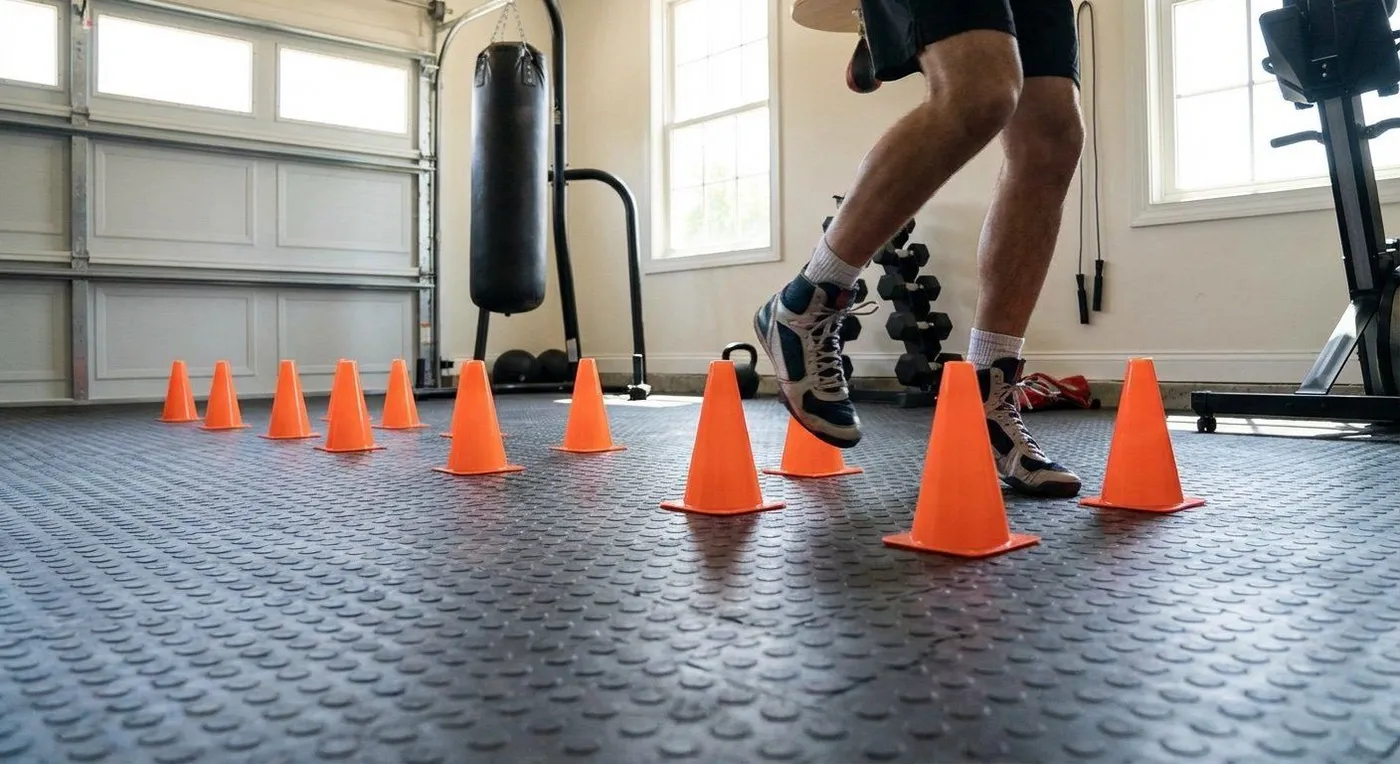
1. Single-step run
This is the simplest drill and probably the most useful for beginners.
Step one foot into each square, then the other, and run the full ladder under control. Stay on the balls of your feet, keep your hips level, and do not let your shoulders start bouncing all over the place.
For boxing, the value here is rhythm and posture. If you cannot move through a simple linear pattern without looking clumsy, your footwork under pressure is not going to be tidy either.
The mistake is trying to do it too quickly. People start sprinting, their heels bang down, and their upper body rocks side to side. That is not sharp footwork. That is just panic with equipment.
Do this drill at a pace where every contact looks clean. Smooth first, fast second.
2. In-in-out-out
This is the classic ladder pattern for a reason.
Step both feet into the square, then both feet out to the sides, then into the next square, then out again. Keep the movement small and crisp. You want fast contacts, not dramatic leaps.
This drill is useful for boxers because it builds quick re-positioning under the hips. Think about the moments when you need to reset your stance after a combination, or when you need to move your feet without crossing them after stepping off the centre line. That is the sort of quality this drill can sharpen.
The coaching point that matters most: keep your stance feeling like boxing, not like an aerobics class. Hands up. Chin tucked. Do not let the feet get so wide that you would be useless if someone actually threw a jab at you.
3. Lateral in-in-out-out
Turn sideways to the ladder and do the same in-in-out-out pattern moving laterally down the line.
For orthodox boxers, work both directions. Same for southpaws. Do not only drill the side that feels natural.
This one carries over nicely to defensive movement because boxing is full of side-steps, outside steps, and little lateral exits after punching. It is also very good for exposing imbalance. If one direction feels awkward, that usually tells you something real about your movement.
A lot of people make this drill too square. They face fully sideways and forget that boxing movement still needs some stance integrity. Stay slightly coiled, as if you could throw while moving.
4. Two-in forward, one-out angle step
This is one of the better boxing-specific patterns.
Step both feet into the square, then step the lead foot out diagonally as if you are taking an angle, bring the rear foot with it, then re-enter the next square and repeat. Alternate directions.
Why this is good: it starts resembling actual boxing movement instead of generic speed work. You are not just moving linearly. You are stepping in, then shifting off line, then resetting your base.
That matters because good boxers rarely move in perfect straight lines for long. They step, adjust, then punch from a slightly better angle. If you are already reading about boxing footwork drills at home, this is one of the easiest ways to add a more structured version with equipment.
5. Forward run with pivot exit
Move down the ladder with a basic single-step run. At the end, plant the lead foot and pivot out 45 to 90 degrees, then reset and come back the other way.
This is a useful bridge drill because it links quick feet with an actual boxing action. Plenty of boxers can move quickly in a straight line. Fewer can finish the movement in balance and turn the hips cleanly into a new angle.
That pivot at the end is the whole point. Do not rush past it.
If you are a beginner, keep the pivot small. If you are more experienced, you can shadow a jab-cross after the turn to make the movement more boxing-specific.
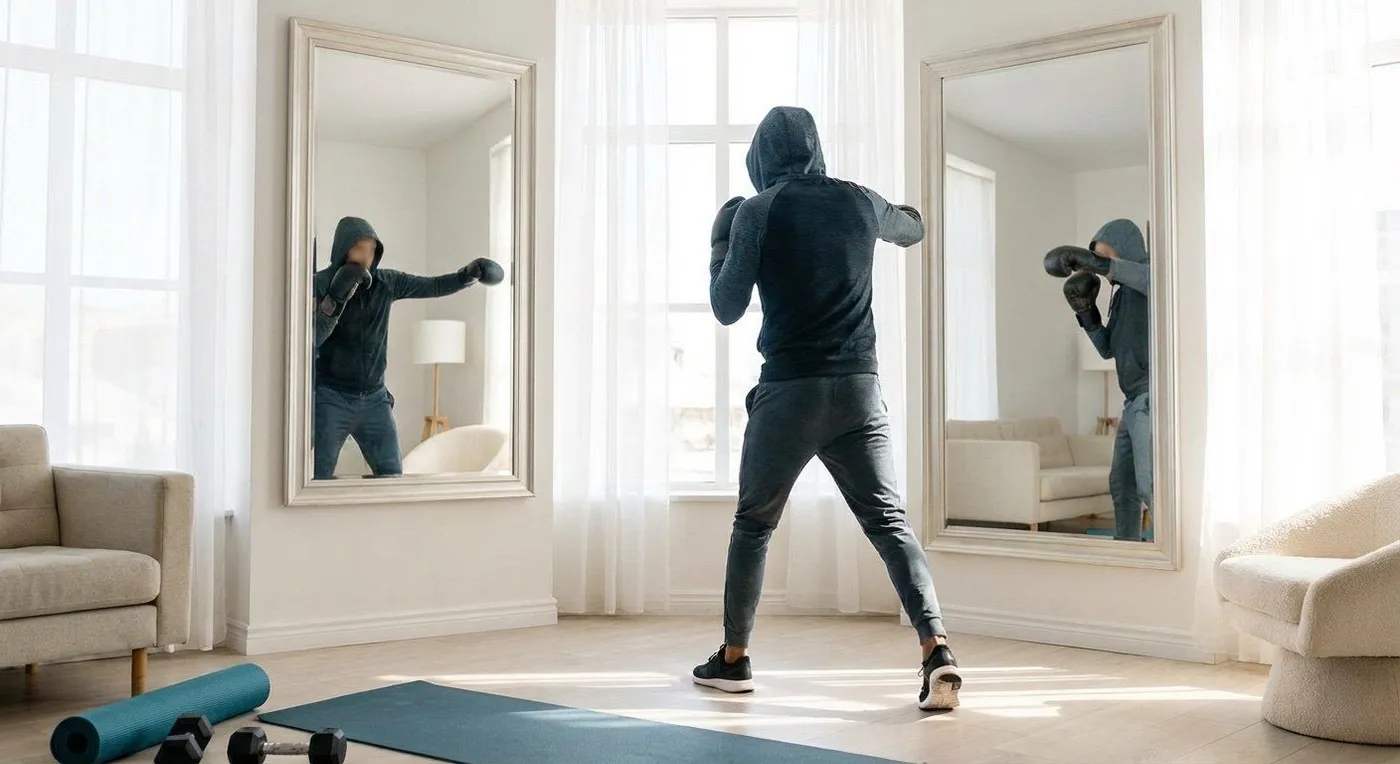
6. Ali shuffle through the ladder
This one is easy to overdo, but when used sparingly it is excellent for rhythm.
Move through the ladder with a quick switch-step pattern, almost like a controlled bounce. The emphasis is not on pretending to be Muhammad Ali. It is on keeping the feet light while the upper body stays calm.
This drill helps the sort of boxer who is too flat-footed and sticky. It can loosen people up and improve cadence.
The trap is obvious: too much bounce, too much flash, not enough structure. Boxing footwork is not a dance-off. If your head is bobbing six inches up and down, you are wasting energy and making yourself easier to hit.
Use this in short bursts. Think rhythm, not performance.
7. Out-out-in-in retreat drill
Start straddling the ladder. Step both feet outside, then both feet inside the square, and keep working backwards down the ladder.
This drill is valuable because retreating well is harder than most people realise. Many beginners fall apart when they move back. Their feet cross, their stance narrows, or they end up too upright to punch or defend.
Running this pattern in reverse builds confidence moving away while keeping the feet organised. That matters in boxing, especially if you are the type who can come forward decently but looks lost the moment pressure comes back at you.
8. Ladder to punch-out drill
This is the best way to stop ladder work becoming too abstract.
Pick a simple pattern - single-step run or lateral in-in-out-out works well - and the moment you exit the ladder, throw a short punch combination in stance. Jab-cross is enough. Then reset and repeat.
Now the ladder has a purpose. It is not just feet for the sake of feet. It is feet into position, then punches from balance.
That is how the drill should feel in boxing. Movement sets the shot up.
If you want to sharpen timing after that, combine it with work from the double end bag guide. The ladder can organise the feet. The bag can punish bad timing.
The biggest mistakes boxers make with ladder drills
The first mistake is treating the ladder like conditioning. It is not there to leave you shattered. If your technique disappears because you are red-lining, the drill stops helping.
The second is making everything too pre-planned. This is where boxing coaches need a bit of honesty. The ladder is neat and structured. Boxing is messy. That is why ladder work should be short and then followed by something less predictable: shadow boxing, partner cues, pad work, ring movement, or sparring.
The third is forgetting stance. If the drill makes your feet move in ways that would get you clipped the second somebody punched back, it is probably not worth much for boxing.
The fourth is assuming faster feet always mean better footwork. They do not. Plenty of novices can tap quickly through a ladder and still move terribly in a ring. Real footwork is about timing, balance, distance, and being ready to punch or defend at any second.

How to use the ladder in a real boxing session
Keep it simple.
Use 2 to 4 patterns. Run each for 2 or 3 rounds of 15 to 30 seconds, with enough rest to keep the quality high. Then move straight into shadow boxing or pad work so the foot speed carries into proper boxing.
A good sequence looks like this:
- single-step run
- lateral in-in-out-out
- forward run with pivot exit
- ladder to punch-out drill
That is enough. More than that and you usually get diminishing returns.
If you are a beginner in our Adult Recreational class, the goal is just to become less clumsy and more balanced. If you are further on, the goal is to sharpen rhythm before the real work starts.
So, are ladder drills worth it for boxers?
Yes, if you keep them in their place.
The best ladder drills for boxers are the ones that clean up rhythm, stance discipline, and quick re-positioning without pretending to replace actual boxing. Use them as a warm-up tool, a coordination tool, and occasionally a reset when your feet are getting lazy.
Do not expect them to solve your footwork on their own. Good boxers still need rounds, coaching, and reactive movement against another human being.
If you want to build cleaner feet that actually carry over to boxing, the answer is not just more ladder work. It is smart ladder work, followed by real boxing.
H&G Team
Writer at Honour & Glory Boxing Club, a community boxing gym in Kidbrooke, South East London.
KEEP READING
How to Improve Your Boxing Speed and Reflexes
Speed wins fights. Learn how to improve your boxing speed with targeted drills, technique fixes, and training methods that actually work.
Rear-Foot Pivot and Tuck: A Safer Boxing Angle
Use a compact rear-foot pivot and tuck to leave a straight-punch line without losing your guard, balance or next step.
Boxing Footwork Drills at Home
Good footwork separates decent boxers from great ones. Here are practical boxing footwork drills you can practice at home with no equipment needed.
Was this page helpful?
It takes one tap, and it genuinely helps.
Choose your next step
Turn this article into the right action
Some readers are ready to book. Some need the class route first. Pick the route that matches what you actually want.