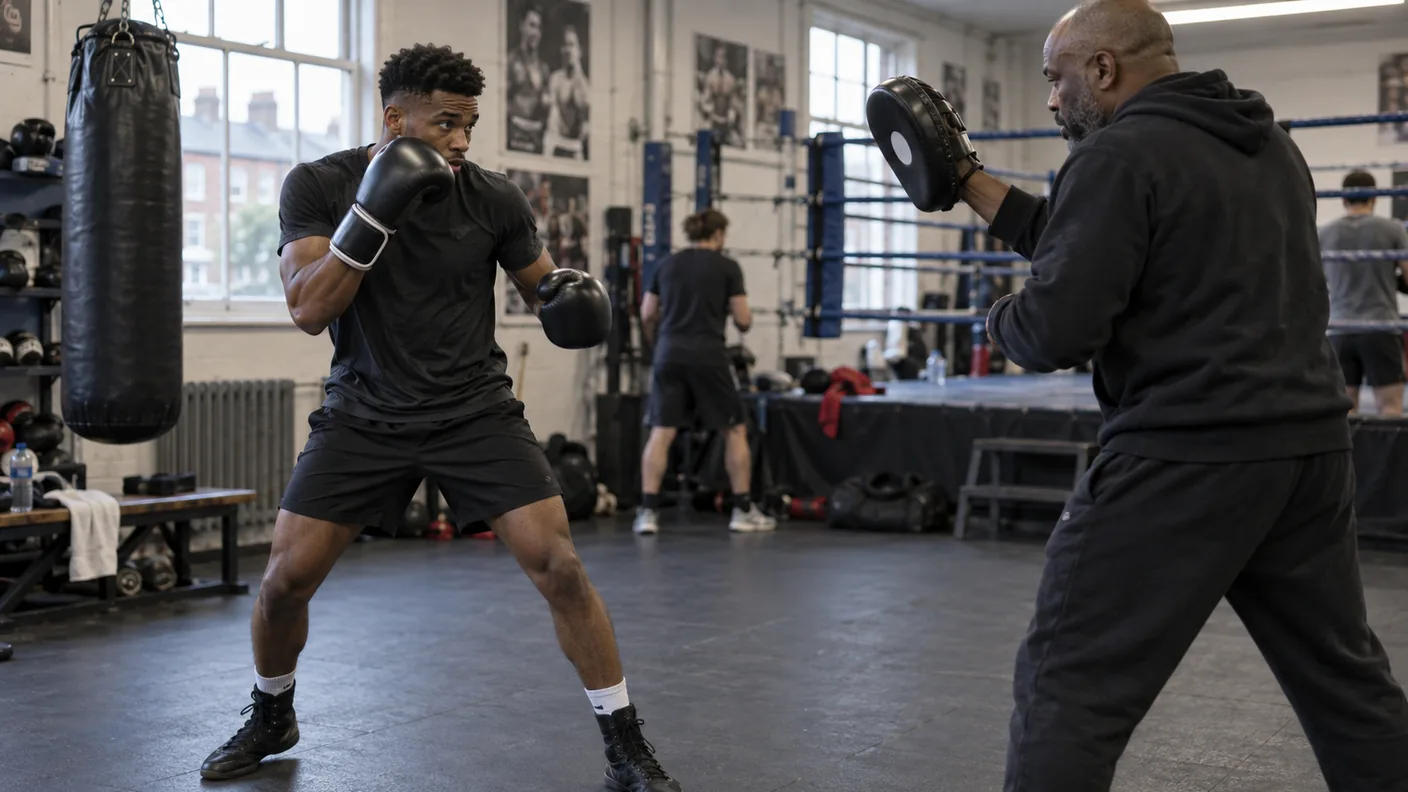
A feint should make the other boxer show something. A block should keep you in shape. A one-two should arrive only when those first two jobs have left you a real line.
Put them together and you have a useful counter drill: feint, draw the jab, make a compact rear-hand block, then place a calm jab-cross on pads. It is not a sequence for charging into an exchange. It is a way to stop treating defence as the moment after your plan has failed.
The short video below is a useful visual prompt for the order of the drill. Watch the block stay close to the face, then notice that the straight punches come from balance rather than from a hurry.
Start with a feint that could become a punch
The feint is there to invite a response. If the other boxer thinks you are about to jab, they may show their own jab, close the guard, reach with a parry or take a step away. Each answer changes what you should do next.
Keep the first movement small. A slight lead-shoulder shift or a gentle pressure through the lead foot is enough. Your lead glove can move a fraction, but it should not float across the space between you. A big arm wave tells the other boxer that nothing is actually coming.
A review of anticipation in combat sports found that skilled performers make better use of early movement information. In a boxing gym, that means you watch what the shoulders, lead hand and front foot reveal before the full jab arrives. The feint gives you a reason to pay attention.
Do not decide the answer before the response exists. If your partner does not jab, you have not missed the drill. Bring the hands home, stay at range and feint again later. A good counter is based on a real cue, not an optimistic script.
Our guide to using feints in boxing without fake movement explains how to make the first signal believable. This drill gives that feint a narrower job: invite one straight line and keep your guard ready for it.
The block is a short cover, not a reach
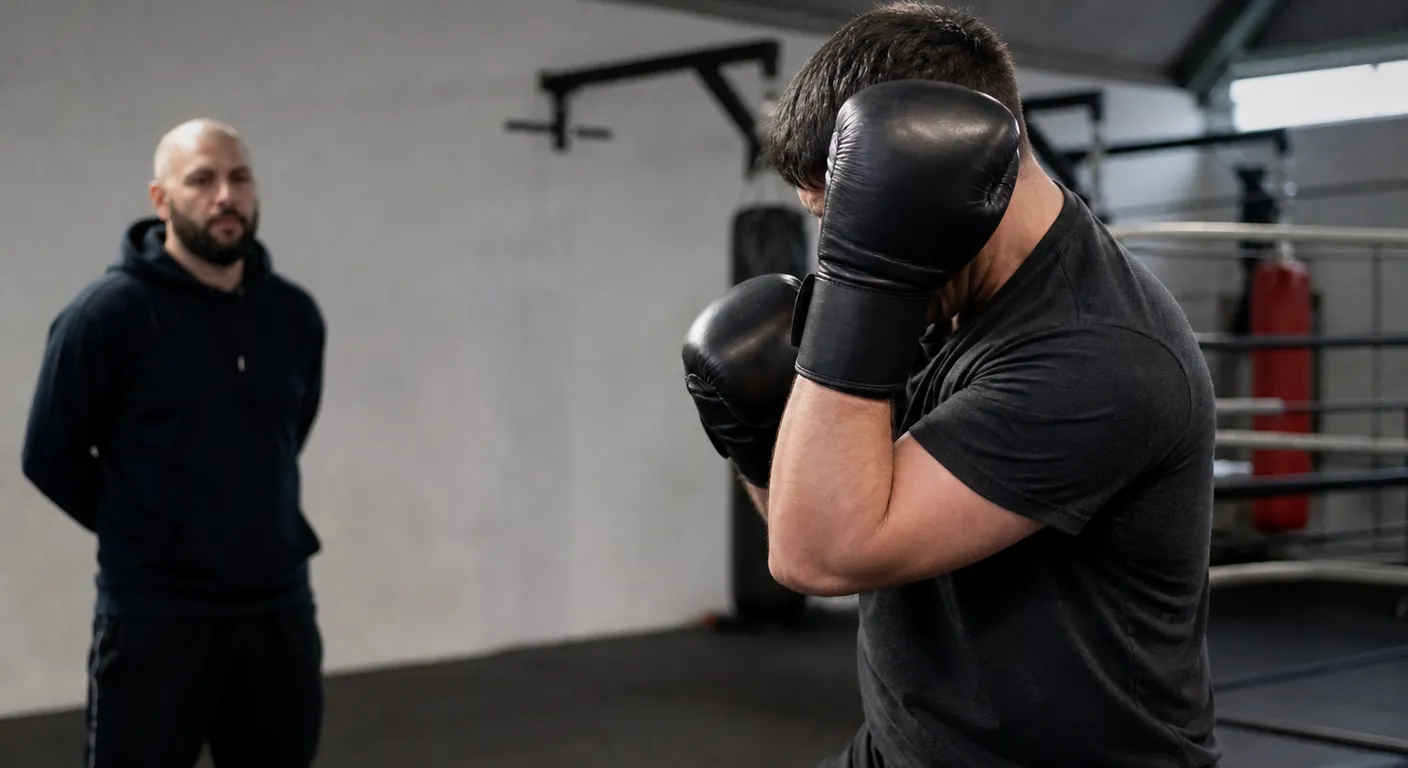
When the jab comes, the rear glove and forearm close the direct line near your cheek. The rear elbow stays sensible rather than flying out. Your chin stays tucked, your eyes stay up and the lead hand remains available to start the return.
The movement is compact because you are already at a range where the other boxer can touch you. If you push the rear hand forwards to chase their jab, you give them a larger target and pull your own guard apart. The block should happen close enough that it feels like you have closed a door, not swatted at a fly.
England Boxing puts guard, balance and controlled technical progression at the centre of its coaching handbook. That is the useful test here. After the block, can you still see, jab, cross, cover or take a step? If not, the hand action was too big or the range was already wrong.
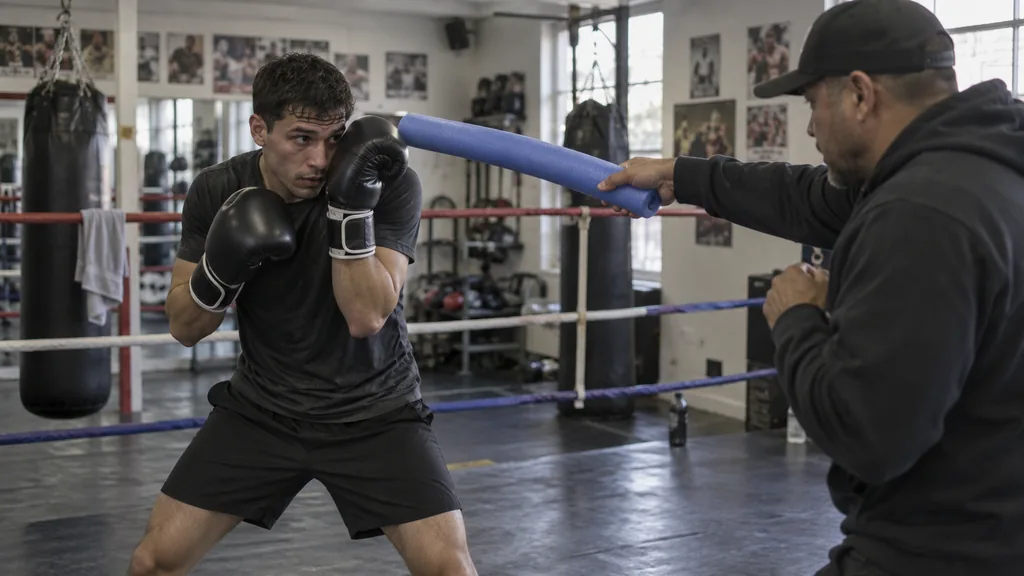
Do not use this as a first response to every punch. A slip, parry, step or regular high guard can be better depending on the distance and the line. This drill is for a pre-agreed jab at technical pace. It teaches the shape before you try to choose among several defences.
Let the one-two come from the reset
The block does not need to become a long pause. Once it has protected the line and the partner is still in front of you, the lead hand can travel straight to the mitt and the rear hand can follow through the middle.
Think jab, then cross, rather than a fast double-handed rush. The lead jab starts from its normal lane. The rear hand follows only if the feet are still underneath you and the coach has shown the target. Both punches return to guard when they finish.
A review of boxing performance describes punching as a connected action between the lower body, trunk and upper body. You can feel that in this drill. If the block leaves you leaning over the front knee, the cross becomes an arm reach. If your feet stay settled, the one-two can be clean without being forced.
This is the difference between a counter and a pre-loaded combination. A counter fits the picture in front of you. If the partner has moved away, covered well or changed the line, bring the gloves home and reset instead of throwing at empty space.
Build the drill in three rounds
Use pads, a foam noodle or a clear glove cue. Keep contact controlled. There is no benefit in making the jab hard enough that the defender starts flinching or closing their eyes.
Round one: feint and block
Stand at honest jab range. Partner A shows a small jab cue only after Partner B has made a shoulder or lead-foot feint. Partner B makes the compact rear-hand block, then freezes for one count.
Check the basics before repeating. The rear glove should be near the cheek, the elbow should still help protect the body, and the feet should be staggered. There is no return punch in this round.
Round two: block and one-two
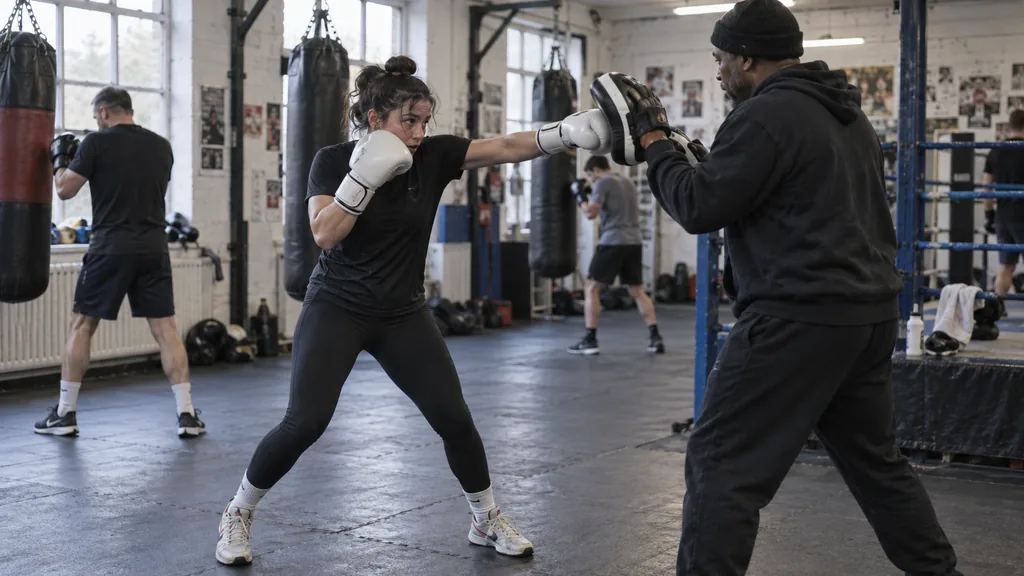
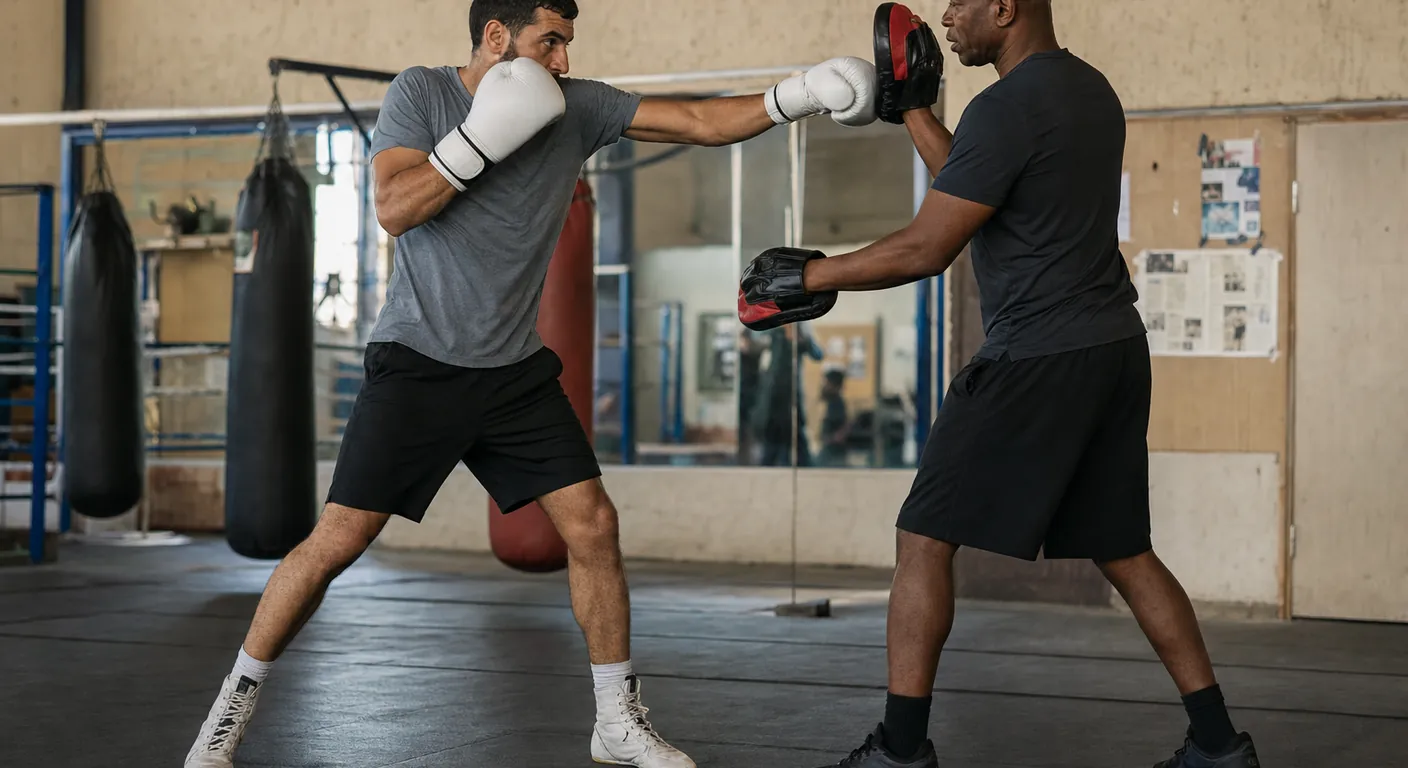
Use the same cue, but add two coach-held mitts after the block. Partner B blocks the jab, then touches the lead mitt with a jab and the rear mitt with a cross. Work at a pace where the coach can remove either mitt without anyone chasing it.
The one-two should not be a reward for being brave enough to block. It is only there when the line and range support it. If the mitts are missing, reset.
Round three: make the cue less predictable
Partner A can now give a jab, a false start or no punch after the feint. Partner B waits, then chooses the block-and-one-two only when the jab and mitts appear. On a false start or no punch, Partner B returns to stance with no counter.
This round stops the drill turning into choreography. Your job is to wait for the information, defend the actual line, then make one clean answer. The best repetition may end with nothing more than a feint and a reset.
For a wider exercise in drawing a response, read how to make an opponent throw first in boxing. For the opposite sequence, where your own one-two is followed by a defensive block, see one-two, block, hook. They are related but different jobs: this drill starts with the opponent's reply; that one starts with your attack.
Five mistakes that spoil the counter
The first is making the feint too large. If the shoulder drops, the head follows and the front foot lunges, you have announced the entry instead of inviting a jab.
The second is reaching with the rear hand. A block that meets the jab halfway can pull the right side of your guard away from your face. Keep the cover close and let the incoming line meet it.
The third is throwing the one-two before the block has finished. The rear hand cannot protect and punch at the same time. Make the cover, bring the lead hand through, then let the rear hand follow.
The fourth is allowing the feet to square up under the cross. If the rear foot has dragged forward or the front knee has locked, stop adding speed. The stance must still be able to move after the counter.
The fifth is treating every feint as a promise of a counter. The other boxer may do nothing, step out or show a different punch. Resetting is not a failure. It is proof that you saw the situation rather than forcing the drill.
Where this fits in training
Use the drill after a warm-up, before harder bag work or controlled sparring. It suits a boxer who can hold a basic guard and jab with shape, but it does not require hard contact. A coach, clear rules and light cues are enough.
For adults in Kidbrooke, Greenwich and nearby, our Recreational Adults boxing classes use pads and partner drills to join up feints, defence and simple counters without rushing beginners into a scrap.
The coaching cue is short: show the feint, close the line, then punch only when the picture is still there.
H&G Team
Writer at Honour & Glory Boxing Club, a community boxing gym in Kidbrooke, South East London.
KEEP READING
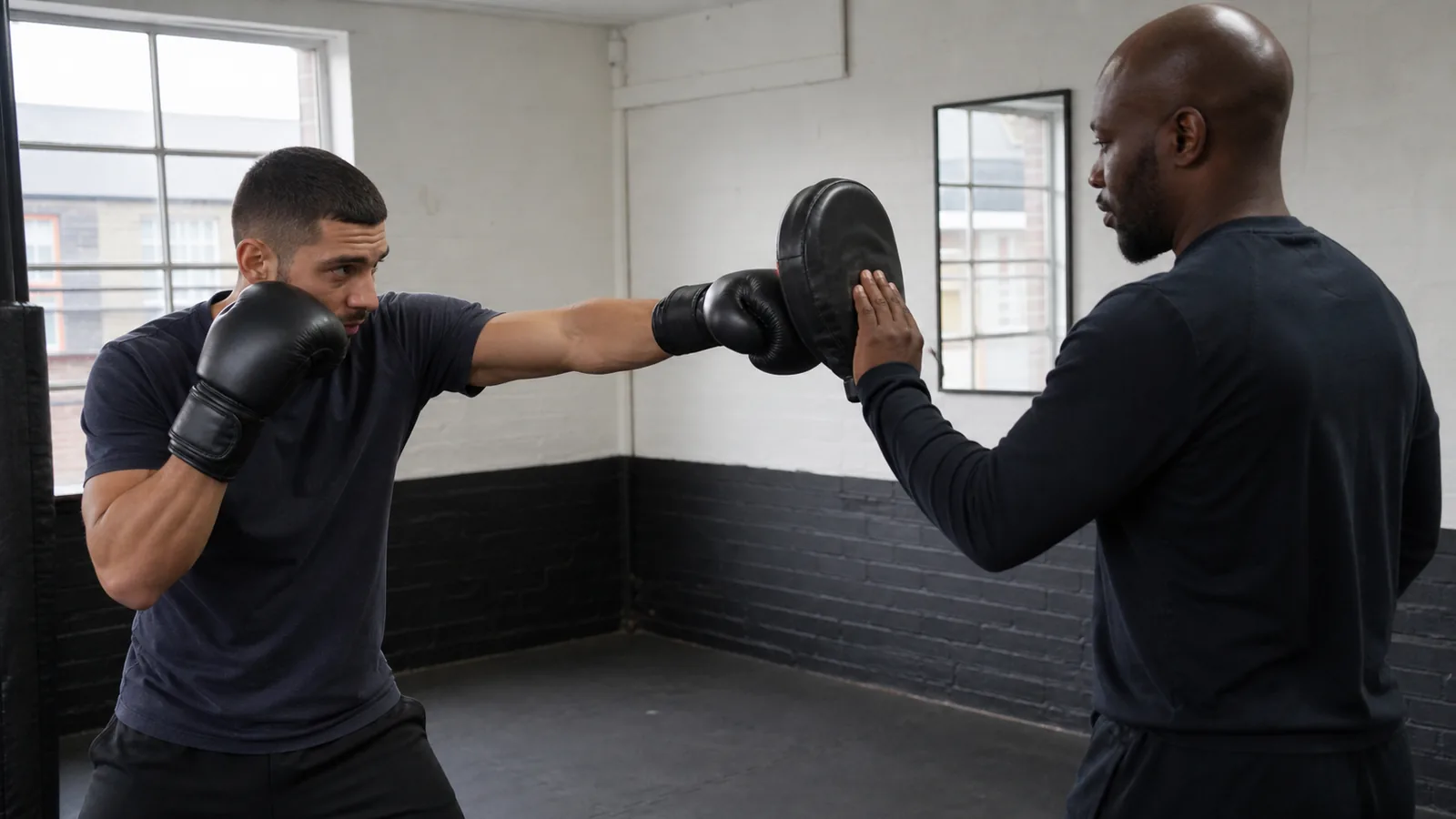
Trigger, Evade, Counter: A Boxing Reaction Drill
Use three small triggers to draw a predictable response, evade without panic, and return only when your stance still supports the counter.
Shift Counter in Boxing: Punch as You Move
Learn the shift counter: a simple way to step off pressure and punch while you change angle, instead of backing up in panic.
How to Block Hooks in Boxing Without Opening Up
Learn a compact hook block that protects your head, keeps your eyes up and leaves you ready to answer at close range.
Was this page helpful?
It takes one tap, and it genuinely helps.
Choose your next step
Turn this article into the right action
Some readers are ready to book. Some need the class route first. Pick the route that matches what you actually want.