Trigger, Evade, Counter: A Boxing Reaction Drill
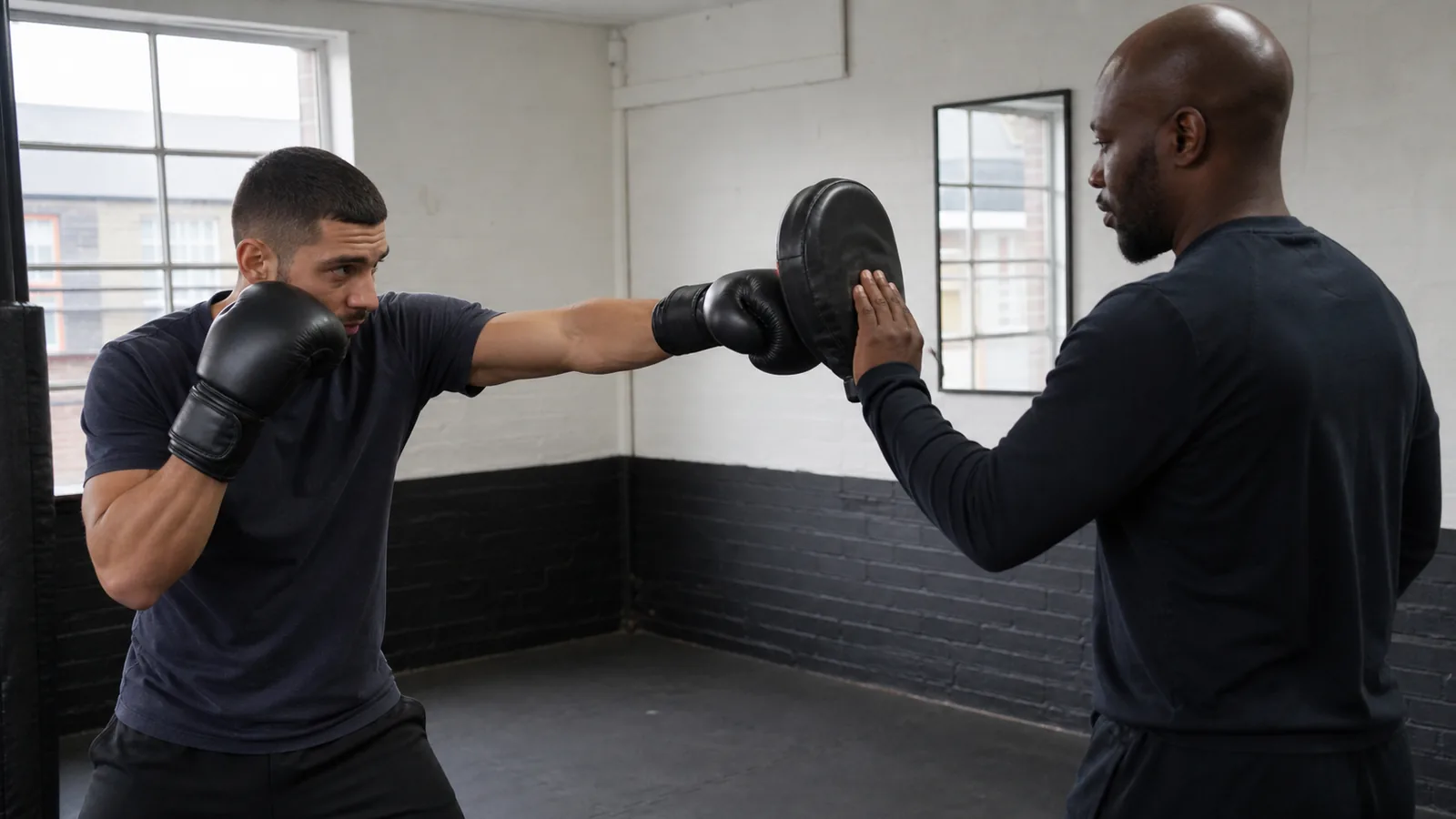
Counter punching is easier when you stop waiting for a perfect mistake to fall into your lap.
A lot of boxers hear "make them miss and make them pay" and stand still hoping the other person throws something obvious. That can work against a reckless partner. It is not much of a plan against somebody who is careful, moving and looking for their own counter.
A better approach is to give them a small reason to react, then stay organised enough to deal with the answer. This drill has three parts: trigger, evade, counter. The trigger asks a simple question. The evade keeps you off the obvious return line. The counter is available only if the first two parts have left you balanced.
Watch the demonstration below, then slow the work down until each part has a clear job.
The first punch should create a question
The trigger is not meant to win the exchange. It is there to make the other boxer show a habit.
A light tap jab is one option. It travels down the middle, touches a mitt or the guard in a controlled drill, then comes home. If the other boxer is used to meeting every jab with their own lead hand, they may start reaching back. That gives you information. It does not guarantee a counter.
A small shoulder feint is another option. The lead shoulder gives the early shape of a jab, but the hand does not travel all the way. A tiny lead-foot pressure can work in the same way. The mistake is making either one so large that you have to rebuild your stance afterwards.
A systematic review of anticipation in combat sports found that experienced athletes make better use of early movement information. That is the useful coaching point here. A trigger is not a magic trick. It gives the other boxer something to read, and gives you a chance to read their first answer in return.
Start with one trigger for a whole round. Do not flick a tap jab, feint the shoulder, stamp the foot and rush in all at once. If you give too many signals, you will not know which one made the other boxer react.
Choose the response before you add the counter
The middle part of the drill is where people become impatient. They throw the light jab, see a glove move, then fire a hard rear hand regardless of where their feet or head have gone.
Do the opposite. Agree one response with a coach or partner first. For example, the partner can answer the tap jab with a light jab of their own. The boxer then makes a compact outside slip and freezes. Or the partner can show a long parry, and the boxer takes one calm step to the side rather than punching immediately.
The evade should be small. A slip moves the head just far enough that a straight line would miss. A step takes you off the line while keeping the feet staggered. A compact cover is useful if the reaction comes too close to slip safely. The right answer depends on distance. The rule does not: finish where you can still see, defend and move.
England Boxing's coaching handbook puts stance, balance and controlled skill progressions at the centre of boxing development. That is a better test than whether the counter makes a loud sound on the pads. If the evade leaves you leaning across the front foot, the drill has moved too fast.
Counter only from a position you can own
The counter is the last part of the drill, not the compulsory finish to every repetition.
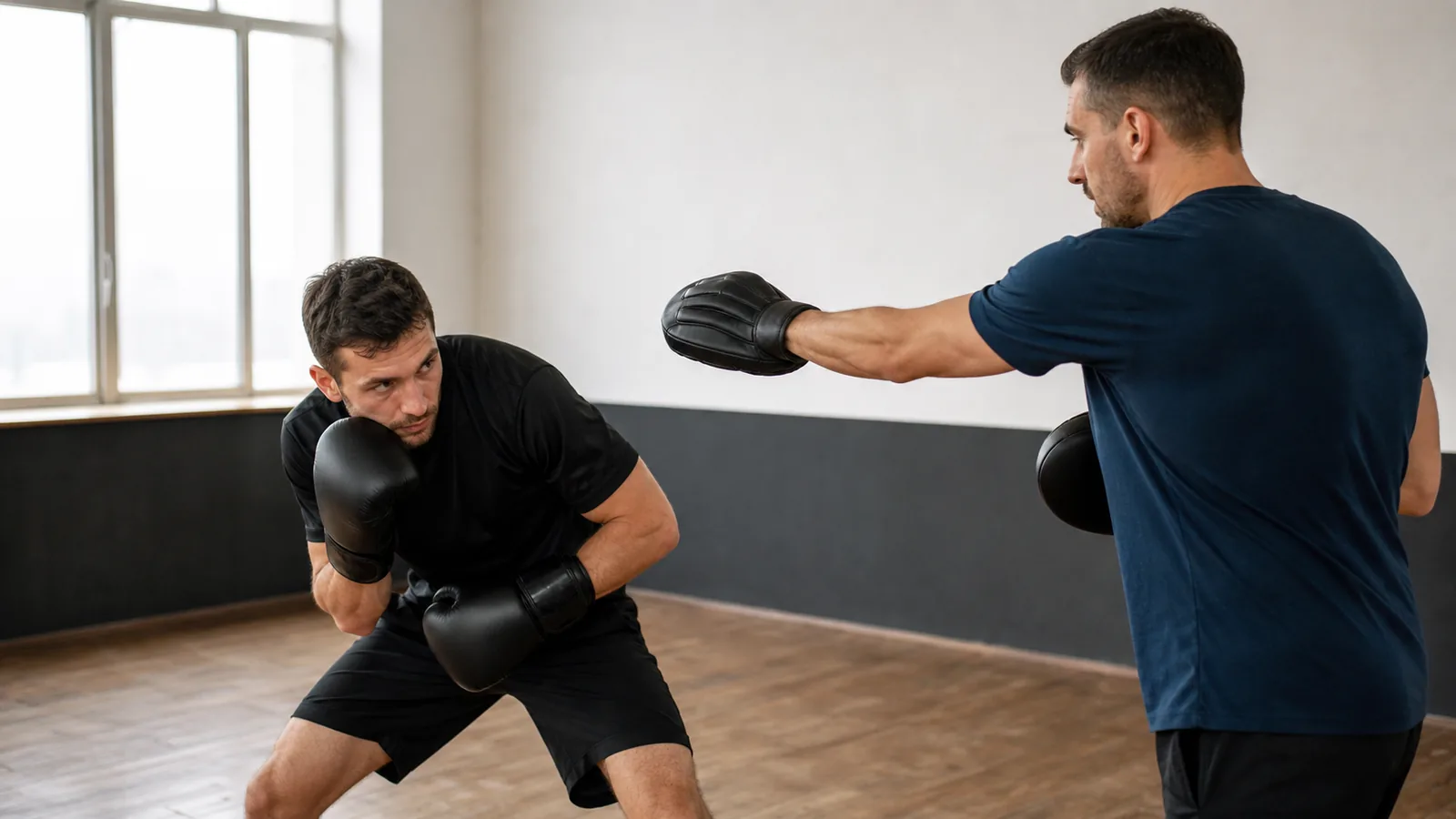
If the partner reaches with a jab and your small slip has left the rear foot settled, a measured straight rear hand to a focus mitt can make sense. If they parry their own lead hand wide, a calm jab to the open line may be the better beginner answer. If they have stepped back, reset rather than stretching after them.
This is where pad work helps. The coach can show the first response clearly, then present a target only when the counter belongs at that range. At first, let the target stay still for a moment. The pause shows whether you can recognise the line without chasing it.
A review of boxing performance and biomechanics describes punching, movement, defence, distance and tactics as connected tasks. In gym language, the counter cannot rescue a poor evade. If the feet are crossed, the chin has drifted or the lead hand is hanging out, bring everything home and begin again.
The useful counter might be a rear straight, a lead hook to a mitt, a jab back to centre or no punch at all. No punch is still a good decision when the partner has moved, covered or taken the range away.
Build the drill in three short rounds
Keep the first pass at technical pace. This is a reading drill, not a race to land the best counter.
Round one: trigger and freeze
Work with a coach holding one mitt, or shadow box in front of a partner. Use only a tap jab, a shoulder feint or a small foot feint. After every trigger, freeze for one beat.
Check whether the lead hand returns, the rear hand remains near the cheek and the feet are still staggered. The rep is only useful if you could jab, cover or step away from that position.
If you use the tap jab, make it a proper light punch rather than a hand left in the middle. The lead shoulder should still help protect the chin. The elbow should not flare. Bring the glove home before the next repetition.
Round two: trigger and evade
Now a partner gives one agreed response. A simple version is: tap jab, partner shows a light jab, boxer slips outside and returns to stance. Another is: shoulder feint, partner gives a visible parry, boxer takes one small angle step and resets.
The partner is not trying to catch you. They are feeding a clear picture that lets you practise the timing. Keep the response slow enough that both people can stop at any point. No contact to the head, no surprise shots and no attempt to turn the drill into sparring.
Round three: add one chosen counter
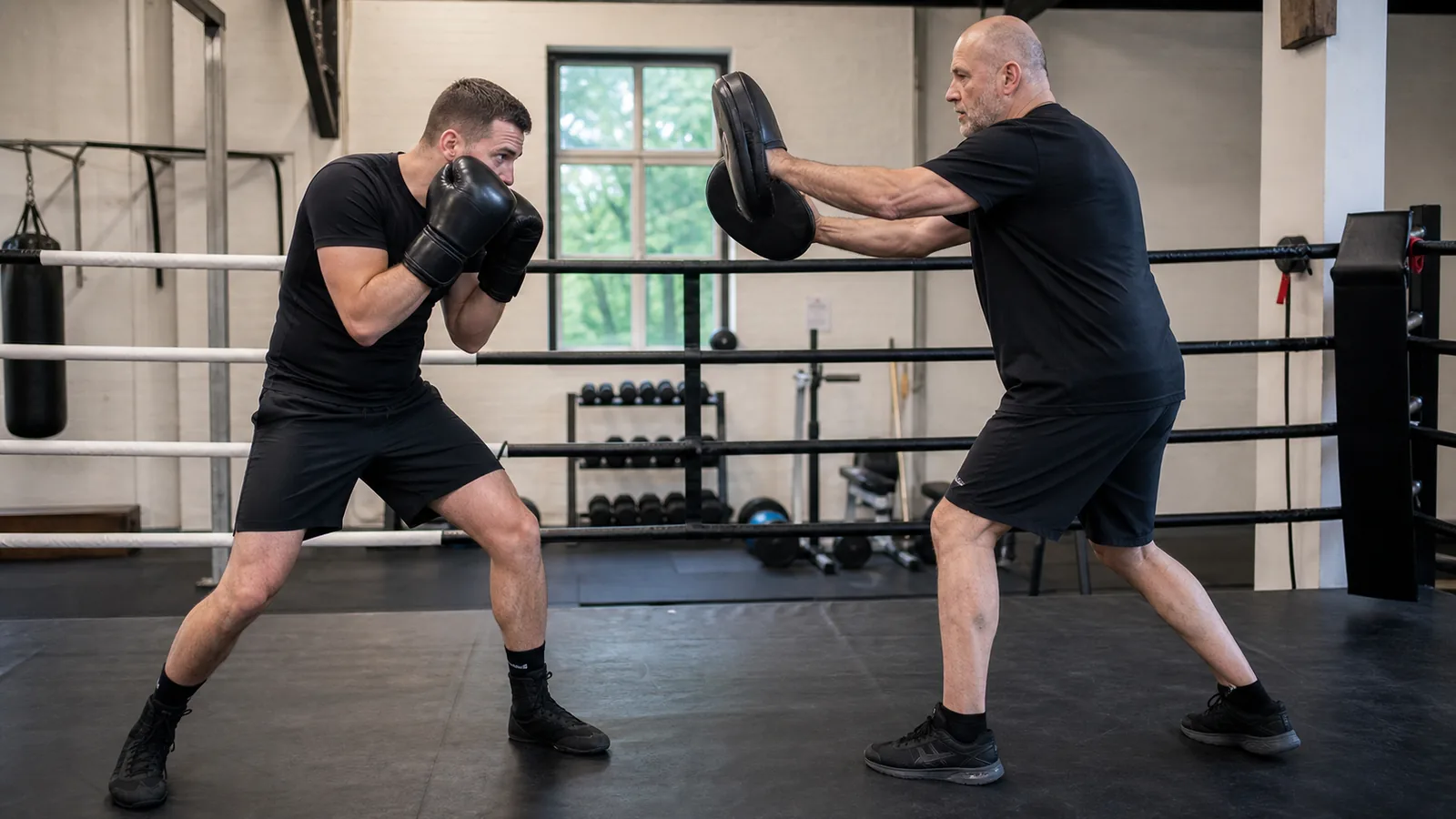
Only now does the coach add a safe target after the evade. Use one simple counter for the round.
For an orthodox boxer, a small slip outside a jab can leave a straight right available on the mitt. For a southpaw, reverse the picture. If the angle or range does not support that punch, choose a lead-hand touch or reset instead. Do not make the counter a debt you have to collect.
Finish with guard and an exit. Take a short step away, return to your original range or cover and reset. A counter that leaves you standing square in front of the partner has taught the wrong finish.
Four mistakes that ruin the drill
The first is using a trigger that does not resemble anything real. A shoulder feint with no shoulder movement, a foot feint that never affects the stance, or a tap jab thrown from the elbow tells the partner nothing. Make it small, but make it believable.
The second is guessing the response. If you slip before the partner has shown the jab or parry, you are performing a sequence rather than reading an opponent. Ask the partner to vary the pause between repetitions so you have to wait.
The third is trying to evade by bending at the waist. A deep fold may move the head, but it often puts the eyes on the floor and the rear hand too far away. Bend the knees, make the movement compact and keep the head in a place where you can still punch or cover.
The fourth is forcing the counter. Good boxing includes moments where the answer is to do nothing dramatic. If the partner has moved out, if the mitt is not there or if your feet have lost shape, reset. That is judgement, not a missed opportunity.
Our guide to using feints in boxing without faking it is a useful companion for making the first trigger believable. For the wider idea of how an exchange develops, read the three phases of a boxing exchange. This drill keeps the focus tighter: make one person react, stay safe through their answer, then choose the counter you have actually earned.
Where it fits in training
Use this after a warm-up, before harder bag rounds or controlled partner work. It suits boxers who have a settled stance and a basic jab, but it does not need hard sparring. Pads and pre-agreed partner feeds are enough to teach the order.
If you are near Kidbrooke, our Recreational Adults boxing classes use controlled drills to connect offence, defence and footwork without rushing people into exchanges they cannot yet read.
The coaching cue is simple: ask a question, see the answer, then counter only when your feet agree.
H&G Team
Writer at Honour & Glory Boxing Club, a community boxing gym in Kidbrooke, South East London.
KEEP READING
Feint, Block, One-Two: A Boxing Counter Drill
Use a small feint, compact block and balanced one-two to turn a predictable jab into a calmer boxing counter drill.
Boxing Reaction Drill: Think While You Punch
A practical boxing reaction drill that teaches you to stay in guard, read a call and make a clean choice under pressure.
Boxing Move, Slip, Punch Reaction Drill
Build a cleaner response to pressure with a boxing drill that joins footwork, a compact slip and one balanced return shot.
Was this page helpful?
It takes one tap, and it genuinely helps.
Choose your next step
Turn this article into the right action
Some readers are ready to book. Some need the class route first. Pick the route that matches what you actually want.