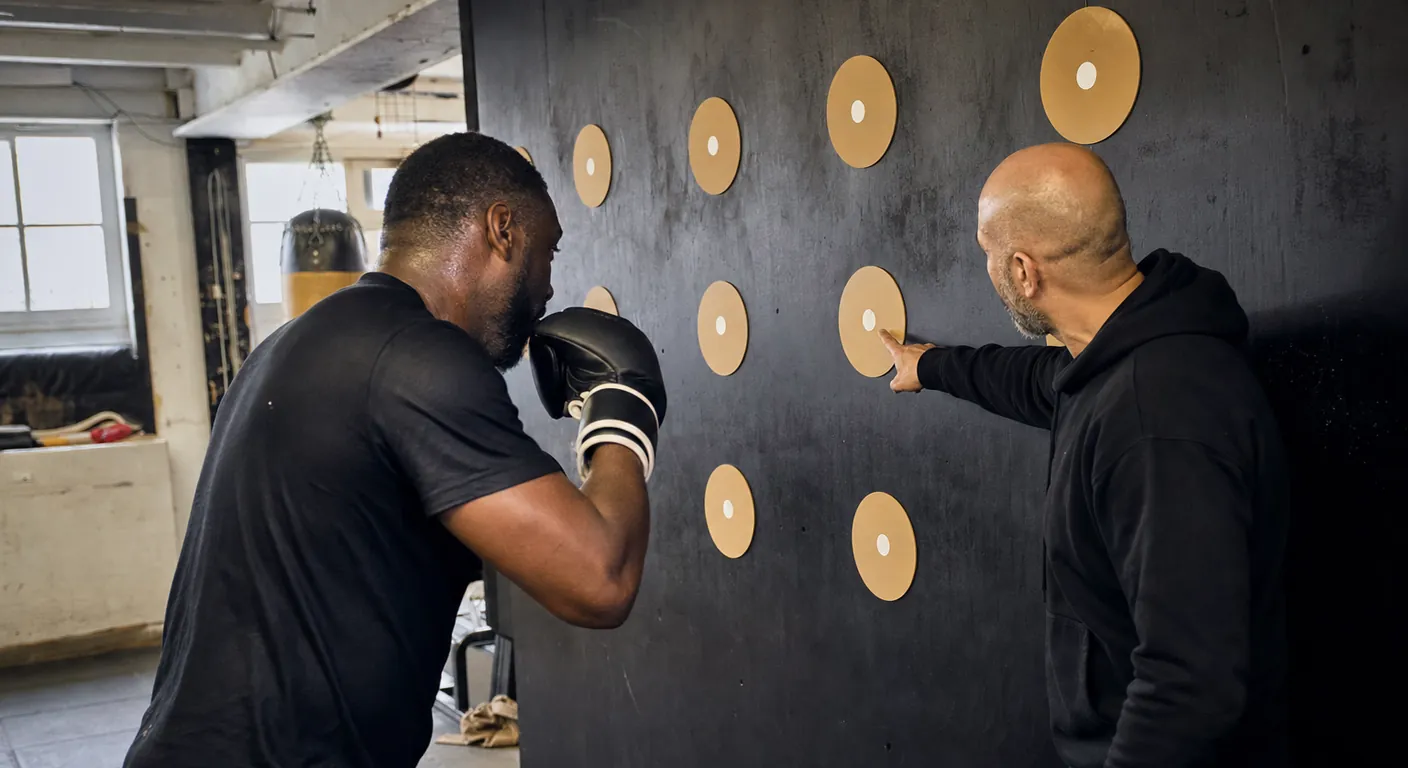
Most beginners think reaction training means moving faster.
That is only half right. In boxing, the useful reaction is not the first panic twitch. It is the right action, from a decent stance, while your brain is busy. A fast wrong answer still gets you hit. A calm correct answer gives you the next punch, the next step, or the clean reset.
The drill below is simple: a coach calls a number, the boxer touches the right target, then returns to guard. The smarter version adds two numbers or a small sum, so the boxer has to think before moving. That sounds like a game. Done properly, it is a very good boxing drill.
A 2024 review of cognitive-motor dual-task training found that athletes can improve performance when they train movement and thinking together over time. Boxing coaches have known the gym version for years: once punches are coming back, clean technique under mental load matters more than perfect technique in a quiet room.
Here is how to use the drill without turning it into circus training.
What the reaction drill teaches
The drill teaches you to make a choice without losing your boxing shape.
That is the key. Anyone can slap a coloured target on a wall if balance does not matter. A boxer has to touch, punch, slip or step while the feet stay under the body and the hands return home. The value is not the number on the wall. The value is whether you can think, move and recover without opening yourself up.
This connects directly to sparring. You see a shoulder twitch, a glove lift, a step, a dip, or a breath change. You do not get time to pause and analyse it. You make a small read and act. Sometimes the answer is jab. Sometimes it is catch. Sometimes it is step back. Sometimes it is do nothing and let the other person miss.
A technical and tactical review of boxing performance describes boxing as a mix of punching, movement, defence, distance and tactical behaviour. That is why a reaction drill is useful only if it keeps those parts connected. If it becomes random tapping with boxing gloves on, it has lost the point.
Start with stance before speed
Speed is the last thing to add.
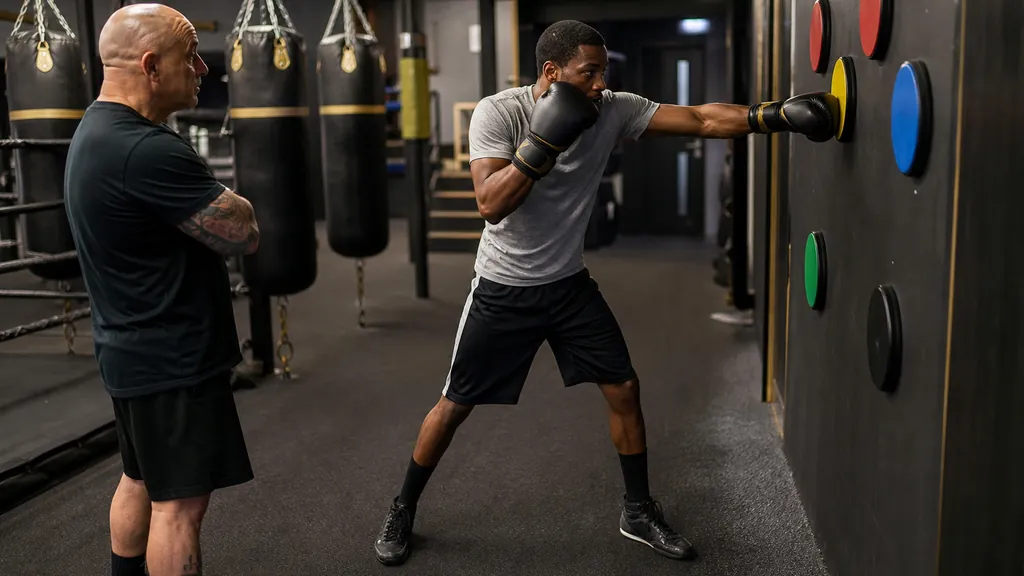
Set up in your normal stance, just inside touching distance from the targets. Chin down. Rear hand near the cheek. Lead shoulder relaxed. Knees soft. Weight balanced enough that you could jab, slip, or step out from the same position.
The coach calls one number. You touch the target with the lead hand and bring the glove straight back to guard. Then reset. That is round one.
Do not chase the target with your face. Do not let the back foot drag behind you. Do not leave the lead hand floating after the touch. If the movement would get you countered in a real exchange, it does not count as a good rep just because you found the correct target.
Use the same rule we use for the jab: the hand goes out, the hand comes back, the shape stays useful. If your reaction drill makes your jab worse, slow it down.
Add the second decision
Once single calls are tidy, add a second decision.
The coach can call two numbers: three then seven, one then nine, five then two. The boxer touches both in order and returns to guard after each touch. The temptation is to rush both touches and let the stance fall apart. Resist it. You are training a boxing habit, not a party trick.
A good rep has three parts:
- read the call
- touch or punch with balance
- recover to a position that can defend
That third part is where most people fail. Beginners touch the target and admire the fact that they got it right. In boxing, getting the first answer right is not enough. The other boxer is still there. Your hand needs to return. Your eyes need to stay up. Your feet need to be ready for the next cue.
This is the same idea as the three phases of a boxing exchange. The first action starts the exchange. The answer changes it. The next action decides whether you are still safe.
Use maths only if the boxing stays clean
The maths version is useful, but only when the boxer can already hold shape.
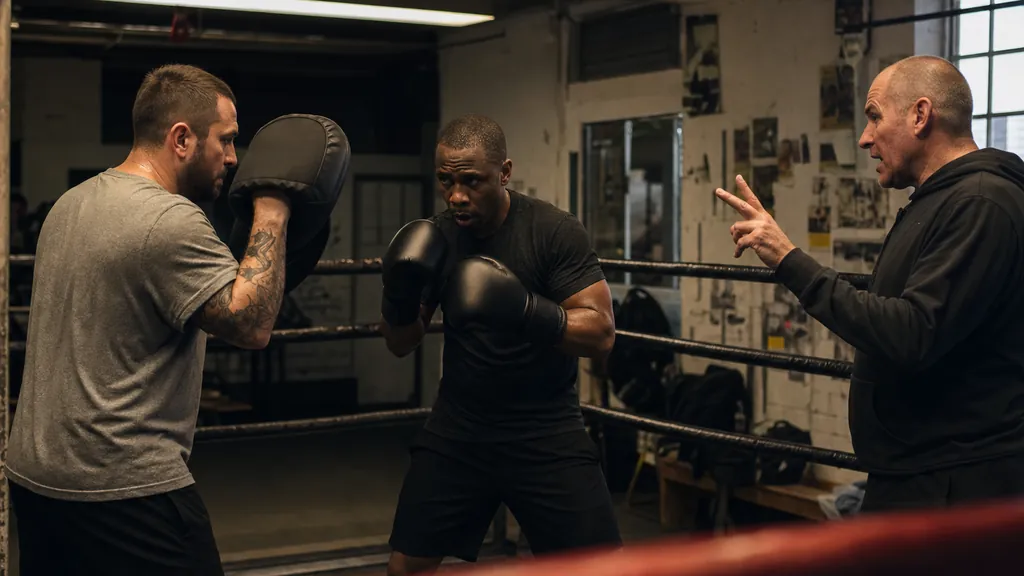
The coach calls a simple sum: two plus six, eleven minus four, three plus five. The boxer has to solve it, find the target, touch it and recover. This adds mental load. It makes the drill messy in a good way, because boxing itself is messy. You are rarely tired in a calm, neat, predictable way. You are tired while reading threat, balance, space and instruction.
Keep the sums easy. The point is not arithmetic. The point is the split second of thought before movement. If the sums become too hard, the boxer stops boxing and starts staring at the wall. That is not better training. It is just confusion.
Good coaching keeps the drill at the edge of control. The boxer should be challenged enough to make the odd mistake, but not so overloaded that every rep becomes ugly. If hands drop, feet cross, or the boxer turns square to the wall, reduce the difficulty.
Turn the touch into a boxing action
After the basic version works, make the touch more like boxing.
Use the lead hand target as a jab touch. Snap it out and back. Use the rear hand target as a cross touch. Turn the hip slightly, but do not overcommit. For lower targets, make the boxer change level with the legs instead of bending at the waist. For side targets, add a small step so the feet move with the hand.
Now the drill becomes more useful. You are not just reacting to a number. You are rehearsing the same shapes you need in a round.
Try this three-round version:
Round 1: lead hand only
The coach calls one number at a time. The boxer touches with the lead hand and returns to guard. Every rep should look like the first inch of a jab. Light, quick, balanced.
Round 2: lead or rear hand
Odd numbers use the lead hand. Even numbers use the rear hand. Now the boxer has to choose the hand as well as the target. Keep the feet quiet at first. Add a small step only when the hands are tidy.
Round 3: answer and exit
After every touch, the boxer takes one defensive exit: step back, pivot, slip, or catch position. The coach chooses the exit or lets the boxer choose. This matters because boxing is not touch and stop. It is touch, recover, and be ready.
Common mistakes
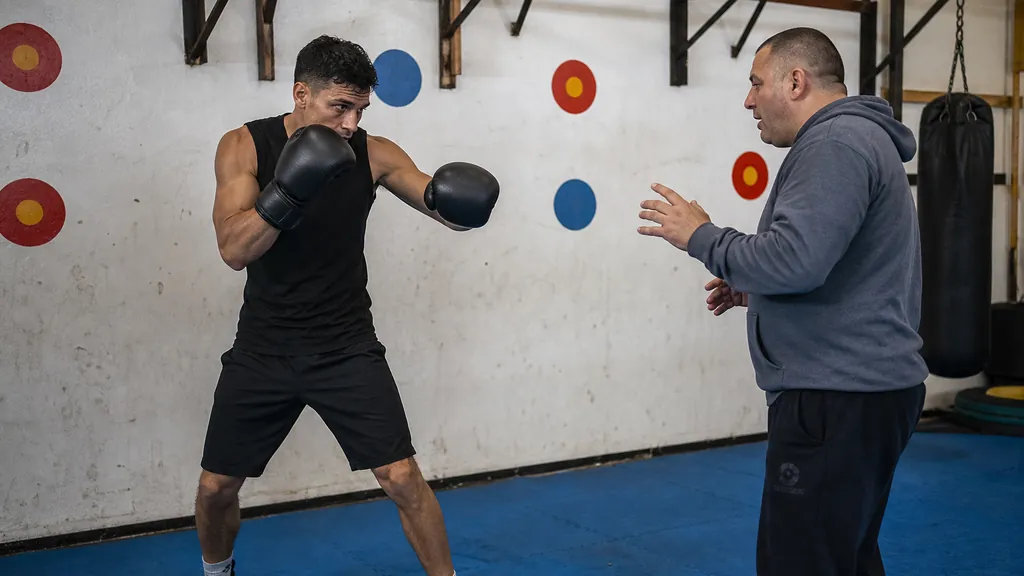
The first mistake is reaching. If the target is too far away, move your feet or set the drill closer. Reaching pulls the chin forward and leaves the back hand late.
The second mistake is looking at the hand. Keep the eyes forward. In sparring you do not get to watch your own glove come back. You need to see what is in front of you.
The third mistake is turning square. The wall can trick people into facing it like a noticeboard. Stay in boxing stance. Shoulder, hip and foot position still matter.
The fourth mistake is going too fast too soon. Fast sloppy reps teach fast sloppy reactions. Build the shape first. Then add speed.
The fifth mistake is forgetting to breathe. Mental load makes beginners hold their breath. Exhale on the touch, breathe on the reset, and keep the face calm.
Where this fits in a real session
Use the reaction drill after the warm-up and before harder pad or bag rounds.
Three short rounds are enough. One round of single calls, one round of two-number calls, one round with a defensive exit. You should finish sharper, not exhausted. If the drill leaves everyone gassed and ragged, it has become conditioning rather than skill work.
It also works well before shadow boxing with intent. Do the reaction drill, then shadow box a round where every movement answers something imaginary: a jab, a step back, a body opening, a missed right hand. The drill wakes up the decision-making. Shadow boxing lets you put it into a freer boxing rhythm.
The coaching cue
Think, touch, recover.
That is the whole drill. The thinking has to happen without panic. The touch has to look like boxing. The recovery has to leave you ready for the next action. If all three are there, the drill is doing its job.
If you are in Kidbrooke, Greenwich or nearby, our Recreational Adults boxing classes use drills like this to build calm reactions, not just fitness. You learn to keep your shape while your brain is working.
H&G Team
Writer at Honour & Glory Boxing Club, a community boxing gym in Kidbrooke, South East London.
KEEP READING
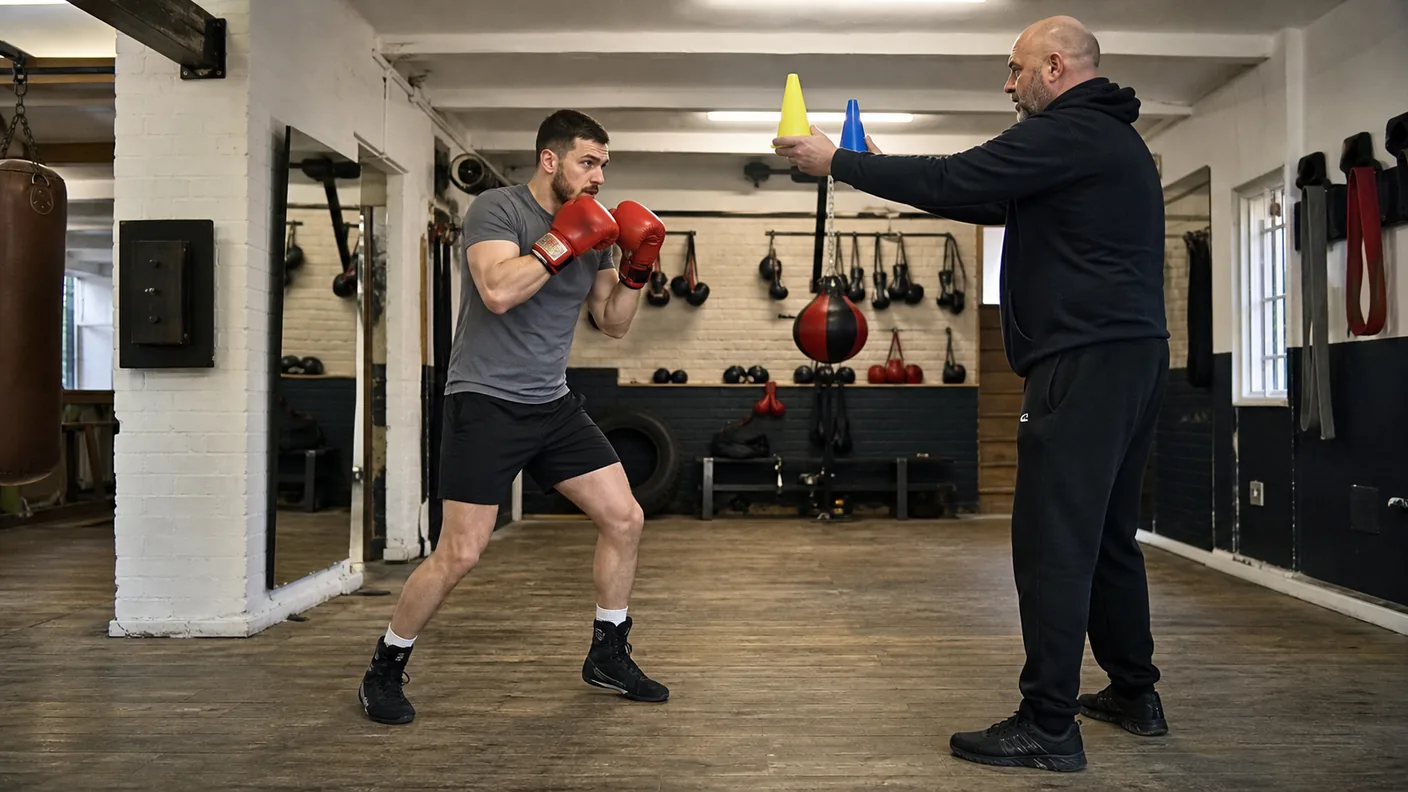
Boxing Move, Slip, Punch Reaction Drill
Build a cleaner response to pressure with a boxing drill that joins footwork, a compact slip and one balanced return shot.
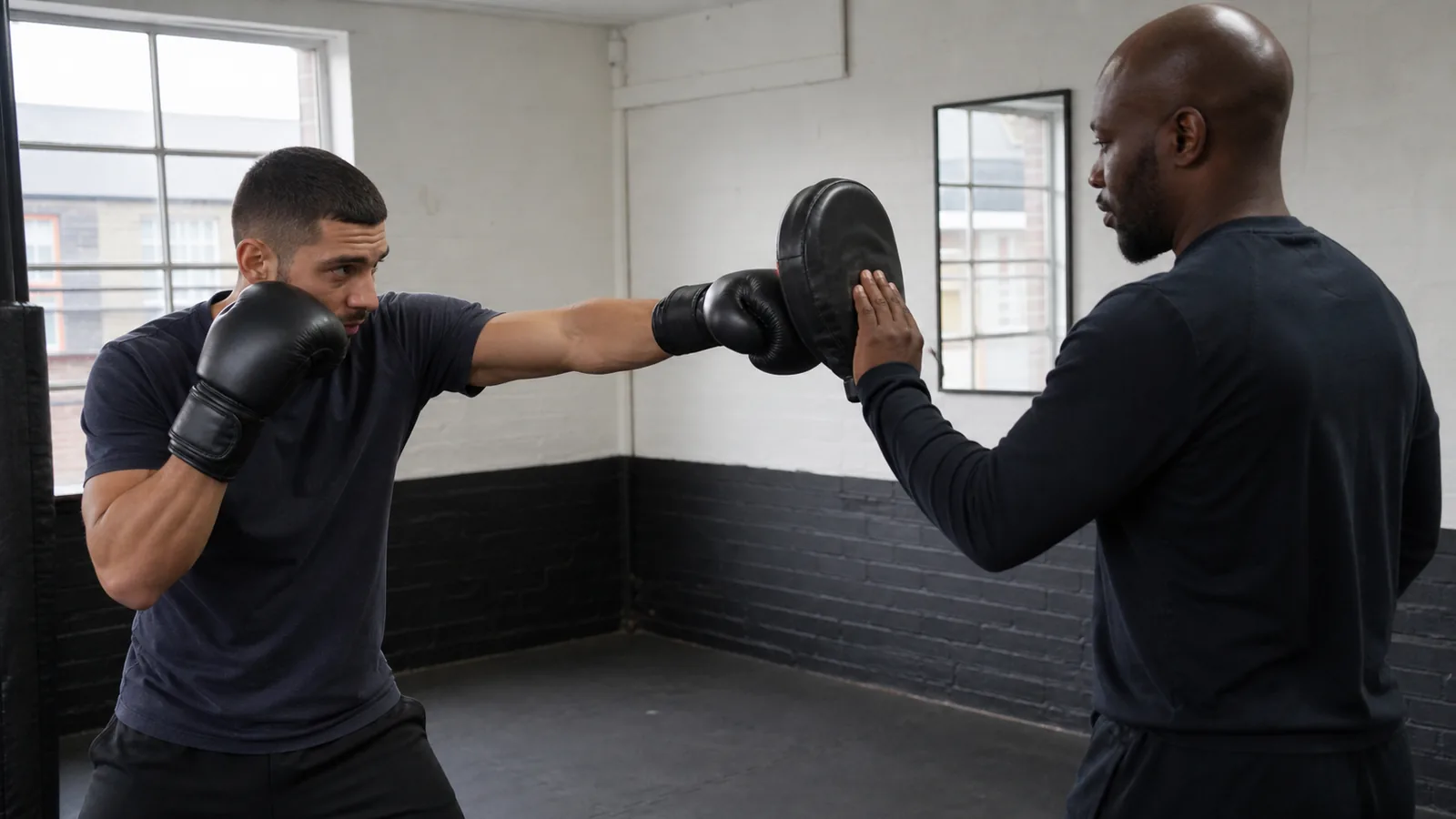
Trigger, Evade, Counter: A Boxing Reaction Drill
Use three small triggers to draw a predictable response, evade without panic, and return only when your stance still supports the counter.
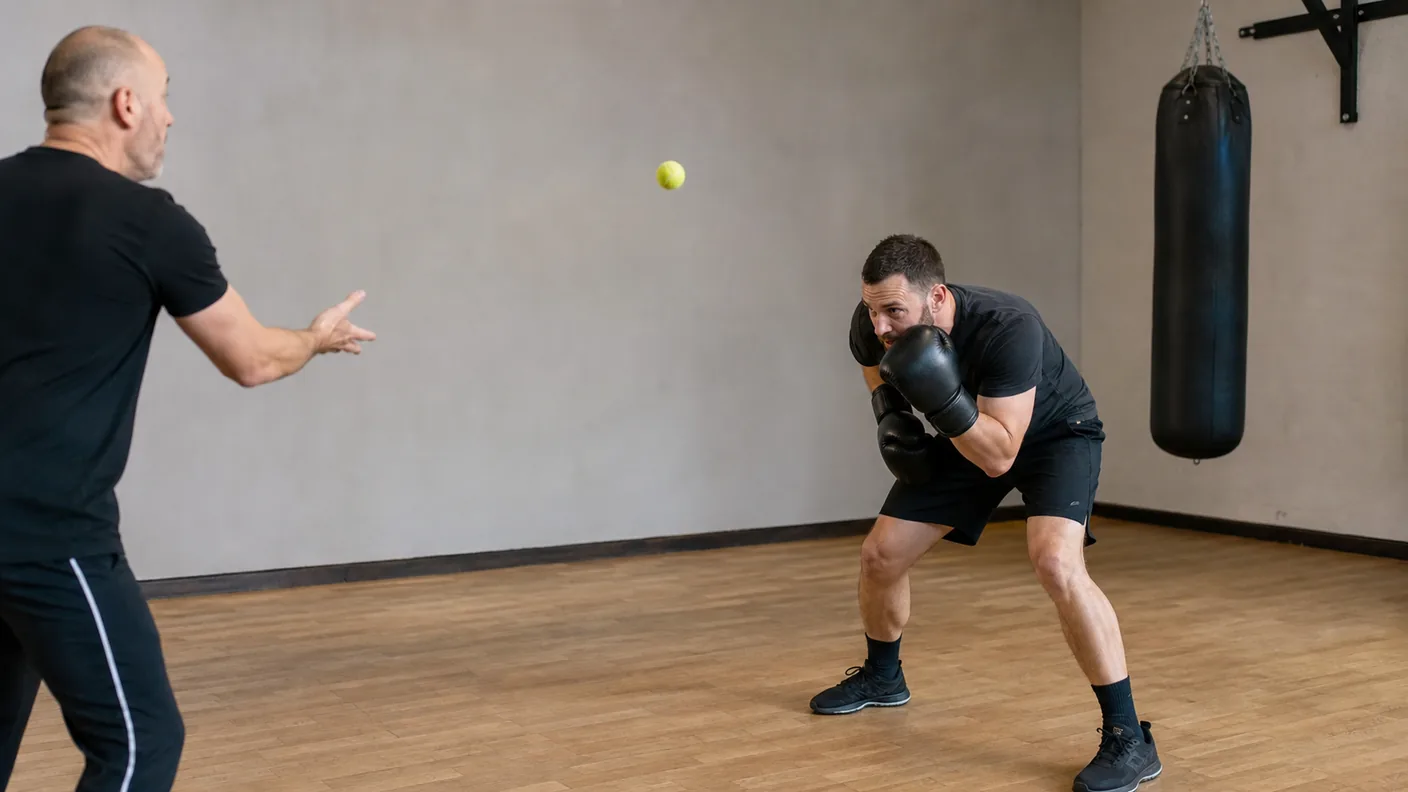
Tennis Ball Slip Drill for Boxing
Use a tennis ball slip drill to keep your eyes up, make smaller defensive movements and return to a balanced boxing stance.
Was this page helpful?
It takes one tap, and it genuinely helps.
Choose your next step
Turn this article into the right action
Some readers are ready to book. Some need the class route first. Pick the route that matches what you actually want.