
Shadow boxing research in sports science confirms that unresisted practice of movement patterns builds the neural pathways that translate to improved technique in contact situations. Boxing Science's training methodology uses shadow boxing as a primary technical assessment and conditioning tool.
Shadow boxing looks ridiculous to outsiders. You are throwing punches at air, bobbing and weaving around nothing, fighting an opponent who is not there. People at regular gyms give you weird looks.
But there is a reason every boxer in history has done it. Muhammad Ali did it. Mike Tyson did it. Every world champion, every amateur standout, every decent club fighter - they all shadow box regularly. It is not for show. It is training that works.
What Shadow Boxing Actually Does
When you shadow box, you are doing several things at once:
- Building technique. Without the feedback of hitting something, you have to focus purely on form. Your jab has to feel right because there is nothing telling you it is wrong.
- Developing movement patterns. Footwork, head movement, defensive slips - these get drilled into your muscle memory during shadow boxing.
- Warming up properly. Before bag work, before sparring, before anything intense, shadow boxing gets your body ready. Blood flowing, joints loosened, mind focused.
- Visualising opponents. Good shadow boxing involves imagining a real fight. You are not just throwing punches - you are responding to attacks, finding openings, executing strategy.
- Building cardio. Three rounds of intense shadow boxing will leave you breathing hard. It is a genuine workout, not just a warm-up.
How Most People Get It Wrong
Walk into any gym and you will see people shadow boxing badly. Here is what they do:
- Standing in one spot. They plant their feet and just throw arm punches. No movement, no engagement with the legs, no footwork at all.
- Going through the motions. Lazy punches with no intent. Arms just floating around without any snap or purpose.
- Ignoring defence. All offence, no defence. They throw punches but never slip, never block, never move their head.
- No imagination. They are not fighting anyone - they are just moving. There is no opponent in their mind, no strategy, no reaction to anything.
- Too fast, too sloppy. Speed without control. Every punch looks the same because they are throwing without thinking.
This kind of shadow boxing is nearly worthless. You are just reinforcing bad habits and wasting time.
How to Shadow Box Properly
Start With Your Stance
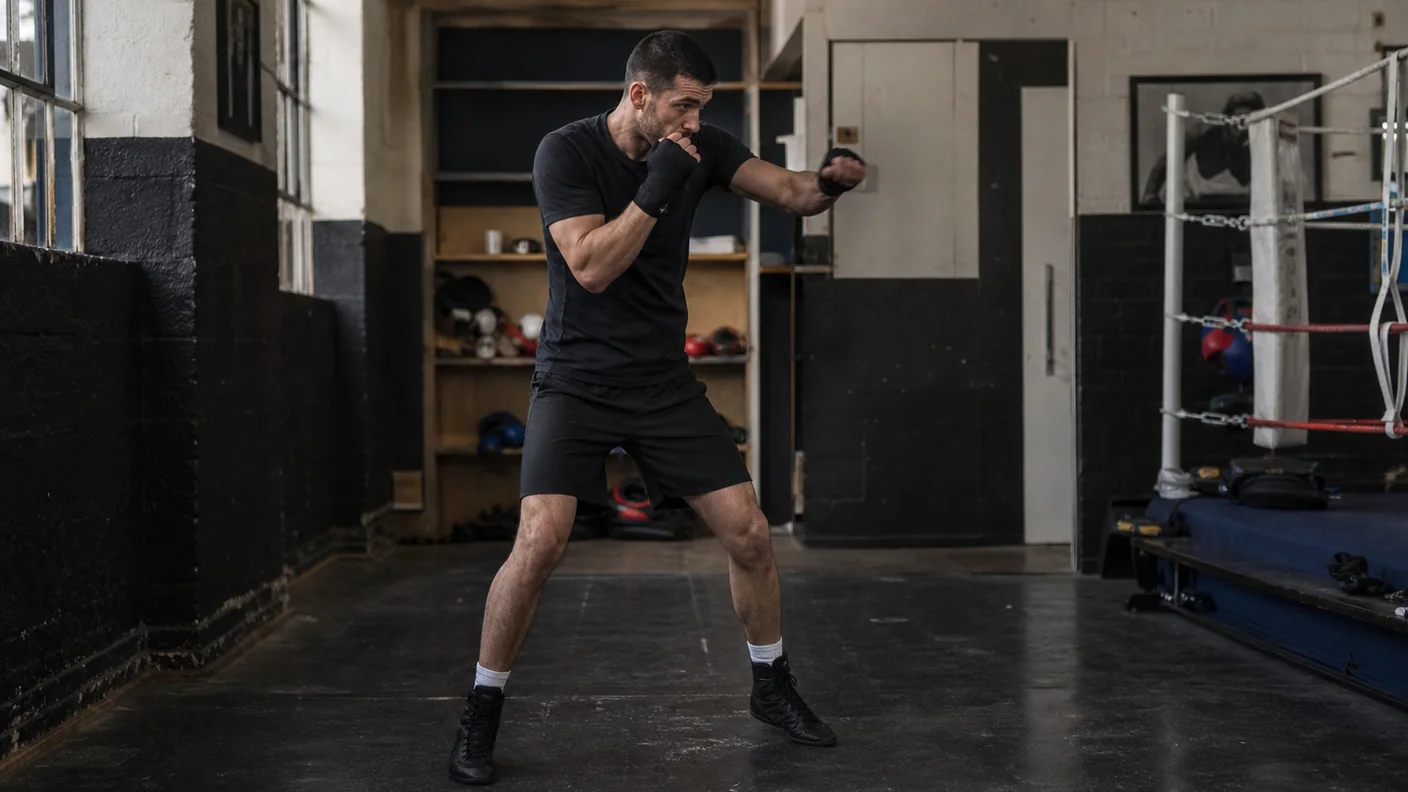
Before you throw a single punch, check your stance. Feet shoulder-width apart, knees slightly bent, weight on the balls of your feet. Hands up, chin down. This is your home position - you will return here constantly.
Move First
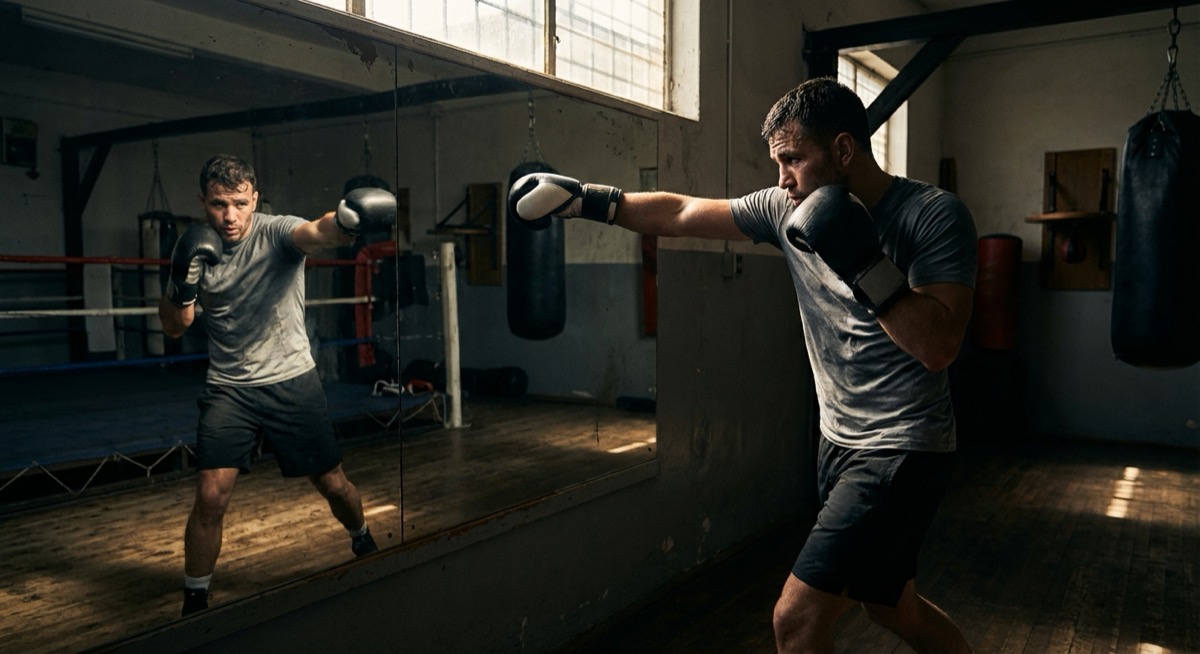
Do not start with punches. Start with footwork. Circle left, circle right. Step in, step back. Bounce lightly. Get comfortable moving before you add anything else.
Throw With Purpose
Every punch should have intent. Your jab should snap. Your cross should rotate your hips. Your hooks should have leverage. Punch like you are hitting something, even though you are not.
Imagine an Opponent
This is what separates good shadow boxing from pointless arm-waving. Picture someone in front of you. See them throw a jab - slip it. See them step forward - circle away. See an opening - throw your combination.
The visualisation makes your movements reactive, not just choreographed. You are training responses, not just motions.
Include Defence
Throw a combination, then slip a counter. Bob and weave under an imaginary hook. Pull back from a straight right. Your defensive moves should be woven throughout, not ignored.
A good rule: for every offensive movement, include a defensive one. Jab, slip, cross, roll under, hook. Attack and defend.
Use the Space
Move around the room. Work angles. Imagine cutting off the ring or escaping to the ropes. Your shadow boxing should cover distance, not just happen in a two-foot square.
Vary Your Speed
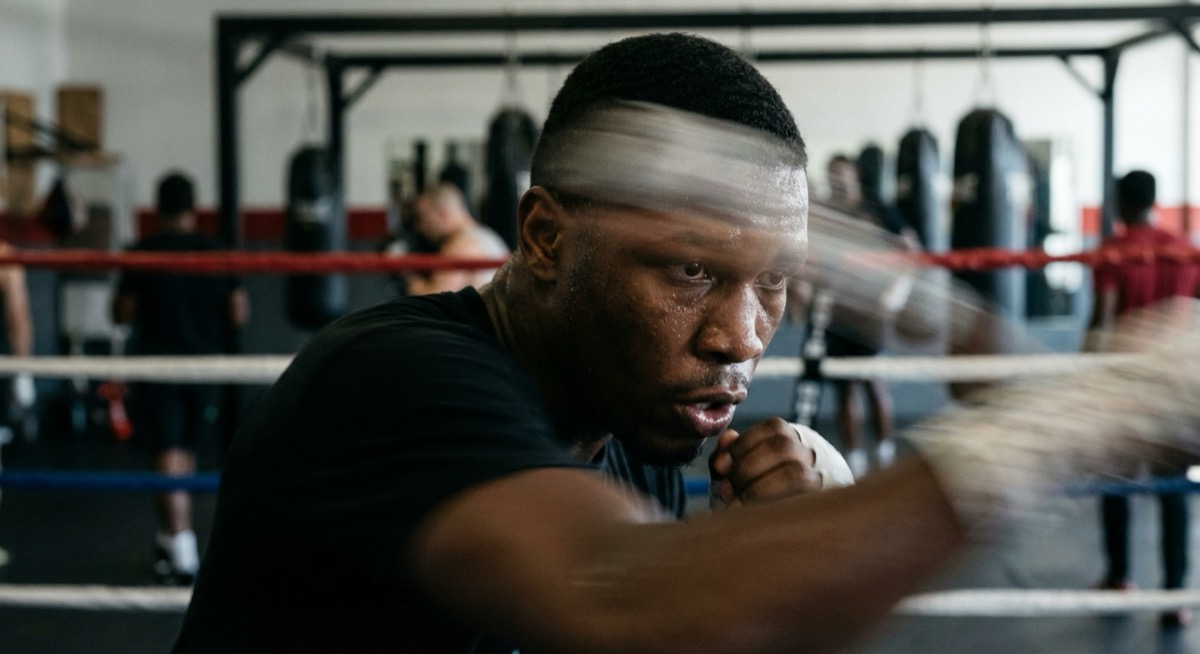
Some punches are fast, some are slow with power behind them. Some combinations are explosive bursts, others are methodical pressure. Mix it up like you would in a real fight.
A Basic Shadow Boxing Routine
Here is a structure for a 3-round shadow boxing session:
Round 1: Warm-Up and Movement
Focus on footwork and loose punches. Nothing hard. Circle around, throw light jabs, get your body warm. Maybe 50% intensity. The goal is to loosen up and find your rhythm (source).
Round 2: Technical Work
Pick specific things to work on. Maybe it is your jab-cross, making sure the rotation is right. Maybe it is your head movement after combinations. Slow down if you need to - this round is about precision, not power.
Throw a combination, check your position. Did your feet end up right? Are your hands back where they belong? Make corrections.
Round 3: Fight Simulation
Now imagine you are in a real round. Your opponent is aggressive - deal with them. They are backing off - cut them off. Throw combinations when you see openings, defend when you are under attack.
This round should have rhythm changes - moments of intense output, then controlled movement. Just like a real fight.
What to Focus On Each Session
You cannot improve everything at once. Pick a focus for each shadow boxing session:
- Jab day. Everything revolves around the jab. Double jabs, step jabs, jab to the body, jab to set up the cross.
- Defence day. Heavy emphasis on slipping, rolling, and blocking. Throw punches after defensive moves only.
- Footwork day. Constant movement. Pivots, circles, lateral steps. Punches while moving.
- Power day. Fewer punches but more weight behind each one. Focus on rotation and sitting down on your shots.
- Combo day. Practice linking multiple punches together. Work on flow between different combinations.
Shadow Boxing at Home
One of the best things about shadow boxing is that you can do it anywhere. Living room, garden, hotel room when travelling - all you need is enough space to move.
A few tips for home sessions:
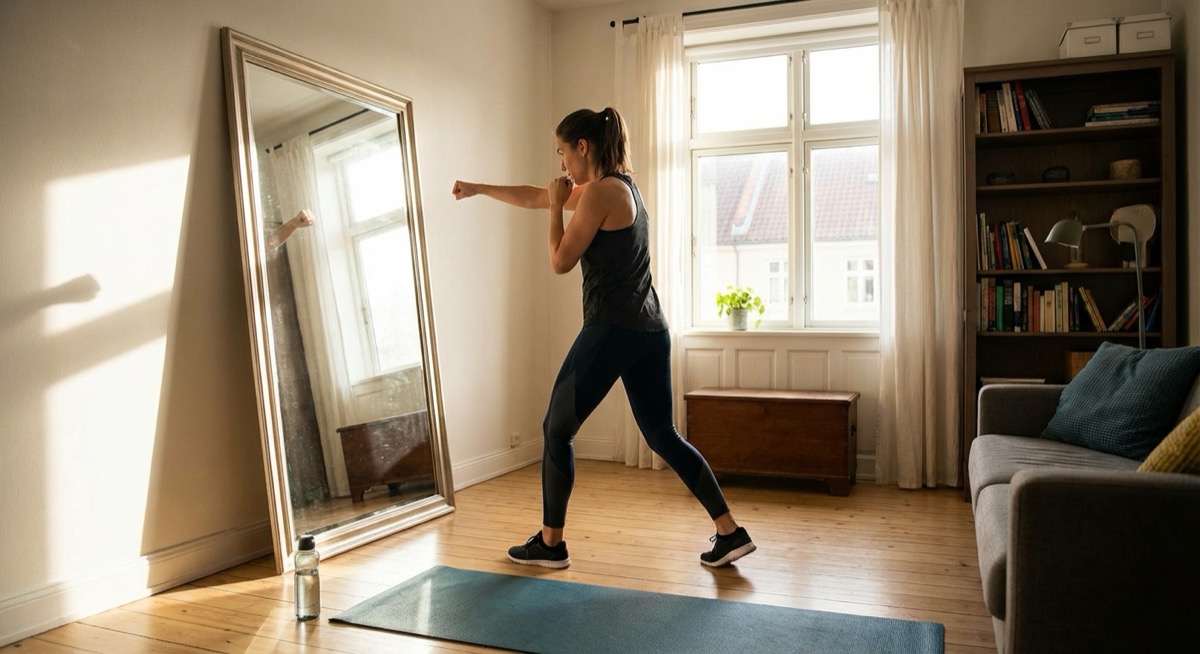
- Use a mirror if possible. Watching yourself helps catch mistakes. Is your rear hand dropping? The mirror shows you.
- Set a timer. 3-minute rounds with 1-minute rest keeps you honest. Without a timer, you will either stop too soon or go too long.
- Clear the space. You need to move. Push furniture aside. You cannot shadow box properly if you are worrying about hitting the lamp.
- Play music or fight sounds. A three-minute song gives you natural round timing. Some people prefer crowd noise or commentary to get in the zone.
How Often Should You Shadow Box?
Every time you train boxing, shadow boxing should be part of it. Most fighters do at least 3 rounds as a warm-up before anything else.
Beyond that, dedicated shadow boxing sessions a few times a week are valuable. Even 10-15 minutes improves your movement patterns and keeps your skills sharp.
It is low impact enough that you can do it on rest days too. Technique work without the physical stress of bags or sparring.
Make It Count
Shadow boxing only works if you take it seriously. Treat it like real training, not just time to kill before the main workout. Focus, visualise, move with purpose.
At Honour & Glory, we coach shadow boxing as seriously as any other skill. In every class, you will get feedback on your movement, your combinations, your defensive work. It is not just warm-up time - it is teaching time.
H&G Team
Writer at Honour & Glory Boxing Club, a community boxing gym in Kidbrooke, South East London.
KEEP READING
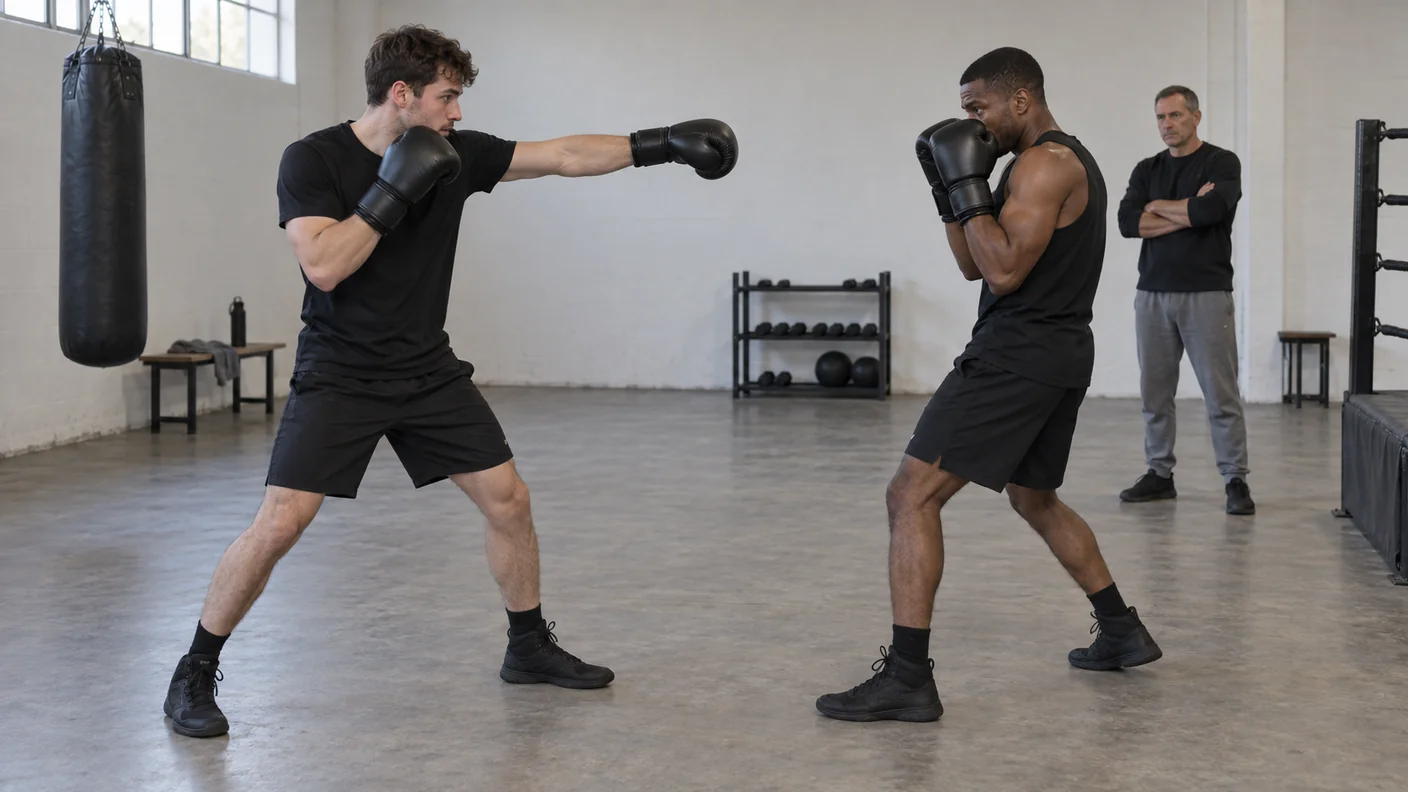
Partner Shadow Boxing: A No-Contact Reaction Drill
Build better boxing reactions with a no-contact partner shadow-boxing drill that keeps your eyes, feet and guard working together.
Relax Your Hands When Shadow Boxing
A simple shadow-boxing drill to stop clenched fists and tense shoulders making your punches slow, stiff and easier to read.
How to Improve Your Boxing Speed and Reflexes
Speed wins fights. Learn how to improve your boxing speed with targeted drills, technique fixes, and training methods that actually work.
Was this page helpful?
It takes one tap, and it genuinely helps.
Choose your next step
Turn this article into the right action
Some readers are ready to book. Some need the class route first. Pick the route that matches what you actually want.