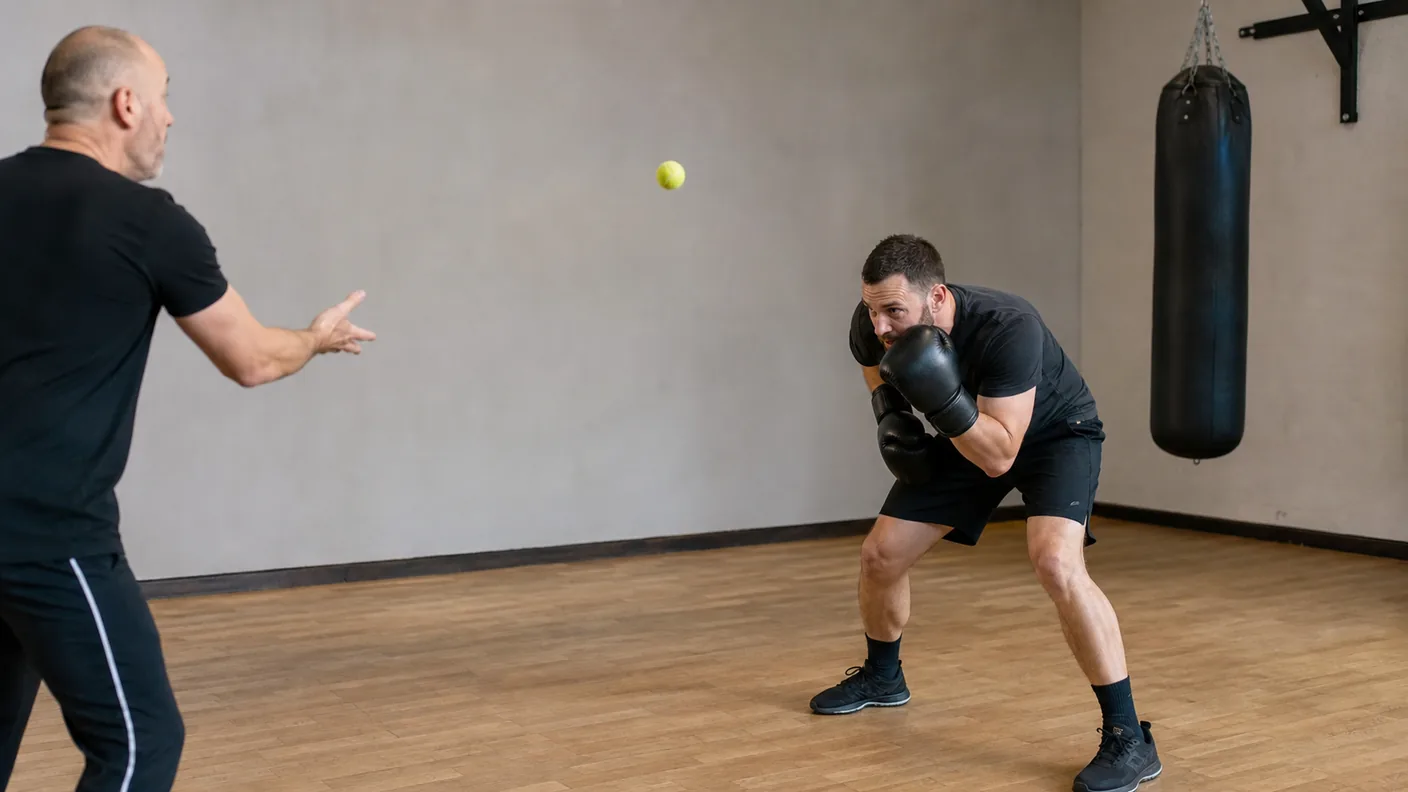
Head movement is useful only when it leaves you ready to box.
That is where many beginners go wrong. They see a punch, bend at the waist, lose sight of the other boxer and arrive in a position where neither hand can work. The punch has missed, but the next one is already on its way.
A tennis ball gives you a gentler way to learn the first part of the habit. It asks you to keep your eyes open, make a small movement and return to shape. It does not make you good at sparring on its own. It does give a coach a clear view of whether you are moving the head with the feet and guard still organised.
Watch the drill below, then use the progressions after it to make the ball a coaching tool rather than a game.
What the tennis ball slip drill is for
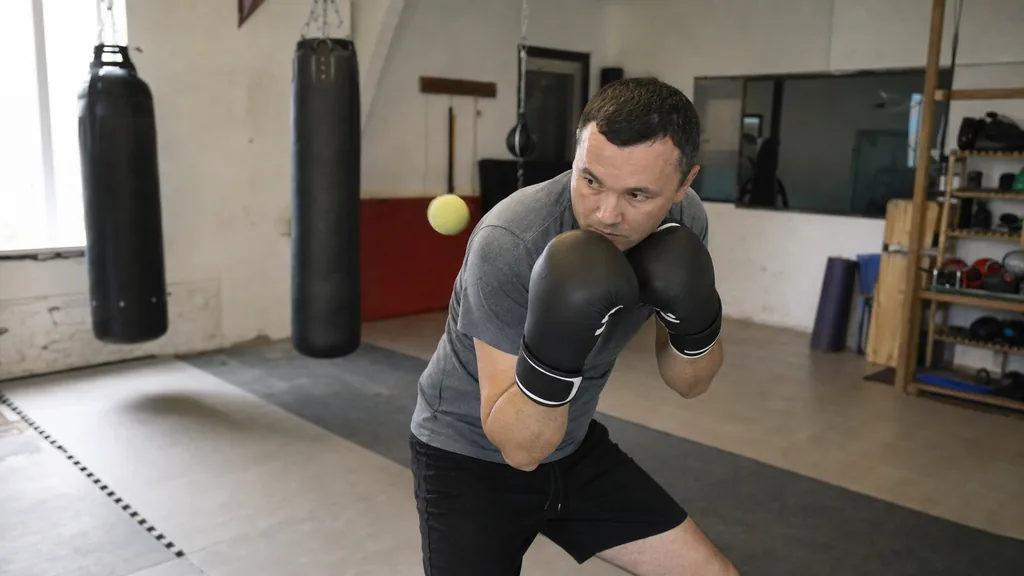
The basic version is simple. A coach stands at a safe distance and softly tosses a tennis ball towards the boxer’s head line. The boxer makes a small slip, lets the ball pass and returns to stance. No one is trying to hit anyone. The ball is only a cue.
That cue has value because it makes the boxer react to something travelling towards the face without adding the pressure of a punch. A systematic review of anticipation in combat sports found that skilled athletes use earlier visual information to make better decisions. The tennis ball is not a replacement for live partner work, but it gives a beginner a manageable first task: see the object, keep the eyes up, move a little and recover.
The aim is not dramatic evasions. A good rep can look almost boring. The nose moves off the ball’s path, the knees soften, the shoulders turn a little and the gloves stay close enough to protect the face. Then the boxer is ready again.
Think small movement, clear eyes, ready hands.
Set it up so the drill teaches boxing
Stand in your ordinary boxing stance, not square to the coach. Keep the lead foot forward, the rear hand close to the cheek and the chin behind the lead shoulder. The coach should stand far enough away that the toss has an obvious, gentle arc.
Start with a slow underhand toss at one side of the head. Do not throw the ball hard. Do not aim at the nose. Do not surprise someone who has not agreed on the pace. The first job is to show the direction clearly enough that the boxer can move with control.
The boxer should slip outside the ball’s line by a small amount. If the ball goes past the lead side, the head moves a little towards the rear side. If it goes past the rear side, the head moves a little towards the lead side. Keep the back straight enough to see the coach. A fold at the waist might avoid the ball, but it does not make a useful boxer.
Keep the eyes on the coach
The drill gives the coach a low-stakes way to spot blinking, turning away or pulling the chin high before partner work makes those habits more urgent.
Keep your gaze on the coach’s upper chest, not on the ball itself. The ball is only the trigger. In a real round, watching the glove alone is usually too late. You are trying to notice the shape of the person in front of you: shoulder movement, weight shift, a step or a hand leaving guard.
Our guide to defending the jab in boxing explains why the best defensive answer depends on range. The tennis ball drill is not teaching every answer. It is teaching the starting discipline of seeing the line without losing your posture.
Add the return only when the slip is clean
Once the boxer can make a small slip and return to guard, add one simple action afterwards.
The cleanest option is a jab. Coach tosses the ball, boxer slips, boxer returns a light jab to a mitt, then resets. This makes the point clear: the slip was not the finish. It put the boxer in position to do something useful.
After that, a three-punch return can work well on pads. Slip, jab, cross, lead hook, then return to guard. Keep it controlled. The purpose is not to throw a fast combination because the ball went past. The purpose is to connect a defensive movement to balanced punching.
A study of lead straight punches found that punch performance changes with how the body segments work together. In gym terms, a good punch needs the feet, trunk, shoulder and hand to arrive in sequence. If the slip leaves you folded over, square or reaching, the return will show it immediately.
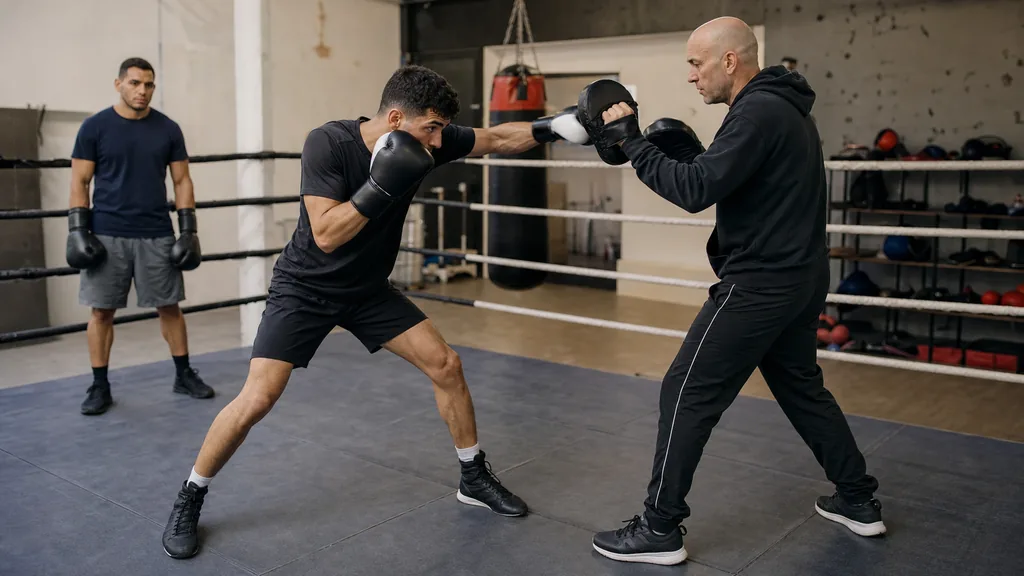
If the guard drops during the slip or the boxer keeps moving after the ball has passed, go back to the first version. Good defence begins with recovery, not with extra punches.
A three-round progression
Use this after a normal warm-up, before hard bag work or any controlled partner rounds. Three short rounds are enough for most people.
Round one: single-side slips
The coach gives the same gentle toss to one side for 30 seconds, then changes side. The boxer slips, holds the stance for one beat and returns to guard. This gives the coach time to check the eyes, chin, feet and rear hand.
The standard is simple. Did the ball miss because the head moved, or because the whole boxer fell away from it? The first answer is useful. The second needs tidying up.
Round two: choose the side
Now the coach varies the side of the toss. The boxer does not know which direction is coming, but the pace remains slow. This is where people reveal whether they are guessing.
If the boxer starts moving before the ball is released, pause and reset. The goal is to read the cue, not perform a memorised left-right pattern. If they are late, do not speed the ball up. Bring the coach closer only when the basic movement stays calm.
Round three: slip, punch, reset
Add a mitt at a safe distance. The coach tosses the ball, the boxer slips, lands a short combination on the mitts and finishes in stance. Begin with one jab. Build to jab-cross or jab-cross-hook only when the first punch is landing from a balanced position.
This round should still feel technical, not frantic. If the boxer is chasing the mitts with the chin or throwing while the feet are crossed, the drill has become too hard.
Common mistakes to stop early
The first is over-slipping. If you move your head a foot to avoid a tennis ball, you would leave too much space against a real punch. Make the ball miss by enough, not by a mile.
The second is bending at the waist. Your eyes disappear, the back rounds and the hands get trapped below the head. Use the knees and a small turn through the hips instead.
The third is lowering the rear hand. Beginners sometimes pull the lead hand across the face and let the other glove fall. The rear hand should stay home while the head moves.
The fourth is treating the ball as a reflex contest. Faster is not automatically better. A clean, readable toss lets the boxer learn the right response. Random hard throws usually teach flinching.
The fifth is adding counters before the stance is ready. A slip that leaves you unable to jab, step or defend again is not finished yet. Our article on what to do after you punch in boxing explains why every action needs an after-plan.
Where it belongs in training
This drill is useful for adults who are new to defensive movement, for returning boxers who need to make their slips smaller, and for coaches who want a clear warm-up before pad work. It is not sparring preparation by itself. You still need controlled partner drills where someone throws real boxing shapes at sensible speed.
At Honour and Glory, beginners do not need to spar to learn how stance, guard, distance and reaction fit together. In our Recreational Adults boxing classes, the coach can slow a drill down until the movement is useful, then build it back into pads and partner work. If you are near Kidbrooke, that is a better starting point than trying to teach yourself to duck random objects in the kitchen.
The coaching cue is short: see it, move a little, return ready.
H&G Team
Writer at Honour & Glory Boxing Club, a community boxing gym in Kidbrooke, South East London.
KEEP READING
Boxing Move, Slip, Punch Reaction Drill
Build a cleaner response to pressure with a boxing drill that joins footwork, a compact slip and one balanced return shot.
How to Improve Your Head Movement: Drills That Help
Head movement is the most difficult defensive skill in boxing. Here are the drills that actually develop it, why most people practise it wrong, and what coaches look for.
Boxing Reaction Drill: Think While You Punch
A practical boxing reaction drill that teaches you to stay in guard, read a call and make a clean choice under pressure.
Was this page helpful?
It takes one tap, and it genuinely helps.
Choose your next step
Turn this article into the right action
Some readers are ready to book. Some need the class route first. Pick the route that matches what you actually want.