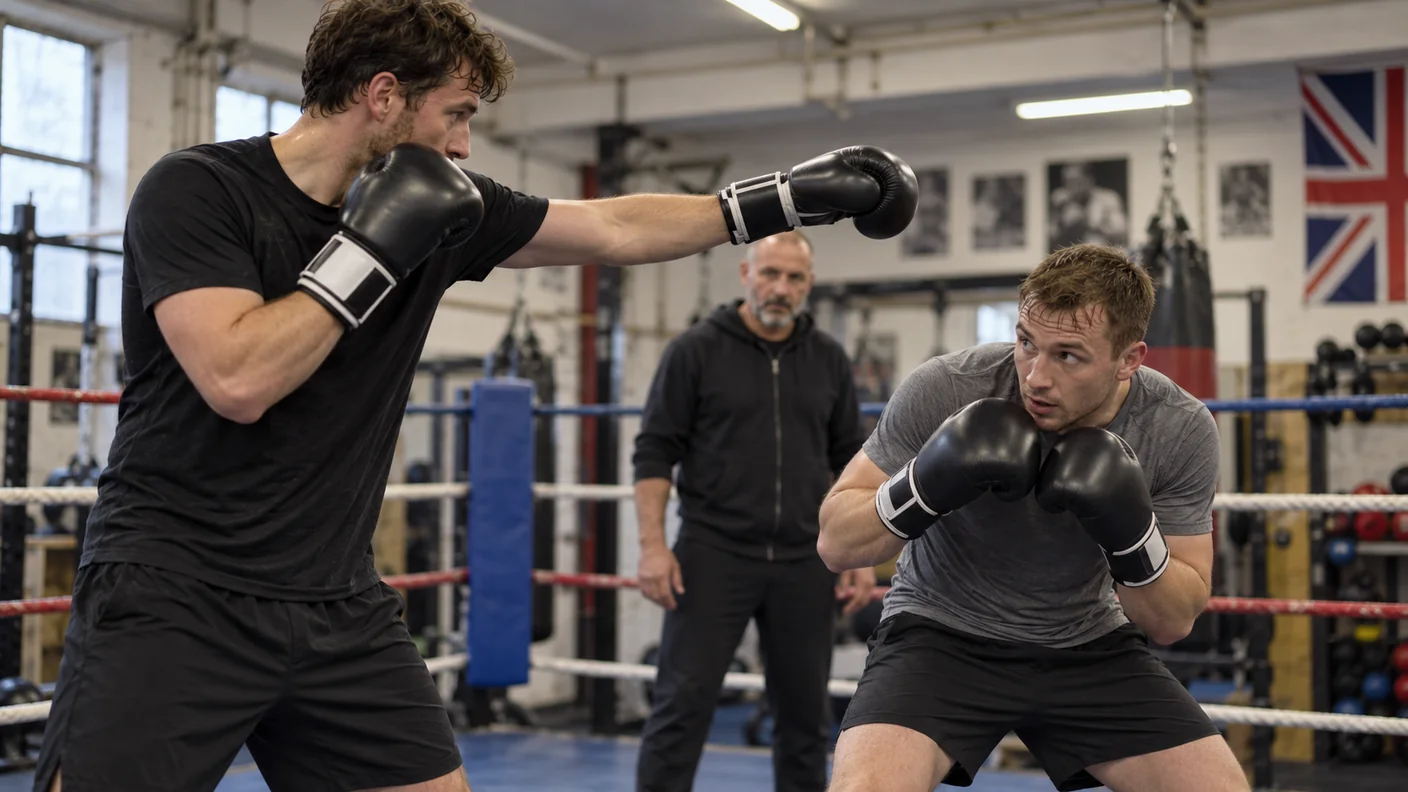
A slip should not make the other boxer disappear.
That is what goes wrong for many beginners. They move the head far enough to avoid a straight punch, then turn their eyes away, stare hard at the other boxer’s face, or become so focused on the movement that they stop seeing the rest of the exchange. The slip has happened, but they are no longer in a position to choose what comes next.
The useful version is quieter. Your hips and shoulders move your head just off the line, your gloves stay useful, and your eyes keep hold of the broad picture. You do not need to watch one glove like it is the only thing in the room. You need enough sight of the chest, shoulders and space around you to recognise the next decision.
Watch the short demonstration below, then use the drill in slow shadow boxing, pads or controlled partner work.
A slip is a change of line, not a blind dive
The simplest job of a slip is to move your head away from a straight punch. That does not require a dramatic lean, a bow at the waist or a full turn of the head away from the other boxer.
Start from a normal stance with the chin tucked, both gloves near the cheeks and a light bend in the knees. As a slow jab cue arrives, let the knees soften and the hips turn enough to move the nose just outside the line. Your shoulders will turn with the action. Your head does not need to be thrown sideways by itself.
The important detail is the finish. You should be able to pause after the slip and still see the chest and shoulders in front of you. If the movement has put the other boxer behind your shoulder, made you look at the floor or pulled your rear hand away from your face, it was too large.
A systematic review of anticipation in combat sports found that more experienced athletes made better use of early movement information. In a boxing gym, that means keeping the whole upper body in view long enough to notice a shoulder turn, a step or a second punch. It does not mean predicting everything before it starts.
Our guide to why beginners close their eyes in boxing covers the fear response that can make this harder. Here, the technical aim is more specific: move the head without throwing your vision away with it.
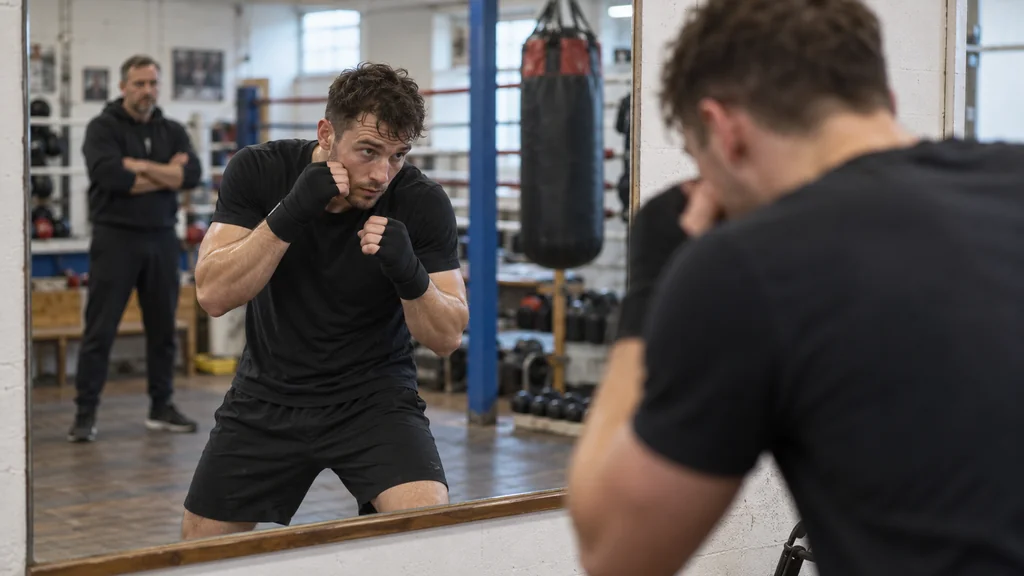
Do not chase the other boxer’s face with your eyes
There are two bad versions of the same habit.
The first is looking away as you slip. A boxer turns the head so far that they lose the other person completely, then has to find them again before they can defend or return. That is an expensive movement for something that should be small.
The second is staring at the other boxer’s face while the body moves. The head tries to stay fixed on one point while the hips rotate below it. The slip becomes stiff because the body is arguing with itself.
A more useful cue is to look through the chest and shoulders, not directly at the eyes and not down at the feet. The gloves, head and lead foot remain in your wider view. You are not trying to count every detail. You are keeping a steady picture while your body makes a small adjustment.
This matters in both directions. When you slip to the outside of a jab, you still need to see whether the partner has stepped forward, withdrawn the hand or shown the rear shoulder. When you slip inside, you need to know whether they have stayed balanced, covered the middle or crowded the space. The answer may be a return shot, but it may just as easily be guard and reset.
That is why a good slip feels less theatrical than people expect. It removes one line while leaving you connected to the next one.
Let the hips start the movement
Trying to push the head sideways is usually where vision goes wrong. The boxer throws the head out first, loses their balance and then turns their eyes to check where they ended up.
Start lower down. Make a modest hinge at the hips, keep the back long and let one shoulder draw back slightly. The hips and shoulders turn together, and the head leaves the centre line as part of that action. The feet remain staggered, with enough pressure through the floor that you can return to stance without a recovery shuffle.
Do not turn this into a deep squat. A small bend is enough. The aim is not to make yourself tiny. It is to create a position where the head can move without the chest falling forward.
The England Boxing coaching handbook places balance, technical position and controlled progressions at the centre of coaching. That is the standard to use here. If the slip costs you your stance or sight line, make it smaller before you think about adding a counter.
Our boxing move, slip, punch reaction drill is a useful next stage once the position feels stable. It adds a step and one calm return. First, learn to see the cue and finish in a place where a return remains possible.
A three-round vision-and-slip drill
Use a coach or trusted partner. Keep every cue clear, slow and well away from the face. This is technical work, not a contest over reactions.
Round one: see the line
Stand at a safe distance while the coach shows a glove or soft foam cue to either side of your head line. Do not move yet. Keep your gaze on their upper chest and call which side the cue appeared from.
This first round is useful because it makes the task honest. If you cannot notice the cue without staring at a glove, do not add the slip. Hold the stance, breathe and let your wider vision do the work.
Round two: slip and freeze
Now make a small slip away from the cue. After every repetition, freeze for one count.
The coach checks four things: eyes still forward, chin behind the shoulder, both gloves useful and feet still under the body. If you have to look down or take an extra shuffle before you can move again, reduce the size of the slip.
Do not add a punch yet. The pause makes it easy to see whether the movement was a controlled answer or a fast escape.
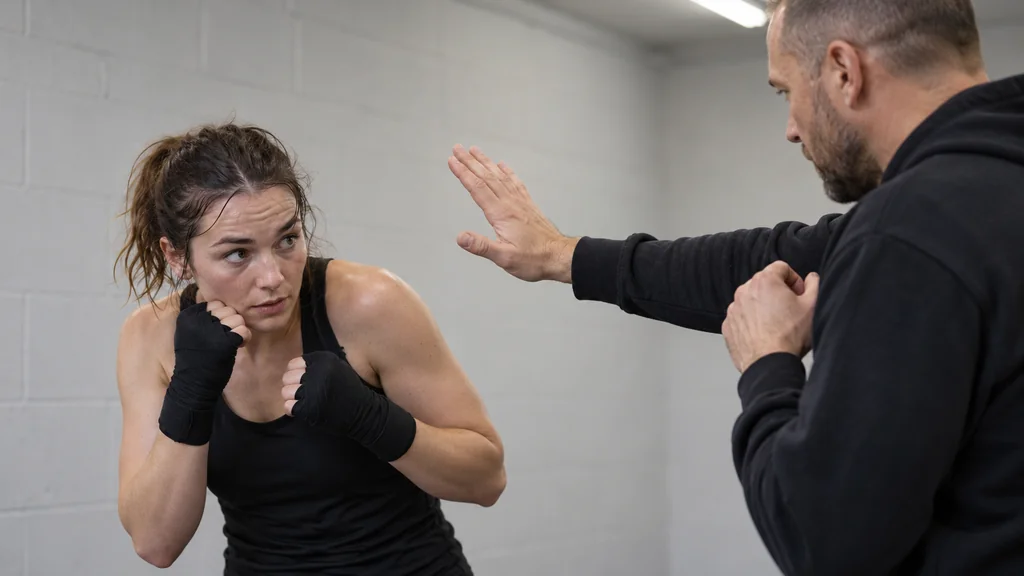
Round three: choose the finish
The coach can now show a slow jab cue, a small step in or no cue at all. After a genuine jab cue, slip and choose one calm finish: return to stance, take a small exit step or touch a coach-held mitt with a light pre-agreed punch.
If no cue appears, stay in stance. Do not perform a slip simply because you expect one. This is the difference between moving your head and reading a problem.
Keep the number of choices low. A new boxer does not need a five-punch answer. One tidy movement with the eyes still up teaches more than a long sequence performed without seeing it.
Common mistakes to catch early
The first is turning the head farther than the body. Your eyes leave the partner, your neck tightens and the slip becomes a lurch. Let the shoulders and hips take the head with them.
The second is trying to watch the glove all the way through the movement. A punch is easier to recognise before it is close. Keep the broad picture of the upper body instead of chasing the last moving object.
The third is making the slip large because you do not trust it. Big head movement often produces a bigger problem: the feet cross, the chest folds and the gloves drift. Move just enough for a straight line to miss.
The fourth is forcing a counter. A slip can create a useful angle, but it does not guarantee a clean punch. If the partner has stepped away, covered or closed the space, take your guard home and reset. Good defence is still good work when it gives you no obvious shot back.
Where the drill belongs
Use this after the warm-up and before hard bag rounds, fast pads or controlled sparring. It works especially well when someone says they can make a slip in the mirror but lose composure as soon as another person starts moving.
Start with shadow boxing if you are new. Imagine a jab line, make a small slip, keep your gaze level and return to stance. Then move to a partner cue only when the shape stays calm. Recreational boxing does not require sparring, and a technical drill does not need contact to show whether your eyes, feet and guard are working together.
At Honour and Glory, our Recreational Adults boxing classes use coached pads, bag work and controlled partner drills to build these details safely. If you are travelling from Kidbrooke, Greenwich or nearby, start with a class where a coach can see whether your head movement keeps you able to box.
The cue is simple: move the line, keep the picture, return in stance.
H&G Team
Writer at Honour & Glory Boxing Club, a community boxing gym in Kidbrooke, South East London.
KEEP READING
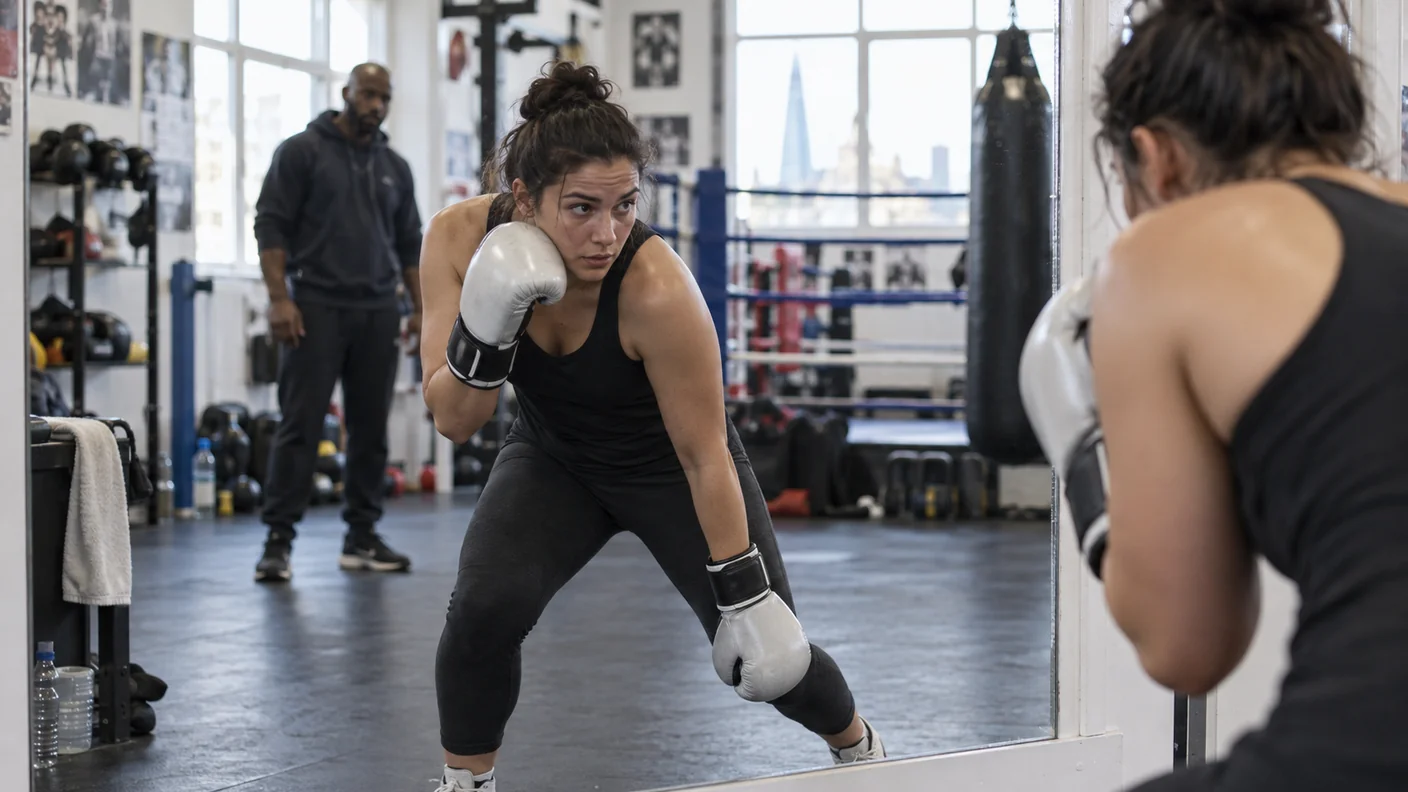
Knee-Touch Slip Drill for Better Head Movement
Use a knee-touch slip drill to find a smaller, balanced head movement before you add jabs, counters or partner cues.
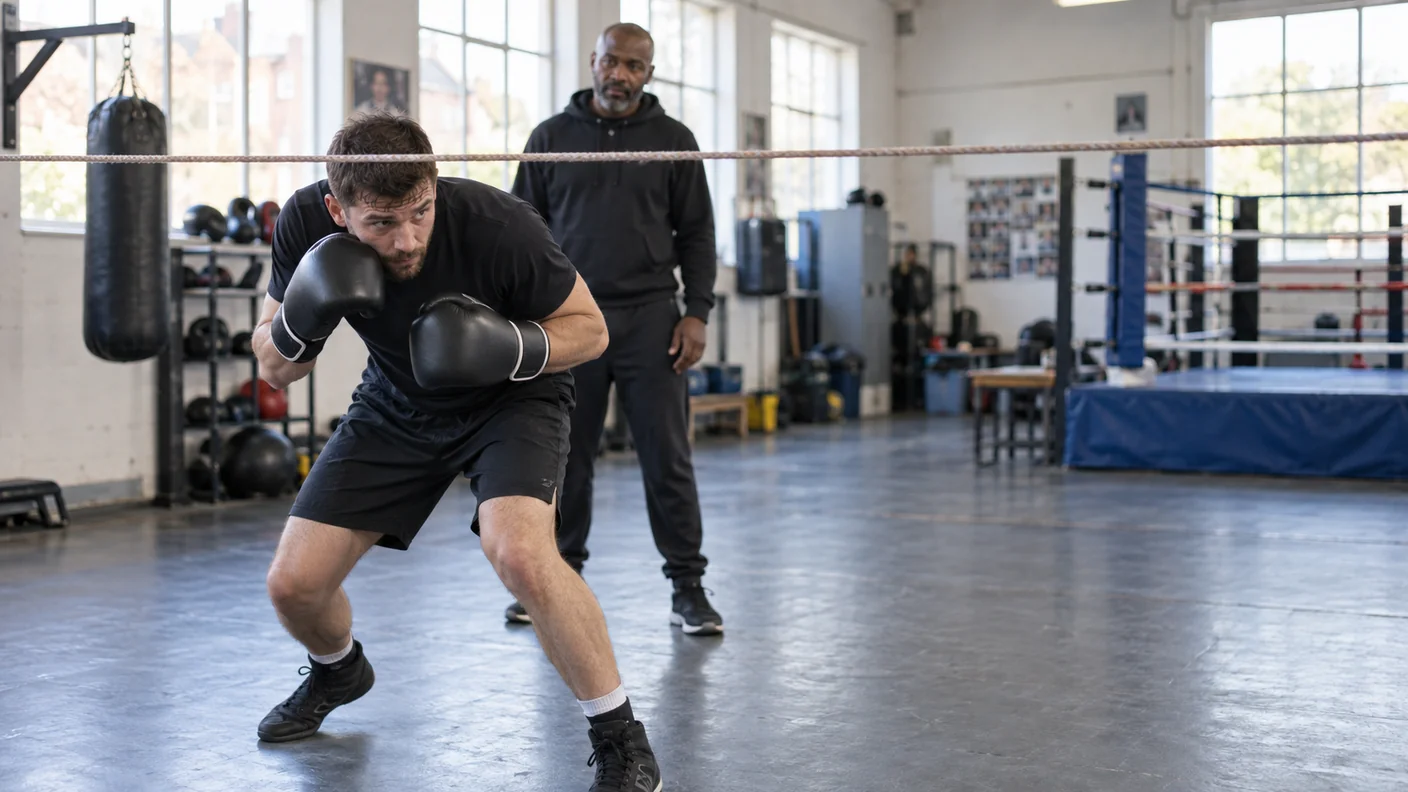
Diagonal Slip-Line Drill for Boxing Footwork
Use a slip line to connect diagonal footwork, a small level change and a stable guard without turning head movement into a big lean.
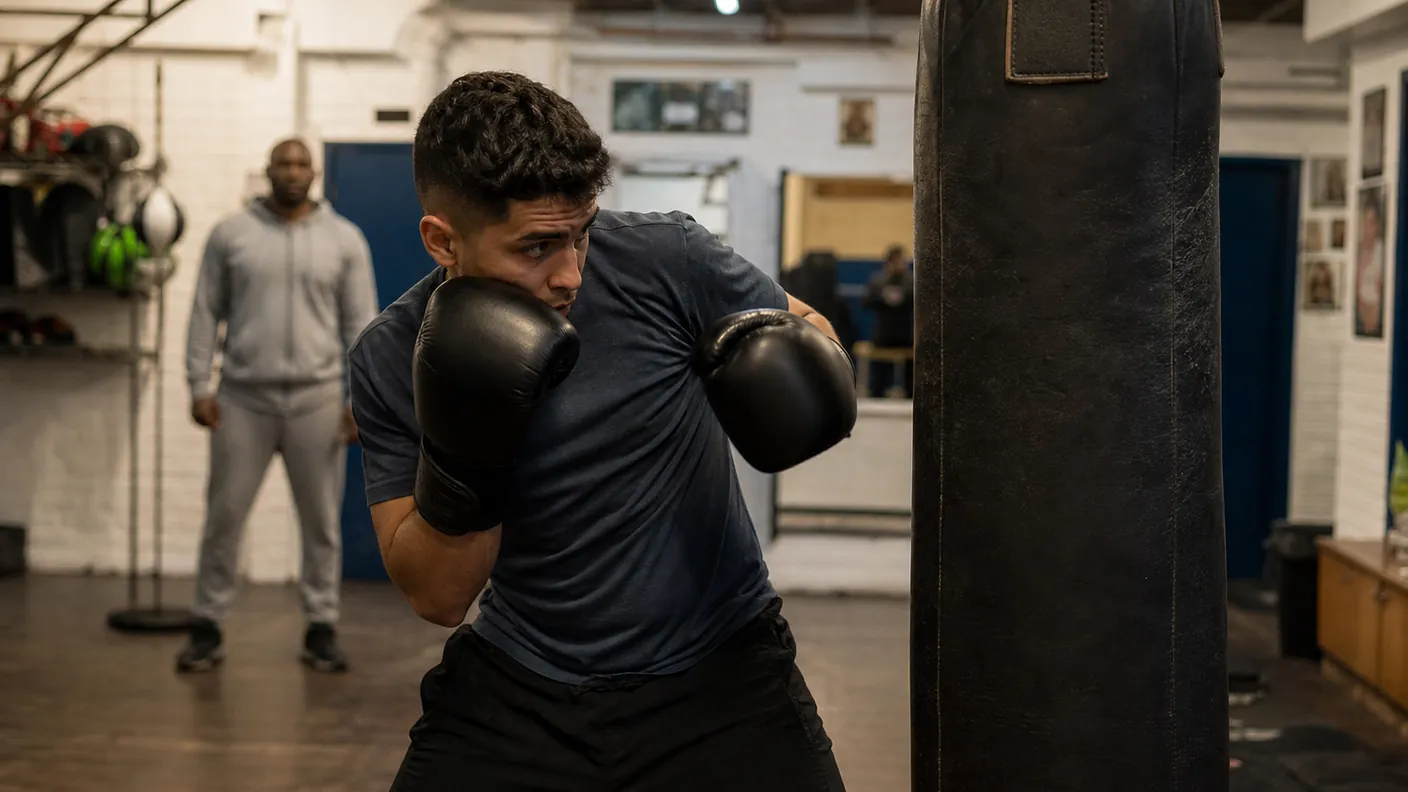
Jab, Slip, Slip, Hook: A Calm Boxing Drill
Use a controlled jab-slip-slip-hook drill to join your guard, head movement and lead hook without rushing the exchange.
Was this page helpful?
It takes one tap, and it genuinely helps.
Choose your next step
Turn this article into the right action
Some readers are ready to book. Some need the class route first. Pick the route that matches what you actually want.