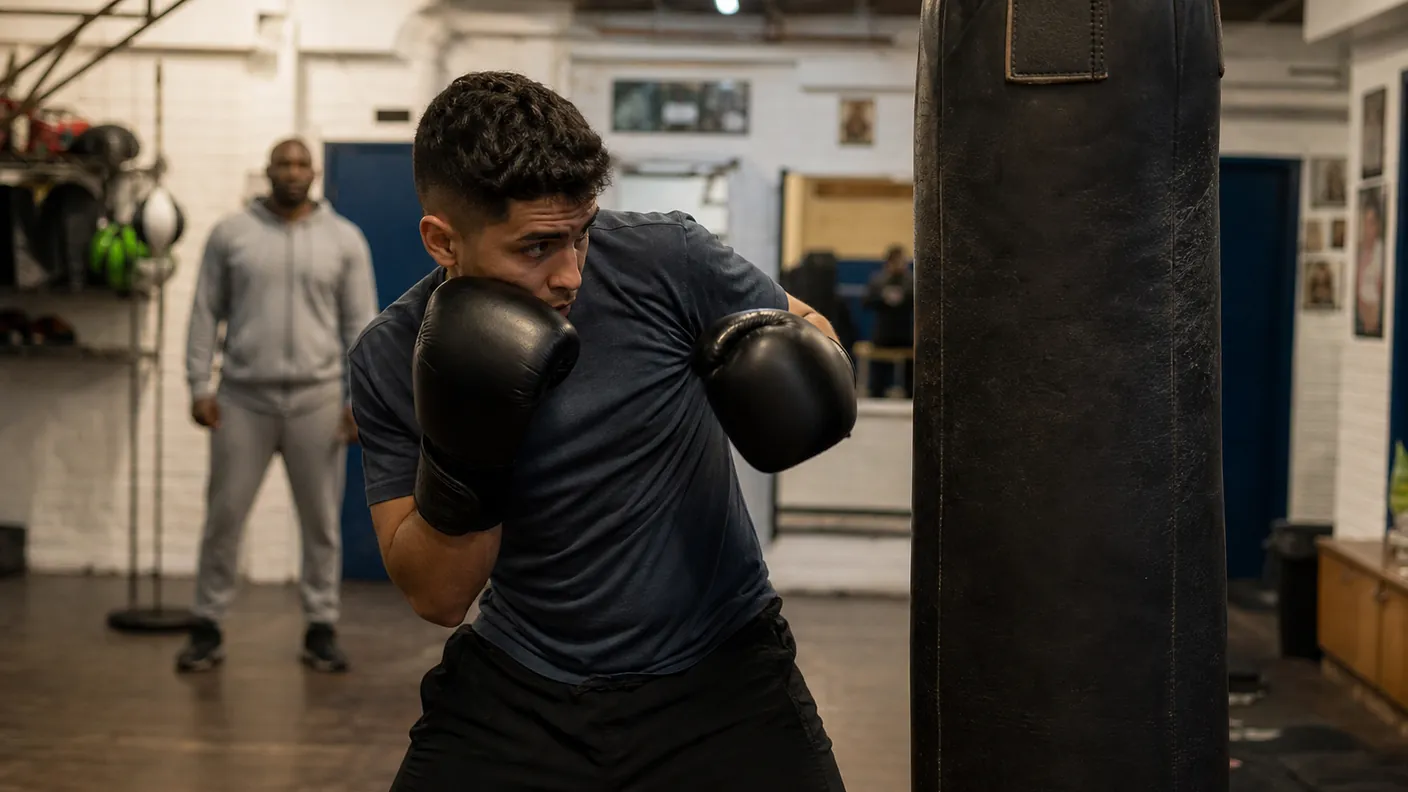
A slip is only useful if it leaves you able to do something.
That sounds obvious, but it exposes a common beginner problem. Someone sees a straight punch, moves their head well clear, then has to stand up, find their feet and remember they were meant to punch back. The defence happened. The boxing did not.
The jab, slip, slip, hook drill gives the movements one connected job. You use a light jab to organise the lead side, make two small defensive movements without losing the guard, then bring a short lead hook to a pad only when you are still balanced. It is not a sparring trick and it is not a combination to force at full speed. It is a way to stop treating attack and defence as separate turns.
Watch the clip below for the shape of the movement. Keep your attention on the tight guard and small shoulder movement, not on copying someone else’s rhythm.
The drill starts with a useful jab
The opening jab is not there to win an exchange. It is there to put the lead shoulder, lead hand and feet in a position that can defend.
Throw a light jab at a focus mitt. Let the lead shoulder come with the glove and return the hand to guard. Do not lean your head over the front knee to make the punch reach. Step into honest range first, then let the jab travel and come back along its own line.
That return matters. If the lead hand floats after the jab, the next defensive movement becomes a scramble. If the rear glove has drifted, the hook at the end becomes a hopeful swing rather than a clean punch.
Our guide to defending the jab in boxing explains the wider choices of catch, slip and block. This drill narrows the job down. You are learning to keep a useful guard while the head changes line twice.
A technical review of boxing performance describes punching, movement, defence, distance and tactical behaviour as connected parts of the sport. In a normal gym, the test is simpler: after the jab and slips, can you still see clearly, stand properly and make a sensible next choice?
Make both slips small
The two slips are the heart of the drill, and they should be almost boring.
A slip is not a bow from the waist. It is not a dramatic lean with the rear foot lifting off the floor. It is a small movement through the knees, hips and shoulders that takes the head off the centre line while the eyes remain forward.
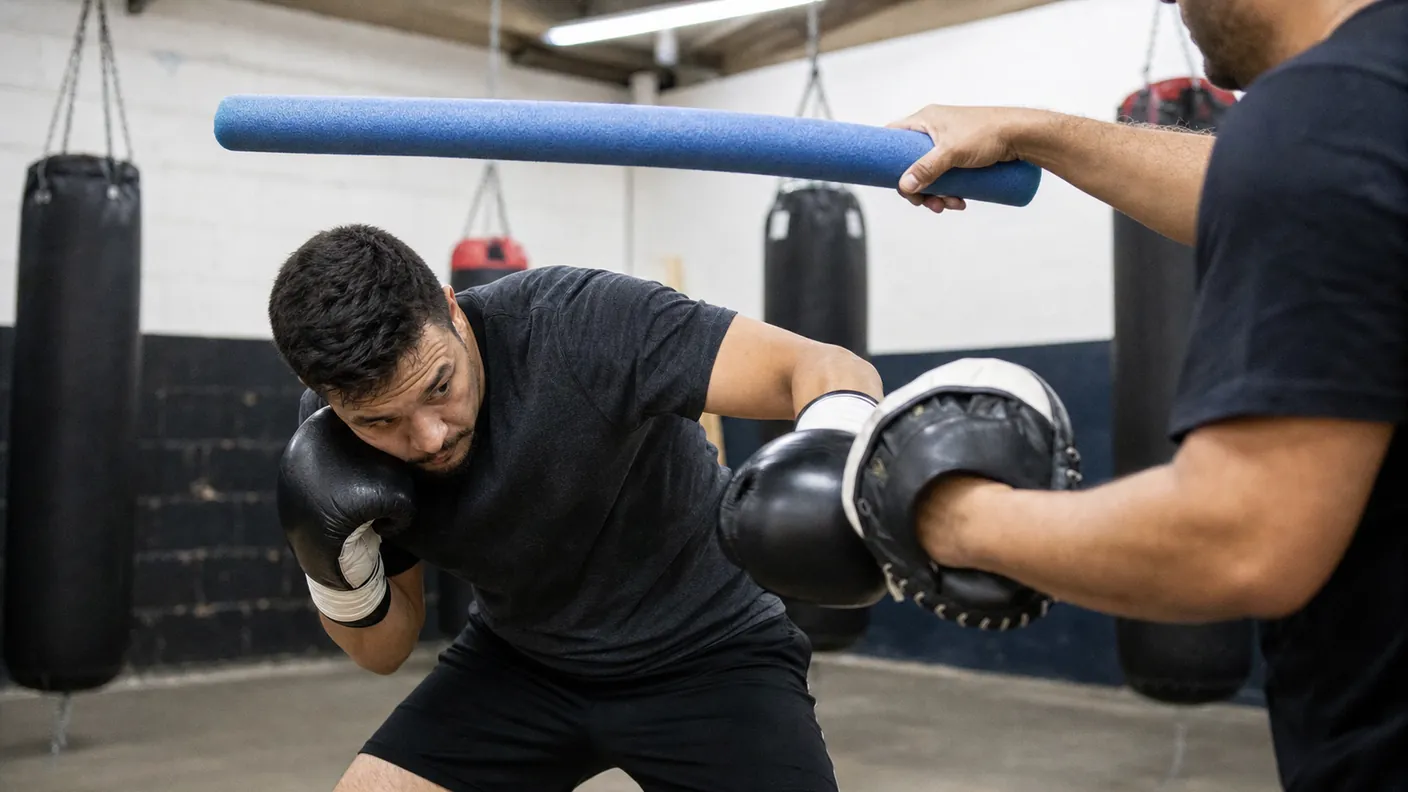
For the first version, have a coach or trusted partner give two slow, pre-agreed straight-punch cues with a glove or a pool noodle well clear of the face. The boxer makes one compact slip, returns through the middle, then makes the second compact slip. No contact is needed. The coach is checking shape, not trying to surprise anyone.
Keep both gloves near the cheeks. The lead glove should not pull down after the jab. The rear glove should not chase the imaginary punch across the room. A good slip moves the head by enough to change the line, while the guard stays ready for the next shot.
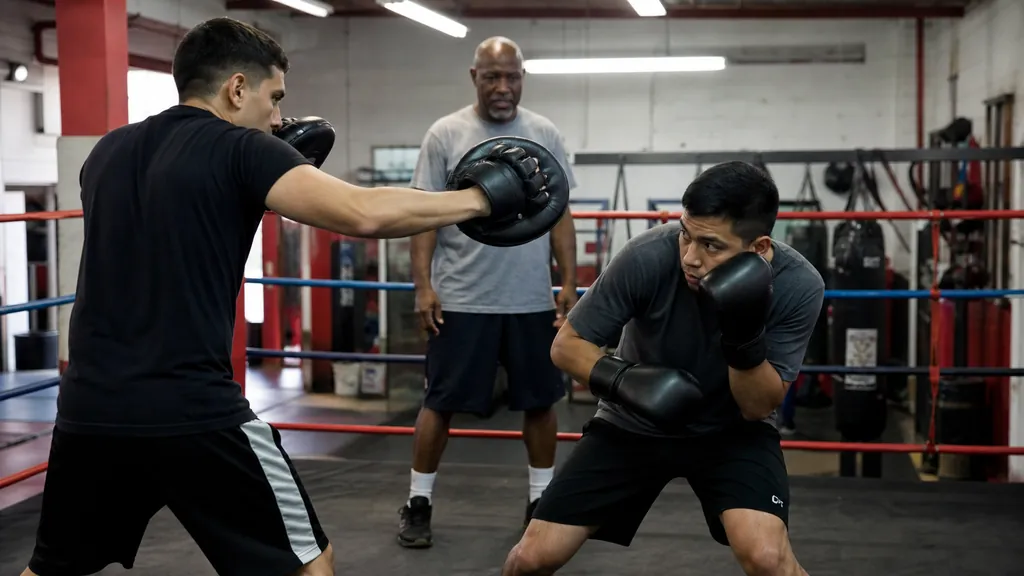
The England Boxing coaching handbook puts balance, technical position and controlled progression at the centre of learning. That is the right standard here. If a boxer loses posture on the first slip, the second slip and hook are not a progression. They are extra movement added to a mistake.
Let the second slip load the hook
The hook belongs at the end because the second slip can leave the lead side ready to turn. It does not give you permission to throw automatically.
After the second slip, pause for a fraction of a second. Are your feet still apart? Is your chin still protected? Is the lead shoulder in a position to turn? Is the partner holding a clear pad at an honest hook range? If any answer is no, reset instead of forcing the shot.
When the shape is right, bring a compact lead hook to the pad. Let the lead hip and shoulder turn together. Keep the elbow bent, make the glove travel on a short path, and bring it home before you admire it. The opposite glove stays close enough to protect the face.
The key is that the hook comes from the defensive shape, not after a theatrical reset. If you have to stand tall, pull the arm back and wind up, the slips were too large or the range is wrong.
This connects with boxing weight shifts that stop you punching in pieces. A good movement should leave you somewhere useful. In this drill, the second slip should leave you able to throw, cover or step out. It should not leave you stranded on one leg.
Build it in three calm rounds
Use pads first. A heavy bag can help later, but it cannot show whether your head movement would work against a real line or whether your guard opened while you were slipping.
Round one: jab and one slip
Work at low speed. Jab to a mitt, bring the hand back, then make one small slip around a slow cue. Freeze after every rep.
Check the details: chin down, eyes up, knees soft, both gloves useful. If the boxer is bending forward or reaching with the rear hand, remove the jab and practise the slip alone for a minute. There is no prize for adding the full pattern too soon.
Round two: jab, slip, slip, reset
Now add the second cue. Jab, small slip, return through the middle, small slip, then reset to stance. Do not add the hook yet.
The reset exposes the truth. A boxer who has slipped with control should be able to jab again, catch a return or take a small step. A boxer who has leaned or crossed their feet will need to rebuild before doing anything. That is the mistake to fix.
Round three: jab, slip, slip, hook, guard
Only now add a lead-hook pad. Use a touch or light technical shot, then bring the glove straight back to guard. Finish in stance, not in a pose.
A useful rhythm is one measured rep every few seconds. That gives the coach time to see whether the hook came from balance and whether the boxer can recover after it. Ten tidy repetitions teach more than thirty frantic ones.
Do not turn the drill into a fight
The biggest mistake is making the partner cues unpredictable too early. The boxer becomes anxious, the slips get bigger, and the hook appears from whatever position they can find. That is not decision-making practice. It is a fast route to poor habits.
Begin with clear, repeatable cues. Once the shape is settled, a coach can vary the timing slightly or ask for a reset instead of the hook. That teaches the real lesson: the hook is an option, not a debt you must collect.
The second mistake is dropping the hand during the slip. People often move the lead glove down because they want to see better. Keep the eyes up instead. Your gloves and shoulders protect you while your eyes read what is next.
The third mistake is making the hook long. If you are too far away, step to range before the drill starts. Do not try to solve a footwork problem with a wide arm. Our guide to boxing range and choosing the right punch explains why an honest range makes every punch easier to control.
Where this belongs in a session
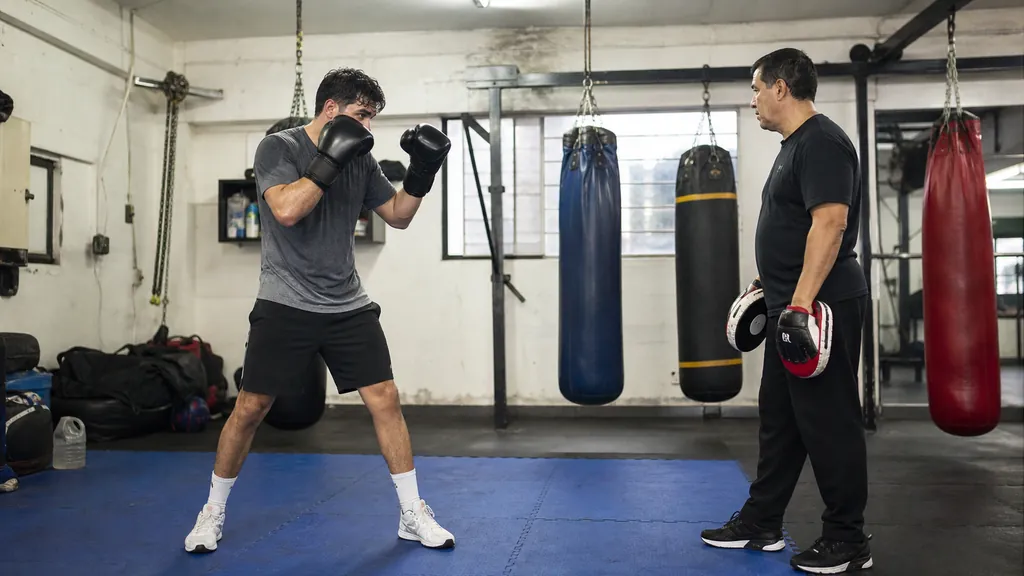
Use the drill after a warm-up and before hard bag rounds or open sparring. Three two-minute rounds are enough for most people: one round with one slip, one with two slips and a reset, one with the controlled hook finish.
It also works well as a partner drill for beginners when the rules stay clear. No surprise shots. No hard contact. No pressure to complete the hook if the balance is not there. A coach should be able to stop the sequence at any point and ask the boxer to show their stance, guard and eyes.
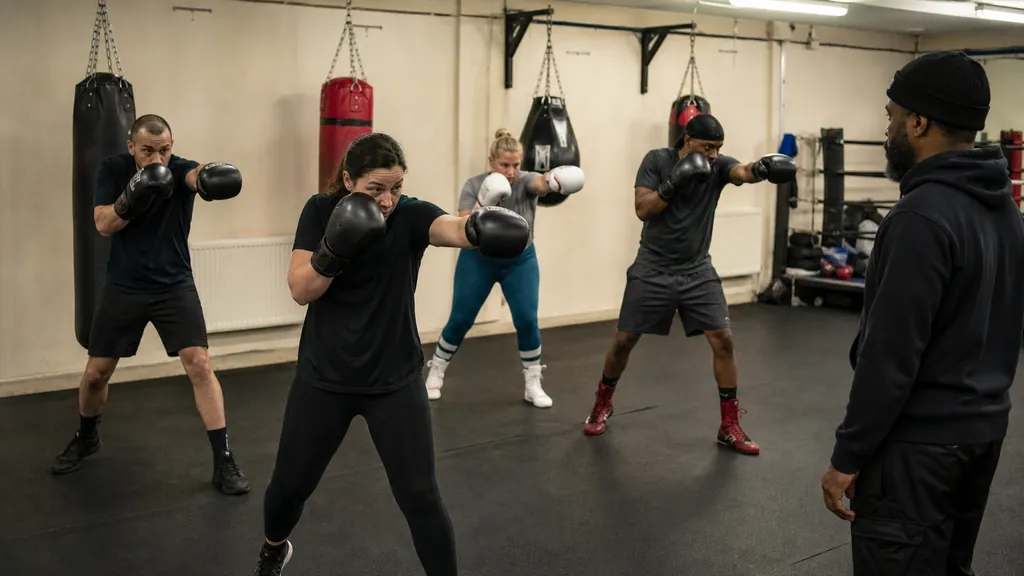
At Honour and Glory, our Recreational Adults boxing classes teach these movements through coached pads, bag work and controlled partner drills. If you are in Kidbrooke, Greenwich or nearby, you can learn the details in a room where someone can correct the small errors before they become automatic.
The cue is simple: jab, move small, finish balanced.
H&G Team
Writer at Honour & Glory Boxing Club, a community boxing gym in Kidbrooke, South East London.
KEEP READING
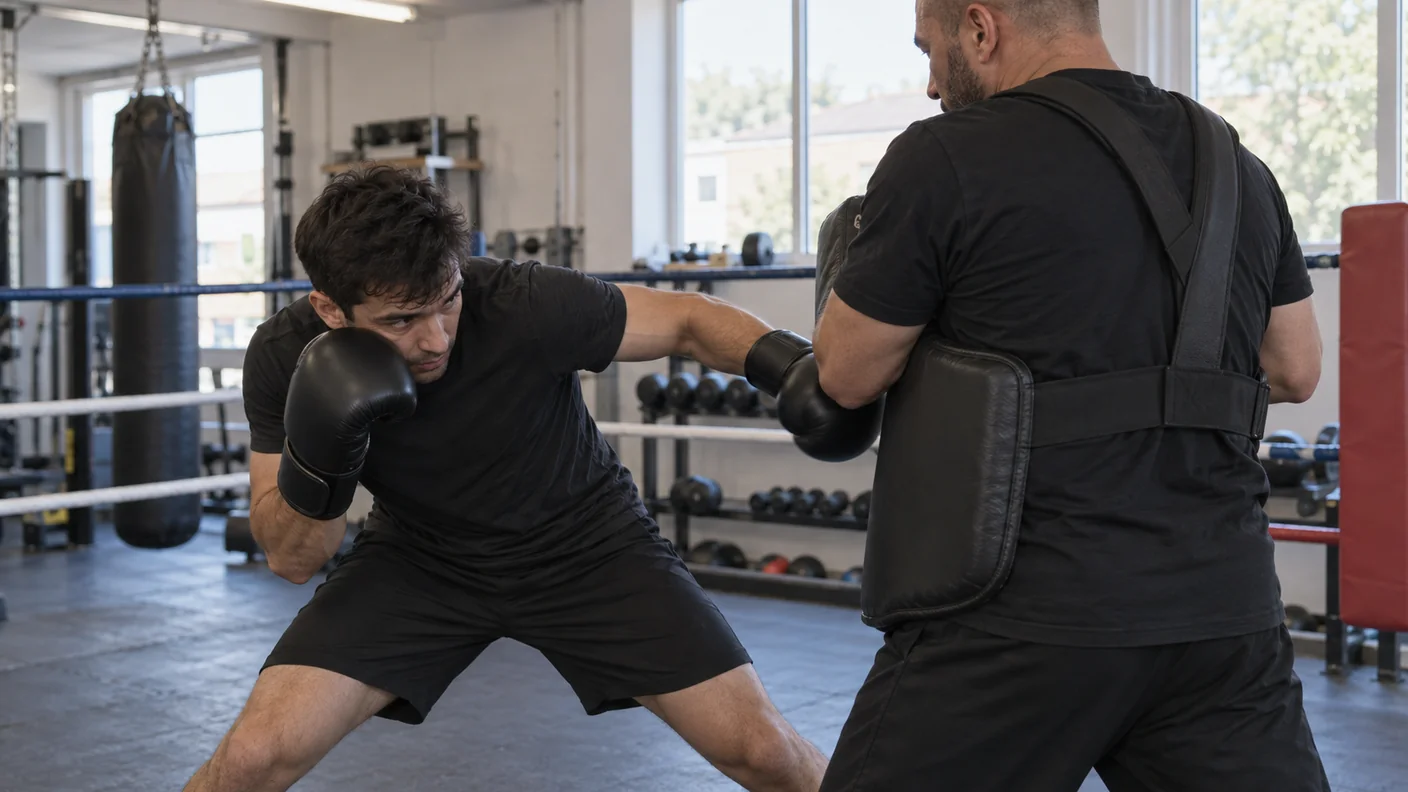
Slip Inside the Jab for a Body Hook
Use a small inside slip to move off the jab line, then build a compact lead hook to the body without losing your balance.
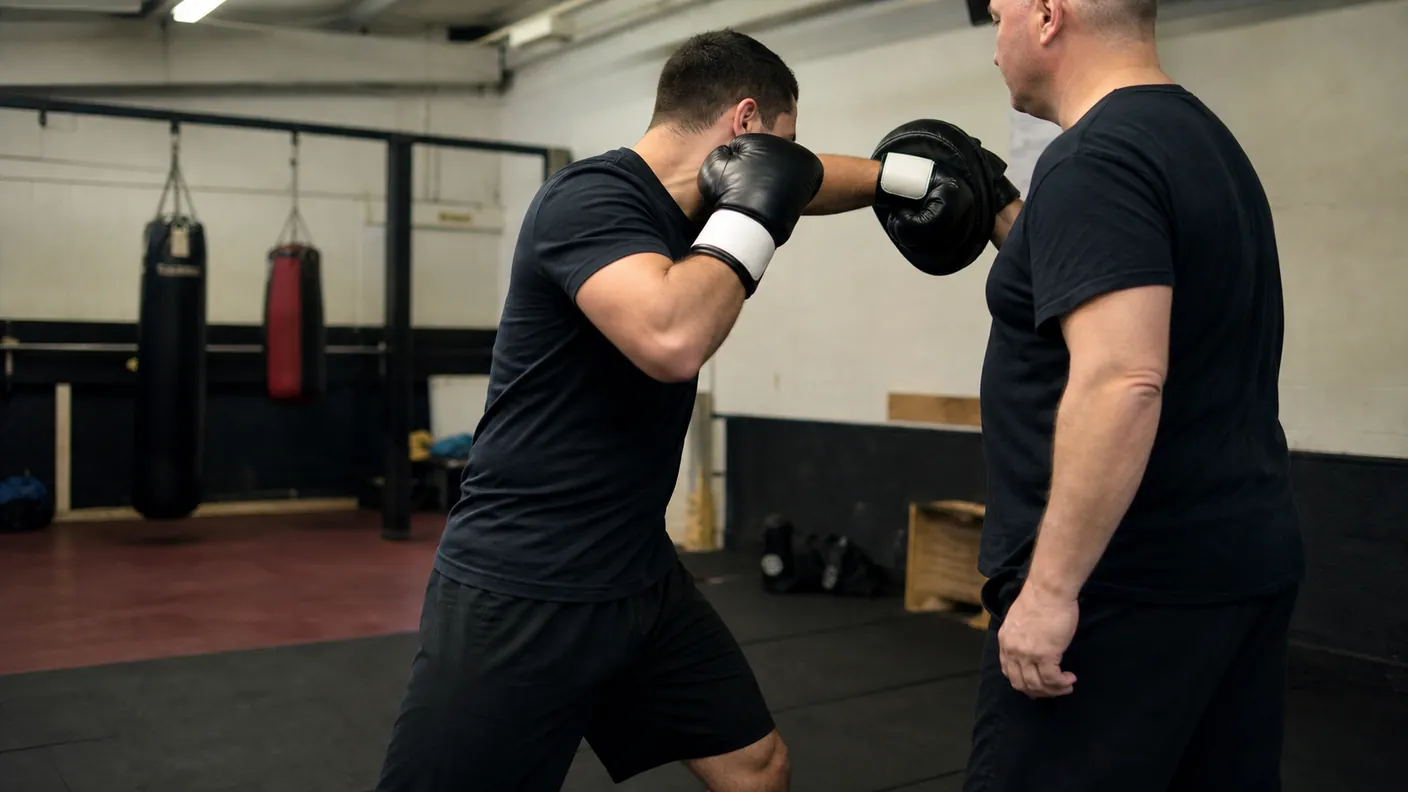
Inside Slip Lead Hook: A Controlled Jab Counter
Use a small inside slip and a compact lead hook only when the jab, range and guard make the counter an honest option.
The Hook-Jab: Use Your Lead Hand Twice
Learn how a compact hook-jab can change the line of attack, bring your lead hand home and help you leave the pocket in balance.
Was this page helpful?
It takes one tap, and it genuinely helps.
Choose your next step
Turn this article into the right action
Some readers are ready to book. Some need the class route first. Pick the route that matches what you actually want.