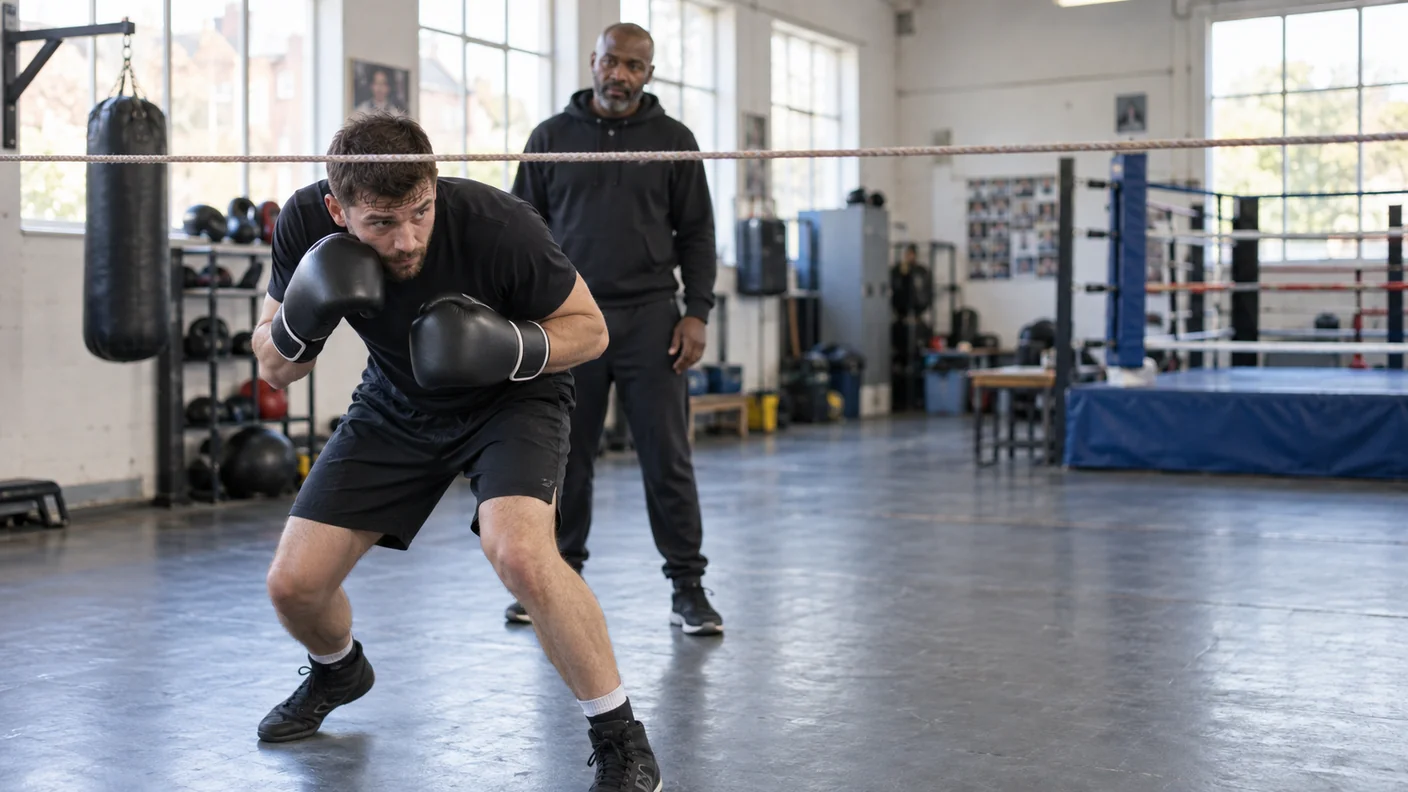
A slip line becomes useful when it teaches your feet to carry the head somewhere safer. It becomes theatre when you simply bend under a rope, then stand back in the same place with your feet square.
The diagonal slip-line drill gives the rope a better job. You step in or out on a slight angle, lower your level through the legs and arrive in a stance that can still jab, cover or move again. It is not an exercise in getting as low as possible. It is a way to stop your head travelling on an easy straight line whenever you move.
Watch the demonstration below once for the direction of travel, then again for the size of the movement. The useful version is compact.
Why a diagonal changes the drill
A boxer who only moves straight forward and straight back gives an opponent a familiar picture. The head may change distance, but it keeps returning to the same lane. A pure side step changes the lane, but can leave the boxer too far away if the feet drift.
A short diagonal combines both jobs. You are changing the line while taking or giving up a little distance. The slip line makes the level change visible, while the stance decides whether that movement is actually useful.
The England Boxing coaching handbook puts balance, controlled progression and good posture before complicated sequences. That is the right order here. A diagonal is only worth using when you can finish it with your hands available and your feet apart.
Set the line at the right height
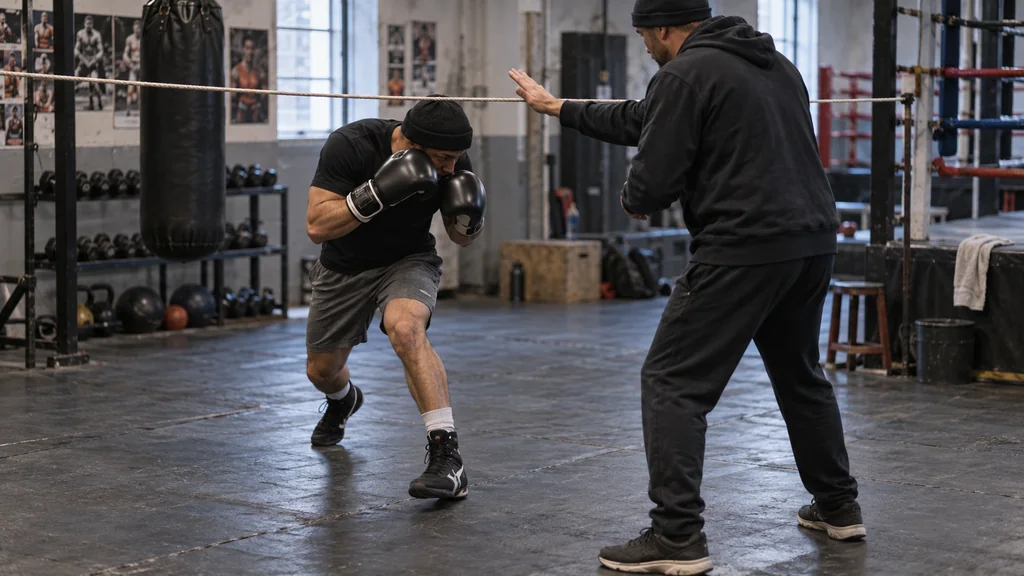
Use a light rope, a hand wrap or a soft length of cord. It should sit around shoulder height when you are in stance. The line is a reference, not something that should scrape the top of your head or pull you into a deep squat.
If the line is too low, you will fold from the waist or stare at the floor. If it is too high, you can walk underneath without changing level. Set it so you have to soften the knees and let the body pass under with the back long and the eyes forward.
Do not tie a line across a walkway or use a fixture that could come loose. A quiet corner of the gym, a clear space and a coach checking the setup are better than improvising around people or equipment.
The drill should feel like moving beneath a punch line, not crawling under a barrier. Your gloves stay near the cheeks. Your chin stays tucked. The head travels only far enough to clear the line.
Start with four quiet directions
Before adding punches, learn the travel. An orthodox boxer can use four basic routes. Southpaws reverse the picture, but the same rules apply.
- Step diagonally forward towards the lead-hand side, lower under the line and settle.
- Step diagonally forward towards the rear-hand side, lower under the line and settle.
- Step diagonally back towards the rear-hand side, lower under the line and settle.
- Step diagonally back towards the lead-hand side, lower under the line and settle.
The angles do not have to match perfectly. Moving towards the lead side can usually cover a little more ground than moving towards the rear side. That is normal. Trying to force identical big steps is how the feet cross or the stance becomes too long.
A useful cue is: push, pass, settle. One foot creates the space, the head passes beneath the line through a small bend in the legs, and the other foot restores your boxing stance. Do not walk sideways with the feet parallel. Do not let them click together underneath you.
This develops the same discipline as moving in and out without crossing your feet, but asks you to preserve it while the head level changes as well.
Lower with the legs, not a waist bend
The common mistake is to chase the rope with the shoulders. The boxer leans to the side, folds at the waist and lets the feet follow late. They get beneath the line, but cannot throw a clean jab without a recovery shuffle.
Instead, soften both knees, keep the chest organised and let the hips move with the stance. The head can travel slightly to the side and down, but it should remain broadly between the feet. If one shoulder has dropped far below the other or your eyes are looking at the floor, make the movement smaller.
A review of boxing performance and biomechanics describes punching, movement and defence as connected tasks rather than separate actions (boxing performance review). The practical test is simple: after each pass under the line, could you throw one measured punch or cover a slow cue without rebuilding yourself first?
Build the drill over three rounds
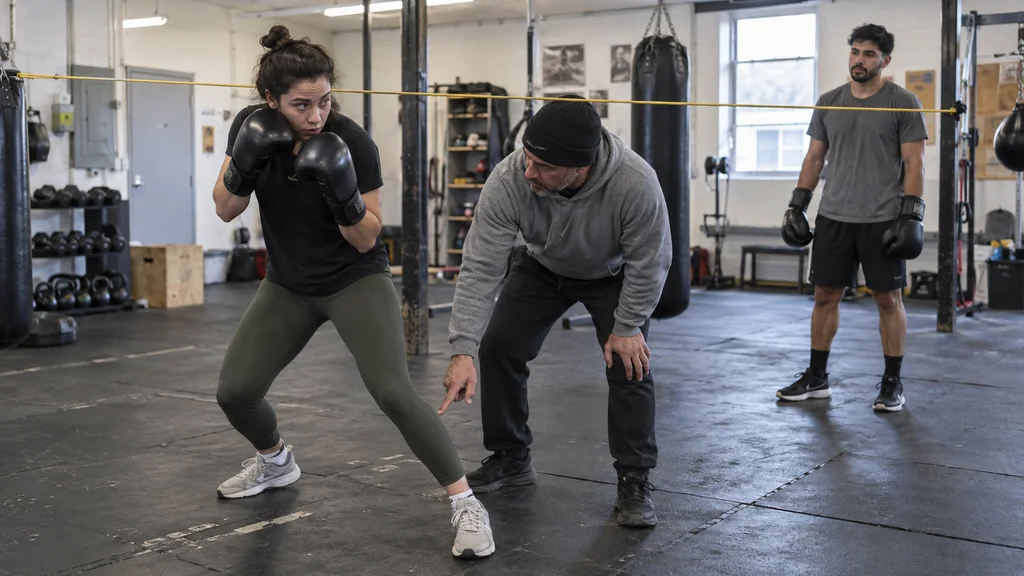
Start with one-minute rounds. This is technical work, so do it while you are fresh enough to notice where the feet and guard are finishing.
Round one: diagonal steps only
Move through the four routes without punches. Pause after every pass beneath the line. Check that the feet are staggered, both gloves are home and you can see straight ahead.
If a route repeatedly makes you square, shorten it. The rope is not asking for a larger movement. It is exposing the amount of movement you can currently control.
Round two: add one straight punch
On each forward diagonal, let a coach show a focus mitt after you have settled. Throw one light jab or cross only when the mitt is at honest range. On each backward diagonal, make the exit and return to guard without a punch.
This stops the drill becoming a dance around a rope. The forward step needs to leave a punch available. The backward step needs to leave a guard available. If either result is missing, slow down.
Round three: add a choice after the line
Ask the coach to vary the finish. They can hold a mitt for a jab, show a guarded hand that asks you to cover, or leave no cue at all. The right response may be a punch, a cover or a full reset.
That choice matters. A diagonal movement has not earned a counter just because it looks neat. If the range is wrong or the target has gone, bring the hands home and take your position back.
Do not turn it into a constant bob
Head movement works when it has a reason. Constantly dropping under an imaginary line can make your rhythm easy to read and can tire the legs before the useful part of the session starts.
Use the line as a short technical block. It can prepare you for a controlled pad round, sharpen the shape of a side exit or give you a clear correction after you have noticed that your head stays still when you step. It is not a replacement for seeing actual punches, catching a jab or learning a proper guard.
Our guide to boxing side steps without drifting is a useful companion. The side step changes the line. This drill adds a modest change of level, so the feet and head arrive together rather than doing two unrelated jobs.
Four faults to catch early
The first is crossing the feet. A diagonal step still needs the stance to stay usable. If the legs cross, reduce the distance and return to the slow version.
The second is dropping both hands to make room under the line. Your gloves should travel with you. A rope does not punch back, but the habit will matter when a partner does.
The third is leading with the head. If the face arrives before the feet, you are reaching into the movement. Let the legs move the stance first.
The fourth is forcing a punch after every pass. The drill works when it leaves you able to choose. A clean reset is better than a cross thrown from the wrong range.
For adults in Kidbrooke, Greenwich and nearby, our Recreational Adults boxing classes use coached footwork, pads and controlled partner drills to make defensive movement practical rather than decorative.
The coaching cue is simple: move on an angle, go under with the legs, finish ready to box.
H&G Team
Writer at Honour & Glory Boxing Club, a community boxing gym in Kidbrooke, South East London.
KEEP READING
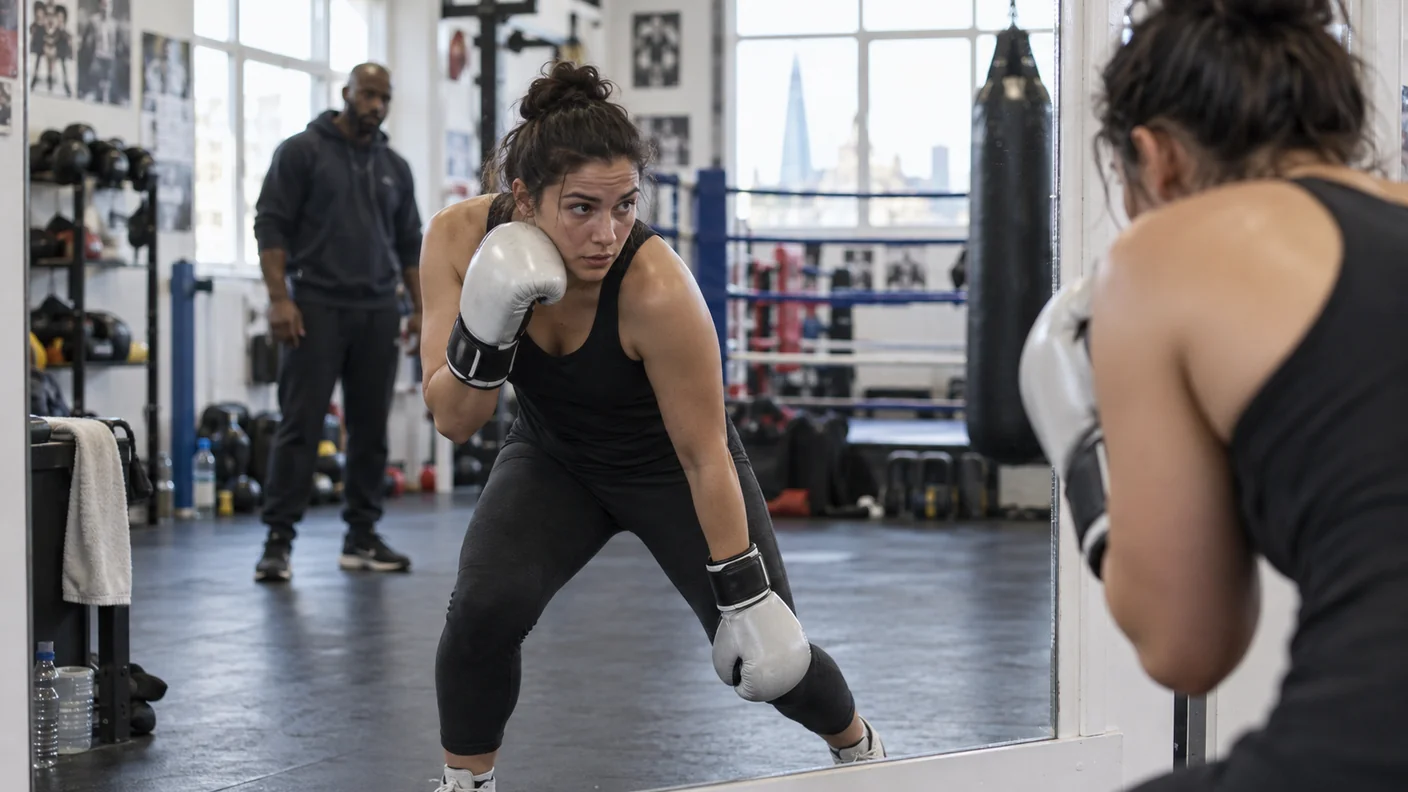
Knee-Touch Slip Drill for Better Head Movement
Use a knee-touch slip drill to find a smaller, balanced head movement before you add jabs, counters or partner cues.
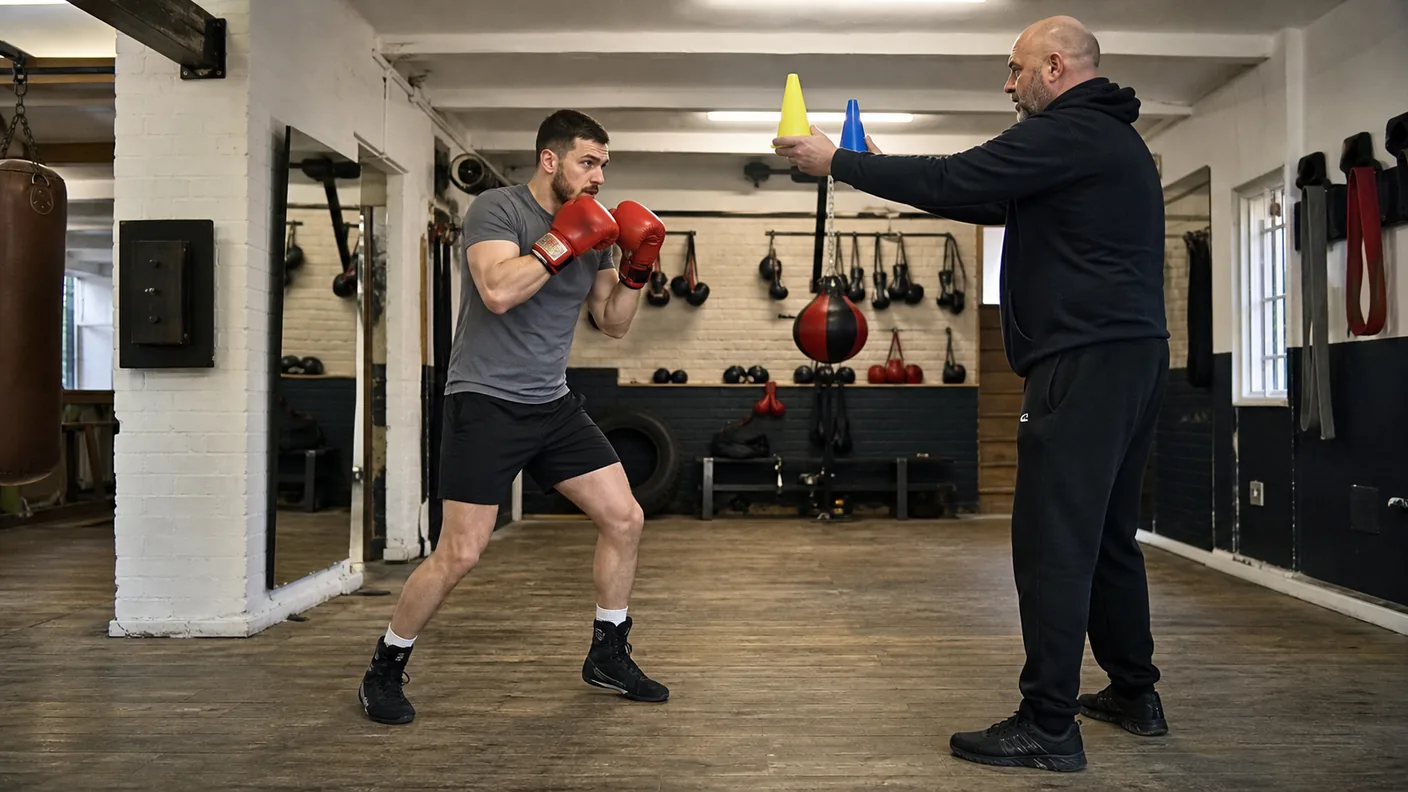
Boxing Move, Slip, Punch Reaction Drill
Build a cleaner response to pressure with a boxing drill that joins footwork, a compact slip and one balanced return shot.
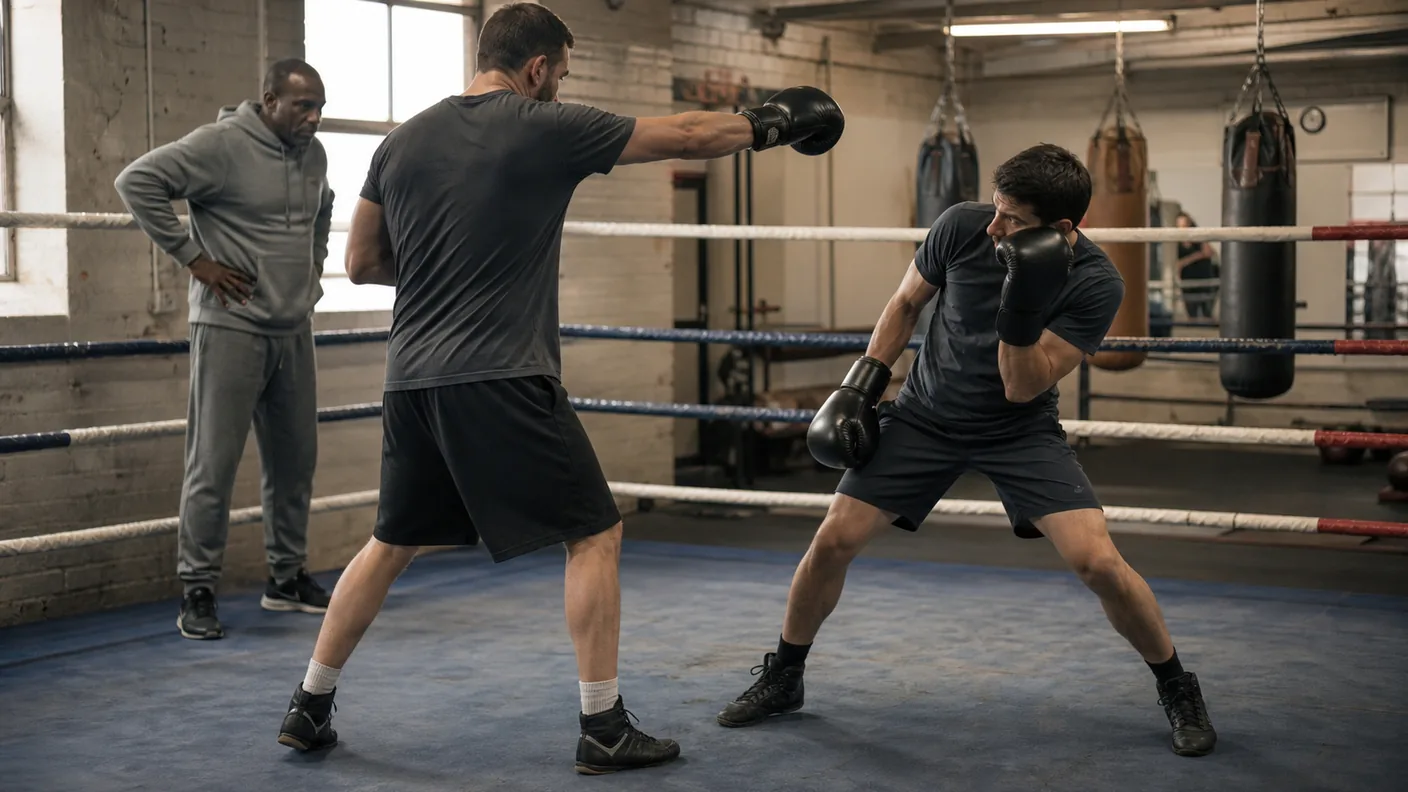
Slip Then Pivot: A Boxing Exit Drill
Use a compact slip and pivot to leave the jab line with balance, clear vision and a useful next position.
Was this page helpful?
It takes one tap, and it genuinely helps.
Choose your next step
Turn this article into the right action
Some readers are ready to book. Some need the class route first. Pick the route that matches what you actually want.