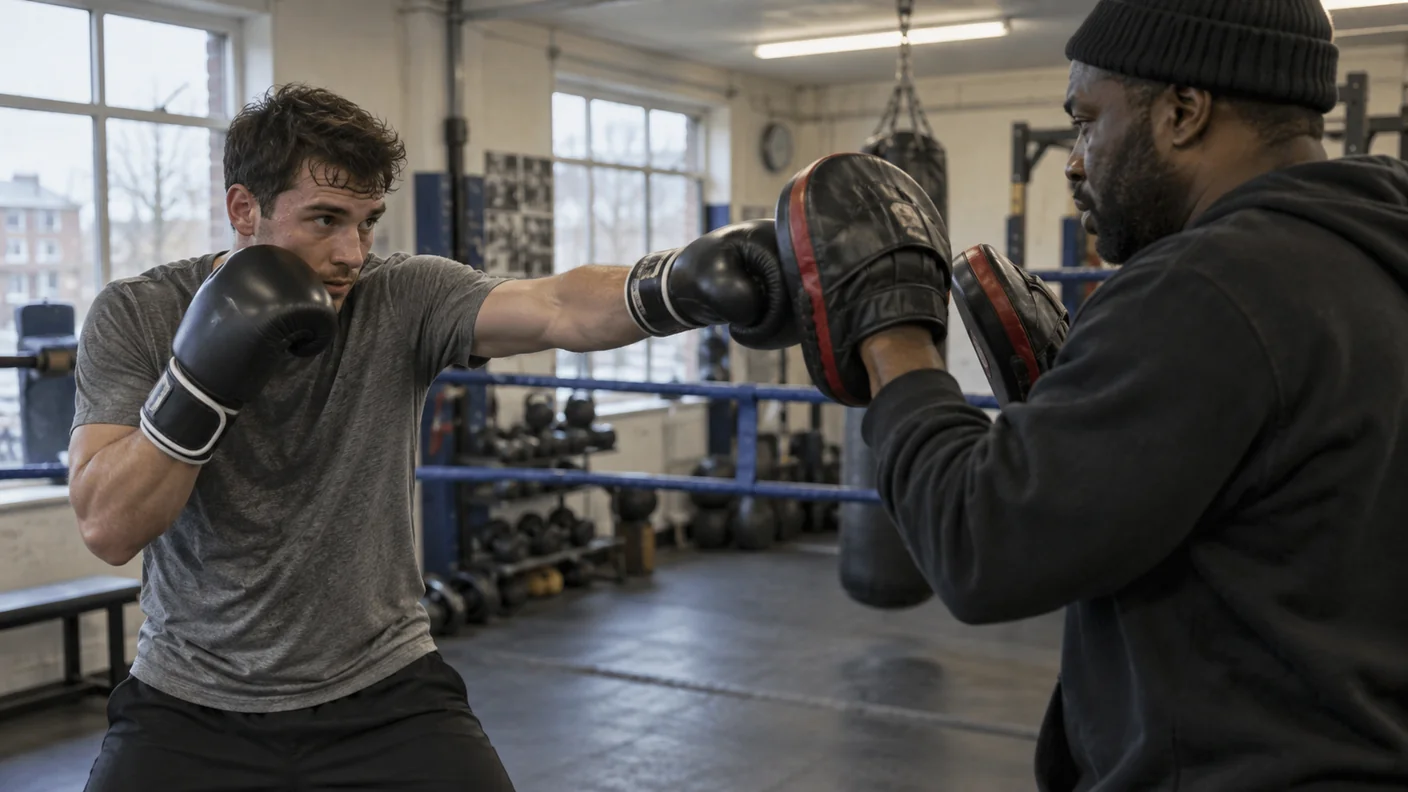
A feint does not have to come from the lead hand.
A small rear-hand cue followed by a jab can make a familiar punch arrive when the other boxer is looking for something else. The job is simple: show the early shape of the longer punch, see whether the guard or feet react, then send the lead hand down its usual straight line.
This is not a trick for standing still and twitching at someone. It works only if your rear-hand cue looks believable, stays compact, and is followed by a real jab often enough that the other boxer has a reason to care.
Watch the short demonstration below, then start with the slow drill before trying it on pads or in controlled partner work.
Why a rear-hand cue can open the jab
Most boxers expect the jab to start from the lead side. They see the lead shoulder rise, the lead foot press forward, or the lead glove begin to travel. If every jab gives the same early picture, the opponent can begin to catch, parry or step around it before the punch arrives.
A compact rear-hand feint changes the picture without changing the final punch. The rear shoulder turns a fraction, the rear hip gives a small hint, and the rear glove may travel only a few inches. The opponent may tighten the far side of the guard, brace for the cross, or stop moving for a moment. That is when the jab can be useful.
The feint is not there to make them panic. It is there to make one part of their attention move. If nothing changes, do not force the jab anyway. Reset, try another honest action, or use the moment to take a better position.
A systematic review of anticipation in combat sports found that more experienced athletes make better use of early movement information. That gives this drill its value. You are learning to make a credible early cue and to notice the first answer it creates, not memorising a party piece.
Keep the rear hand close enough to defend
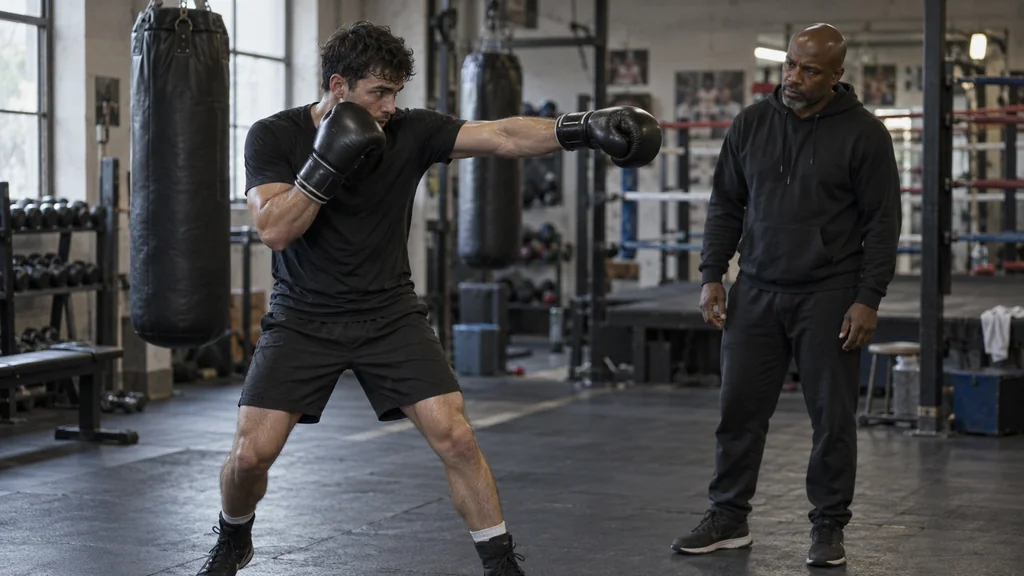
The common mistake is turning the feint into a slow, full right hand or left hand. Once the rear glove has drifted too far from the cheek, it has stopped being a cue and become an open invitation for the other boxer to jab straight through the middle.
Start from a normal guard. For an orthodox boxer, the right shoulder and hip give a small forward suggestion. For a southpaw, reverse the picture with the left side. The rear glove can move slightly, but it should remain close enough that you could bring it back to your cheek without needing a big pull.
Your head should not travel with the feint. If the nose passes over the front knee, you have stepped into range with your face before you have made the jab. Keep the knees soft, the chin down, and the feet in the same useful stance you had before the movement.
England Boxing's coaching handbook puts balance, guard and controlled progressions at the centre of technical development. Use that as the test. At the end of your feint, could you still jab, cover, step away or do nothing? If not, make it smaller.
Make the jab ordinary
The jab after the feint does not need a new line or a dramatic swing. In fact, the cleaner it stays, the more the feint has done its job.
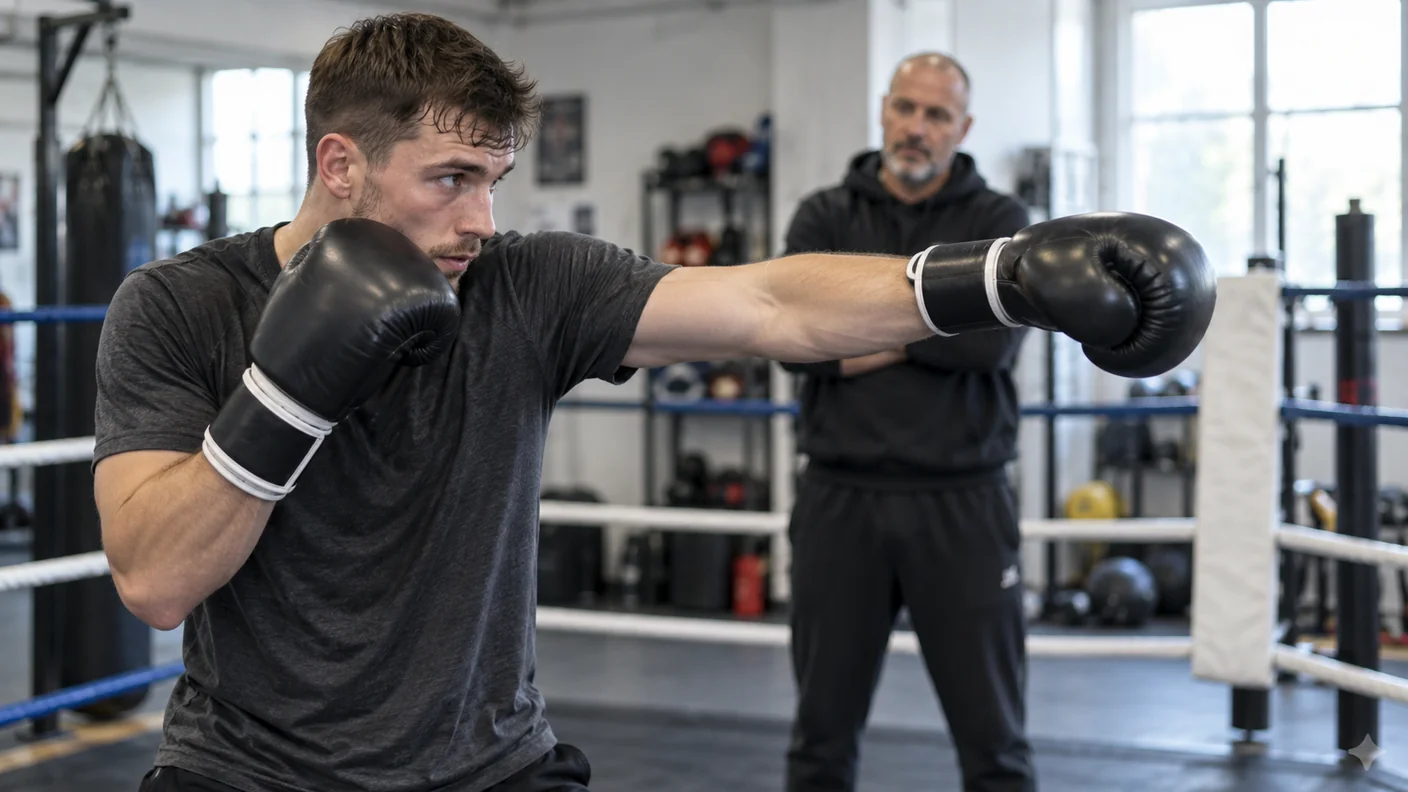
Throw it straight from the lead shoulder. Let the lead glove travel to the target without the elbow flaring or the head chasing it. The rear glove comes home as the jab goes out. Do not pause after the feint as though you are waiting for applause. The cue and the jab should feel like one calm decision.
There are two useful versions to begin with:
- Rear-hand feint, jab to the head line.
- Rear-hand feint low, jab to the head or chest line.
The low cue is not a deep dip. A slight knee bend and a small rear-side suggestion are enough. If you bend at the waist, drop your eyes, then throw a jab from below your own shoulder, the movement has become harder to defend and easier to read.
Our guide to using feints in boxing without faking it explains the wider rule: the false action has to borrow enough shape from a real action that the other boxer has to make a decision. Here, the narrow lesson is that the jab can be the real punch even when the rear hand starts the conversation.
The three-round rear-hand-feint-to-jab drill
Keep the first rounds deliberately quiet. You are trying to feel whether the cue leaves you in a position to jab, not trying to make the feint big enough for somebody across the gym to notice.
Round one: cue and freeze
Shadowbox at long range or stand in front of a mirror. Make the rear-hand cue, then freeze before the jab.
Check three things. Is the rear glove still near the cheek? Is the chin still behind the lead shoulder? Are both feet in a stance from which you could step in either direction? If one answer is no, reduce the turn until the position is tidy.
Work for one minute each side if you switch stance. The aim is not equal movement on both sides. The aim is knowing what a controlled rear-side cue feels like in your own stance.
Round two: cue and jab to a mitt
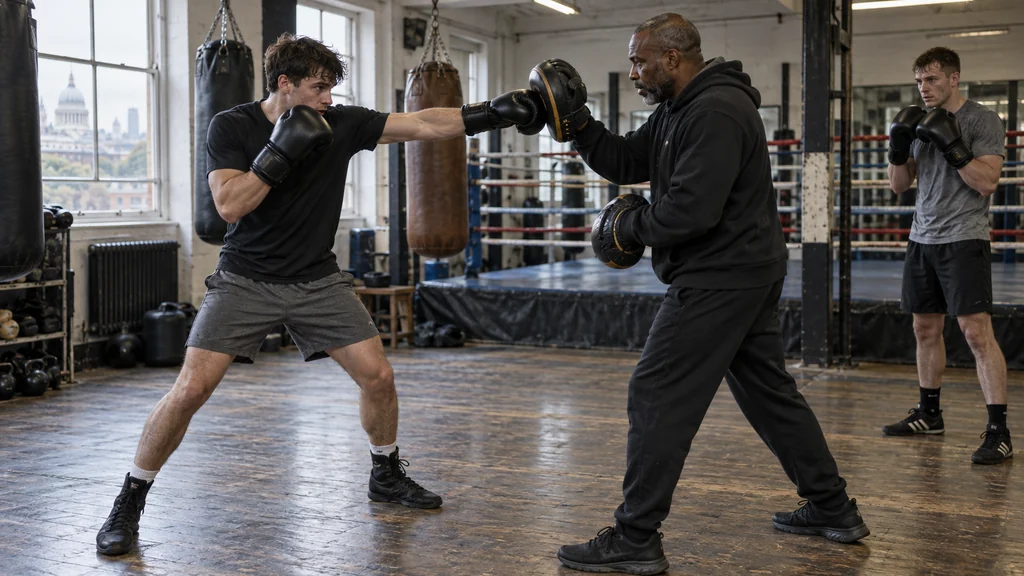
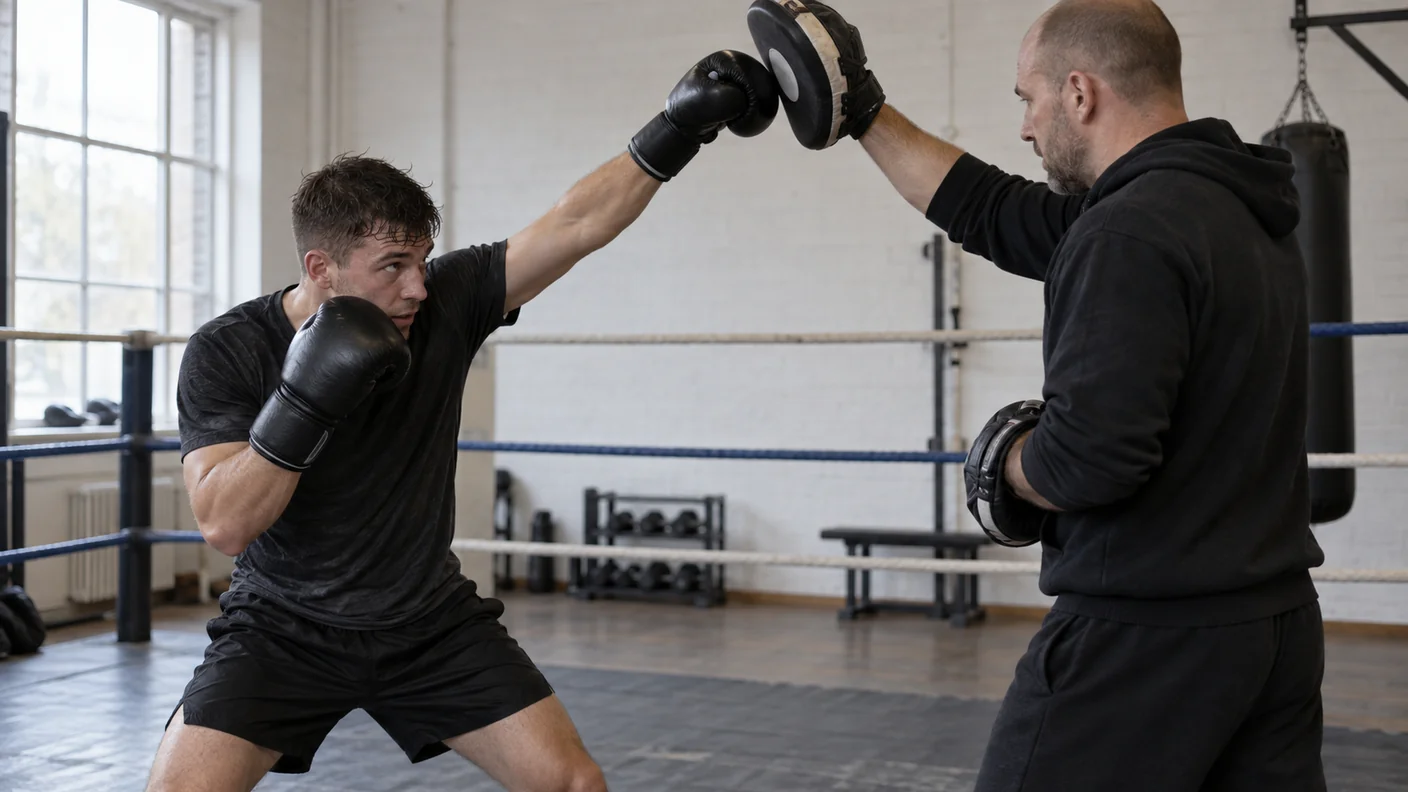
Now ask a coach to hold one mitt at honest jab range. Give the compact rear-hand cue, then send one straight jab to the mitt. Bring both gloves home and reset before the next repetition.
Do not add a cross after the jab yet. Adding the punch that you have just feinted makes it tempting to rush the whole sequence. First learn that the jab can arrive cleanly after the rear-side suggestion. The later choice depends on range and the response in front of you.
A useful coaching cue is: show the back hand, score with the front hand, leave with both hands home.
Round three: read one simple response
For the final round, a partner or coach can give one of three clear responses after the rear-hand cue: hold the guard still, raise the far glove, or take a small step back.
If the guard stays still and the mitt is in range, jab. If the far glove rises and the head line is clear, jab without reaching. If the partner steps back, do not chase the jab. Reset your feet, show another cue, or take a small piece of ground with a proper lead-foot step.
This is where the drill becomes boxing rather than a sequence. The feint does not entitle you to a punch. It gives you a better chance to choose one that fits.
Four faults that make the jab easier to read
The first is pulling the rear hand too far back before you show it. That is not a feint. It is a warning sign. Keep the glove close and let the shoulder, hip and small hand movement do the work.
The second is letting the feint and jab become two separate beats. If you pause after the cue, the other boxer has time to recover and prepare for the jab. Join the movements, but do not rush them.
The third is falling forward during the rear-side cue. A feint should not cost you your stance. If the front knee takes all the weight and the rear foot becomes light, the jab will become a reach.
The fourth is using the same answer every time. A rear-hand feint to jab can be a useful rhythm change, but it becomes predictable if you repeat it on every entry. Mix it with your ordinary jab, a lead-hand feint, a step out, or no punch at all.
The delayed jab timing drill is a useful companion because it teaches the same bigger idea from the lead side: change the early picture, keep your shape, and let the simple punch do the work.
Where this fits in training
Use this after a warm-up and before faster bag or pad rounds. It suits a boxer who already has a basic jab and guard, but it does not require hard sparring. Shadowboxing, mitts and a slow agreed partner feed are enough to practise the order safely.
For adults in Kidbrooke, Greenwich and nearby, our Recreational Adults boxing classes use controlled pad work and partner drills to build timing, range and defensive habits without rushing people into hard exchanges.
The coaching cue is simple: show one story with the rear hand, tell the truth with the jab.
H&G Team
Writer at Honour & Glory Boxing Club, a community boxing gym in Kidbrooke, South East London.
KEEP READING
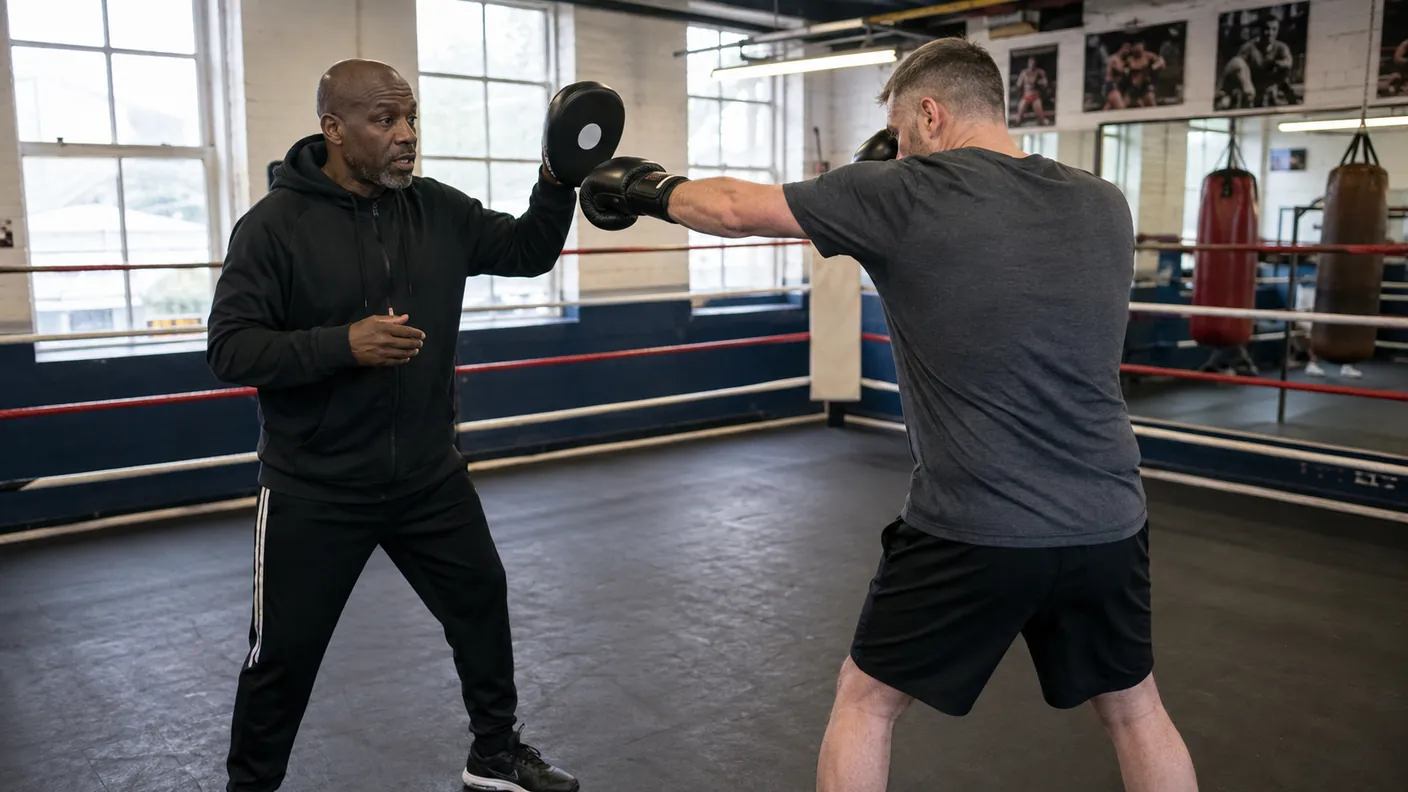
The Delayed Jab: A Simple Boxing Timing Drill
Use a small shoulder cue before the jab to change the rhythm, draw a reaction and keep your stance ready for the next decision.
How to Use an Up Jab in Boxing
Use a compact up jab to change the line, test a high guard and keep your stance ready for the next decision.
Slow Jab, Fast Cross: Boxing Timing
Use a measured jab and sharp cross to break predictable timing without losing your stance, guard or route out.
Was this page helpful?
It takes one tap, and it genuinely helps.
Choose your next step
Turn this article into the right action
Some readers are ready to book. Some need the class route first. Pick the route that matches what you actually want.