
A sore thumb after boxing is not something to punch through.
Sometimes the cause is simple: the hand wrap is pulling the thumb awkwardly, the glove is a poor fit, or a punch is landing with the hand twisted. Sometimes it is a more significant thumb or hand injury. The useful first step is not trying to diagnose it from a gym bench. It is stopping the impact, telling the coach and working out whether the thumb is behaving like normal post-training irritation or a problem that needs proper advice.
A dull ache that is already easing and does not change your grip is one thing. Sharp pain, swelling, bruising, weakness, altered sensation, a pop, or difficulty making a fist is another. Boxing does not reward brave guesses with injured hands.
Why the thumb can take a beating in boxing
The thumb is not where a clean straight punch is meant to land, but it still has a job in every glove. It helps close the hand, sits inside the thumb compartment of the glove and has to stay organised while the fist meets the bag or pads. If the hand lands partly on the thumb side, twists late, or moves around inside a loose glove, that small structure can end up receiving force it was not designed to take.
This is not a made-up beginner complaint. An older clinical report on hand injuries in boxing found that 39 per cent of the injuries in its series involved the thumb area. The evidence does not tell you what your own thumb injury is, but it is a good reason not to dismiss the area as trivial.
Gloves are part of the picture too. A 2024 study of boxing glove design and thumb position found that wearing a glove changed thumb joint position. That does not make any particular glove unsafe. It does explain why fit, thumb comfort and the way the hand sits inside the glove deserve attention instead of being treated as cosmetic details.
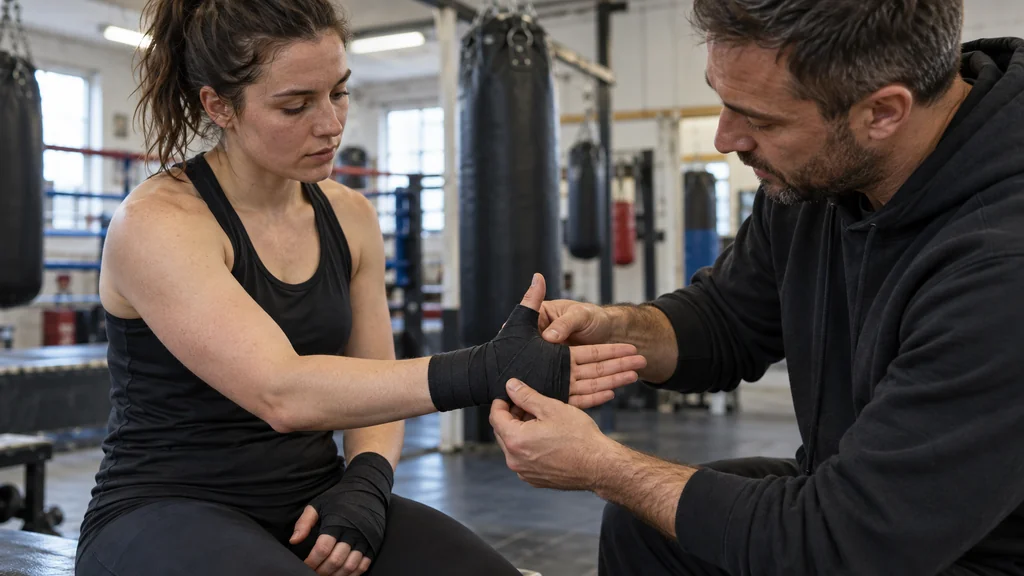
The usual technical causes
Most thumb pain after bag or pad work has a practical story behind it. A coach needs to see the punch and the kit, rather than simply telling you to rest harder.
Landing on the wrong side of the fist
A clean straight punch should travel through a closed fist with the wrist stacked behind it. When a beginner reaches for the bag, turns the hand late, or lets the elbow flare, the glove can arrive at an awkward angle. The thumb side of the hand starts doing work that should have gone through the main knuckles and wrist.
Hooks can cause the same problem. A hook thrown too wide or too hard before the wrist angle is reliable may land with the side of the glove. Slow the punch down and let the coach see the contact. More power is not the correction for a bad line.
A wrap that pulls or leaves the thumb unsupported
Hand wraps should support the wrist and hand without strangling the thumb. A wrap that is too tight around the thumb, bunches across the palm, or changes shape inside the glove can make the hand uncomfortable before the first hard shot lands.
Do a simple check before training: open and close the hand, make a fist, and see whether the thumb feels trapped, numb or pulled sideways. If it does, unwrap and start again. Our guide to wrapping boxing hands covers the basic fit checks, but a coach can usually correct a bad wrap in seconds.
A glove that lets the hand move around
If the glove compartment is too roomy, the hand can slide on impact. If it is too tight once wraps are on, the thumb may be pressed into an uncomfortable position. Old gloves create another problem when the padding or inner lining has collapsed and the hand starts rotating inside the glove.
A glove should feel secure, not like a vice. You should be able to make a proper fist, close the wrist strap and keep the thumb comfortable before you start a round. If one pair hurts and another does not, that is useful information, not fussiness.
Gripping for the whole round
Some thumb discomfort starts with a tension habit rather than one bad punch. New boxers often squeeze the glove all round because it feels ready. It is not. The fist needs to firm up at impact, then soften as the hand returns to guard.
A constant death grip makes the thumb, hand and forearm work when nothing is happening. If your forearms are burning as well, read our guide to why forearms burn in boxing. The usual fix is calmer hands, not harder squeezing.
What to do when your thumb hurts in class
The first decision is easy: stop hitting things.
Take the glove off carefully, tell the coach and check what has changed. Can you move the thumb? Can you make a fist? Is there swelling, bruising, a new shape, numbness or tingling? Did it happen on one punch, or did it gradually build as the round got messier? Those details matter more than whether you can force one more combination.
For minor pain that is settling and has no warning signs, the NHS thumb-pain guidance advises reducing painful activity, resting the thumb when possible and using an ice pack wrapped in a towel for up to 20 minutes every two to three hours. It also advises avoiding tight gripping. In boxing terms, that rules out bag work, hard pads and sparring until the thumb is comfortable enough for ordinary movement and a coach has seen the return to impact.
You may still be able to do a modified session. Easy footwork, lower-body conditioning, coach-led shadowboxing with an open or relaxed hand, or watching technical work are better options than pretending a painful thumb has disappeared. The coach can change a drill. They cannot decide that an injured thumb is safe.
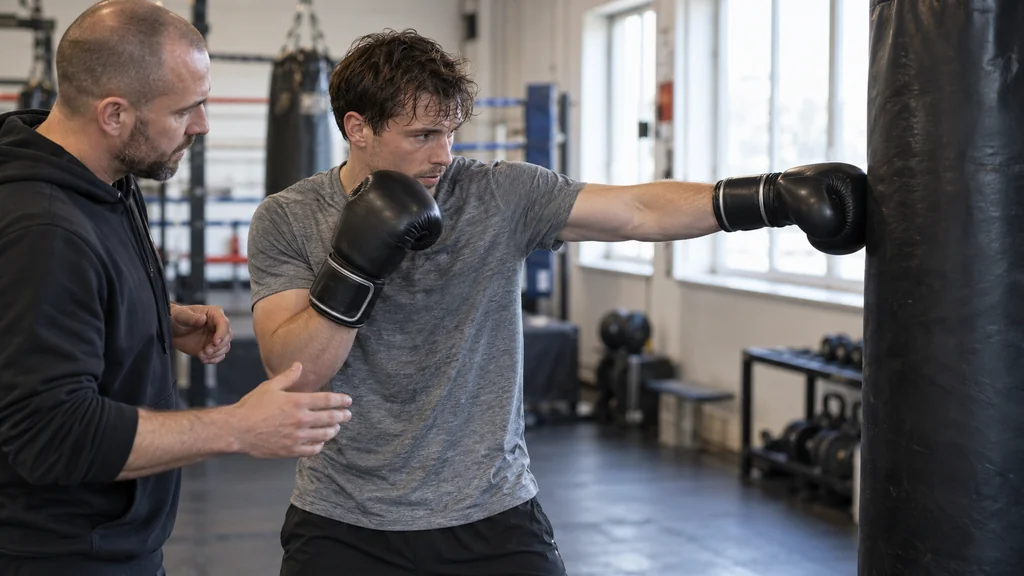
When thumb pain needs medical advice
This article cannot tell you whether a thumb is sprained, fractured, irritated or affected by a tendon problem. The decision becomes more cautious when symptoms do not behave like ordinary muscle soreness.
The NHS says to seek urgent help through an urgent treatment centre or A&E for severe thumb pain, a snap, grinding or popping sound at the time of injury, inability to move the thumb or hold things, a changed shape or colour, or loss of feeling in the hand. It also advises seeing a GP if pain stops normal activity, is getting worse or keeps returning, has not improved after two weeks of home care, or comes with tingling or reduced sensation (NHS guidance on thumb pain).
For a boxer, add a few plain rules:
- stop immediately after a sharp impact pain or a pop
- do not keep testing hard punches to see whether it settles
- do not tape the thumb tighter and carry on if it is swollen or weak
- do not spar with a thumb that cannot grip, move or protect itself normally
- get checked if the pain keeps returning in the same spot every session
If there is deformity, major swelling, numbness or weakness, this has moved beyond a coaching correction. Our broader guide to wrist and hand injuries in boxing explains the wider warning signs for the hand, wrist and knuckles.
A sensible return to punching
Returning is not a test of whether you can tolerate pain for three minutes. It is a sequence.
Start with normal daily movement. You should be able to open the hand, make a fist, grip lightly and move the thumb without a sharp protest. Then let a coach see light shadowboxing. If that is comfortable, move to short technical pad rounds or light straight shots on a bag. Hard hooks, high-volume bag rounds and sparring come later.
If pain returns at a particular stage, step back rather than negotiating with it. That point in the sequence is useful evidence. It may be the glove, wrap, punch shape, training load or something that needs a clinician to assess.
This is also why beginners should not buy the hardest bag gloves on the shelf and spend an hour smashing the bag alone. Technique is easier to correct before a bad habit gets enough force behind it to hurt.
The thumb check before every round
Make this boring and routine:
- The wrap feels snug, not tight or pinching.
- The thumb can move comfortably inside the wrap and glove.
- The glove holds the hand still when you make a fist.
- The wrist sits in line behind the fist on light straight punches.
- You can relax the grip between punches.
- Nothing is numb, tingling, swollen or painful before the round begins.
If one of those is wrong, fix it before the bell. A two-minute conversation with a coach is cheaper than a fortnight of trying to do everyday tasks with a sore thumb.
For adults in Greenwich, Recreational Adults boxing classes at Honour and Glory are a sensible place to learn the details under supervision. You do not need to hit hard to make progress. You need a hand that stays organised enough to train again next week.
H&G Team
Writer at Honour & Glory Boxing Club, a community boxing gym in Kidbrooke, South East London.
KEEP READING
Why Your Wrists Hurt After Boxing
Wrist pain after boxing is usually a technique or equipment problem, not a toughness test. Here is what causes it and what to fix first.
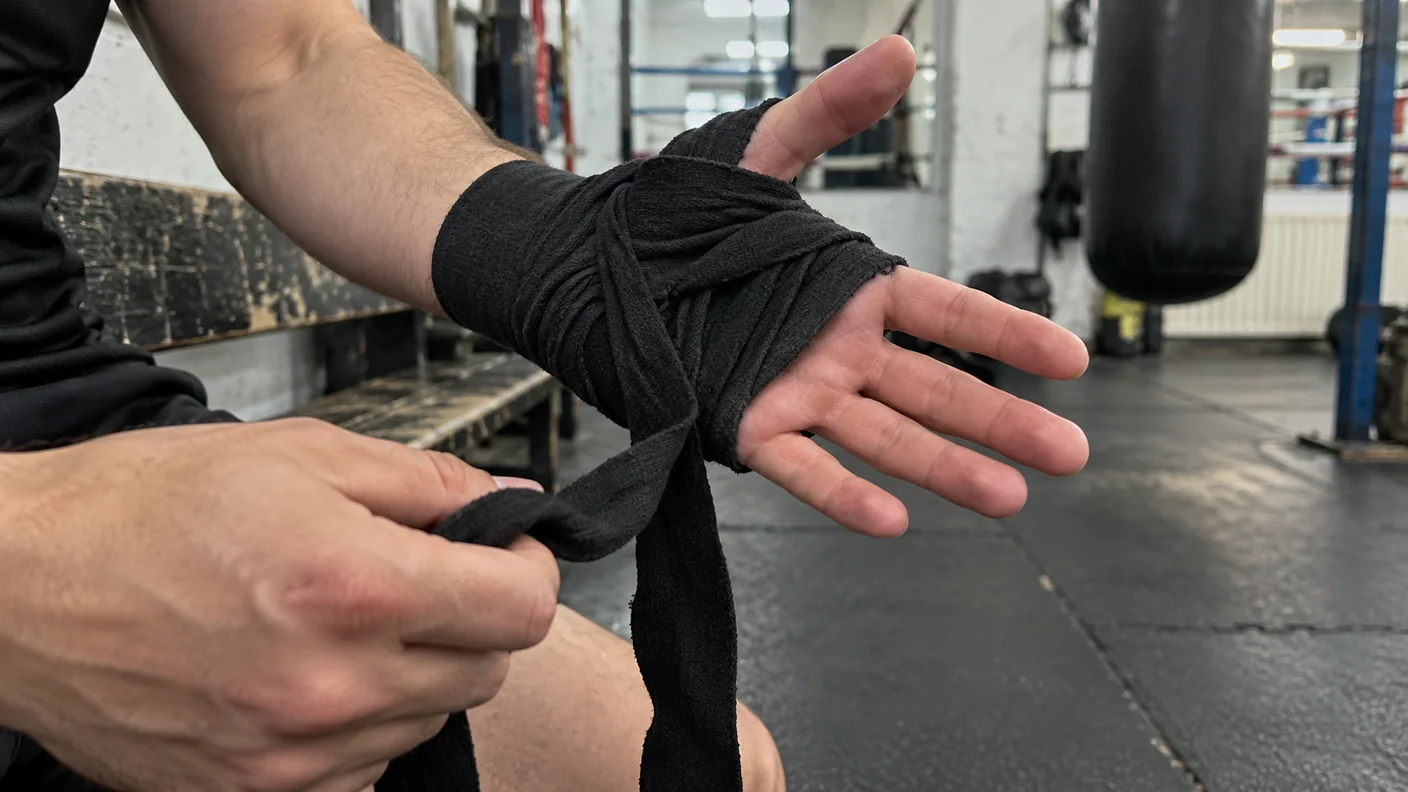
Why Boxing Hand Wraps Come Loose
Loose boxing hand wraps are irritating and can spoil a session. Here is how to spot the cause, reset them and keep your hands comfortable.
How to Wash Boxing Hand Wraps
A practical guide to washing boxing hand wraps properly, drying them faster, and stopping glove smell before it starts.
Was this page helpful?
It takes one tap, and it genuinely helps.
Choose your next step
Turn this article into the right action
Some readers are ready to book. Some need the class route first. Pick the route that matches what you actually want.