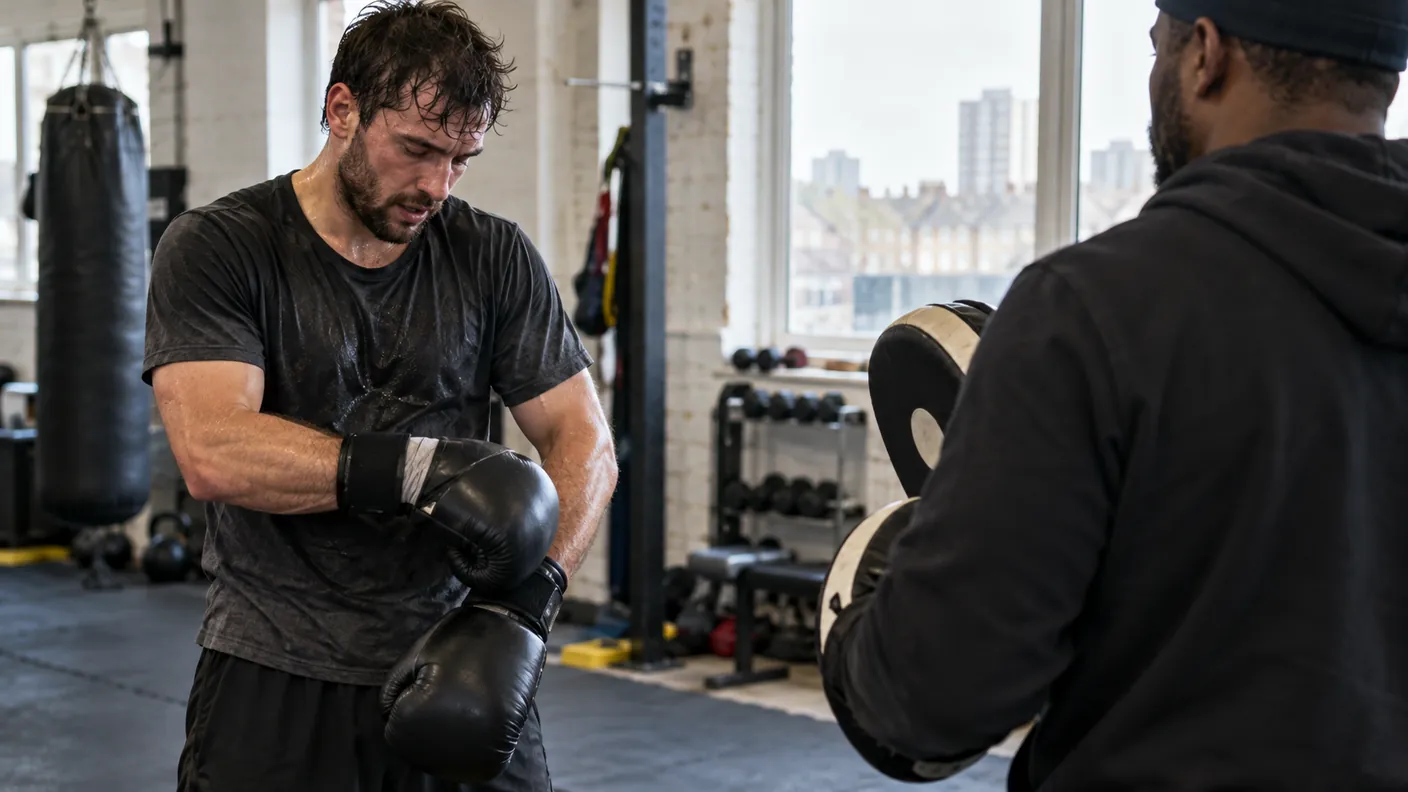
Forearms burning in boxing is usually a sign that you are doing too much with your hands between punches.
New boxers often notice it halfway through a bag round. The shoulders are tight, the gloves feel heavier than they did ten minutes ago, and the hands start to cramp inside the wraps. Then every jab looks slower and every instruction feels harder to follow.
That does not automatically mean you need stronger forearms. More often, it means you are gripping the gloves too hard, holding a rigid guard, or landing with the wrist out of line. Boxing asks the forearms to work, but it should not feel like you are trying to crush the glove for an entire round.
Your forearms are working even when you are not punching
A boxing glove is not weightless, and holding it in front of your face is work. Your forearms help keep the wrist organised, close the fist at impact, bring the hand back to guard, and keep the glove from drifting when you move.
Beginners add unnecessary work on top of that. They keep both hands clenched, pull the elbows in so hard that the shoulders rise, and freeze the guard between combinations. The result is a forearm that is switched on for three minutes without a break.
Experienced boxers have usually built more grip strength than untrained people. A small study of elite male boxers found stronger handgrip results than a non-boxing comparison group (Frontiers in Physiology study). That does not make grip strength the first answer for a new member. It does explain why a seasoned boxer can look relaxed while a beginner feels as though the gloves are full of wet sand.
The useful lesson is not to squeeze harder. It is to use the hand at the right moment.
Do not clench the gloves all round
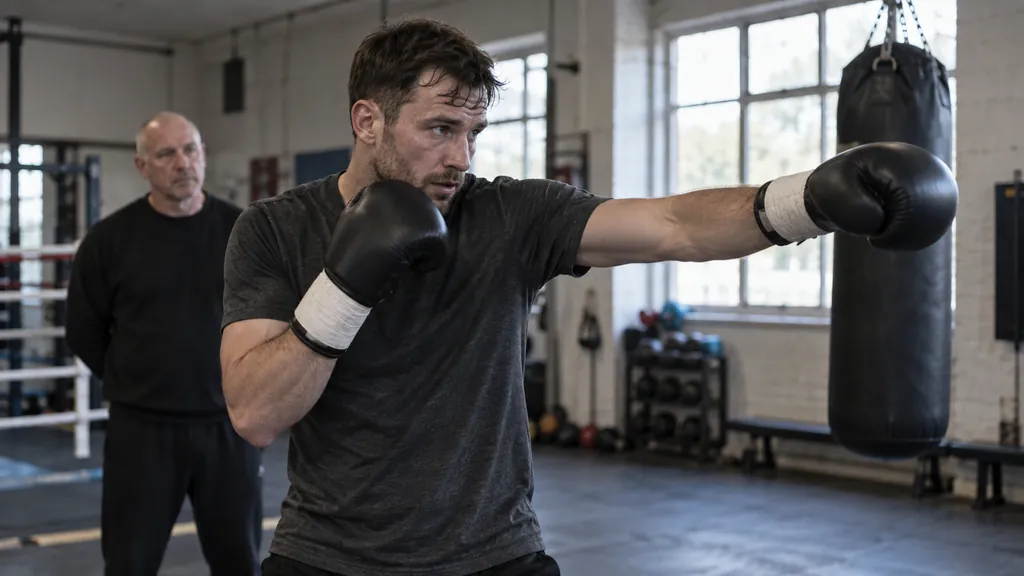
Your fist needs to be secure when it lands. It does not need to be locked shut when you are stepping, feinting, listening or resetting.
Try this in your next shadowboxing round. Close the hand as the punch goes out. Let the hand soften as it returns to guard. You are not opening the fingers inside the glove or letting the hand hang loose. You are removing the useless squeeze.
The change can feel strange at first. Many beginners mistake tension for readiness. A ready hand is close to the cheek, with the wrist supported and the elbow in a useful place. A tense hand is a fist, shoulder and neck all working when nothing is happening.
This is also one of the reasons your shoulders can burn early in boxing. Tension starts in the fist and travels upward. If the hands are clamped and the shoulders are lifted, the whole upper body pays for it.
A straight wrist saves work
The wrist should sit close to straight behind the glove at impact. If it folds back or sideways, the forearm has to fight to stabilise a position it should not be forced into.
You may not notice that during the first fresh minute. You will notice it when the hands get tired. The jab starts landing with a bent wrist. The cross feels like a shove. You compensate by gripping even harder. That is the loop worth stopping.
On the bag, slow down enough to check one thing: does the line from knuckles through wrist to forearm look organised when the glove touches? If it does not, lower the power and ask the coach to look. You will learn more from ten clean jabs than from a round of forcing a bad position into the bag.
Our guide to wrist and hand pain in boxing explains the warning signs that are not ordinary training fatigue. It is worth reading if the pain is sharp, localised, swollen or changing how you make a fist.
Wrapping and glove fit can make a good hand work badly
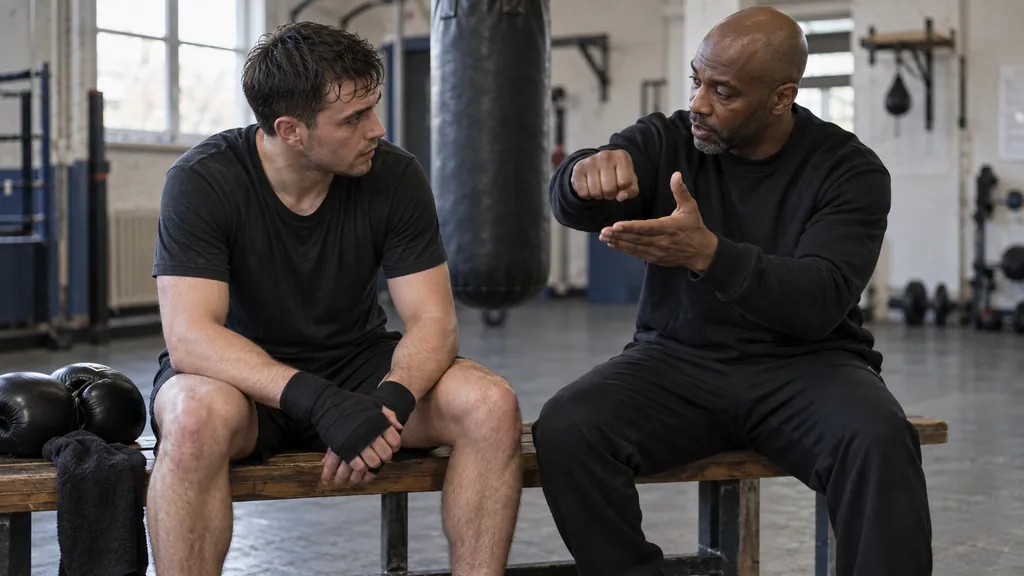
Poorly fitted gloves and uneven hand wraps make the forearm work harder than it needs to. A wrap that bunches in the palm, pulls the thumb awkwardly or leaves the wrist unsupported can make a normal pad round feel miserable.
You do not need to buy expensive kit before your first class. You do need a glove that closes securely and a wrap that does not distort your hand. If the glove is too tight across the knuckles, too loose at the wrist, or difficult to close into a fist, tell the coach before the round starts.
Do not try to solve a bad fit by squeezing harder. That only hides the problem until the forearm is cooked.
For bag and pad work, the practical check is simple:
- the glove closes firmly without pinching
- the wrap supports the wrist without making the fingers tingle
- you can make a full fist without forcing it
- the wrist stays stacked when you touch the bag
- the grip can soften between punches
If one of those fails, adjust the kit or the technique before you add intensity.
The fastest fix is a quieter round
When the forearms are burning, many people try to finish the round through sheer force. That usually turns a small technical problem into a messy one. The jab gets pushed, the shoulders climb, and the feet stop moving.
Instead, take the next round down to sixty per cent. Throw one clean jab, bring it home, shake the fingers inside the glove for a second, then move. Add the cross only when the wrists are still organised.
This is not a soft option. It is a technical option. You are teaching the body that control comes before output.
A good coach may also change the drill. Shorter combinations, more time between calls, lighter bag contact and a reminder to release the grip can reveal whether the issue is mostly tension. If the forearms settle when the round gets tidier, you have found the real problem.
When forearm pain is not normal training fatigue
Broad, dull soreness after a first hard session is different from pain that keeps getting sharper in one spot.
The NHS says tennis elbow can cause pain around the outside of the elbow and may make gripping objects or moving the wrist difficult (NHS guidance on tennis elbow). That does not mean every tight forearm is tennis elbow. It does mean that persistent elbow or forearm pain deserves more respect than a normal post-session ache.
Stop and tell the coach if you have sharp pain, swelling, a pop, numbness, tingling, weakness, pain that changes your grip, or pain that worsens with each punch. Do not keep testing it on the bag to see whether it disappears.
If it is not settling, keeps returning, or affects normal tasks such as opening a jar, carrying a bag or typing, use an appropriate clinician such as a GP or physio rather than guessing from a gym floor. Training advice is not a diagnosis.
Build forearm endurance after you fix the squeeze
Once the technique is cleaner, basic endurance work can help. Farmer carries, light wrist work, controlled hangs and regular bag rounds all have a place. They are useful because a boxing hand needs to hold position repeatedly, not only squeeze once as hard as possible.
But do not make forearm exercises the first fix for a guard that is too tense. A stronger bad habit is still a bad habit. If you do three rounds with a clenched jaw, raised shoulders and a death grip on the gloves, more grip strength only lets you repeat the mistake for longer.
Start by making the rounds quieter. Keep the wrists organised. Close the fist for the punch, not for the entire session. Then let the ordinary training build the capacity over time.
If you are in Kidbrooke, our Recreational Adults boxing classes are a good place to learn that balance with a coach watching the details. You do not need to hit hard to start boxing well.
H&G Team
Writer at Honour & Glory Boxing Club, a community boxing gym in Kidbrooke, South East London.
KEEP READING
How Floor Grip Changes Your Boxing Footwork
A sticky or slippery surface can expose poor boxing footwork. Learn how to adjust steps, pivots and balance without forcing movement.
Why Your Shoulders Burn in Boxing
Shoulders burning in boxing usually comes from tension, guard position, and wasted effort. Here is what causes it and what fixes it first.
Why Your Neck Hurts After Boxing
Neck pain after boxing usually comes from tension, guard habits, posture, or impact. Here is what to fix first.
Was this page helpful?
It takes one tap, and it genuinely helps.
Choose your next step
Turn this article into the right action
Some readers are ready to book. Some need the class route first. Pick the route that matches what you actually want.