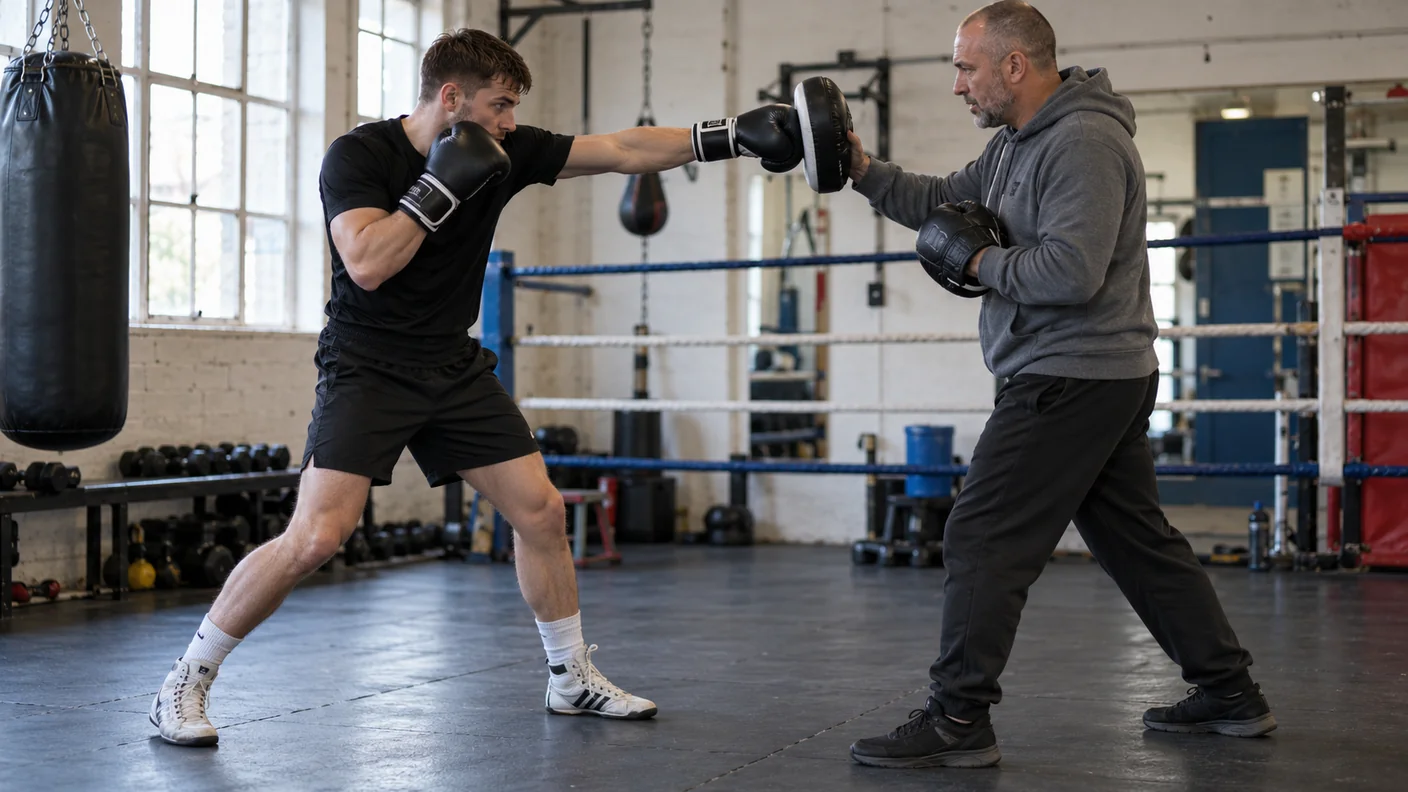
Most jabs turn over as they travel. That is the version most people should learn first.
A vertical jab is a smaller variation: the lead fist stays more upright as it leaves guard, with the knuckles travelling through a narrow straight lane. It can be quick because the hand does not need a large turn before it reaches the target. It can also make a mess of your wrist, elbow and guard if you force it from the wrong position.
This is not a secret punch or a replacement for the ordinary jab. It is a useful option for a boxer whose lead hand already sits naturally in a more upright position and who can throw a clean standard jab without reaching, lifting the chin or losing the rear hand.
The video below gives a useful visual reference for the upright lead fist, direct line and body alignment. Use it as a technical prompt, then practise the details at a slow, coach-led pace.
What makes a vertical jab different
The difference is the fist position, not a dramatic new arm path. A conventional jab often starts near vertical and turns over as it extends. A vertical jab stays closer to its starting orientation, so the palm faces inwards more than down when the fist meets a mitt or a light target.
The potential benefit is economy. If your lead hand is already upright near the cheek, a small direct extension can reach the line without an obvious extra rotation. The danger is assuming less turning means no body involvement. The shoulder still helps protect the chin, the elbow still follows the fist, and the feet still need to leave you able to jab again, cover or move.
Research comparing the cross, hook and uppercut in junior and elite boxers examines how different body segments contribute to punching (boxing biomechanics study). For this drill, keep the same whole-body coaching principle in mind: the fist may stay upright, but the stance, trunk and shoulder still have a job.
Start from a hand position you can defend from
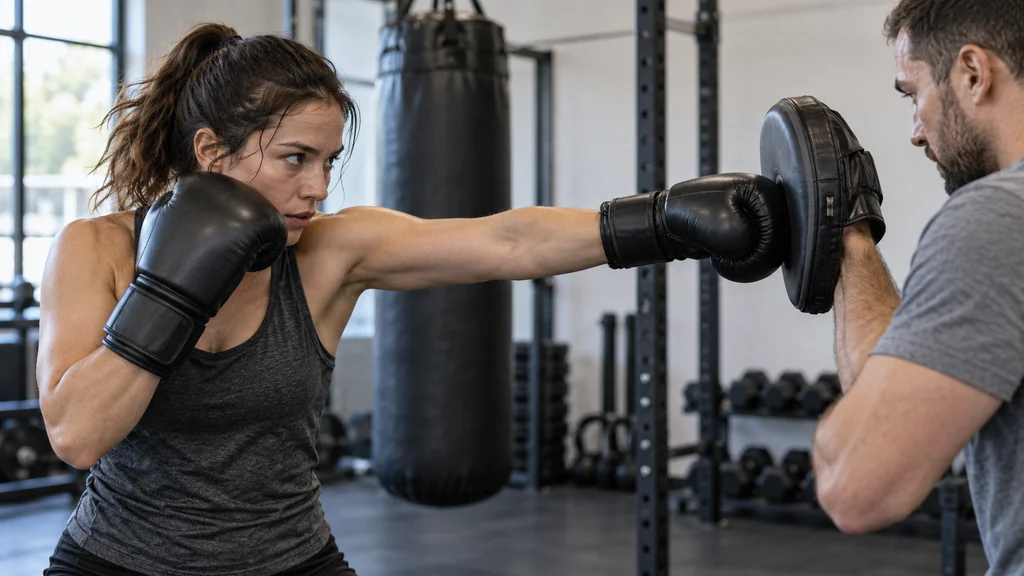
Do not twist your wrist into position halfway through the punch. Start with the lead fist comfortable, wrist straight and elbow beneath or close to the line of the fist. If holding the glove more upright makes the wrist ache or forces the elbow to flare, that version is not for you today.
The lead shoulder should sit slightly in front of the chin, as it would for any sound jab. The rear glove stays near the cheek. Your head stays between your feet rather than travelling ahead of the lead knee.
The simplest cue is not "keep it vertical". It is "keep the line honest". The fist, wrist and elbow should agree on the route. If the fist is vertical but the elbow flies out sideways, you have made a telegraph, not a faster jab.
England Boxing's coaching handbook puts stance, balance and guard at the base of technical development. That matters more than the fist angle. If the angle costs you any of those basics, use the ordinary jab.
Let the shoulder carry the jab, not the arm alone
A vertical jab can look deceptively small. Some boxers see that and push the fist forward with only the arm. The hand gets there, but the shoulder does not cover the chin and the punch returns slowly.
Instead, let the lead shoulder make a modest forward turn as the hand extends. You do not need to swing the shoulder across the body. It only needs to put the chin behind the lead side and connect the hand to a settled stance.
The rear heel can stay quiet for a light range-finder. For a firmer jab, a gentle push from the rear foot can support the body moving through the line. Do not chase power by lunging. If your chest falls past the lead knee or the rear foot has to drag after the jab, you started too far away.
Use it when the direct line is actually available
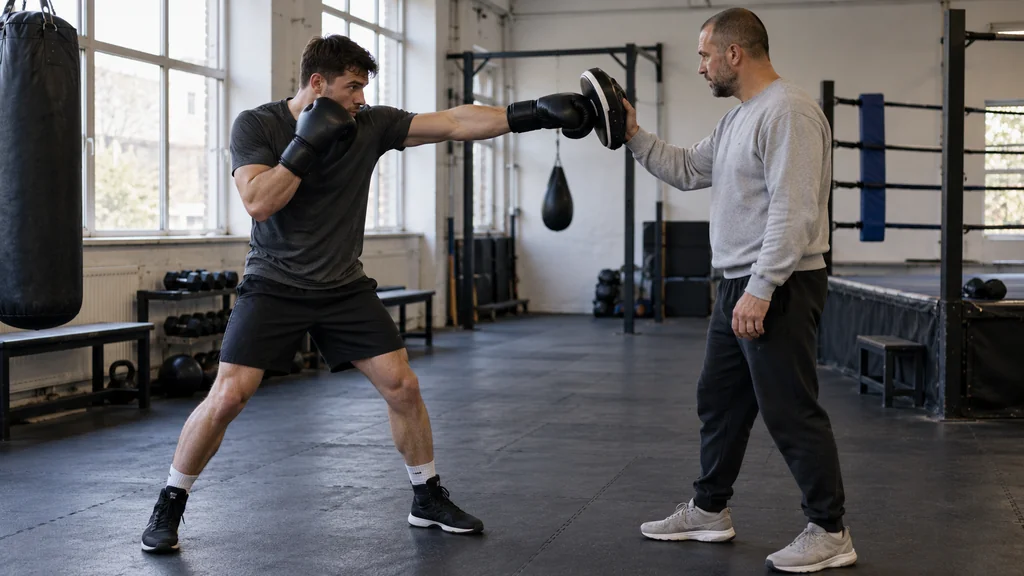
This jab works best as a direct lead-hand touch from sensible range. It can help when you want to give the other boxer a less familiar look, interrupt their set-up or touch a narrow central target without winding up.
It does not make a closed high guard disappear. It does not make a jab land from outside range. It does not make a busy opponent stand still for you. If the target is covered, angled away or too far off, the better answer may be to feint, take a proper step, use an ordinary jab or reset.
That restraint is important because a vertical jab is easy to overrate. A clean touch may make the other boxer lift their gloves, shift their lead hand or step back. That is useful information. It is not an invitation to lean in with a rushed right hand.
Our guide to the corkscrew jab covers a different lead-hand variation for finding a narrow line. The two punches share one rule: the variation should make the next decision clearer, not turn the lead hand into a reach.
A three-round vertical jab drill
Use a coach-held mitt, a clearly marked bag target or slow, agreed partner work. Keep the first repetitions light. This is a coordination drill, not a test of who can punch hardest.
Round one: stance and line
Stand at ordinary jab range. Bring the lead fist into the upright position that feels natural at guard. Touch the mitt with a light vertical jab, return the glove directly to guard and freeze for one count.
Check three things after each repetition: the wrist stayed straight, the elbow followed the fist and the rear glove stayed near the cheek. If one of those fails, make the movement smaller before you add speed.
Round two: shoulder and return
Keep the same target. Now let the lead shoulder come forward slightly with the jab so the chin remains protected behind it. The hand returns on the same direct route.
A coach should be able to see that you have not pulled the glove back before punching. If the elbow lifts or the shoulder rises towards the ear, slow down. A fast jab that announces itself is not fast in the way that matters.
Round three: touch, read, decide
The coach can now show one of three pictures after the jab: the mitt stays present, it moves away, or a second mitt appears as a guarded return cue.
If the first mitt stays there, touch it once more with an ordinary jab or vertical jab. If it disappears, reset rather than stretching after it. If the return cue appears, bring both gloves home and use the defence your coach has set for the round. The point is not to build a fixed combination. The point is to finish able to box.
Four mistakes that spoil the vertical jab
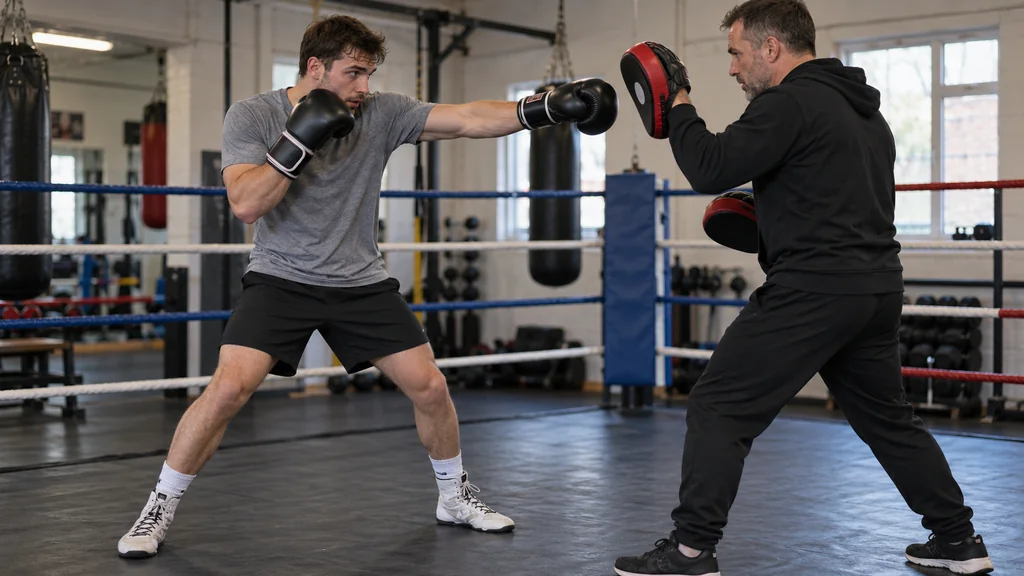
The first is forcing the wrist. The upright hand position should be comfortable and supported by the forearm. If the wrist bends backwards or sideways at impact, stop and return to the jab your coach has already checked.
The second is elbow flare. A vertical fist does not need a looping elbow. Keep the elbow travelling behind the hand, close enough to the body that the route stays difficult to read. Our guide to keeping your jab straight without elbow flare gives a simple wall drill for checking that detail.
The third is leaving the lead hand out after the touch. The vertical jab is still a jab. Hand home means hand home. A parked lead glove can be parried, controlled or punched around.
The fourth is using it as a fix for poor range. If you cannot touch the target without tipping forward, a narrower fist will not solve the distance. Move your feet first or let the target go.
Where this fits in a normal class
Treat the vertical jab as a detail for a boxer who has already built a reliable ordinary jab. It works well in technical pad rounds, controlled partner drilling and shadow boxing when a coach can check whether the new hand position is helping or merely looking unusual.
It does not need hard contact. In fact, hard contact is where people most often force the wrist, over-commit the shoulder and forget the rear hand. Keep the first rounds calm enough that you can stop after any repetition and assess your stance.
For adults in Kidbrooke, Greenwich and nearby, our Recreational Adults boxing classes teach the jab as part of a whole position: range, balance, guard and the choice after the punch. A variation is worth keeping only when it leaves those basics better, not worse.
The coaching cue is simple: upright fist, straight line, hand home.
H&G Team
Writer at Honour & Glory Boxing Club, a community boxing gym in Kidbrooke, South East London.
KEEP READING
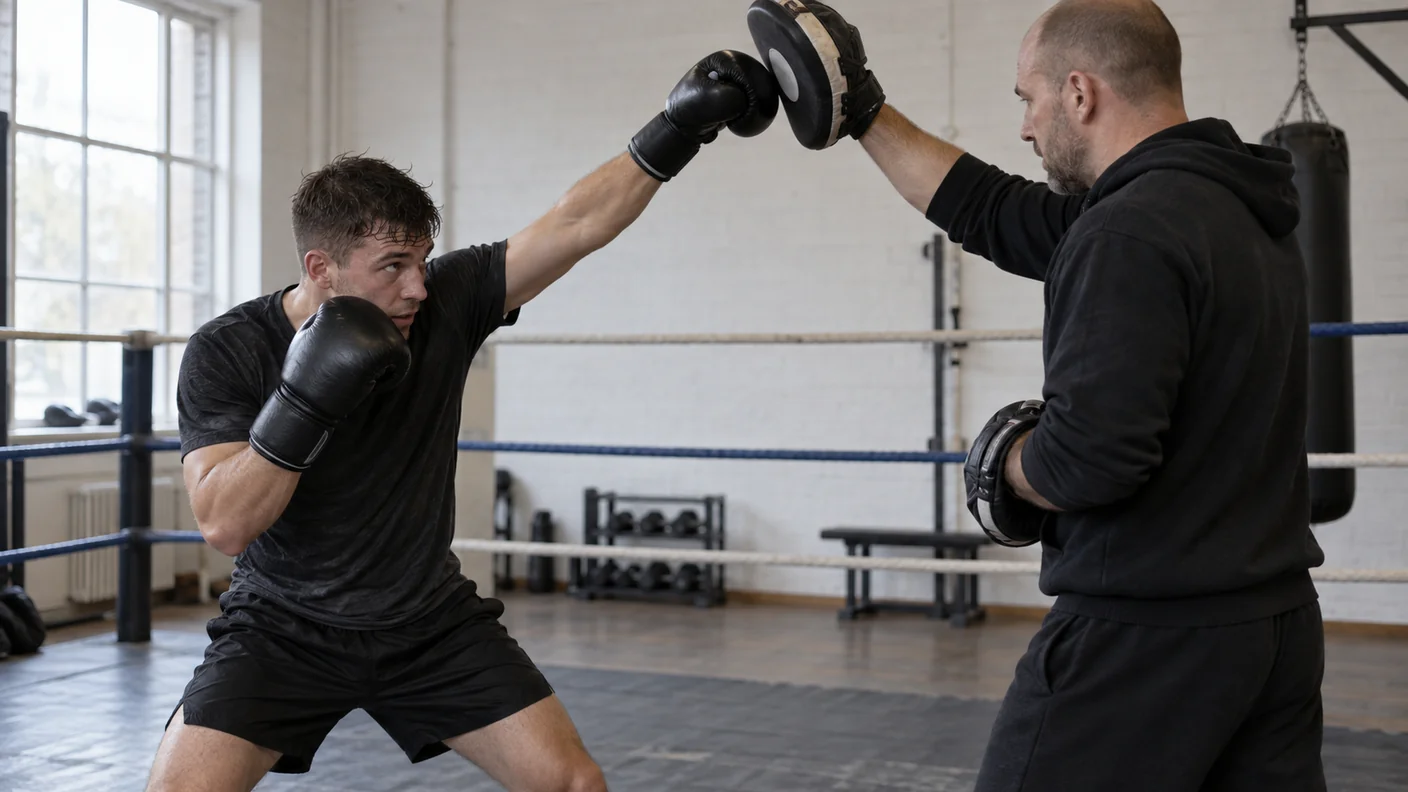
How to Use an Up Jab in Boxing
Use a compact up jab to change the line, test a high guard and keep your stance ready for the next decision.
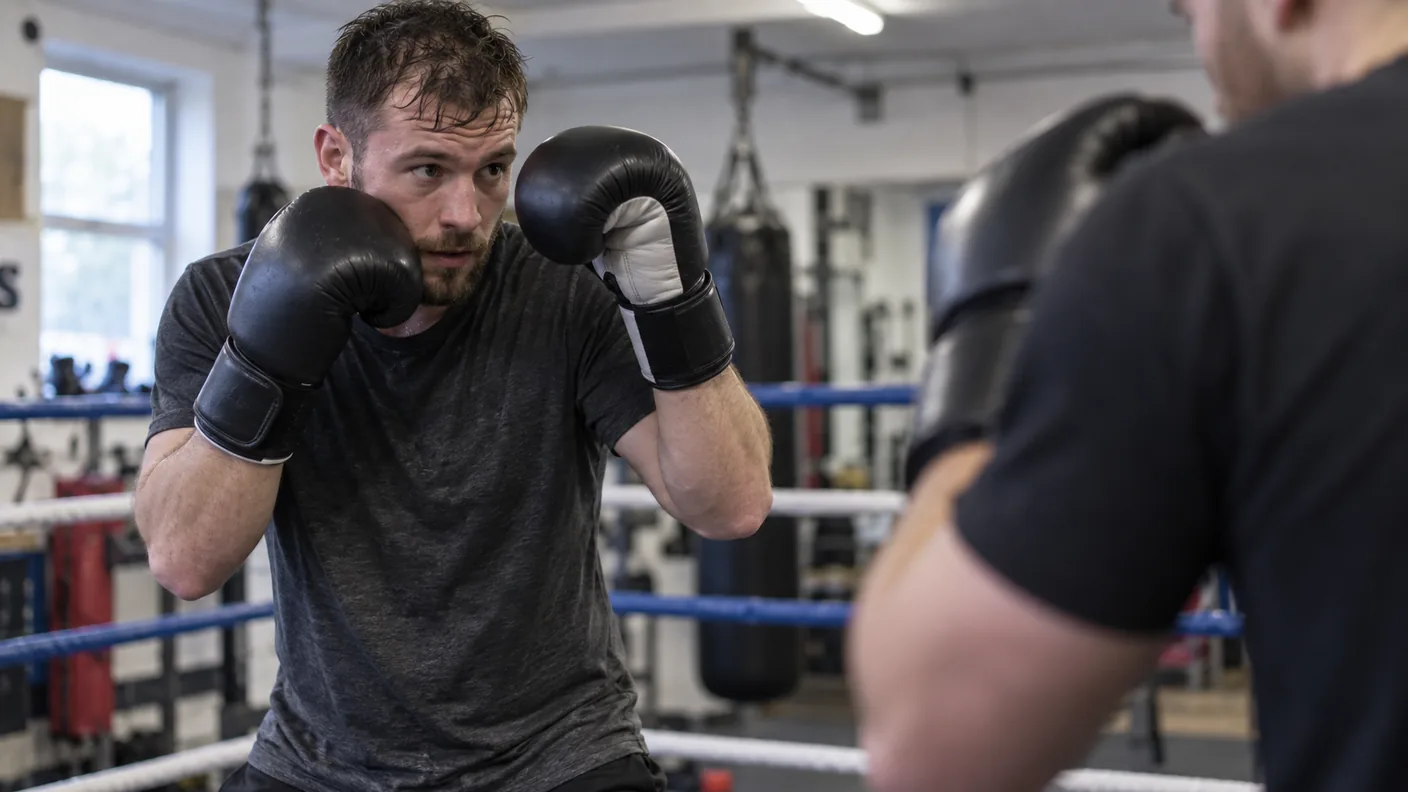
Lead-Hand Catcher Mitt: A Jab Defence Drill
Use a light lead-hand catch to manage the jab line, then return to guard before adding a calm counter or exit.
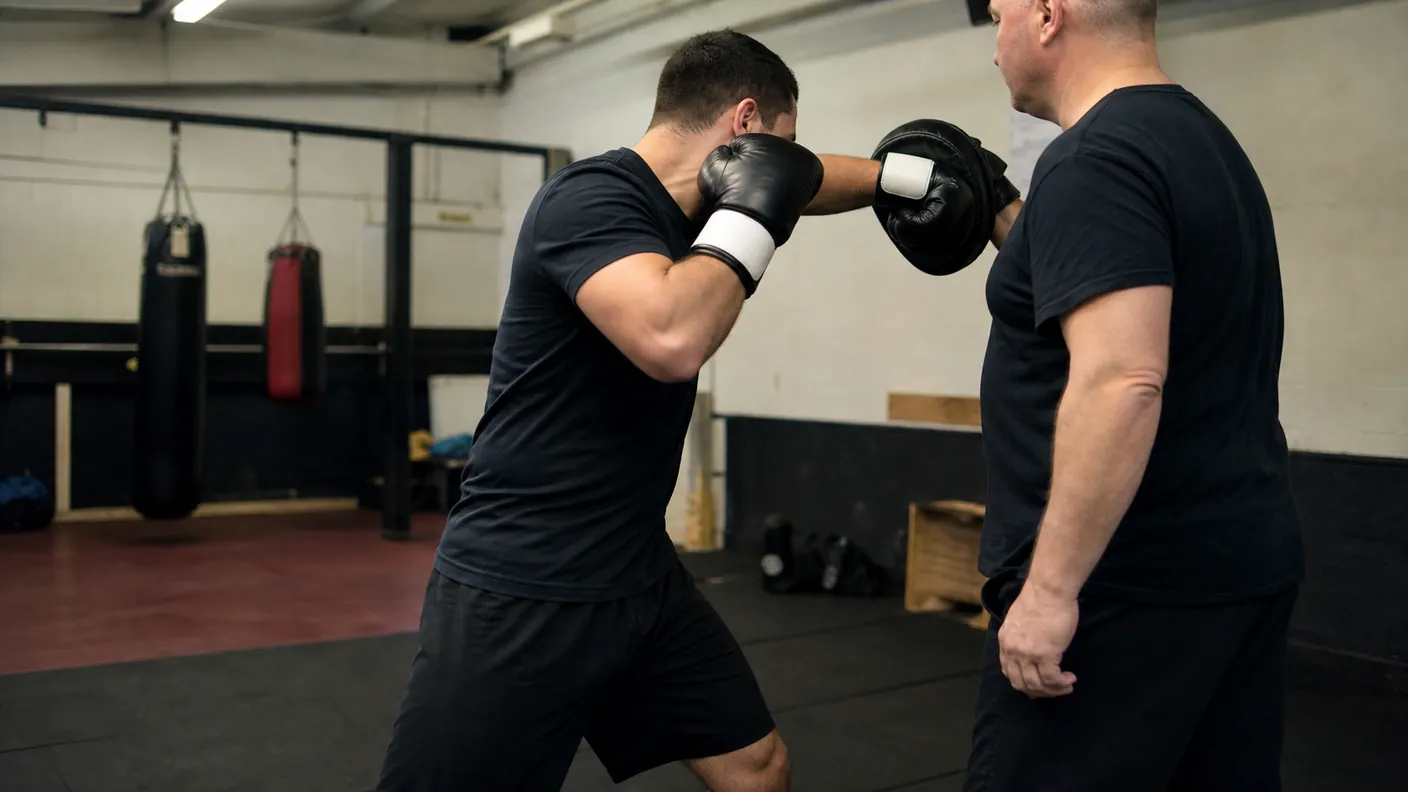
The Hook-Jab: Use Your Lead Hand Twice
Learn how a compact hook-jab can change the line of attack, bring your lead hand home and help you leave the pocket in balance.
Was this page helpful?
It takes one tap, and it genuinely helps.
Choose your next step
Turn this article into the right action
Some readers are ready to book. Some need the class route first. Pick the route that matches what you actually want.