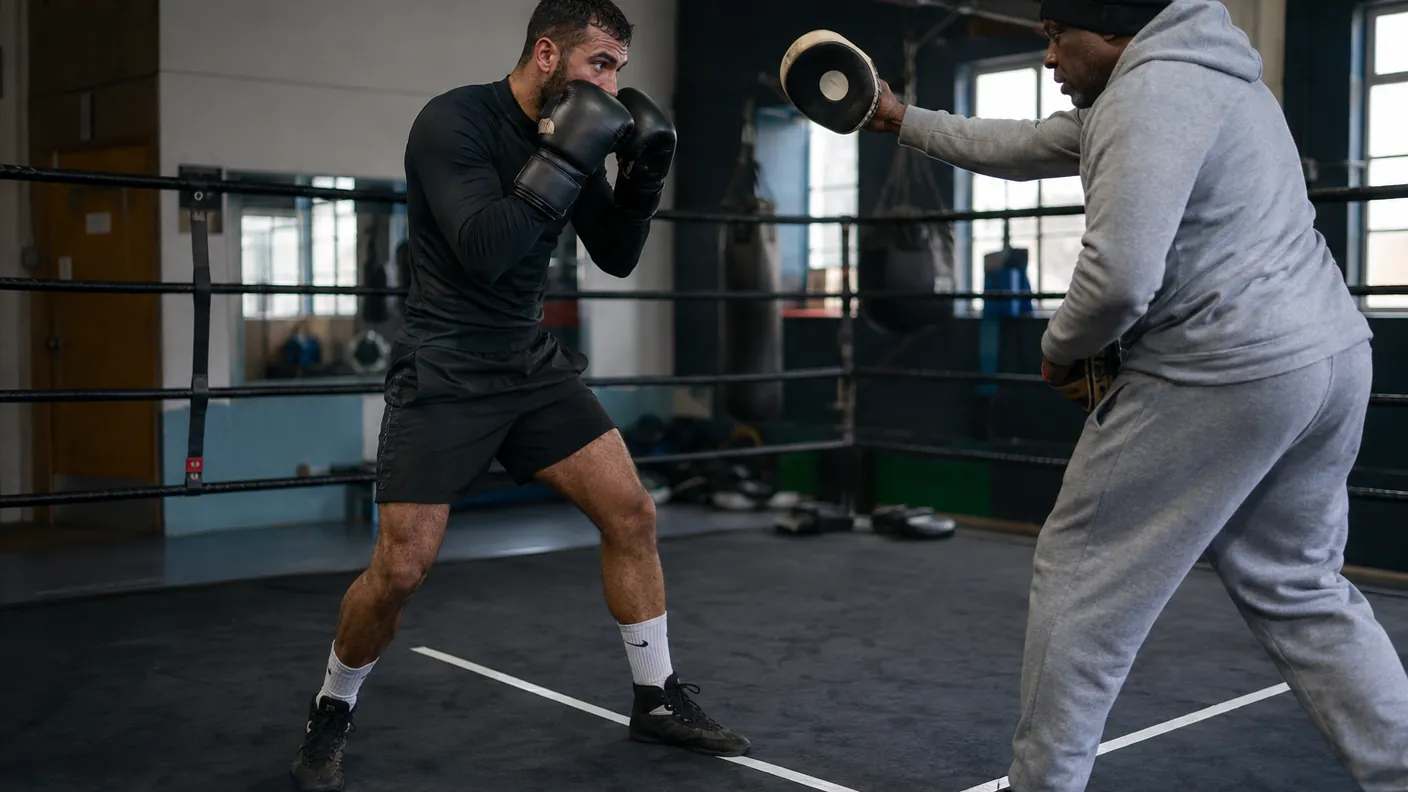
A right hand can land cleanly and still leave you in the worst place in the ring: directly in front of somebody who has just seen it coming.
That is why the cross needs an after-plan. Sometimes the answer is a high guard. Sometimes it is a small step back. Sometimes the useful choice is a compact lead-foot step across followed by a pivot, which changes the line before the other boxer can settle into their return.
This is not a dramatic spin or a way to chase somebody around the ring. It is a controlled angle drill for a cross that has already brought you into range. The aim is simple: throw the rear hand, keep the guard, take one small change of line, then finish in a stance that can still jab, cover or leave.
Watch the demonstration below, then work through the drill slowly enough that the feet do not start doing their own thing.
The cross changes your position
A cross turns the rear hip and shoulder through the middle. If you overreach, it can also pull the chest towards the target and leave the rear side slow to recover. That is why a clean cross is not only about the glove landing. It is about whether the feet, guard and head are still in a usable place as the hand comes home.
A study of lead straight-punch mechanics across boxing levels found clear differences in punch velocity and lower-limb force measures between groups of boxers. The useful coaching lesson is not to chase numbers. It is that straight punching depends on the floor, hips and trunk working in order, rather than the arm travelling alone.
After the cross, do not admire the sound on the mitt. Bring the rear glove back towards guard and ask one question: am I still standing in the line they expect?
If the answer is yes, a small angle may be useful.
What the step across actually does
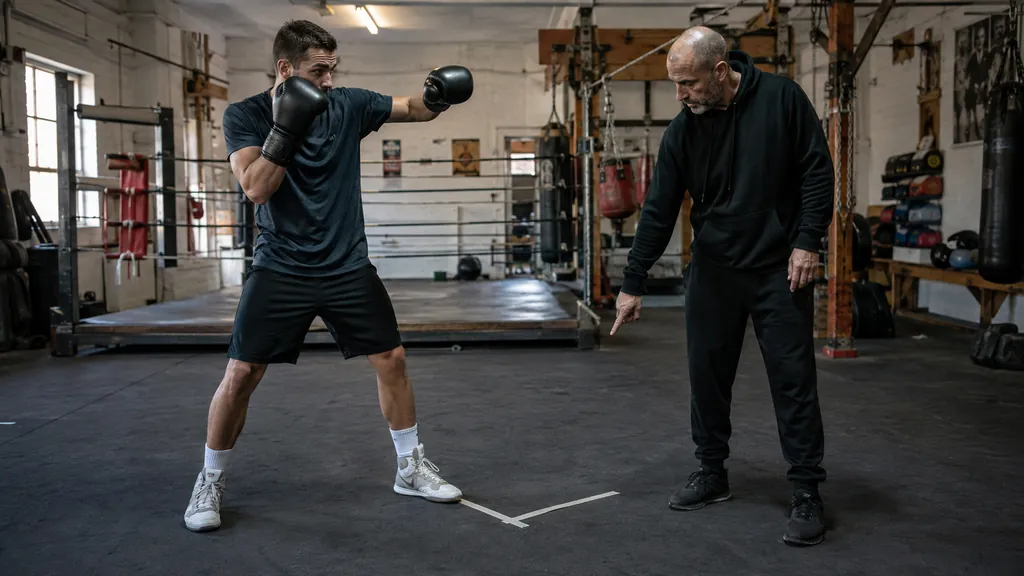
For an orthodox boxer, the lead foot moves a short distance across the original line towards the lead side. The body then pivots around that new lead-side position, with the rear foot following enough to restore a recognisable stance. Southpaws reverse the picture.
The important word is short. You are not stepping your lead foot across your own centre line until the feet trade places. That would square you up and make the next defensive choice slower. The lead foot only moves far enough to give the turn a new starting point.
Think of it as moving the doorway, not running through it. The cross has asked the other boxer to look down the middle. The step across changes where the middle is. The pivot then lets you finish at an angle rather than parked in front of their lead shoulder.
This is different from a rear-foot pivot. Our guide to the rear-foot pivot and tuck starts from the rear side and gives the movement a defensive job against a straight line. This version begins from the lead foot after your own rear hand has done its work. Do not blend them together until a coach has seen both positions clearly.
Keep the step tied to the cross
The mistake is taking the step first and throwing the right hand while your feet are rearranging. That makes the cross reach, opens the chest and turns the pivot into a rescue job.
Start with the cross from a settled stance. Let the rear foot turn as it normally would. Bring the right glove back towards the cheek. Then take the small lead-foot step across and let the body turn with it.
There is a useful pause after the cross while learning. It may feel less smooth, but it exposes whether the step is genuine. If you cannot stop after the cross with both hands available, do not add an angle yet. Fix the rear hand, stance width and head position first.
England Boxing's coaching resources place skill development within coached progressions. That is the sensible standard for this drill. Build the shape on a line or mitts before trying to use it around a live partner.
The three-round step-across pivot drill
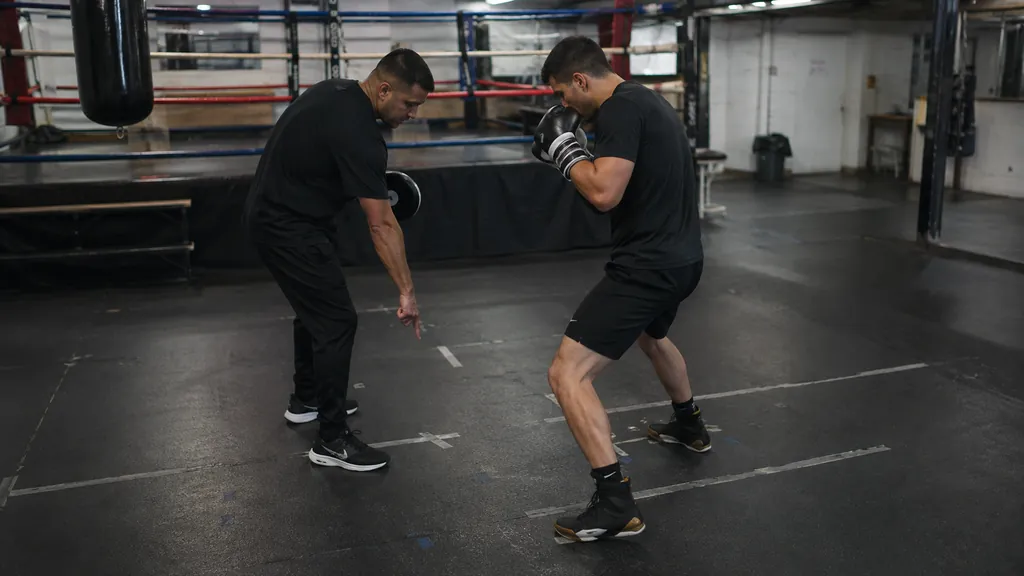
Use floor tape, a heavy bag or two focus mitts. Start at a pace where you could stop at any point without needing to grab a wall or shuffle your feet back into place.
Round one: cross and freeze
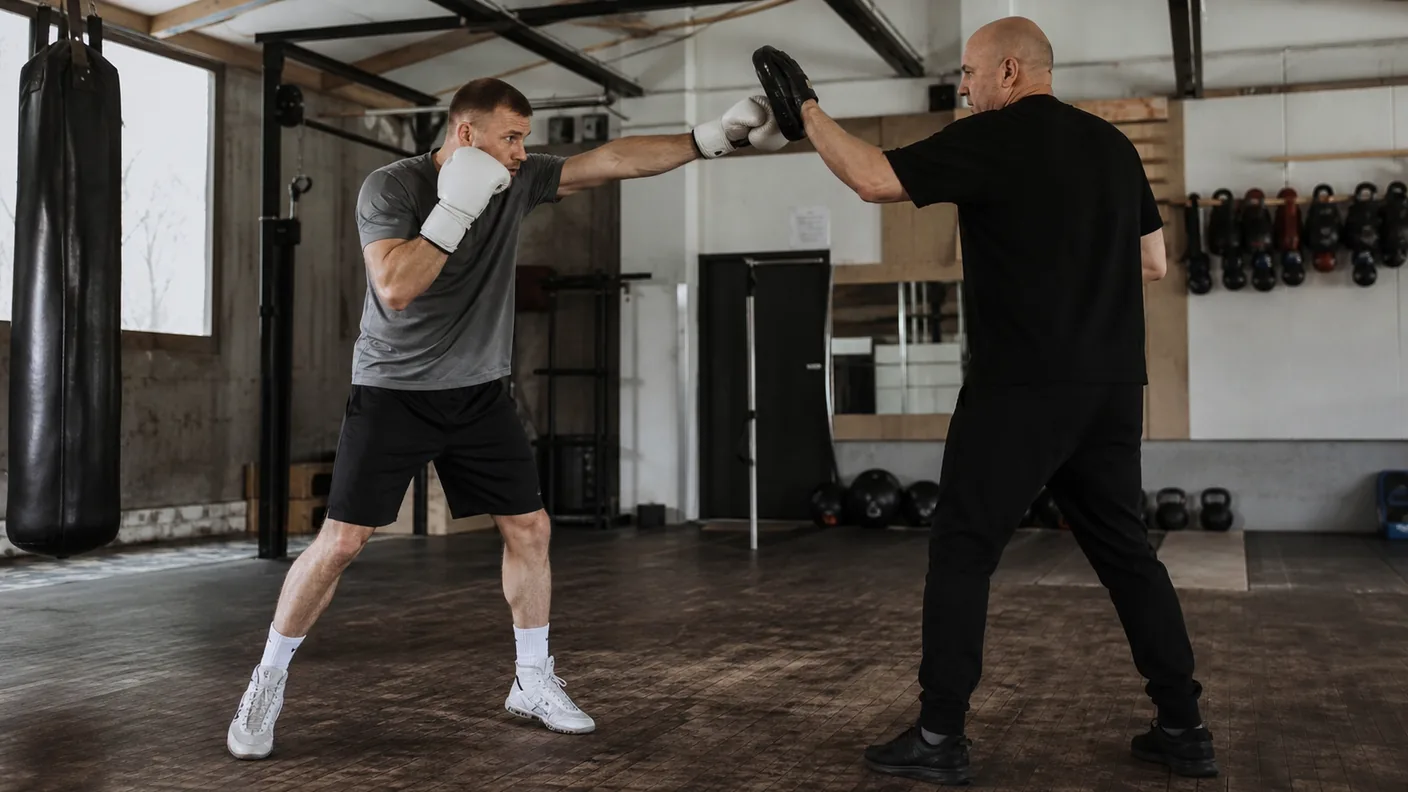
Throw a measured cross to a mitt or the centre of the bag. Bring the rear glove home and freeze for one beat.
Check the basics before adding any footwork:
- The feet are still staggered.
- The head has not travelled over the lead knee.
- The lead glove is still near the cheek.
- You could jab, cover or take one small step without rebuilding your stance.
If any of those fail, use a shorter cross. The distance is wrong if the punch only works by taking your body with it.
Round two: step across and pivot
Now add the lead-foot step across after the cross has returned. Make the step no longer than needed to open a modest new line. Let the rear foot follow the turn and freeze again.
Do not hunt for a perfect 90-degree angle. Your body shape, range and partner will decide how much turn is useful. The first goal is more ordinary: finish with a stable stance and both gloves in a position to work.
A helpful test is to throw a light jab into open space from the finished angle. If the jab needs a shuffle first, the step was too large or the feet have become too square.
Round three: cross, pivot, choose the finish
Use a coach-held second mitt or a slow visual cue. After the cross and pivot, the coach may present a light jab target, a high guard target or nothing at all.
If the jab target is there at honest range, touch it and reset. If the coach shows the guard, bring both gloves home and take a small step away. If there is no clear target, do not invent one. The pivot has still worked if it has taken you out of the original line and left you ready to box.
This is what makes the drill more useful than a rehearsed combination. The angle gives you a choice. It does not force another punch.
Four mistakes that spoil the angle
The first is crossing the feet. If the lead foot travels so far across that the stance collapses, you have made a larger problem than the one you were trying to solve. Shorten the step and keep the feet staggered.
The second is throwing the cross while stepping. That often pulls the head forward and makes the right hand late on the return. Land from a base first. Then move.
The third is dropping the lead hand as the body turns. The cross is already away from your face. Do not make the turn a second chance for the other boxer to find you. Keep the lead glove home and the chin behind the shoulders.
The fourth is treating the pivot as an automatic attack. If the other boxer has covered, moved back or stepped away from the new line, reset. A good angle can make a second punch available. It does not guarantee one.
Our article on boxing pivots without losing your stance is a useful companion for the basic movement. For a broader rule about ending an attack in a position you can defend from, read what to do after you punch in boxing.
Where this belongs in training
This is not a first-session boxing move. You need a stable stance, a cross that returns to guard and basic confidence with small pivots first. If those are already in place, the drill can make pads and shadow boxing more realistic without needing hard sparring.
Keep partner work controlled. One person throws a calm cross to a mitt, steps across, pivots and resets. The other person gives a clear target or stays behind a high guard. Nobody is trying to jump in with a surprise hook while the feet are being learned.
The coaching cue is short: cross, hand home, step small, turn ready.
If you are near Kidbrooke, our Recreational Adults boxing classes use pads, bag work and controlled partner drills to connect punches to the footwork that follows. You can learn the angle before trying to use it under pressure.
H&G Team
Writer at Honour & Glory Boxing Club, a community boxing gym in Kidbrooke, South East London.
KEEP READING
Jab Step-Across Cross: A Boxing Angle Drill
Use a compact jab step-across to open a rear-hand angle without crossing your feet, losing your guard or reaching for the cross.
Boxing One-Two Footwork: Step With the Jab
Use a small step with the jab, then set your feet for the cross so a basic one-two stays balanced and useful.
Boxing Pivot Drill: Turn Without Losing Your Stance
Build a useful boxing pivot with three simple drills that keep your feet under you, your guard ready and your next punch available.
Was this page helpful?
It takes one tap, and it genuinely helps.
Choose your next step
Turn this article into the right action
Some readers are ready to book. Some need the class route first. Pick the route that matches what you actually want.