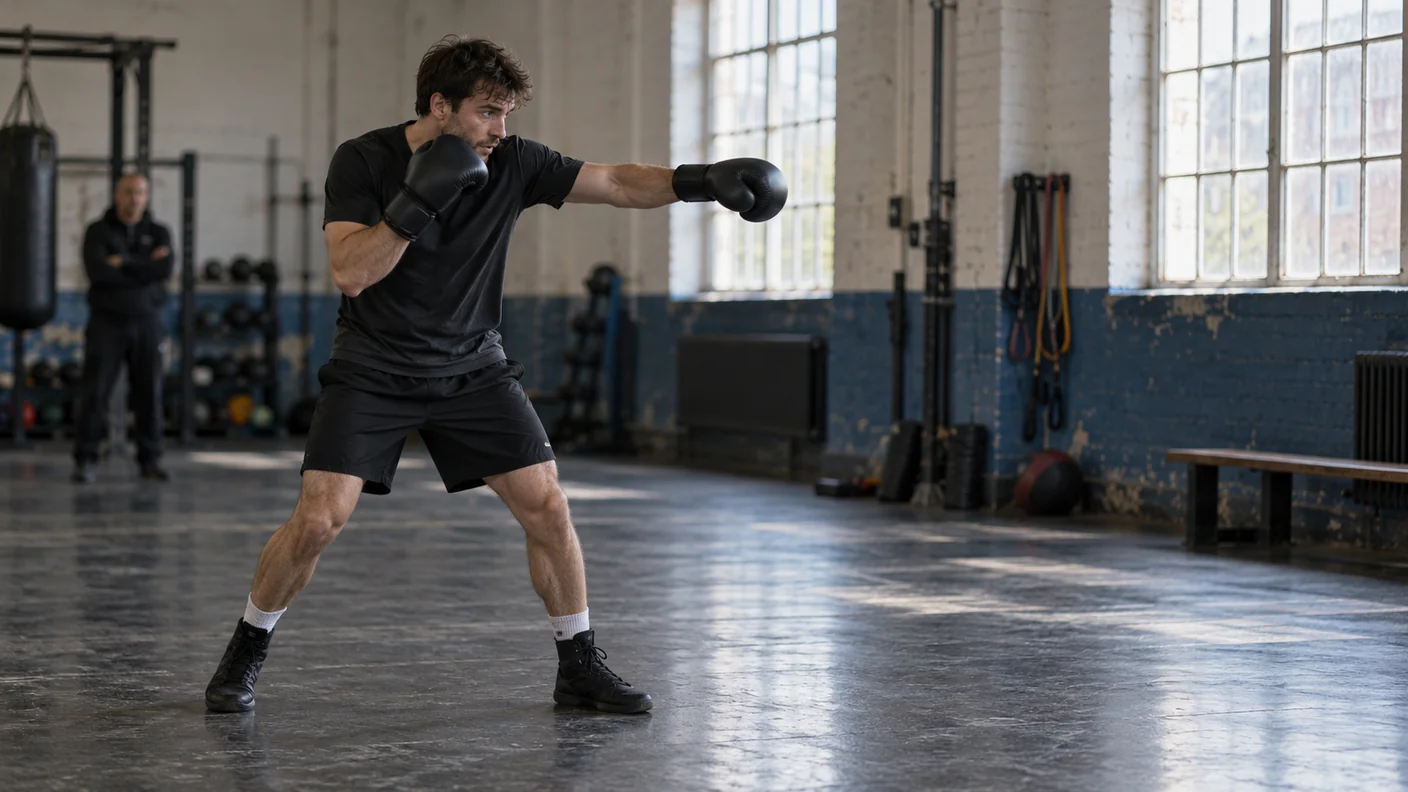
A shadow-boxing round should not look like a fight with nobody in it.
The common mistake is constant motion. A boxer bounces, throws three or four punches, rolls, pivots, slips again and keeps going until the bell. It feels energetic, but it often has no range, no reason for the punches and no point where the boxer has to recover their stance.
A better round has a quieter shape. See the space. Use a jab or feint to enter. Throw a short, sensible attack. Then leave with the guard and feet still available. That is closer to the rhythm of actual boxing, and it gives every movement a job.
Watch the demonstration below once, then use the round structure that follows. The important lesson is not to copy a string of movements. It is to stop treating every second of a round as an attack.
Shadow boxing needs an imagined range
Air does not tell you when you are too far away. That is why people often throw a jab with no step, then add a cross that would never reach, then fall into a hook because the combination told them to. The hands are busy, but the distances do not make sense.
Before you throw, picture a person at the edge of your jab range. You do not need an elaborate story or a named opponent. You need one clear problem: are they far enough away that you need a small step, close enough for a jab, or too close for a long punch?
Your answer changes the round. A jab at honest range can be followed by a quiet reset. A small feint can make you pause and imagine their response. A short one-two makes sense only after your feet have brought you close enough to throw it without reaching.
England Boxing's coaching handbook repeatedly returns to the same useful standard: balanced stance, guard recovery and enough control to throw the next shot. That is a better test than whether the round looked quick in a mirror.
A pause is part of the drill
Good boxing has pauses. They are not dead time.
A boxer may use them to check range, show a jab, watch the other person settle, or decide whether there is an entry worth taking. The pause does not mean freezing with both feet stuck to the floor. It means staying in stance without throwing because no useful opening has appeared yet.
Try a simple rule: after each short attack, move or hold your position for one full beat before beginning again. During that beat, imagine one response. Perhaps the other boxer steps back. Perhaps they cover high. Perhaps they show a jab. Your next movement should answer that picture, rather than being the next item on a memorised list.
This keeps shadow boxing from becoming a blur. It also exposes poor habits. If you cannot pause after a one-two without leaning over the front foot, crossing the feet or letting a hand drift, the combination was too ambitious for your current position.
A study of novice boxers completing a structured programme reported improvements in technical skill and highlighted the value of organised practice rather than unplanned repetition (study of structured boxing practice). In the gym, the practical point is plain: make the round clear enough that you can tell whether the action improved.
Enter with one clear reason
An entry is the moment you move from a safe distance into a place where a punch could land. It does not need to be dramatic.
Use one of three simple entries in a shadow round:
- A small step with a jab.
- A lead-hand feint, then a calm step into range.
- A short step to the side, then a jab from the new line.
Each option has the same condition. The feet and hand work together. Do not plant the front foot, wait, then reach with the jab. Do not throw the jab from too far away and let your head travel after it. If the distance is wrong, reset and build the entry again.
The entry is not an order to throw a long combination. Sometimes the honest next action is one jab and a step out. That is still a complete rep because you entered, tested the range and left in stance.
Keep the attack short enough to recover
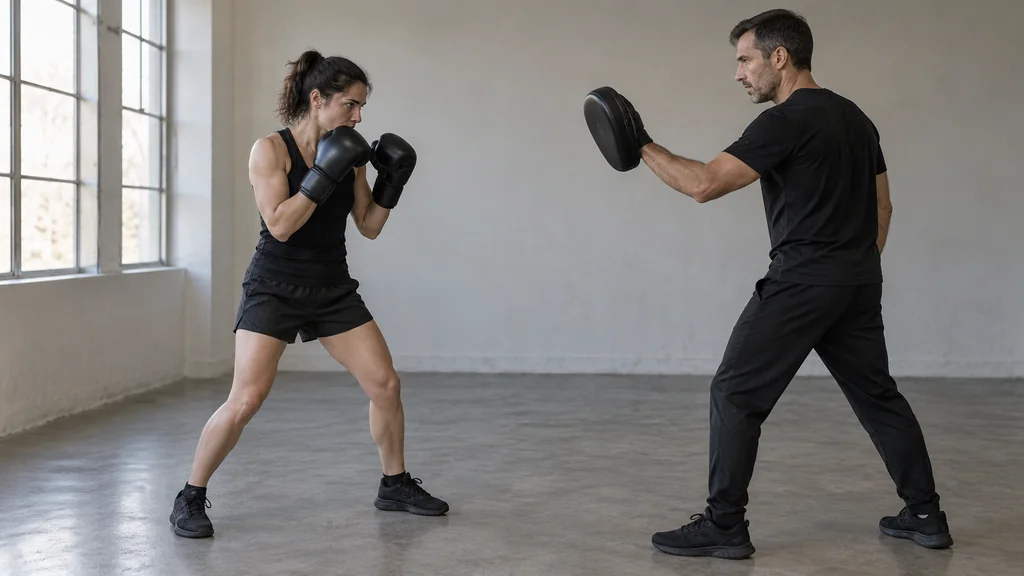
For this drill, use one or two punches at first. A jab. A jab-cross. A lead hook only if you have already imagined the range as close enough.
The point is not to make your combination collection larger. It is to check whether you can finish with both feet under you and both gloves available. If a cross leaves you square, do not disguise it with a fast hook. Bring the hands home, take a small step and start again.
This is where a mirror can help, provided you use it briefly. Throw a short sequence, pause and check the basics: chin protected, rear glove home, feet staggered. Then look forward again. Shadow boxing needs an imaginary opponent, not a staring contest with your own reflection.
Our guide to technical boxing rounds with one job gives a useful way to narrow the focus further. If today is about a balanced exit, do not try to repair every punch in the same three minutes.
Leave with a defensive decision
The exit gives the round its boxing shape. A person in front of you would not politely wait while you admire a combination. Build one small protective action into the end of every attack.
After a jab, take a short step back and recover the guard. After a jab-cross, make a small pivot or side step. After a lead hook, bring the glove back and imagine a straight punch coming through the middle before you reset.
The exit does not have to be the same every time. In fact, it should not be. If you always move back after the cross, your imagined opponent will soon be walking you down. Mix a step back, a small angle and a compact cover, but only when each one leaves you ready to throw a calm jab next.
A review of anticipation in combat sports found that higher-level athletes used earlier visual information more effectively than less experienced athletes. Shadow boxing cannot replace a live partner, but it can rehearse the useful habit of attacking with a defensive thought already attached.
A three-round shadow-boxing structure
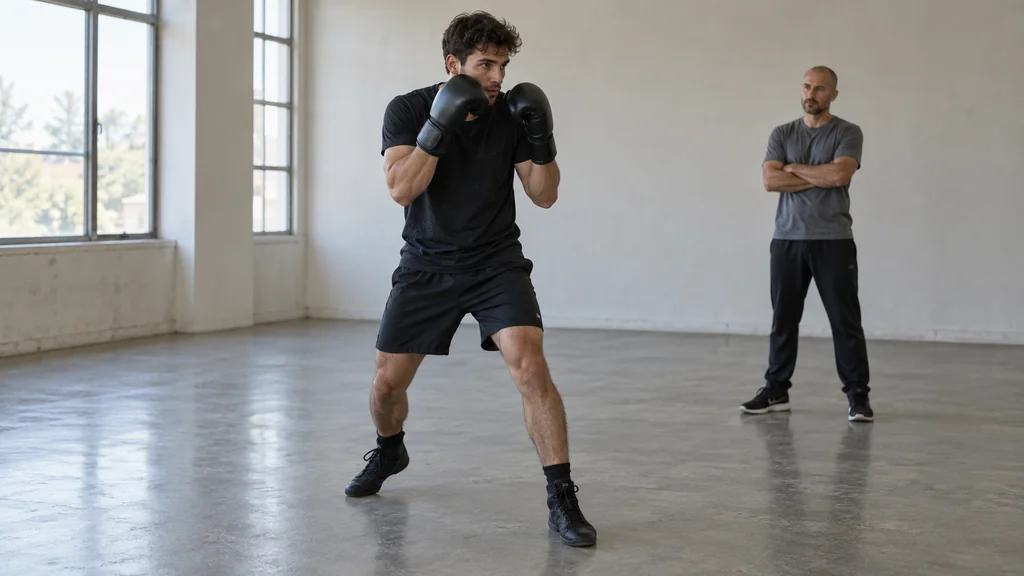
Keep the first attempt slow. The goal is a believable sequence, not a hard conditioning round.
Round one: range and one jab
Move lightly around the space. Every few seconds, picture yourself arriving at jab range. Take one small step if it is needed, throw a single jab, then recover and pause for a beat.
Do not add a second punch yet. Check that the jab does not pull the head over the lead knee and that the rear hand remains at the cheek. If it does, shorten the step or begin closer to the imagined range.
Round two: enter, attack, leave
Use one of the entries above. Throw either a jab or a jab-cross. Then choose one exit: a short step back, a small side step or a compact cover before you reset.
Give yourself enough time between reps to make the positions honest. The round should include quiet moments. Those moments are where you decide whether the next entry makes sense.
Round three: one imagined response
Now give the invisible partner one repeated answer. They might step back from the jab, cover high after the cross or return a jab after every entry.
Your job is not to beat every response. It is to notice it and make one sensible decision. If they step back, bring the feet forward before the next jab. If they cover, pause or take a small angle. If they jab back, cover or move before starting the next attack.
This round is where the drill becomes more than movement. You are no longer reciting a sequence. You are making a small decision, then recovering in a way that leaves another decision available.
Four signs the round has become too busy
The first is throwing while too far away. If the arm is straight but the body is leaning after it, you need a better entry, not a faster punch.
The second is never pausing. Constant bouncing and punching can hide the fact that you have no picture of range or response. Leave one beat after each attack and see whether the stance survives it.
The third is adding defence as decoration. A slip, roll or pivot must answer an imagined line. If it arrives at random after every combination, it will become another movement with no job.
The fourth is clenching through the whole round. Tense shoulders make the guard slow and the punches obvious. Our relaxed-hands shadow-boxing drill can help you keep the hands ready without turning the upper body rigid.
Where this fits in training
Use this structure after a warm-up and before faster pads, bag work or partner drills. It is useful for beginners because it slows down the urge to throw everything at once. It is useful for experienced boxers because it makes them account for the entry and exit that a bag will forgive.
For adults in Kidbrooke, Greenwich and nearby, our Recreational Adults boxing classes use shadow boxing, pads and controlled partner work to connect range, punch choice and recovery without rushing anybody into hard sparring.
The coaching cue is simple: see the space, enter with purpose, do your work, leave able to box.
H&G Team
Writer at Honour & Glory Boxing Club, a community boxing gym in Kidbrooke, South East London.
KEEP READING
Shadow Boxing: Why It Matters
Shadow boxing looks simple but it is one of the most valuable training methods in boxing. Learn why every boxer does it and how to get real benefits from your shadow work.
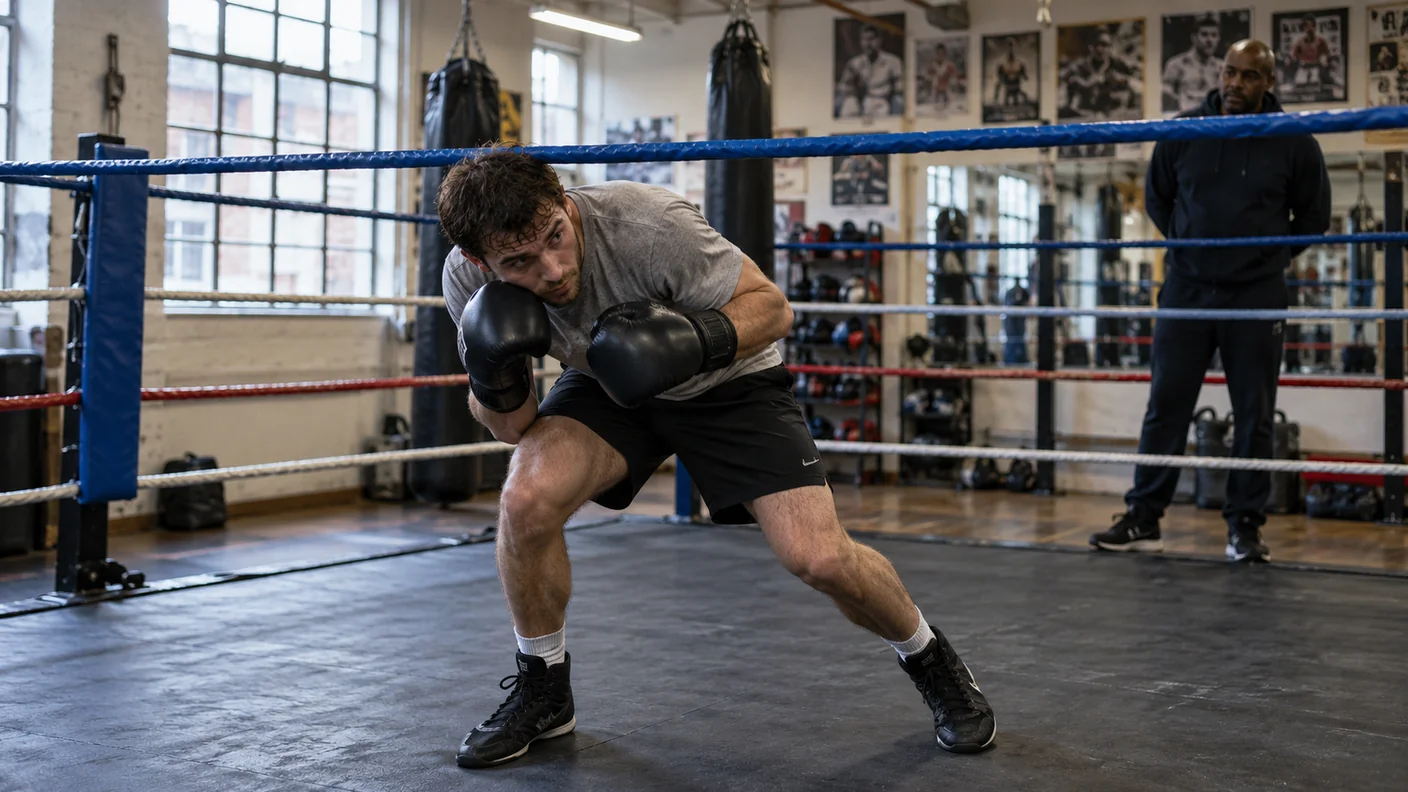
Cross-Rope Shadow Boxing Drill: Move With Purpose
Use two low-cost rope lines to practise boxing exits, pivots and defensive movement without turning shadow boxing into arm waving.
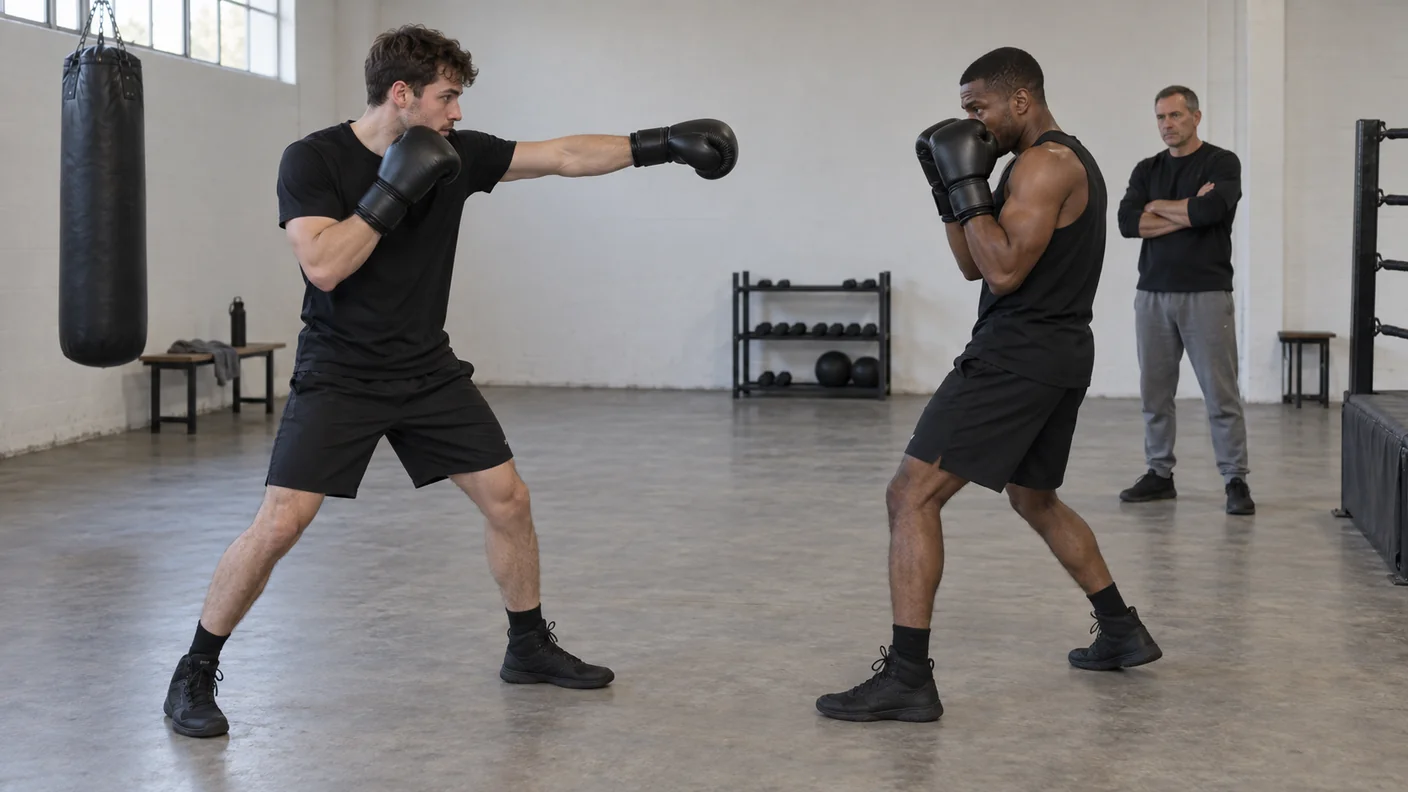
Partner Shadow Boxing: A No-Contact Reaction Drill
Build better boxing reactions with a no-contact partner shadow-boxing drill that keeps your eyes, feet and guard working together.
Was this page helpful?
It takes one tap, and it genuinely helps.
Choose your next step
Turn this article into the right action
Some readers are ready to book. Some need the class route first. Pick the route that matches what you actually want.