Partner Shadow Boxing: A No-Contact Reaction Drill
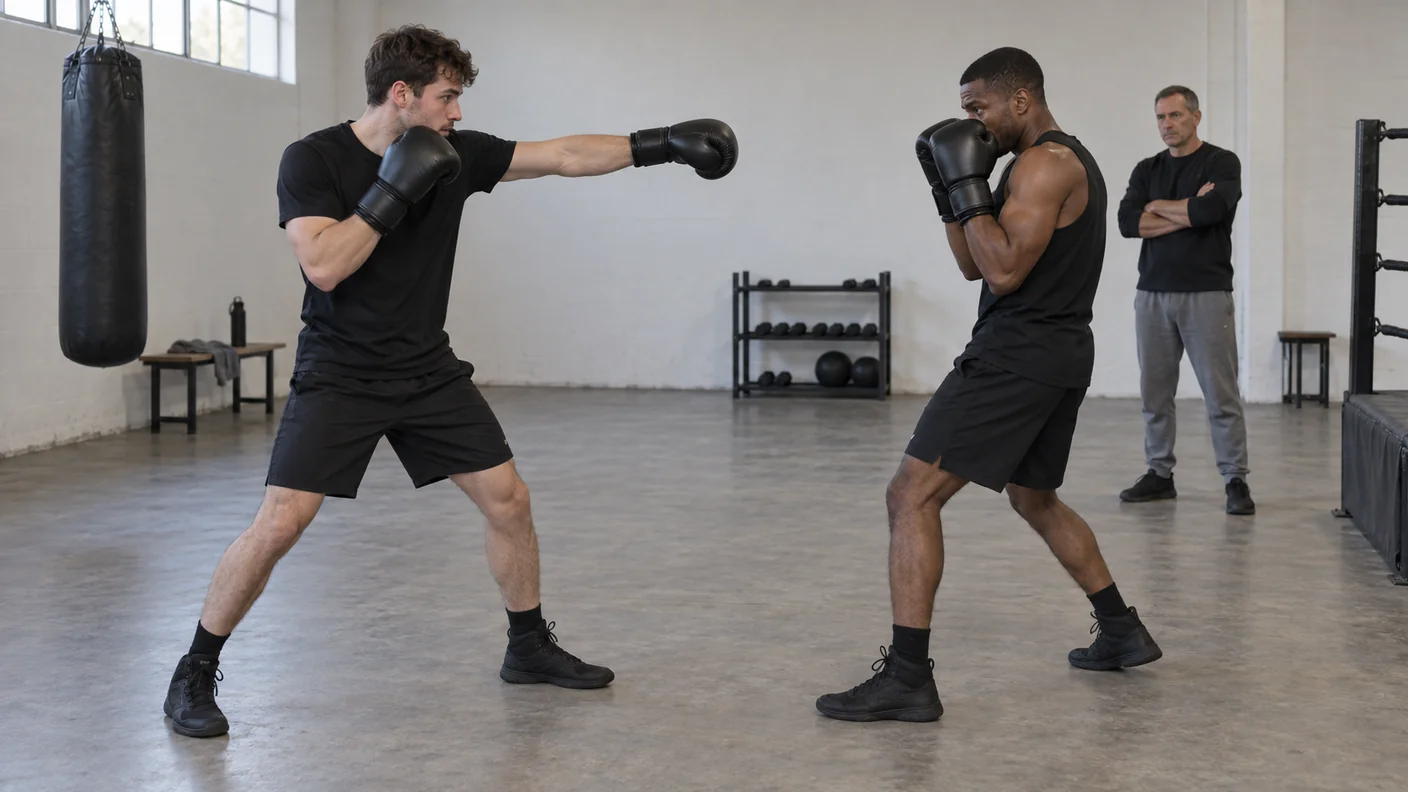
Partner shadow boxing is one of the best ways to make solo movement feel less imaginary without turning a technical round into sparring.
Two boxers stand at a sensible distance and move with each other. There are no punches landing and no contest over who can fool the other person. One person gives a clear picture with their feet, shoulders and lead hand. The other notices it, makes a small response and stays in a working stance.
That is the whole point. You are learning to look, decide and move before the gym gets louder or the pace rises.
The short video below is a useful visual reference. Watch how the work can stay relaxed while the feet, guard and attention remain properly switched on.
What partner shadow boxing teaches that solo rounds cannot
Solo shadow boxing is still essential. It lets you work on shape, rhythm and a particular correction without another person changing the picture. But a partner gives you something that air cannot: an opponent-shaped problem which changes every few seconds.
Your partner may show a small step in, a lead-hand twitch, a shoulder movement or a guarded retreat. You have to see it without staring at the gloves, then decide whether to hold position, make a small step, cover, feint or reset.
That is useful practice for reading early movement. A systematic review of anticipation in combat sports found that more experienced athletes made better use of early visual information than less experienced athletes. The lesson for an ordinary class is not to predict everything. It is to keep your eyes on the chest and shoulders long enough to notice the start of a decision.
The pace should be low enough that both people can explain what they saw after a round. If neither boxer can describe the cue they were responding to, the drill has become vague movement rather than deliberate practice.
Keep a clear distance and a clear agreement
This is not light sparring without the word sparring. It is a no-contact drill with a simple agreement before the bell.
Start at a range where a normal jab would fall short. Gloves should not touch faces, bodies or arms. If one person needs more room, they raise a hand or say stop, then both boxers reset without an argument.
England Boxing's coaching handbook puts welfare, coaching process and purposeful activity at the centre of learning. That matters here. The drill only works when both people know the limit and can concentrate on movement rather than wondering whether a hard shot is coming.
Keep the stance familiar. Chin down, eyes up, hands in useful places and feet far enough apart to step in any direction. Do not bounce around to look busy. Quiet feet make it easier to see what the partner is offering.
Start with the mirror round
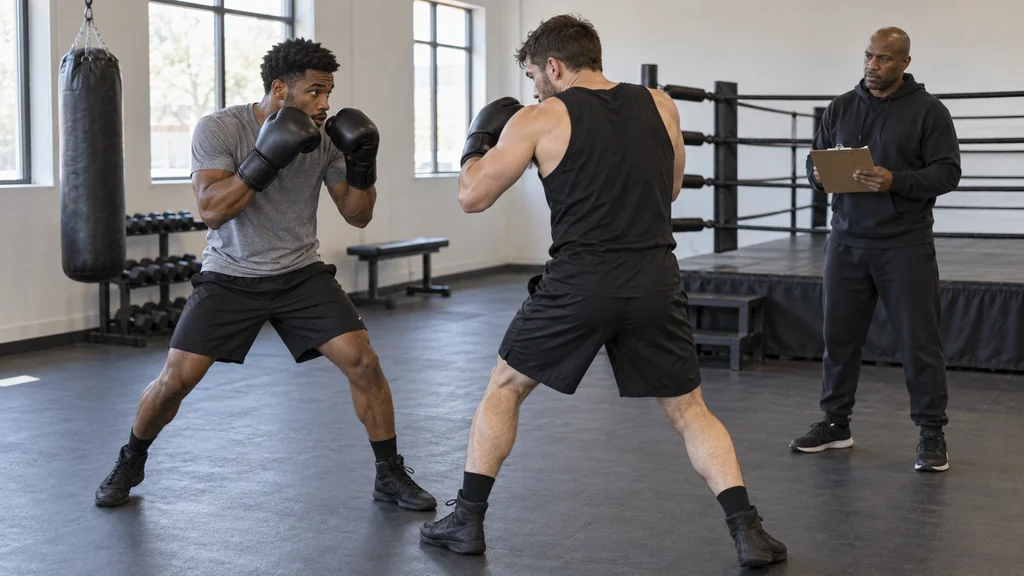
The first round is deliberately plain. One boxer leads, the other mirrors.
The leader moves slowly around a marked space. They can step forward, take a small step back, circle one direction, bring the lead hand up or give a quiet shoulder cue. The follower copies the distance and direction without copying every hand movement like a reflection.
The follower's job is to stay opposite the leader and retain a proper stance. If the leader steps in, the follower gives ground with the whole body rather than leaving the rear foot behind. If the leader steps out, the follower closes a little space without lunging. If either person becomes square, both reset.
Work for one minute each before swapping. The leader should not set traps or move at a speed designed to make the follower fail. Good leading gives the other boxer a clear movement problem they can solve well.
This is more useful than it sounds. A boxer who cannot keep their base while watching a partner will struggle to keep it when punches and noise are added later.
Add one cue and one answer
For the second round, agree one cue and one sensible response. Keep it limited.
For example, the leader can make a small step in. The follower's only answer is a small step back with both gloves home. Or the leader can show a slow jab shape that stops well short. The follower makes a compact catch shape or a small slip, then returns to guard.
Do not add a counter yet. The aim is to stop the first reaction becoming panic. A tidy defensive movement that finishes in stance is a successful repetition.
The leader can also show a shoulder feint. The follower watches the chest and lead shoulder, then either holds position, makes a small step out or gives a quiet parry shape. The follower should not automatically jump at every twitch. Sometimes the correct answer is to stay calm and let the false signal pass.
This links naturally with our guide to using feints in boxing without overcommitting. A feint is useful because it asks a question. Partner shadow boxing gives you time to learn what a sensible answer looks like before someone is trying to land the follow-up.
Build a simple three-round drill
Use a coach where possible. If you are working in a pair, keep the rules written down or say them aloud before each round. The structure matters more than adding lots of moves.
Round one: mirror the feet
Boxer A leads with only footwork. Boxer B stays opposite, matching range without crossing feet or staring at the floor. Swap after one minute.
The coach watches for obvious distance errors. If the follower keeps walking into the leader, make the steps smaller. If the follower runs away from every forward step, slow the leader down.
Round two: read the upper-body cue
Boxer A may now show one of two pictures: a small shoulder feint or a slow jab shape that stops outside range. Boxer B chooses the agreed defence, then freezes for one count in stance.
No punches land. No one tries to make the cue too subtle. The point is to build recognition, not to prove who has the faster reactions.
Round three: choose, then leave
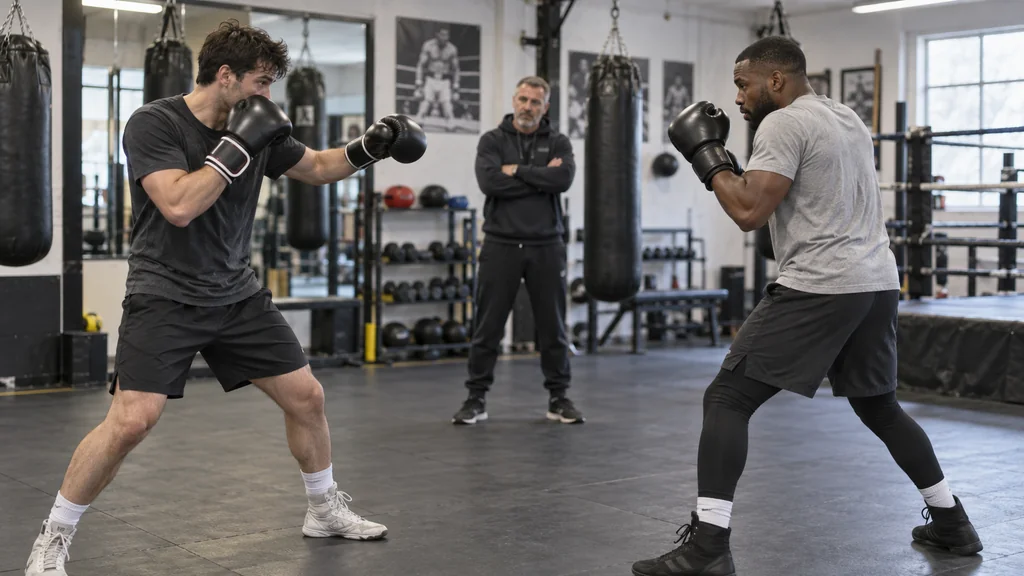
Boxer A can now step in, step out or show the jab shape. Boxer B has three answers: take a small step out, give a compact cover, or hold position and reset.
After every answer, both boxers return to neutral range. This last part is important. Your response has not worked if it leaves you too close, square or looking down at your own feet.
For a related solo-to-partner progression, use our boxing reaction drill for making clean choices. The common rule is that a good response needs a clear reason, a balanced finish and no rush to add a flashy counter.
Four errors that spoil the drill
The first is drifting into range. If the gloves begin brushing or either boxer has to pull a punch, there is not enough space. Step back and restart from honest distance.
The second is copying everything. A follower who mirrors every glove twitch becomes easy to lead around. Keep the eyes on the partner, but respond only to the agreed cue or movement.
The third is turning the drill into a competition. There is no value in trying to wrong-foot a newer partner with a huge feint or sudden rush. Give a clean cue, let them learn the answer, then make the cue a little less obvious only when both people are ready.
The fourth is forgetting the feet while concentrating on the hands. This is why the mirror round comes first. If your legs cross or your base disappears, no clever hand movement will make the next decision safe.
Where it fits in normal training
Use partner shadow boxing after your warm-up and before pads, bag work or controlled technical sparring. Two or three short rounds are enough. It is especially useful for adults who know the individual punches but freeze when another person moves in front of them.
Beginners can stay with mirror rounds and single cues. More experienced boxers can add a light mitt target after the defensive response, but only when a coach has confirmed that distance and control are holding up. This drill does not need hard contact to make someone better at reading boxing.
If you train in Kidbrooke, Greenwich or nearby, our Recreational Adults boxing classes use controlled partner work to connect stance, vision and footwork without rushing anyone into sparring.
The coaching cue is simple: see the movement, make one calm decision, then return to a position where you can box again.
H&G Team
Writer at Honour & Glory Boxing Club, a community boxing gym in Kidbrooke, South East London.
KEEP READING
Shadow Boxing: Why It Matters
Shadow boxing looks simple but it is one of the most valuable training methods in boxing. Learn why every boxer does it and how to get real benefits from your shadow work.
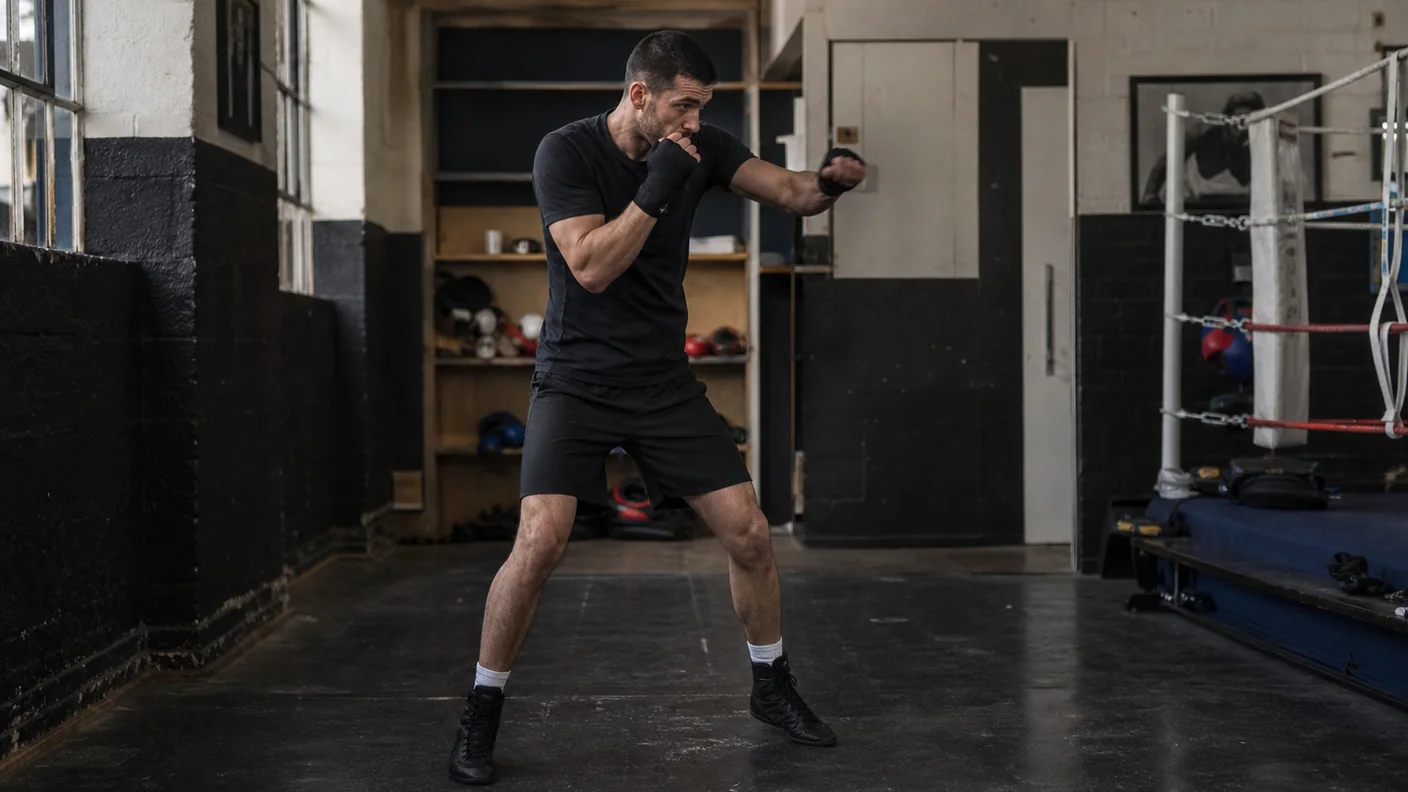
Relax Your Hands When Shadow Boxing
A simple shadow-boxing drill to stop clenched fists and tense shoulders making your punches slow, stiff and easier to read.
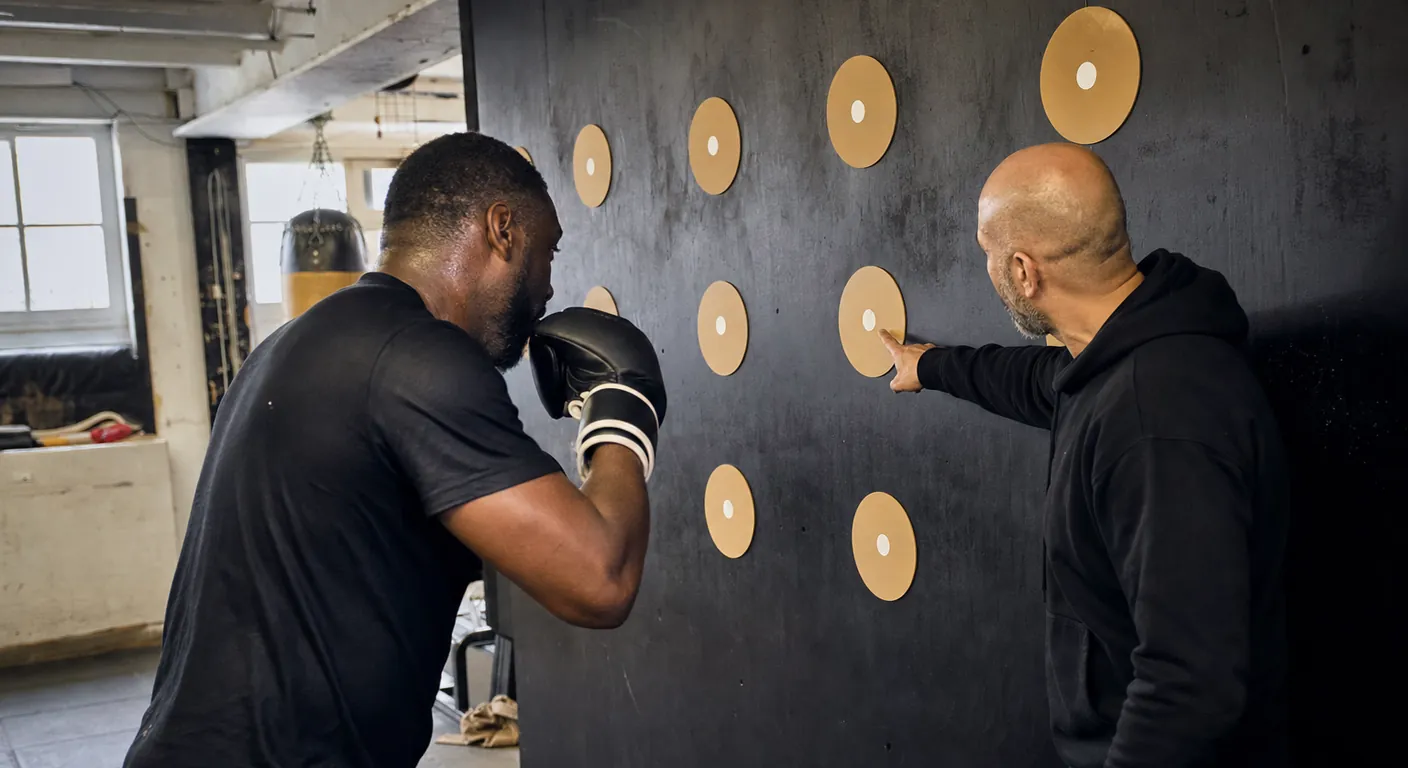
Boxing Reaction Drill: Think While You Punch
A practical boxing reaction drill that teaches you to stay in guard, read a call and make a clean choice under pressure.
Was this page helpful?
It takes one tap, and it genuinely helps.
Choose your next step
Turn this article into the right action
Some readers are ready to book. Some need the class route first. Pick the route that matches what you actually want.