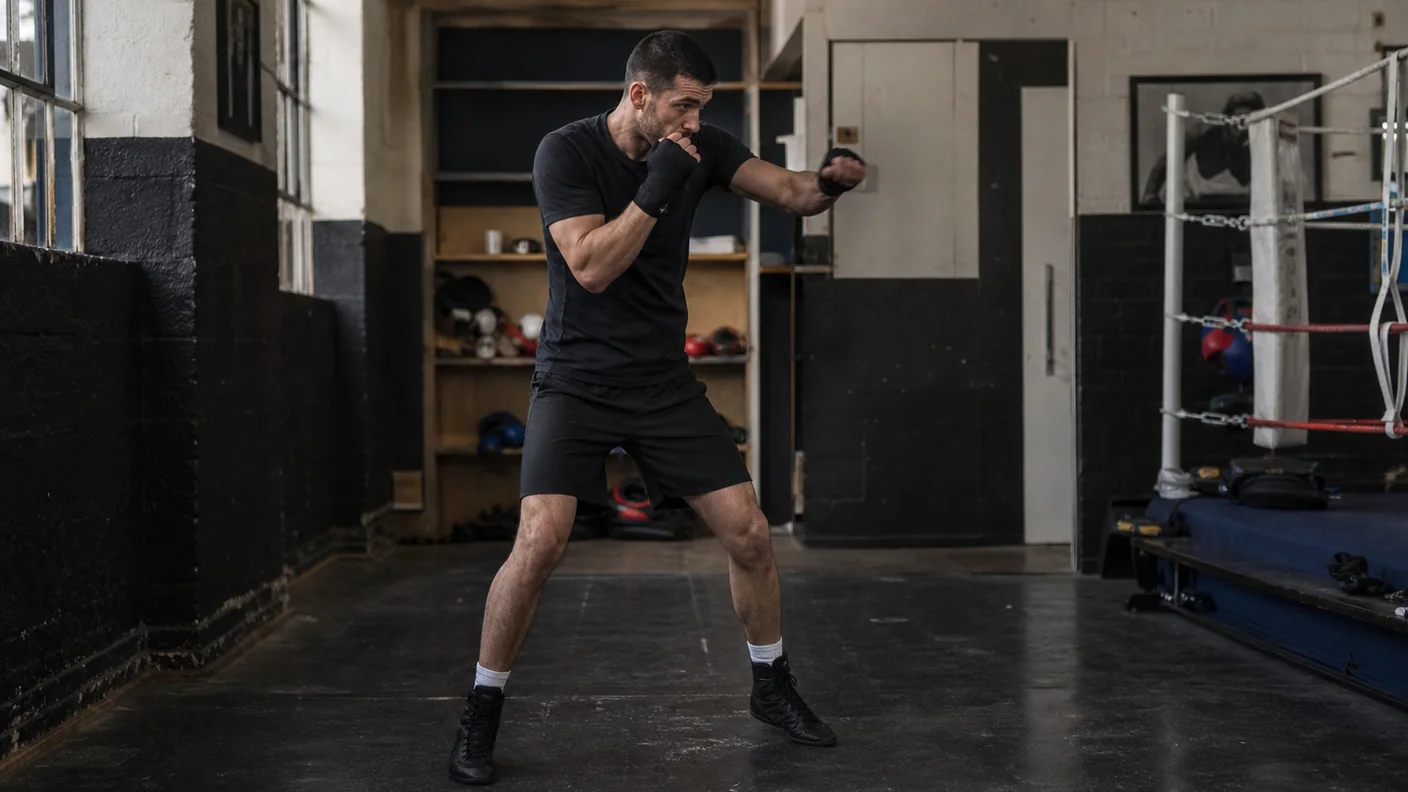
If your shadow boxing feels stiff, look at your hands before you add another combination.
Many beginners close both fists hard from the first bell, pull the shoulders towards the ears and try to make every punch feel powerful. The arms tire early, the punches become easy to see, and the guard starts to look like a tense pose rather than something that can jab, catch or parry.
The better starting point is calmer. Keep a proper boxing shape, but let the fingers and shoulders stay as loose as the moment allows. Close the hand only as the punch needs it, then let the tension go as the glove returns. You are not shadow boxing a fight against the air. You are rehearsing how to stay ready for every job.
Watch the short demonstration below before trying the drill. Notice the relaxed upper body and the small defensive movements between punches.
Loose hands do not mean a loose guard
A relaxed hand is not a hand hanging by your waist. It is a hand held near a useful guard position without squeezing so hard that the forearm, shoulder and neck turn rigid.
Start with the gloves or hands near the cheeks, elbows in a sensible place and chin down. Your fingers can be lightly curled. The wrists stay organised. You should still be able to close the fist, jab, catch a straight shot or lift the lead hand into a parry without having to rebuild the whole position.
England Boxing's Level 1 coaching handbook lists clenched hands and stiff shoulders among the faults that work against fast, relaxed punching. That is the useful distinction: the hands stay present, but they do not lock the upper body before anything has happened.
Let the punch create the tension
The hand does need to close for a real punch. Shadow boxing is not a reason to flick open fingers at imaginary targets or practise a careless wrist position.
Instead, begin with the arm loose enough that it can travel cleanly. As the jab, cross or hook reaches its final part, make the fist properly and let the body support the shot. Then release the unnecessary squeeze as the hand comes home. The aim is a quick organised action, not a permanent clench.
A study of fast strikes in experienced combat athletes observed a contract-relax-contract pattern through the movement, rather than constant maximal tension (research on muscle activation and strike speed). That does not give you a licence to chase power in shadow boxing. It is a useful reminder that speed is not made by making every muscle hard from the start.
The practical check is your shoulders. If they rise as soon as you think about punching, slow down. Let the feet settle, breathe out as the hand travels and see whether the shoulder can move with the punch rather than announcing it first.
The one-minute relaxed-hands round
Use this after a light warm-up. It is a technical reset, not a conditioning challenge.
First 20 seconds: guard and breathe
Move in your normal stance without throwing a punch. Keep both hands near guard height, fingers lightly curled and shoulders away from the ears. Take small steps forward, back and to either side without crossing the feet.
Every few seconds, quietly open and close the fingers once. This is not a flourish. It is a check that you are holding the guard instead of gripping it. If the wrists feel awkward, bring the hands slightly closer to the cheeks and reduce the movement.
Next 20 seconds: single punches only
Throw one jab, reset. Then one cross, reset. Then one lead hook at a compact imaginary range, reset. Keep each action slow enough that you can feel the hand travel out, tighten at the end, then soften again on its return.
Do not throw a second punch because you feel impatient. The point is to notice whether the first shot makes the other hand clench, the shoulders rise or the chin reach forward. If it does, make the next rep smaller.
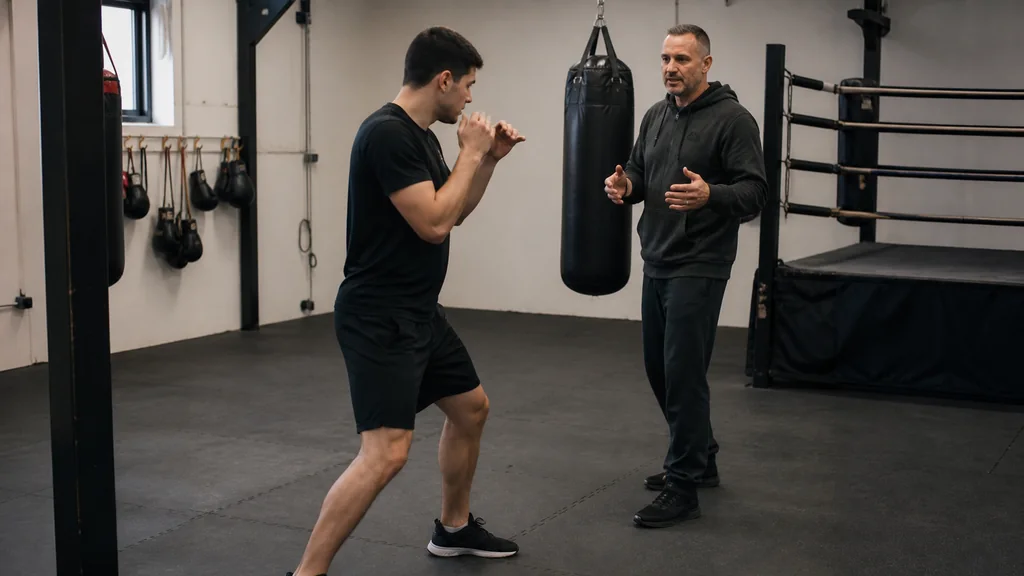
Final 20 seconds: add a defensive job
Now shadow box a simple sequence: jab, small slip, reset. Cross, catch shape, reset. Lead-hand touch, small step out, reset. The hands should change task without becoming stiff.
A loose lead hand can jab or show a parry shape. The rear hand can stay near the cheek, make a compact catch or come through with a straight punch when the feet are ready. This is why shadow boxing should include more than arm swings. You are rehearsing the choices you want available when another person is in front of you.
Our guide to shadow boxing with intention is useful once this basic round feels comfortable. It shows how to give a round one clear job rather than filling it with busy movement.
A partner version without contact
Work with a trusted partner at a distance where neither person can reach the other without stepping. No gloves need to touch.
Partner A moves and shows one slow visual cue: a lead-hand line, a small shoulder feint, a step forward or no action at all. Partner B shadows a sensible response: a guarded jab, a small parry shape, a step away or a reset. Then swap.
The point is not to win a game of reactions. It is to feel whether you can switch from a relaxed guard into a useful task without tightening your neck or swinging the arm. Keep the pace low enough that both people can stop immediately and name the action they saw.
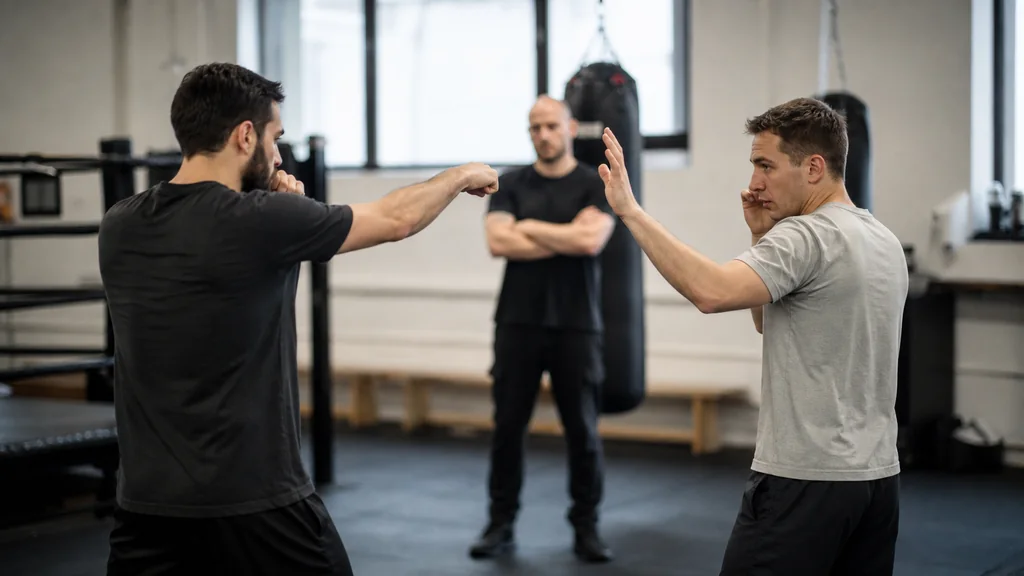
This fits well before pads or controlled partner drills. It also complements how to stop dropping your hands in boxing. Relaxed hands should still return to a reliable guard. The answer to stiffness is not letting the gloves drift away from the face.
Four mistakes that make the drill pointless
The first is confusing relaxed with floppy. Keep the wrists aligned and the hands near positions that can protect you. A limp arm is not a fast arm.
The second is opening the hand at the imagined point of impact. Shadow boxing is low impact, but you are still learning a punching shape. Close the fist properly as the punch finishes, then soften on the return.
The third is tensing the opposite shoulder. A tight rear hand during a jab can make the neck rise and slow the lead side. A tense lead shoulder during the cross can stop the guard recovering. Let the non-punching side stay useful, not frozen.
The fourth is turning this into a speed contest. If your hands only feel relaxed when you are moving slowly, that is fine. Build control first. Add speed only when the guard, breathing and feet remain calm.
Where this belongs in training
Use one or two relaxed-hands rounds at the start of a session, after a hard bag round or whenever your shoulders start doing more work than your feet. It is especially useful for people who look sharp for thirty seconds, then begin forcing everything with the arms.
If you train near Kidbrooke, our Recreational Adults boxing classes use shadow boxing, pads and controlled partner work to make the guard active without making the body tense. You learn to keep the hands ready for a punch, a parry or a reset instead of locking them into one shape.
The coaching cue is simple: hold the guard, do not grip it.
H&G Team
Writer at Honour & Glory Boxing Club, a community boxing gym in Kidbrooke, South East London.
KEEP READING
Shadow Boxing: Why It Matters
Shadow boxing looks simple but it is one of the most valuable training methods in boxing. Learn why every boxer does it and how to get real benefits from your shadow work.
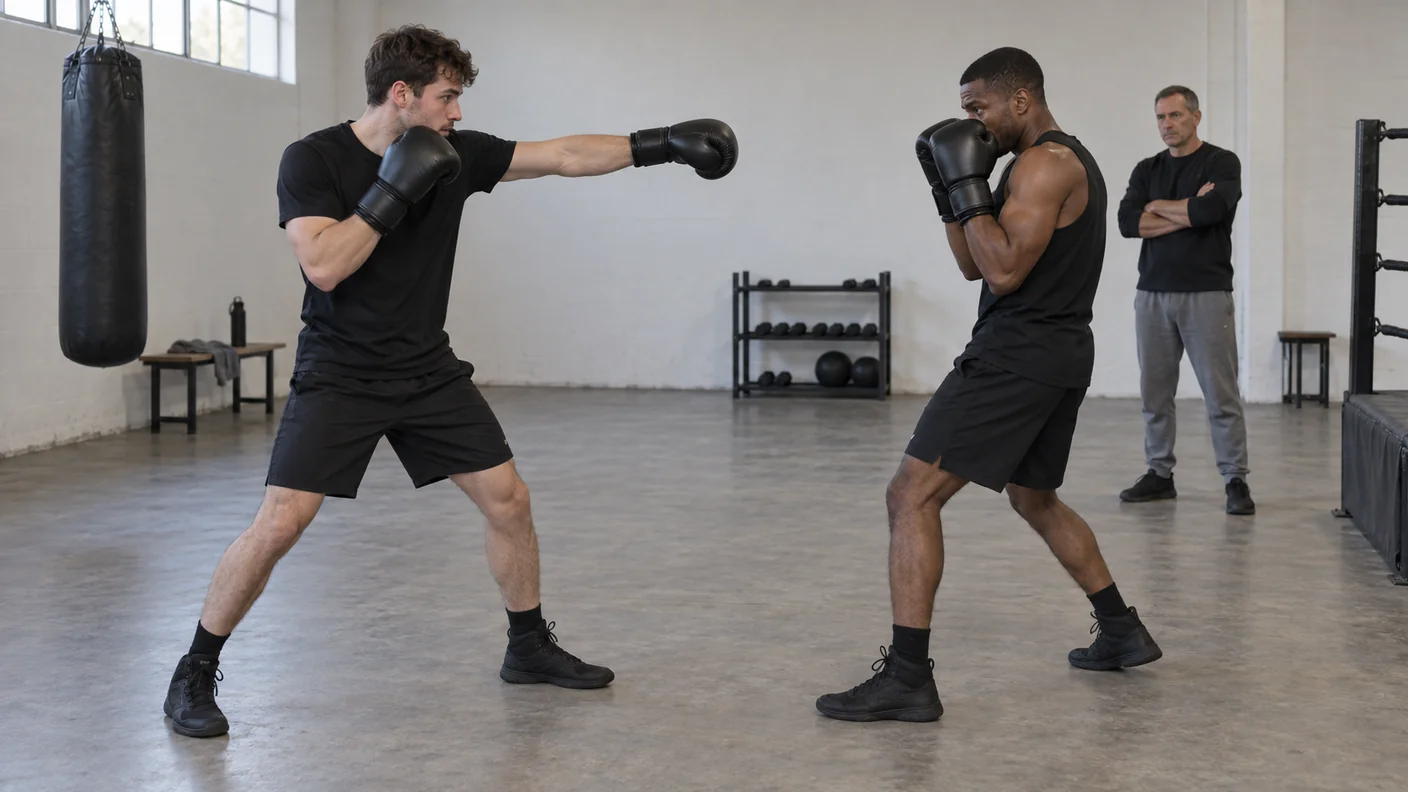
Partner Shadow Boxing: A No-Contact Reaction Drill
Build better boxing reactions with a no-contact partner shadow-boxing drill that keeps your eyes, feet and guard working together.
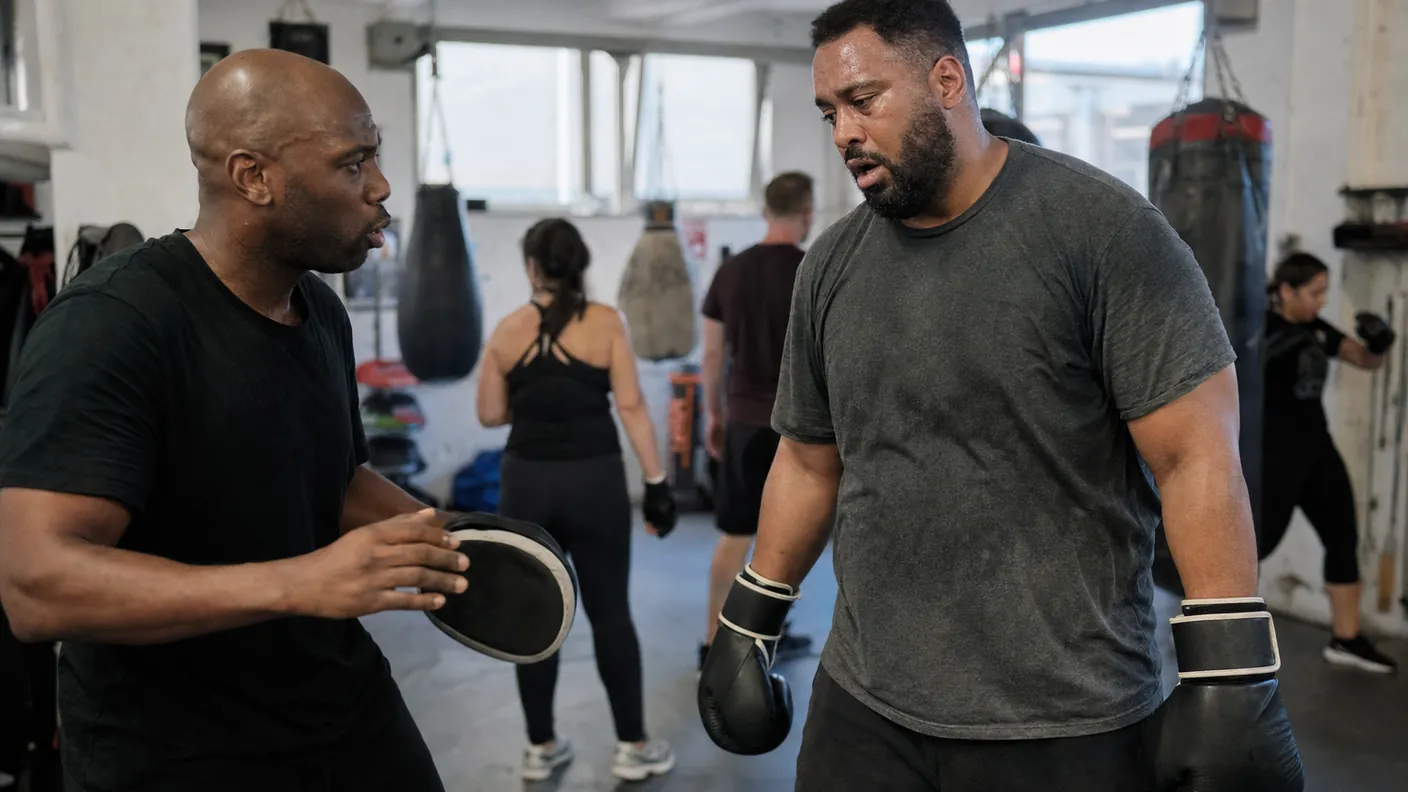
Why You Drop Your Hands in Boxing
Hands dropping in boxing is usually a fatigue, tension and reset problem. Here is how beginners can fix the habit without forcing it.
Was this page helpful?
It takes one tap, and it genuinely helps.
Choose your next step
Turn this article into the right action
Some readers are ready to book. Some need the class route first. Pick the route that matches what you actually want.