Cross-Rope Shadow Boxing Drill: Move With Purpose
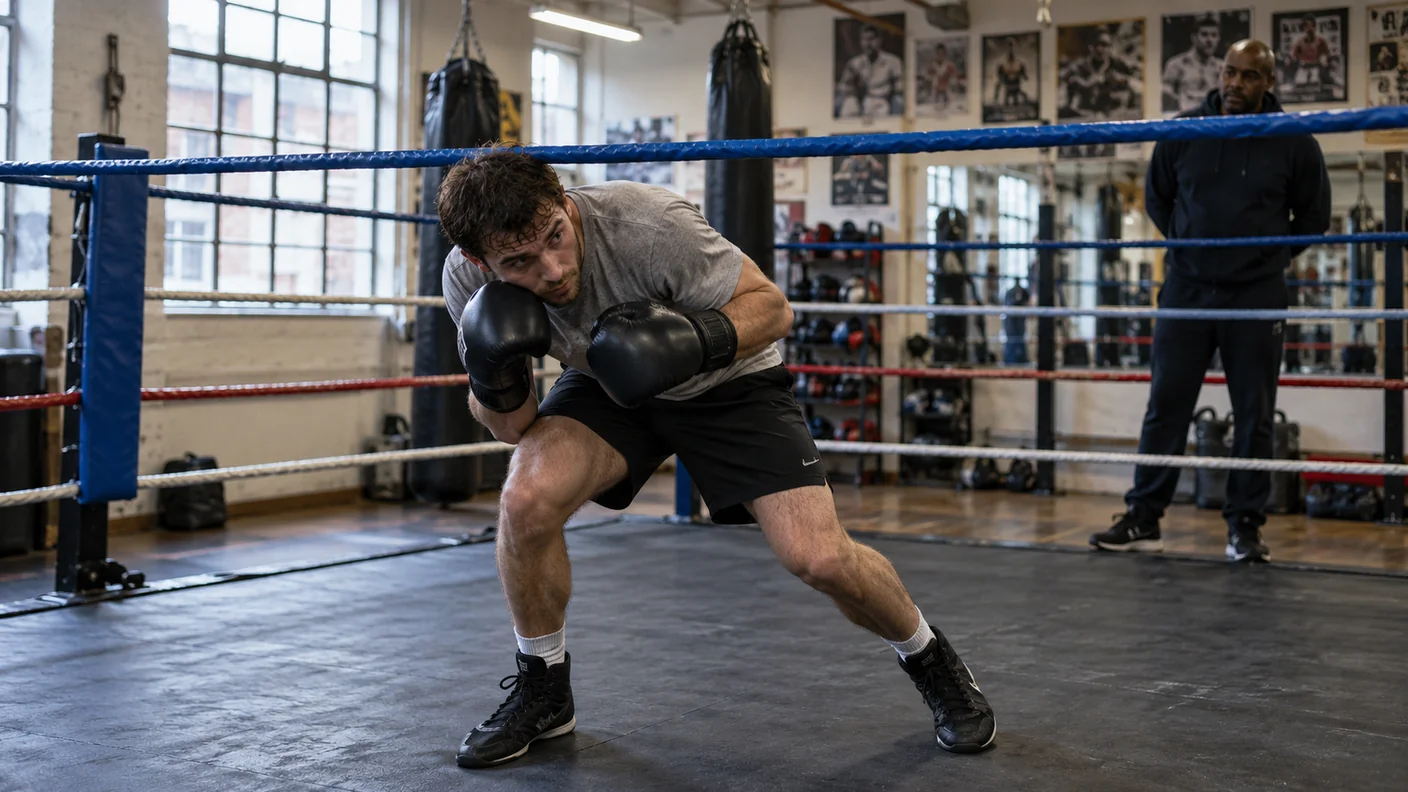
Shadow boxing gets vague when there is nothing asking you to move with a reason. You throw a combination, take two random steps, then repeat it in another direction. The hands may be busy, but the feet never have to solve a real problem.
A cross-rope drill gives the floor a simple job. One line gives you something to roll under. A second line creates four small spaces, so you have to leave on an angle instead of wandering forward and back. It is a solo technical drill, not a substitute for sparring. The value is in making every step finish in a stance that can still punch, cover or move again.
The video below is a useful visual reference for setting up the lines and keeping the drill calm. Watch the feet as closely as the head movement. A roll is only useful if you come out with your stance intact.
Set up a safe rope reference
Use two hand wraps, light ropes or strips of tape. Make one line at around shoulder height, or use only a single line if you have limited space. The line is a visual reference, not something to pull against. It should be light, easy to step away from and nowhere near a door, heavy bag chain or sharp fitting.
For the full cross version, place a second line across the floor or low enough that it marks your four working spaces without becoming a trip hazard. A taped cross is often the simpler choice in a busy gym. You do not need a ring, expensive footwork ladder or large studio. You need enough clear floor that a missed step does not put you into a wall or another person.
Start in your normal boxing stance at one edge of the marked space. Keep both hands in a working guard, knees soft and eyes forward. If you are orthodox, your left foot and hand lead. If you are southpaw, reverse the picture. The drill does not change the stance. It exposes whether you can keep it while changing direction.
England Boxing's coaching handbook puts safe, purposeful activity at the centre of learning. That is the right standard here. If the setup makes you hurry, duck blindly or worry about hitting somebody, remove a line and make the space simpler.
Roll with your legs, not your waist
The rope gives you a simple test: can you lower your level without folding forward?
Bend through the knees and let the hips travel underneath the line. Keep the chest organised, chin tucked and eyes where an opponent would be. Your head should move in a compact arc, not dive forward towards imaginary punches. Both gloves remain close enough to protect the face as you move.
The usual error is dropping the upper body while the legs stay stiff. That may get your head below the rope, but it puts weight over the front knee and leaves you slow to step out. A second common error is letting the feet narrow as you pass under. If the feet come together, the exit becomes a scramble rather than a boxing movement.
A biomechanics study of boxing punches found that punching is a connected action involving the whole body rather than only the arm. You can apply the same practical rule here. The legs lower you, the trunk stays under control, the hands stay useful, and the feet leave you ready for the next job.
Give every roll an exit
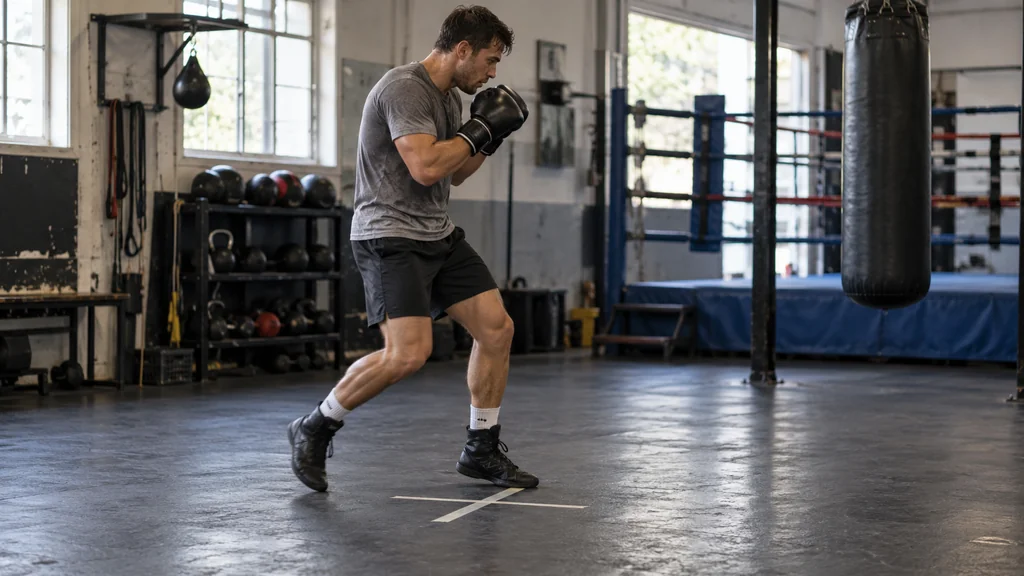
Do not roll under the rope and stop in front of the line. The drill becomes useful when the roll has a direction.
After a left hook shape, a boxer will often roll to the left. After a rear straight or right hand shape, they will often roll to the right. That is a helpful starting pattern, not a rule to follow without thinking. The more important detail is that the lead foot starts the exit in the direction you have chosen and the rear foot restores the usual stance gap.
Take only enough ground to clear the original line. A huge sideways leap feels athletic but normally leaves you too square to punch or defend. A small step and a quiet pivot are harder to notice and more useful in a real round.
The finish should pass a simple test. Freeze for one second after the exit. Could you throw a measured jab, cover a return shot or step away again without a repair shuffle? If not, the step was too large or the feet have come too close together.
For the basic position underneath this drill, use the floor-line drill for a better boxing stance. For a more specific angle after a punch, see our guide to the step-across pivot after the boxing cross. The cross-rope version is less about adding a flashy shot and more about making the exit automatic after your own movement.
Build the cross-rope drill in three rounds
Work slowly enough that you can stop at any point. One or two-minute rounds are plenty while you are learning. The objective is not to collect repetitions. It is to make the same good position appear again and again.
Round one: move under the line
Start without punches. Travel from one marked space to the next, passing under the shoulder-height line with a compact roll. Step out into the next space, hold your stance for one count, then return through the line in the opposite direction.
Keep the feet apart throughout. Do not spin around when you reach an edge of the space. Use a small side step or pivot to face the line again. Your head can move under the rope, but your eyes should not drop to the floor to watch it happen.
If you hit the rope, slow down. It usually means you have stood up too soon, bent at the waist, or let the feet arrive after the head. Fix the position before you add pace.
Round two: finish a short combination, then leave
Add one simple combination in each square. A jab-cross or jab-cross-hook is enough. Throw it at no more than technical effort, then roll under the line in the direction that leaves you balanced.
Do not turn every combination into a ten-punch display. The point is to connect an attack with an exit. After the jab-cross, bring the rear hand home before you roll. After a lead hook, make sure the rear glove has not drifted down as you leave the line.
A useful coaching cue is: finish, lower, step, settle. The final word matters. You should not be falling out of the roll or bouncing away just because the line has been cleared.
Round three: choose the next space
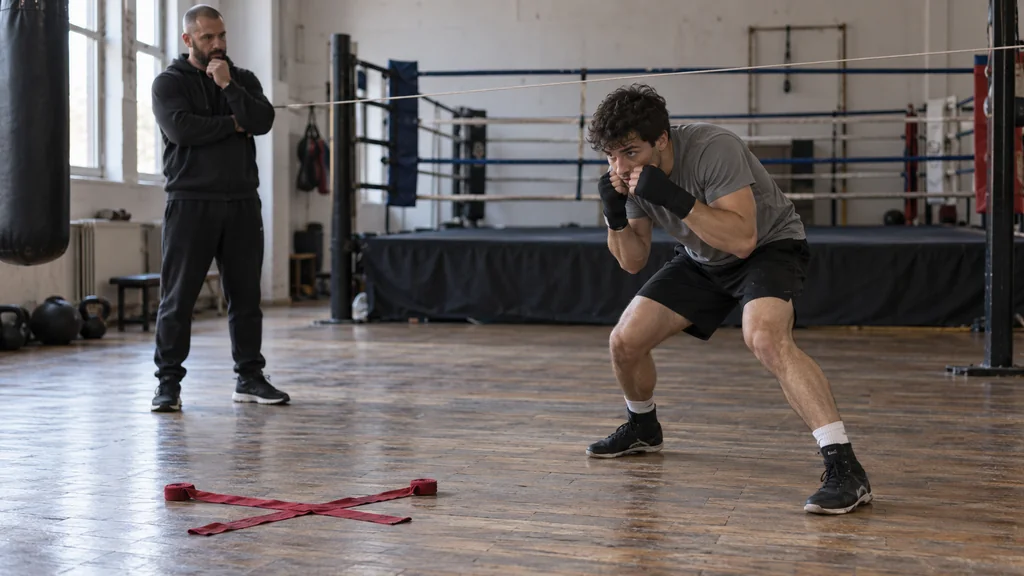
Now make the drill less scripted. Start in any one square. Throw a single jab or a light one-two, then choose which adjacent space gives you the better exit. Roll or step under the line, settle, then begin again from the new position.
Imagine one simple cue in front of you. A jab line might ask for a compact roll and exit. A forward step might ask for a small angle. No cue at all might mean you hold range and move without punching. You are not trying to win an imaginary fight. You are training the habit of seeing a reason for the next step.
This makes the drill more useful than a fixed sequence. A good boxer does not move because a timer tells them to. They move because the previous action has changed the range, line or balance.
Three faults to stop before they become habits
The first is ducking without guard. If both hands drop as you pass under the rope, you have made the exercise easier while making the boxing worse. Keep the gloves where you would want them if a hook or jab were actually coming.
The second is crossing the feet to reach the next square. That can make the drill look fast, but it removes your ability to stop, punch or change direction. Take a smaller step, then let the second foot follow into a proper stance.
The third is treating the rope as a target. You do not need to brush it with your hair or squeeze under the lowest possible point. The rope represents a punch line, not a limbo contest. Give yourself enough room to lower with the legs and keep the eyes up.
Where the drill fits in training
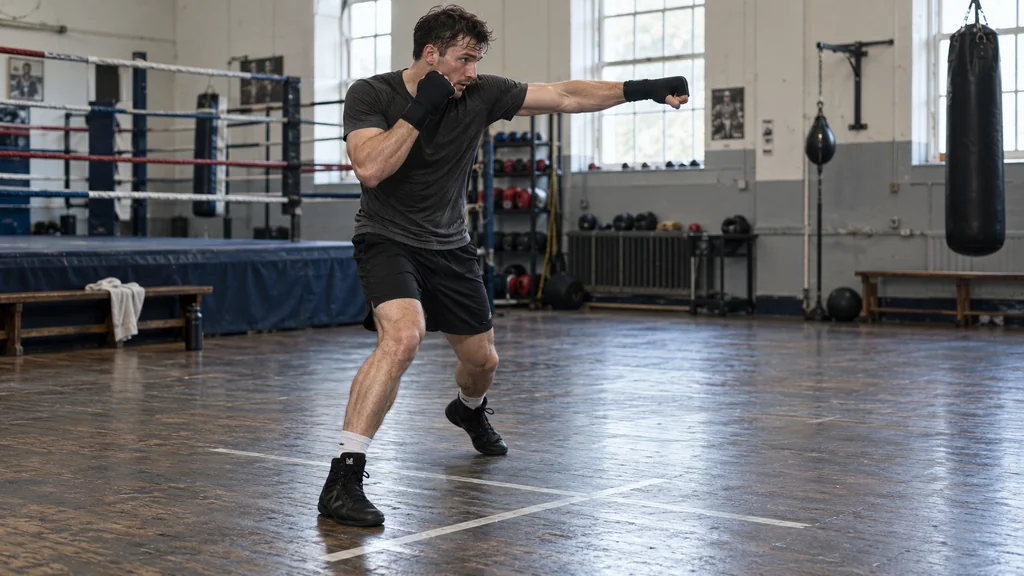
Use this after a general warm-up or at the start of a technical session. It works well before pads because it reminds you that a combination should leave you somewhere useful. It also works at home if the space is clear and the line can be set up safely. Do not tie a rope across a walkway or use furniture that could move if you catch it.
Beginners should stay with round one until the feet and guard remain calm. More experienced boxers can add a coach-held mitt after the exit, but only when the stance does not need a shuffle before the punch. The rope should never push you into rushing a counter.
For adults in Kidbrooke, Greenwich and nearby, our Recreational Adults boxing classes use pads, footwork and controlled drills to turn movements like this into practical habits. You do not need hard sparring to learn how to leave a line with your guard and balance intact.
The cue is simple: move under, step out, finish ready.
H&G Team
Writer at Honour & Glory Boxing Club, a community boxing gym in Kidbrooke, South East London.
KEEP READING
Shadow Boxing: Why It Matters
Shadow boxing looks simple but it is one of the most valuable training methods in boxing. Learn why every boxer does it and how to get real benefits from your shadow work.
Partner Shadow Boxing: A No-Contact Reaction Drill
Build better boxing reactions with a no-contact partner shadow-boxing drill that keeps your eyes, feet and guard working together.
Relax Your Hands When Shadow Boxing
A simple shadow-boxing drill to stop clenched fists and tense shoulders making your punches slow, stiff and easier to read.
Was this page helpful?
It takes one tap, and it genuinely helps.
Choose your next step
Turn this article into the right action
Some readers are ready to book. Some need the class route first. Pick the route that matches what you actually want.