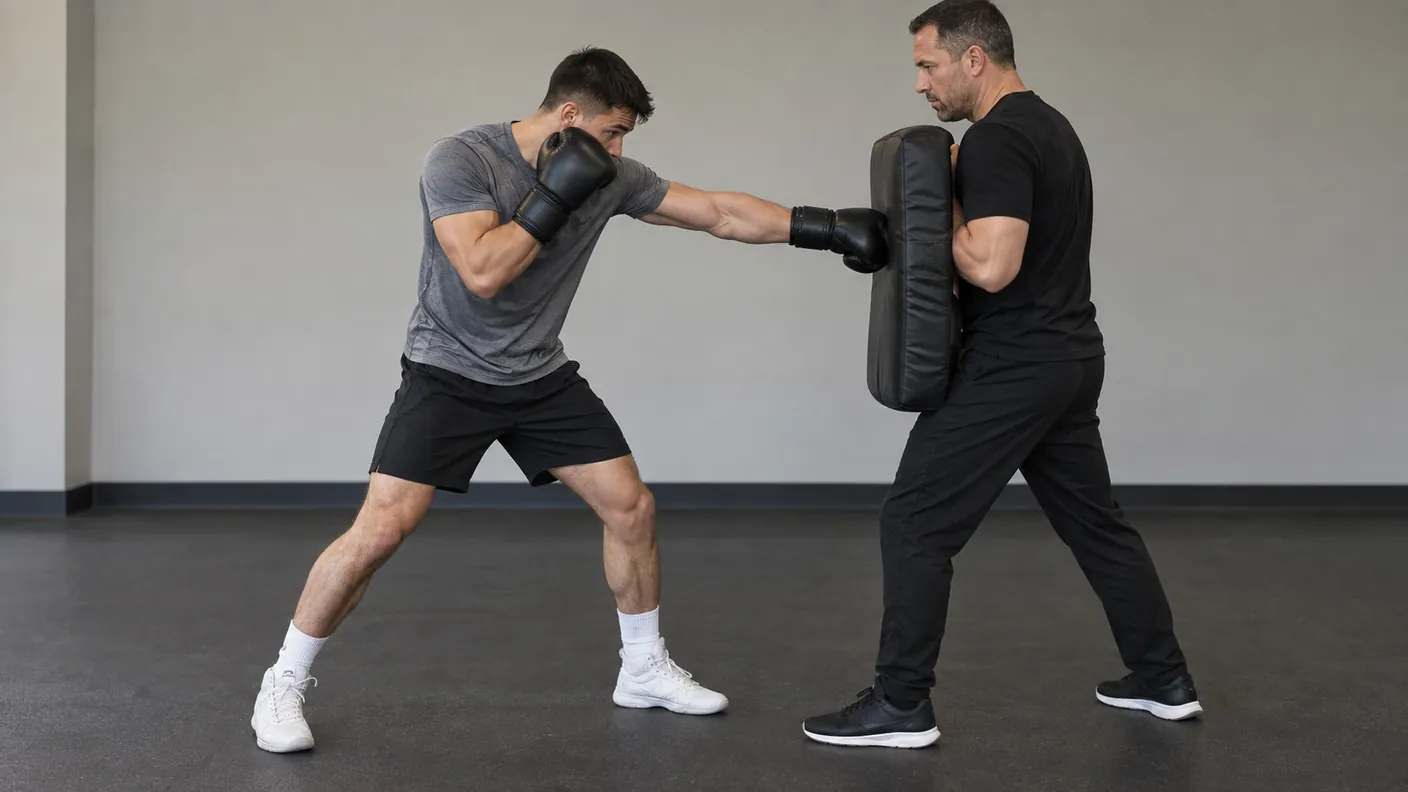
A rear hand to the body can be a very useful long-range shot. It can make a taller boxer respect the lower line, slow someone who is walking forward, or give you a quieter way to take ground than charging in with a head shot.
It can also leave you folded forward with your head in front of your feet.
The difference is not how hard you throw it. The difference is whether the feet take you into an honest range, the knees lower the level, and the exit is ready before the glove lands.
The video below is a useful reference for the simple idea: step into range, sit through the legs rather than reach down with the arm, then leave before the return arrives. Treat it as a coaching reference, not a fixed combination to force in sparring.
This is a range problem before it is a punching problem
A rear body cross is not a long arm shot. It is a straight rear-hand punch delivered after the feet have taken enough distance out of the exchange.
Many boxers see the body open and throw the right hand from wherever they are standing. The shoulder reaches, the chest follows, and the rear foot drags behind. The glove may touch the bag or body shield, but the boxer is now too far over the lead knee to cover a return or move away cleanly.
Start at a distance where your rear straight would fall a little short. Take one small step in, then let the rear hand travel to a body-height shield or mitt. The step makes the range. The arm does not need to rescue it.
A biomechanical review of boxing punches describes punching as a whole-body action, with the lower body, trunk and upper body contributing to the result. That is the useful gym lesson here. If the feet and trunk do not support the cross, the arm will usually reach for the target and leave you exposed.
Lower through the legs, not through the waist
The lower target changes the line, not the standard.
As you take the small step, soften both knees and let the body sit just enough to bring the rear hand onto the body line. Keep the back long, eyes up and head between the feet. The lead glove remains close to the cheek. The rear shoulder turns through the punch, then starts coming home.
Do not bow at the waist. A bow sends the head forward before the punch has earned the distance. It also makes it harder to see a hook, uppercut or step coming back.
The freeze test is useful. After one slow rear body cross, stop for a count. Could you bring both gloves into a conventional guard? Could you take one small step either way? Could you still look at the coach rather than the floor? If not, the step was too large or the level change was too deep.
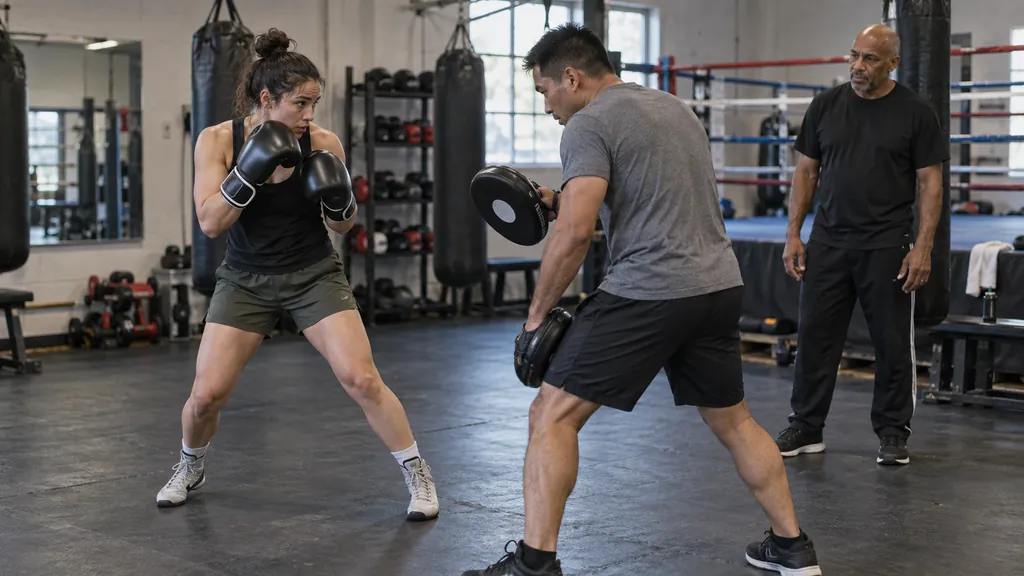
The lead hand still has work to do
The rear body cross makes the lead glove easy to forget. That is a mistake.
When the right hand travels down for an orthodox boxer, the lead glove should still protect the left side of the face. It can sit by the cheek, cover a direct return or help you find the line as you step. Southpaws reverse the picture, but the rule remains the same: the non-punching hand does not become decoration because the target is lower.
This is why the shot should start from a settled guard. Do not drop the rear hand early to load it. Do not drag the lead hand down to watch the punch. If either hand leaves home before the feet have created the range, the body cross becomes easy to see and easier to answer.
England Boxing places balance, posture and sound technical foundations at the centre of its coaching handbook. Those standards matter more than trying to make this a spectacular shot. A compact body cross that leaves you ready is better than a hard one that leaves you stranded.
Our guide to body-jab setup work covers the lead-hand version of this lower line. The rear body cross has a different job. It needs more turn from the back hip, which means it needs an even clearer exit.
The exit belongs to the punch
A body shot puts your head closer to the other boxer. That is not a reason to avoid body work. It is a reason to decide what happens next before you throw.
The first option is a small pull back. As the rear hand returns, let the body recover to the original range without standing tall or dragging the feet together. This works well when the coach has shown a clear body shield and there is open space behind you.
The second option is a small step out. The lead foot can take you slightly away from the centre, with the rear foot following just enough to restore the stance. Do not sprint sideways and do not cross the feet. The point is to remove your head from the easy return line, not to flee the drill.
The third option is simply returning to guard. If the range has collapsed or the other boxer has stepped in, a clean guard and reset may be the best outcome. The body cross does not create a debt that you must collect with another punch.
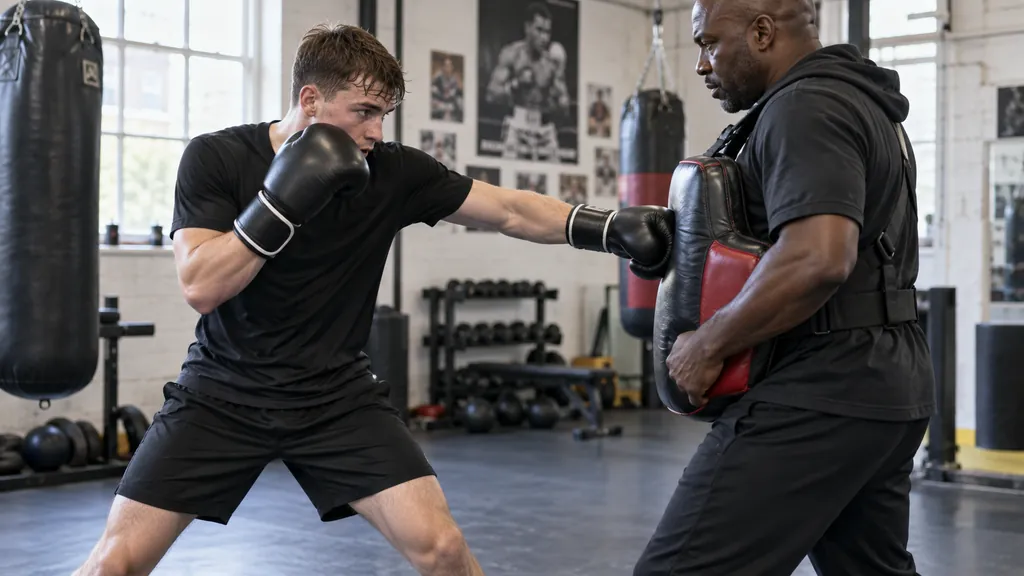
Build the shot in three controlled rounds
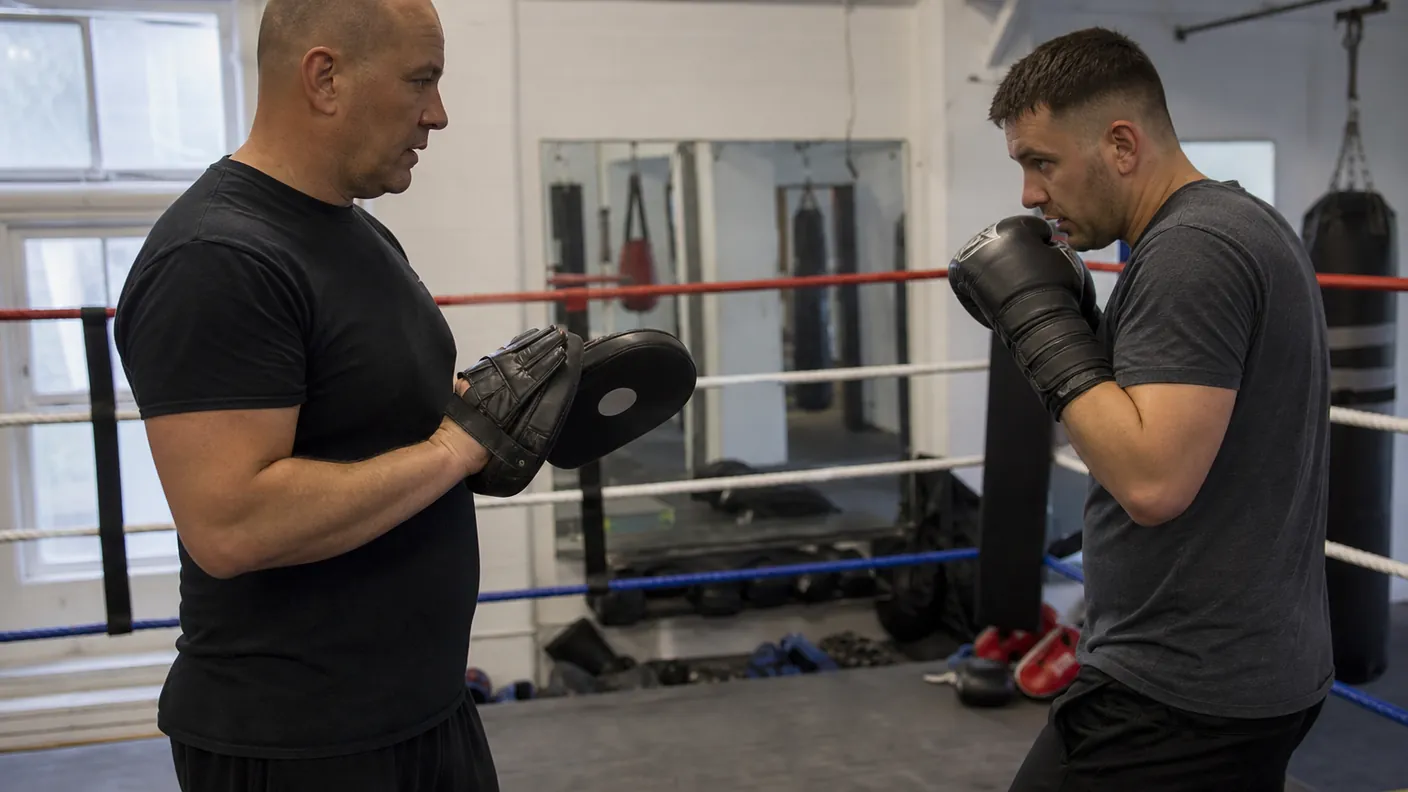
Use a coach with a body shield or low mitt. Keep the work technical. No hard punches to a partner, no surprise counters and no competition over who can land first.
Round one: step, touch, freeze
Start just outside rear-hand range. Take a small step in and touch the body shield with a light rear cross. Bring the hand back, then freeze.
The coach checks three things: your head has not travelled past the front knee, the lead glove has stayed home, and your feet remain staggered. If any one of them fails, shorten the step and remove power.
Ten tidy repetitions are enough before you swap. This round teaches the actual skill. The body target is not yet an excuse to rush.
Round two: step, cross, recover
Use the same body shield, but add one exit after the cross. Choose either a small pull back or a small step out for the whole round.
Make the exit quiet. A good repetition should finish with you able to jab, cover or move again without rearranging the feet. If you need a second shuffle to find your stance, the first step was too greedy.
For a broader look at why range decides the shape of a punch, read our guide to short, middle and long boxing range. The rear body cross belongs at the edge of middle range. Too far away, it becomes a reach. Too close, it becomes crowded and should give way to a shorter shot, cover or reset.
Round three: see the target, then decide
The coach now gives one of two pictures after you step in: the body shield is present, or the target is removed and the coach takes a small step back.
When the shield is there, land the light body cross and use your planned exit. When the target is missing, do not throw anyway. Bring the hands home and reset at range.
This is what turns a pad pattern into a useful habit. You are not practising a compulsory sequence. You are practising a decision: range is there, body line is clear, exit is ready.
Four mistakes that make the body cross expensive
The first is reaching with the shoulder. If the head and chest arrive before the feet, the shot is trying to solve the wrong problem. Step into an honest range first.
The second is dropping the lead hand. The punch may look clean on a shield, but a real return line does not care how tidy the right hand felt. Keep the lead glove close enough to protect the cheek.
The third is staying low after contact. The body line is only useful for a moment. Bring the posture back to a position where you can see and defend.
The fourth is treating the exit as an optional flourish. A body cross that leaves you square in front of someone has created a second problem. Build the pull back, step out or guard recovery into every slow repetition.
Our wider guide to body-shot aim, angle and exit explains how those same rules apply to hooks, jabs and closer body work. The target changes. Balance and recovery do not.
Where it fits in your training
Use this after a warm-up and before hard bag rounds or controlled partner work. It suits someone who already has a basic rear cross, stable stance and coach who can keep the target placement consistent.
It does not need hard sparring to be useful. A body shield gives enough feedback to test the step, level change and return without teaching anyone to chase low shots at a partner. Build the shape slowly. Once the feet stay organised, the shot can become a calm option rather than a gamble.
For adults in Kidbrooke, Greenwich and nearby, our Recreational Adults boxing classes use pads, shields and controlled drills to connect body work with stance, guard and exits.
The coaching cue is simple: step in, sit through the legs, hand home, leave balanced.
H&G Team
Writer at Honour & Glory Boxing Club, a community boxing gym in Kidbrooke, South East London.
KEEP READING
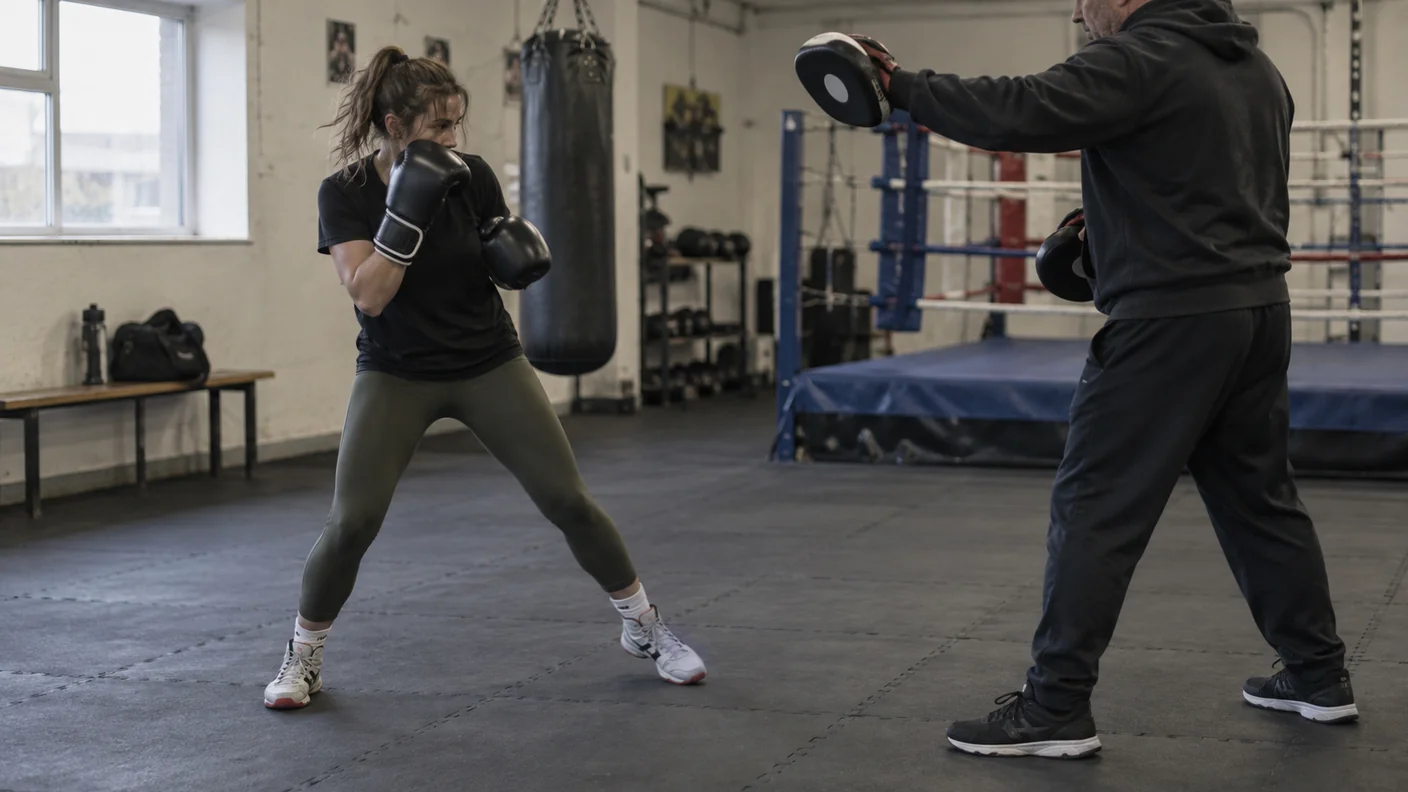
Side-Step Rear Body Cross: A Boxing Counter
Use a small side step to leave a jab line, then place a rear body cross only when your feet and range still support it.
Boxing Belt Line: Body Shot Targets Explained
Learn where body shots should land, why the belt line matters, and how elbow position keeps target practice controlled.
Body Shots in Boxing: How They Work and Why They Matter
What is a body shot in boxing and why do they win fights? Liver shots, solar plexus, floating ribs - how to throw body punches and set them up like the best boxers.
Was this page helpful?
It takes one tap, and it genuinely helps.
Choose your next step
Turn this article into the right action
Some readers are ready to book. Some need the class route first. Pick the route that matches what you actually want.