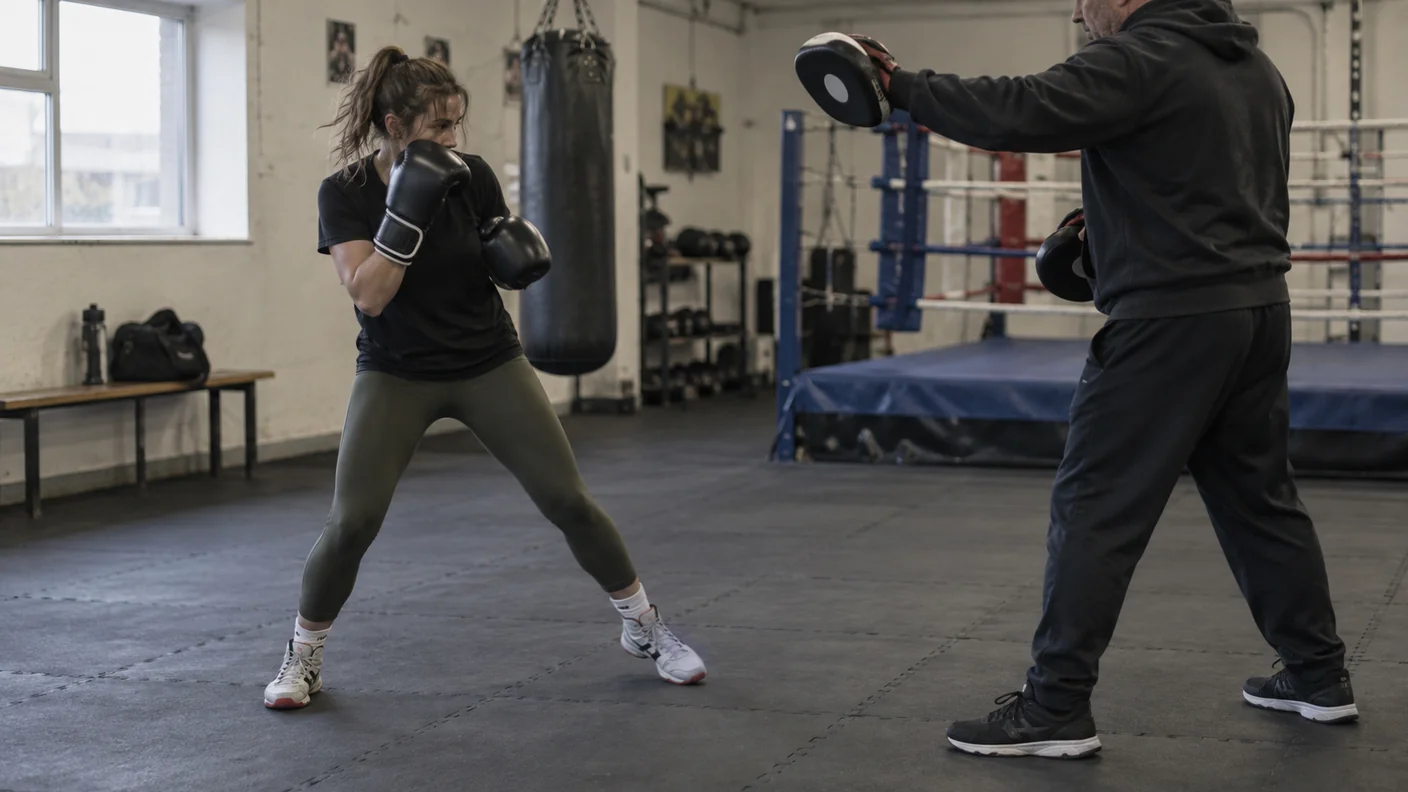
A side step does not have to end with a right hand to the head.
When a predictable jab keeps arriving down the middle, a small move to the rear-hand side can take your head off its line and change the body target at the same time. The rear body cross is there only when the feet have landed in a usable stance and a coach-held shield is at real range. It is not a dive at the ribs and it is not a way to force a body shot after every jab.
That distinction matters. The defender needs to leave the jab line without crossing the feet, while still keeping the lead glove near the cheek. The body shot comes from the new position, not from stretching the arm towards a target that has already gone.
The short video below is a useful reference for the size of the side step. Watch how little ground the feet need to cover before the boxer can still work from the new line.
Why the side step can open the body line
Against an orthodox jab, a small step to your own right can move your head outside the opponent's lead hand. Southpaws reverse the picture. The point is not to move miles away. It is to take the jab past your shoulder while keeping enough range to make one calm decision.
A head-level rear hand is the obvious follow-up, which is why the side-step cross counter is useful to learn first. A body-level rear cross asks a slightly different question. It works only if the new angle gives the rear glove a short, honest route to a shield without pulling your head over the front knee.
The England Boxing coaching handbook puts stance, balance and controlled progression before complicated responses. That is the standard here. If the step makes the body shot look long, you have moved too far or started from the wrong range.
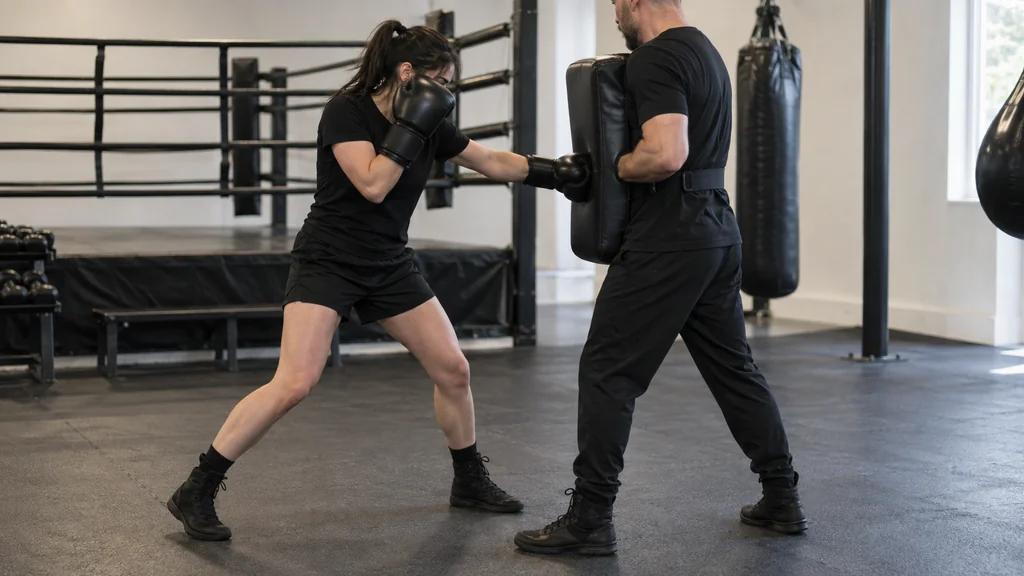
The feet move the body, not just the shoes
A useful side step starts with a small push from the leg opposite the direction of travel. The body moves with the stance. The second foot follows enough to keep the usual width, rather than dragging behind or crossing over.
That is easy to say and easy to spoil. A boxer can move one foot sideways while leaving the shoulders and head in the original line. They can also jump too far, arrive with the rear foot late, and turn the body cross into an arm punch. Both versions may make the jab miss, but neither gives you a reliable counter.
Use a floor line for the first reps. Start at the edge of jab range, make one modest side step to the rear-hand side and freeze. You should still be able to bend both knees, turn the rear hip and bring either glove to guard without shuffling first.
A technical review of boxing performance describes punching, movement, defence and distance as connected parts of one task. In the gym, that is a simple test: the side step is good only if it leaves you able to hit, cover or move again.
Put the rear body cross on a short line
The body target is lower, but the punch should still start from guard. Let the rear hip turn, soften the knees enough to meet a body shield, and send the glove on a controlled straight path. The lead glove stays high enough to protect the other side of the face.
Do not drop the rear hand to load it. That makes the shot visible, lengthens its route and leaves you open while you are trying to look clever. The body cross should feel like a shorter version of the rear straight, not a scoop from below the waist.
The shield has to be at a sensible height and distance. If the coach is holding it too far away, do not reach down and forwards to find it. Take another small step, use a lead-hand touch to reset range, or leave the body shot out. The right choice is the one that keeps your stance intact.
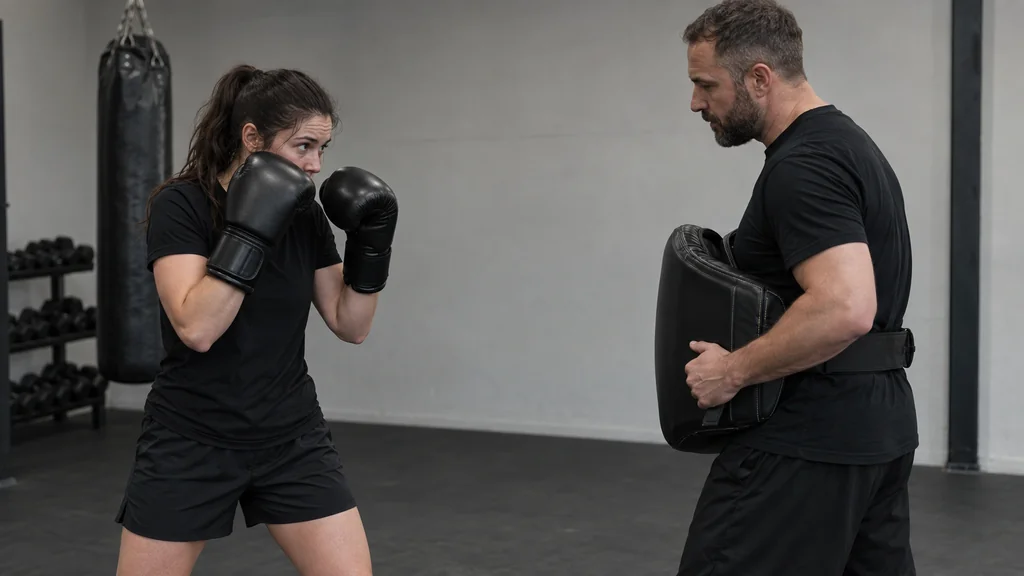
Build the drill in three rounds
Use a coach with a lead mitt and body shield, or a trusted partner using slow agreed cues. This is technical work. There is no need for hard contact to learn the line.
Round one: side step and freeze
Start in a normal guard at honest jab range. The coach shows a slow lead-hand mitt line. Take a compact side step to the rear-hand side, bring both gloves home and freeze for one count.
Check the finish before the next repetition. Your feet should still be staggered. Your head should be outside the original jab line without leaning backwards. Your rear hand should be close enough to travel without a wind-up.
Do not add the body shot until that finish feels calm. The step is the first skill, not a warm-up for the punch.
Round two: step and touch the shield
Use the same jab cue. Once the boxer has made the side step, the coach presents a body shield at a range where the rear hand can arrive without the shoulder chasing it.
Touch the shield with a measured rear body cross, return the glove to guard and reset. Work at a pace where the coach can remove the shield without the boxer trying to throw anyway.
The lead glove has a job while the rear hand travels. Keep it close to the cheek and keep the eyes on the coach rather than staring at the shield. The lower target does not excuse the head from drifting into the middle.
Round three: choose the finish
Now the coach can show one of three pictures after the jab: a body shield, a head-level mitt or no target. The boxer steps only after the jab cue, then chooses one sensible finish.
The body shield permits the short rear body cross. A head mitt may call for the ordinary side-step cross. No target means both gloves return to guard and the boxer resets. This is what stops the drill becoming a fixed routine that falls apart when a partner moves.
Do not confuse a body shot with a low reach
The first mistake is taking too large a side step. A wide movement may look defensive, but it often puts the body target out of reach. The rear hand then extends while the head follows, which gives away the exact balance the step was meant to protect.
The second is bending at the waist to find the body. A small knee bend and hip turn are enough. If you cannot see the coach after the shot, you have turned a controlled counter into a blind lunge.
The third is dropping the lead hand. The body shot comes from the rear side, so the lead glove has more reason to stay useful, not less. A second jab or a hook can arrive while the first action is still finishing.
The fourth is treating every jab as an invitation. A double jab, a jab-cross, a step forward or a crowded range changes the answer. For a body counter from a head movement rather than a side step, read outside slip to rear body shot. It has a different job and a different line.
Where this fits in a boxing session
Use this after a warm-up and after basic jab defence. It suits controlled pads, a body shield and slow partner cues. It does not belong in hard sparring until a coach has seen the step, guard and range hold up repeatedly.
The body shot itself is not the prize. The useful habit is learning that the feet can move you out of a straight line without removing your next punch. When that becomes reliable, a boxer has another way to answer the jab without standing still or throwing a head shot from every angle.
For adults in Kidbrooke, Greenwich and nearby, our Recreational Adults boxing classes use coached pads, shields and partner drills to build these choices at a pace where the stance stays honest.
The coaching cue is simple: step small, keep the head off line, touch the body only when the feet have earned it.
H&G Team
Writer at Honour & Glory Boxing Club, a community boxing gym in Kidbrooke, South East London.
KEEP READING
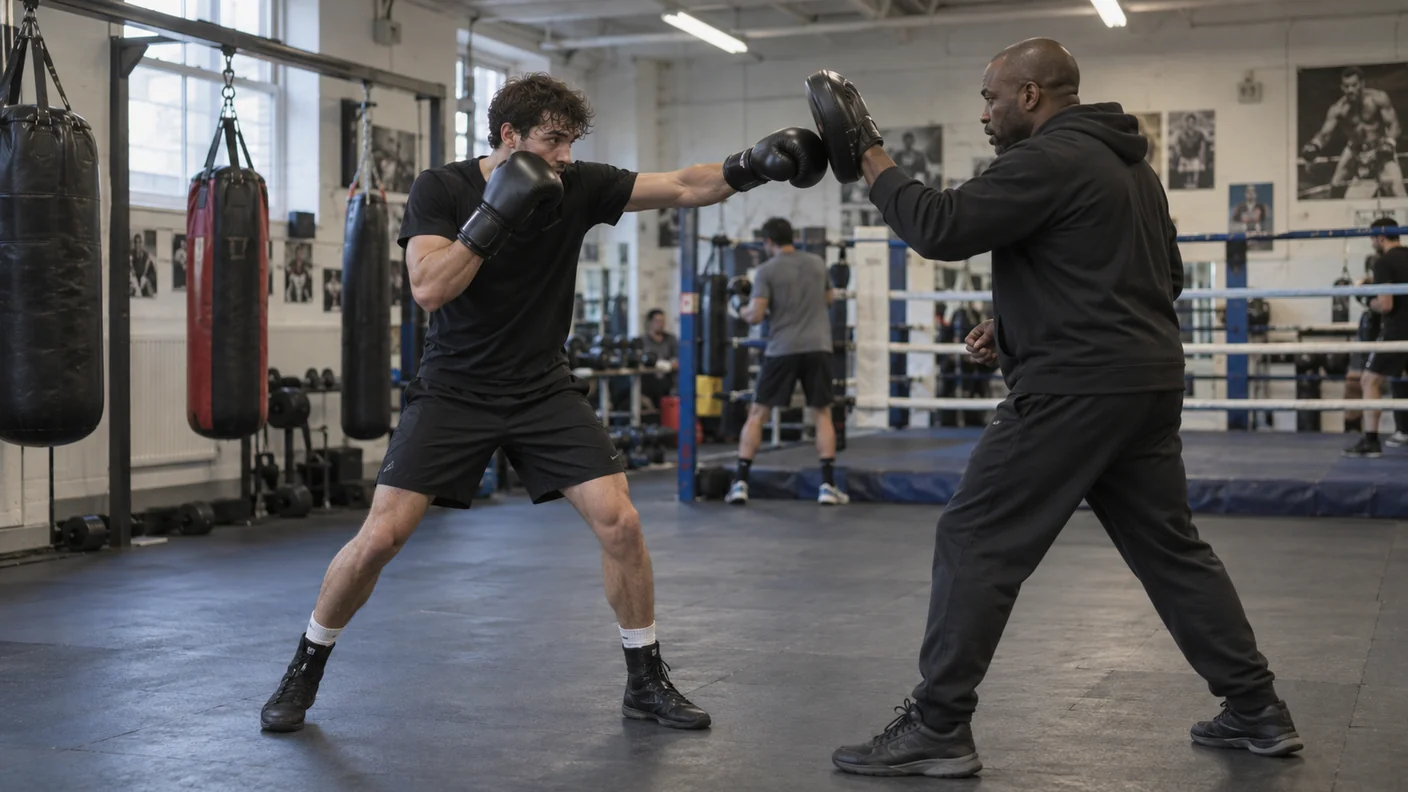
Side-Step Cross: Counter a Jab Without Reaching
Use a compact side-step cross to leave the jab line, keep your stance and make a calm counter when the range is honest.
Long-Range Rear Body Cross: Boxing Drill
Use a small step, level change and guarded exit to land a rear body cross without reaching or getting stuck at close range.
Boxing One-Two Footwork: Step With the Jab
Use a small step with the jab, then set your feet for the cross so a basic one-two stays balanced and useful.
Was this page helpful?
It takes one tap, and it genuinely helps.
Choose your next step
Turn this article into the right action
Some readers are ready to book. Some need the class route first. Pick the route that matches what you actually want.