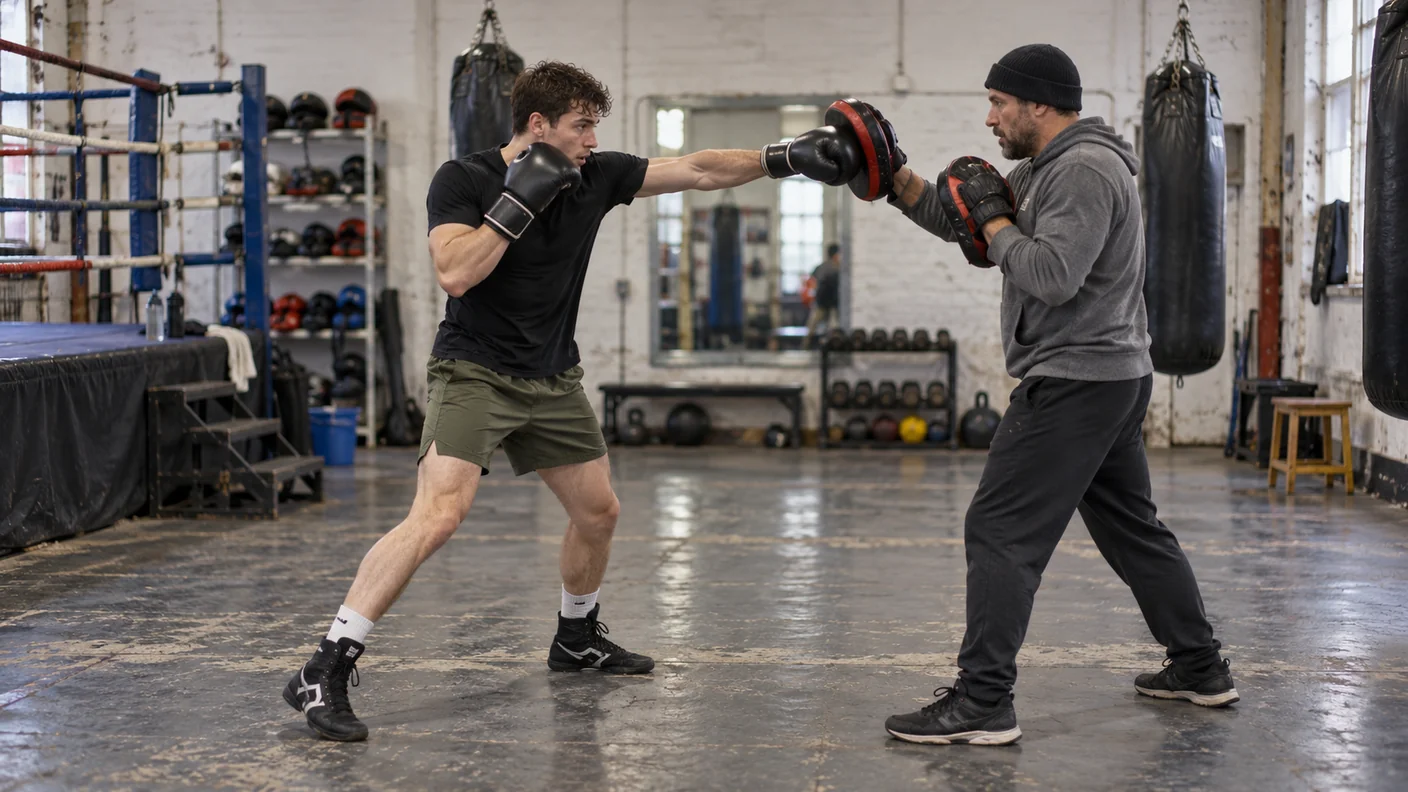
A step back is not automatically an escape. Done badly, it is just a retreat that gives away the ring. Done well, it can make an advancing boxer reach, leave their feet behind their hands and give you a brief chance to return in balance.
The step-back jab-cross is a useful way to practise that moment. You move just far enough to make a straight attack miss, see whether the other boxer has overreached, then step back into honest range behind a controlled one-two. It is not a trick for winning every exchange. It is a distance drill that asks you to keep your guard, feet and judgement in the same place.
Watch the demonstration below once for the timing, then use the drill at a pace where you can still stop after either punch.
Make the other boxer fall short first
The counter begins before your own jab. You need to be close enough that the other boxer believes they can reach you, but not so close that one short step puts you on the ropes or inside a hook.
For an orthodox boxer, move the rear foot first, then let the lead foot follow enough to restore your stance. Southpaws reverse the feet. Keep the step small. If your feet cross, your head rises or your lead leg stretches far behind you, you have made distance but lost the position needed to use it.
The other boxer does not have to stumble dramatically for the drill to work. A small overreach is enough. Their front foot may land heavy, their jab may finish a little long, or their shoulders may travel past their base. That is the picture you are reading, not an invitation to sprint back with a combination.
England Boxing puts stance, balance and controlled progression at the centre of technical learning in its coaching handbook. That is the right standard. At the end of the retreat, you should still be able to cover, take another step or step forward again without untangling your feet.
Return with the jab, then let the cross earn its place
Once the other boxer has fallen short, step back towards range with a light jab. The lead hand gives you a line to travel behind and checks whether the gap is real. It is not a reaching punch thrown from outside range.
Let the lead foot travel with the jab, then allow the rear foot to settle before you add the cross. The cross should come from a stance, not from a chase. If the jab has landed on a mitt but your rear foot is still catching up, pause and reset instead of forcing the second punch.
A review of boxing biomechanics describes effective punching as a linked action through the lower body, trunk and upper body. In practical gym terms, the jab and cross should not pull your body in opposite directions. The first punch brings you back to range. The second is available only when the feet have made it safe to use.
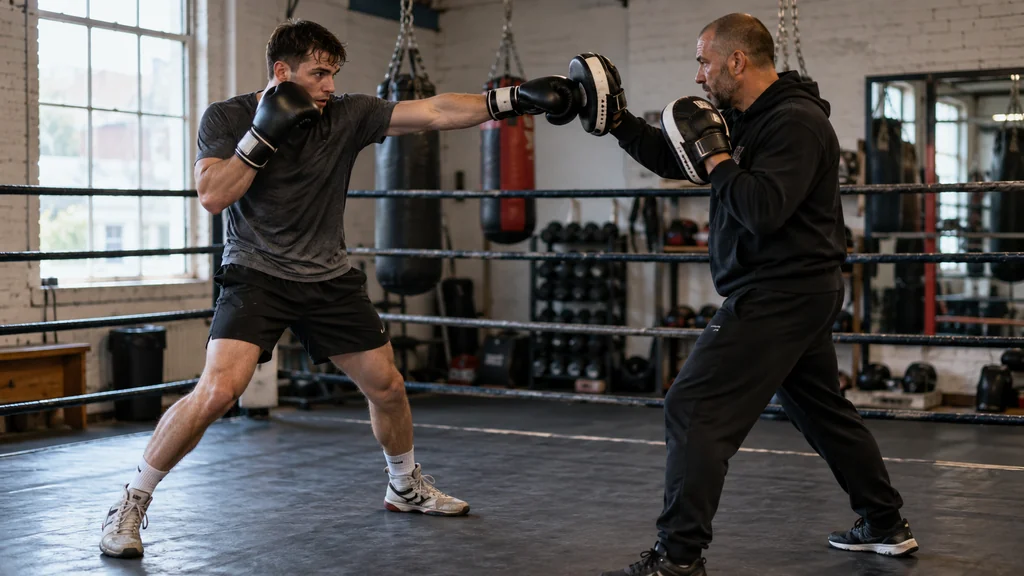
This is the distinction between a counter and a charge. A counter arrives because the other boxer has put themselves long. A charge arrives because you have decided in advance that two punches must follow your step. The first is a choice. The second is a habit that a calm partner can read.
Our guide to boxing one-two footwork covers the feet beneath an ordinary forward-moving one-two. This version adds a prior decision: make space first, then only re-enter when the distance gives you a real route.
Use a floor line to keep the retreat honest
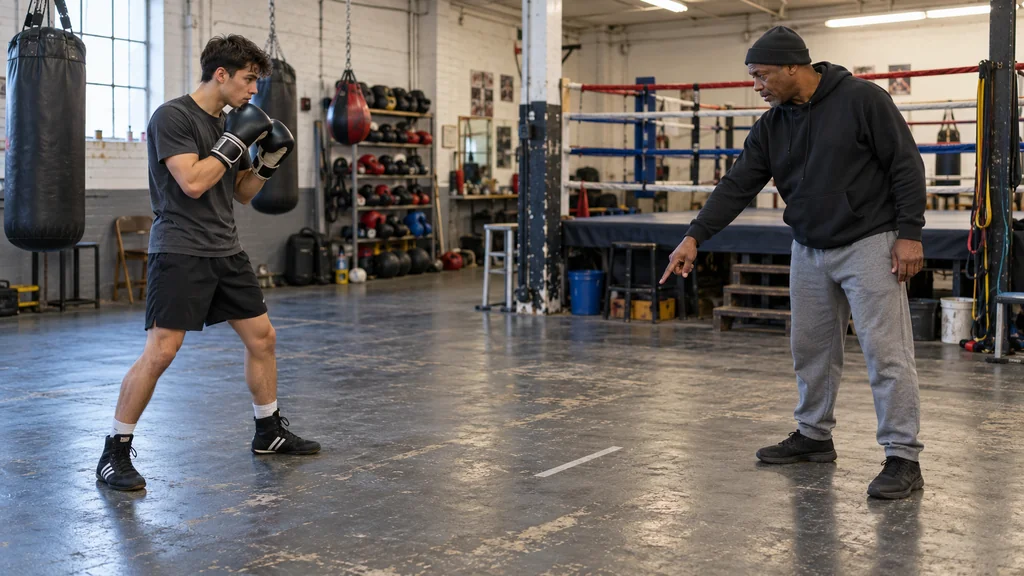
A simple line of tape can make this drill much clearer. Put one strip on the floor. Start with your lead foot a comfortable step in front of it. Your job is not to leap behind the line. It is to make one small retreat that takes you just outside a coach-held jab or a slow partner cue.
After the retreat, check where you are. If both feet have travelled so far back that your jab cannot find a target without reaching, the step was too large. If the coach can still touch you without moving, it was too small. The useful distance is the one that makes the first attack fall short while leaving a measured return available.
This is safer and more useful than trying to memorise how far every opponent will stand. People have different reaches, feet and rhythms. The line only gives you a visible way to notice whether your own step has stayed organised.
The same principle appears in our step-back shield drill, but the purpose is different. The shield drill uses the lead hand to protect a retreat. This counter drill asks whether the retreat has created enough space to return safely. Do not merge the two movements into one long, busy action before you can make each one cleanly.
Build the counter in three quiet rounds
Use a coach with mitts or a trusted partner who can give one light, agreed straight-punch cue. Keep contact light and predictable. The aim is to understand range, not to prove that you can throw a hard one-two while someone walks at you.
Round one: step back and hold your stance
The coach gives a slow jab line. Take one rear-foot-first retreat, bring the lead foot with you and freeze for one count. Do not punch yet.
Look for three things: your chin remains down, both gloves are present and your feet still give you a choice of direction. If you find yourself leaning from the waist rather than moving your feet, shorten the step. The head should travel because the stance travelled, not because the upper body folded away.
Round two: step back, jab and stop
Now add the return jab to a coach-held mitt. The coach gives the same slow line, you step out of it, then step back in behind one measured jab. Bring the glove home and pause.
Do not add the cross yet. The pause tells you whether the jab has actually carried you back to range. If you have to stretch the shoulder or tip over the front knee to reach the mitt, the counter is not ready.
Round three: let the coach decide whether the cross exists
In the final round, the coach varies the second cue. Sometimes the jab mitt stays in place and a rear-hand mitt appears at proper range. Sometimes the coach takes a small step back. Sometimes the lead mitt disappears and the coach keeps the guard high.
Only throw the cross when the rear-hand mitt is genuinely there and your rear foot has settled. If the coach steps away, reset. If the guard stays closed, cover or take a small angle as instructed. That is the useful lesson: a step-back counter is not a fixed one-two. It is a way to make one good decision after another boxer has reached too far.
A review of anticipation in combat sports found that more experienced performers use early movement information more effectively. You do not need to predict everything in a partner drill. Start by noticing one clear cue: did the other boxer step long enough to leave a safe path back in?
Four ways to spoil the movement
The first is taking a huge retreat. That can make the first punch miss, but it often puts you near the ropes and too far away for your own jab. Take the minimum space that lets you see the attack fall short.
The second is throwing the jab while still travelling backwards. If the lead hand leaves as your weight is fleeing, it becomes a reach with no base underneath it. Finish the retreat, then step in with the jab.
The third is forcing the cross. A cross is not owed because the jab touched a mitt. If the feet are narrow, the coach has moved or the rear-hand target is not there, let the sequence end. Your guard and stance are worth more than a noisy finish.
The fourth is using this on every forward step. A step-back counter needs room behind you and a clear moment when the other boxer has overcommitted. Against sustained pressure, on the ropes or at close hook range, covering or turning out can be the better choice.
Where this fits in training
Use this after a warm-up, before hard bag rounds or any faster partner work. It suits a recreational boxer who already understands a basic stance, retreat and one-two. Shadow boxing can teach the first round, but a coach-held target is better for checking whether your re-entry actually reaches the distance you think it does.
Keep partner work narrow. One person feeds the agreed straight line. One person makes one small retreat, then returns only when the range allows it. No surprise follow-ups, no hard sparring and no contest for speed.
For adults in Kidbrooke, Greenwich and nearby, our Recreational Adults boxing classes use controlled mitt work, footwork and partner drills to make range feel practical before pressure rises.
The coaching cue is simple: make them miss by inches, come back in balance, then stop when the opening is gone.
H&G Team
Writer at Honour & Glory Boxing Club, a community boxing gym in Kidbrooke, South East London.
KEEP READING
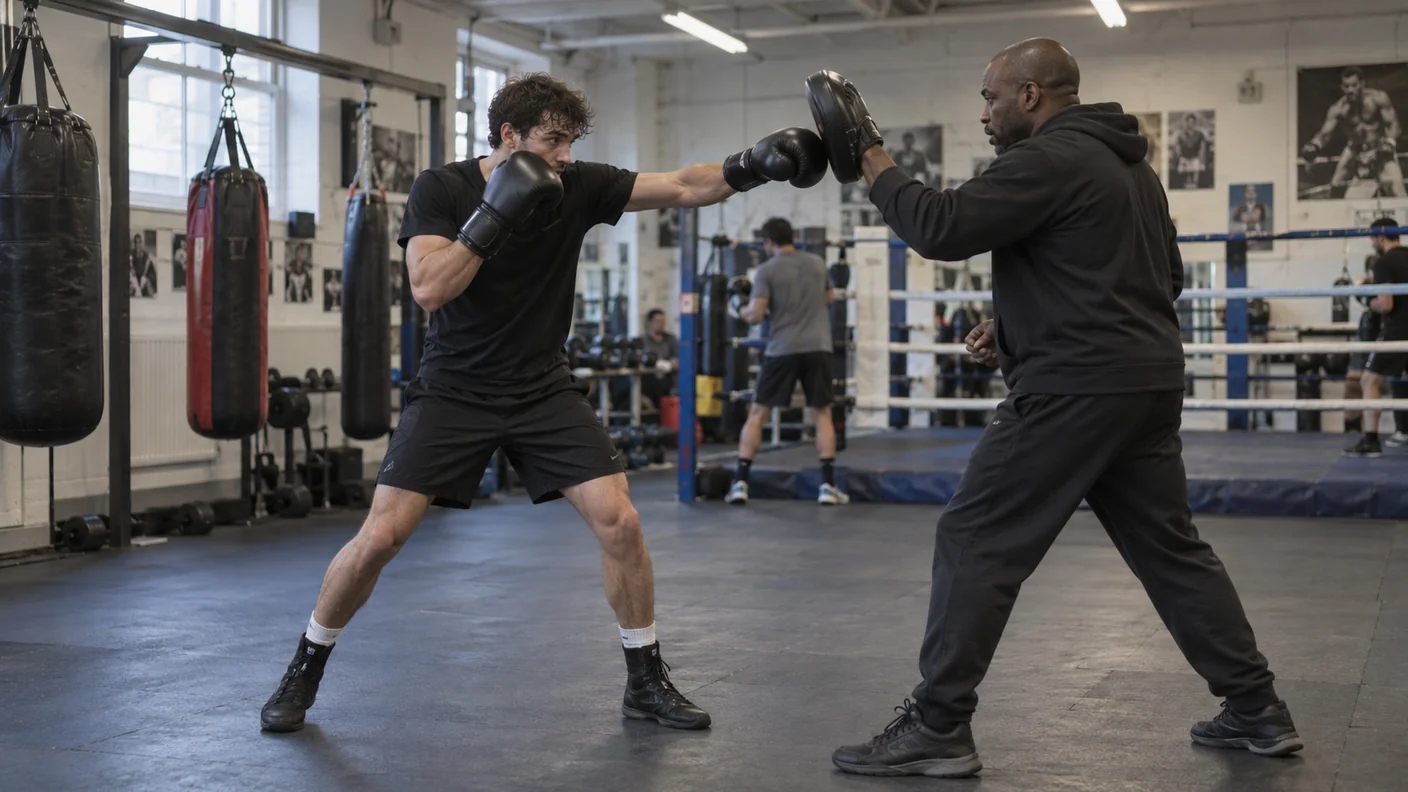
Side-Step Cross: Counter a Jab Without Reaching
Use a compact side-step cross to leave the jab line, keep your stance and make a calm counter when the range is honest.
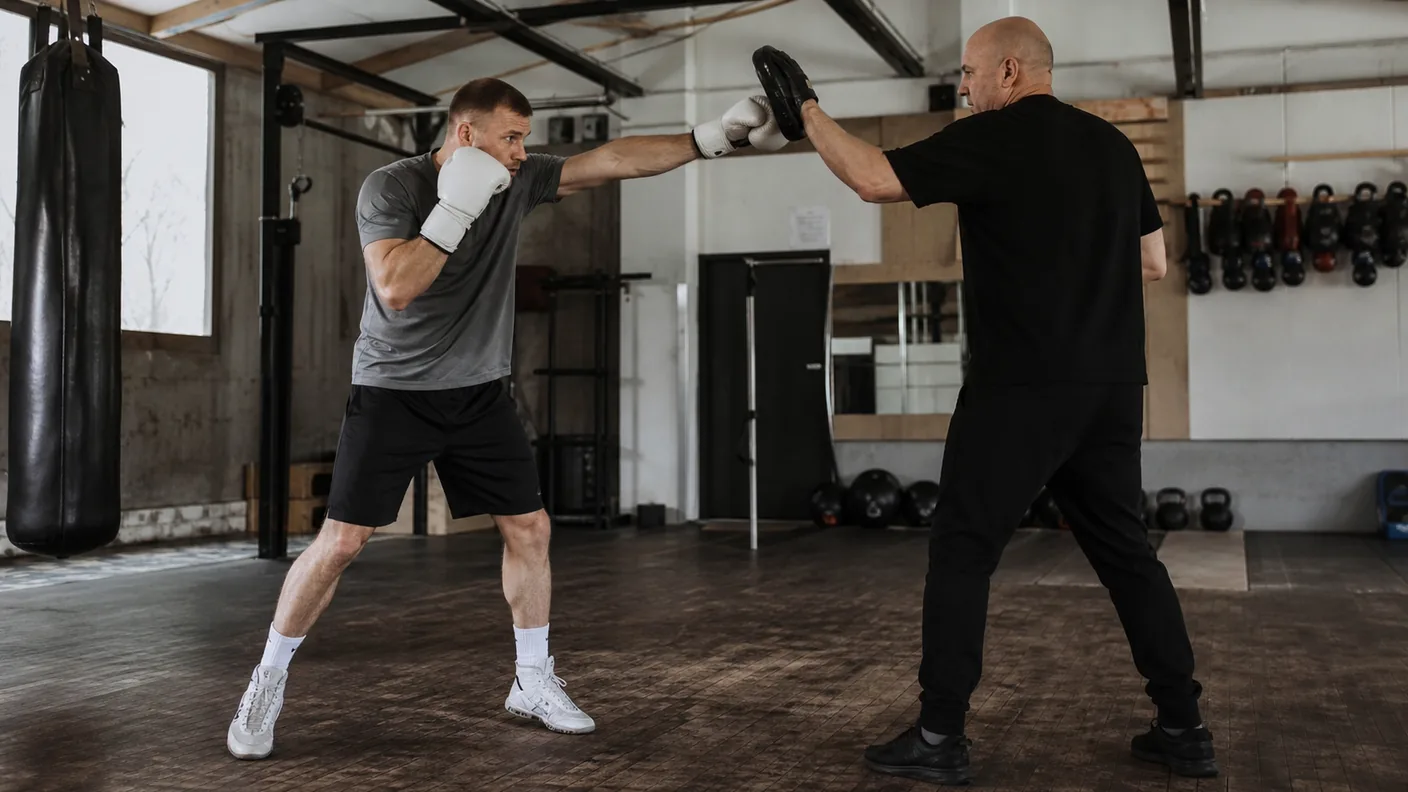
Boxing One-Two Footwork: Step With the Jab
Use a small step with the jab, then set your feet for the cross so a basic one-two stays balanced and useful.
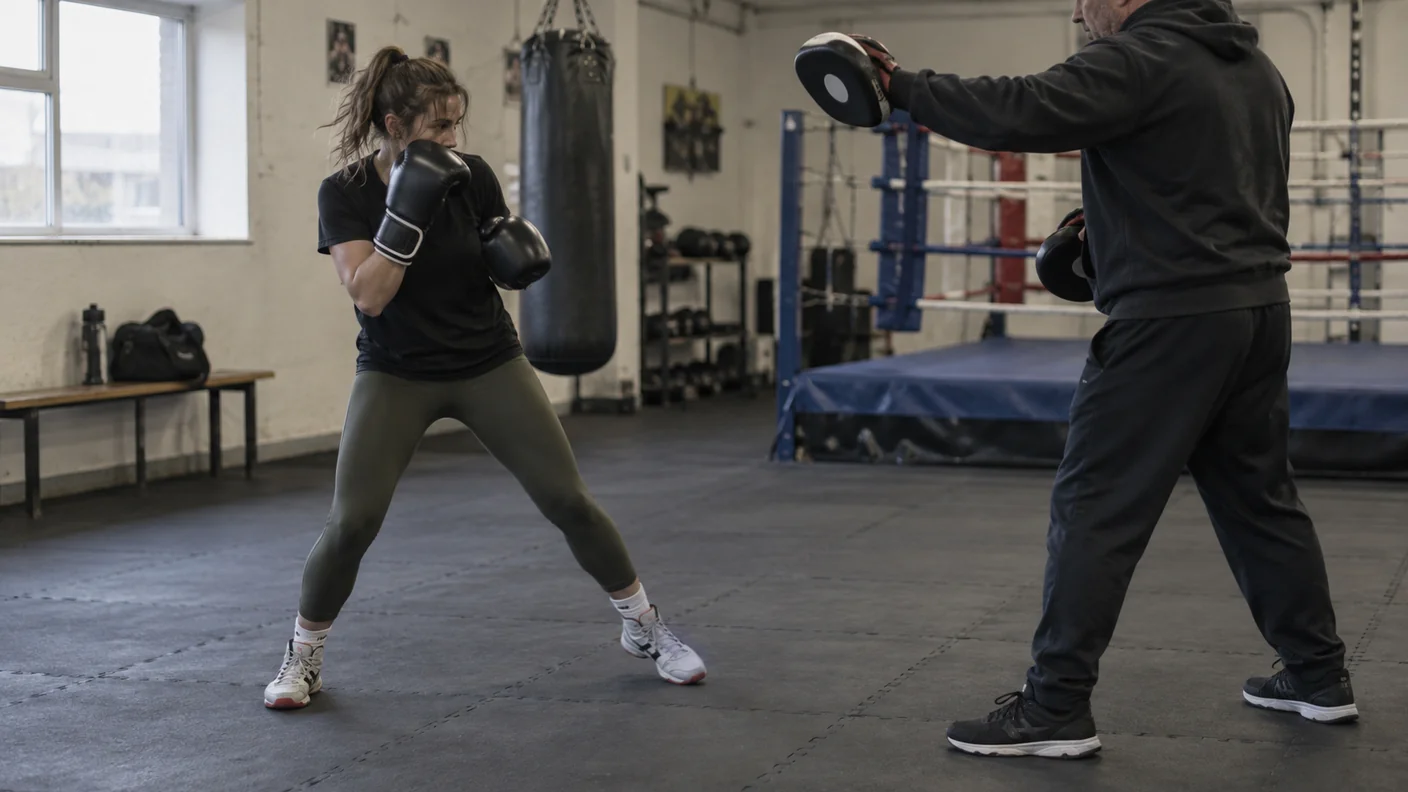
Side-Step Rear Body Cross: A Boxing Counter
Use a small side step to leave a jab line, then place a rear body cross only when your feet and range still support it.
Was this page helpful?
It takes one tap, and it genuinely helps.
Choose your next step
Turn this article into the right action
Some readers are ready to book. Some need the class route first. Pick the route that matches what you actually want.