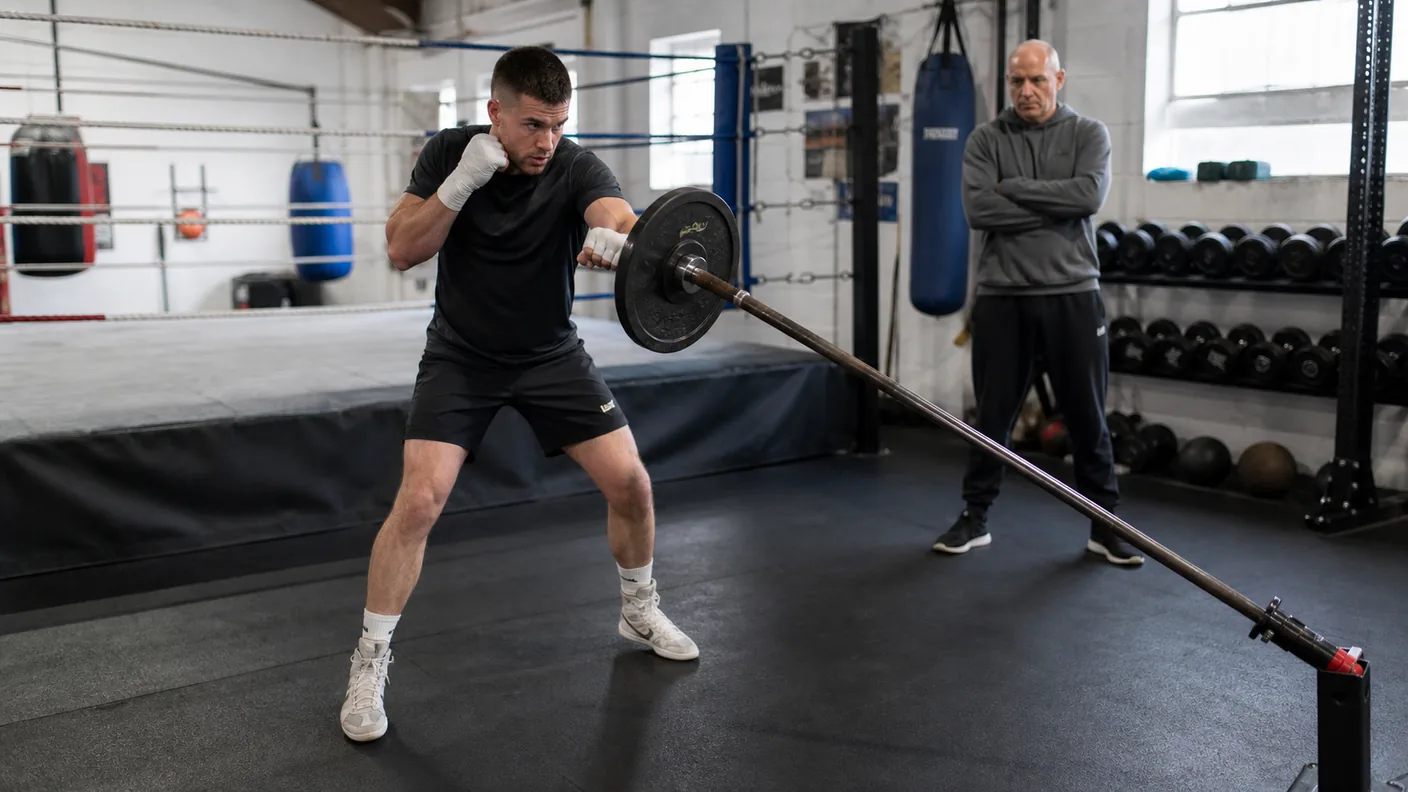
A landmine punch catch-and-throw is not boxing with a barbell in your hand. It is a strength drill that can help a boxer feel one useful part of a good punch: the feet set, the trunk turns, the shoulder drives, and the hand finishes without the body coming apart.
That distinction matters. Put a bar in somebody's hands and they often try to throw a heavy cross at full speed. The shoulder races forward, the feet go quiet and the movement turns into a reach. That does not teach a better punch. It just gives the barbell a boxing name.
Used lightly and under coaching, the drill has a narrower job. It lets you rehearse a connected drive through the floor while the load gives immediate feedback. If you push from the wrong place, pull the shoulder out of line or lose your stance, the bar tells on you straight away.
Watch the short demonstration below, then use the coaching notes to make the exercise useful rather than theatrical.
What the drill is actually for
The setup is simple. One end of a barbell is fixed in a landmine base or securely anchored in a corner attachment. You hold the free end at shoulder height, take a boxing-shaped stance, receive the bar under control, then drive it forward and slightly upward before bringing it back to the start.
The catch is the useful part. It makes you accept the load with soft knees, a braced trunk and a settled shoulder before you ask for speed. The throw only works well if that position is already organised.
For an orthodox boxer, the movement can resemble the rear-side drive of a cross. For a southpaw, reverse the sides. But do not get too attached to the resemblance. The bar travels on a fixed arc and a punch does not. This is a supporting exercise, not a replacement for pads, bag work or coached boxing.
A systematic review of strength training in Olympic combat sports found that strength-focused programmes can improve force and punch-performance measures in boxers. That does not mean one drill makes a harder punch. It means sensible strength work has a place beside technical practice, not above it.
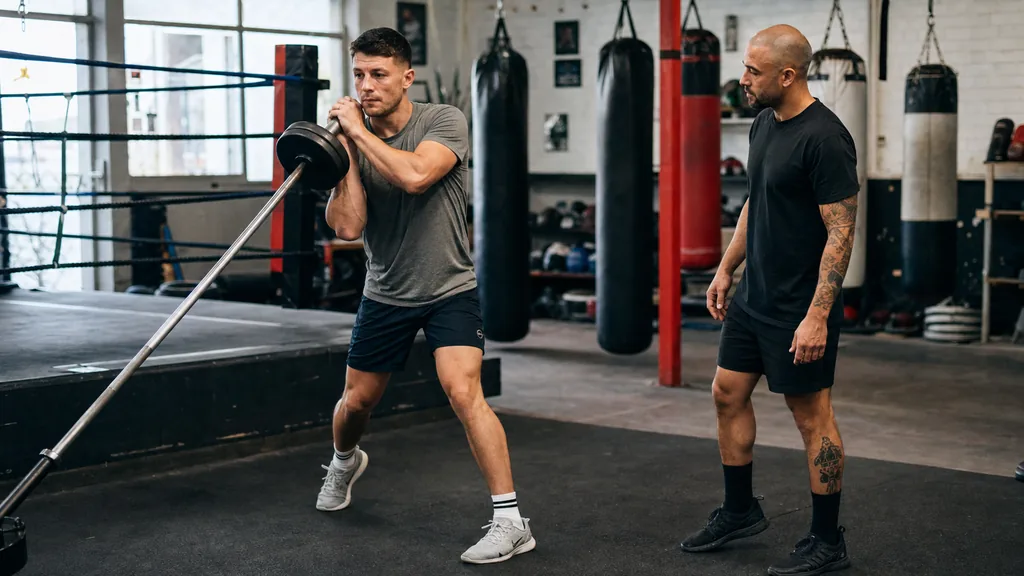
Start with the catch, not the throw
Most people rush the exciting half. They put too much weight on the bar, push hard from a loose stance and call it explosive work. Start the other way round.
Hold the bar close to the shoulder. Keep the elbow below the hand rather than flared wide. Let the knees bend enough that you can accept the load without folding at the waist. Your chest should stay tall enough to see ahead, not tip over the front knee.
Then pause for a beat.
Can you feel both feet? Is the trunk firm? Is the shoulder still sitting in a strong position rather than shrugged into the ear? If the answer is no, lower the load or shorten the range. The catch has failed before the drive has started.
This is one reason the exercise works well after a proper warm-up. It teaches you to absorb, settle and then produce force. In boxing terms, that is more valuable than simply moving a bar fast with loose joints.
England Boxing's coaching handbook treats movement, punch mechanics and defence as connected skills rather than separate items. The landmine drill should follow the same logic. Your feet, trunk and shoulder must agree with each other. If one part is late, the whole movement becomes less useful.
Drive from the floor without copying a punch
Once the catch is tidy, drive the bar forward with a small turn through the rear side of the body. The rear foot can release naturally, but it should not spin you off balance. The hips and trunk begin the work. The shoulder and hand finish it.
The hand should not arrive first.
That is the common problem with a landmine punch drill. A boxer sees the word punch and starts arm-pressing. The bar moves, but the hips have not helped and the stance has not done any work. It might feel tiring. It is not the connection we are after.
Use this cue instead: push the floor, turn the body, send the bar.
The order is not rigid enough to be counted in slow motion. It is one joined action. But the cue stops the arm from taking over.
A good rep should leave you balanced enough to catch the bar again. If the drive pulls you forward, drags the rear foot or makes the front knee collapse inward, it is too heavy or too ambitious. Strong work is not messy work.
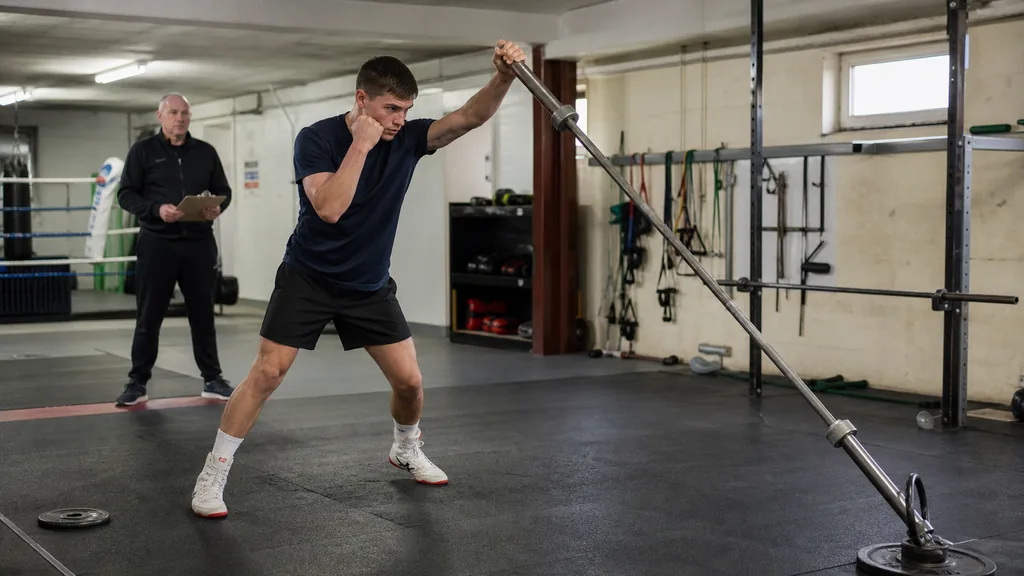
Keep one hand doing a useful job
The free hand does not need to impersonate a perfect sparring guard. You are lifting a bar, not boxing an opponent.
It should still stay organised near the chest or cheek instead of flapping away from the body. That gives the shoulders a sensible shape and stops you from twisting into the loaded side. It also keeps the drill honest for boxers who have a habit of letting the opposite hand drift every time they throw.
This is a useful bridge into technical work. After the landmine set, shadow box slowly and notice whether the shoulders now turn without the other hand disappearing. Then try the same idea on pads with a coach. If the connection vanishes as soon as gloves go on, return to the simpler drill rather than adding more weight.
Our guide to punching without dropping your guard explains why the non-punching hand still has a job while the other side works. The landmine drill does not solve that habit on its own, but it can make the shoulder position easier to feel.
A simple three-set progression
Use this as a warm-up accessory or a short strength block. Do not use it after your technique has already fallen apart from hard bag rounds.
Set one: receive and hold
Use a very light load. Bring the bar to shoulder height, accept it in stance and hold for two seconds. Feel the feet, knees, trunk and shoulder. Return it under control.
Do five repetitions each side. There is no need for speed yet.
Set two: catch and press
Use the same light load. Catch the bar, settle, then press it along the landmine arc at a controlled pace. Keep the movement smooth and stop before the shoulder loses position.
Do six repetitions each side. If you cannot control the return, you have not earned a faster drive.
Set three: catch and drive
Only now add intent. Catch the bar, settle briefly, then drive it with a sharp but controlled whole-body action. The finish should be strong, but never locked out so hard that the shoulder jars.
Do four or five repetitions each side, rest properly, then repeat for two or three total sets. This is quality work. More tired reps are not automatically better reps.
What this drill cannot teach you
A landmine bar does not hit back. It does not change distance. It does not make you read a jab, choose a counter or recover from a missed punch.
That is why it belongs around boxing training, not at the centre of it. A boxer learns timing and judgment from pads, partner drills, controlled sparring and actual boxing practice. Strength work gives you more physical options. It does not make the decisions for you.
Be especially careful not to turn it into a home test of toughness. If you do not know how to set up the base, use a coach or a trainer who does. Do not wedge a bar into a loose corner, load it heavily and try to launch it. The anchor must be stable and the return must be controlled.
If you have shoulder, elbow, wrist or back pain, this is not the place to push through it. Get the movement checked, use a lighter variation or leave it out. A useful accessory is optional. Healthy training is not.
The best place for it in a boxing week
For recreational boxers, one short block after a warm-up can be enough. Keep it on a day when you are also doing technical work, so you can feel whether the movement improves your stance and shoulder connection rather than merely tiring your arms.
For competitive boxers, it may sit in a more structured strength plan with proper coaching, loading and recovery. The exercise is still only one tool. Strong legs, a capable trunk, good mobility, sound technique and enough quality boxing rounds matter more than finding a clever variation of a press.
At Recreational Adults boxing classes, the first job is to build a proper stance, guard, punch mechanics and fitness base. You do not need barbell drills to begin boxing. But once the basics are taking shape, well-coached strength work can help you understand how the body supports the punch.
If you are local to Kidbrooke or nearby, the most useful next step is simple: learn the punch with a coach first, then add tools that make the pattern stronger without making it stranger.
H&G Team
Writer at Honour & Glory Boxing Club, a community boxing gym in Kidbrooke, South East London.
KEEP READING
How to Throw an Uppercut in Boxing
Learn how to throw short, mid-range and long uppercuts without lifting your chin, swinging wide or losing your feet.
Banded Punching: Keep Your Boxing Shape
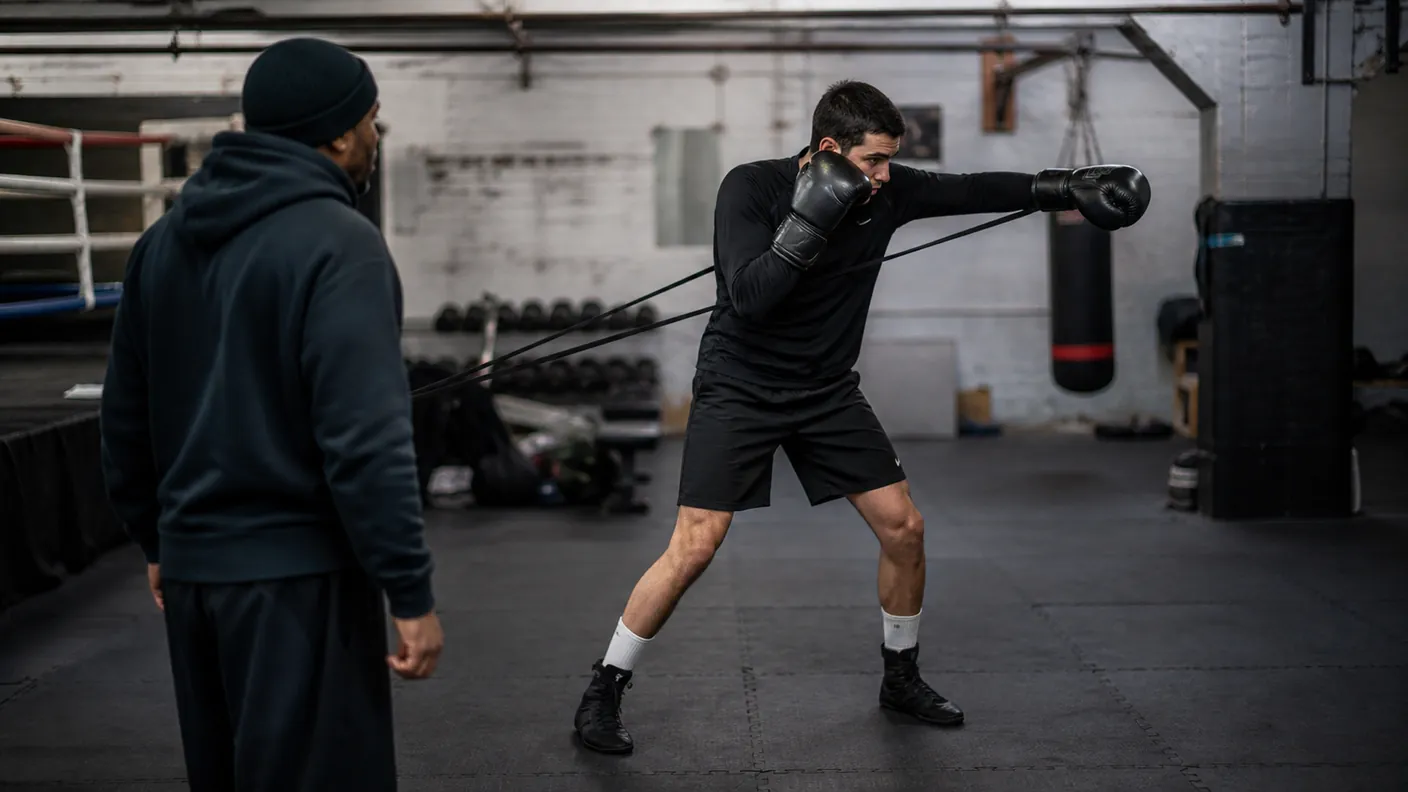
Use a light resistance band to check shoulder, elbow and stance alignment without turning strength work into a bad punch.
Boxing Guard: Do Not Squeeze Your Hands Together
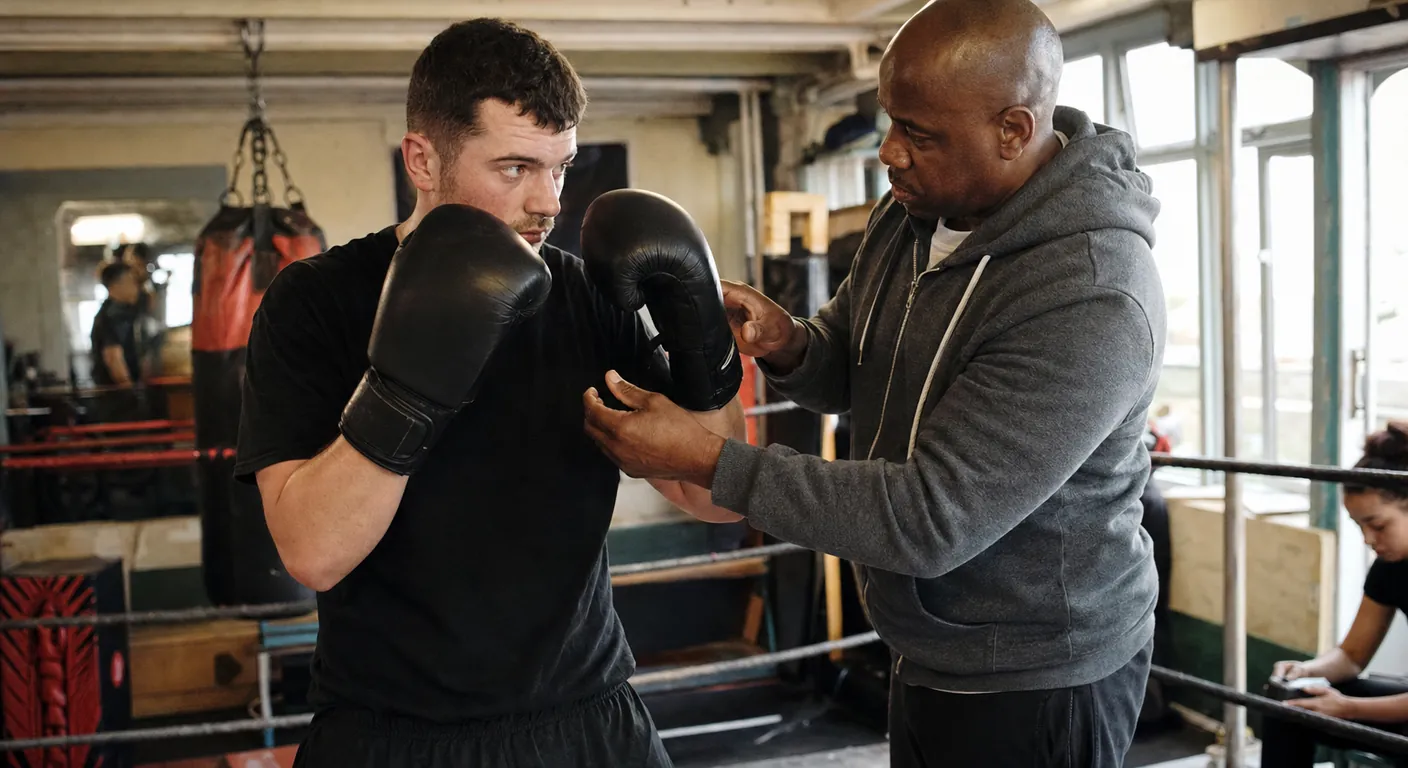
A practical guard lesson for boxers who keep their gloves too narrow and lose shoulder position when they punch.
Was this page helpful?
It takes one tap, and it genuinely helps.
Choose your next step
Turn this article into the right action
Some readers are ready to book. Some need the class route first. Pick the route that matches what you actually want.