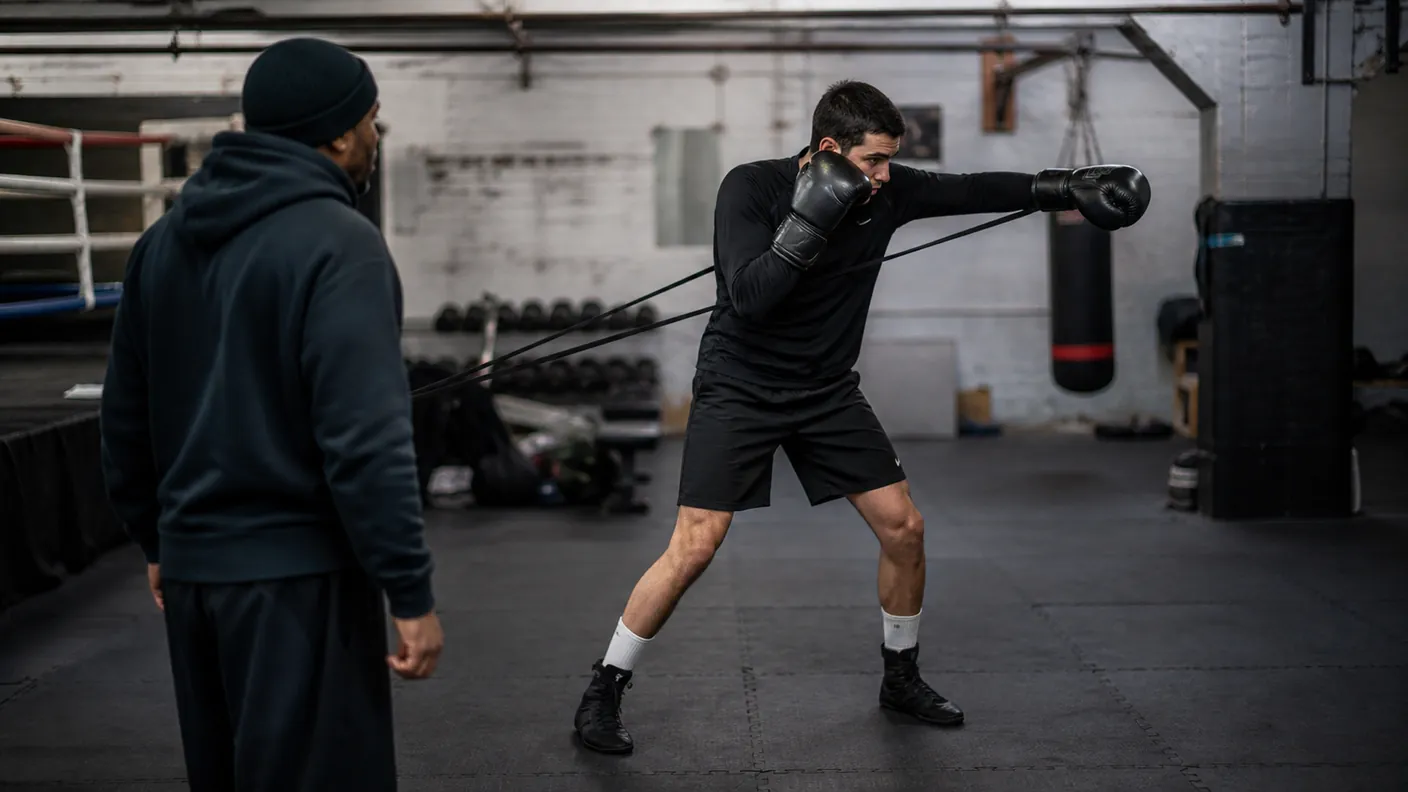
A resistance band can make a bad punch feel worse very quickly.
That is useful. A light band gives you a little extra feedback when the elbow races ahead, the shoulder lifts, or the body reaches to make up for poor range. It does not teach you how to box. It can, however, make a simple technical error obvious enough to fix.
The mistake is treating band work as a power shortcut. It is not. If you stretch a thick band and fire punches as hard as possible, you can turn a clean jab into a tense shove. The band starts deciding the path, the shoulders rise, and the hand comes back slowly. That is strength work wearing boxing gloves, not useful boxing practice.
Use the short demonstration below as a visual reference, then keep the drill small and coach-led.
What a light band can show you
A straight punch should not feel like the arm breaks away from the body.
The feet give you a base. The hips and trunk help turn. The shoulder follows the line of the punch. The hand finishes the job, then returns to guard. If any part is late, the punch may still make contact, but it feels disconnected. A boxer often notices this first as a reaching elbow, a chin drifting forward or a rear hand that goes missing.
A light band makes those faults harder to ignore. The resistance grows as the hand travels, so a punch that starts from a poor stance becomes awkward earlier. If the elbow straightens too soon, you feel the arm pulling away from the shoulder. If you lean forward, the band gives you another reason to stay there. If you finish with the shoulders high, the return feels slow and heavy.
That is the value. The band is a check, not the coach.
A technical review of boxing performance describes punching as a linked movement involving the lower body, trunk and upper body rather than an isolated arm action. That is a sensible way to judge this drill. If the band makes you forget your feet, guard and posture, it is not helping the punch.
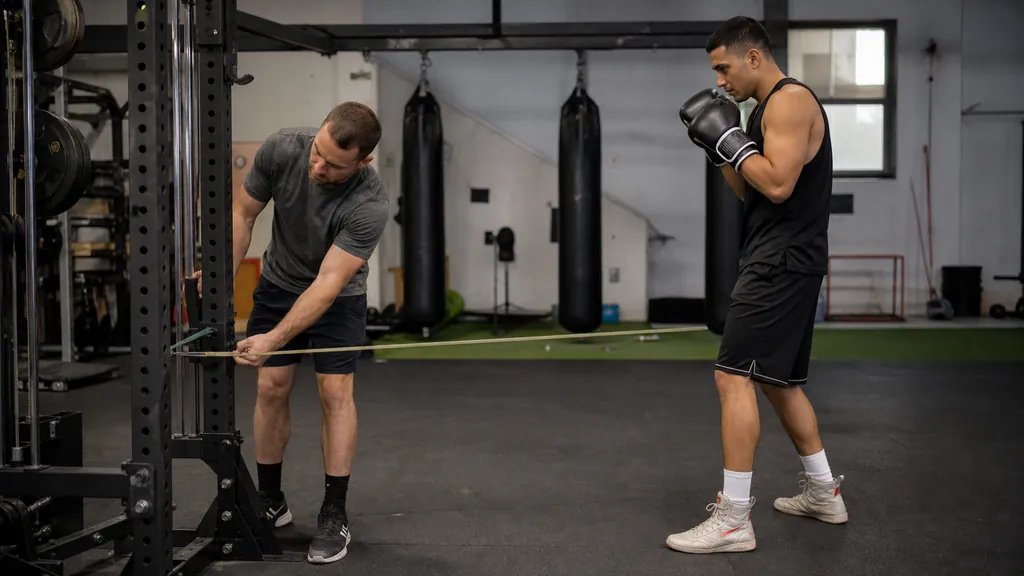
Start with a safe, boring setup
Use a light band attached to a stable rack or purpose-built anchor at about waist height. Check the anchor, the band and the floor before you start. A frayed band, an unstable post or a crowded space is enough reason not to use it.
Do not attach a band to your neck, wrap it around a hand loosely, or let it pull you into a position you cannot leave. The band should give a modest backward pull through the working hand or forearm. If you need to fight the band just to hold your stance, it is too heavy.
Start farther from the anchor only when the light version stays clean. More distance creates more resistance. That does not automatically create a better punch.
For most recreational boxers, the band should feel like a question rather than a challenge. Can you keep the elbow under control? Can the shoulder travel with the hand? Can you recover to guard without your body being pulled open? If the answer is no, reduce the tension or remove the band and practise the punch normally.
There is no prize for making a simple drill difficult.
The jab is the first test
The jab is the right place to begin because its route is short and easy to inspect.
Stand in your normal stance. Keep the knees soft, chin down and rear glove close to the cheek. Let the lead hand travel straight ahead at half speed. The shoulder should move naturally with the jab, but it should not jump to the ear. The elbow should extend as part of the line, not flick out ahead of the hand.
Then bring the hand home before the stance changes.
The band should not pull you square. If it does, shorten the range or reduce the tension. The punch should still look like a jab: controlled path out, shoulder cover, hand back, feet useful. Our guide to throwing a jab in boxing covers the basic mechanics. The band drill is only a slow way to check whether those mechanics hold when there is a little resistance.
Run one-minute rounds rather than long sets. Ten clean jabs are more useful than fifty tense ones.
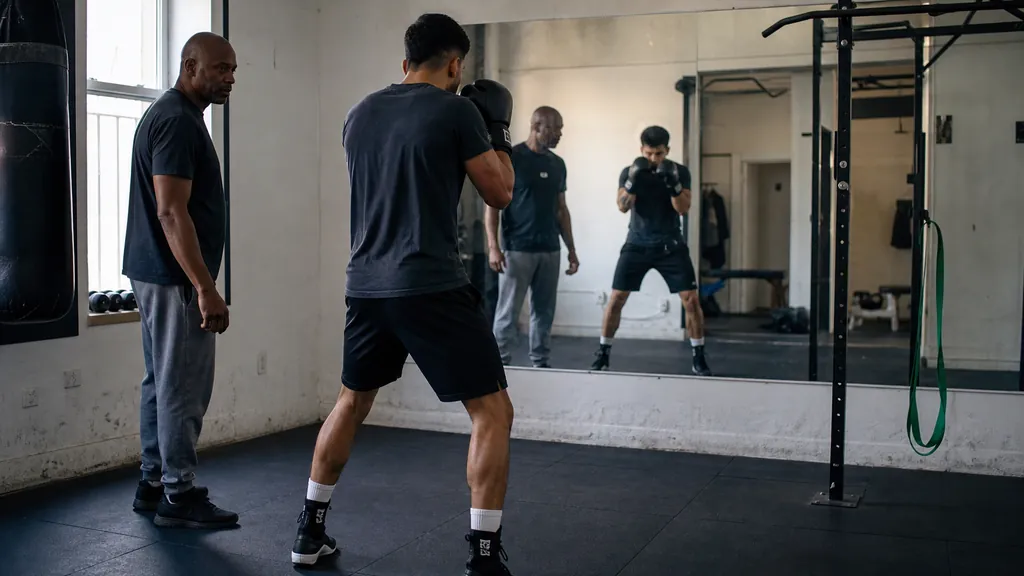
Add the cross only when the guard stays honest
The rear cross asks more of the whole body. That is why it should come second.
With a light band, begin from a settled stance. Let the rear foot, hip and trunk start the movement. The rear shoulder turns with the hand. The lead glove stays near the face. When the cross finishes, you should still be able to step, cover or throw another sensible shot without first untangling your feet.
The common error is arm pressing. The boxer tries to beat the band with the shoulder and triceps alone. The punch becomes long, the back foot loses its job and the lead hand falls. The band has not made the cross stronger. It has exposed a body that was trying to use the arm for everything.
A better cue is: turn, send, return.
Turn from the stance. Send the glove on its normal line. Return it before you add another action. If the cross looks different from your normal technical cross, stop. There is no reason to groove a worse version just because the drill feels demanding.
This is why band work belongs after basic pad and shadow-boxing practice, not before it. You need a sound pattern to test. If you are still learning where the feet, hands and hips belong, get the correction from a coach first.
A three-round band check
Use this as a short technical block before pad work. Keep the resistance light and the pace low enough that the shape stays visible.
Round one: jab and return
Throw one jab at a time. Pause after each repetition and check that the rear glove is still near the cheek, the chin has not chased the hand and the feet have not narrowed. Do not add speed until the hand returns cleanly.
Round two: cross and freeze
Throw one rear cross at half pace, then freeze for a beat. Check the lead hand, stance width and head position. If you feel the band dragging you towards the target or twisting you square, reset closer to the anchor.
Round three: one-two, then step out
Throw a light jab-cross, bring both hands home, then take one small step away in stance. This is the honest test. A band drill is useful only if it leaves you able to move as a boxer afterwards. If your feet are stuck or your shoulders are burning so much that the guard is falling, the resistance is too high or the round is too long.
Do not use the band for fast combinations, hard bag work or live partner exchanges. The band changes the rhythm and return of the hand. Those are poor conditions for trying to hit harder or react to another boxer.
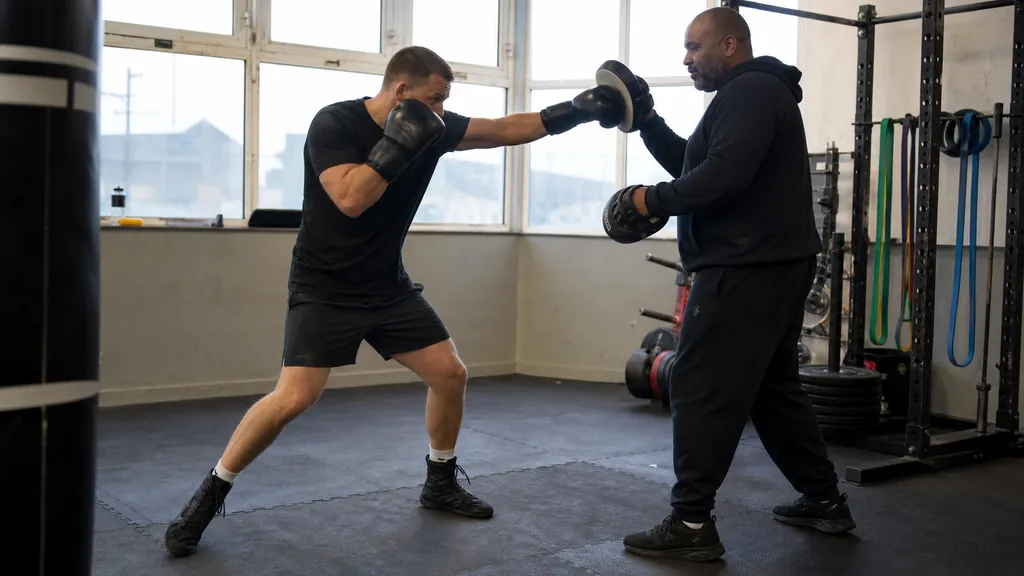
What the band cannot teach
A band does not know distance.
It does not tell you whether you are close enough to land a jab, whether a partner has changed angle, or whether a counter is coming back. It cannot teach timing, punch choice or how to read a real person. It also cannot tell you whether a shoulder is sore because of poor mechanics, too much training or an injury that needs proper assessment.
That is why the normal order matters. Shadow box slowly. Work on pads with a coach. Use the bag with a clear purpose. Then, if a light band helps you feel the connection from stance to shoulder to hand, use it for a short block. Take it away again and see whether the punch still looks clean.
Strength work can support boxing, but it does not replace it. A systematic review of strength training for Olympic combat sports found that well-planned strength work can improve performance measures, while also making clear that training needs to fit the athlete and sport. The gym lesson is simpler: stronger is useful only when the boxing stays organised.
If you feel sharp pain, joint instability, numbness or a persistent pinch in the elbow or shoulder, stop the drill. Do not use a band to test whether you can push through it. A coach can help with technique. A clinician should assess warning signs.
Four mistakes that ruin the drill
The first is using a band that is too heavy. If the band changes the punch so much that you cannot return to guard, it is not a technical check any more.
The second is chasing full extension. Your elbow does not need to snap hard into a locked finish. The glove should reach its natural target line, then return under control. If your elbow jars or your shoulder pulls forward, reduce the range.
The third is letting the rear hand wander. A band can make the working arm feel busy enough that you forget the other glove. The non-punching hand still protects you. If it drops, the repetition does not count.
The fourth is adding volume before quality. The shoulder burn can feel satisfying, but fatigue is not proof of a better drill. Stop while the punches still look tidy. The useful work is the repeatable shape, not the final ugly ten seconds.
Keep the boxing first
Light band work can give an improving boxer a useful feeling for connection and recovery. It can show when the elbow runs away, when the shoulder is doing too much or when the stance disappears under a straight punch.
But it is a supporting drill. Your real boxing still happens when you can hold stance, judge range, punch with a partner in mind and return to a position that protects you.
If you are in Kidbrooke, Greenwich or nearby, our Recreational Adults boxing classes build the jab, cross, footwork and guard before adding tools that make those skills harder.
H&G Team
Writer at Honour & Glory Boxing Club, a community boxing gym in Kidbrooke, South East London.
KEEP READING
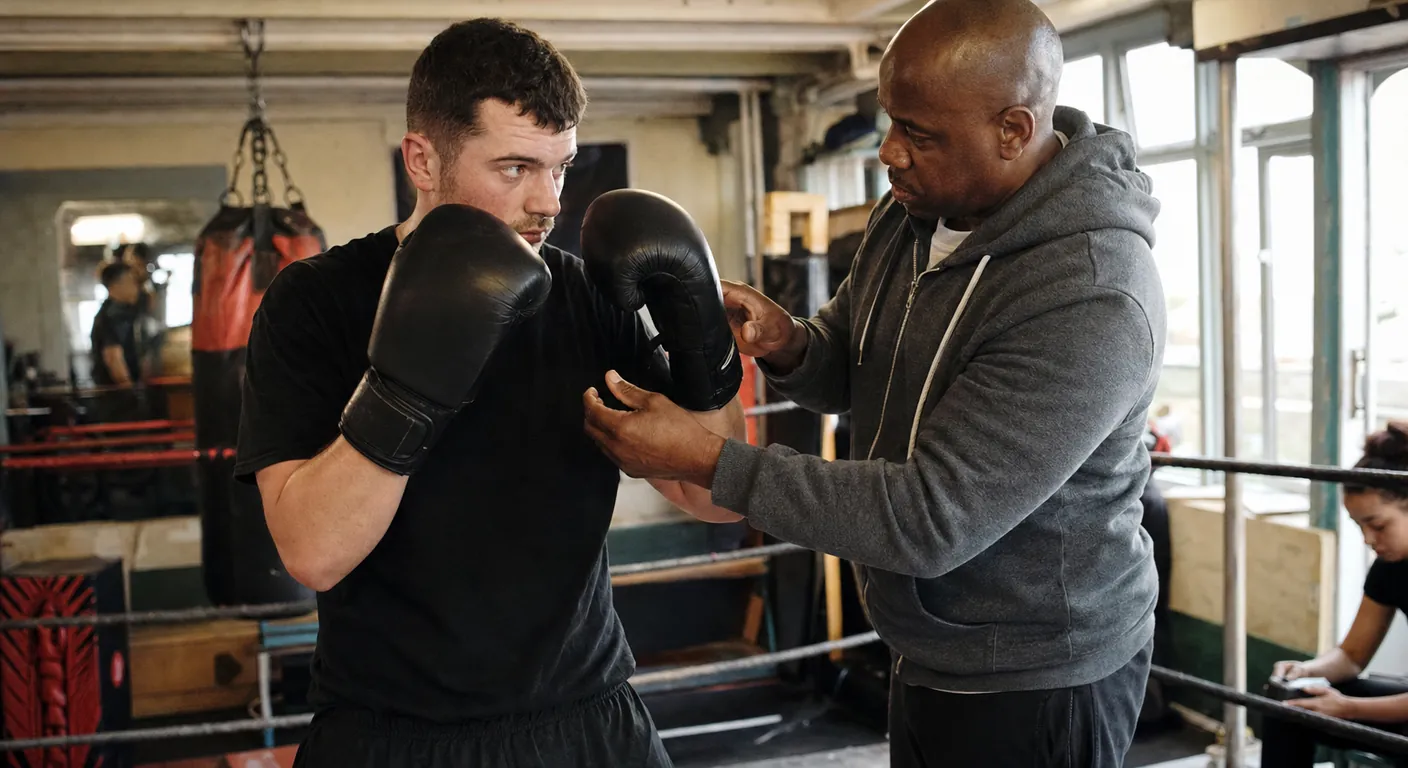
Boxing Guard: Do Not Squeeze Your Hands Together
A practical guard lesson for boxers who keep their gloves too narrow and lose shoulder position when they punch.
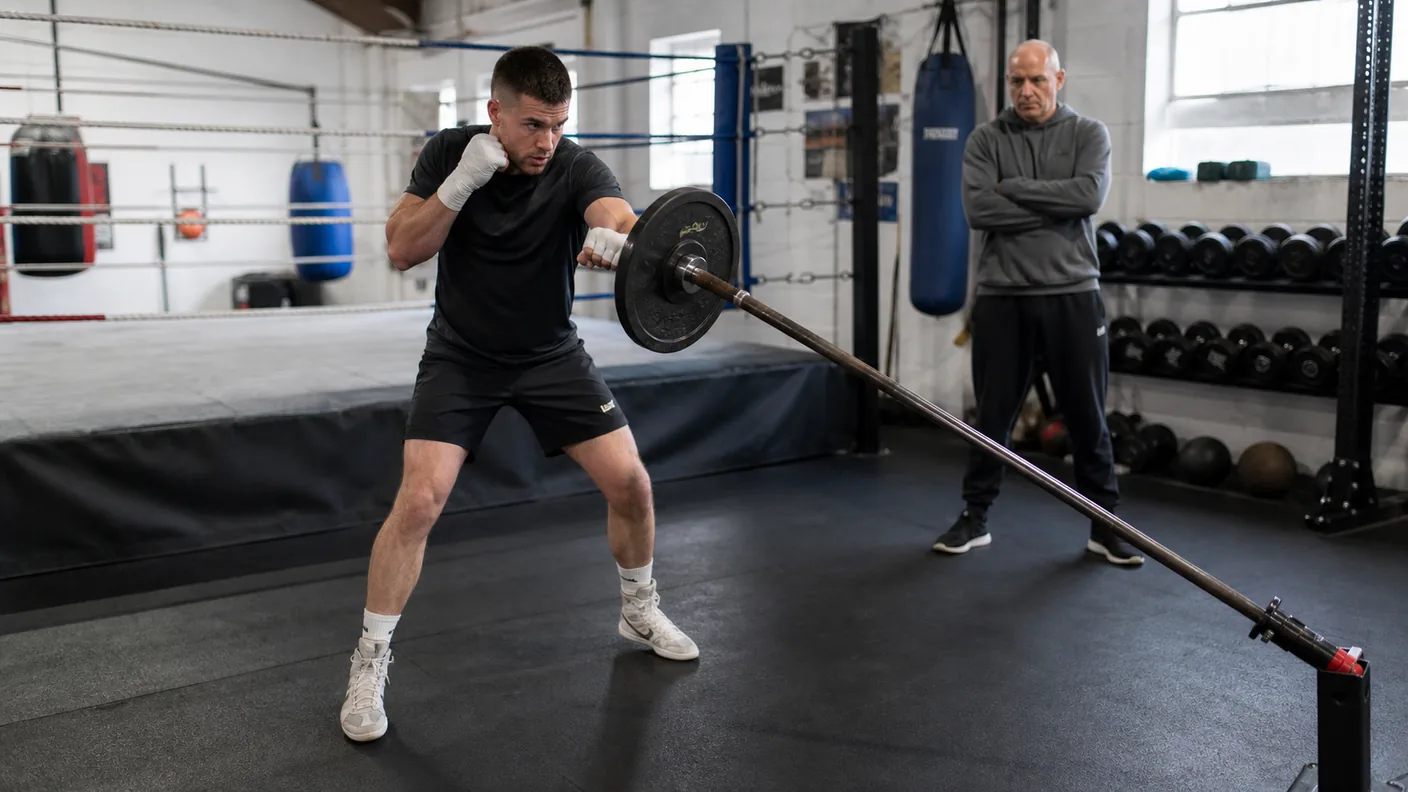
Landmine Punch Catch and Throw for Boxers
Use the landmine punch catch-and-throw drill to train linked feet, trunk and shoulder action without turning strength work into shadow boxing.
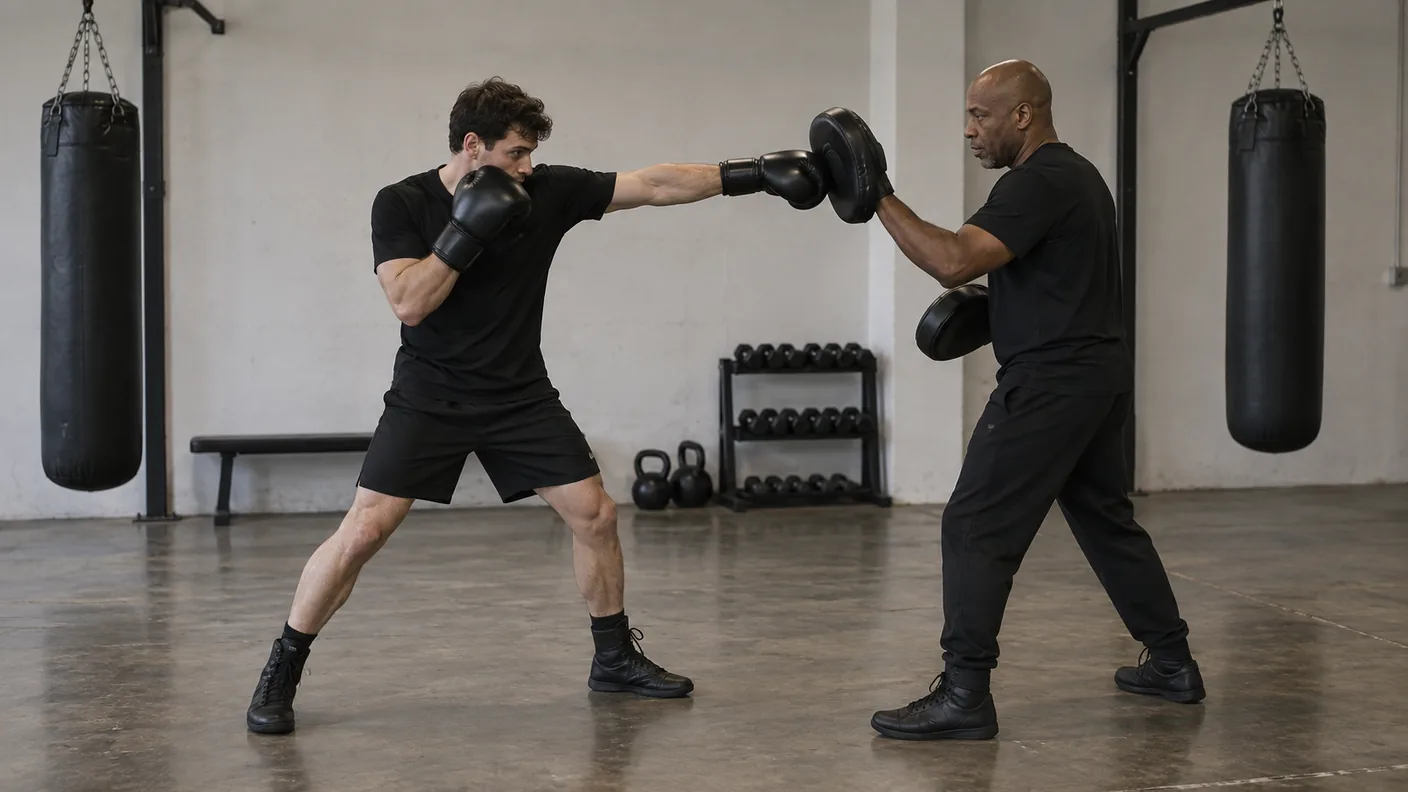
Opposite-Shoulder Turn: Stop Arm Punching
Use a small turn from the non-punching shoulder to stop reaching with the arm and keep your balance after straight punches.
Was this page helpful?
It takes one tap, and it genuinely helps.
Choose your next step
Turn this article into the right action
Some readers are ready to book. Some need the class route first. Pick the route that matches what you actually want.