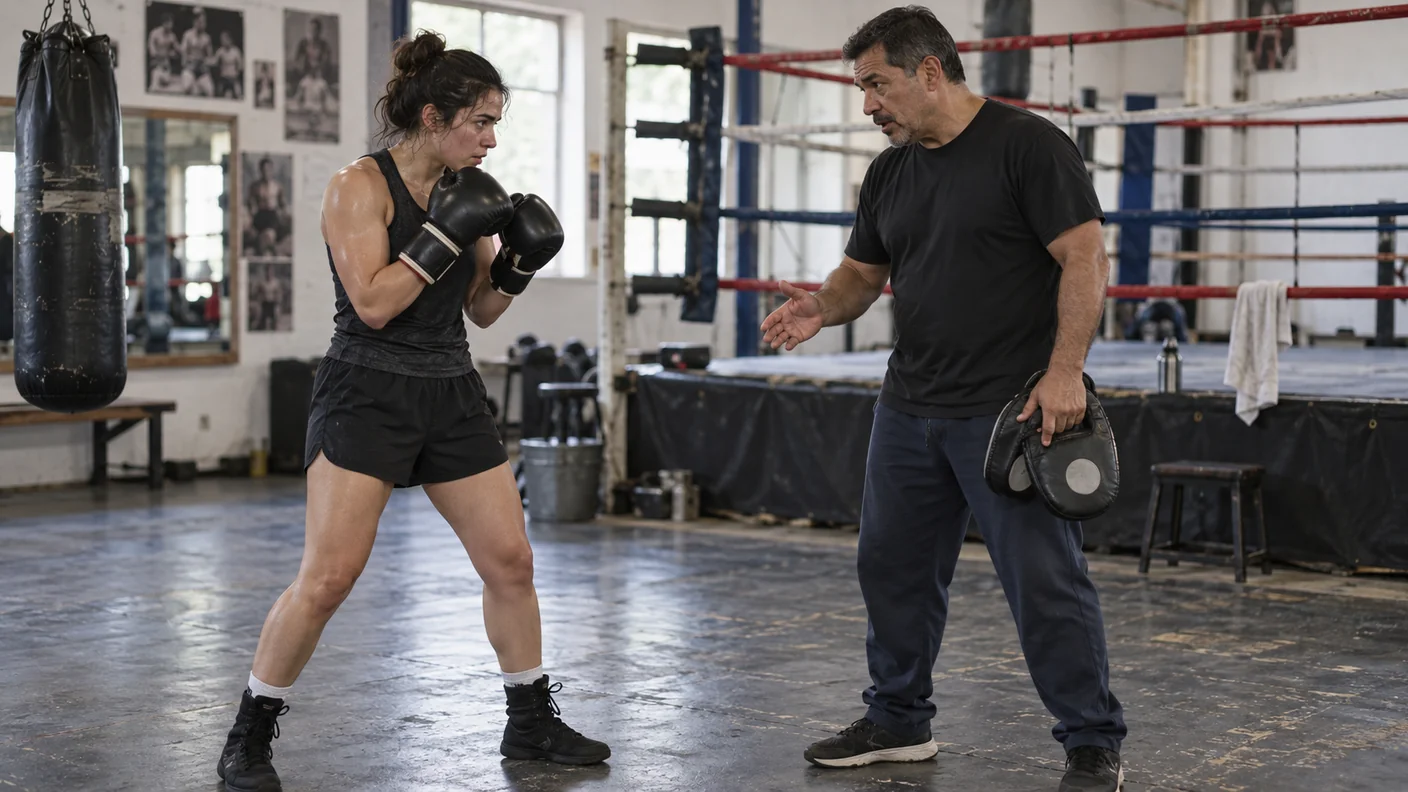
The cross-to-lead-hook is a simple two-punch combination that exposes an awkward habit quickly.
Many boxers land the cross, then have to rebuild their stance before the hook can go. The rear hand stays out too long, the front knee locks, or the feet travel so far forward that the lead hook becomes an arm swing. The combination has two punches, but it needs one organised base throughout.
This drill keeps the combination useful in three common situations: holding your ground, taking a small amount of ground and moving back without surrendering your shape. It is not a substitute for sparring judgement. It is a way to make the feet, hips and guard behave before you add pressure.
Watch the demonstration once, then start at a pace slow enough to notice what each foot does.
Why the cross should prepare the hook
A good cross does not pull the boxer into a dead end. The rear foot drives, the rear hip turns and the rear hand returns straight to guard. That turn can leave the lead side ready to rotate into a hook, but only if the front leg stays soft enough to let the hips move.
Lock the front knee and the turn stops. Let the lead foot point too far across and balance disappears towards the hook side. Chase the target with the chest and the hook arrives late, wide and with the rear glove abandoned.
The useful version is smaller. Keep the front foot in its ordinary stance angle, let the cross turn through the body and bring the rear hand home as the lead hook travels. The hook should feel like the next part of the same movement, not a separate swing added after the cross.
A biomechanical study of the cross, hook and uppercut describes the different contribution of body segments to those punches. That does not give one universal stance for every boxer. It does reinforce the practical coaching point: a cross and a hook ask for organised movement through the legs, trunk and upper body, not two isolated arm actions.
Start by holding your ground
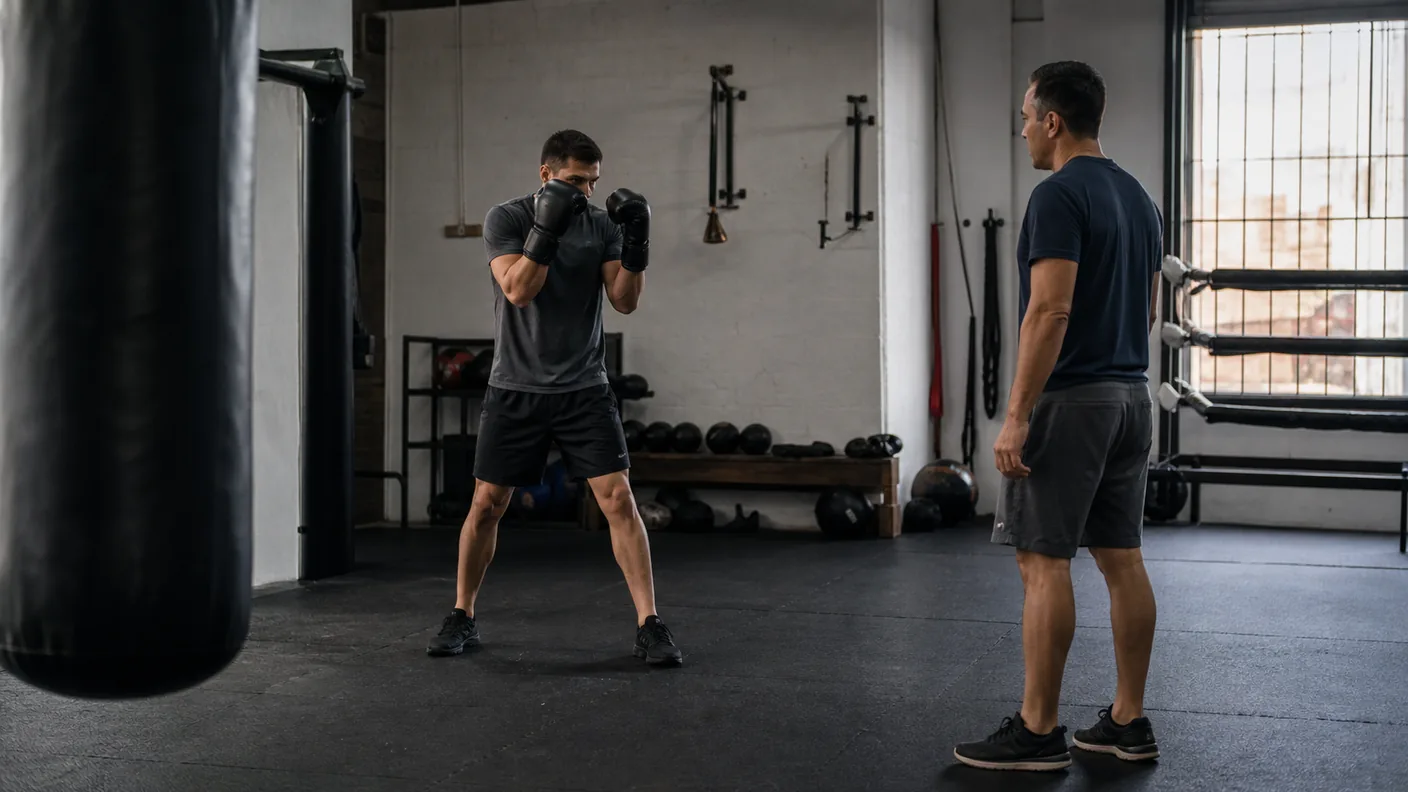
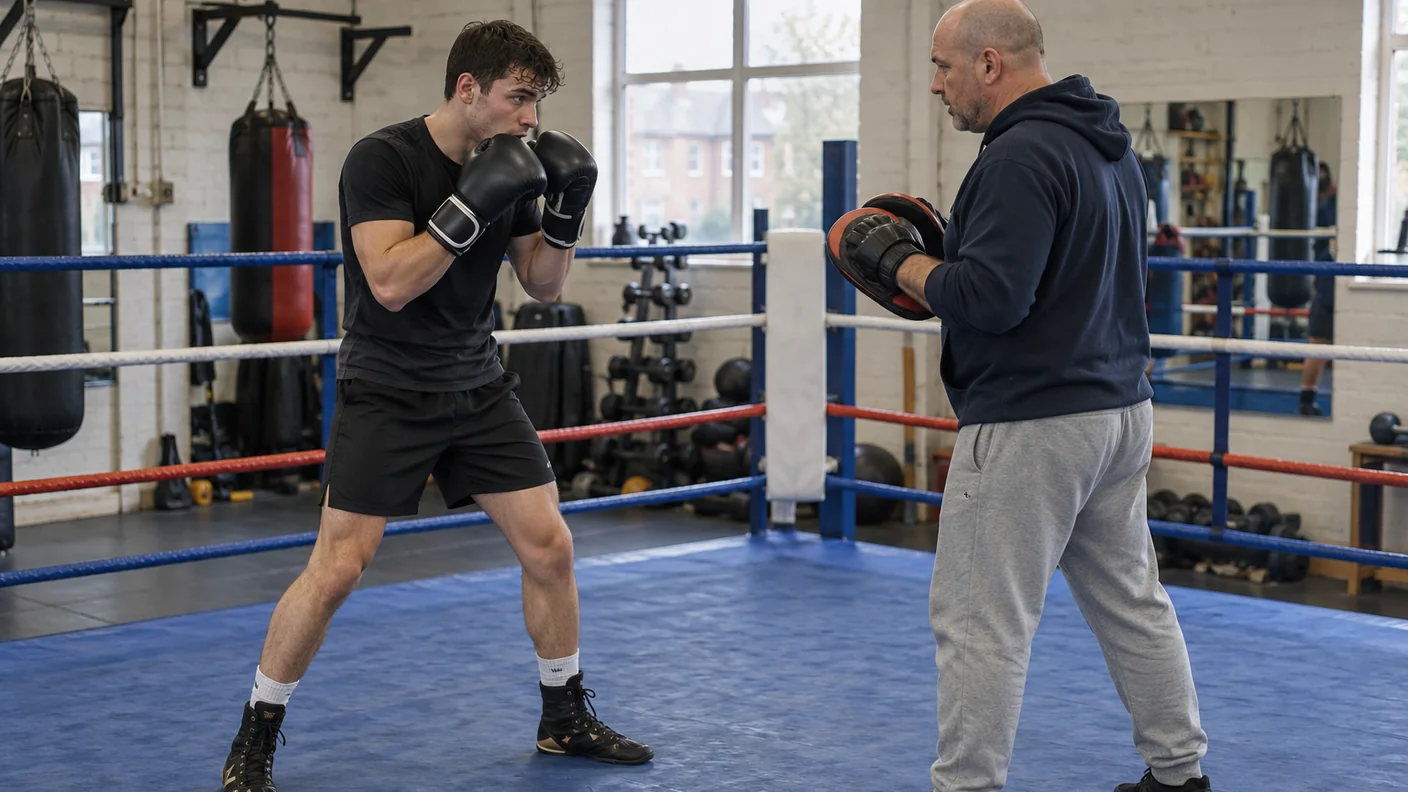
The first version needs no step. Work at a comfortable mid-range on a bag, with a coach holding mitts or in slow shadow boxing.
Throw a measured cross. Let the rear hip turn, but do not force the shoulder past the front knee. As the rear hand starts home, bring the lead elbow up into a compact hook shape and turn from the lead leg and hip. Both gloves should have a job: one strikes while the other protects.
Pause after the hook. Check whether the stance still has width. Check whether the rear glove is close to the cheek. Check whether you could take a small step in either direction without first untangling your feet.
Do one-minute rounds with a calm rhythm: cross, hook, reset. The pause is useful. A bag will not show you when you are square or overextended, but a one-second freeze will.
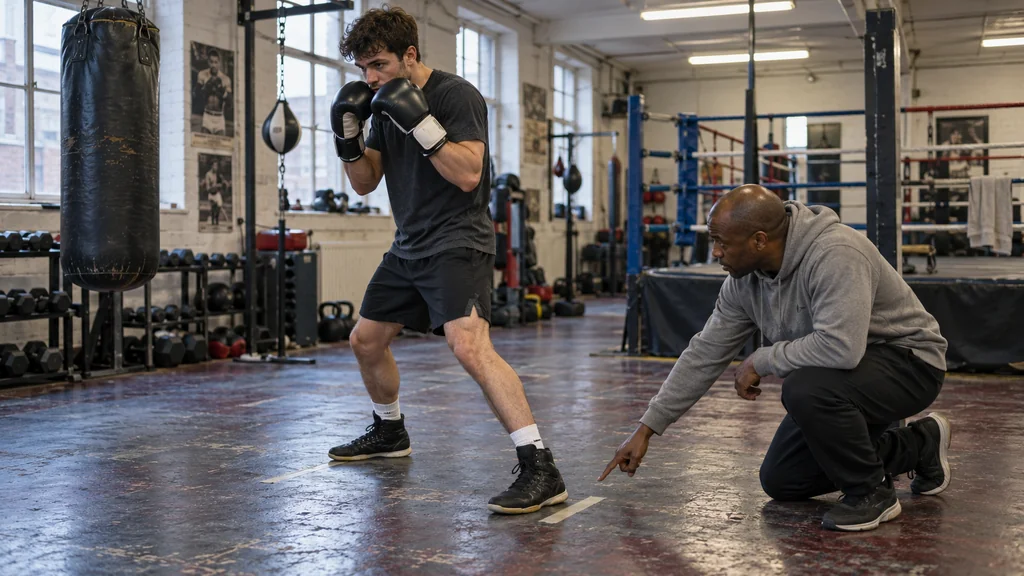
Our guide to setting your feet in boxing is a good companion for this first version. If the feet are already too narrow, no combination will make the hook feel settled.
Take ground in two short stages
Moving forward is where many people spoil the combination by trying to cover too much floor at once.
Let the cross take you forward by a small amount. The lead foot moves with that first punch, not three feet ahead of it. Then, as the lead hook goes, allow the rear foot to come up enough to restore the normal distance between your feet.
Think of it as two quiet stages:
- Cross and a short lead-foot adjustment.
- Lead hook and rear foot follows into stance.
That order matters. If both feet jump forward before the cross lands, there is no room to turn the hips. If the rear foot stays behind after the hook, the stance becomes too long and the next movement is slow. Small steps give the combination power without making it a lunge.
Use a line on the floor or two pieces of tape to make this honest. Start with the lead foot just behind the first marker. After the cross, move it only to the marker. After the hook, bring the rear foot to its usual spacing. Do not increase the distance until every repetition finishes with the head between the feet and both gloves available.
England Boxing's coaching handbook places technical development, safe progressions and clear demonstrations at the centre of coaching. That is the right approach here. Earn the bigger movement with clean small movements first.
Give ground without running away
The backward version is not a panic retreat. It is a way to keep the range honest when another boxer is walking in.
As the cross lands, take a short step back with the rear foot. The lead foot then follows as the lead hook comes round, restoring the same staggered shape you started with. The steps are small because the aim is to maintain distance, not escape across the room.
A common mistake is stepping too far back with the rear foot. That stretches the stance, leaves the front leg unable to drive the hook and turns the second punch into a reach. Another is letting the lead foot lag behind so long that the boxer is standing square by the end of the combination.
Keep the sequence modest: cross as the rear foot goes, hook as the lead foot follows, then reset your eyes and guard. If you cannot throw the hook without leaning, shorten the retreat. You are practising range control, not making a dramatic exit.
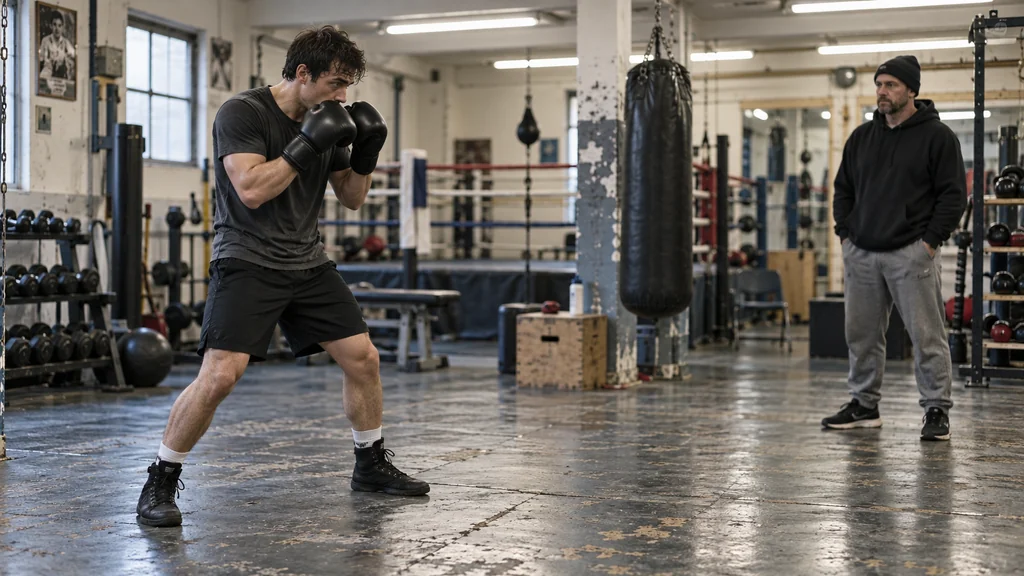
This connects well with what to do after you punch in boxing. The second punch does not end the exchange. You still need a stance that can cover, move or answer the next cue.
Add one defensive finish
Hooks bring you closer to the other boxer. That makes the moment after the hook important.
Start with a simple rule: after the lead hook, bring both gloves home before adding anything clever. The hook hand returns along a short route. The rear glove stays near the face instead of dropping while you admire the shot. Keep your eyes forward and your knees soft.
Once that reset is reliable, a coach can add one slow return cue. They might hold a mitt on the centre line to ask for a high guard, or give a clear hook-shaped cue to ask for a small controlled roll. Keep the response agreed and technical. There is no benefit in turning a two-punch drill into hard, unscripted exchanges.
For a further reset option after a rear hand, try our jab after a cross drill. The two drills have different finishes, but they share one standard: a punch is only useful if it leaves you ready for the next sensible choice.
Three rounds that keep the drill honest
Use three rounds of one minute with thirty to sixty seconds of rest. Start in shadow boxing or on a bag. Use pads only when the feet are doing the right thing without a target persuading you to reach.
Round one: static cross and hook
Stay at one range. Throw the combination at light effort, return both gloves and freeze. Make the cross and hook clean before you add travel.
Round two: small advance
Use the two-stage step. Lead foot with the cross, rear foot with the hook. Keep the movement short enough that you can still turn the hips and recover the guard.
Round three: short retreat and reset
Rear foot moves with the cross, lead foot follows with the hook. End every repetition in an ordinary stance, not a stretched pose. If the stance begins to lengthen, go back to the static version.
This works well in supervised pad work because a coach can see whether the range is real and whether the feet arrive in time. It also suits recreational training because it teaches control before contact or speed.
If you are near Kidbrooke, our Recreational Adults boxing classes use bag work, pads and controlled partner drills to build combinations without losing stance or guard.
The cue is short: cross turns, hook follows, feet restore the stance.
H&G Team
Writer at Honour & Glory Boxing Club, a community boxing gym in Kidbrooke, South East London.
KEEP READING
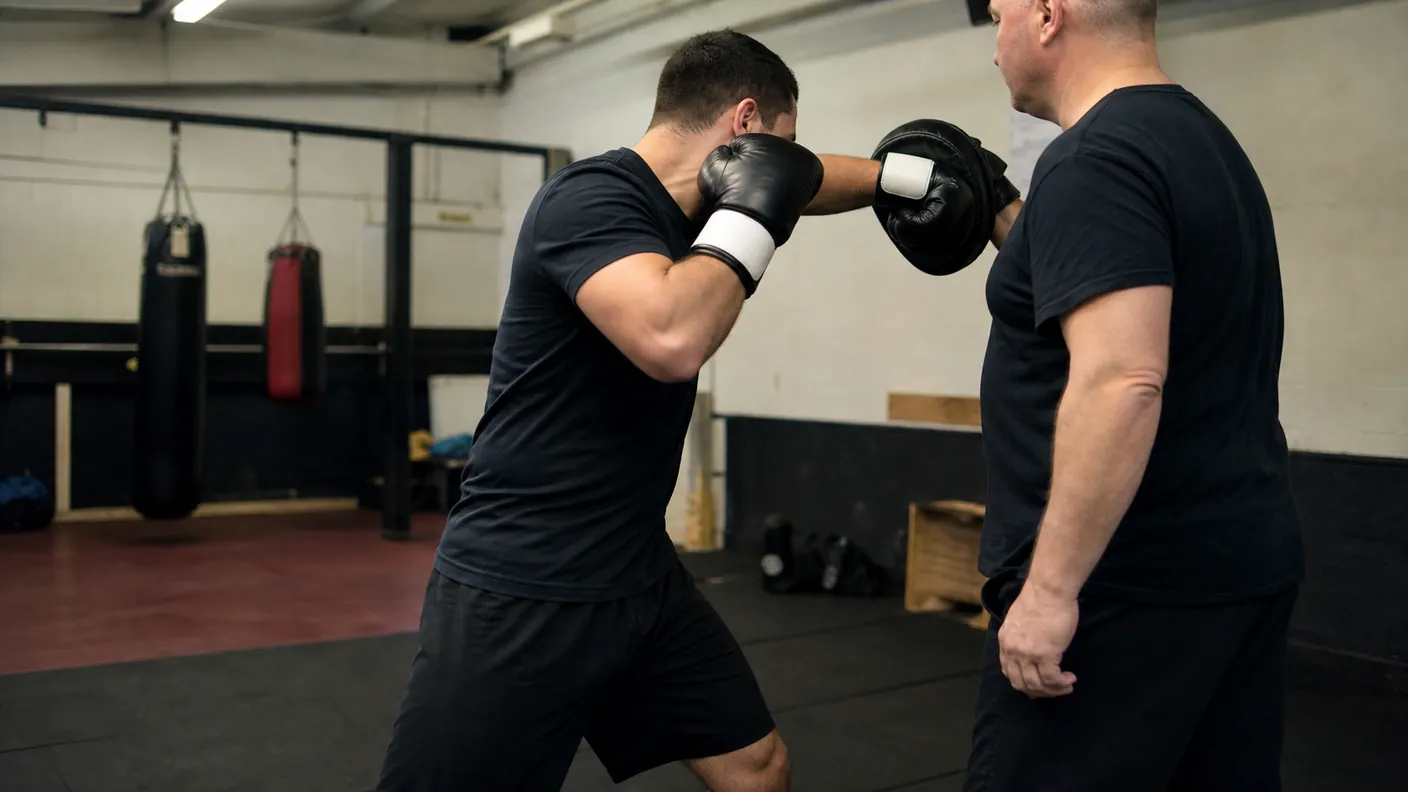
The Hook-Jab: Use Your Lead Hand Twice
Learn how a compact hook-jab can change the line of attack, bring your lead hand home and help you leave the pocket in balance.
Lead Hook to Jab: Change Direction in Boxing
Use a compact lead hook to shift the guard, then send a jab through the middle without losing your stance or balance.
Finish Boxing Combinations With a Lead Hand
Use a final jab or lead hook to recover your stance after a short combination without standing still for the return.
Was this page helpful?
It takes one tap, and it genuinely helps.
Choose your next step
Turn this article into the right action
Some readers are ready to book. Some need the class route first. Pick the route that matches what you actually want.