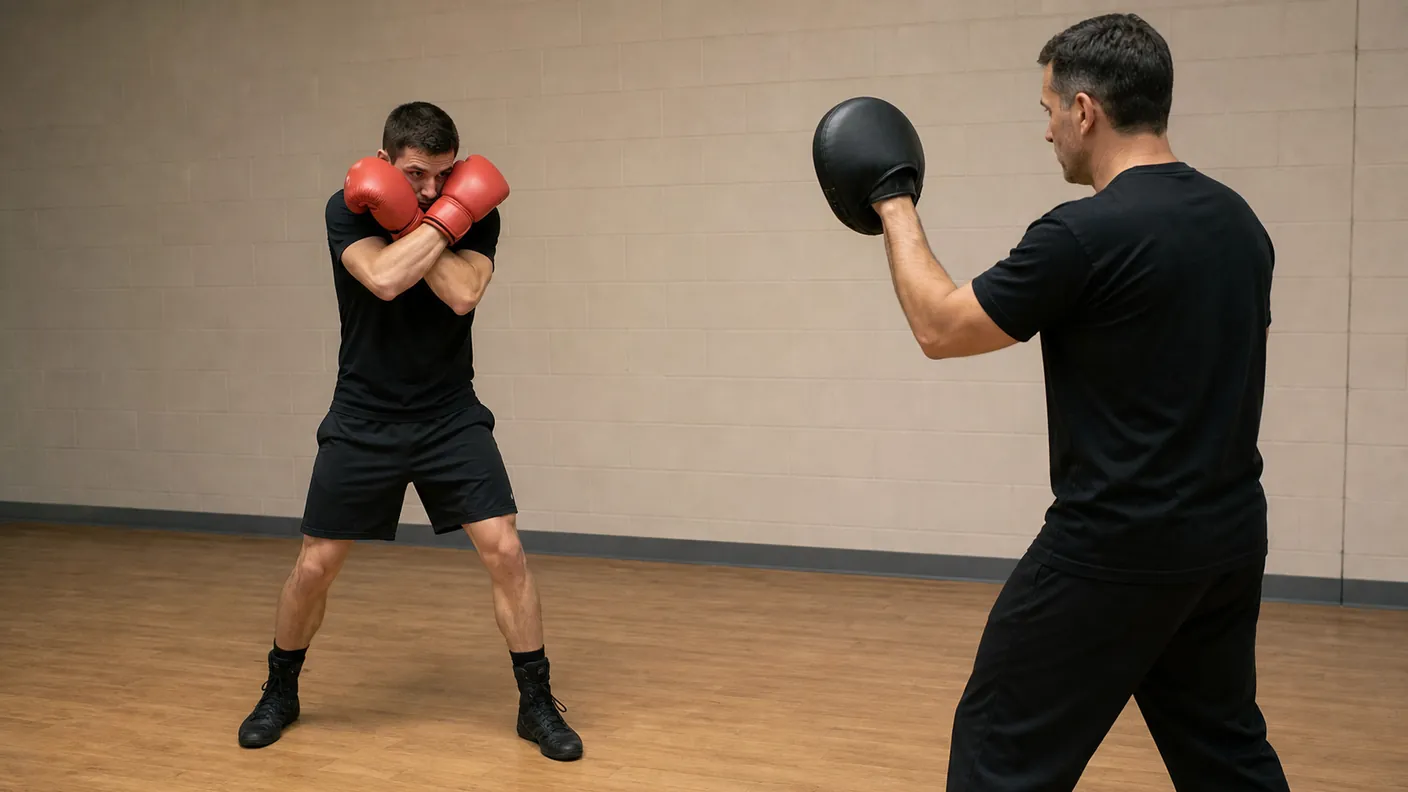
A cross guard is a brief cover, not somewhere to live.
At the right moment, bringing both forearms across the face can close a straight line, give you a solid point of contact and buy enough time to make one calm decision. The mistake is turning it into a pose. If you stay folded behind both arms, the other boxer can keep working, walk you backwards or wait for you to open up.
The useful version is temporary. Cover the line, feel the contact, bring the guard back into working shape and either answer with one measured punch or leave the exchange.
Watch the demonstration below, then use the drill to make the cover compact and useful.
What the cross guard is for
The cross guard is a short double-forearm cover for a moment when a straight punch is already entering your space.
Instead of chasing the punch with one hand, bring the forearms across the front of the face with the chin tucked behind them. The elbows stay close enough to protect the body. Your eyes stay on the other boxer through the gap between the gloves. The aim is to make a compact wall, not to hide completely.
This is not the same as your normal guard. Your ordinary guard needs separate lanes for the jab, catch, parry and cross. A cross guard is a quick answer when the line has narrowed and you need both arms to close it for a beat.
England Boxing's coaching handbook puts safe, coach-led technical development at the centre of boxing practice. That is the right setting for this skill. Learn the cover through pads and controlled feeds before you ask it to work in live rounds.
Build a wall without squeezing yourself still
The hands should come together only as much as the incoming line requires. If the elbows drift wide and the forearms point in different directions, there is no wall. If the shoulders rise to the ears and the hands clamp down for too long, you have protected the head but given away the body, feet and next movement.
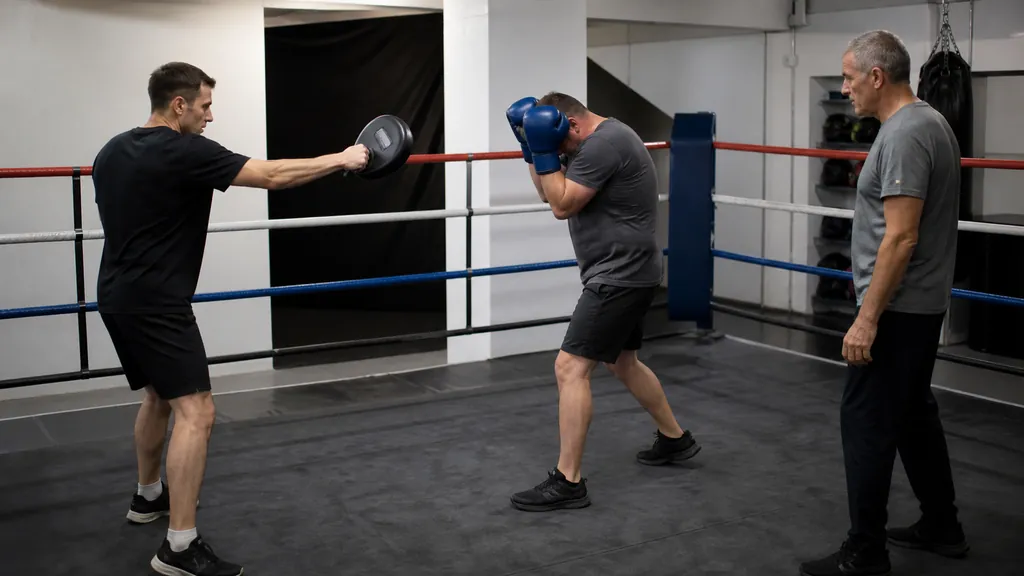
Start from an ordinary stance. As the coach shows a slow straight-punch mitt, raise both forearms a few inches so they overlap in front of the forehead and nose line. Keep a small bend in the knees. The rear heel stays connected enough that you can step, turn or punch after the contact.
The lower arm should not crush your own chest. The upper arm should not cover your eyes. You need to see the other boxer's shoulders and feet, because those tell you whether a second punch, a step or a change of angle is coming.
The useful test is simple: after the cover, can you immediately return to a normal guard without pulling your feet together? If not, the cover has become too big or too tense.
This differs from a standard hook block. A hook block closes one side of the head while the other hand stays ready. The cross guard is for a brief central line, so both arms help cover before separating again.
Catch the contact, then make one decision
The cover has done its job when the forearms receive the punch without the head snapping back or the body folding forward. That contact tells you something useful: the other boxer has committed to a line and their arm is extended.
Do not assume that every cover earns a hard counter. Sometimes the right answer is to bring the gloves back to a normal guard and take a small step out. Sometimes a short jab to a coach-held mitt is available as the opponent retracts. If the range has closed too much, cover again or use a coach-led reset rather than forcing a punch from the wrong place.
The key is that the return comes after the cover, not at the same moment as a panic response. A clean punch needs the feet, trunk and arm to work together. A biomechanics study of boxing punches found that punch performance depends on the coordination of body segments, not the arm moving alone. That is why the cross guard should finish with a settled stance before you ask it to produce a punch.
The cross guard catch-and-return drill
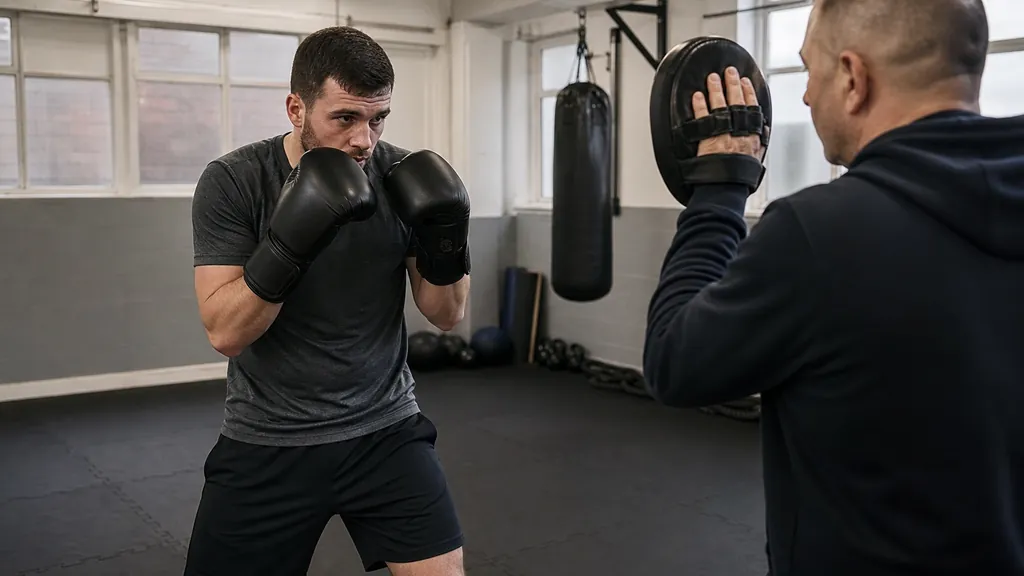
Use gloves, a coach or trusted partner, and slow pre-agreed feeds. This is not a hard-contact drill. The feeder is giving a clear line to help the boxer learn the shape, not trying to split the guard or land around it.
Round one: cover and recover
Partner A shows a slow jab or straight mitt line towards Partner B's forehead. Partner B brings the forearms into the temporary cross guard, receives the mitt softly, then returns to a normal guard and freezes for one second.
Check the finish before the next repetition. The feet should still be staggered. The chin should be down. Both hands should be available again. If Partner B has leaned backwards, stared at the floor or stayed in the cover, slow the feed down.
Round two: cover, recover, jab
Use the same controlled straight line. After the cover, Partner A presents a second mitt at honest jab range. Partner B returns to a normal guard and places one light jab on the mitt.
There is no rush to fire. The jab should come from its usual lane after the hands have separated. If it has to travel round both forearms, the cover is still in the way. Recover first.
Round three: choose jab or exit
Now Partner A may either show the straight line and second mitt, or show the straight line then take the mitt away. Partner B covers, recovers and chooses one sensible finish.
If the mitt is there at range, jab once and reset. If the mitt has gone or the partner has stepped close, bring both hands home and make a small step out. This is where the drill becomes more than a fixed sequence. The cover creates a pause. You decide what the range allows.
Keep the cover short and the return tidy
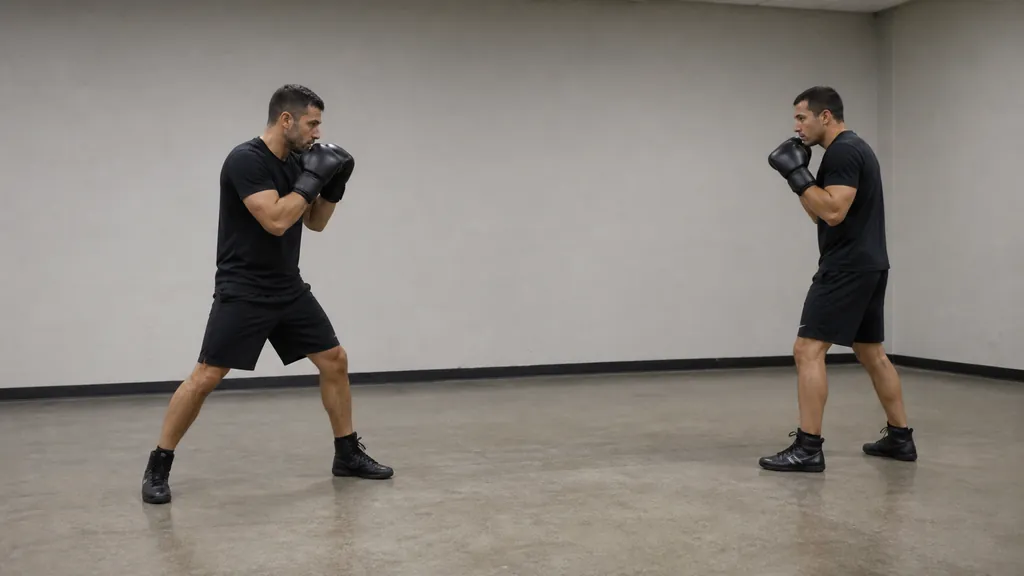
The biggest mistake is camping behind the arms. The cross guard is useful for a moment. It becomes a problem when you wait there for someone else to decide the exchange. A boxer who cannot see, step or punch has not solved the pressure.
The second mistake is making the cover too wide. If the elbows separate from the ribs and the arms drift outward, straight shots can still find the middle while body shots become easier. Keep the cover compact enough that the forearms meet, but not so tight that the shoulders lock.
The third mistake is trying to counter before the stance is ready. A big hook thrown from a crossed, crowded guard often pulls the chin up and feet square. Recover the normal guard first. One clean jab, a small step or no punch at all is better than a wild answer.
The fourth mistake is using the cross guard as a substitute for normal defence. A catch, parry, small slip or standard high guard is often the simpler answer. Our guide to defending the jab explains how the distance and timing should decide which response you use.
Where the drill fits in training
This is an intermediate guard drill, not a first-session exercise. You should already have a basic stance, a normal guard and a controlled jab before adding a temporary double-forearm cover.
Start with pads or a slow partner feed. Keep the action predictable. Once the shape is stable, a coach can vary the range and ask for a jab or exit after the cover. There is no need to test it in hard sparring before you can show the same balanced position repeatedly in a quiet drill.
For adults in Kidbrooke, Greenwich and nearby, our Recreational Adults boxing classes use pads and controlled partner work to connect guard, footwork and decision-making. You can build the habit before speed and pressure expose every loose movement.
The coaching cue is simple: close the line, feel the contact, return ready.
H&G Team
Writer at Honour & Glory Boxing Club, a community boxing gym in Kidbrooke, South East London.
KEEP READING
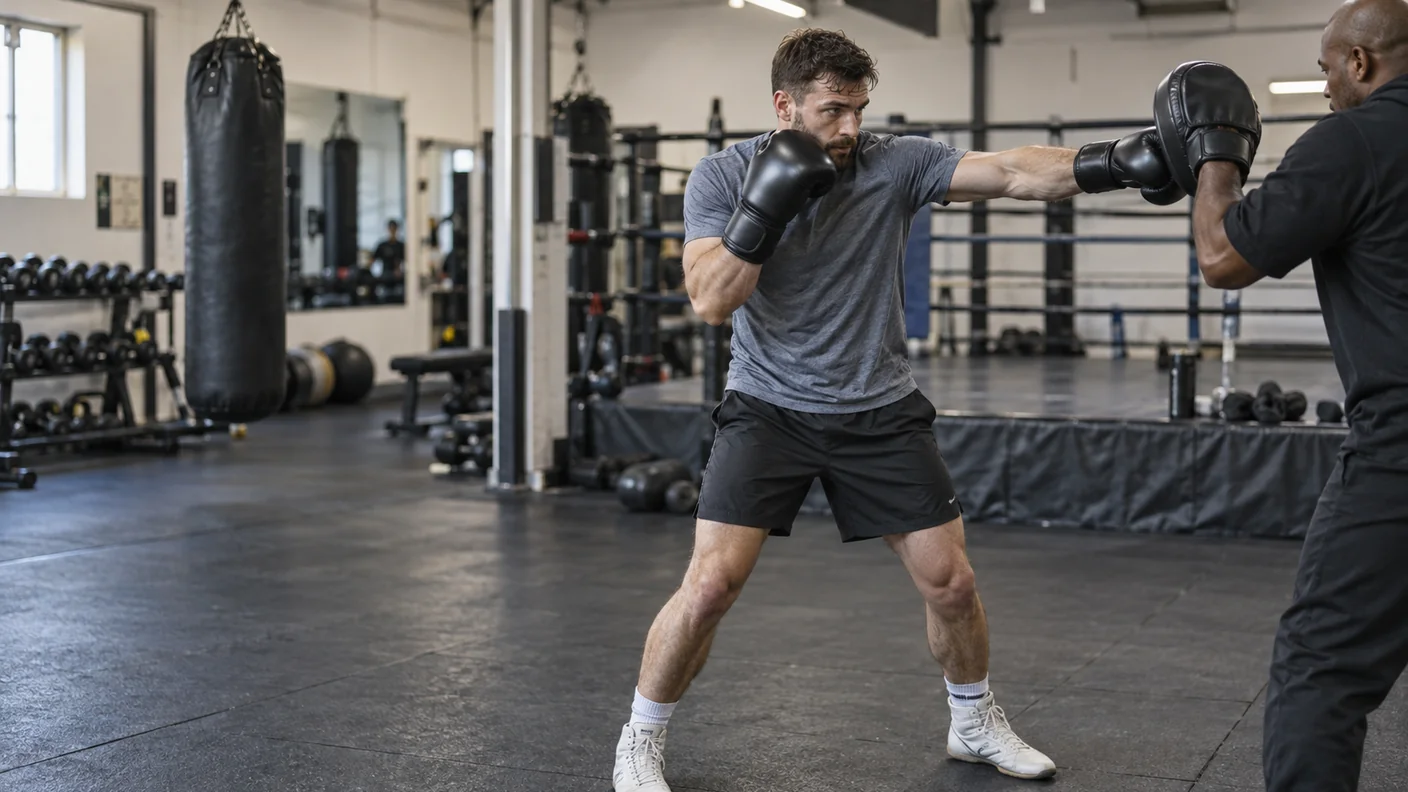
Jab After a Cross: A Boxing Reset Drill
Use a light lead-hand post after the cross to recover your stance, manage the return and stop standing still in front of a partner.
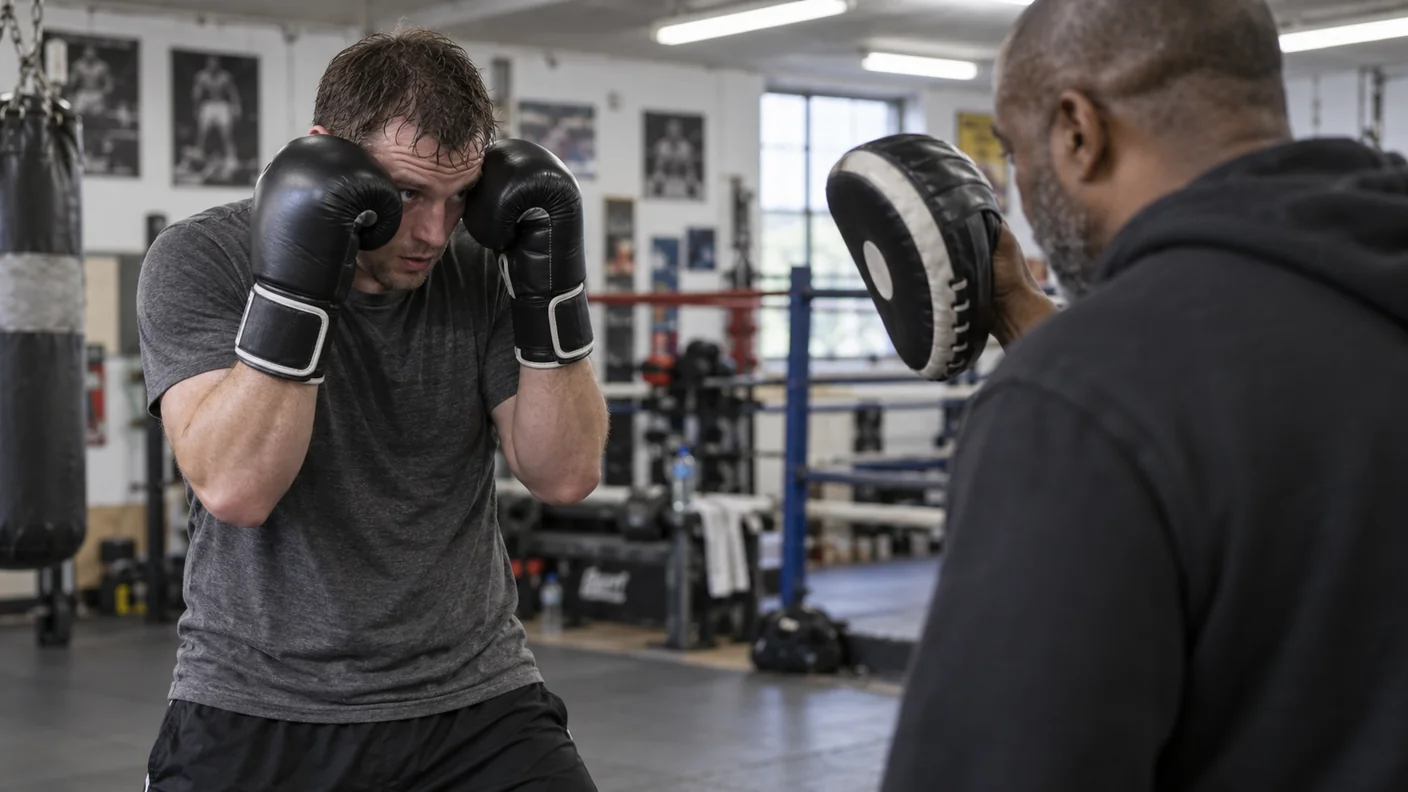
High Guard Defence for Straight Punches and Hooks
Learn how small high-guard adjustments help you cover straight punches and hooks without losing your eyes, stance or next step.
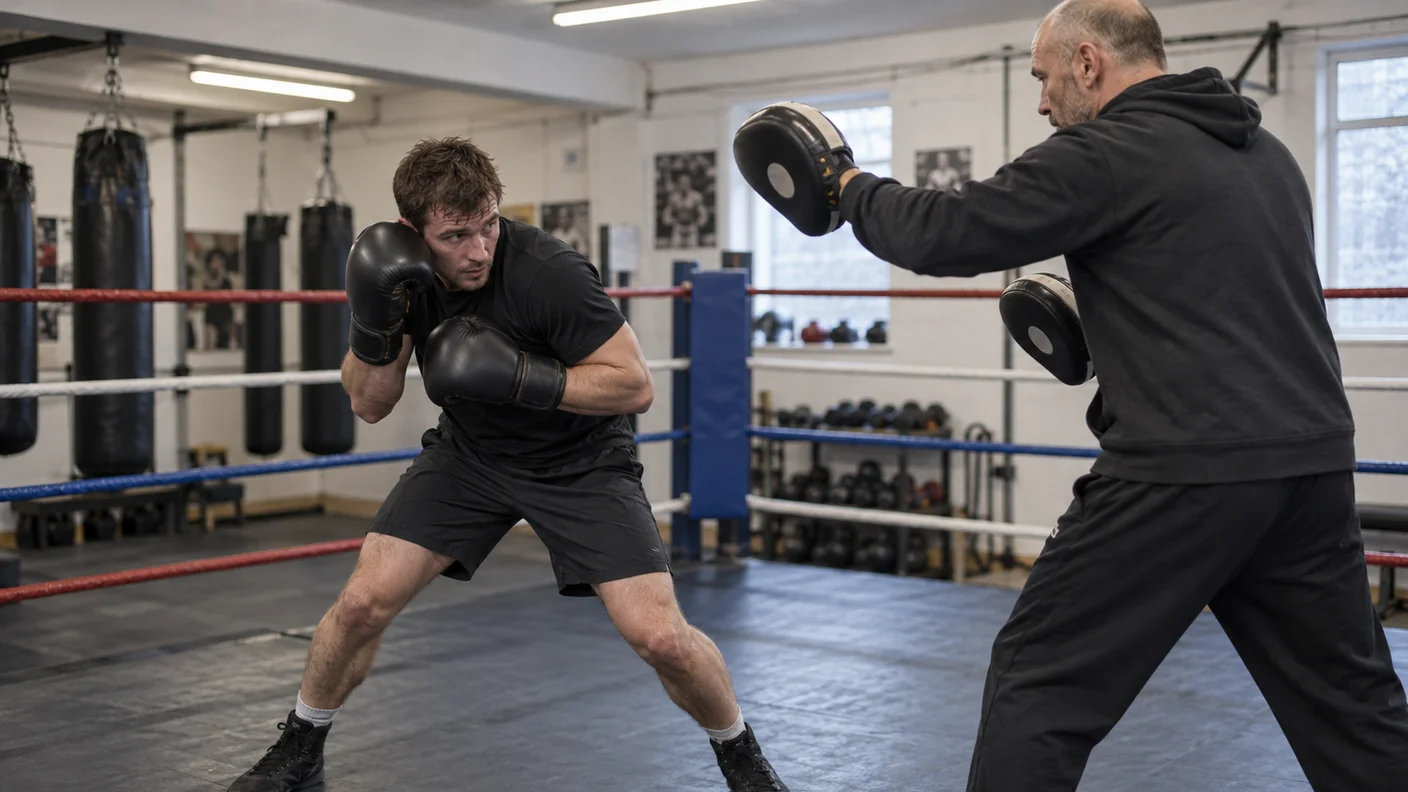
Catch, Parry, Roll: Boxing Defence Drill
Use a catch, parry and compact roll to defend a one-two-hook without reaching, folding over or losing your stance.
Was this page helpful?
It takes one tap, and it genuinely helps.
Choose your next step
Turn this article into the right action
Some readers are ready to book. Some need the class route first. Pick the route that matches what you actually want.