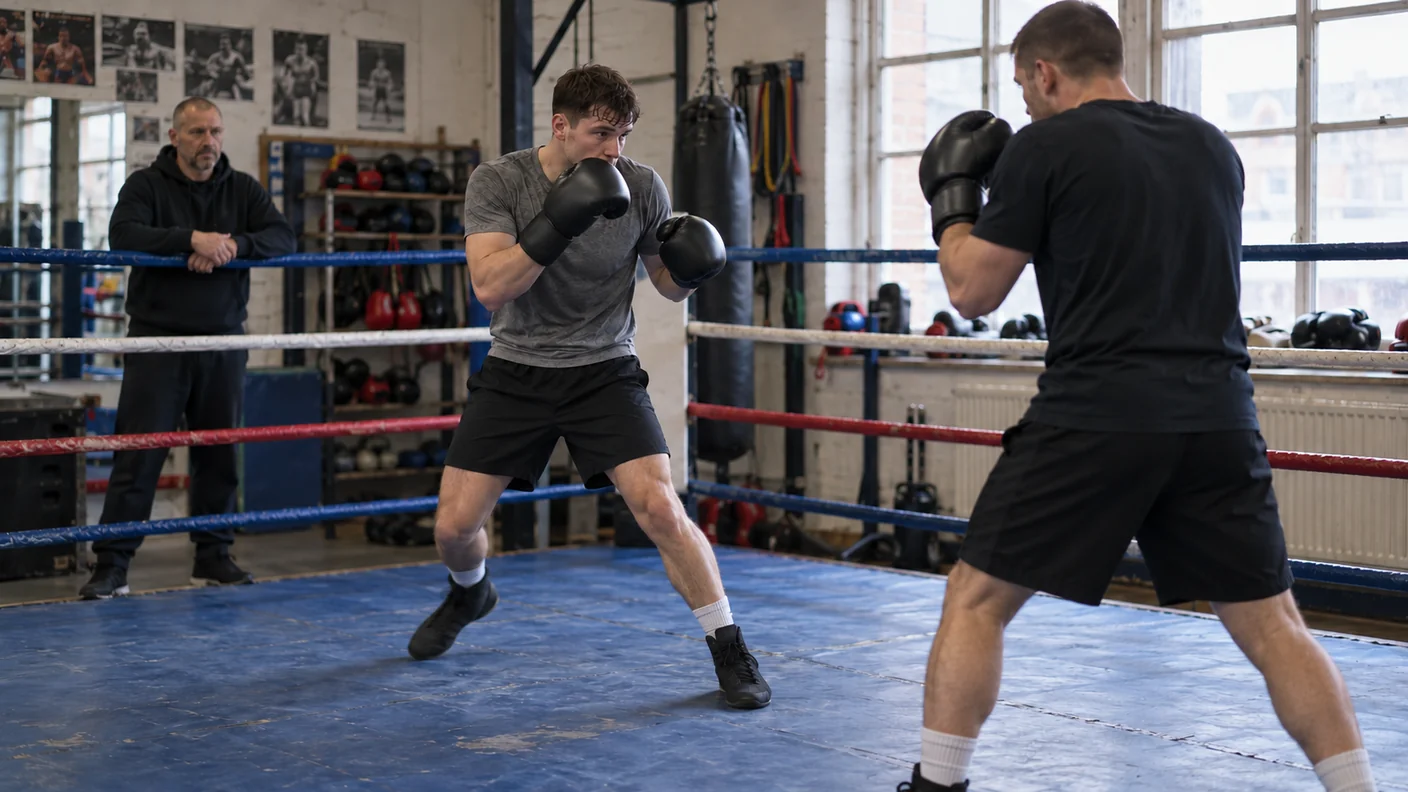
A rear hand is dangerous when the other boxer has time to set it. They see you arrive on the centre line, settle their feet, turn the shoulder and throw through a clear lane.
You do not always need a big defensive reaction to make that harder. A small change of position can alter which punches are easiest to throw. For an orthodox boxer facing another orthodox boxer, moving a little to your right places you closer to their lead side and makes their right hand less direct. Moving left puts you nearer the rear-hand lane, so you need a different answer.
The point is not to memorise a magic safe side. It is to understand the picture, keep a proper stance and make the other boxer reset before their strongest shot is ready.
Watch the video below before trying the drill. The useful lesson is positional awareness, not a promise that one side step makes you untouchable.
Move right to make the rear hand travel further
For two orthodox boxers, a small step to your right moves you towards the other person's lead hand side. Their jab and lead hook are still live, but the rear hand has a longer, less direct route. They may have to turn, step across or wait for you to return to the middle before they can throw it cleanly.
That is useful because it narrows the immediate problem. Instead of trying to watch every punch at once, you can keep a compact guard and stay alert to the lead-side choices. The rear glove stays close to the cheek, the lead shoulder remains ready to protect the chin and the feet stay staggered.
Do not turn this into a long circle at the same pace. If you keep moving right on the same beat, the other boxer can follow, step across to cut you off or time the lead hook. A position is a momentary advantage, not somewhere to camp.
England Boxing's coaching handbook puts balance, the ability to move in any direction and a sound guard at the base of technical development. That is the test here. After the step, can you still catch a jab, block a hook or take another small exit? If not, the step was too large.
Move left with a lead-hand job
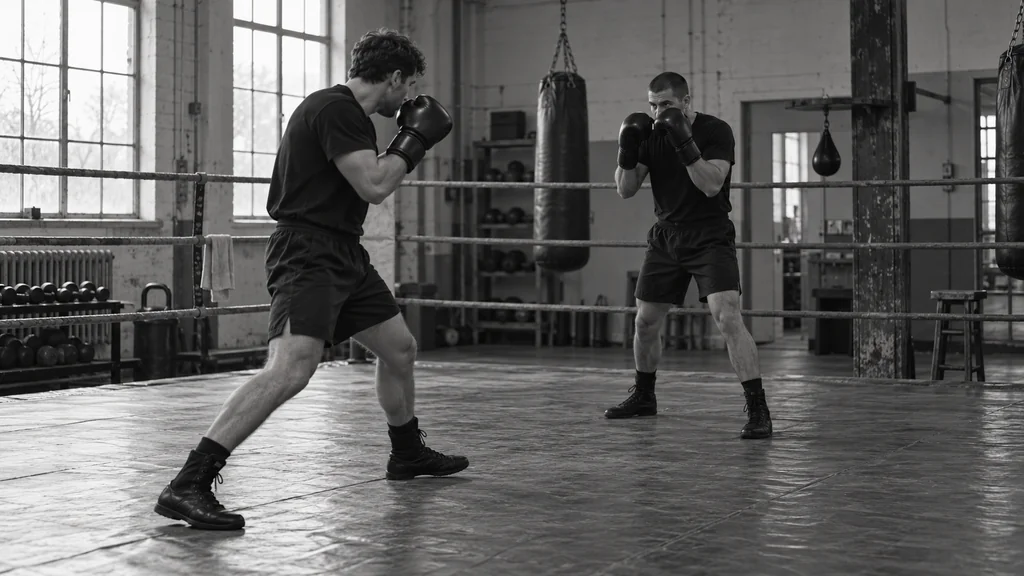
Moving left can be useful too, but it asks more of you against an orthodox rear hand. You are moving towards the line their right hand wants to use. A static step left with your lead hand low gives them a clear picture: feet planted, centre line open, rear shoulder ready.
Give the lead hand a job as you move. A light jab to a coach-held mitt, a range-finding touch or a believable feint can make the other boxer deal with something before they set the rear hand. Keep moving as you do it. The lead hand is not there to wave in front of their face. It is there to occupy the line while your feet change it.
The jab does not make you safe by itself. If the other boxer reads it, they can still slip, parry or counter. Its value is that it stops your leftward movement becoming a naked step in front of the rear hand.
This is why a side-step drill that keeps your stance matters. The feet must carry the body without crossing, and the hand must return before you ask the next question.
The middle is not a panic station
At ordinary long range, standing directly in front of an opponent can feel as though everything is available to them. In reality, the straight lines are often the first problem. Their jab and rear hand have the shortest routes. Hooks need more room and are easier to see when the range is honest.
That does not mean you should stand still in the middle and wait to prove a point. It means you can simplify the decision. Keep the gloves in a working guard. Watch the chest and shoulders. Be prepared to catch, parry, slip small or take a measured step back when the straight line arrives.
Our guide to using the smallest useful defensive answer develops that idea. A huge reaction can turn a manageable jab into a scramble. A small answer preserves the stance, which lets you choose the next position.
A biomechanics study of boxing punches found that lower-body contribution and balance are central to punching actions, while also noting that its work was carried out against a bag rather than a live opponent. That limitation matters. In partner work, the feet are not only there to create force. They are there to keep you ready when the other person changes distance or line.
A three-round position-reading drill
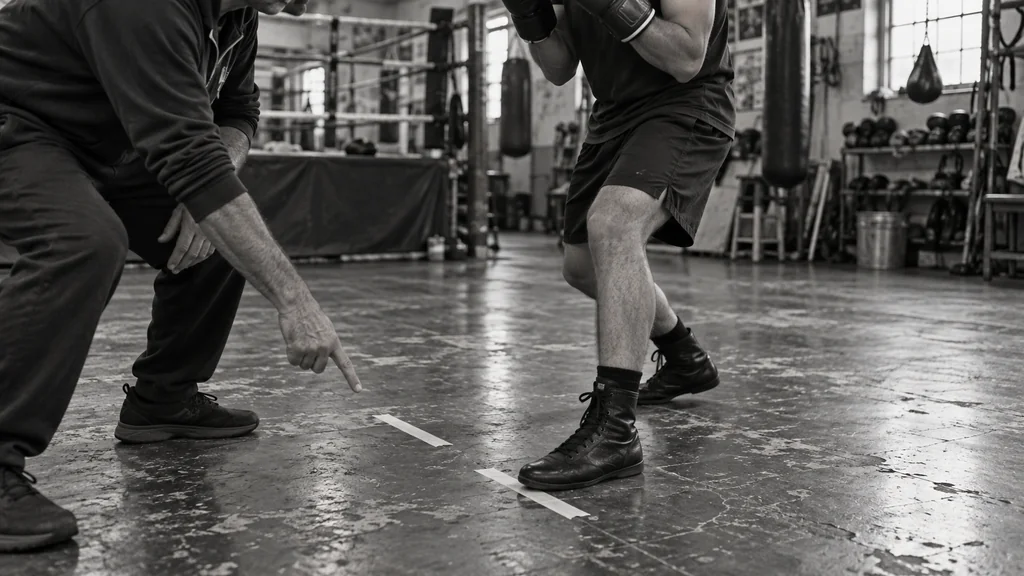
Use a coach and mitts, or a partner who can feed slow, agreed cues. There is no need for hard contact. The point is to see what each position leaves available, then recover before the next cue.
Round one: right, centre, left
Start at long range. The coach calls right, centre or left. Take one small step in that direction, hold the guard and freeze for a count.
At each stop, name the clearest line: lead hand, rear hand, or both straight punches. This is not a test of getting the answer perfect on the first go. It trains the habit of looking at position before throwing.
Round two: add one honest cue
Now the coach gives one slow mitt cue after each call. From the right side, show a lead-hand mitt or a small hook-shaped cue. From the left side, show a rear-hand mitt. From the middle, show either straight line.
The boxer does not need to counter. Catch, block, slip or step out, then bring the guard back together. If the feet cross or the chin lifts, reduce the step before adding speed.
Round three: move, read, reset
In the final round, the coach chooses the position call and can show no cue at all. The boxer moves, reads the picture and decides whether to touch a mitt, cover or return to range.
The empty cue is important. It stops the drill becoming a dance where every side step earns a punch. Sometimes good positioning buys you nothing more dramatic than another second to see clearly. That is still useful.
Four mistakes that give the rear hand back
The first is taking a giant side step. A large move may place you outside the straight line for a moment, but it can leave the feet too far apart to defend the next punch. Shorten the step until you can move again without rebuilding the stance.
The second is admiring the new angle. If you move right and then stop with your lead hand low, the opponent can simply turn with you. Keep the guard organised and be ready for the jab and lead hook.
The third is moving left with no lead-hand activity. You are not required to jab every time, but you need to know when the rear hand can see you clearly. A small feint, a range touch or a return to centre may be the better decision.
The fourth is treating orthodox advice as universal. Against a southpaw, the lead and rear sides reverse. The principle remains the same: notice which side of their body you are moving towards, then ask which hand now has the cleanest route.
Where this belongs in training
Use this after you have a settled stance, a basic jab and simple guards against straight punches. It works well in shadow boxing, controlled partner drills and slow pad rounds. It does not need hard sparring to be useful.
If you are in Kidbrooke, Greenwich or nearby, our Recreational Adults boxing classes use coached footwork, pads and controlled partner drills to make position, defence and decision-making practical from the start.
The coaching cue is simple: see the side, protect the line, keep an exit.
H&G Team
Writer at Honour & Glory Boxing Club, a community boxing gym in Kidbrooke, South East London.
KEEP READING
How to Defend a Rear Hook in Boxing
Use a compact guard, settled feet and a clear exit to defend a rear hook without leaning away or forcing a counter.
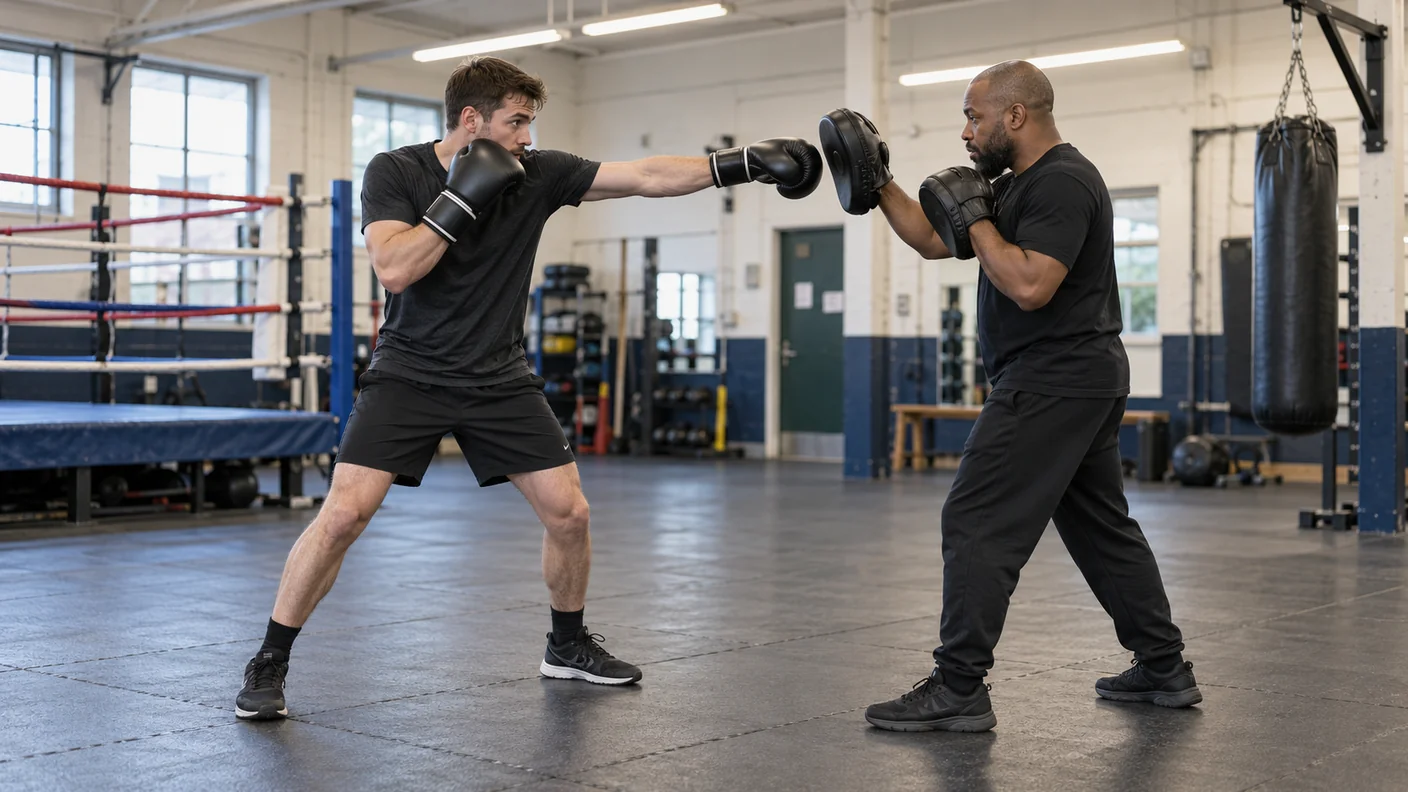
Jab to Rear Hook: A Boxing Range Drill
Use the jab to settle distance, then turn a compact rear hook without reaching, dropping the lead hand or standing square.
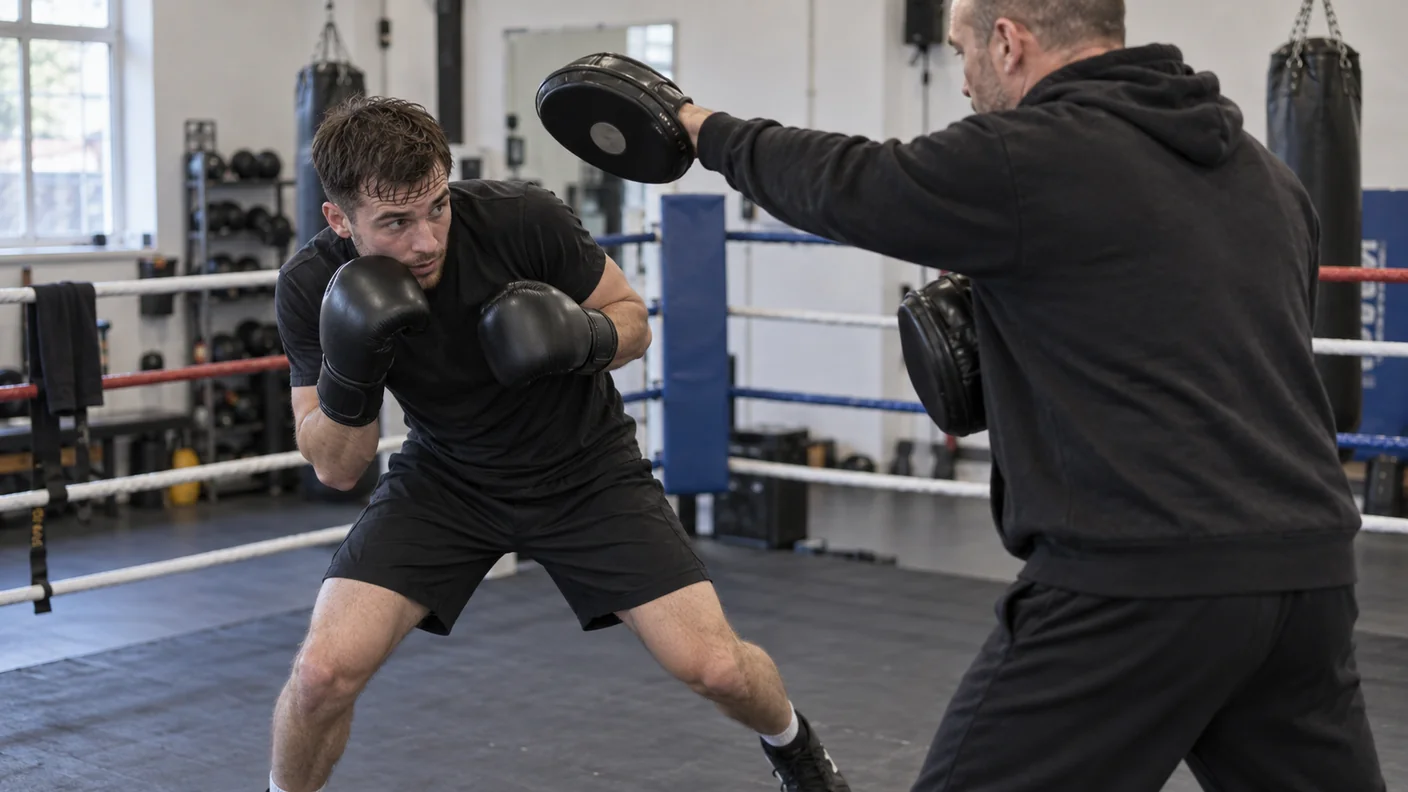
Outside Slip a Cross: Rear Uppercut Counter
Use an outside slip against a straight rear hand, then decide whether a short rear uppercut is truly there.
Was this page helpful?
It takes one tap, and it genuinely helps.
Choose your next step
Turn this article into the right action
Some readers are ready to book. Some need the class route first. Pick the route that matches what you actually want.