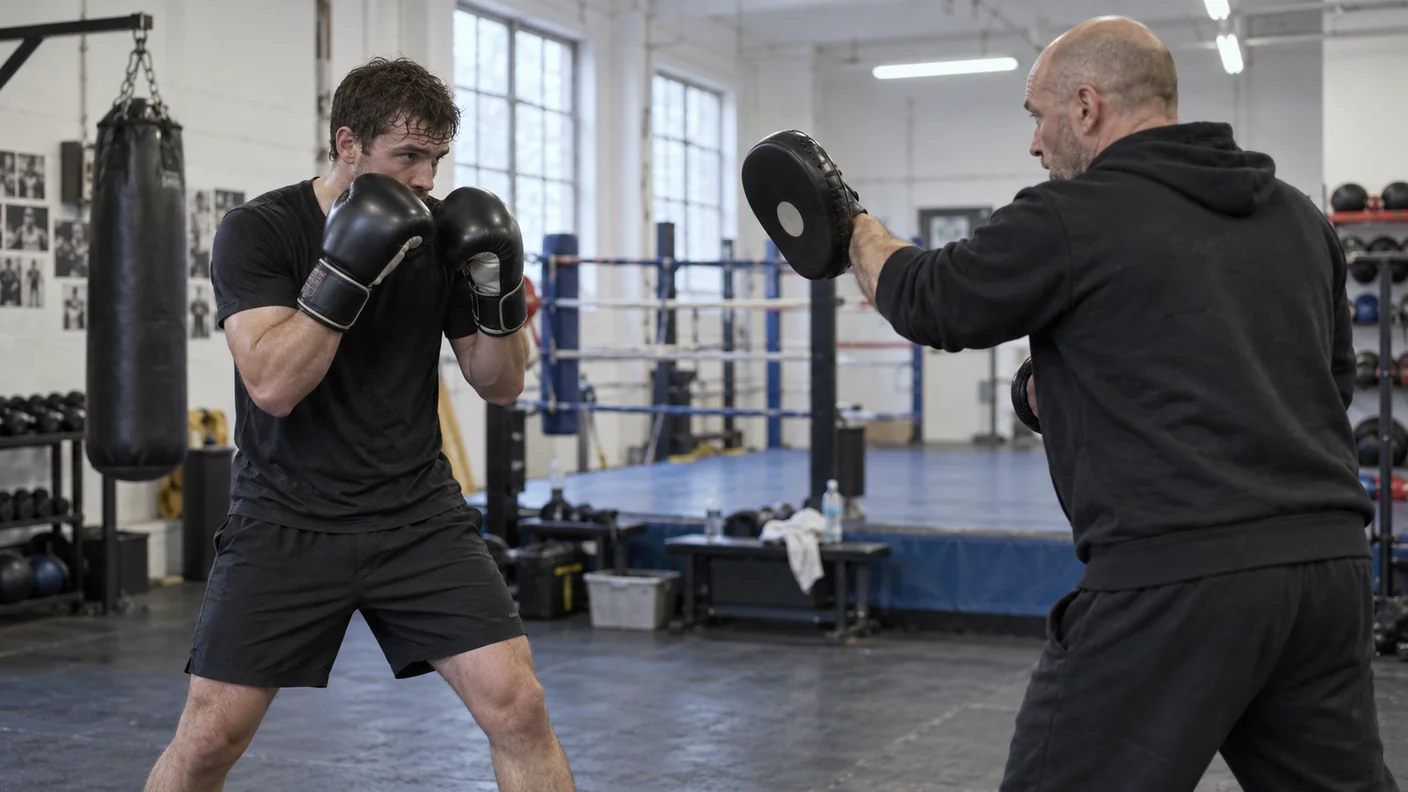
A rear hook is awkward because it does not arrive on the same straight line as a jab or cross. It comes from the hand furthest from you, travels around the side, and can make a boxer react too late with a large lean or a wide arm.
The useful answer is smaller. Recognise the range, cover the threatened side with a compact guard, and keep enough stance underneath you to move when the punch has passed. You do not need a dramatic pullback or a clever counter to make this work.
The video below is a useful visual reference for how guard shapes change against straight and looping punches. Watch the elbows, the gloves and the feet. Then use the slower drill below with a coach or a trusted partner.
First, recognise when the rear hook is a real threat
The rear hook is usually a close-to-middle-range punch. If the other boxer is too far away, it needs a long, visible swing. If they have arrived at a range where the shoulder can turn without a big arm wind-up, it becomes more difficult to read.
That is why the first defence happens before the glove moves. Watch the chest, shoulder and rear hip, not just the fist. A boxer preparing a rear hook often needs the back side of the body to turn. If you only notice the glove after it has started round, you are already late.
Do not try to guess every punch. Notice the distance and keep a usable guard. England Boxing's coaching handbook puts balanced stance, sound guard position and the ability to move in every direction at the centre of technical boxing. That is the standard here. You should be able to cover one side without losing the other side of your defence.
This is also why a rear hook needs respect without panic. If you are safely outside its range, keep the distance. If the other boxer has closed that space, bring the guard together and stop pretending that a long jab will solve a short-range problem.
Cover the side, but keep both hands useful
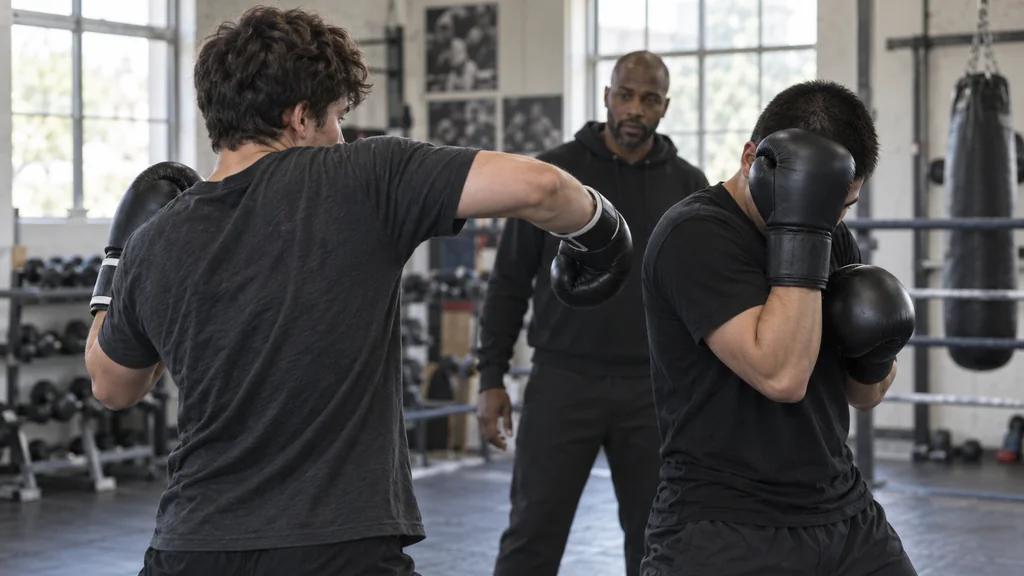
A rear hook asks the glove and forearm on the threatened side to do a clear job. Bring that glove close to the temple or cheekbone, with the elbow sitting below it rather than floating out like a wing. The forearm helps close the line between glove and shoulder.
The other glove stays close enough to protect the centre and answer a second punch. Do not use both hands to chase the hook. If the guard opens through the middle while you block the side, the next straight shot or uppercut can arrive through the space you made.
Think of the cover as a door, not a crash helmet. It closes the route for a moment, then returns to a working guard. Your eyes stay up. Your chin stays behind the gloves. Your feet remain staggered.
A biomechanics study of the cross, hook and uppercut found that hooks depend on connected movement through the body, rather than an arm acting on its own. For the defender, that is a useful reminder: do not watch only the hand. A shoulder and hip that are turning together give you an earlier cue than the glove alone.
The compact cover is more dependable than reaching out to meet the hook. A reaching hand has to travel farther, can be pulled out of line, and often takes your head with it. If the hook is already close enough to matter, the hand should protect your own space first.
Do not lean away from the punch
A small movement of the head or a short step can help take a hook off its line. A large lean back is a different thing. It can lift the chin, freeze the feet and leave you unable to answer the follow-up.
The safer default for a developing boxer is to cover first. If there is clear floor behind you, take one compact step out after the hook has passed. Move in stance, not as two separate feet racing away. If you are near the ropes, do not try to create space that does not exist. Keep the guard organised and use the exit your coach has set.
This distinction matters because a rear hook rarely appears alone in a training sequence. The other boxer may follow it with a straight shot, a body attack or another hook. A cover that leaves you upright, balanced and able to see gives you a chance to deal with the next cue. A deep lean only gives you one lucky escape.
A three-round rear-hook defence drill
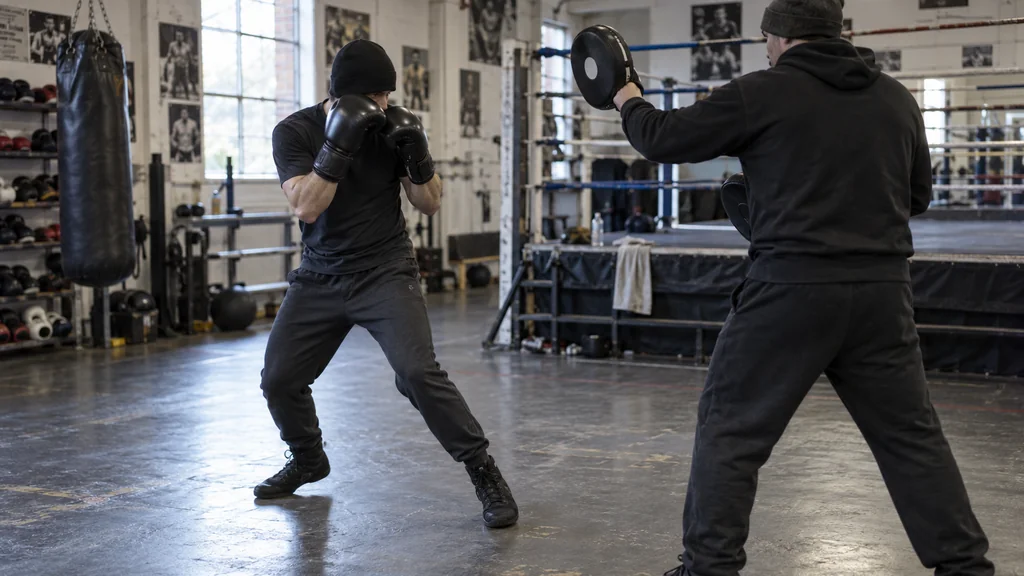
Work with focus mitts or a trusted partner at a technical pace. The feeding boxer should show a clear, slow hook line. No hard contact, no surprise shots and no contest over who can react faster.
Round one: see the cue and cover
Partner A stands at controlled middle range and shows a slow rear-hook line with a mitt or gloved hand. Partner B raises the glove on the threatened side, keeps the other glove near the cheek and freezes for one count.
Check the end position before repeating. Can you see the partner? Are your feet still staggered? Has the elbow stayed near enough to protect the ribs? If not, make the cue slower and the guard movement smaller.
Round two: cover, then leave the line
Use the same hook cue, but now add one short exit after the cover. Partner B blocks or covers, then takes a measured step back or to the safe side chosen by the coach. Finish in stance with both gloves back in front of the face.
Do not jump backwards. The aim is to make enough space for a new decision, not to run across the gym. Pause after each repetition and check whether you could throw a jab from the final position without reaching.
Round three: choose the finish
Partner A now shows either the rear-hook cue, a straight mitt, or no punch. Partner B responds only to what is shown.
Against the hook, cover and exit. Against the straight line, use the simpler defence the coach has chosen. If no cue appears, stay relaxed and do not perform a defence early. This is the point where the drill becomes boxing rather than a fixed routine.
Counter only after the guard has done its job
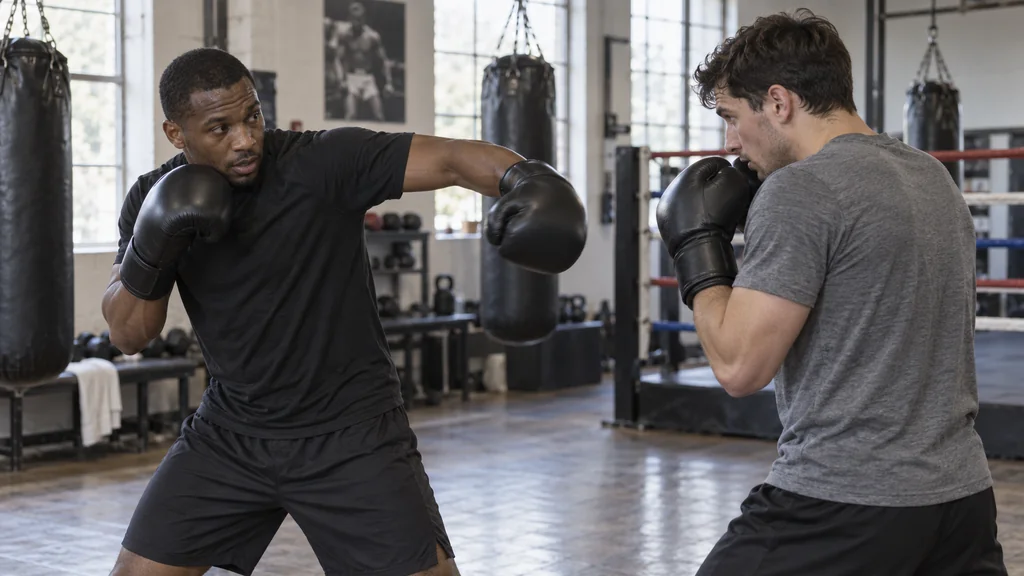
A hook that has missed or landed on a compact guard can leave a brief opening. It does not guarantee a counter.
If the other boxer is still close, their free hand may be ready. If your cover has left you square, the best answer may be to reset. If they have stepped away, chasing them with a long counter turns a good defence into a reach.
Start with a simple rule: cover, see, then decide. A light jab to a coach-held mitt can be useful when the range has opened. A short, controlled reply may be there when both feet are settled. Often, the right choice is no counter at all.
For the general defensive position, read how to block hooks in boxing. If the exchange has already become crowded, how to defend an uppercut explains why elbows, posture and a calm exit matter as much as the gloves. For the attacking version of the punch, our rear hook after a roll drill shows why a rear hook needs a genuine range and base underneath it.
Four mistakes to correct early
The first is crossing both gloves over the face and leaving the middle open. Cover the side, but keep the other glove ready.
The second is bending at the waist. Your knees can soften, but your eyes need to stay up and your head needs to remain between your feet. A fold forward can turn one looping punch into an easier uppercut.
The third is trying to block from too far away. If the hook is landing beyond the edge of your guard, the distance was wrong before the block began. Take the range with your feet rather than sending one arm after a punch.
The fourth is forcing a counter because the drill has trained one. Your defence is successful when you are still balanced and protected. A punch only follows when the target, distance and stance agree.
For adults in Kidbrooke, Greenwich and nearby, our Recreational Adults boxing classes use pads and controlled partner work to build guard, distance and decision-making before anyone needs hard sparring.
The coaching cue is simple: see the shoulder, close the side, then leave in stance.
H&G Team
Writer at Honour & Glory Boxing Club, a community boxing gym in Kidbrooke, South East London.
KEEP READING
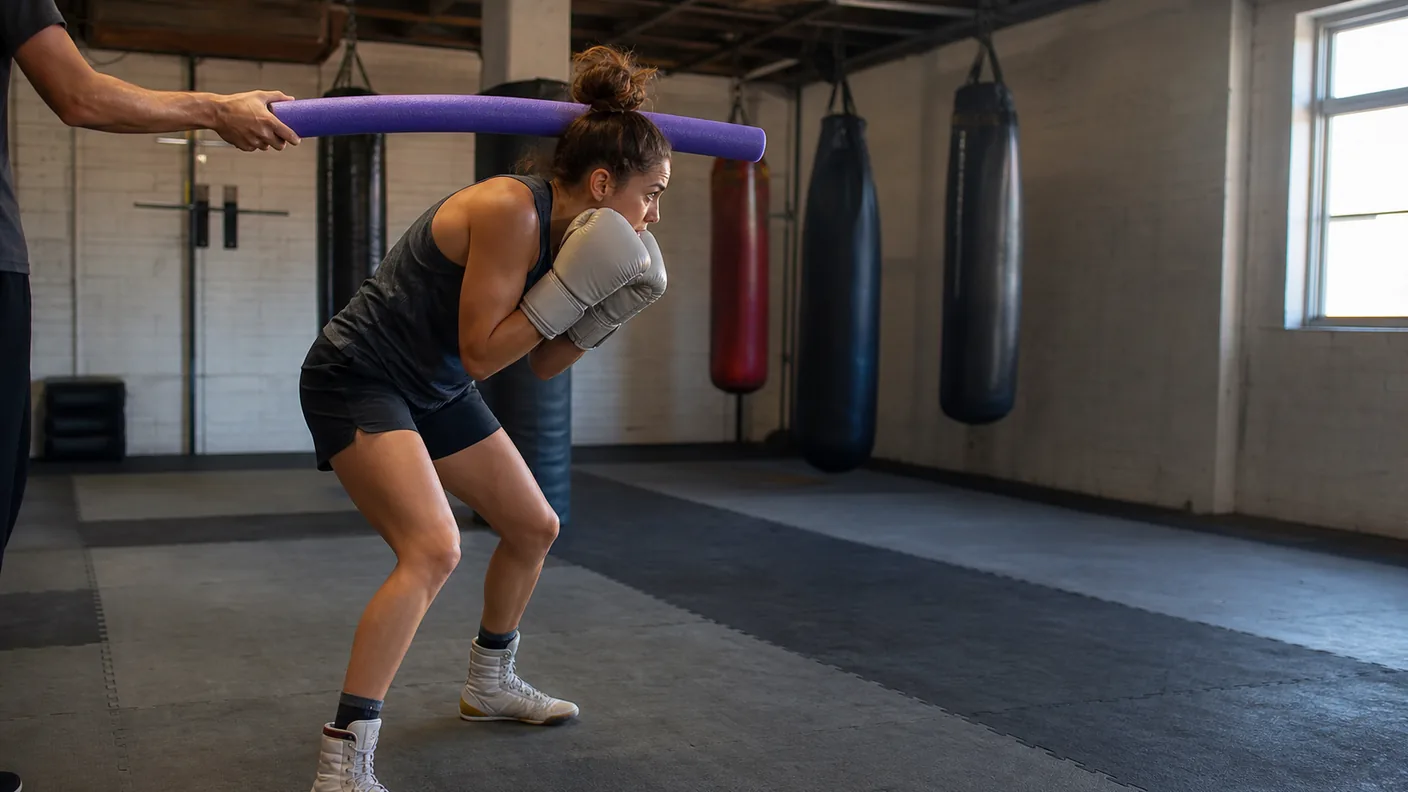
Rear Hook After a Roll: A Boxing Drill
Use a compact roll to load a short rear hook without forcing the punch, losing your stance or leaving your guard behind.
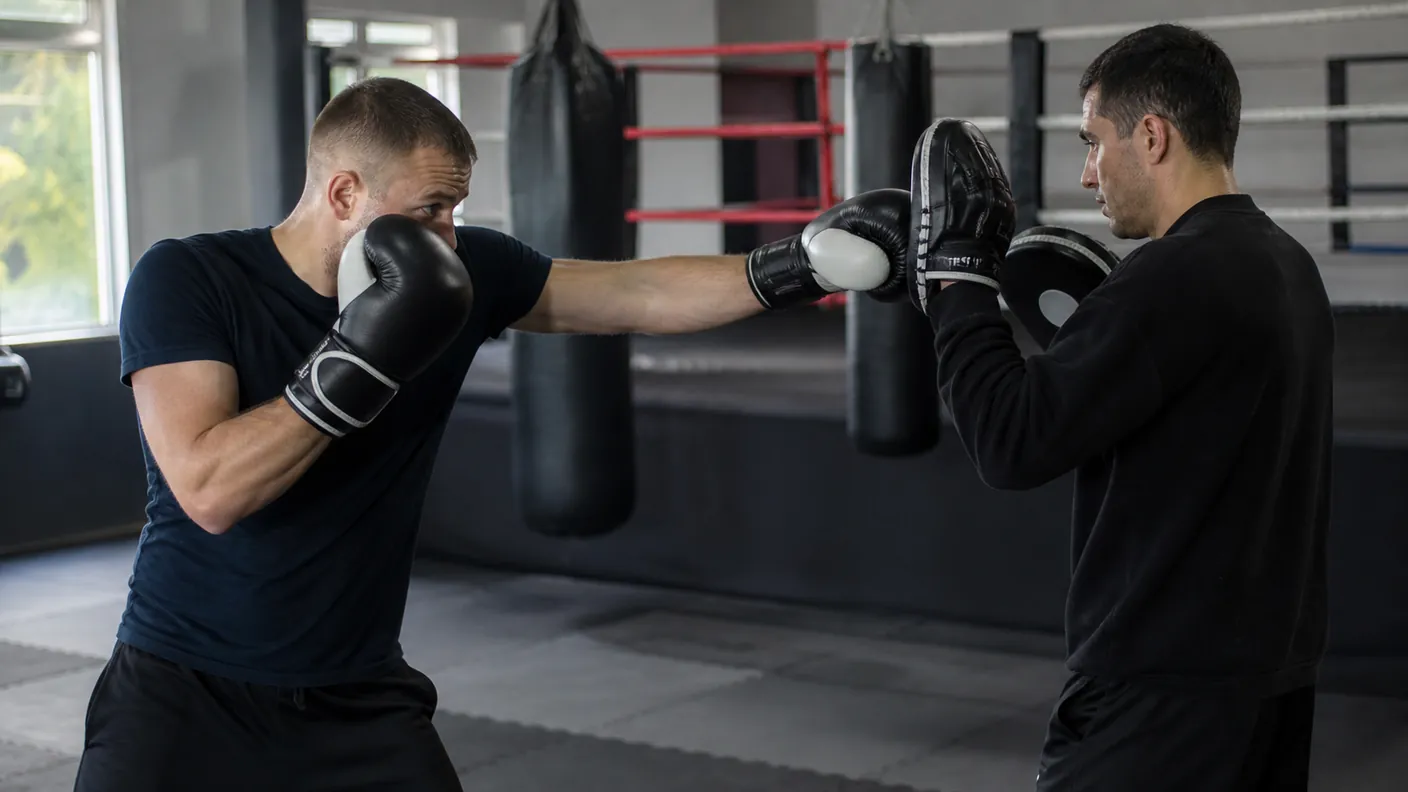
Rear-Hand Touch Before a Lead Hook
Use a light rear-hand touch to occupy the guard before a compact lead hook, without forcing power from the wrong position.
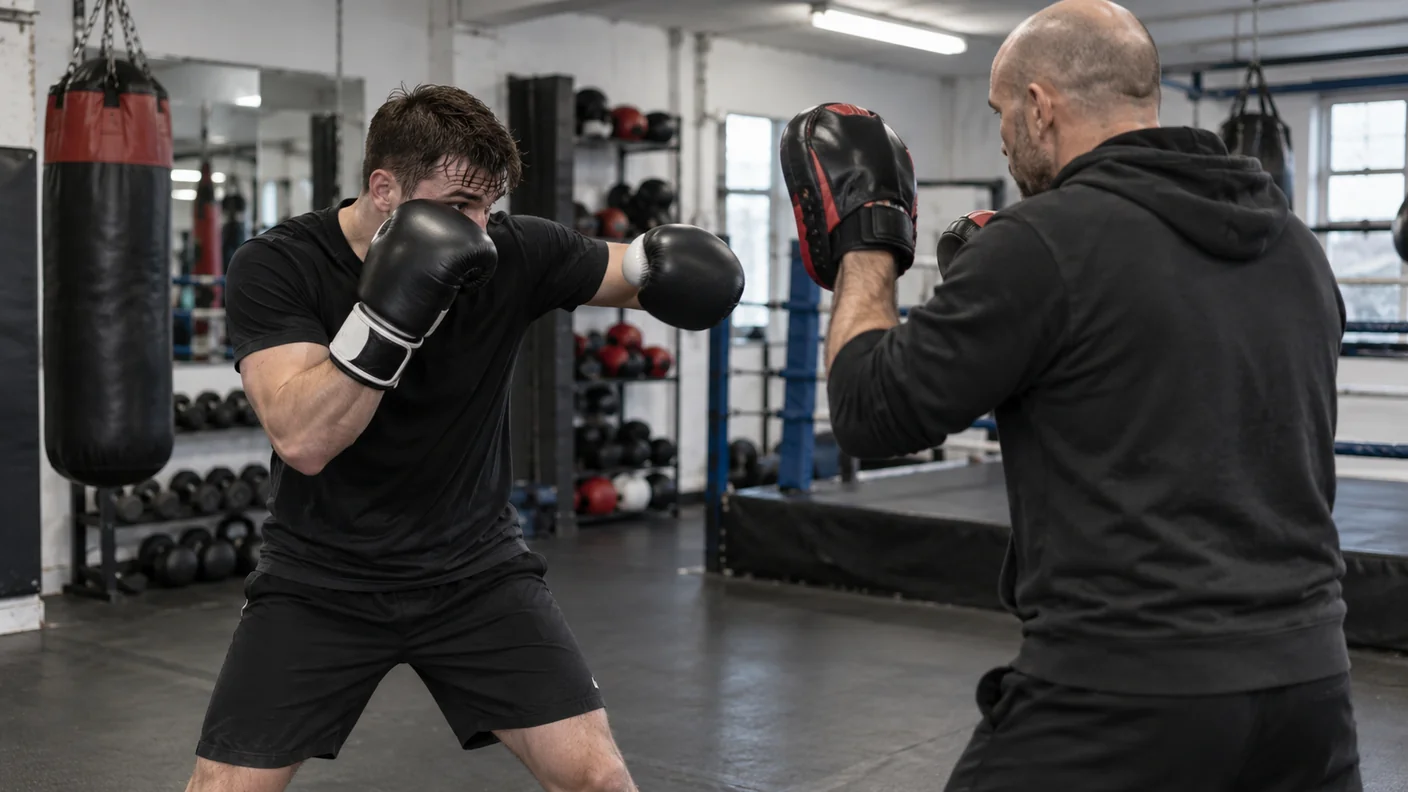
High Guard Block to Lead Hook: Boxing Counter
Use a compact high guard to block a straight line, then return with a short lead hook only when your stance and range are ready.
Was this page helpful?
It takes one tap, and it genuinely helps.
Choose your next step
Turn this article into the right action
Some readers are ready to book. Some need the class route first. Pick the route that matches what you actually want.