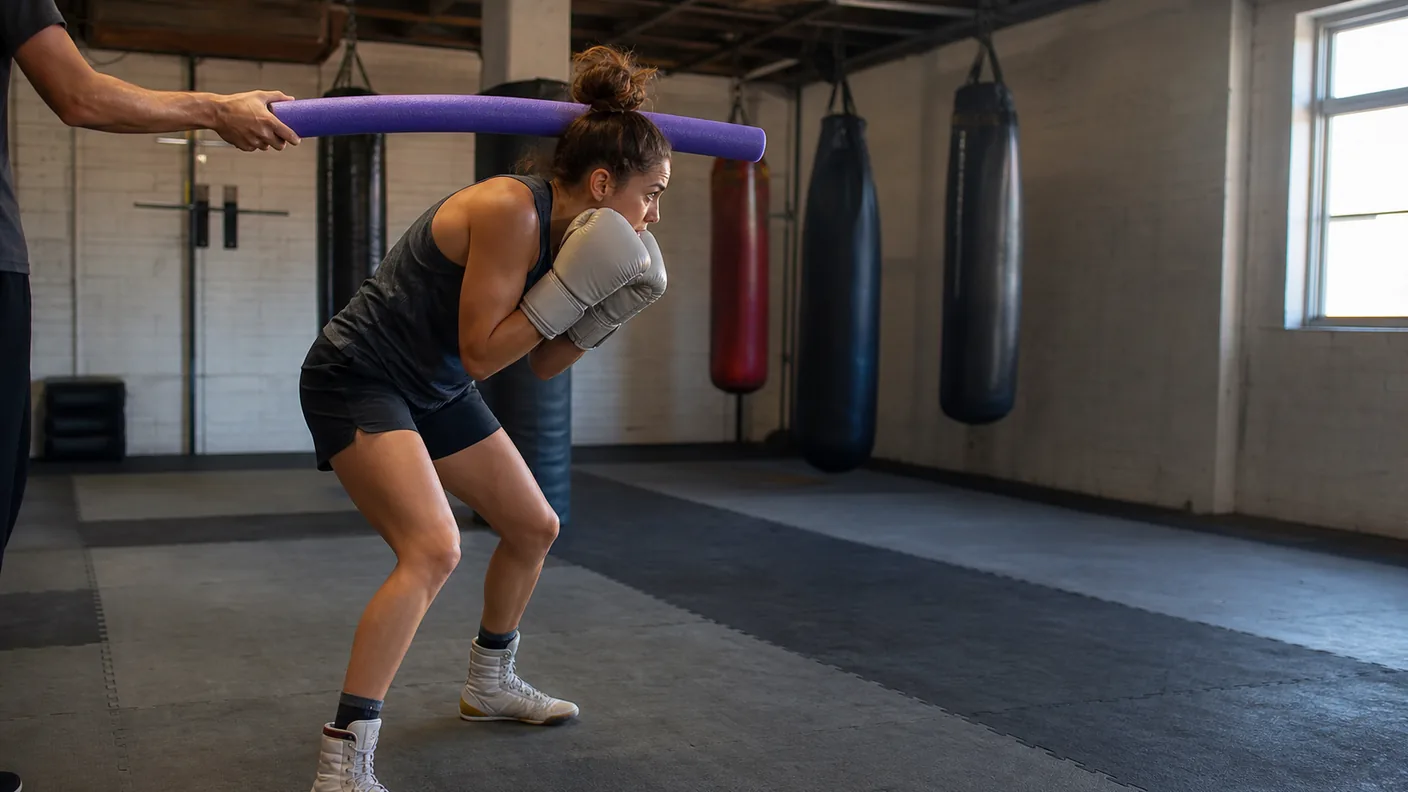
The rear hook can feel awkward because it is easy to ask it to do too much.
A boxer sees an opening on the far side, swings the back hand around and hopes the glove arrives with enough force to matter. The shoulder races ahead, the feet stop, and the punch either falls short or leaves the boxer square in front of a return shot.
There is a better way to learn the action. A compact roll to the rear side can leave your weight in a position where a short rear hook has a base underneath it. The roll is not there to make the punch dramatic. It is there to make the next movement less forced.
Watch the short example below, then use the drill at a slow pace with a coach, a focus mitt or a heavy bag.
A rear hook needs an honest starting point
For an orthodox boxer, the rear hook is the right hand. For a southpaw, it is the left. It travels from the hand furthest from the other boxer, so it normally needs more time and a clearer position than a lead hook.
That does not mean you need a huge wind-up. It means the rear hip, rear foot and torso need to be ready to turn together. If your weight is stranded over the lead knee, the rear hook often becomes an arm swing. If you pull the hand back first, you show the other boxer exactly what is coming.
A rear-side roll gives you a quieter starting point. You move the head off a coached hook line with the knees and hips, keep the back long and let the body finish slightly more over the rear side. From there, the rear hip has somewhere useful to turn from.
The key is small. A roll that drops your eyes below the target or takes your chest too far forward has not loaded a punch. It has only made you late.
Roll with the legs, not the waist
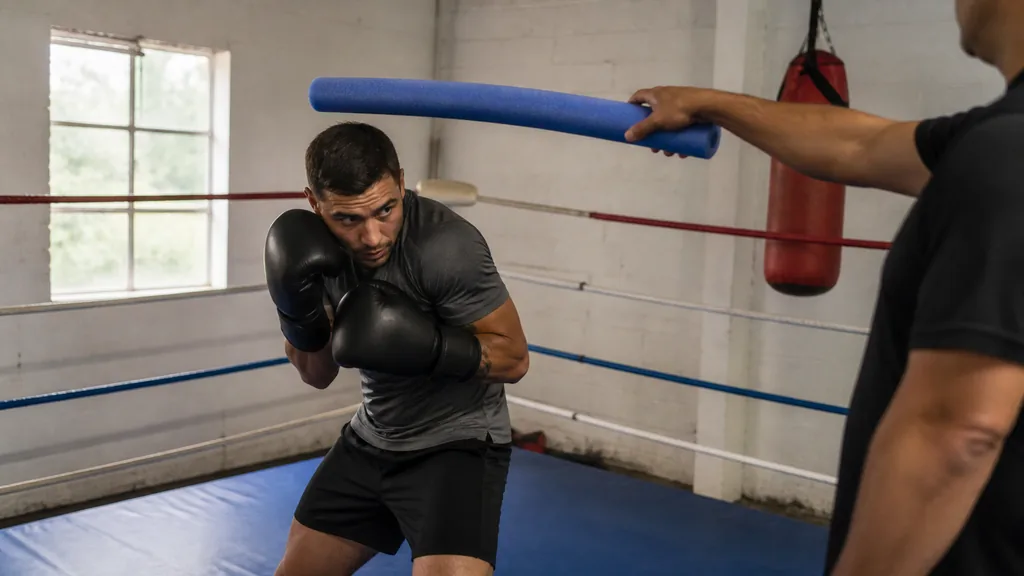
Start in a normal stance with the chin down, knees soft and both gloves available. A coach or partner shows a slow, clear hook-shaped line at a safe distance. Your job is to move underneath that line without folding towards the floor.
The first part is a small slip. The knees bend a little, the hips begin to turn and the head moves only far enough to leave the line. The second part is the return. Let the legs carry you around and back into stance rather than trying to pull yourself up with the shoulders.
A review of boxing biomechanics describes effective punching as a connected action across the lower body, trunk and arms. That is a useful test here. If the feet, hips and upper body disagree after the roll, the rear hook will arrive as a separate effort rather than as the next part of the movement.
Freeze after each roll before adding the hook. Ask three plain questions:
- Can you still see the target?
- Is the lead glove near the cheek?
- Could you turn the rear hip without first rearranging your feet?
If the answer to any of those is no, make the roll smaller. Do not try to repair it by swinging the rear hand harder.
Add a short rear hook only when the range fits
Once the roll is steady, put a single focus mitt or a clear bag target at close-to-mid range. The rear hook should travel in a short curve from a bent elbow. Let the rear hip turn, allow the rear foot to assist the rotation and keep the lead glove close to the face.
Do not chase a target that is too far away. The rear hook is slower than the lead hook and much easier to see when it has to travel across open space. If your elbow straightens or your head reaches forward, you are asking the wrong punch to solve a range problem. Step, jab or reset instead.
The England Boxing coaching handbook puts balanced stance, controlled progression and clear targets at the centre of technical learning. That is exactly the standard for this drill. Use a target that lets the boxer keep the elbow bent and the stance usable. A loud punch on a distant bag is not proof that the movement works.
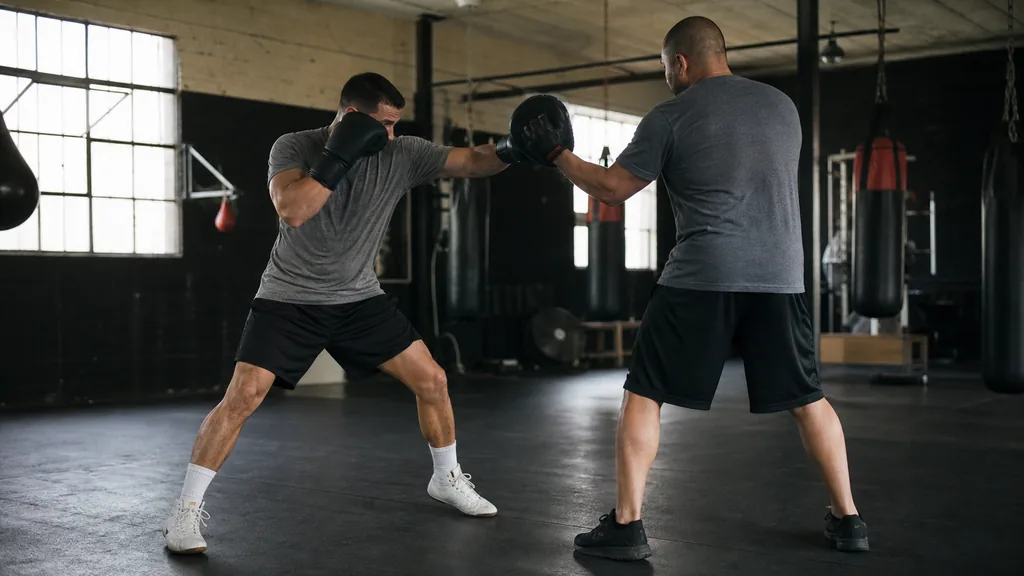
A useful cue is: roll, settle, turn, return.
The pause after the roll is important at first. It makes the difference between a rear hook that comes from a real base and one that is thrown while the boxer is still trying to stand up. Once the shape is reliable, the pause can become shorter. It should not disappear because the drill has become faster.
A three-round drill for the pattern
Keep all partner work light and agreed. This is a technical exercise, not an invitation to trade hooks.
Round one: rear-side roll and freeze
Work for one minute with no punch. The coach gives a slow hook-shaped cue. Roll to the rear side, hold the finish for one beat and return to stance.
The coach watches the eyes, the lead glove and the feet. If the boxer bends at the waist or drifts too far forward, reduce the depth of the roll. The aim is not to get low. It is to stay useful.
Round two: roll and touch the mitt
Now add one rear-hook target after the roll. Roll first, settle for a beat, then touch the mitt at light pace with a compact rear hook. Bring the hand back to guard before resetting.
Do not add power. The question is whether the roll has made the hook easier to throw with balance. If the boxer has to pull the rear hand back or spin the rear foot wildly, remove the punch and improve the first round.
Round three: choose the finish
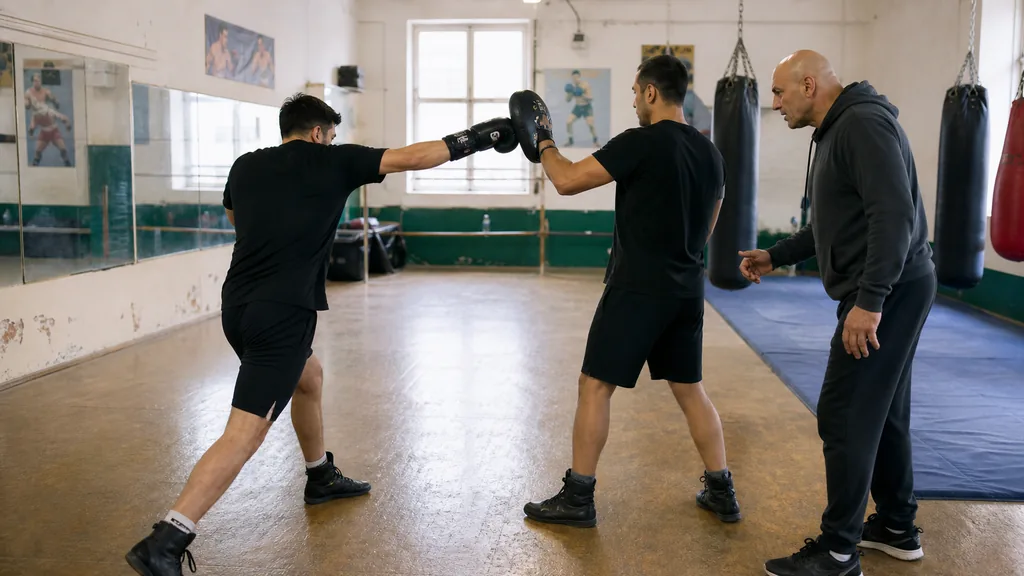
In the final round, the coach can offer the rear-hook mitt after some rolls and withhold it after others. If the mitt is there at an honest range, touch it and bring the glove home. If it is not, recover to guard, take a small step out or reset.
That final choice matters. A drill should build a position, not programme a boxer to throw a rear hook whenever they have moved their head. The right answer depends on range, balance and what the other person is showing.
Do not confuse the roll with a shortcut to power
The roll can help the rear hook feel more connected, but it does not turn every rear hook into a hard punch. Power still depends on range, timing, target position and the ability to keep the rest of the body organised.
It also does not mean that a rear hook is always the correct answer after a roll. You may be too close for a proper hook. The other boxer may have covered. The range may have opened up. In those moments, a guard, a short step, a jab or no punch at all can be the smarter finish.
Our guide to rolling under punches without folding is useful if the head movement itself still feels loose. For the wider hook mechanics, read how to throw a hook in boxing. This drill sits between those two skills: it teaches how one clean defensive movement can leave a better platform for one clean punch.
Four mistakes that spoil the drill
The first is bowing forward. If your eyes are looking at the floor, the roll has stopped being defensive movement and started becoming a bad habit.
The second is loading the rear hand with a big pullback. The roll and body position should prepare the hook. A visible arm load tells the other boxer what to expect.
The third is throwing at long range. A rear hook needs an honest pocket. If the target is far away, do not stretch your neck and arm to create one.
The fourth is forgetting the lead glove. The rear hand is working, so the lead hand needs to stay available. A rear hook that lands while leaving the chin unprotected is still poor boxing.
The coaching cue
Roll small, turn from the floor, bring the glove home.
A good rear hook should not feel like a desperate reach from the far side. It should come from a position you have built, travel on a compact line and leave you ready to defend, step or make the next decision.
If you are in Kidbrooke, Greenwich or nearby, our Recreational Adults boxing classes use pads, bags and controlled partner drills to make defensive movement and punching work together without rushing either skill.
H&G Team
Writer at Honour & Glory Boxing Club, a community boxing gym in Kidbrooke, South East London.
KEEP READING
How to Defend a Rear Hook in Boxing
Use a compact guard, settled feet and a clear exit to defend a rear hook without leaning away or forcing a counter.
Shoulder Roll to Rear Uppercut: Boxing Drill
Learn when a compact shoulder roll can create a rear uppercut, with a coached drill that keeps range, guard and balance in view.
Rear-Hand Touch Before a Lead Hook
Use a light rear-hand touch to occupy the guard before a compact lead hook, without forcing power from the wrong position.
Was this page helpful?
It takes one tap, and it genuinely helps.
Choose your next step
Turn this article into the right action
Some readers are ready to book. Some need the class route first. Pick the route that matches what you actually want.