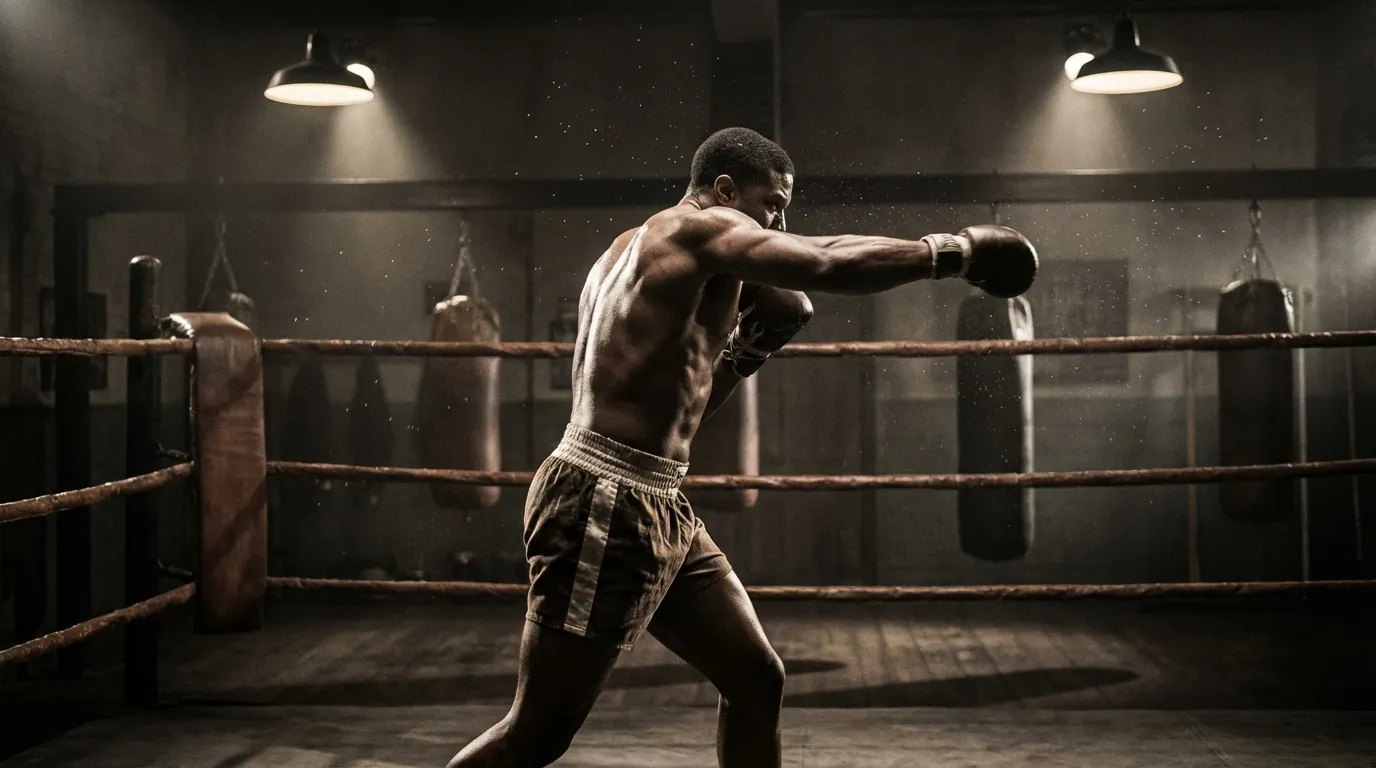
The hook is probably the most misunderstood punch in boxing. Not because it is complicated, but because it looks deceptively simple. You watch someone land a clean left hook and think "that is just swinging your arm sideways." Then you try it, and either it has no power, or you keep getting countered the moment you throw it.
Learning how to throw a hook in boxing is one of the first real technical hurdles for beginners. The jab you can mostly figure out. The cross follows naturally. The hook requires you to understand something that nobody tells you clearly enough: this punch starts in your feet, not your shoulder.
Once that clicks, everything else follows.
Why the hook matters
Most knockouts in boxing come from hooks, not straight punches. There is a reason for that. A jab or cross hits the head from the front - the brain absorbs the impact more or less directly. A hook arrives from the side. The rotational force causes the brain to move inside the skull differently, which is why a well-timed hook to the jaw can stop a fight that a dozen straight shots could not.
You do not need to be a heavyweight to benefit from this. At every weight, at every level, a boxer who can land a sharp lead hook is harder to deal with than one who cannot. It creates angles, disrupts rhythm, and catches people when their guard is set for something else.
Lead hook vs rear hook
There are two versions. The lead hook (left hook for orthodox fighters) is the one to learn first. It is closer to your opponent, quicker to land, and fits naturally into most combinations. The rear hook carries more raw power but is slower and easier to see coming.
This guide focuses on the lead hook. The mechanics translate to the rear version, but the lead is where you build the foundation.
How to throw a hook in boxing: step by step
Start from your stance. Feet shoulder-width apart, knees soft, weight centred. Hands up at your chin. Nothing about your guard changes until the punch begins.
Set your arm position. Lift your lead arm so the elbow is roughly level with your shoulder. The forearm is parallel to the floor, fist in line with the elbow, arm bent at about 90 degrees. This is your launch position. If you are lifting and cocking the arm backward to "load up," stop. That is telegraphing the punch and it costs you more than the extra power is worth.
The pivot - this is where the power lives. As the punch fires, pivot on the ball of your lead foot, rotating your foot inward. Think of it as stubbing out a cigarette. That foot rotation drives your hip to turn toward the target. Your hip leads, your shoulder follows, your fist arrives last. The chain from the ground through your legs, hips, core, and shoulder is where the punch gets its power. Without the pivot, you are throwing an arm punch. That is maybe 20% of what a proper hook delivers (source). The Frontiers in Sports and Active Living biomechanics study confirms this - elite boxers use significantly greater hip rotation than junior boxers when throwing hooks, which is the technical difference that separates effective power punching from arm-driven shots.
Keep your rear hand glued up. Your right hand does not move. It stays at your chin while the left fires. This is where most beginners get caught out - they drop the rear hand to get more rotation, and their coach (or sparring partner) watches the jaw open up. The rear hand is your protection while you are vulnerable mid-punch.
Snap back immediately. The moment the hook lands, bring your lead hand back to your guard. Do not leave it hanging. The punch is finished the instant it makes contact. Anything after that is exposure.

Common mistakes beginners make
The windmill. Winding the arm back in a big arc before throwing. It feels like you are generating power. You are actually telling your opponent the punch is coming and giving them time to move. Fire the hook from your guard, not from behind your ear.
The wide loop. The hook should travel in a tight, horizontal path. If your elbow drops below your shoulder as you punch, the arc widens and the punch slows down. You end up slapping more than hooking. Keep the elbow up, keep the path compact.
Dropping the rear hand. Already mentioned. Worth repeating, because at H&G we see this at almost every pad session with newer boxers. It is not a minor mistake - it is the one that gets people clipped with counters when they first start sparring. Drill the habit of keeping that hand up until it is automatic.
Wrong range. The hook is a close-to-mid-range punch. Throwing it from too far out means you are fully extended before contact, which removes all the rotation from the equation. You are also reaching into space, which puts you off-balance. If the distance is not right, do not throw it. Move your feet first.
No foot pivot. If you are throwing the hook but not turning your lead foot, you have cut the power chain off at the source. The pivot is not optional. Some people treat it as a stylistic thing they will add later. It is not. It is where the punch begins.
Using the hook in combinations
The hook on its own lands now and then, but it is most effective as part of a sequence. The jab-cross-hook (1-2-3) is one of the most used combinations in boxing for good reason: the jab and cross bring the guard forward or push it to the side, and the hook arrives from an angle that is harder to pick up in time.
Other situations where the lead hook fits well:
- After slipping a jab. Step outside the incoming punch and return immediately with a lead hook to the exposed jaw.
- As a counter when someone walks onto your punches. The hook arriving simultaneously with their attack can stop them mid-combination.
- To the body. Same mechanics, but you drop your level slightly and aim for the ribs. A left hook to the liver is one of the more convincing punches in boxing. Keep the hip rotation the same.
The numbering: lead hook is 3, rear hook is 4. When coaches call combinations in pads or on the bag, knowing the numbers speeds everything up. A 1-2-3 at H&G means jab-cross-lead hook.
How to drill it
Start in front of the mirror. No bag, no partner. Throw the hook in slow motion and watch your foot, your hip, and your guard hand. Can you see the pivot? Can you see the hip rotating? Is your right hand staying up? Go through ten slow reps before you speed anything up.
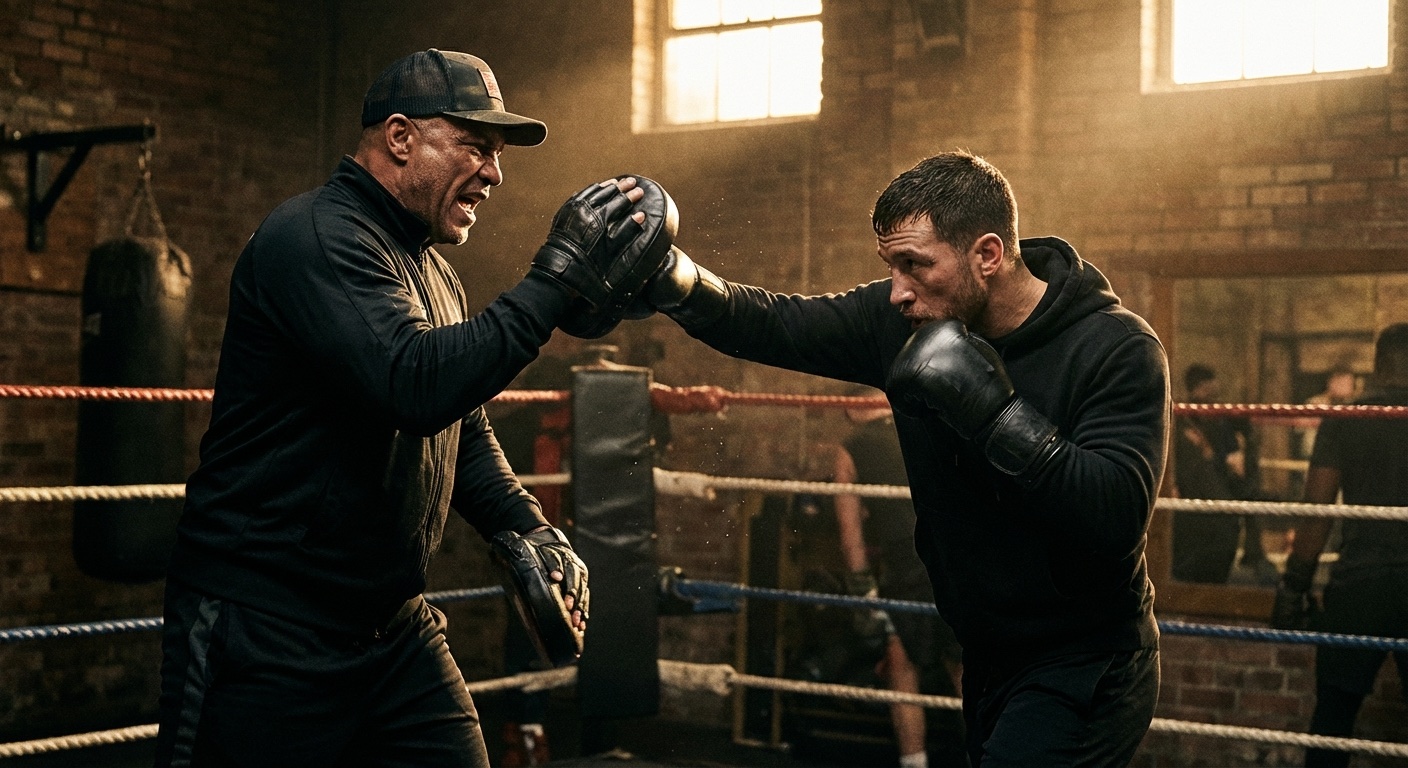
On the pads, your coach will put the hook in context - calling it at the right moment in a combination, which is more useful than throwing it in isolation. It is one thing to drill a hook alone, another to land it naturally off the back of a jab and cross.
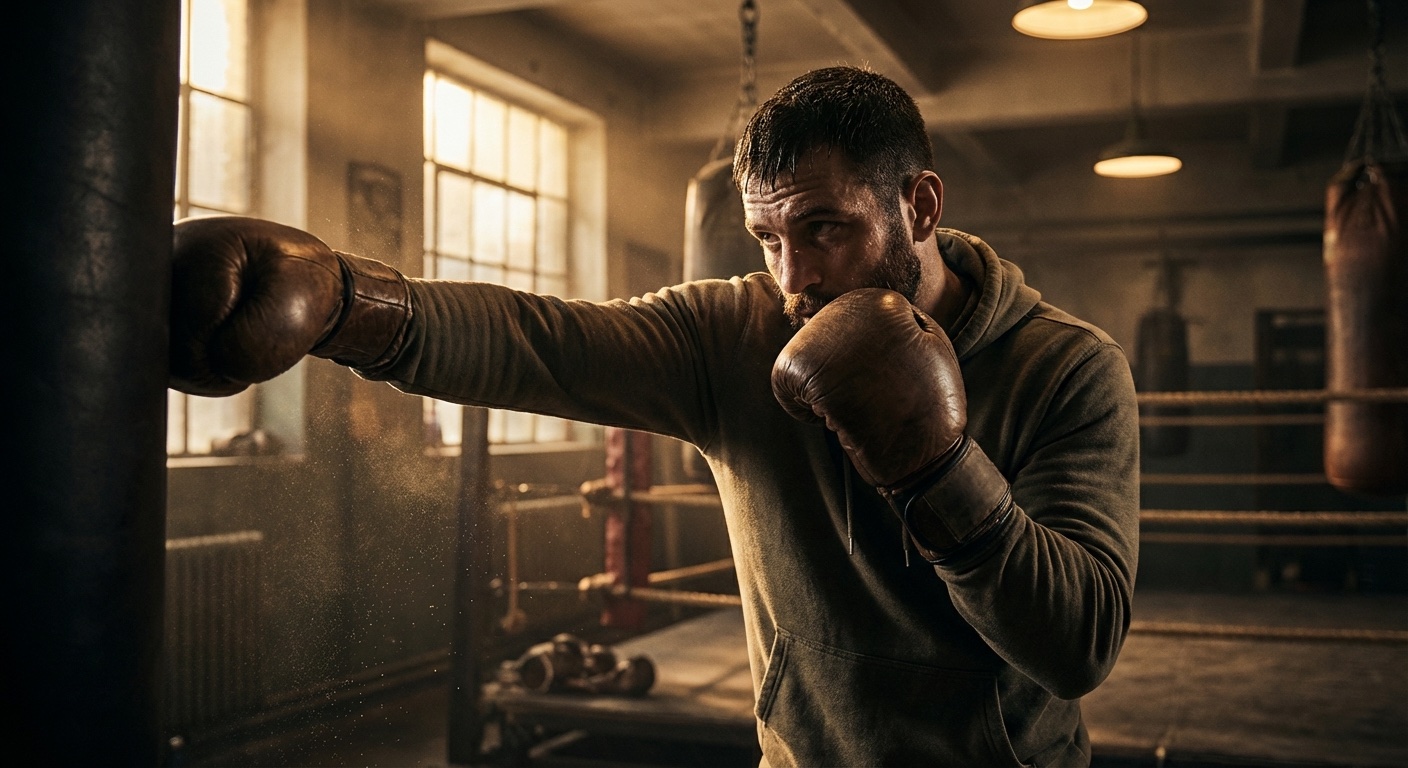
On the bag, start with the 1-2-3. Jab, cross, lead hook. Get the rhythm. Then vary the target - sometimes head, sometimes body. Focus on snapping the hand back to guard after every hook rather than leaving the arm extended.
In sparring, keep the rear hand up. Watch for counters. The hook leaves you open for a split second, and experienced boxers will make you pay for it if your guard slips. Light contact is fine at first - you are learning the timing, not trying to land hard.
The hook is one of those punches that feels awkward for a few sessions, then suddenly makes sense. When it starts to come together, you will feel the difference between an arm punch and a body-driven one. That snap is worth working toward.
A note on patience
None of this happens in one session. The mechanics take time to build into muscle memory. Most people throw a decent jab within a few weeks. A reliable hook takes longer - partly because the pivot is unfamiliar, partly because it is easier to get away with a weak hook than a weak jab, so the bad habits do not get corrected as quickly.
If you are based in Kidbrooke or the wider Greenwich area and want to work on this in person, our beginner sessions at H&G cover all four punches in the early weeks. The hook gets more time than most people expect, because getting it right early makes everything that follows easier to learn.
Put in the reps. Check the pivot. Keep the rear hand up. The rest follows.
H&G Team
Writer at Honour & Glory Boxing Club, a community boxing gym in Kidbrooke, South East London.
Was this page helpful?
It takes one tap, and it genuinely helps.
Choose your next step
Turn this article into the right action
Some readers are ready to book. Some need the class route first. Pick the route that matches what you actually want.