
Best exercise for dentists? Boxing is a strong answer because dentistry is physical in a way outsiders often miss.
A dentist can spend the day leaning, rotating, gripping, concentrating, talking, reassuring and holding awkward positions while trying to do careful work inside a tiny field of view. That is not the same as sitting at a desk, and it is not the same as a normal active job either.
The body is working, but not always in a balanced way. The neck, shoulders, upper back, wrists and hips can all take quiet punishment. The head is busy too. Every appointment needs precision, patience and a calm face, even when the list is running late.
Boxing helps because it gives dentists a different pattern: standing tall, moving the feet, rotating through the hips, using the shoulders properly, breathing under effort and switching attention away from the surgery for a clean hour.
Dental work loads the body unevenly
Dental work often creates physical strain because the position is small, static and repeated.
A 2023 systematic review on occupational ergonomics and musculoskeletal disorders among dentists found that dental work is closely linked with musculoskeletal problems, especially where posture and work setup are poor (occupational ergonomics review). Another systematic review on neck pain in dentists looked at occupational and non-occupational risk factors, which tells you the issue is serious enough to be studied as its own pattern (neck pain review).
That fits what most dentists already know. You may not feel like you have trained after work, but your body has been loaded. The difference is that work load is often narrow: neck forward, shoulders rounded, hands busy, hips still, feet planted.
Boxing is useful because it asks the body to organise itself again. Stance brings the feet back into the job. Punching brings the hips and trunk into the job. Pad work brings the eyes, hands and breath into one task without the same clinical pressure.

Boxing gives dentists movement without another static plan
Dentists usually do not need another plan that asks them to hold still and think harder.
A gym routine can work, but many busy professionals turn it into another list: choose the machines, count the sets, check the app, wonder whether the session is good enough, then go home feeling as if they have completed one more admin task.
A coached boxing class is different. The session tells you what to do. You warm up, learn the focus, work in rounds, take coaching, recover, then finish. There is enough structure to remove guesswork, and enough skill to keep your attention.
That matters after a day of exact work. Boxing lets the dentist stop being careful in the same way. You still train safely. You still listen. But you get to move with more freedom and more force than the job allows.
The NHS advises adults to aim for at least 150 minutes of moderate activity each week, or 75 minutes of vigorous activity, plus strengthening work on two days (NHS adult activity guidance). A good boxing class can help because it combines conditioning, strength, coordination and skill in one coached session.
The stress is not only physical
Dentistry can be mentally demanding because it mixes precision with people pressure.
You are dealing with pain, anxiety, expectations, complaints, time pressure and fine technical work. That is a hard combination. A 2023 systematic review and meta-analysis on professional burnout among dentists reported burnout as a significant concern in the profession (dentist burnout review).
Boxing will not fix workload, staffing, regulation or difficult patients. It is not therapy. But it gives pressure somewhere controlled to go.
The bag can take effort. The coach sets the rules. The round has a beginning and an end. That is valuable when work can feel like a chain of small problems with no clean finish.
For a dentist, that clear edge matters. You are not trying to become aggressive. You are trying to unload tension safely and put your attention into something immediate.
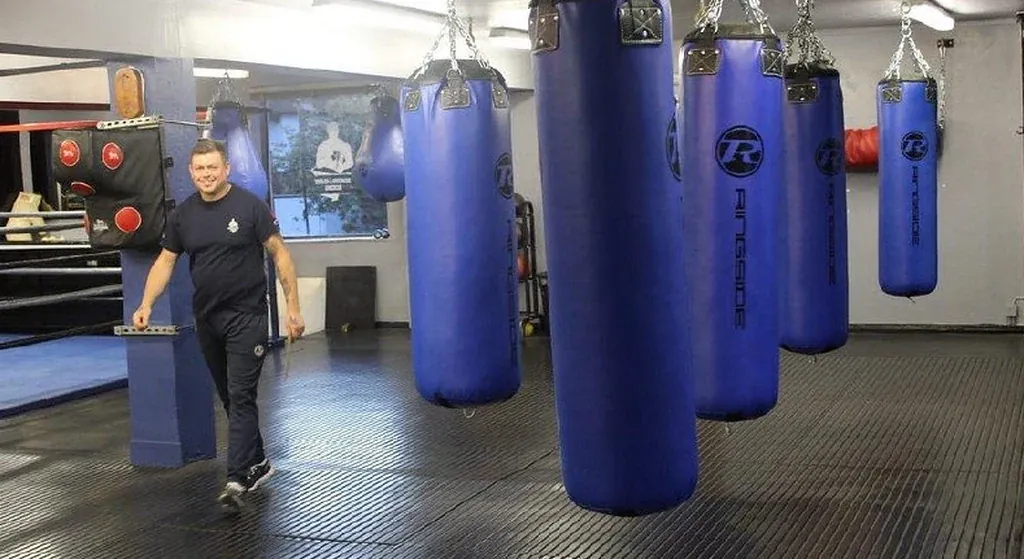
It trains posture through action, not nagging
Dentists do not need another lecture about posture. They need movement that makes better posture useful.
Boxing rewards a balanced stance. If you collapse through the chest, lean from the neck or throw only with the arm, the punch feels weak and the coach will correct it. If you turn from the hips, keep the ribs organised and bring the hand back, the movement improves immediately.
That feedback is one of boxing's strengths. You can feel the difference between a rushed arm punch and a punch that uses the floor, legs and trunk. Over time, that teaches the body a cleaner pattern than simply being told to sit upright.
It also gives the shoulders a better job. Dental work can keep the arms forward and the shoulders rounded. Boxing asks for reach, return, guard, rotation and recovery. The shoulder is not stuck in one small working zone.
If posture and stiffness are your main concern, you may also like our guide to boxing for office workers and desk posture, because the physical problem is different but the training logic overlaps.
Dentists should start with recreational boxing
The right starting point is coached recreational boxing, not sparring.
You do not need to fight. You do not need to arrive fit. You do not need expensive kit before your first session. You need stance, guard, footwork, bag work, pad work, simple conditioning and enough coaching to stop bad habits becoming normal.
Our Adult Recreational boxing classes are built for adults who want proper boxing training without previous experience. If you are based around Greenwich, Blackheath, Kidbrooke, Woolwich or Charlton, the club is close enough for after-work training without turning exercise into another long commute.
Dentists with neck, shoulder, back, wrist or hand pain should be sensible. Get persistent pain checked. Tell the coach what needs managing. A good session can be scaled, but only if the coach knows what state you arrived in.
How to fit boxing around a dental week
Start with one or two sessions per week and let the habit settle before adding more.
Dentistry already asks for concentration. If you attack week one with four classes, a new diet, roadwork and weights, you are likely to make training feel like another burden. Keep the first month simple.
Use this rule:
- On a normal workday, train the class as planned and listen to the coach.
- After a long list, keep the first few rounds technical before chasing intensity.
- If your neck or shoulders are already sore, say so before pad work starts.
- If grip or wrist discomfort is present, wrap properly and avoid proving a point on the heavy bag.
- If sleep has been poor, choose consistency over heroics.
That is not a soft plan. It is a plan that can last.
A dentist who trains steadily for six months will get far more from boxing than the person who does two brutal weeks and then disappears.

What kind of dentist benefits most?
Boxing suits dentists who finish the day stiff, wired or mentally crowded.
It is especially useful if your work gives you a lot of small-motor control but not enough whole-body movement. You already know how to focus. Boxing gives that focus a new job: timing, distance, breathing, footwork and control under fatigue.
It also suits people who dislike ordinary gyms. A boxing class is harder to drift through. You cannot scroll through a round. You cannot do pad work while mentally answering emails. The session pulls you into the room.
If your main worry is getting tired quickly, read why beginners gas out in boxing. If your work pattern is the bigger issue, the boxing for workers guide collects the job-specific series, including nurses, care workers, pharmacists, teachers and other busy adults.
The honest answer
Boxing will not fix a poorly set-up surgery, missed breaks, staff shortages, appointment pressure, weak ergonomics or persistent pain.
It will not replace proper rest, clinical advice, a better chair position, loupes that fit, good footwear or sensible workload management.
But as exercise, boxing fits dentists well. It gives the body a wider movement pattern after narrow clinical positions. It gives stress somewhere contained to go. It gives busy professionals a coached session rather than another self-managed plan.
For dentists who want fitness, posture work, focus and a proper reset after clinic, boxing is worth trying.
H&G Team
Writer at Honour & Glory Boxing Club, a community boxing gym in Kidbrooke, South East London.
KEEP READING
Boxing Fitness for Programmers: When It Fits
Boxing can be a useful training option for programmers when you want coached movement, conditioning and a clear break from work. It is not the only answer, but it can fit well.
Boxing Fitness for Shift Workers: When It Fits
Boxing can be a useful training option for shift workers when you want coached movement, conditioning and a clear break from work. It is not the only answer, but it can fit well.
Boxing For Stress Relief
A practical guide to boxing for stress relief, routine and confidence without treating training as therapy.
Was this page helpful?
It takes one tap, and it genuinely helps.
Choose your next step
Turn this article into the right action
Some readers are ready to book. Some need the class route first. Pick the route that matches what you actually want.