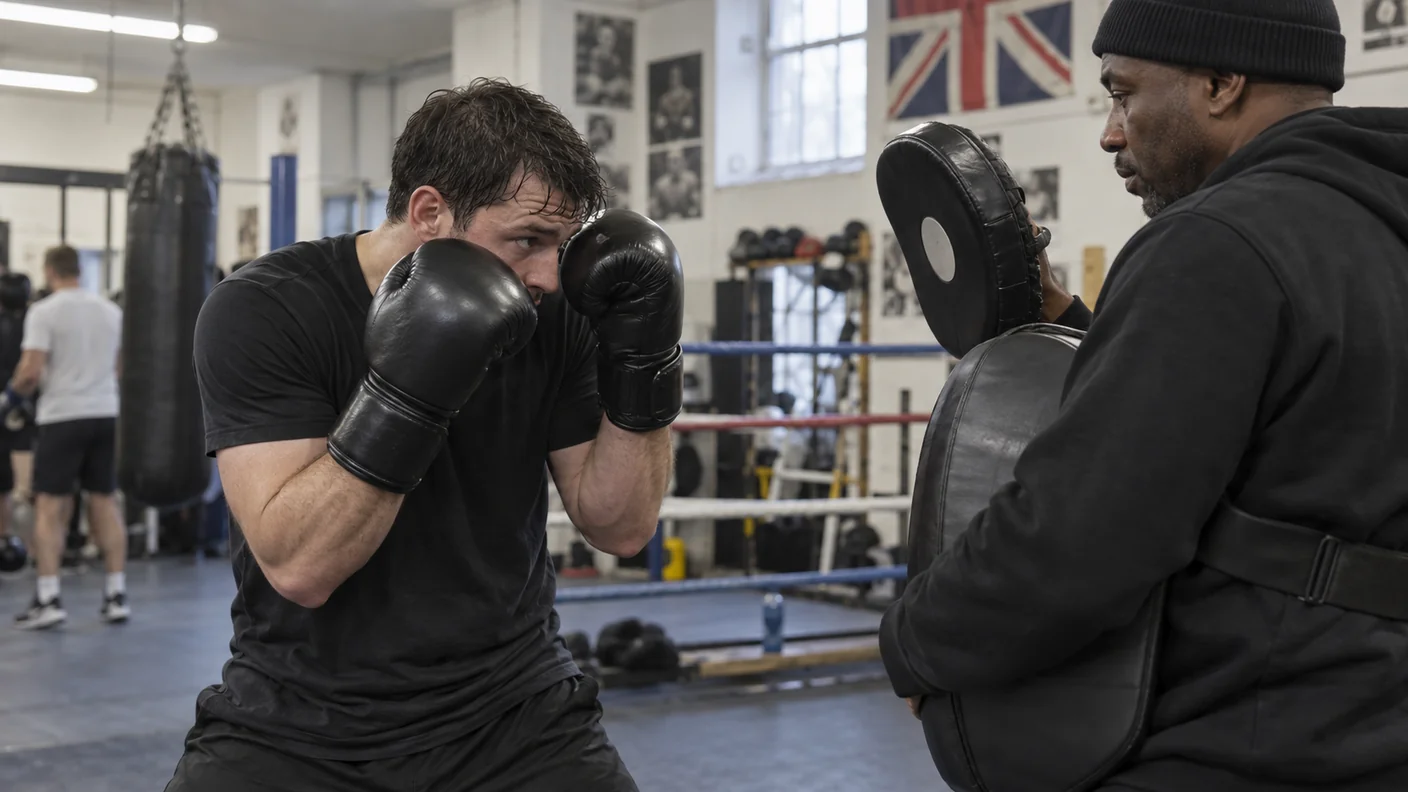
An uppercut becomes dangerous when the range has already become crowded. The other boxer is close enough that a long jab will not stop them, the elbows drift out, and the chin starts sitting above the gloves.
The answer is not to panic and fold forward. It is to recognise the range early, keep the guard compact and make one useful decision before the next punch arrives. Sometimes that decision is a cover. Sometimes it is a short step away. Sometimes it is a reset without a counter at all.
The video below is a useful visual reference for how different guard shapes behave at close range. Watch the relationship between the elbows, forearms and chin, then use the drills below at technical pace with a coach.
Do not duck into the uppercut
The most common bad answer to pressure is bending forward at the waist. A boxer sees hooks coming, drops their eyes, lets the hips drift back and puts their head directly above the other person's punch line.
That can make a hook miss. It can also put the chin in the path of an uppercut. A better duck comes from the knees, keeps the back organised and leaves the eyes on the person in front of you. England Boxing's coaching handbook makes the same point when it warns against bending at the waist and ducking into an uppercut.
This is not an instruction to stop moving your head. It is a reminder that each defensive movement needs a job. If the other boxer is throwing a wide hook from outside, a small roll may be available. If they are already close, upright enough to throw up the middle, a dramatic dip can make the situation worse.
Keep your head between your feet. Bend the knees only as much as you need. If you cannot see the chest and shoulders in front of you, you have given up the information that tells you what is coming next.
Our guide to blocking hooks in boxing is useful here. A hook block should protect the side of the head without making the ribs loose or inviting you to collapse forward.
Build the cover from the elbows up
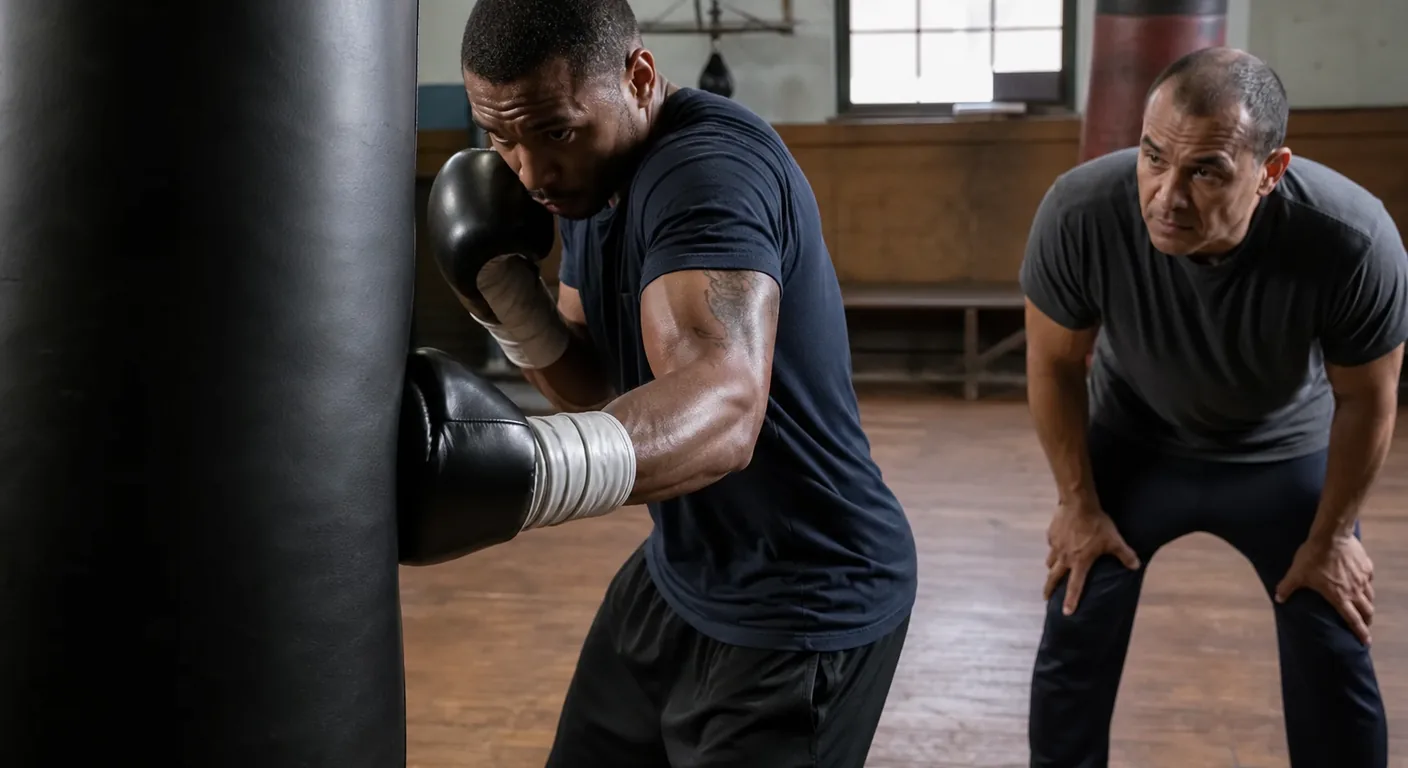
At close range, the guard has to do more than hide the cheeks. The elbows need to stay near the ribs, the forearms need to be ready to close the centre, and both gloves need to remain close enough to protect the chin.
That does not mean squeezing into a rigid shell. A guard that is too tight can make you freeze. The aim is a compact working position: hands near the cheeks, chin down, elbows organised and knees soft enough that you can still take a step.
An uppercut travels through the middle or up an available side. If one elbow floats wide as you look for a hook, the body line opens. If both gloves wander high while the hips are close, the path underneath can open. The cover has to be connected from glove to forearm to elbow.
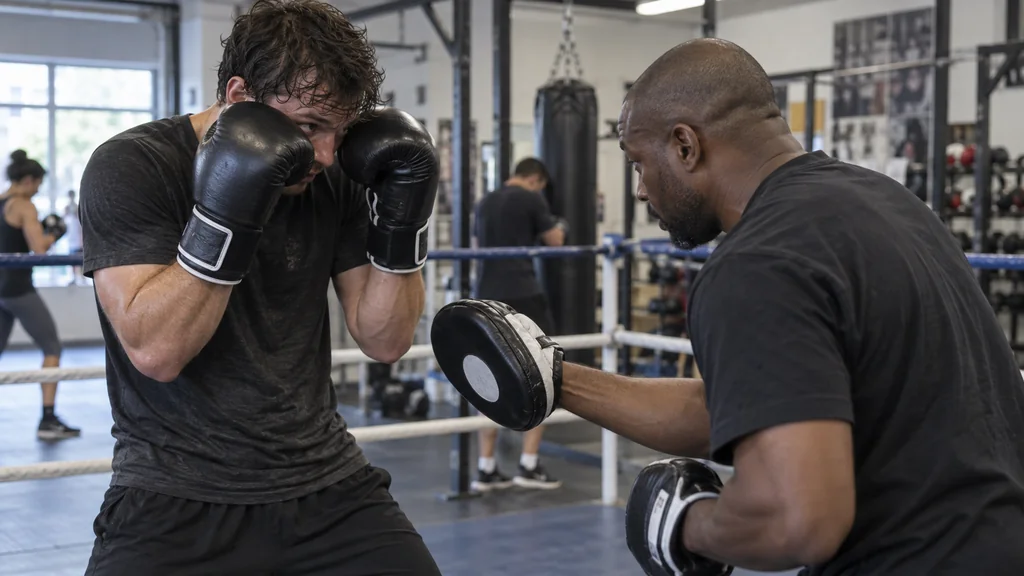
A biomechanics study of the cross, hook and uppercut describes the uppercut as a whole-body movement, not an arm flick. That is why trying to swat it with one lazy hand is unreliable. You need a guard position that is already there before the punch begins travelling.
The simplest coaching cue is: elbows in, eyes up, then move your feet when there is room.
Make space before you look for a counter
A good defence does not always finish with a punch. This matters most against an uppercut because it is usually thrown when the distance has already collapsed.
If a partner has crowded you after a jab-cross, do not automatically try to answer with a long rear hand. That punch may have no room to travel, and you may be square enough that the next hook or uppercut finds you first.
Bring the guard together for the first beat, then make space with a short step back or an angle out if the floor is clear. The step needs to be small enough that your stance survives. If you take a giant leap, you may avoid one punch but lose the range for everything that follows.
There are times when the right answer is to cover and wait for a coach or referee reset in supervised work. There is no prize for trying to produce a stylish counter from a crowded, unbalanced position. Good boxing is often quiet: protect the target, regain a usable distance, then start again.
Our guide to choosing the right punch for boxing range explains why a punch that works at long range can become a liability when shoulders and elbows are already touching.
A three-round uppercut-defence drill
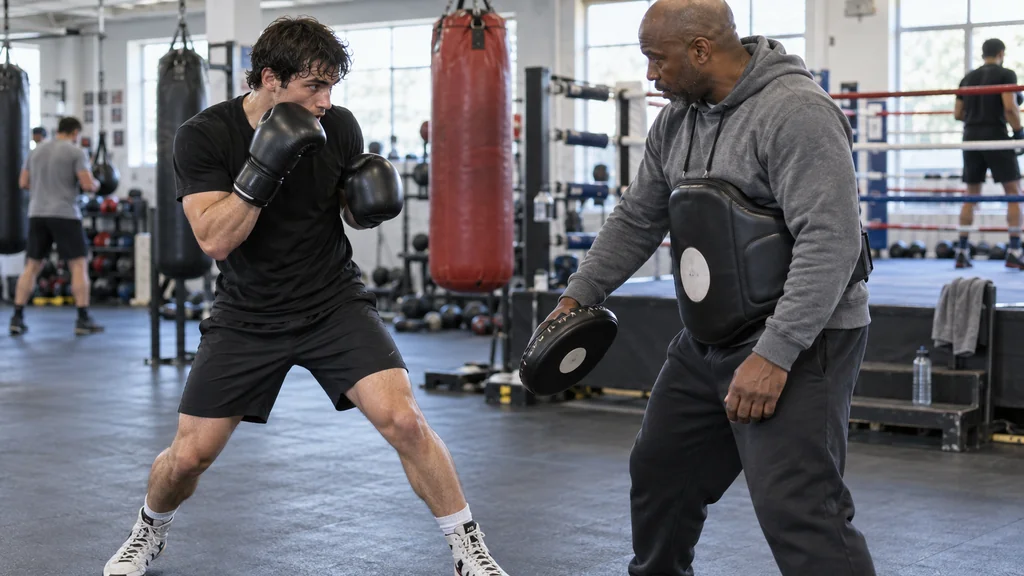
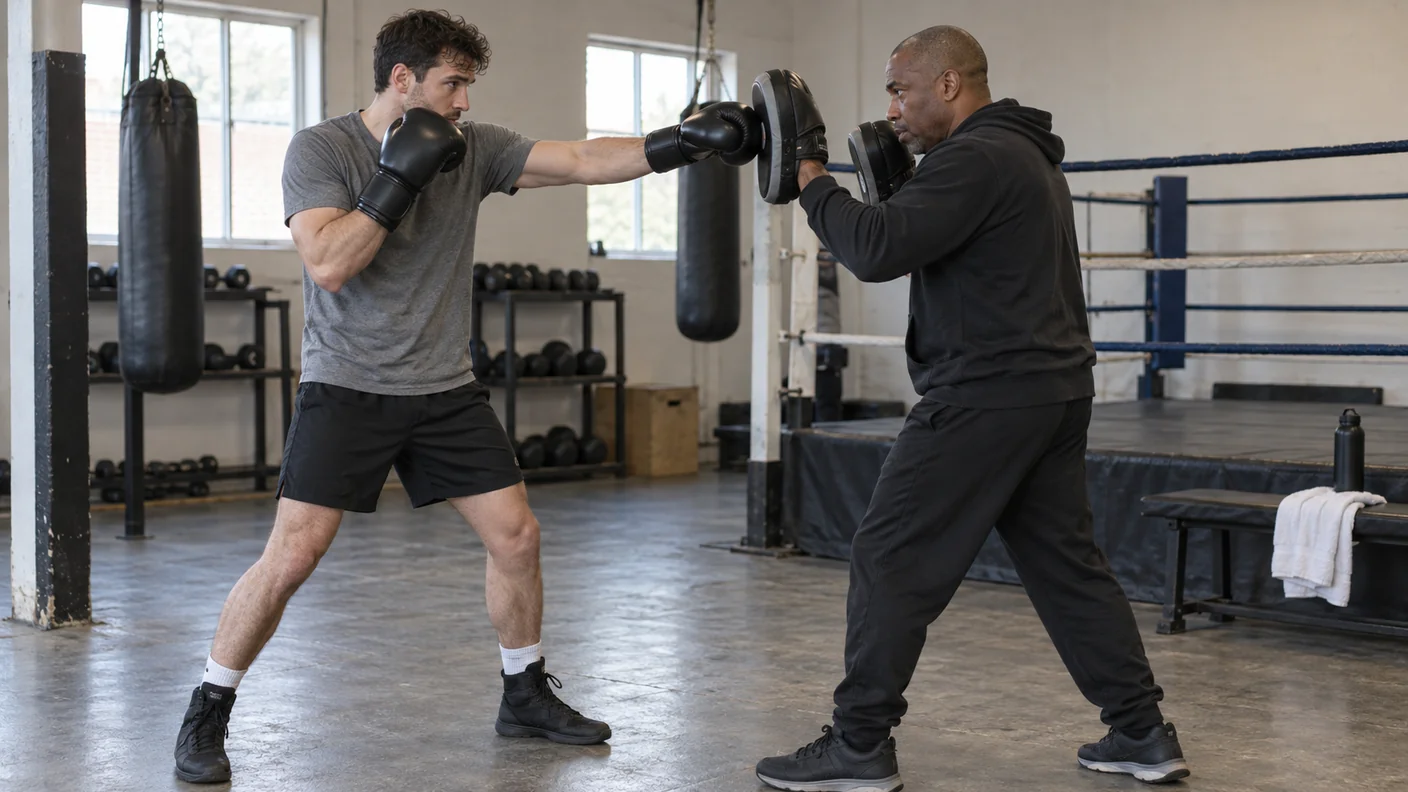
Use focus mitts or a body shield with a coach. Keep the feed slow and obvious at first. This drill is for learning posture and recovery, not testing who can surprise their partner.
Round one: cover and freeze
The coach shows a low mitt from close but controlled range. Bring the gloves near the cheeks, connect the elbows to the ribs and hold the stance for one count. No counter yet.
Check three things after every repetition: your eyes are still up, your head has not fallen over the front knee, and your feet are still staggered. If any of those has gone, reduce the speed and rebuild the position.
Round two: cover and leave
Use the same low mitt cue. Cover first, then take one compact step back into ordinary jab range. Finish with both gloves home.
Do not slide the rear foot away and leave the lead foot behind. The feet should move as a stance, not as two separate emergency actions. Once you have space, freeze briefly and see whether you could throw a jab without reaching.
Round three: read the next cue
Now the coach can show either the uppercut mitt, a hook-height mitt or no punch. Against the low cue, cover and step out. Against the hook cue, use the appropriate block and reset. If no cue appears, stay relaxed in guard rather than performing a defence early.
This is the useful part. You are learning to read a cue and make the smallest answer that works, rather than rehearsing a fixed sequence regardless of what is in front of you.
Four mistakes that leave the middle open
The first is looking down. When the eyes drop, the spine often follows and the chin becomes easier to find. Look through the chest and shoulders instead.
The second is flaring both elbows to protect the head. That can leave a clear route to the body. Bring the elbows in enough to connect the side of the guard, but do not pin yourself so tightly that you cannot move.
The third is throwing a counter while the guard is still open. If you have had to cover an uppercut, recover the stance before you decide whether a counter exists. A reset is a strong answer when the range is wrong.
The fourth is treating the uppercut as a long-range problem. If someone can throw it cleanly, they are usually already close. Deal with the space first. Do not lean in to prove you can see the punch.
For adults in Kidbrooke, Greenwich and nearby, our Recreational Adults boxing classes use controlled pad work and partner drills to teach close-range guard, distance and exits without putting beginners into hard sparring.
The coaching cue is simple: stay tall enough to see, keep the middle closed, then make space before you try to do anything clever.
H&G Team
Writer at Honour & Glory Boxing Club, a community boxing gym in Kidbrooke, South East London.
KEEP READING
How to Throw an Uppercut in Boxing
Learn the short, mid and long uppercut ranges, with footwork, hip rotation and drills that stop beginners swinging from too far away.
How to Throw an Uppercut in Boxing
Learn how to throw short, mid-range and long uppercuts without lifting your chin, swinging wide or losing your feet.
Lead-Hand Frame to Lead Uppercut: A Safe Drill
Use a brief lead-hand frame to find close range for a compact lead uppercut without pushing, holding or losing your guard.
Was this page helpful?
It takes one tap, and it genuinely helps.
Choose your next step
Turn this article into the right action
Some readers are ready to book. Some need the class route first. Pick the route that matches what you actually want.