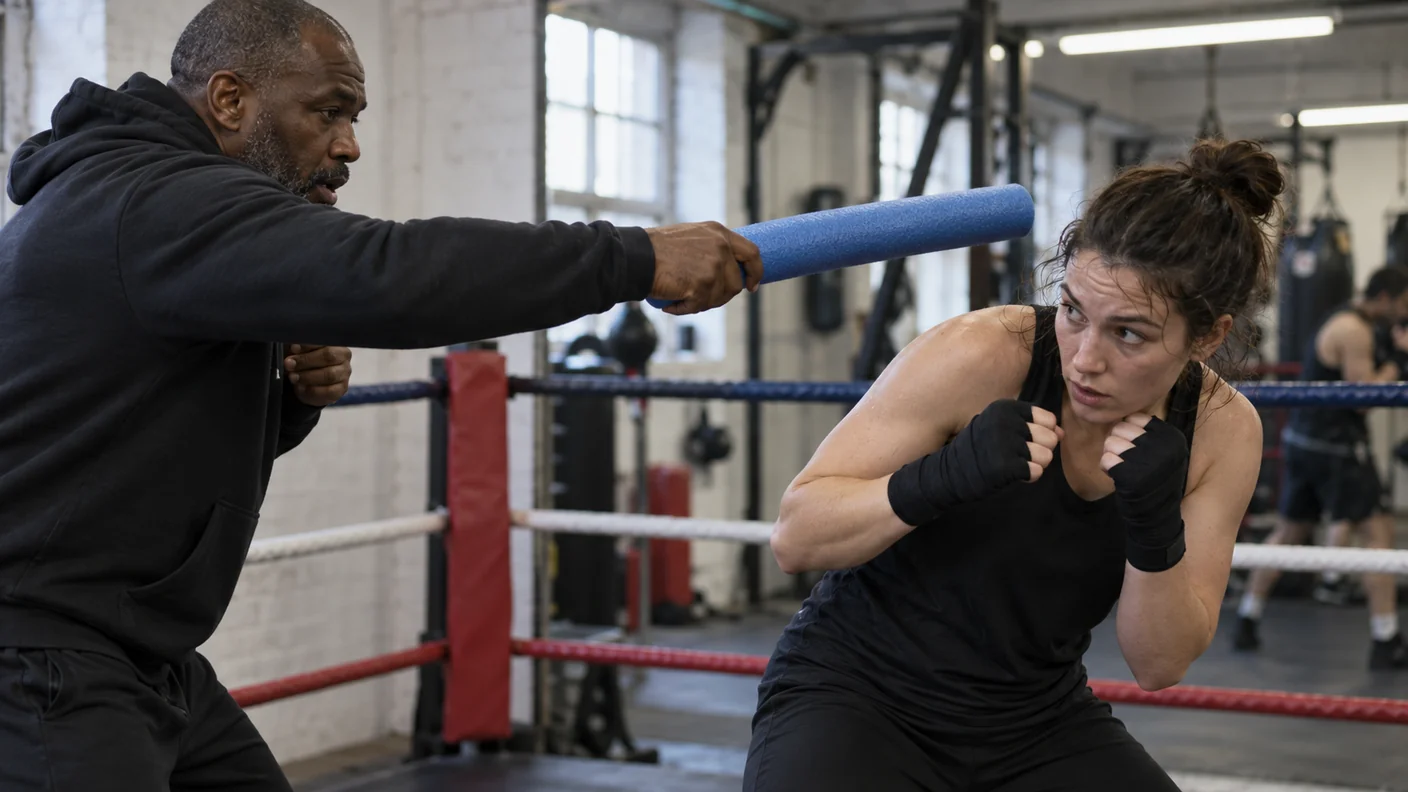
If you answer every jab with the same slip, you are not defending. You are giving the other boxer a map.
A boxer who always moves outside the jab can be led into a hook. One who always dips can be walked onto an uppercut. One who catches every jab with the same rear glove can be made to reach, then punished down the middle. The problem is not the catch, slip or roll itself. The problem is making it automatic.
Good defence gives you a decision after the first movement. You may counter if the position is there. You may take an angle or step out if it is not. What you should not do is run through a pre-planned chain of head movement, then stop in front of the other boxer waiting to be hit.
Watch the drill below once, then use it at a slow, coached pace.
A defence becomes a tell when it always ends in the same place
A jab arrives on one line, but it can be shown in different ways. The other boxer may be measuring, stepping behind it, feinting before it, or using it to bring the rear hand closer. Your answer should fit what is actually happening rather than a rule you decided before the glove moved.
This is why a perfect-looking slip can still be poor boxing. If you slip outside every jab whether it is short, long, fast or feinted, the other boxer can begin to aim where your head is going. They no longer need to land the first punch. They only need to make you take the familiar route.
A systematic review of anticipation in combat sports found that more experienced athletes use early visual information more effectively. In a gym, that means watching the chest, lead shoulder and front foot rather than staring at the glove. It gives you a chance to see whether the jab is a genuine punch, a false signal, or the start of a longer attack.
Give the jab more than one answer
You do not need six complicated defences. You need a few reliable choices that leave you standing properly.
Against a slow single jab at the edge of range, a compact rear-hand catch may be enough. Let the glove receive the jab near where your face was, keep the elbow close, and bring the hand home. Our guide to defending the jab in boxing explains that basic shape in more detail.
If the jab has reached further and the lane is clear, a small outside slip can take your head off line. If the boxer is stepping in behind the jab, a short step out or a guarded cover may be safer than trying to make a neat slip while the space is closing. If the jab is only a feint, the correct answer may be to stay calm and give nothing away.
The point is not to collect techniques. It is to stop every defence becoming the same destination. A catch returns you to guard. A slip leaves you able to counter or move. A cover gives you a moment to settle. A step out changes range. Each choice has a different finish, which makes you harder to lead into the next punch.
England Boxing puts balance, guard and controlled progression at the centre of technical work in its coaching handbook. That is the useful standard here. After your defence, can you still see, jab, cover or leave without first rebuilding your stance? If not, make the movement smaller.
Do not move your head without a next decision
Some beginners hear that head movement is important and try to stay in motion all the time. They slip left, roll right, dip, come up, then finally look at the other boxer. By then, the original punch may have stopped and a new one may already be coming.
Head movement needs a reason. The first useful route is defend, then return a measured punch only if the target and range still agree. The second route is defend, then take an angle or restore distance. Both are complete actions. The weak version is defend, then remain still in front of the other boxer with the guard open or feet square.
That does not mean every slip earns a counter. A counter is available only when the other boxer has committed enough that the line is still open. If they have pulled back, covered or stepped away, do not chase them with an arm. Bring the gloves home, take the exit, and make them start again.
The three-choice defence drill
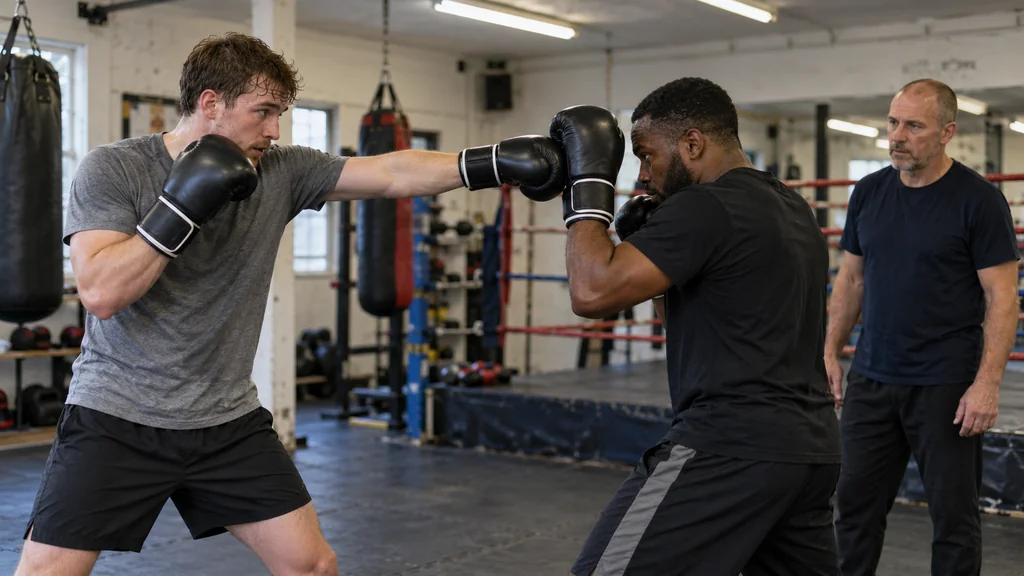
Use a coach or trusted partner. Keep the pace technical. The feeder is showing clear, agreed cues, not trying to score a surprise punch.
Round one: see the jab before you move
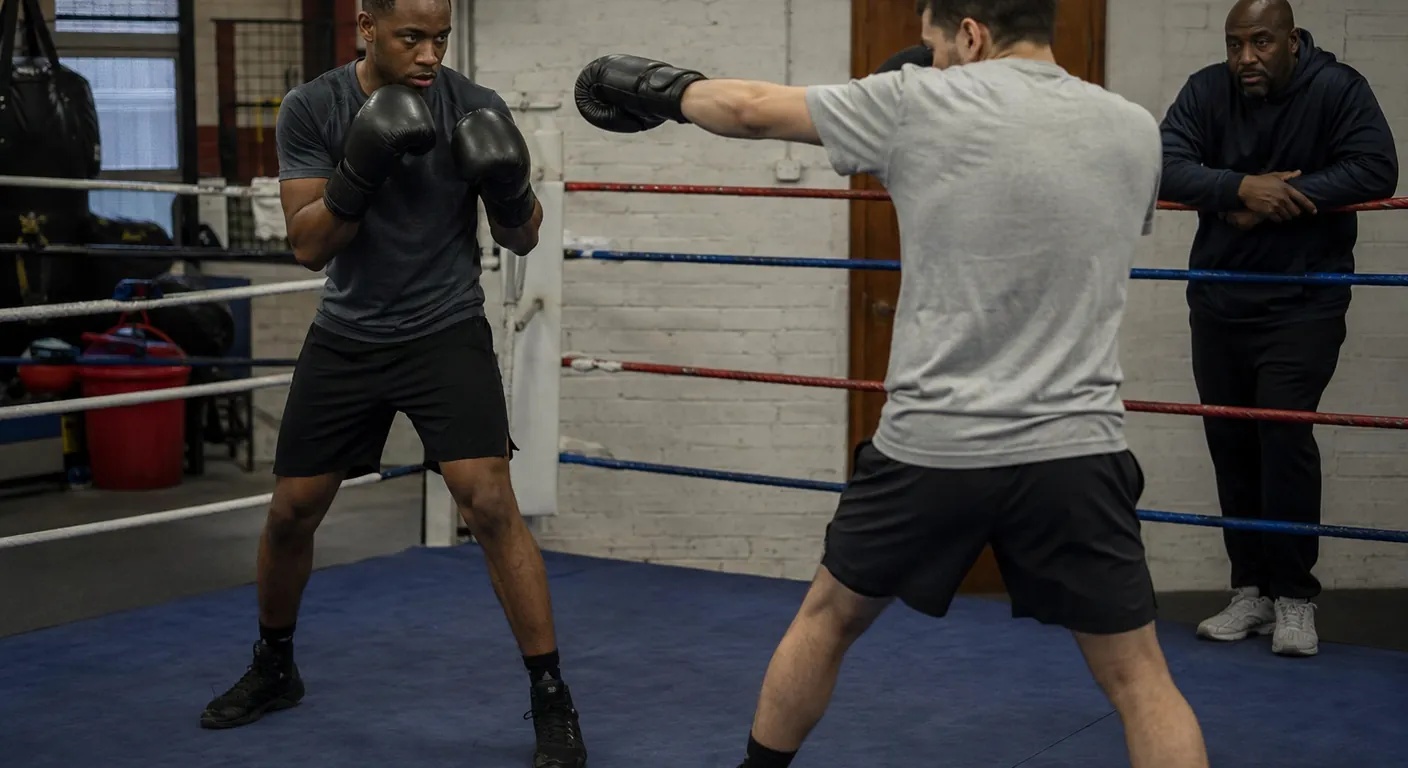
Partner A shows a slow jab, a short feint, or no punch. Partner B does not throw back. They choose only one response: compact catch, short outside slip, or stay in guard without reacting to the feint.
Freeze for one count after every rep. Check that the chin is tucked, the rear glove is available, and the feet remain staggered. If the slip has left the shoulders too far to one side or the catch has reached across the body, reduce it.
The important part is the no-action rep. It teaches your eyes that not every shoulder twitch needs a defensive performance. A feint should not make you reveal your favourite exit for free.
Round two: defend and leave
Partner A now throws a slow jab, then holds position. Partner B catches, slips or covers, then takes one small angle step or step back into a settled stance.
Do not turn away. Do not cross the feet. Keep the person in front of you in view while you move. The exit is there to stop the defence becoming an ending pose in the middle of range.
For a more focused route after a slip, our slip-then-pivot exit drill gives you a simple version to practise once the basic movement is comfortable.
Round three: counter only when the mitt appears
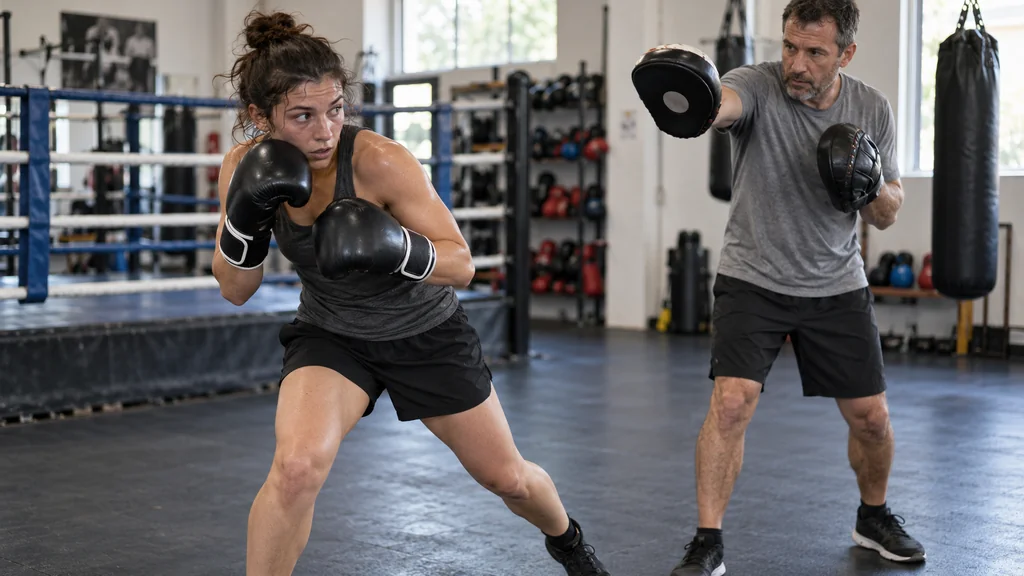
Now the coach or partner presents one focus mitt after a specific defence. For example, a long jab may receive a compact catch followed by a light jab back. A reaching jab may receive a small outside slip followed by a controlled rear straight to the mitt.
On other repetitions, the mitt does not appear. That is deliberate. If the target is missing, take the angle or reset. The drill should teach you to see the counter, not repay every defence with a punch because the sequence says you should.
Four mistakes that make head movement risky
The first is slipping before you have identified the punch. If you move as soon as the other boxer twitches, a feint can steer you straight into the next shot. Wait long enough to recognise the line.
The second is making each movement too large. A slip should move the head by inches, not pull the body into a deep lean. A roll should use the knees and hips, not fold you at the waist. Big movement often takes your eyes away from the next decision.
The third is treating one successful defence as proof that it is always right. A rear-hand catch may work well against a long jab, but it may be a poor answer if a hard cross is already following. A slip may suit a single jab, but not a jab that is deliberately drawing you towards a hook. The pattern around the punch matters.
The fourth is countering after the chance has gone. If you have defended but the other boxer has recovered their guard or stepped away, the moment has passed. Take the position you earned and start again.
Where this fits in training
This drill belongs after a warm-up and before faster pad work or controlled partner rounds. It suits a boxer who has a basic guard and can throw a measured jab, but it does not need hard sparring. Gloves, a foam cue, clear rules and a coach who keeps the pace sensible are enough.
For adults in Kidbrooke, Greenwich and nearby, our Recreational Adults boxing classes use controlled partner drills to build better choices around the jab, head movement and footwork.
The coaching cue is simple: do not give the same answer twice without a reason.
H&G Team
Writer at Honour & Glory Boxing Club, a community boxing gym in Kidbrooke, South East London.
KEEP READING
How to Improve Your Head Movement: Drills That Help
Head movement is the most difficult defensive skill in boxing. Here are the drills that actually develop it, why most people practise it wrong, and what coaches look for.
Read Boxing Weight Shifts Before the Punch
Learn to spot small weight shifts in boxing, then choose a calm defence or counter without guessing at every movement.
Knee-Touch Slip Drill for Better Head Movement
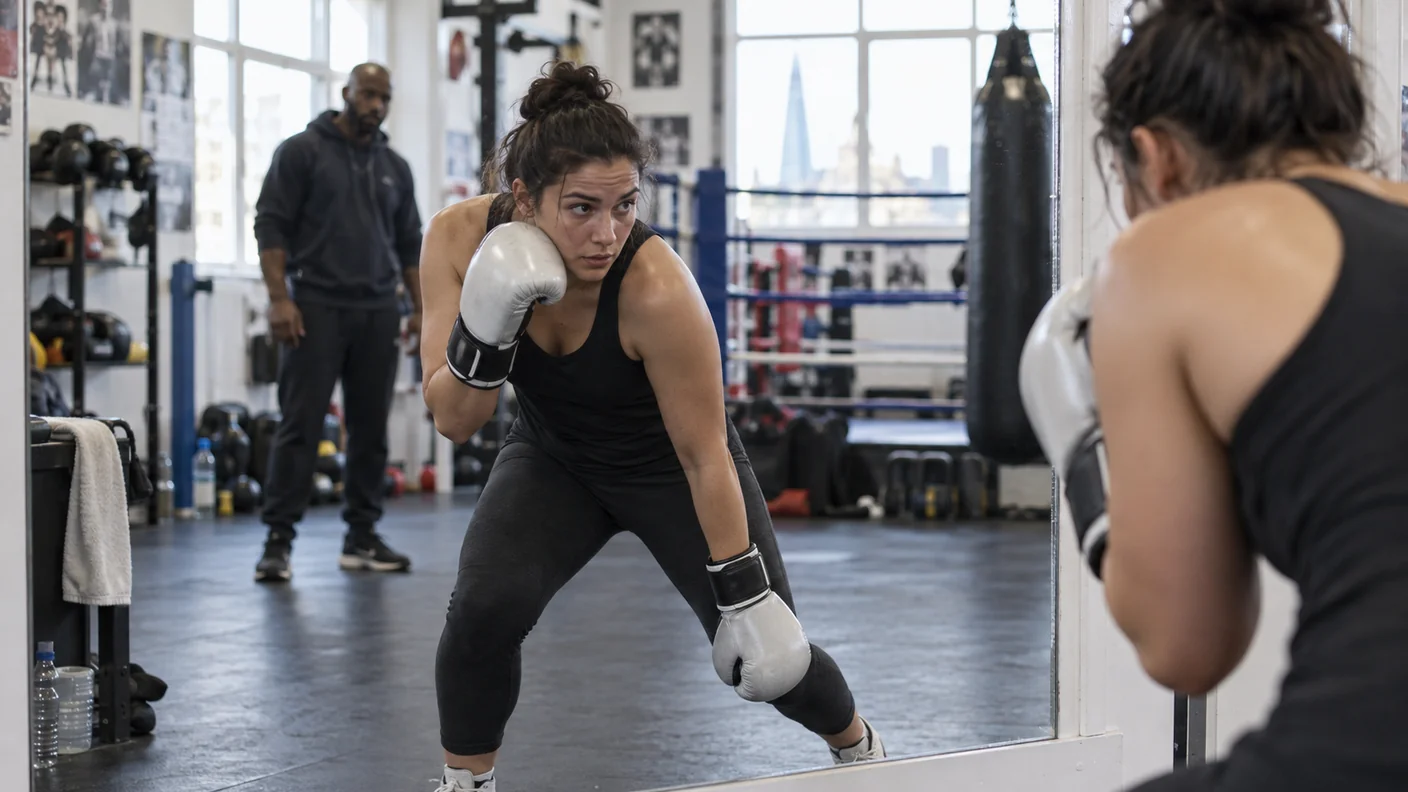
Use a knee-touch slip drill to find a smaller, balanced head movement before you add jabs, counters or partner cues.
Was this page helpful?
It takes one tap, and it genuinely helps.
Choose your next step
Turn this article into the right action
Some readers are ready to book. Some need the class route first. Pick the route that matches what you actually want.