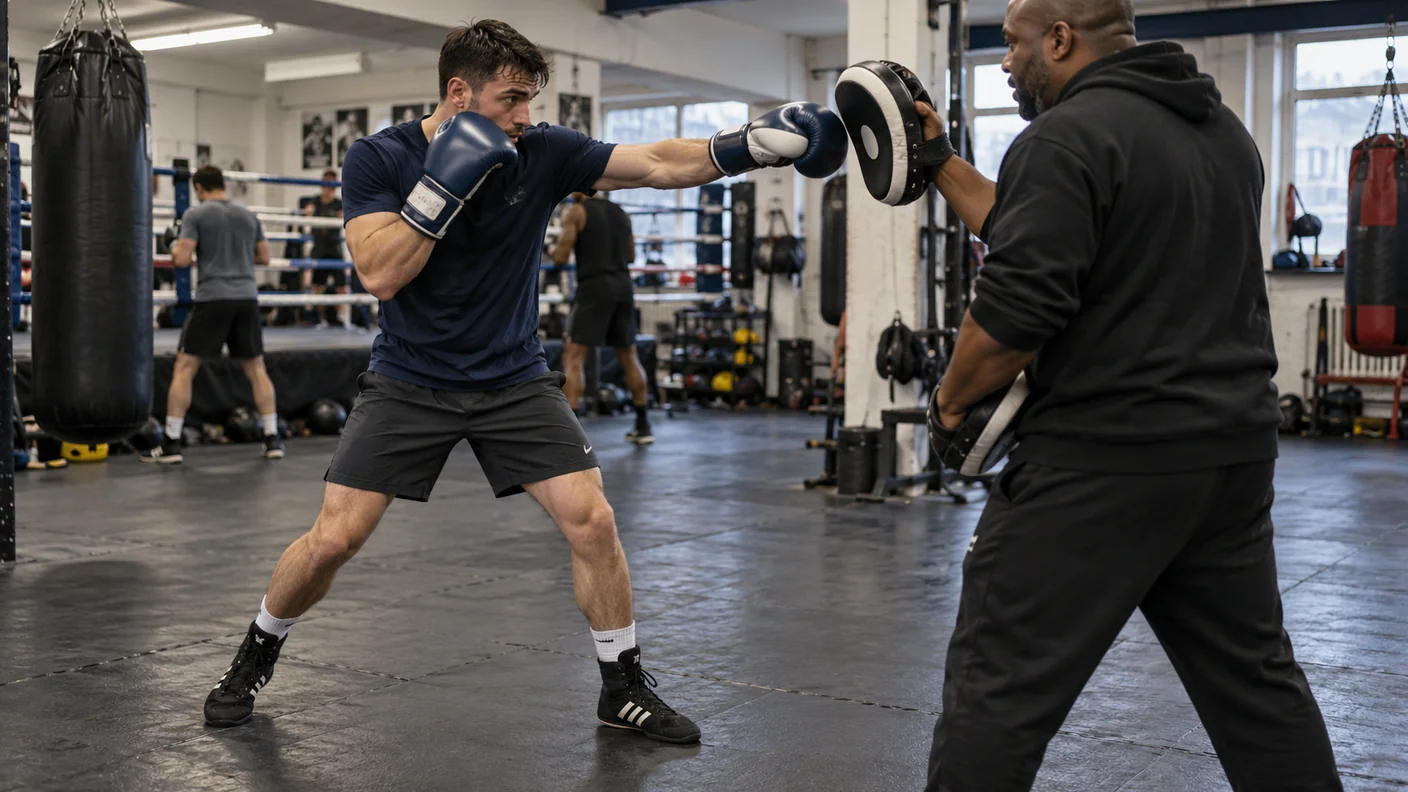
Your rear foot has one job: give you a base from which you can move, defend and throw without rebuilding your stance. If it points too far forward, the hips may feel trapped. If it turns too far out, you may feel slow when you want to step or spring.
The video below is worth watching before you try the drills. It shows why a slightly more forward rear foot can feel lively and why a more outward angle can make it easier to sit back and turn. Neither is a magic setting. Your balance is the deciding factor.
Start with a rear foot that can support your stance
A good stance does not begin with a number. It begins with a usable base.
England Boxing describes the essentials clearly in its coaching handbook: a boxer needs balance, enough width and depth between the feet, and the ability to move quickly in any direction. That matters more than trying to force the rear foot into the same angle as another boxer.
For an orthodox boxer, the rear foot is the right foot. It normally sits behind and slightly to the side of the lead foot, with the toes turned out enough that the hip can rotate through a cross. A southpaw reverses the picture. In both cases, the rear foot should not end up directly behind the lead foot like you are standing on a tightrope.
A sensible starting point is an outward angle that feels natural rather than extreme. Keep a little pressure through the ball of the foot, but do not force the heel to hover high for a whole round.
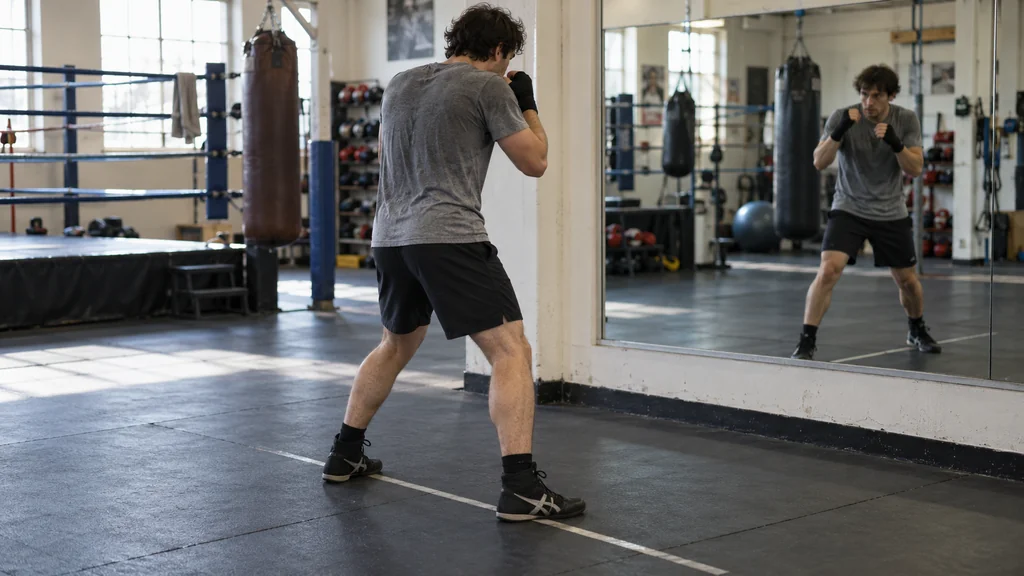
Our floor-line drill for a better boxing stance is useful if the feet keep drifting into one line. It gives you a simple reference without turning footwork into a pose.
The forward rear-foot position: useful, but demanding
Turning the rear foot a little more forward can make the stance feel springy.
It can help when you want to make a small forward movement, pull out of range or set up a straight rear hand. The rear leg has a clearer route to push from, and the body may feel ready to transfer weight forwards. That can be useful during pads or when you are working a controlled pull-and-return drill.
There is a cost. A more forward rear foot often brings your weight and head a little further forward too. If you are already leaning over the lead knee, it will make you easier to catch as you come in.
Do not confuse a high rear heel with being light on your feet. If your calf is working constantly or you cannot settle after a jab, bring the heel closer to the floor and soften the knees.
The test is simple. From that position, can you take one short step back without lifting your chin or crossing your feet? Can you throw one light jab and return the glove to guard? If either answer is no, reset before adding a cross or a counter.
The more outward angle: useful for turning and settling
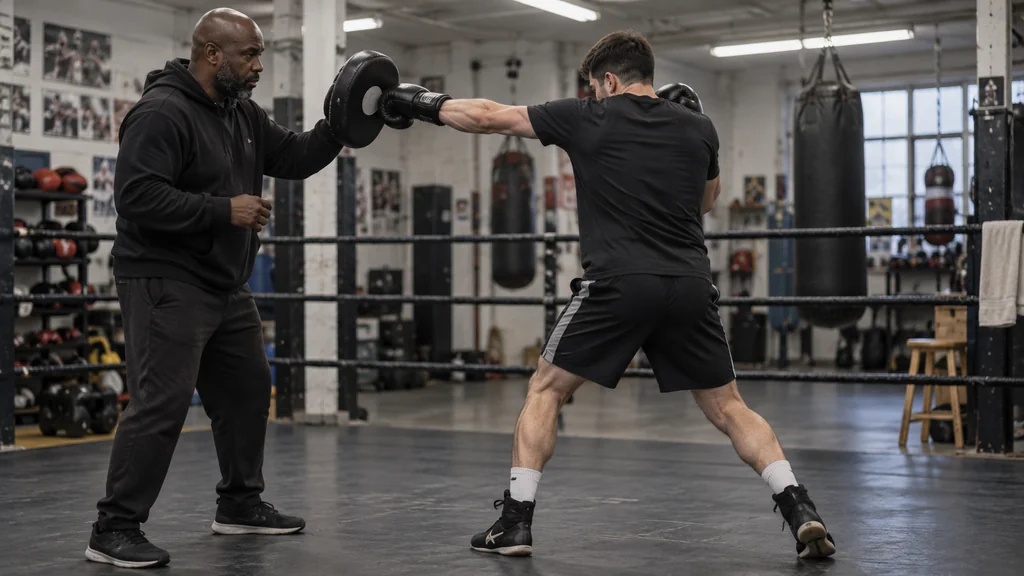
A rear foot that turns a little further out often makes it easier to sit slightly back and let the rear hip rotate.
That can give you a calmer platform for a cross, a small pivot or an exit. It can also make the stance feel less tiring because you are not holding the rear heel high every second. Do not put all your weight on the back leg. If the lead foot becomes empty and the jab has to reach, you have gone too far.
A biomechanics review of the cross, hook and uppercut notes that leg drive and foot position contribute to force transfer in boxing. The coaching lesson is not to chase a bigger punch by twisting the foot harder. It is to keep the foot, hip and torso working together. A rear heel that turns while the rest of the body stays rigid is only a spinning shoe.
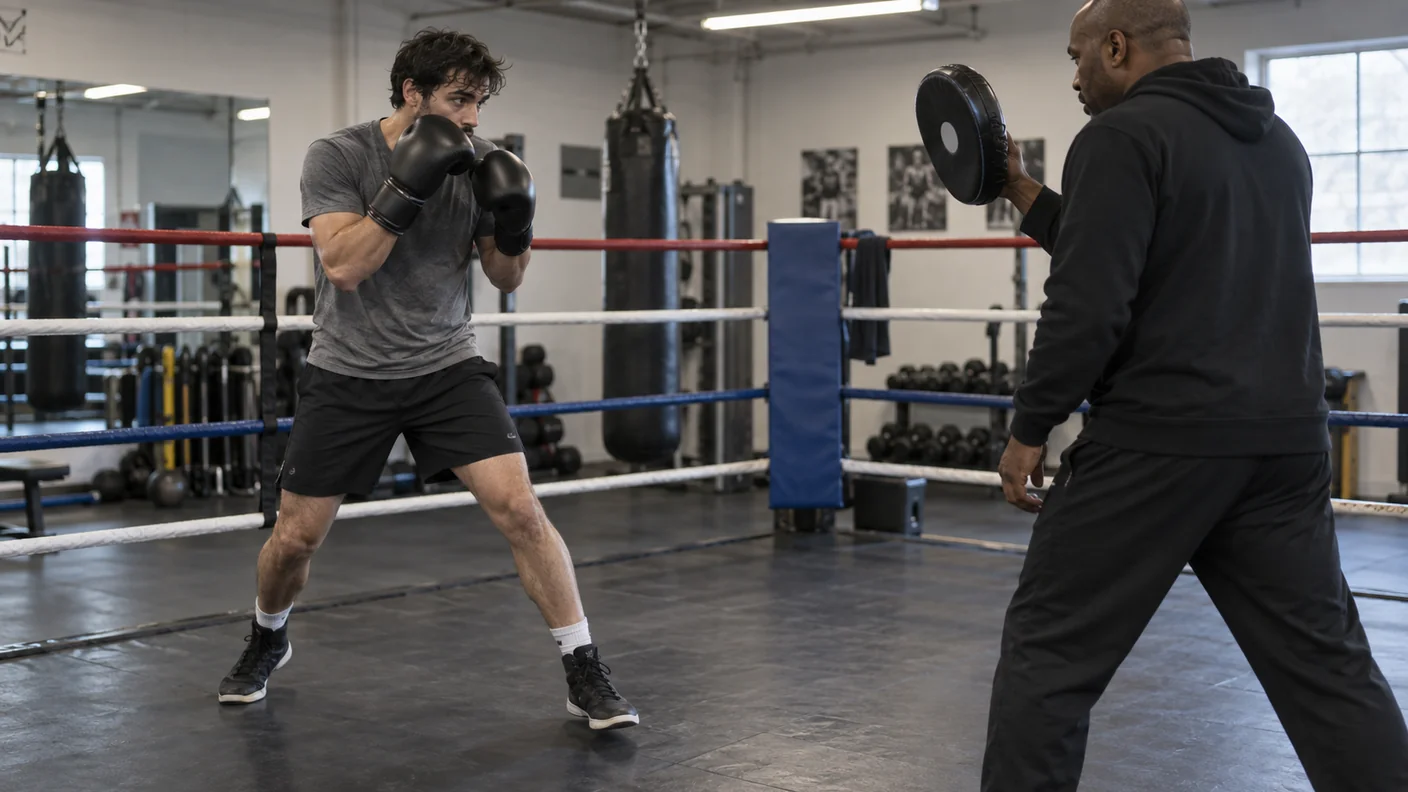
Try one slow rear straight on a coach-held mitt. Let the rear hip and heel turn naturally as the punch travels. Then bring the hand back, return the heel to a stable place and pause. If the turn leaves your chest pitched forward, your feet square or your lead hand low, reduce the rotation.
For the larger skill of linking the rear foot to a clean straight shot, read our guide to throwing a straight right properly. The punch should come from a stance that can recover, not from a foot forced into position.
Do not use your rear foot to solve every problem
When a boxer feels off balance, they often keep rearranging the rear foot. It moves forward, then out, then back again, while the upper body tightens and the hands drift.
Usually the problem is not the foot alone. A stance that is too long or a head that falls past the lead knee cannot be fixed by moving the rear foot.
Watch for four common errors:
- Pointing the rear foot straight forward while the hips cannot turn.
- Turning it so far out that stepping forward feels slow and awkward.
- Holding the rear heel high until the calf tires and the stance starts bouncing.
- Rotating the heel for a cross while the lead hand drops and the chin rises.
None of these needs a dramatic correction. Bring the foot back towards a comfortable angle, restore the gap between the feet and check whether you can stop in balance. Good stance work should make you calmer, not more complicated.
A three-round rear-foot check
Use this before bag work or pads. It is a technical reset, not a conditioning round.
Round one: find the quiet stance
Stand in front of a mirror or beside a line on the floor. Set your feet into their usual lanes. Turn the rear foot out only enough that the rear hip feels free. Shift your weight lightly forwards and back without lifting the shoulders or moving the hands.
Every few seconds, freeze. You should be able to lift either heel briefly without falling sideways.
Round two: jab, settle, step
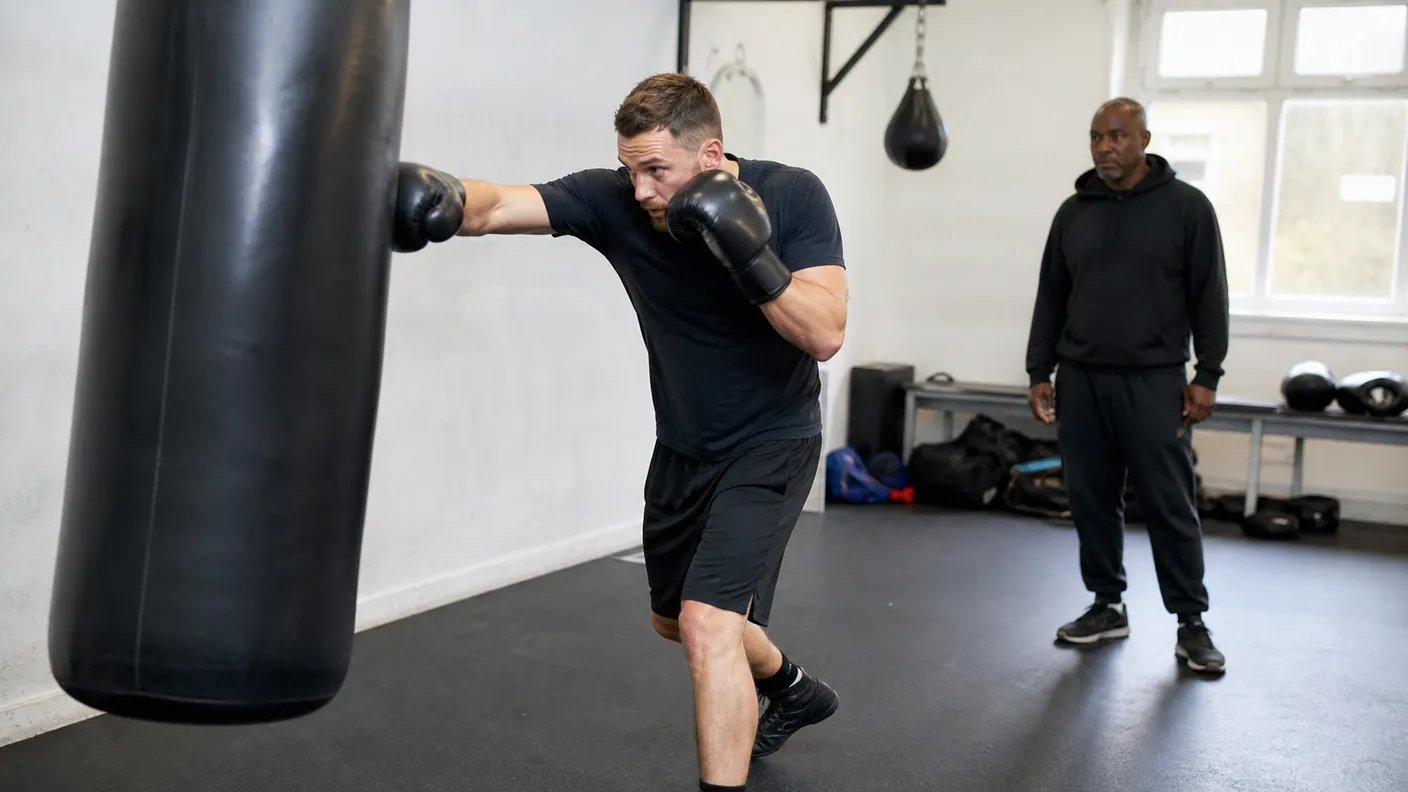
Use a coach-held mitt or a heavy bag. Throw one measured jab, return it to guard, then take one short step back. The rear foot should help the stance travel, not drag behind it.
After the step, check the rear foot. If it has landed directly behind the lead foot, make the step shorter. If it has spun far out, slow down and restore the angle before the next rep.
Round three: cross, recover, choose
Now add one controlled rear straight to a mitt. Let the rear heel turn as the hip turns, but do not chase power. The coach gives one of three cues after the punch: another mitt for a jab, a glove to cover, or no cue at all.
Your job is to choose only after the cross has recovered. If the jab mitt appears, touch it and reset. If the cover cue appears, bring both gloves home. If there is no cue, stand in your stance without adding a made-up combination.
The coaching cue
Set the rear foot so that you can move from it, not so that it looks perfect while you stand still.
A small adjustment can make the jab feel cleaner, the cross feel more connected and the exit less rushed. But the foot is only one part of the stance. Keep the head between the feet, the hands useful and the knees soft enough to respond.
If you are in Kidbrooke, Greenwich or nearby, our Recreational Adults boxing classes use coached drills and padwork to build those small details into movement that holds up when the pace changes.
H&G Team
Writer at Honour & Glory Boxing Club, a community boxing gym in Kidbrooke, South East London.
KEEP READING
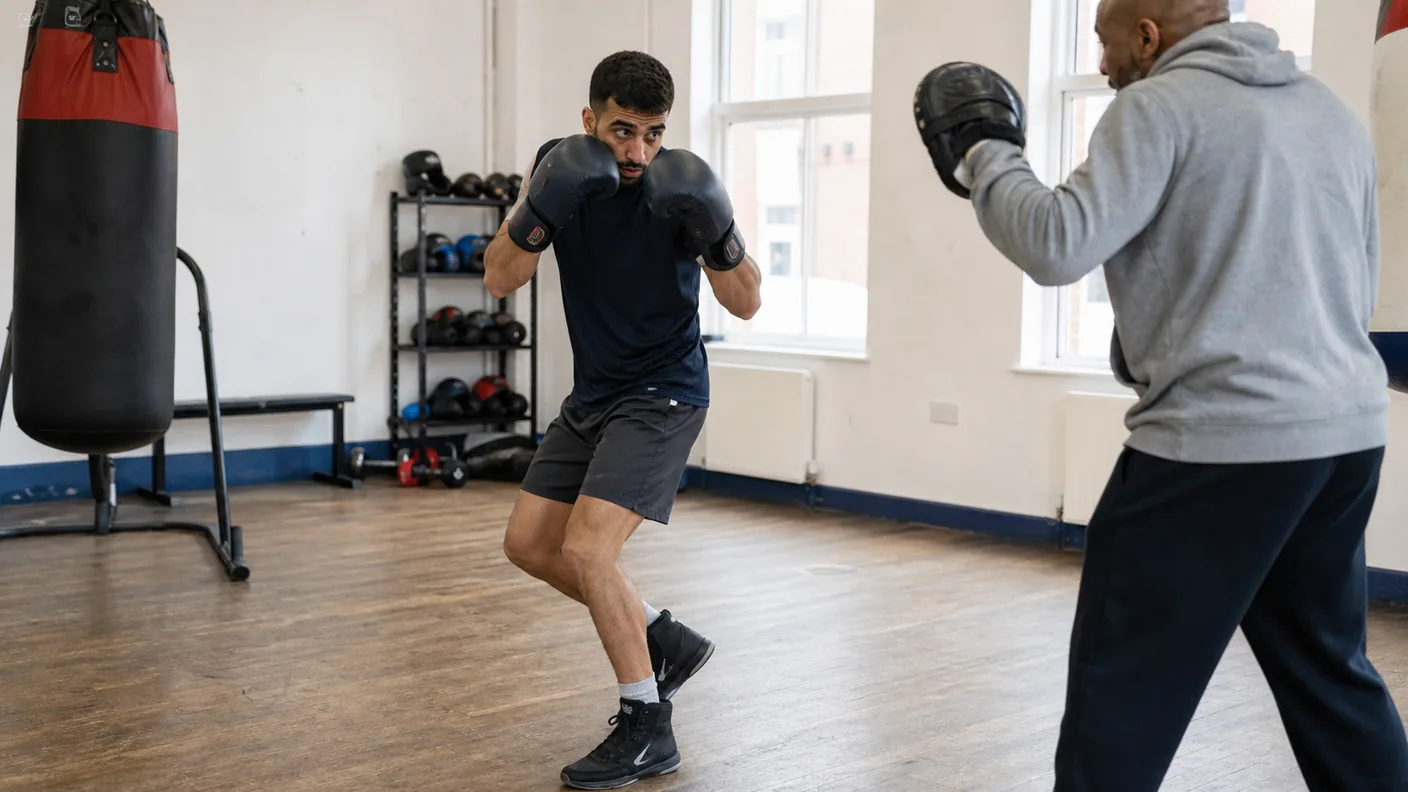
Rear-Foot Pivot and Tuck: A Safer Boxing Angle
Use a compact rear-foot pivot and tuck to leave a straight-punch line without losing your guard, balance or next step.
Lead-Foot Feint: Test a Boxing Entry
Use a small lead-foot feint to test an opponent's range and reactions before you commit to a real boxing entry.
Angle Step to Rear Uppercut Boxing Drill
Use a small angle step after a lead hook to create room for a compact rear uppercut without losing your stance or chasing the target.
Was this page helpful?
It takes one tap, and it genuinely helps.
Choose your next step
Turn this article into the right action
Some readers are ready to book. Some need the class route first. Pick the route that matches what you actually want.