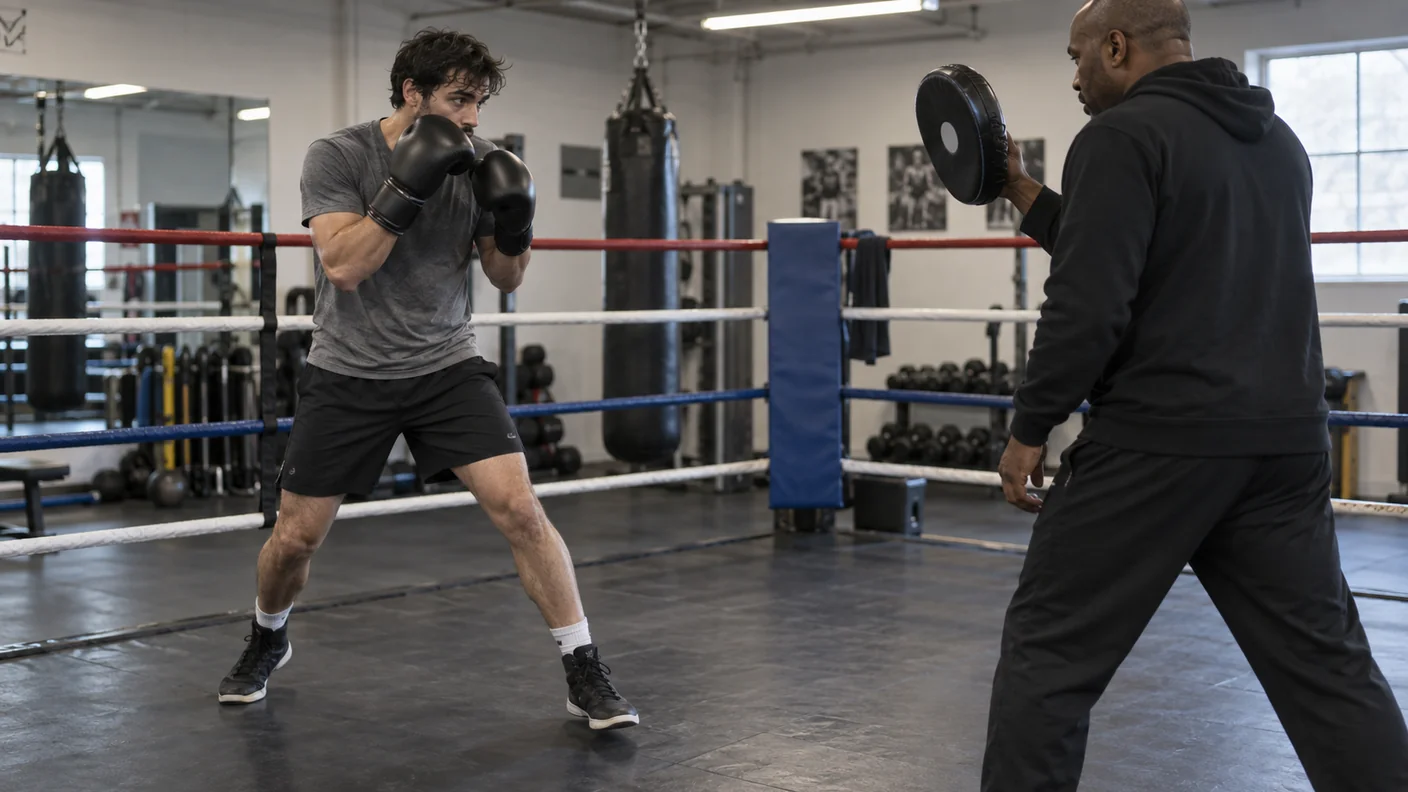
A lead-foot feint is a small promise that you might step into range. It is not the step itself.
That distinction matters. Newer boxers often see an opening, move the lead foot forward and commit the upper body with it. The opponent sees the entry early, either jabs them, steps back or meets them with a guard that is already organised. The boxer has not created an opening. They have announced where they plan to stand.
A good lead-foot feint gives the other boxer a question before you give them an answer. The front foot suggests an entry, but your stance remains capable of stopping, covering or moving away. If they reach, freeze or give ground, you have a clearer next decision. If they do not react, you are still outside range with your guard intact.
The video below is a useful visual reference. Watch the difference between a small forward signal and the later committed step. The useful part is not the long combination. It is the moment before it, when the feet make the other boxer think about an entry.
A foot feint asks whether the doorway is open
A hand feint suggests that a punch is coming. A body feint suggests a level change. A lead-foot feint suggests that you are about to take ground.
That can matter at the edge of jab range. A pressure-minded partner may fire their jab early to stop your step. A cautious partner may retreat before you have moved at all. Another boxer may plant their feet and tighten the guard. Each reaction tells you something about the space between you.
The point is not to make every reaction dramatic. A half-second of hesitation is useful if it stops the other boxer choosing their own rhythm. You can then take a real step behind a jab, stay outside and feint again later, or choose not to enter at all.
A systematic review of anticipation in combat sports found that more experienced athletes make better use of early movement information. That is the coaching value of the lead-foot feint. You are not trying to trick someone with theatre. You are offering one believable cue, then watching the first movement they give back.
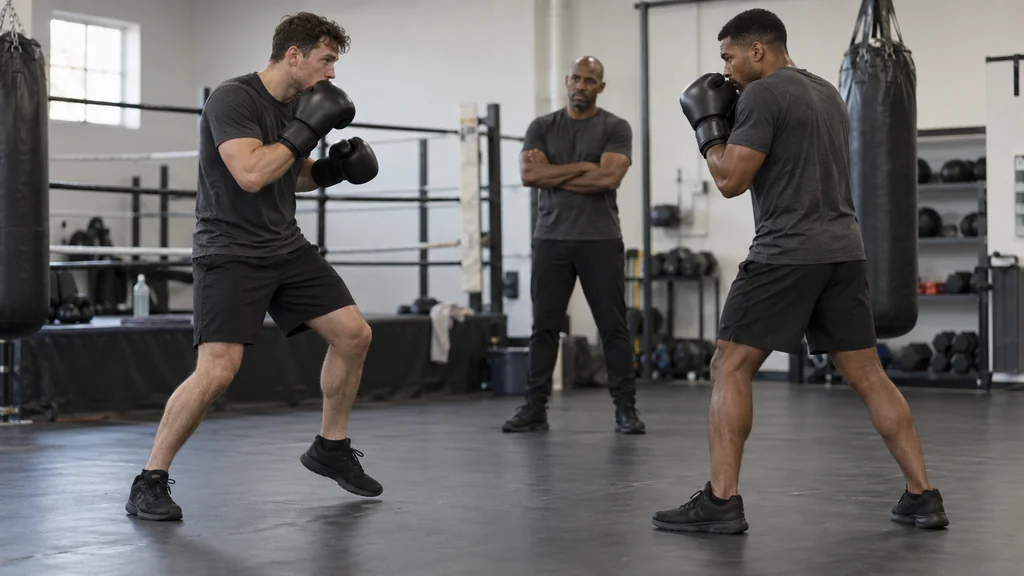
Make the foot move without letting the head chase it
The foot feint begins from your ordinary stance. Your gloves remain where they would be before a jab. Your chin stays behind the lead shoulder. The rear foot stays ready to support a real step or take you back out.
Press the lead foot forward only enough to show intent. Some boxers barely lift it. Others make a short tap on the floor. The exact shape is less important than the finish: you should still have your normal stance width and you should not need to pull your body upright afterwards.
The common error is to let the chest travel first. The front foot shifts, the head follows over the front knee and the rear foot trails behind. That is no longer a feint. It is a poor entry stopped halfway through.
England Boxing places stance, balance and controlled technical progression at the centre of its coaching handbook. Use that as the test. After the feint, could you jab, cover a straight line or take a small step back without rearranging your feet? If not, make the signal smaller.
Do not make it a metronome
A foot feint stops working when it becomes a regular bounce.
If you stamp the lead foot every few seconds, a decent partner will stop reacting. Worse, you may start entering every time the foot moves because your own body has learned the pattern. The feint becomes a warning sign rather than a question.
Use it at a moment when an entry might make sense. You may be outside jab range and want to see whether the other boxer will defend the space. You may have touched the guard with a jab already and want to know whether they are ready to retreat again. You may be facing someone who keeps waiting for your lead foot before throwing their own jab.
Then vary the next action. Feint and remain still. Feint and take a small step back. Feint, wait, then enter behind a real jab. Feint, see the guard close, and decide that the body line or a reset is safer. If every feint becomes the same one-two, you have built a new tell.
Our guide to boxing set-up jabs covers how a real light jab can give a step some cover. The lead-foot feint comes one moment earlier. It checks whether the entry is likely to be welcomed, resisted or ignored.
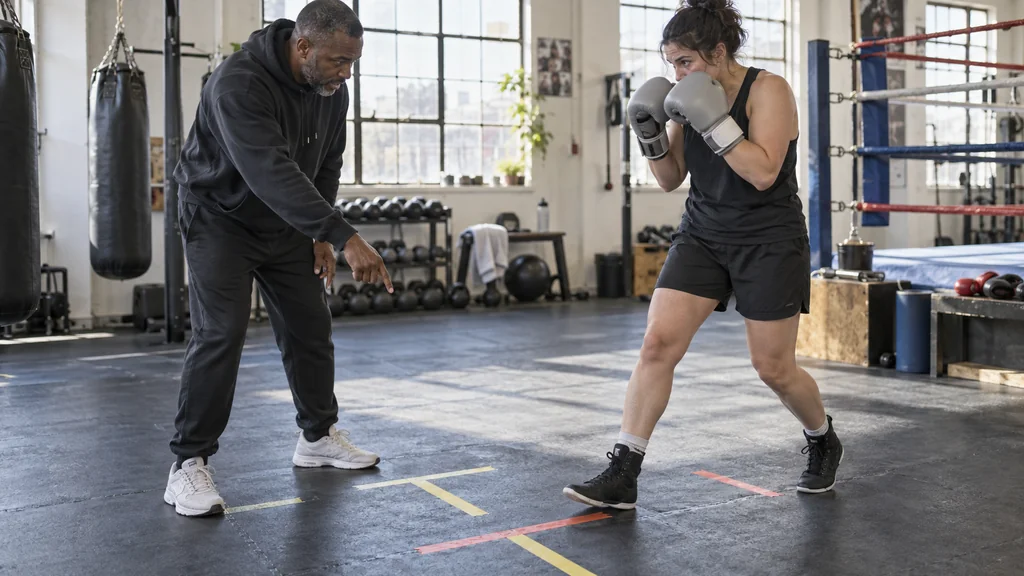
The three-response drill
Use a coach or trusted partner. Keep the pace technical and agree that the partner is giving clear choices, not trying to catch anyone with a surprise punch.
Round one: feint and freeze
Stand at the edge of jab range. Make one small lead-foot feint, then freeze for a count of one.
Check the feet, hands and eyes. The rear hand should still be near the cheek. The head should not have passed the front knee. The rear foot should still have room to move. If the feint leaves you stretched, go back to an even smaller press through the lead foot.
Round two: read the partner
Now the partner chooses one of three answers after your foot feint: they show a light jab line, take a small step back, or hold position behind their guard.
Against the jab line, cover, parry or take the defensive step your coach has taught. Against the step back, do not chase with the arm. You can take a measured step behind a real jab only when the range is honest. Against a still guard, reset or show a light jab to a coach-held mitt if one appears.
The skill is waiting for the answer. If you move before the partner has made a choice, the drill has turned into choreography.
Round three: choose the entry
Add one mitt after the reaction. If the partner has reacted in a way that leaves a sensible lane, step in behind a measured jab and touch the mitt. If the mitt is too far away or the guard has stayed tight, return to stance without throwing.
A review of boxing performance describes punching, defence, movement and tactical choices as connected parts of the same task. That is why the no-punch finish matters. A foot feint is useful when it leaves you in a position to make a good decision, not only when it wins you a follow-up.
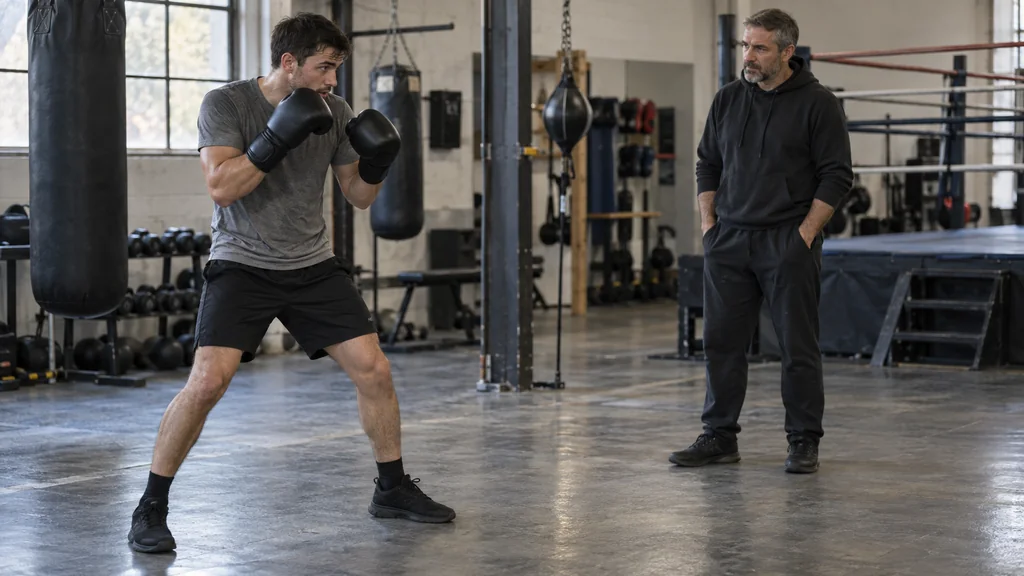
Four mistakes that turn a feint into a bad entry
The first is stepping too far. A foot feint should show intent, not move you into the other boxer's full punching range. If the rear foot has to drag forward to save the stance, the movement was an entry.
The second is lifting the chin. The foot can be busy while the head stays quiet. Keep the eyes on the chest and shoulders in front of you rather than looking down to check the foot.
The third is dropping the rear hand because the foot moved. A lead-foot feint does not make the rear side safe. The other boxer may answer with a jab, a straight shot or their own step. Keep the glove available.
The fourth is treating the feint as a debt that must produce a punch. Sometimes the best result is a clear read and a reset. Do not reach for a follow-up just because you have made the first movement.
For the broader skill of making a fake believable, read how to use feints in boxing without faking it. This smaller version has one job: test the entry without donating your balance.
Where it fits for beginners
The lead-foot feint suits a boxer who can already hold a basic stance and throw a controlled jab. It does not need hard sparring. A tape line, a coach-held mitt and a partner who can give an honest, slow response are enough.
Start with one small feint and one choice. That can feel less exciting than rushing forward behind a combination, but it teaches the more valuable habit: do not commit before you have seen what the space allows.
For adults in Kidbrooke, Greenwich and nearby, our Recreational Adults boxing classes use controlled pads and partner drills to connect stance, range and decision-making without forcing beginners into hard exchanges.
The coaching cue is simple: show the step, read the answer, then enter only when the feet agree.
H&G Team
Writer at Honour & Glory Boxing Club, a community boxing gym in Kidbrooke, South East London.
KEEP READING
Jab-Roll-Hook-Hook: A Controlled Boxing Entry
Use a jab, compact roll and two short hooks to enter a closer range without turning a technical drill into a reckless rush.
Rear-Hand Feint to Jab: A Boxing Timing Drill
Use a compact rear-hand feint to make the jab arrive on a less familiar line, without giving away your guard or your stance.
Feint, Block, One-Two: A Boxing Counter Drill
Use a small feint, compact block and balanced one-two to turn a predictable jab into a calmer boxing counter drill.
Was this page helpful?
It takes one tap, and it genuinely helps.
Choose your next step
Turn this article into the right action
Some readers are ready to book. Some need the class route first. Pick the route that matches what you actually want.