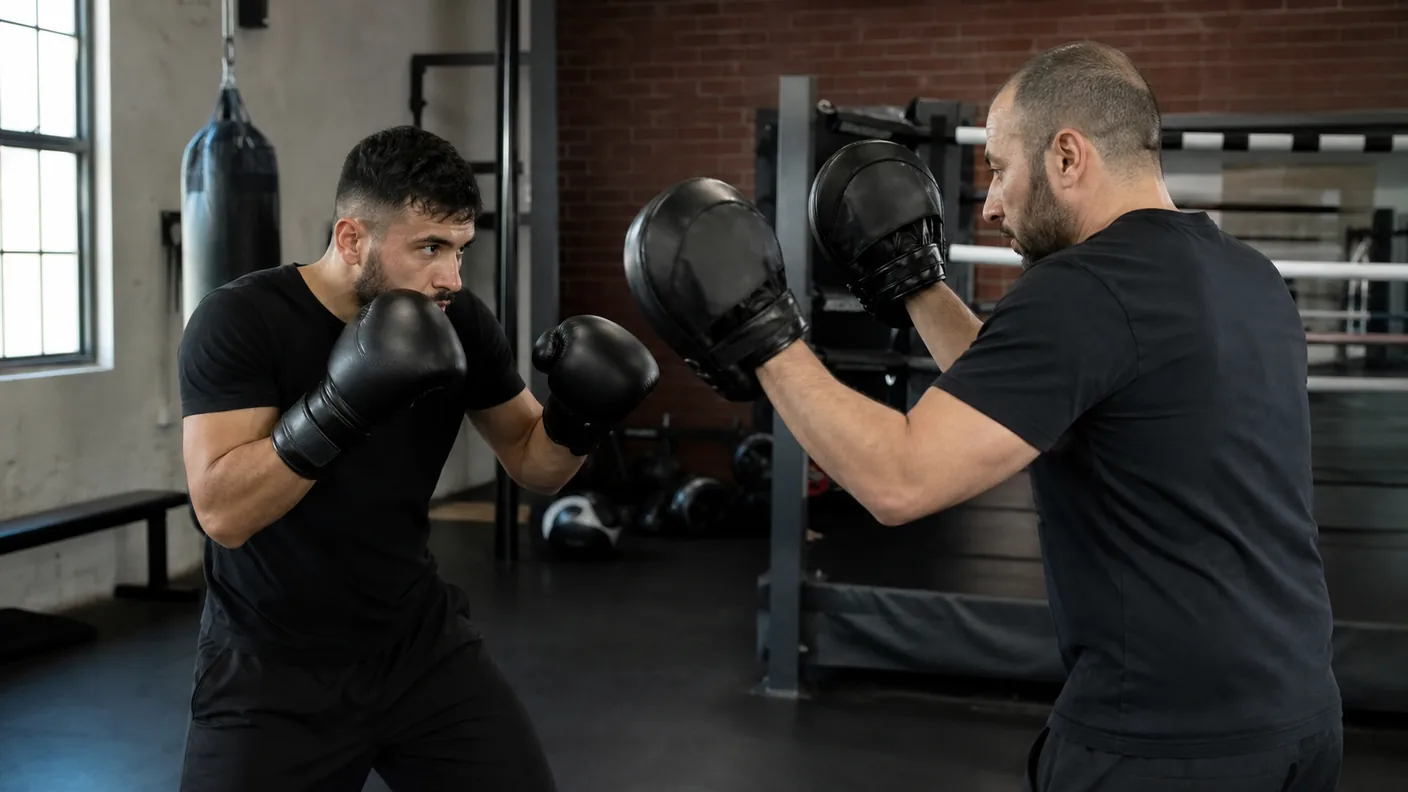
A good entry does not begin with a wild rush. It begins with a question: can you take a little ground, change the line of your head and still arrive in a position where the next punch is worth throwing?
The jab-roll-hook-hook drill is a useful way to practise that question. You begin outside the pocket, use the jab to occupy the space in front of you, make a compact roll as you step in, then place two short hooks only after your feet have arrived. It is not a combination to throw at anyone who happens to be close. It is a technical pattern for learning how the feet, head movement and hooks can belong to one controlled action.
The short demonstration below shows the basic shape. Use the coaching notes to slow it down, give it a clear purpose and keep the drill honest.
The drill has one job: arrive in balance
The first jab is not there to win an exchange on its own. It gives the other boxer something to see while you take a small step towards a closer range. The roll is not a dramatic duck. It changes the head line just enough to make you practise entering with the knees and hips involved rather than walking in upright.
The hooks only make sense if that work has put you in the right place. If you are still at long range, two hooks become two arm swings. If your head is already over the front knee, the roll has not protected your entry. If your feet have narrowed or crossed, the second hook will usually pull you square.
That is why the drill starts slowly. Do not count the rep because you managed four punches. Count it because you finished with a stance, guard and breath that would let you make another decision.
A biomechanical study of boxing hooks, crosses and uppercuts found that punch execution depends on how the body segments work together, not merely on the arm that hits the target. That is the useful lesson here. The jab, the roll, the step and the hooks should look connected rather than like four unrelated actions joined together by effort.
Build the jab and roll before the hooks
Start in a normal stance at the edge of your jab range. The lead glove travels out with a small step. It may touch a mitt, a bag or an agreed light target in partner work. The rear glove stays near the cheek. The head does not chase the jab.
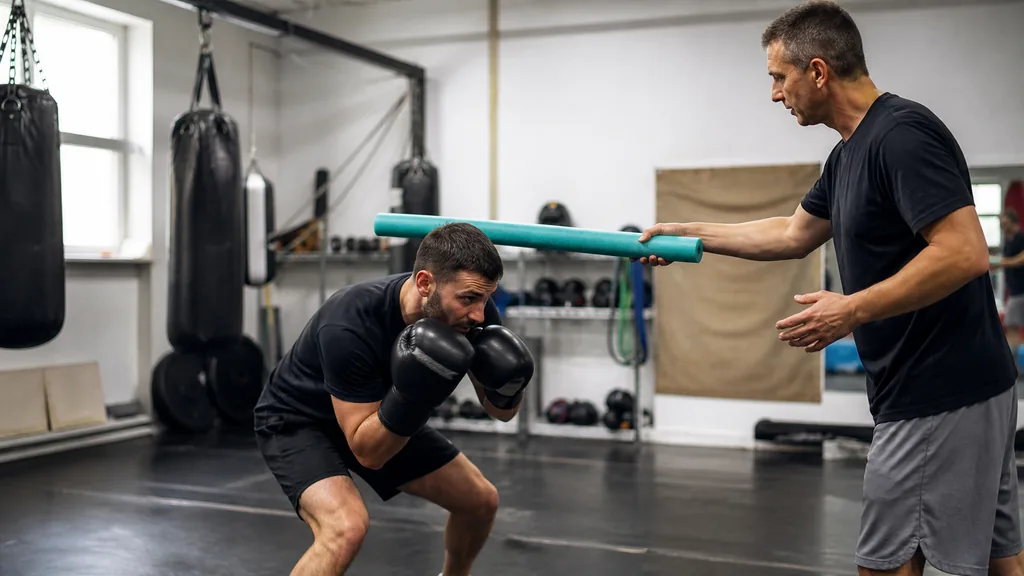
As the lead hand returns, make a small roll to the inside. Bend the knees and allow the hips to turn under the imagined return line. Keep your eyes forward. Your head should move around the line, not fall down towards the floor.
The practical check is simple. Freeze after the roll. Can you still see the coach or partner? Are both gloves available? Is there enough space between the feet to turn either hip? If the answer is no, make the roll smaller and reduce the step.
Do not force a roll under every jab. A catch, a small slip, a block or simply a reset can be the better answer depending on distance. The drill is teaching one route into closer range, not claiming that every exchange should look the same. Our guide to rolling under punches without folding explains why the movement needs to remain compact and useful when you come back up.
Make the first hook compact
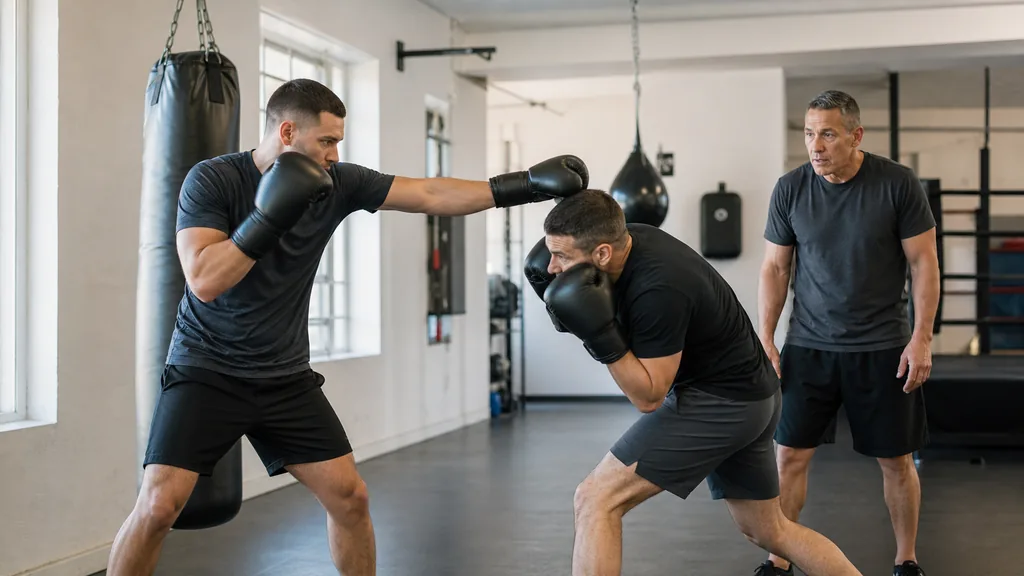
Once the jab-roll entry stays balanced, add one lead hook to a focus mitt or heavy bag. Do not try to land it from the end of your reach. The roll and step should have placed you at a range where the elbow can remain bent and the punch can turn from the hip.
The lead hook is short. The rear glove stays close to the face. Your head remains between the feet rather than travelling beyond the lead knee. You are not trying to throw through the target so hard that your own body has to follow it.
A useful cue is: turn, touch, return. The lead hip turns into the shot, the glove meets the target cleanly, then the hand comes back to a usable guard. If the hook feels long, the usual answer is not to swing harder. Check the range, bring the elbow in and build the entry again.
The England Boxing coaching handbook treats technique work, pads and safe coaching as connected parts of learning. That matters with hooks. A coach holding a target at the right height can check whether your stance and guard still work. A heavy bag cannot tell you whether you have opened the centre line.
Add the second hook only when the first one returns
The second hook is where the drill exposes impatience.
Many boxers throw the first hook, leave the hand out and then try to drag the rear side round with the shoulders. The second punch arrives late, wide and often takes the feet with it. That is a sign to remove it, not a reason to speed up.
Instead, make the first hook return enough that the rear side can turn naturally. The second hook should come from the same settled base, not from a scramble. Keep the punch compact and let the rear hip contribute. Once the rear glove has travelled, bring it home before you admire the sequence.
Use a partner or coach for this version. They can hold two clear mitt targets at a realistic short range and call a reset if the entry has stretched. On a bag, use a calm rhythm: jab, roll, lead hook, rear hook, reset. Let the bag settle between reps. If it swings away, do not chase the second hook.
Our article on making space at close range is a useful companion. Short hooks belong when you have created an honest pocket. When the space is gone, forcing a long punch is usually a worse decision than covering, framing or stepping out.
Three rounds to learn the shape
Round one: jab, roll, reset
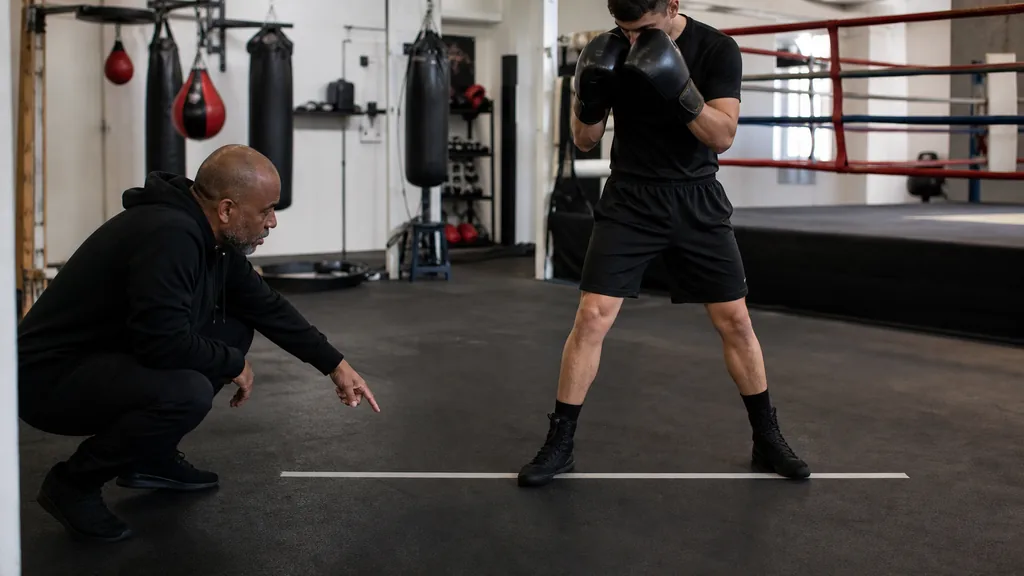
Work one minute at a calm pace. Jab with a small step, make the compact roll, then return to stance without adding a punch. The aim is to make the entry feel steady. If your head drops, the rear hand wanders or the feet come together, pause and rebuild the position.
Round two: add one hook
Use the same jab-roll entry, then place one lead hook on a mitt or bag. Freeze for a beat after the hook. Check that the rear glove is home, the chin is down and the stance has not become square. One clean hook is enough for this round.
Round three: add the second hook and leave
Now use jab, roll, lead hook, rear hook, then take one small step out or bring both gloves to a tight guard before resetting. The exit matters because the drill is not finished at the last punch. If the second hook has taken all your balance, return to round two.
Keep partner work light and agreed. This is not sparring and it is not a way for beginners to test who can force their way inside. The target holder controls the speed, keeps the mitts clear and stops the drill when either person loses shape.
Four mistakes that spoil the entry
The first is reaching with the jab. If the lead hand pulls your head forward, you have begun the sequence from too far away. Take a smaller step or start closer to the target.
The second is rolling too low. A deep bend may look defensive, but it can leave your eyes below the action and make the hooks late. Bend the knees enough to change the line, then come back into a position that still looks like boxing.
The third is throwing the hooks from long range. If the elbows straighten, you need to step in properly or choose a straight punch instead. A hook does not become useful because you want it to reach.
The fourth is treating the second hook as compulsory. The right number of punches is the number you can throw with balance. If the first hook has done its job and the other boxer has moved, cover, reset or take a different angle. Good boxing is not reciting a sequence after the situation has changed.
The coaching cue
Jab to enter. Roll to change the line. Hook only when the feet have arrived.
That is the whole drill. Keep it small enough to stay balanced and deliberate enough that a coach can see where the shape breaks. The pattern becomes useful when you can enter without lunging, throw without swinging and finish with the choice to defend, move or begin again.
If you are in Kidbrooke, Greenwich or nearby, our Recreational Adults boxing classes use pads, bags and controlled partner work to teach entries and close-range punches at a pace that lets you keep the technique.
H&G Team
Writer at Honour & Glory Boxing Club, a community boxing gym in Kidbrooke, South East London.
KEEP READING
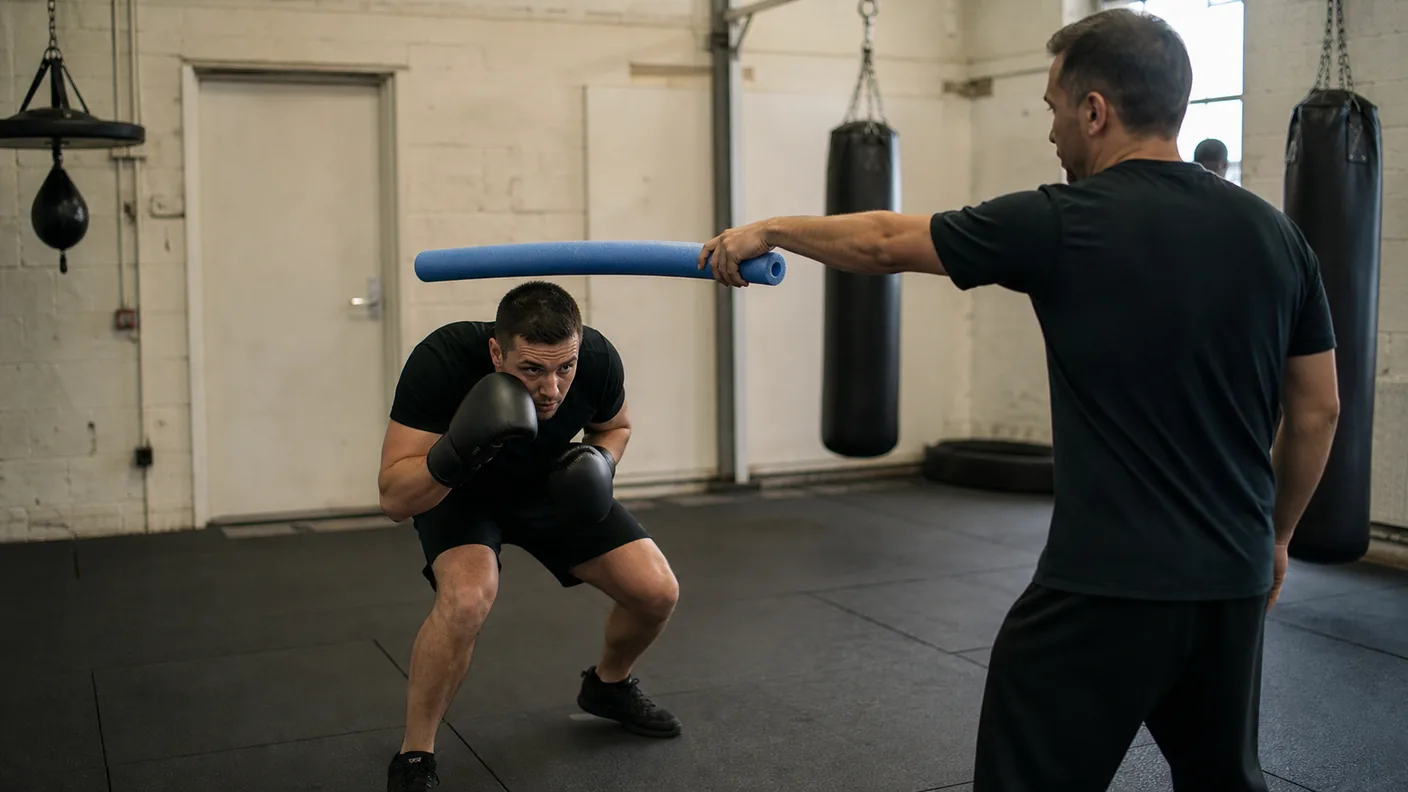
Roll Under Punches in Boxing Without Folding
Learn a compact boxing roll that uses the legs, keeps your eyes up and leaves you ready to hook, defend or move away.
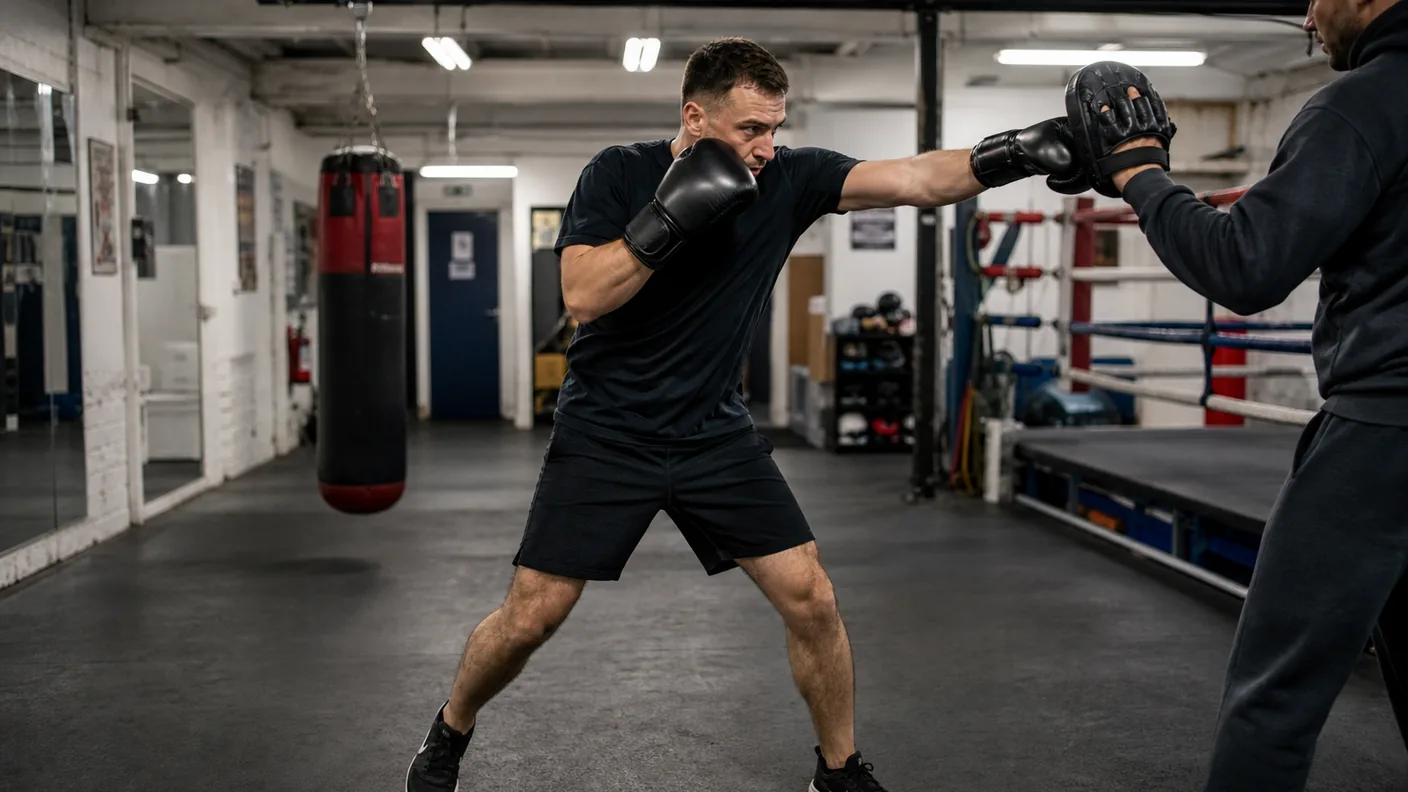
Cross-Roll Drill: Recover After a Right Hand
Use a compact outside roll after the cross to finish balanced, keep your eyes up and avoid standing still for the return.
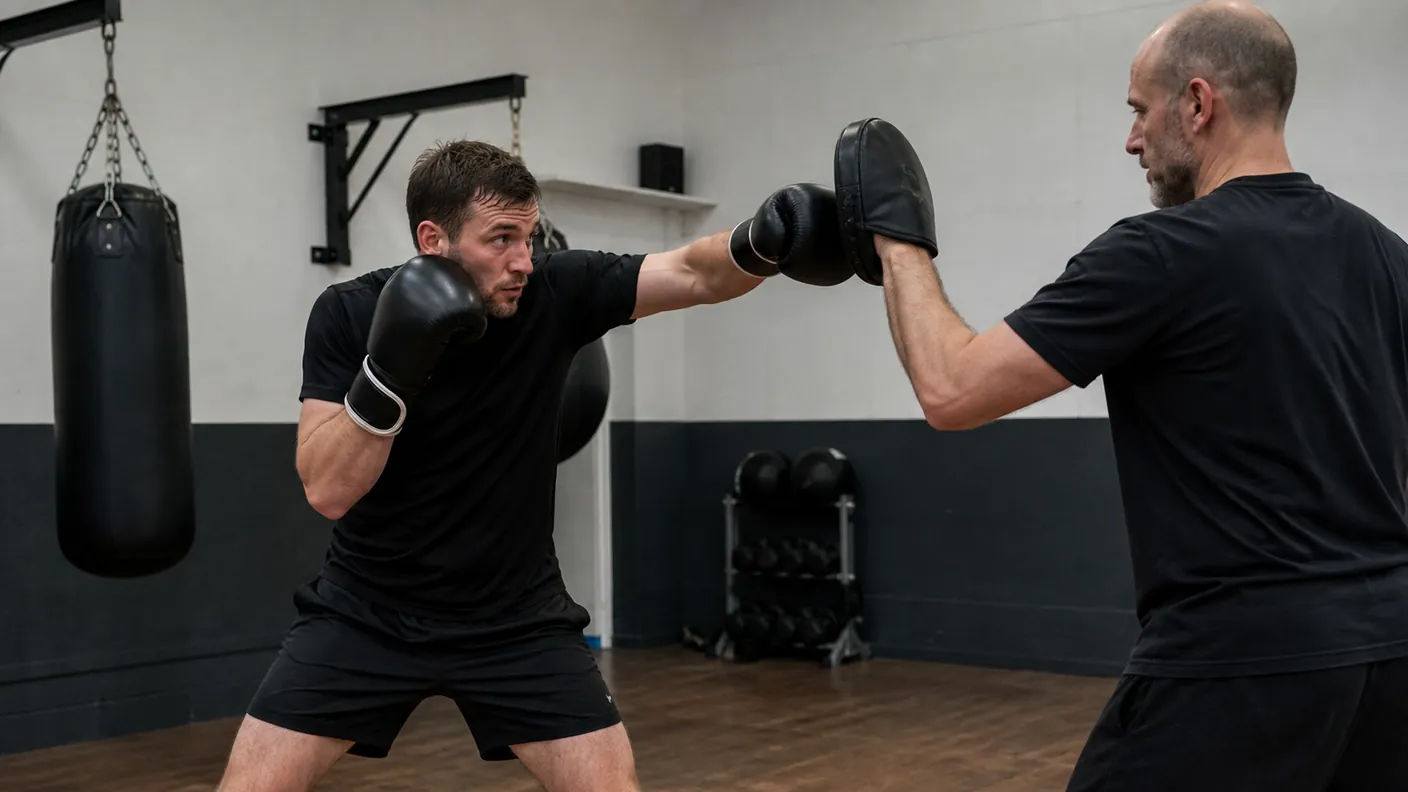
Hook-Slip-Hook: A Calm Close-Range Boxing Drill
Use a compact hook, small defensive slip and second hook to practise close-range boxing without standing still after your first punch.
Was this page helpful?
It takes one tap, and it genuinely helps.
Choose your next step
Turn this article into the right action
Some readers are ready to book. Some need the class route first. Pick the route that matches what you actually want.