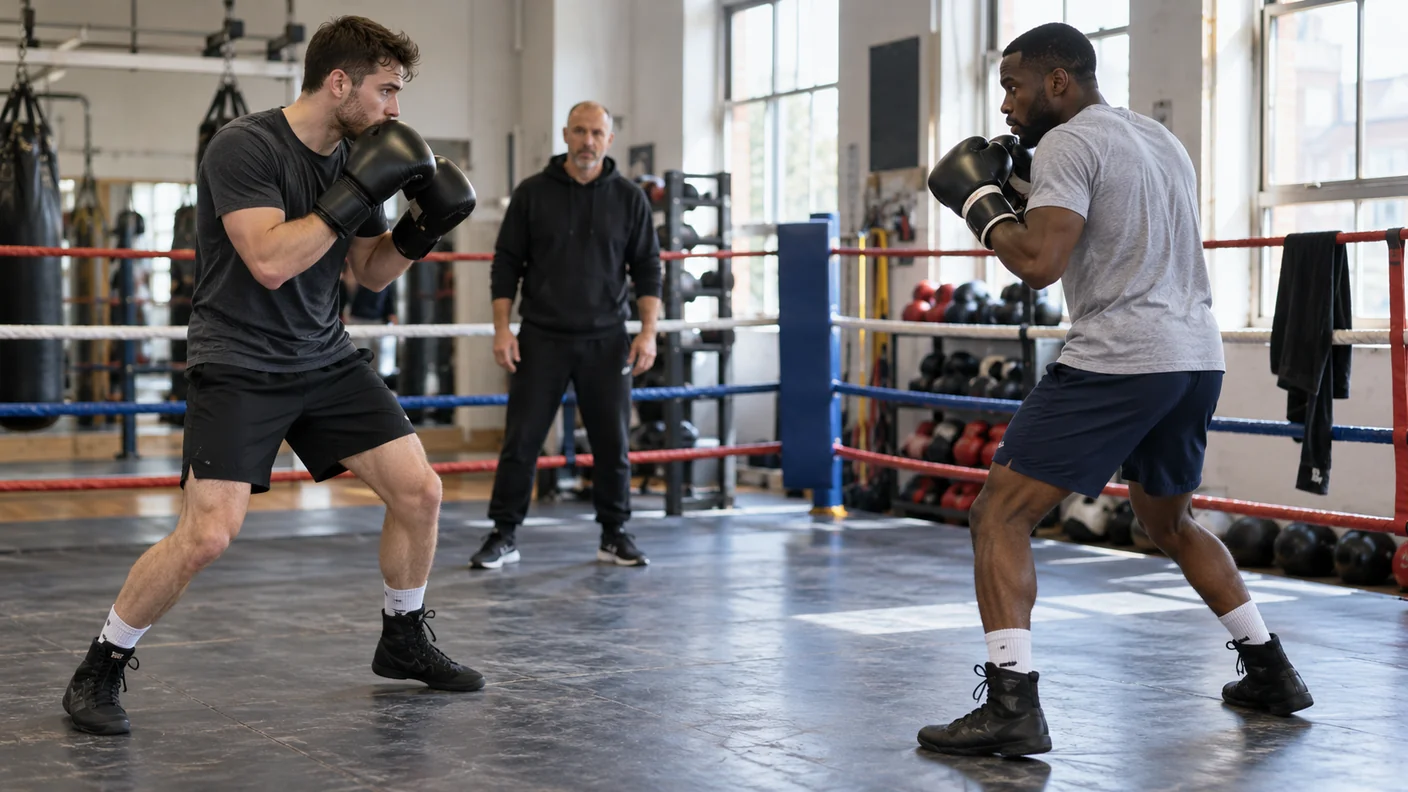
A boxing bounce can either make you hard to read or make you easy to time.
The difference is not how high you lift off the floor. It is whether your feet still leave you able to jab, cover and change direction when the other person moves. A useful bounce changes rhythm or distance while your stance stays available. A useless one turns you into somebody hopping in place with both hands busy trying to catch up.
There are two versions worth separating. A single-foot bounce shifts pressure from one foot to the other, so one foot is doing the light push while the other keeps contact with the floor. A double-foot bounce lifts and lands both feet together in a smaller, more direct rhythm. Neither is automatically better. They answer different problems.
Watch the demonstration below, then start with the slower drills. The point is not to copy a fighter's style. It is to feel which rhythm leaves your guard, balance and jab in the right place.
What a bounce should do for your boxing
A bounce is not a separate skill that sits beside your stance. It is your stance in motion.
At the edge of range, a small rhythm change can stop an opponent settling on your usual entry. You may show the beginning of a step, take the weight back, then move in with a jab when their feet have paused. You may also use a quiet bounce to stay light enough to leave after a punch instead of admiring the shot from square in front of them.
The standard remains simple. Could you stop at any point and throw one balanced jab? Could you cover a return shot without needing to plant your feet again? If the answer is no, the bounce is too large or too fast.
England Boxing places stance, balance and controlled footwork at the centre of its coaching handbook. That is a more useful test than trying to look quick. Good movement leaves options. Busy movement often spends them.
Single-foot bounce: a lighter change of rhythm
In a single-foot bounce, the pressure alternates. As you move forward, the rear foot gives a small push while the lead foot stays close enough to receive your weight. As you move back, the lead side gives the push and the rear side settles the movement. At no point should you feel as if you are launching both feet into the air.
This version can feel relaxed and fluid once it is familiar. It is useful for showing a rhythm without committing to an entry, making a small in-and-out adjustment, or preparing a jab that does not arrive on the same beat every time.
The risk is letting the bounce become a habit with no decision behind it. If you always bounce at the same pace, your partner can wait for the moment you are travelling forward or landing. If your hands drift lower every time the feet get light, the rhythm has cost you your defence.
Start with no punches. Stand in your normal stance and make a short forward-and-back pressure change. Keep the head level, knees soft and guard where it belongs. You should feel a small transfer through the feet, not a jump through the shoulders.
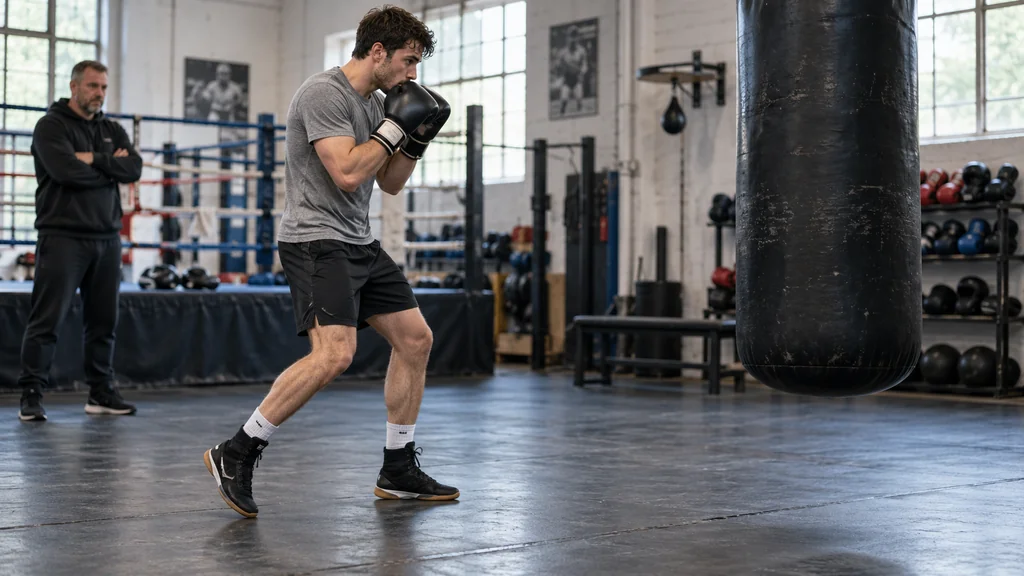
Double-foot bounce: a more direct platform
The double-foot version is more obvious. Both feet leave the floor together by a small amount, then settle together while the usual gap between them remains. The movement should still travel only as far as your stance can travel with it.
This can give a boxer a firmer, more direct feeling when they want to move in behind a straight punch. It is not an excuse to jump into range. The moment the feet land too close together, too wide apart or square to the partner, the next punch has lost its base.
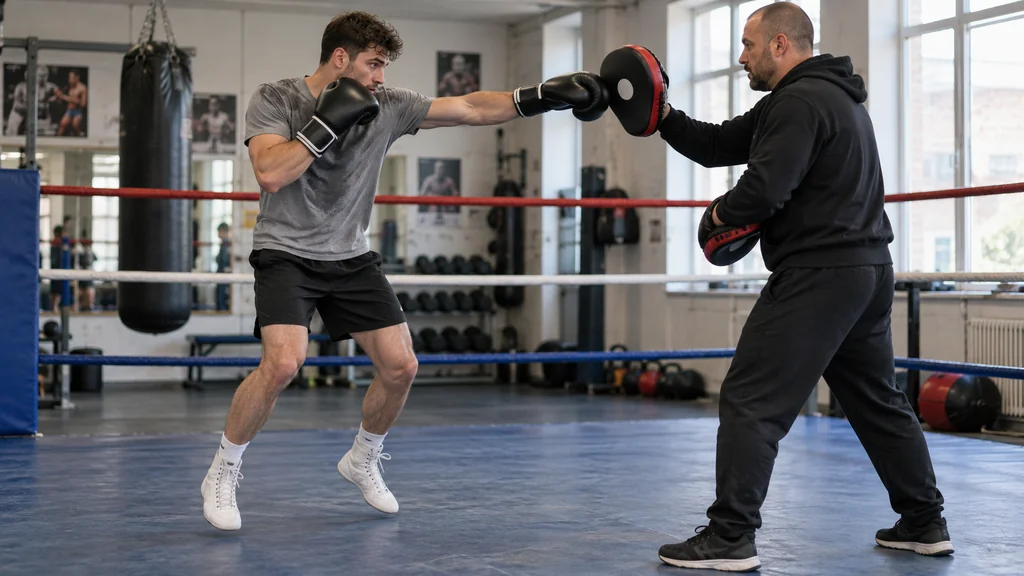
Think of the double-foot bounce as a brief loading rhythm, not a way to cover distance in one leap. You may use it before a controlled jab to a mitt, then settle both feet before deciding whether there is a second shot. If the jab misses or the coach removes the target, bring the hands home and reset instead of chasing forward.
A review of boxing biomechanics describes effective punching as work shared across the legs, trunk and upper body. That is why a small footwork choice matters. If the feet land badly, the arm may still reach the target, but the punch and the recovery will both be weaker.
Do not make either version a permanent metronome
The common mistake is making the bounce predictable.
A boxer starts light on their feet, feels athletic, then repeats the same up-down beat for an entire round. The other person does not need to be a brilliant counter puncher to notice. They can time the landing, step with the bounce or feint a jab and watch you spend your movement early.
Change the rhythm by doing less, not more. Pause in stance. Take one quiet step. Show a short shoulder feint. Bounce once, then stand still long enough to see the response. The change between movement and stillness is often more useful than a bigger or faster bounce.
This is closely connected to how to use feints in boxing. A feint gives the other person a question. Your feet need to stay organised enough to use the answer. If the bounce has already sent you forward, back or sideways, you may not be in position to take advantage.
For longer entries and exits, our pendulum step boxing drill is the better next step. The pendulum step asks you to make a punch fall short and recover range. The bounce work here is narrower: it teaches you to feel rhythm before you commit to either direction.
A three-round bounce-to-jab drill
Use a mirror, a heavy bag or a coach holding one focus mitt. Keep the first attempts quiet. This is a technical drill, not a conditioning challenge.
Round one: find each rhythm
Work for one minute with no punches. Spend twenty seconds using a small single-foot bounce, then twenty seconds using a small double-foot bounce, then twenty seconds standing still in your stance between occasional steps.
Notice which version makes you raise your shoulders, drift over the front foot or lose the gap between your feet. Do not force it. Make the movement smaller until you can stop cleanly.
Round two: add one jab only
Choose one rhythm for three or four movements, then let a coach present a mitt at honest jab range. Land one measured jab as your feet settle. Bring the glove straight home and hold the stance for one count.
The jab is the check. If you have to lean for it, the bounce has brought you to the wrong range. If you fall forward after it, slow the entry and let the feet settle earlier.
Round three: choose movement or stillness
The coach now gives three possible cues: a mitt for one jab, a raised glove for a cover, or no target at all. Use the bounce only when it helps you arrive in balance. When there is no target, do nothing dramatic. Stand in your guard, read the space and reset.
That final choice is the reason for the drill. A bounce should not force a punch. It should leave you ready for the punch, cover or exit that the next moment requires.
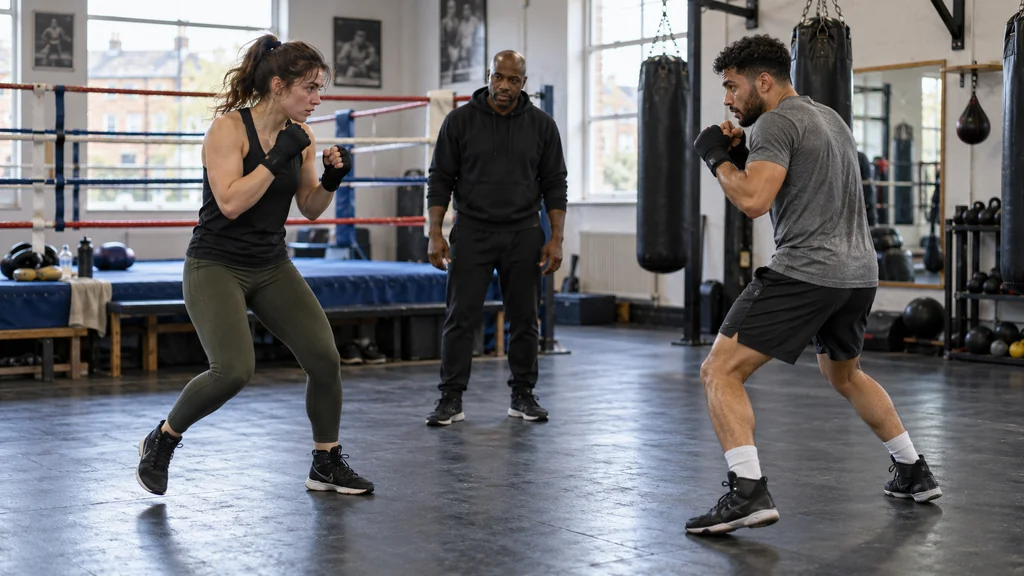
Four mistakes to catch early
The first is bouncing too high. Height gives you time in the air when neither foot is helping you change direction. Keep it close to the floor.
The second is letting the feet land together in one line. A boxer can look lively for a second, then discover they cannot jab, retreat or turn because the stance has disappeared. Land in your ordinary lanes.
The third is adding a large combination before the rhythm is reliable. Build from one jab. If the jab arrives with balance and comes home quickly, add a second decision later.
The fourth is treating light feet as a substitute for defence. Your hands still need to be close enough to catch, cover or return. A bounce should make your stance more useful, not make you a taller target.
Where this fits in training
Use this drill after a general warm-up and before fast bag rounds or partner work. Two or three quiet rounds will teach more than five minutes of frantic hopping. Work in trainers or boxing boots on a clear, dry floor. If the surface feels slick, shorten the bounce until you can stop safely.
For adults in Kidbrooke, Greenwich and nearby, our Recreational Adults boxing classes build footwork through coached drills, pads and controlled partner work. You do not need to spar to learn when movement is helping and when it is just noise.
The coaching cue is simple: stay light, land in stance, then choose.
H&G Team
Writer at Honour & Glory Boxing Club, a community boxing gym in Kidbrooke, South East London.
KEEP READING
Boxing Club vs Boxing Gym: Which Is Better?
Boxing club vs boxing gym explained clearly: coaching, atmosphere, safety, cost, beginners and who each option suits best.
The Greatest Boxing Knockouts in History
The greatest knockouts in boxing history were not lucky punches. Each one was the result of specific technical and tactical conditions. Here is what made them happen.
Boxing vs F45: Which Gives You More After Six
F45 and boxing are both popular fitness options for adults in London. Here is an honest comparison of what each delivers and which is worth your time and money.
Was this page helpful?
It takes one tap, and it genuinely helps.
Choose your next step
Turn this article into the right action
Some readers are ready to book. Some need the class route first. Pick the route that matches what you actually want.