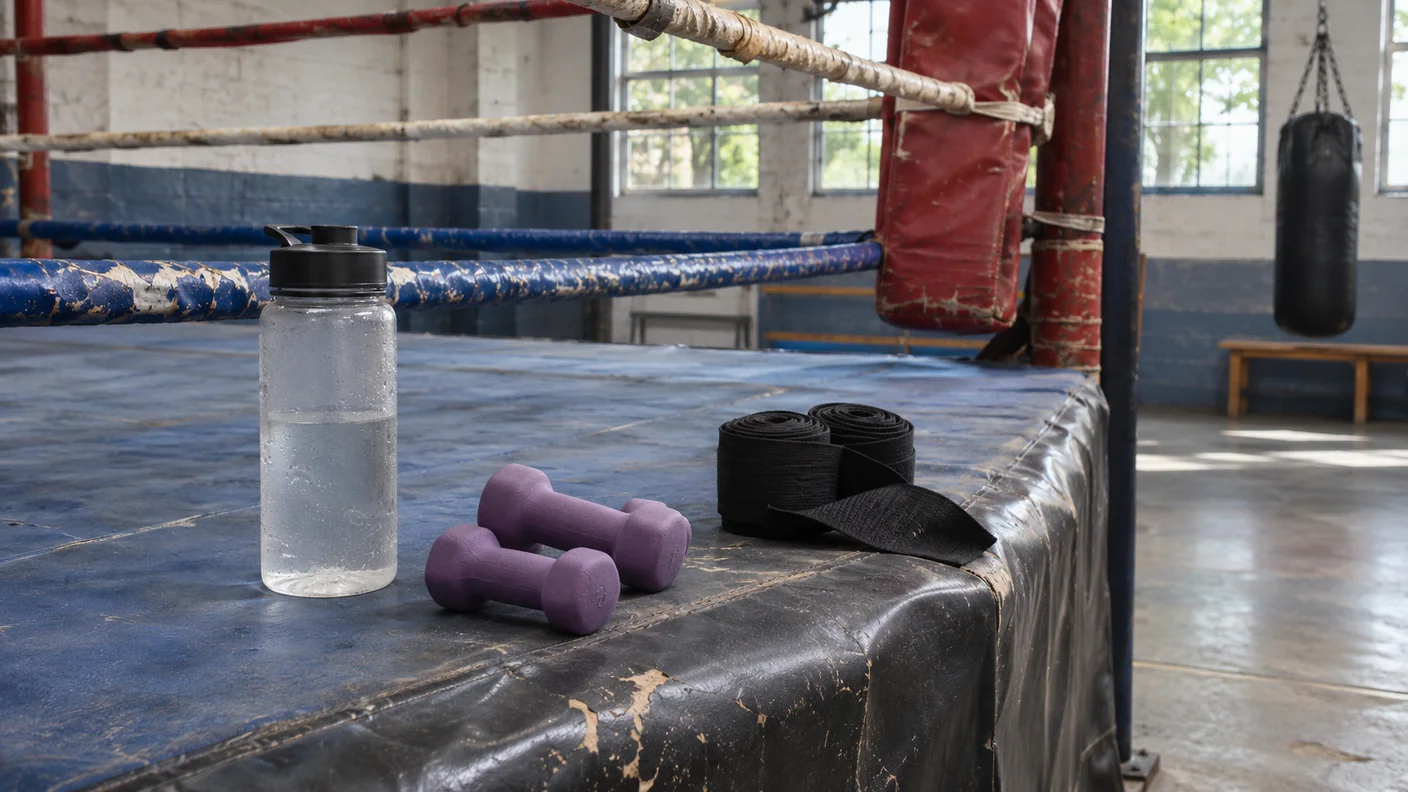
If you mean tiny dumbbells held during a slow shadowboxing round, the answer is sometimes. If you mean trying to make your punches faster, harder or more tiring by snapping them out with weights in your hands, the answer is no.
That distinction matters. Weighted shadowboxing is one of those gym habits that looks serious from across the room. Someone has a pair of dumbbells, their shoulders are burning and the punches are flying. It is easy to assume the drill must be building boxing power.
Usually, it is not. A good boxer does not need another reason to turn punches into arm work. They need a better stance, cleaner sequence through the floor and hips, a hand that returns to guard, and enough patience to make each repetition look like boxing.
What light weights can and cannot do
The best case for light weights is not power. It is restraint.
Boxing Science's assessment of weighted shadowboxing makes the useful distinction. Light dumbbells can slow a boxer down during a technical warm-up, which may help someone stop flinging punches and pay attention to shape. The same guidance is clear that the drill is not a good route to more punch power or upper-body conditioning.
That makes sense when you look at what the body is actually doing. A dumbbell pulls downwards. A straight punch has to link the feet, legs, trunk, shoulder and hand towards a target. Those are not the same demand.
A biomechanics study of amateur boxers found that better punchers did not simply use more shoulder. Their force and speed came from how the body segments worked together. A weight in each hand can make your shoulders work harder, but it cannot repair a weak stance or teach the hips and feet to arrive in the right order.
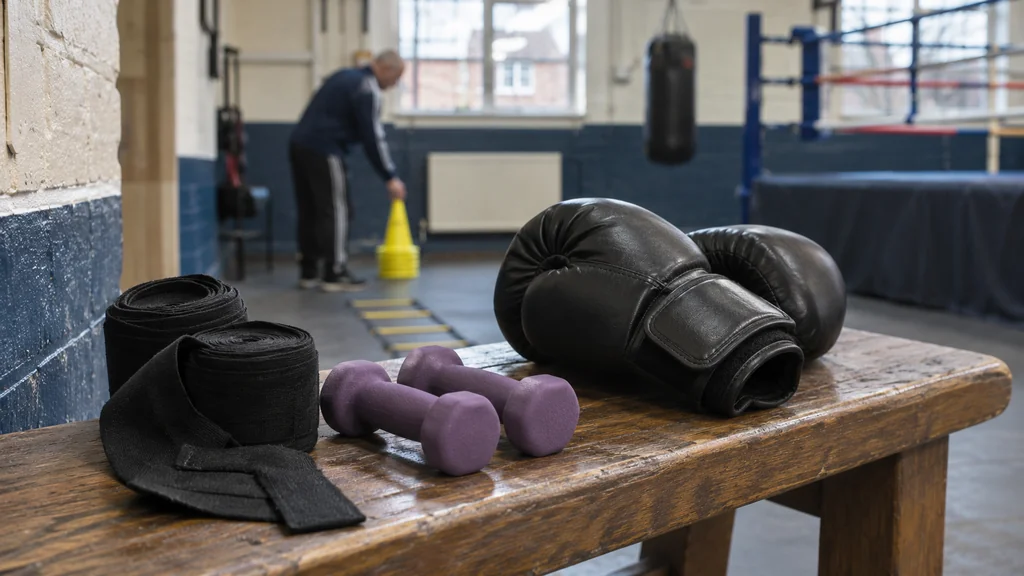
Why most beginners should start without them
A new boxer already has plenty to think about. Stance width. Guard height. Breathing. Which hand is going first. Whether the rear heel is turning. Bringing the glove home without looking at the floor.
Adding weights too soon often makes the least useful part of the movement louder. The shoulders rise, the elbows stiffen and the boxer starts trying to carry the gloves rather than move freely. The punch comes back slowly, the guard hangs in front of the chest, and every round starts looking like a fight with gravity.
Unweighted shadowboxing is not a lesser version of training. It is where you learn whether a punch has a proper start and finish. If the jab returns late without weights, adding a dumbbell does not fix it. It gives the late return more mass.
That is why the first question is not, “What weight should I use?” It is, “Can I shadowbox for a round with my shoulders relaxed, my feet under me and both hands returning where they should?” If the answer is no, stay unweighted.
Our guide to the benefits of shadowboxing gives a simple starting structure. A mirror, a timer and one clear technical job will take you further than a pair of pink dumbbells used for the sake of feeling busy.
Do not use weights to chase punching power
Punching power comes from more than a strong arm. The punch needs force from the floor, an organised transfer through the trunk, a shoulder that can deliver the hand, and a recovery that does not leave you falling over the front foot.
A study of lead straight-punch mechanics found clear differences in both punch output and lower-limb force measures between higher-level and junior boxers. That does not mean every boxer needs complicated strength work. It does mean the legs and sequence matter.
This is where weighted shadowboxing gets oversold. It makes the upper body feel loaded, so it feels specific. But feeling a burn is not the same thing as building a better punch. If a drill leaves your feet quiet, your hips late and your shoulders exhausted, it may be teaching the wrong lesson.
For most recreational boxers, better uses of training time are ordinary shadowboxing, coached pad work, bag rounds where the stance stays honest, and basic strength work that a coach can fit around your boxing. Our guide to improving punching power explains why balance, timing and force transfer should come before any hunt for a magic exercise.
When a light-weight round can make sense
There is a narrow, sensible use for the drill. An experienced boxer, with a coach who knows their habits, might use very light weights for a short warm-up round. The purpose is not to punch hard. It is to slow the movement enough to feel whether the fist stays closed, the shoulder stays calm and the hand comes back under control.
The weights need to remain genuinely light. Boxing Science suggests 0.5kg to 2kg and warns against going heavier because it changes punching technique. That range is not a challenge to reach. It is a ceiling for a specific coaching drill.
Even then, the quality check is simple. The moment you start locking the elbow, snapping punches out, shrugging the shoulders or losing the guard on the way back, put the weights down. You are no longer using a technical constraint. You are practising tired, awkward punches.
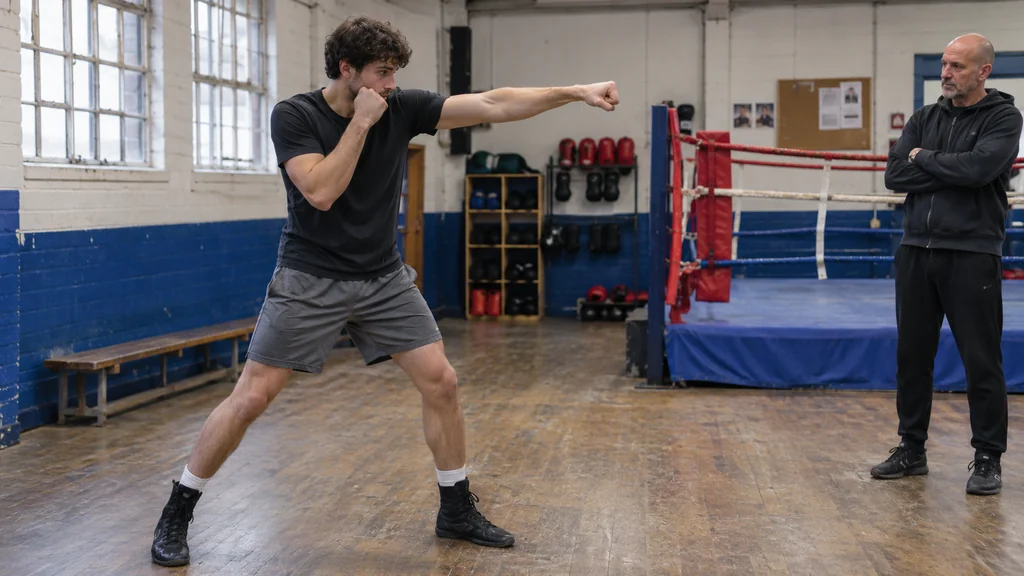
A better three-round alternative
If you want shoulder endurance and cleaner technique, use the same three minutes without hand weights first.
Round one: slow straight punches
Move lightly and throw single jabs and crosses at a pace where every punch can return to guard. Do not chase speed. Watch for the rear hand, the feet and the breath between shots.
Round two: punch and reset
Throw one or two shots, then take a small step and settle. This stops the common habit of throwing combinations while the feet are stuck. You are training the shape after the punch, which is where many beginners lose their guard.
Round three: coach-led calls
Use a simple call from a coach or training partner: jab, cross, step out, reset. Keep the intensity modest enough that you can still hear the instruction and make a decision. The goal is not to win the round. It is to finish it looking organised.
That three-round structure develops the thing people often want from weighted shadowboxing: the ability to keep shape when the shoulders are getting tired. It does so without teaching you to fling a loaded hand through the air.
What if your shoulders hurt during the drill?
Ordinary muscle fatigue after new training is one thing. Sharp pain, a feeling of instability, pain that gets worse, or difficulty moving the arm is another. Stop the loaded drill rather than trying to prove you can tolerate it.
The NHS shoulder-pain guidance advises getting help if shoulder pain is worsening, does not improve after two weeks or makes it very difficult to move the arm or shoulder. A coach can help with guard position and training load. They cannot diagnose an injury.
For adults in Kidbrooke, Greenwich and nearby, our Recreational Adults boxing classes use coached pad work, bag work and technical drills to build fitness without treating every round as a strength test. Learn to move well first. The harder work has somewhere useful to go after that.
H&G Team
Writer at Honour & Glory Boxing Club, a community boxing gym in Kidbrooke, South East London.
KEEP READING
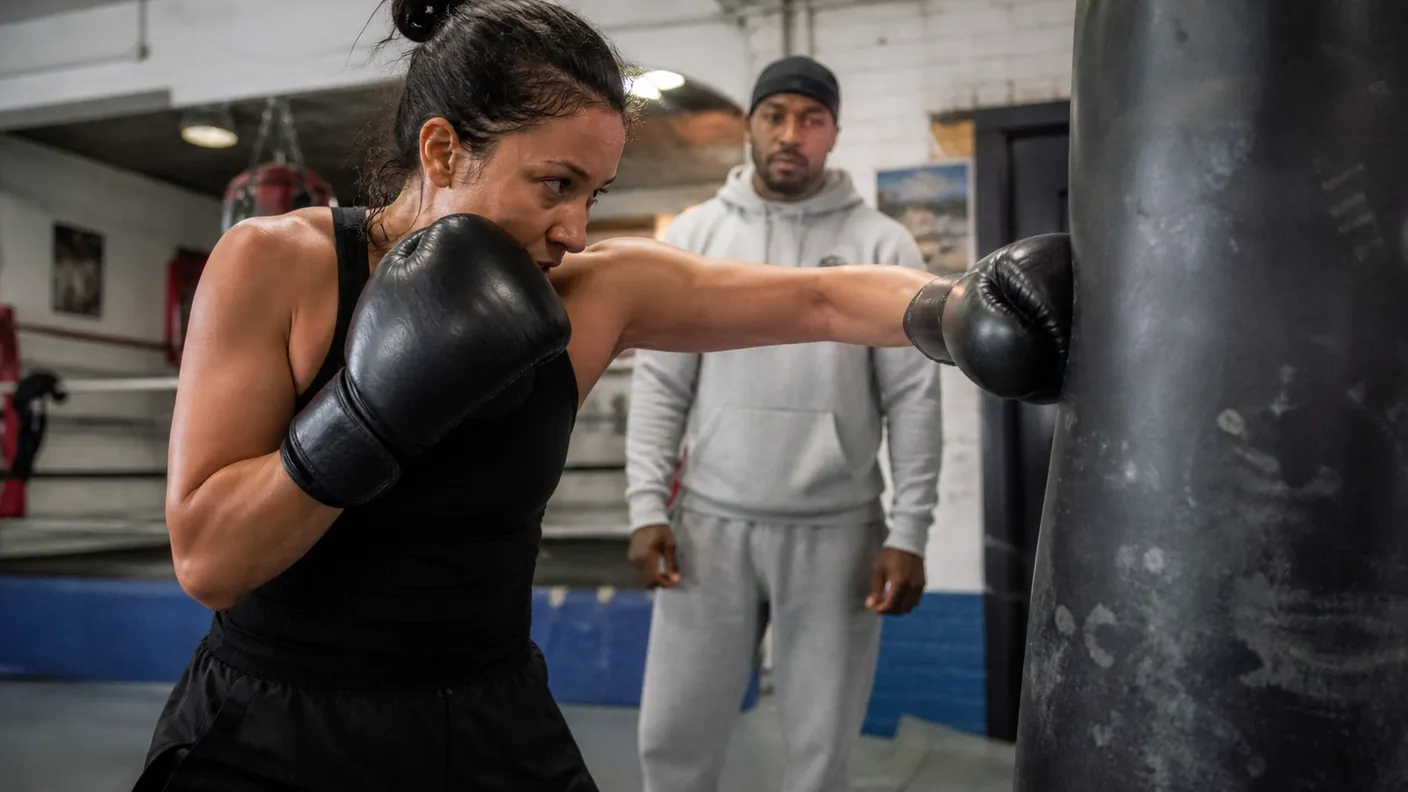
What Does "Sit Down on Your Punches" Mean?
A boxing coach explains the cue behind heavier shots, better balance and cleaner power without turning every punch into a wild swing.
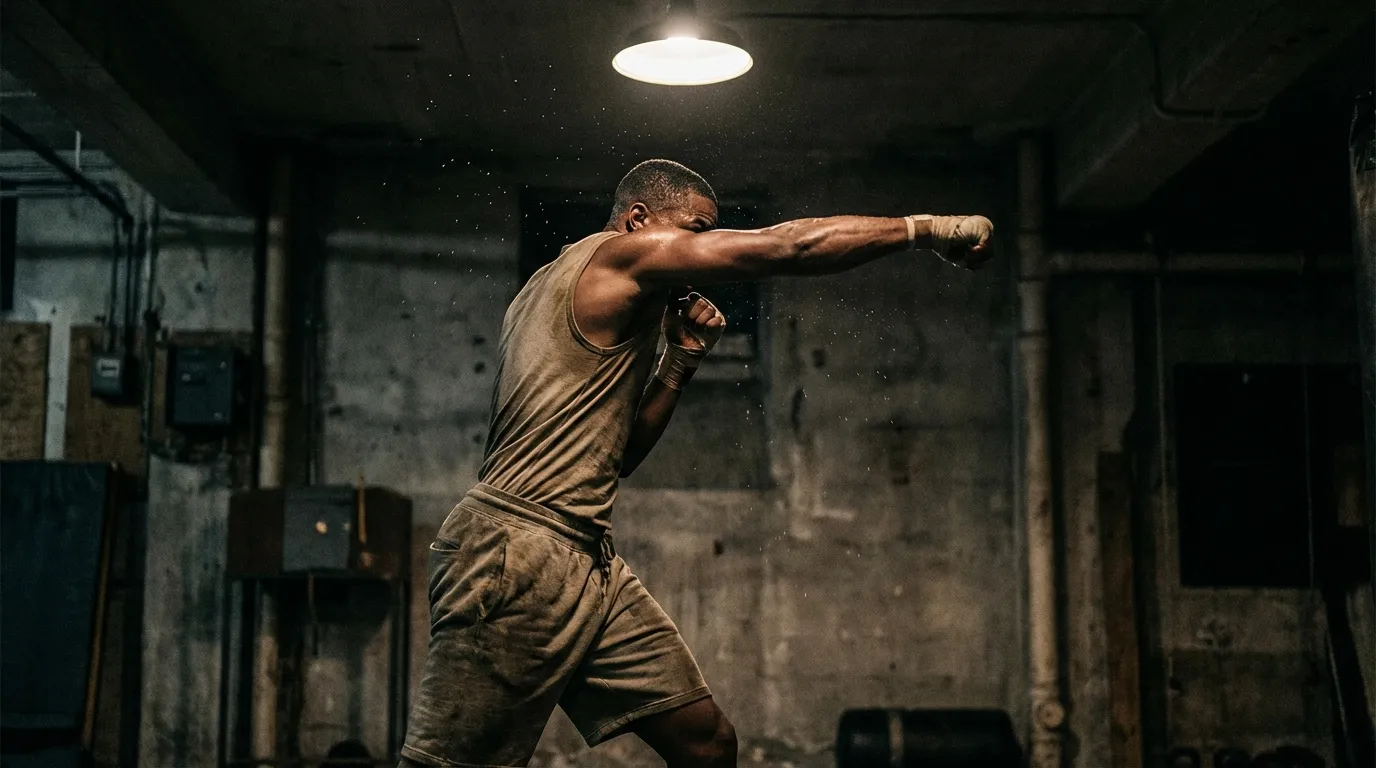
How to Improve Punching Power
A researched guide to harder, cleaner punches: technique cues, coached drills, common-error fixes and a four-week progression.
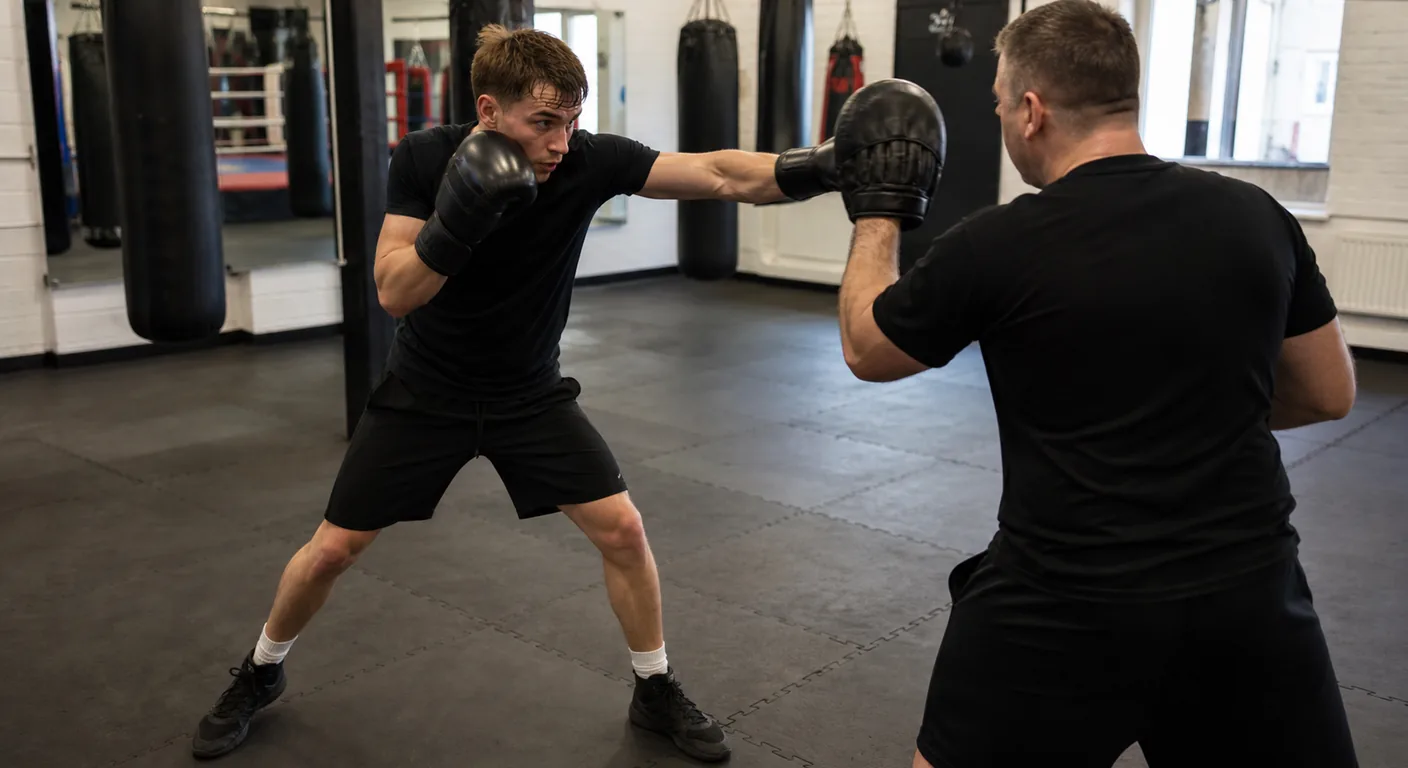
How Hard Should You Hit Boxing Pads?
New to pad work and unsure how much power to use? Learn how to hit with intent without turning every round into a balance and injury test.
Was this page helpful?
It takes one tap, and it genuinely helps.
Choose your next step
Turn this article into the right action
Some readers are ready to book. Some need the class route first. Pick the route that matches what you actually want.