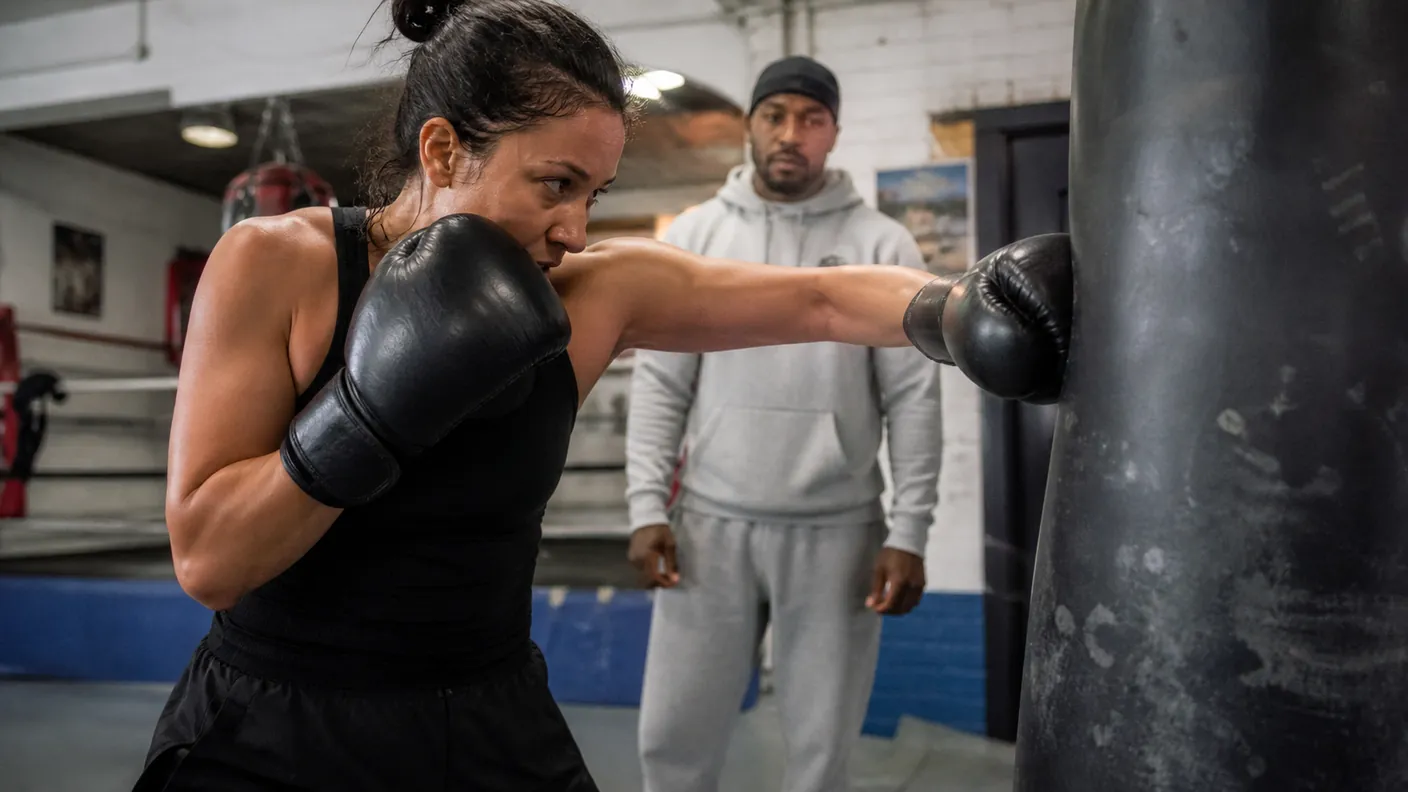
"Sit down on your punches" is one of those boxing instructions that makes immediate sense to people who have heard it for years and almost no sense to everyone else.
You are not being told to squat. You are not being told to throw every shot as hard as possible. You are not being told to stop moving your feet and turn into a statue beside the bag.
The cue means this: get your body underneath the punch, stay balanced as you throw it, and let your legs, hips and torso add something before the fist reaches the target.
When it works, the punch feels heavier without feeling wilder. When it goes wrong, people bend at the waist, reach with the shoulders, or load up so obviously that a training partner could read the shot from across the gym.
Here is what a coach usually means, how to practise it, and when to leave the phrase alone.
It is about balance first, not brute force
A punch has to start from somewhere. If your feet are too close together, your weight is hanging over the front knee, or you are falling into range, the arm does most of the work. That is why a hard-looking punch can land with a disappointing slap.
Sitting down on the shot means settling enough into your stance that you can push from the floor and rotate without losing your shape. Your knees soften. Your hips can turn. Your head stays over your base rather than lunging past it.
The useful test is simple. After the punch lands, can you still defend, step away or throw the next shot cleanly? If your feet have crossed, your chin is hanging over your front toe, or you need a second to find your balance, you fell into it.
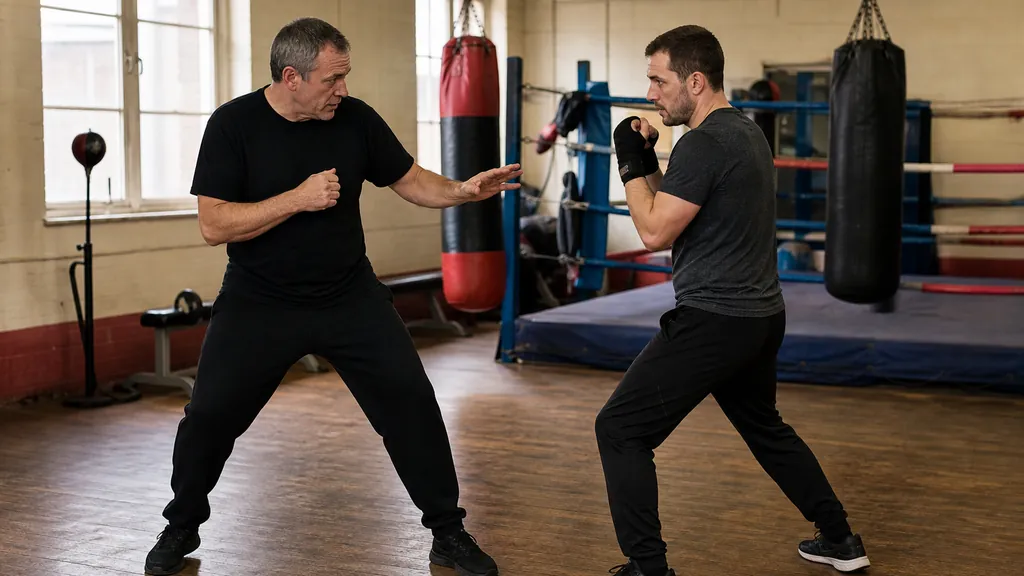
Power moves through the whole body
The fist is the part that lands, but it is not where a clean punch starts.
A biomechanical analysis of junior and elite boxers measures how the body and feet contribute at impact.
A recent review of force transfer in punching reaches the practical conclusion coaches see every day: stable posture and coordinated movement through the legs, hips, torso and arm matter more than trying to throw with the shoulder alone.
For a rear straight, the back foot presses into the floor, the rear hip turns through and the shoulder follows the line of the punch. For a lead hook, the lead foot and hip give the turn somewhere to come from. For a body hook, a small level change can help you get underneath the shot rather than reaching down with your arm.
The sequence is connected, not forced. Think of it as a quick transfer of weight and rotation, then a return to guard.
What the cue should look like
A boxer sitting down on a punch does not look as though they are trying to pose for a photograph. The movement is small enough that you may notice it more in the sound of the pad than in the knees themselves.
Look for these signs:
- knees are relaxed rather than locked
- feet stay in a usable boxing stance
- hips turn with the shot instead of arriving late
- the non-punching hand stays close to guard
- the punch returns without dragging the whole body forwards
The cue often appears when a boxer is too tall, with straight legs and a glove flying from the shoulder. A small knee bend and a good hip turn are enough. Chasing a lower stance for its own sake makes a boxer slow and easier to hit.
What it does not mean
The bad versions are easy to spot once you know them.
Do not bend at the waist
Bending forwards feels like putting weight behind the punch, but it usually puts your head where it should not be. Keep the spine long and let the knees and hips lower the level together.
Do not load up before every shot
If you dip, pause and swing, you have told your partner what is coming. Good boxing power arrives from a position that still looks ordinary. The shot should be prepared by your feet and your timing, not by a large theatrical movement.
Do not plant your feet permanently
You need a base to punch, but boxing is not shot put. If you freeze your feet after every heavy shot, you lose the ability to reset range or leave safely. Sit down briefly, land cleanly, recover your stance and move again.
Do not turn the jab into a power shot
Most jabs do not need a big weight shift. The jab measures distance, interrupts rhythm and gives you information. Save the firmer sit-down action for moments when the target, range and balance are right.
Our guide to the six basic boxing punches explains the jobs those punches do. The goal is not to make all six feel the same. A jab, a cross and a body hook should ask different things of your feet and hips.
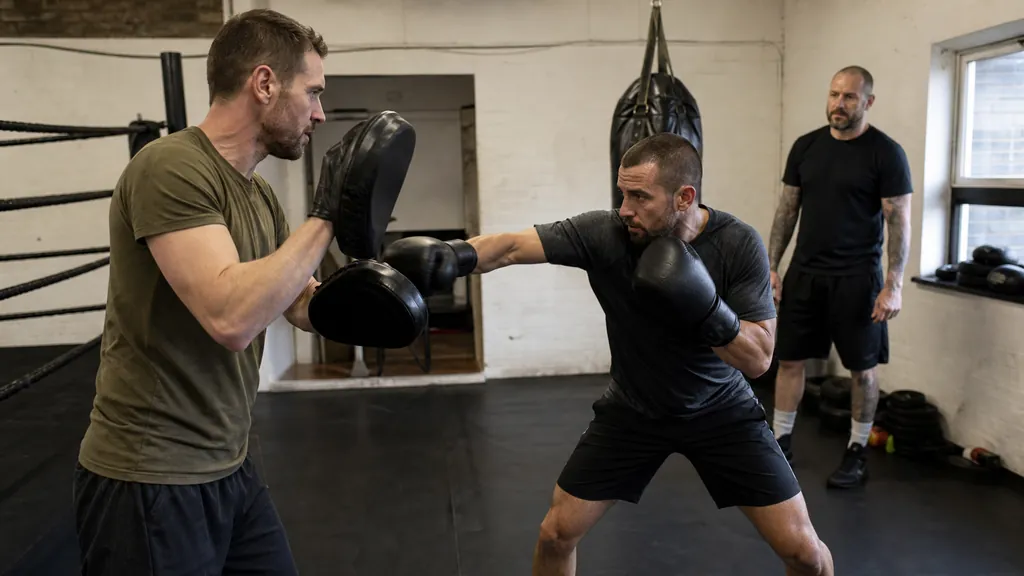
Use the right punch for the right range
This cue is most useful when you are already close enough to land without reaching.
On the bag, that means standing at a range where a straight punch reaches with the shoulder relaxed and a slight turn of the torso. If you need to lean just to touch the bag, step closer first. Sitting down on a punch from the wrong distance does not fix the distance. It makes the reach more committed.
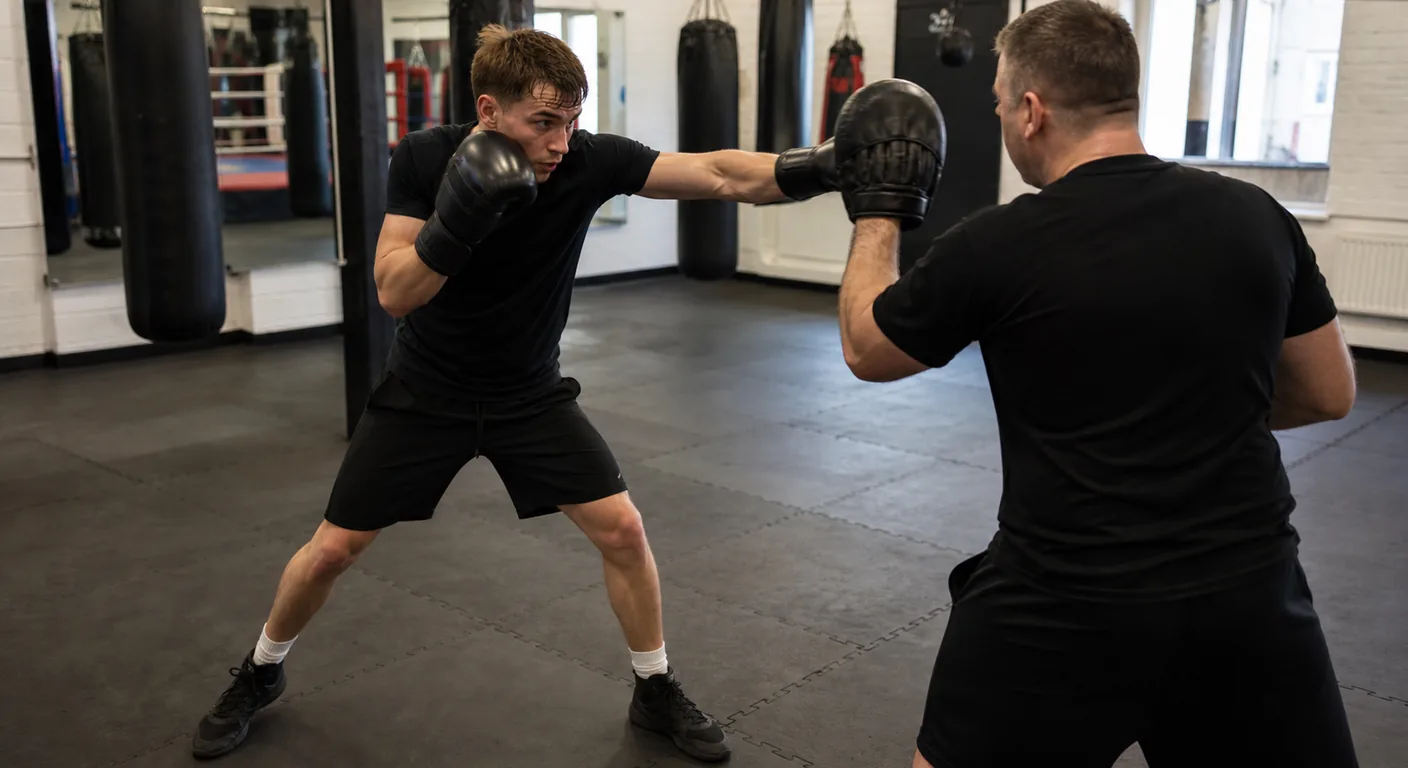
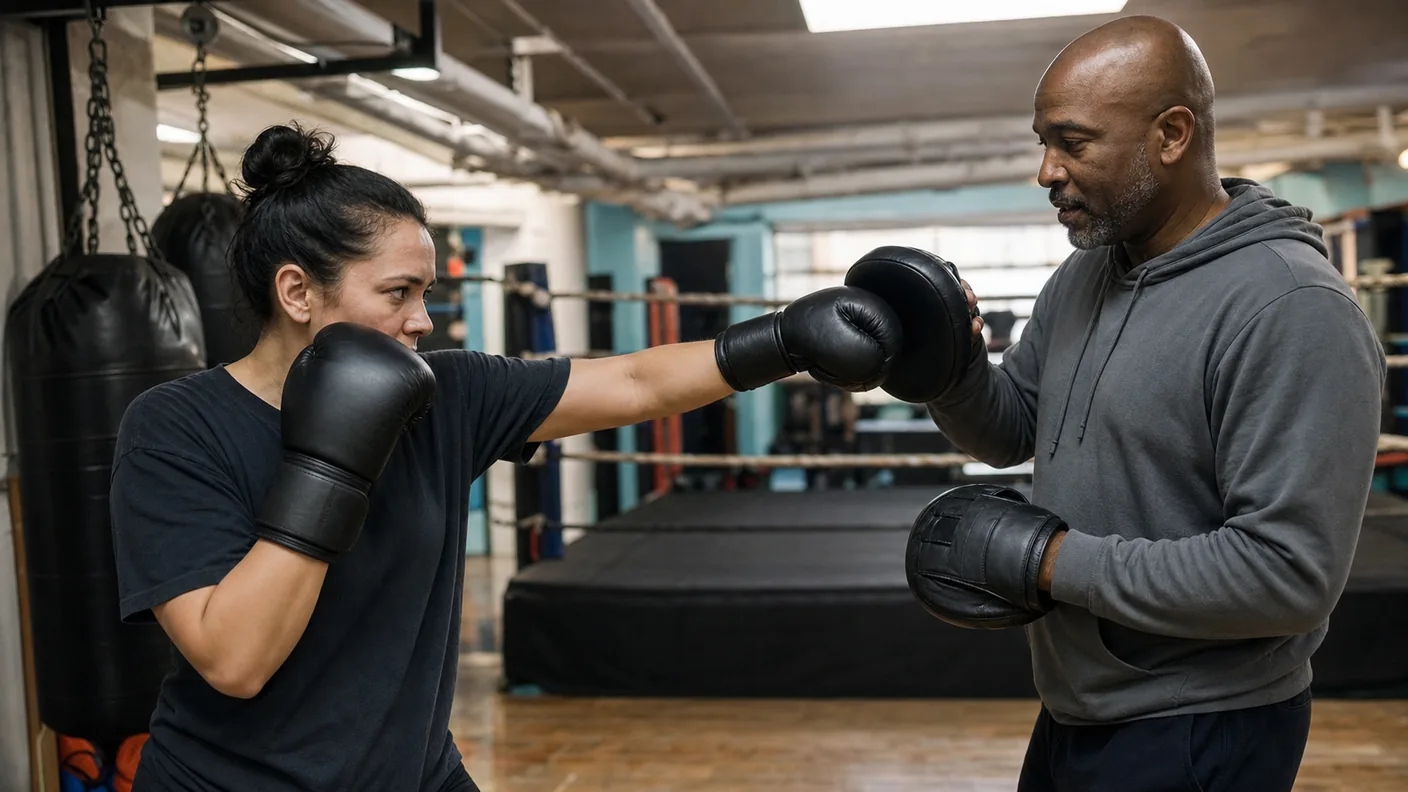
On pads, it means the holder gives you a stable target at a sensible height. Good pad work teaches this quickly because a coach can move the target, slow the pace and show you when the stance has drifted. If you are new to it, read our guide to boxing pad work for beginners. It explains why the mitts are more than something to hit hard.
A simple drill is enough:
- Stand in range of the bag or pad.
- Throw one relaxed jab and reset.
- Throw one rear straight with a small bend in the knees and a clean hip turn.
- Freeze for a second after impact.
- Check that your feet, chin and rear hand are still where they should be.
- Step out, then repeat.
Do five clean repetitions before trying to add speed. If the stance breaks after the cross, do not add a hook. A combination cannot repair a bad first punch.
When you should not chase more power
There are sessions when the right instruction is the opposite: stay light, stay loose and work on speed or timing.
Technical drills, jab rounds, new combinations and early pad work are not tests of who can make the loudest noise. England Boxing advises beginners to learn the basics in a safe, controlled environment, whether they want non-contact fitness or a route towards the ring.
If a coach says you are rushing, tensing your shoulders or losing your feet, more power is not the answer. Get the shape right first. The useful power arrives later because the body has learnt where to be.
If you have current knee, back, wrist or shoulder pain, do not try to coach yourself through it with a deeper stance or harder bag work. Tell the coach what is going on and get appropriate clinical advice if symptoms need it. Technique work should make a session more controlled, not turn pain into a toughness test.
Learn the cue with someone watching
"Sit down on your punches" is useful because it gives a coach a short way to describe a full-body action. It becomes unhelpful when it is treated as a command to throw wild shots.
The good version is quiet: feet underneath you, knees soft, hips involved, punch straight, guard back. You should feel more solid, not more reckless.
For adults in Kidbrooke and nearby, Adult Recreational boxing classes give you the place to learn that distinction properly. You can work on stance, bags and pads with a coach correcting the details before bad habits settle in.
H&G Team
Writer at Honour & Glory Boxing Club, a community boxing gym in Kidbrooke, South East London.
KEEP READING
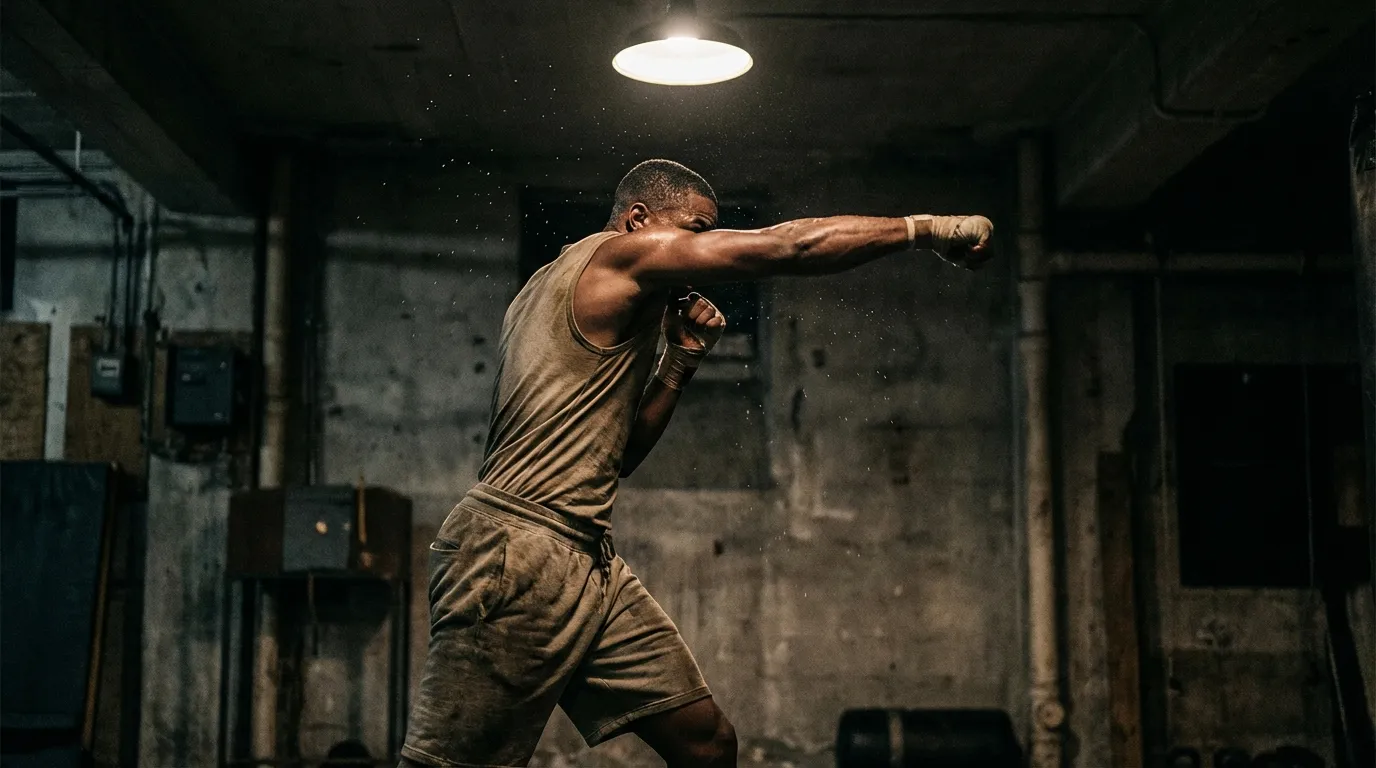
How to Improve Punching Power
A researched guide to harder, cleaner punches: technique cues, coached drills, common-error fixes and a four-week progression.
How Hard Should You Hit Boxing Pads?
New to pad work and unsure how much power to use? Learn how to hit with intent without turning every round into a balance and injury test.
Why You Fall Forward When You Punch
Falling forward after a punch is a common boxing mistake. Learn why it happens and how to keep your balance, guard and next move.
Was this page helpful?
It takes one tap, and it genuinely helps.
Choose your next step
Turn this article into the right action
Some readers are ready to book. Some need the class route first. Pick the route that matches what you actually want.