Power Jab in Boxing: Step In Without Falling Over
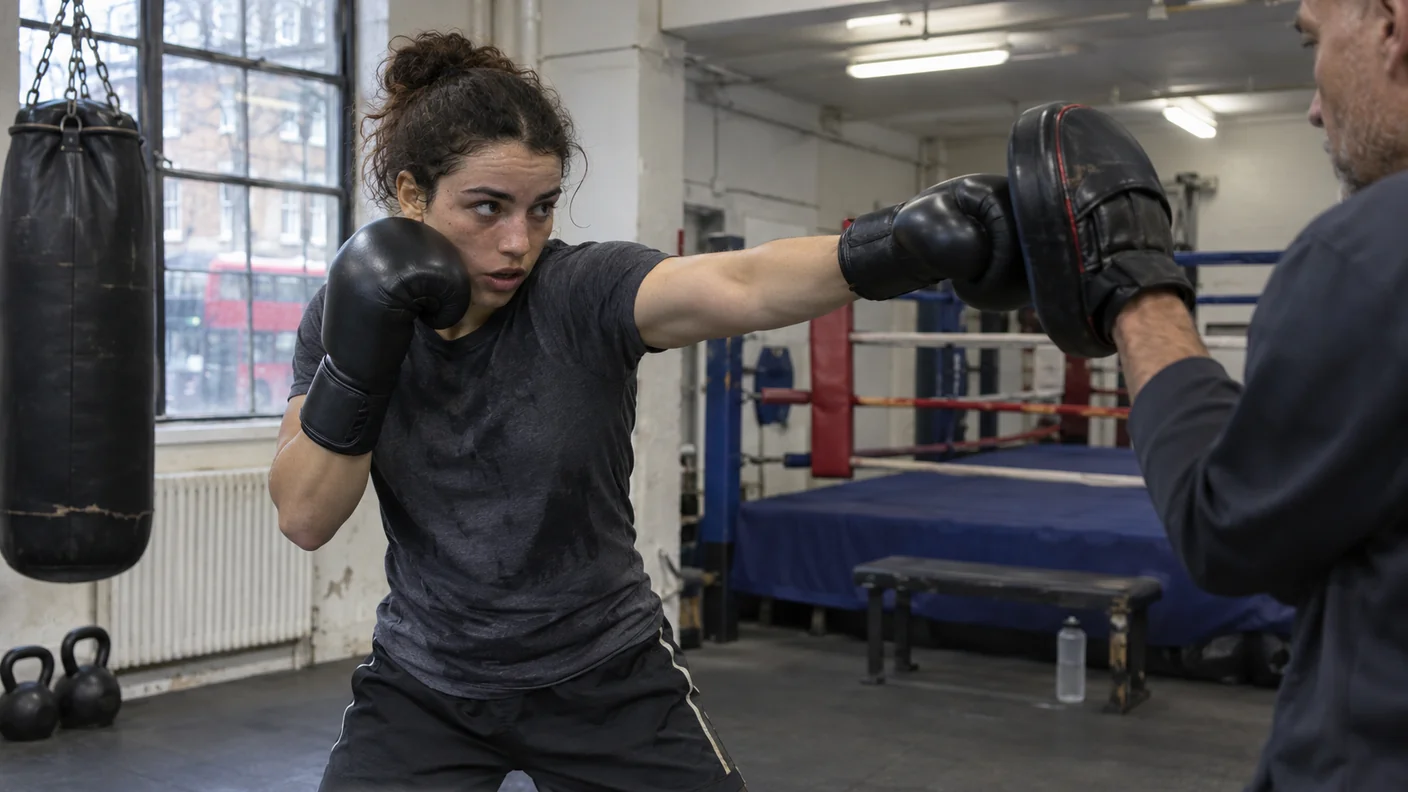
A power jab is not a harder version of every jab you throw. It is a more committed lead hand, used when you want to take a little ground, make someone respect the line and arrive close enough to ask the next question.
That distinction matters. Most jabs should be light enough to measure range, interrupt a step or collect a reaction. The power jab asks more of your feet and body. Done well, it feels like your stance carries the glove forward. Done badly, it becomes a lunge with your chin in front of your knee and your rear hand trying to rescue the moment.
Watch the demonstration below once, then use the slower drill here. Notice the difference between a jab that is snapped out from a settled position and one that takes the body with it.
What makes a jab a power jab
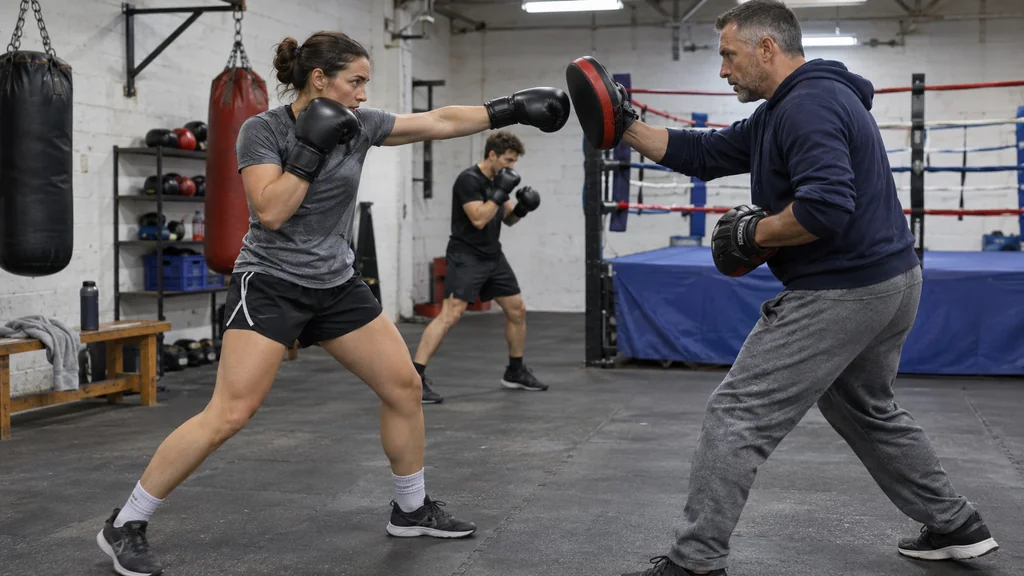
The clue is in the feet. A normal jab can be a small touch from a settled stance. A power jab uses a short lead-foot step at the same time as the lead hand travels. The rear foot gives you the push, the lead foot takes the space and the lead shoulder comes far enough forward to protect the chin.
You do not need a huge stride. If the lead foot lands so far forward that the rear foot has to chase it, the jab has taken away your base. The best step is just large enough to put your knuckles onto a mitt, glove or bag target without your head travelling beyond the lead knee.
The body turns a little, but this is still a straight punch. Do not swing the lead arm across the target or twist so far that the rear glove leaves the cheek. Your shoulder helps the jab land with authority. It does not replace your guard.
England Boxing places balance, guard and controlled movement at the centre of technical development in its coaching handbook. That is the test for this punch. If you cannot stop after it and still defend, you have asked the jab to do more than it can.
Step with the jab, not after it
The common mistake is punching first and then trying to step after the glove has already reached. That leaves the arm long, the shoulder stretched and the feet late. You may touch the target, but you have not arrived in a useful boxing position.
Start with the lead foot and lead hand together. Imagine they are one action. As the rear leg gives a modest push, the lead foot moves and the jab travels on the same beat. The rear foot follows only enough to restore your normal stance after the lead foot has landed.
This is not a running step. The head stays between the feet. Keep the rear heel ready, the rear hand close and the elbows useful.
A review of boxing-punch biomechanics found that effective punches depend on connected work through the lower body, trunk and arm. It also noted that its measurements were taken against a bag rather than a moving opponent. That limitation is useful in the gym. A bag will not make you pay for falling forward. A partner, mitt holder or coach can show whether your feet have left you able to make a second decision.
Choose a sensible target
The head is not the only target for a power jab. A coach-held mitt at head height is useful for learning the line, but the chest and shoulder line can be more practical against someone who is moving in.
A firm jab to the chest can make an advancing boxer check their feet without asking you to chase a small head target. It can also give you a clearer sense of where their body is before you decide whether to step out, jab again or cover their return.
Do not turn this into a shove. The glove lands with a straight punch, then comes back. If your arm stays extended while the other boxer continues to walk in, you have made yourself easy to read and slow to recover.
For the less committed version, see our guide to a stiff jab that stops pressure without pushing. A stiff jab can interrupt a step from a more settled position. The power jab is for taking a little ground yourself, so it needs a clearer rule about what happens after the lead foot lands.
The recovery is part of the punch
A power jab has more commitment than a range-finding touch. That is why recovery cannot be an afterthought.
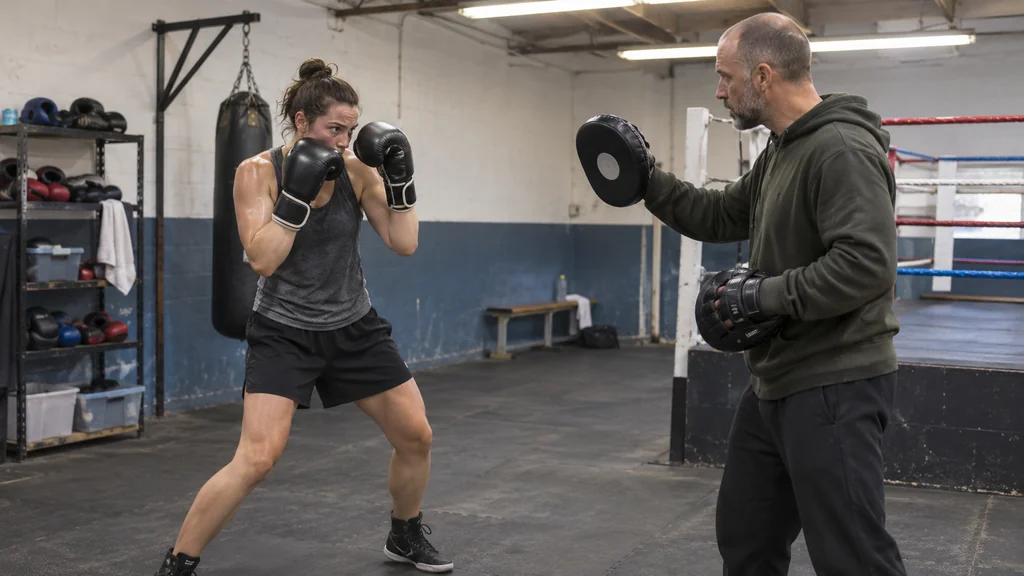
As the lead glove lands, start bringing it home along the same line. Let the rear foot settle enough that your stance is not stretched. Then make one choice: take a small angle, show another jab, bring both gloves into guard, or reset at the edge of range.
Do not programme a right hand after every power jab. Sometimes the jab makes the other boxer cover high and a body shot may be available. Sometimes they step away and the right hand would only become a reach. Sometimes they throw back immediately and the correct answer is a guard and an exit.
Our guide to boxing exchanges in three phases is useful here. An entry, a decision and an exit are connected. If the jab makes you arrive in a position where you cannot see the second phase, it was not a good entry.
A three-round power-jab drill
Use a coach and a mitt where possible. If you use a bag, start lighter than you think you need to. The drill is for stance, timing and recovery, not for trying to move the bag across the room.
Round one: step, jab, freeze
Start just outside normal jab range. Take a small lead-foot step as the jab travels to a mitt. Bring the hand back to guard and freeze for one count.
Check three things before the next repetition: the chin is behind the lead shoulder, the rear glove is near the cheek and the feet remain staggered. If any of those has gone, reduce the step and slow down.
Round two: choose the target
Ask the coach to present either a head-height mitt, a chest-height mitt or no target. Step with the power jab only when the target is there. If the target disappears, keep your stance and reset rather than reaching after it.
Round three: jab, read, leave
Now add one response after the jab. The coach can show a high guard, take a small step back or give a light return-jab cue.
Against the high guard, bring your hand home and decide whether to change level or reset. Against the step back, do not chase with the rear hand. Against the return-jab cue, cover or take a small angle. Keep every answer light and technical. The jab has done its job if it leaves you organised enough to see the response.
Four mistakes that turn it into a lunge
The first is a step that is too large. Your lead foot reaches, the rear foot trails and the chin arrives before the glove. Make the step shorter until you can stop without wobbling.
The second is leaving the rear hand behind. The lead side is busy, so the rear glove needs to be even more dependable. A power jab that lands while the right side of your face is open is an expensive trade.
The third is punching down at the bag from too close. If your shoulder is on top of the target and your elbow is lifting, take half a step back. A power jab is still a straight punch.
The fourth is using it every time you want to move forward. A committed jab becomes easy to counter when it appears on the same rhythm. Mix it with ordinary jabs, feints and pauses rather than charging through every answer.
Where it fits in training
Learn the power jab after you have a basic jab that returns to guard. It works on pads, the bag and light partner drills, but it does not need hard sparring. Start with modest force so the coach can see whether the step and punch are arriving together.
For adults in Kidbrooke, Greenwich and nearby, our Recreational Adults boxing classes use pads, bag work and controlled partner drills to build the connection between feet, guard and simple punches. You can learn to step in with purpose without mistaking a lunge for pressure.
The coaching cue is simple: step with the jab, bring it home, then see what is still there.
H&G Team
Writer at Honour & Glory Boxing Club, a community boxing gym in Kidbrooke, South East London.
KEEP READING
Boxing One-Two Footwork: Step With the Jab
Use a small step with the jab, then set your feet for the cross so a basic one-two stays balanced and useful.
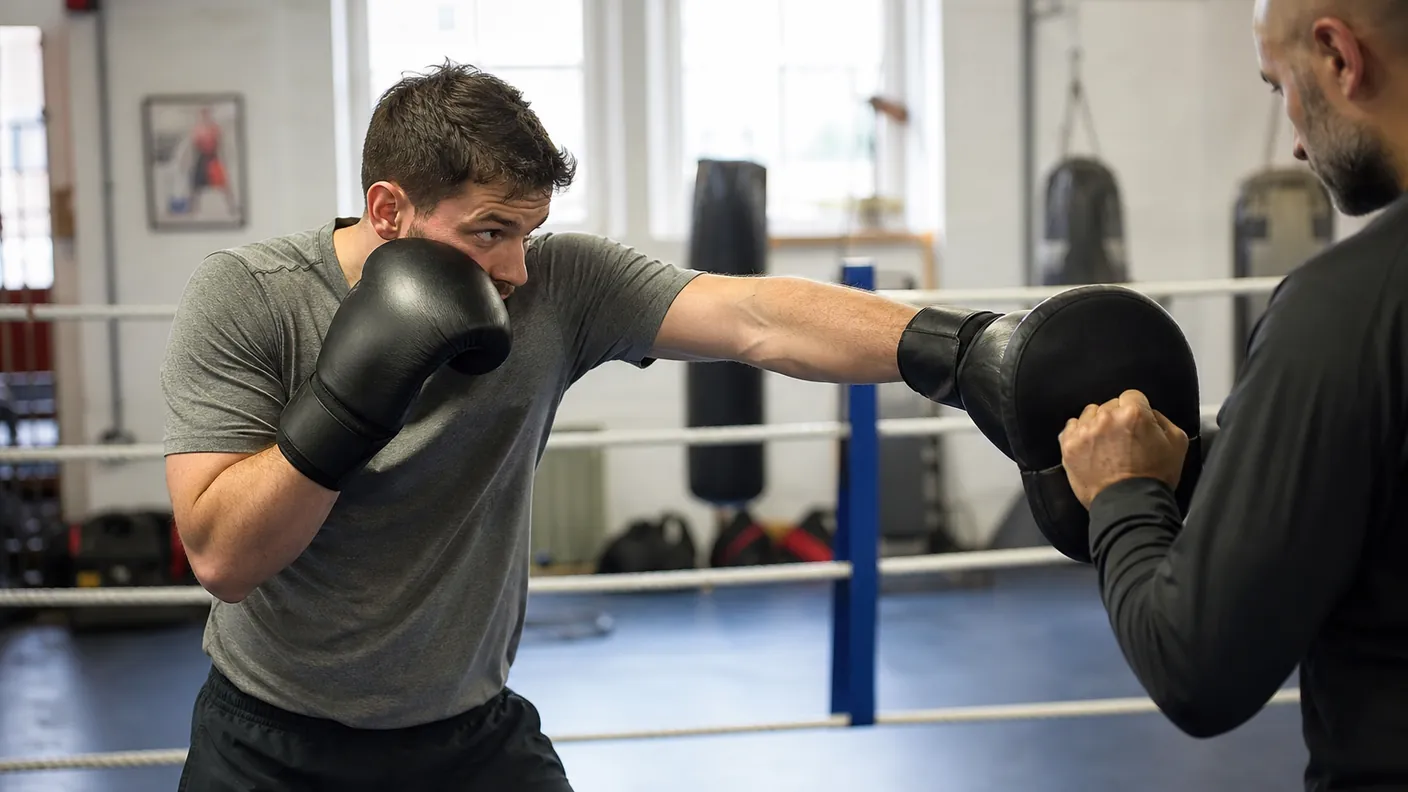
The Body Jab: A Safe Boxing Setup
Use a compact body jab to change the target, check range and set up the next decision without falling over your front foot.
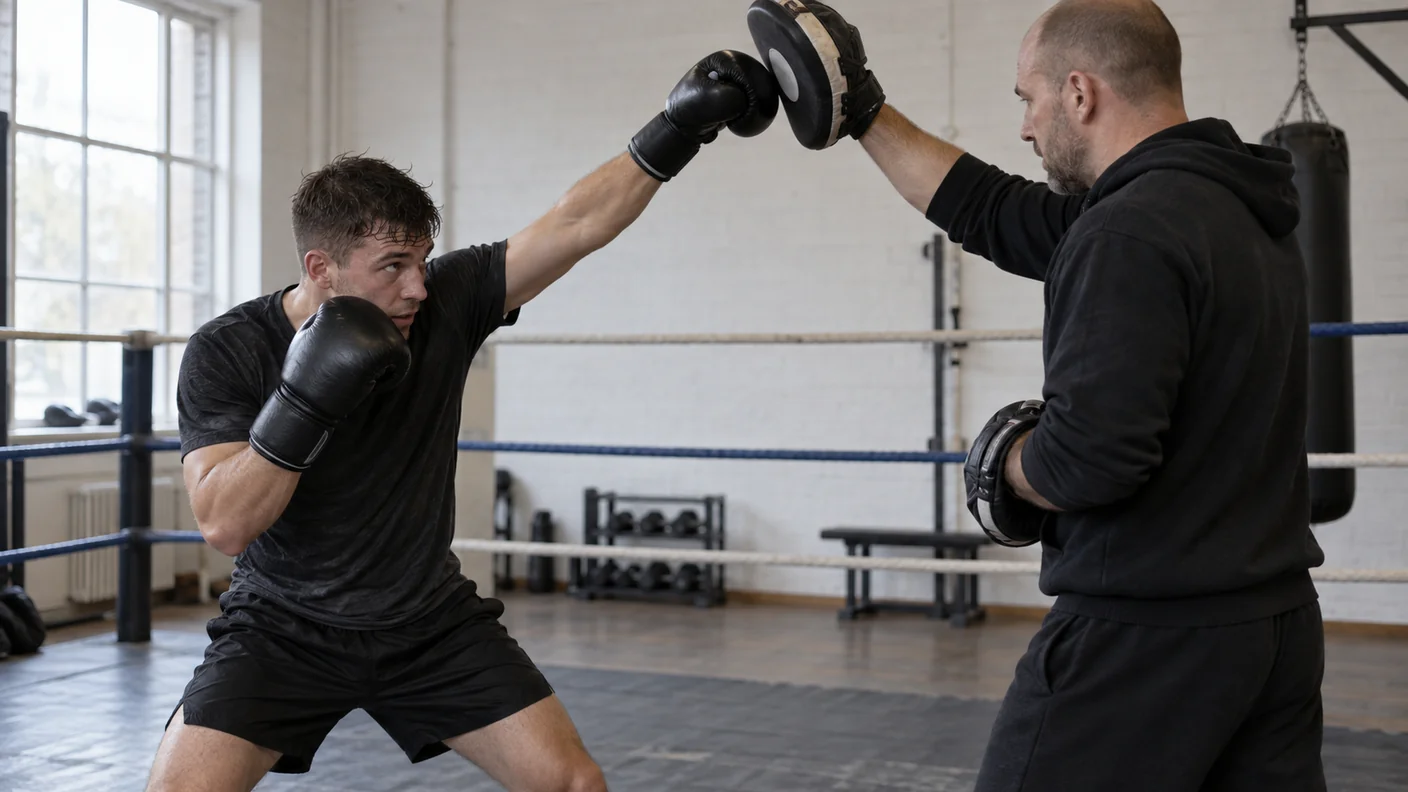
How to Use an Up Jab in Boxing
Use a compact up jab to change the line, test a high guard and keep your stance ready for the next decision.
Was this page helpful?
It takes one tap, and it genuinely helps.
Choose your next step
Turn this article into the right action
Some readers are ready to book. Some need the class route first. Pick the route that matches what you actually want.