Overhand Right in Boxing: Timing, Range and Drills
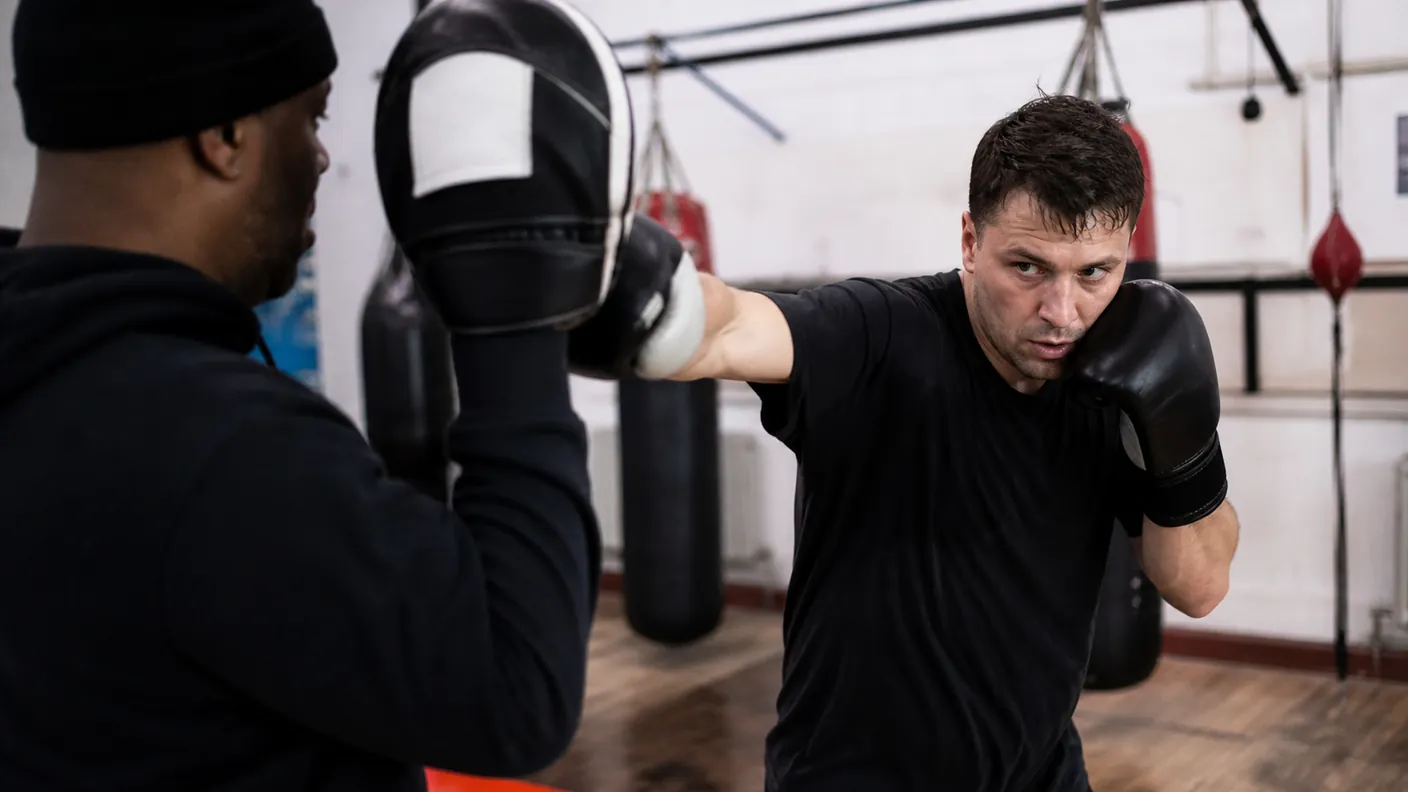
An overhand right is not a wild swing thrown because the straight right did not land. It is a rear-hand punch that travels over the opponent's lead side when their jab, guard position or forward movement has created that lane.
That distinction matters. The overhand can be a useful answer to a predictable lead hand, but it is easy to throw from too far away. Beginners often reach, let the head go first and finish so square that the return punch is already waiting. The better version is compact, timed and supported by the feet.
Watch the video below once for the rhythm, then use the coaching points that follow. Notice that the rear hand is not thrown as a desperate long shot. The boxer has a stance underneath it and a way to move after it.
The overhand is a timing punch
A straight right travels through the middle. An overhand right takes a higher curved path over the lead glove or jab line. That makes it useful when the opponent has given you a repeated picture: they reach with the jab, carry the lead hand low after punching, or move forward with their head on the same line.
It does not mean the punch is available every time you see a jab. If the other boxer is balanced, protected and out of range, a big rear-hand swing is a gift. The correct answer may be a compact catch, a jab back, a small step out or simply waiting for a better moment.
The overhand earns its place when you have seen the line. Your job is not to throw over their glove. Your job is to make the glove or jab create the route, then use it without losing your own position.
A review of boxing punch mechanics describes effective punching as a whole-body action rather than an arm movement. That is especially useful here. The overhand does not become safer or sharper because you pull the hand farther back. It works when the feet, hip, shoulder and hand arrive in the right order.
Do not turn it into a long hook
The overhand right is curved, but it should not become a looping hook thrown from behind your shoulder.
Start from an ordinary guard. The rear glove stays close enough to the cheek that you could defend from there. As you recognise the opening, the rear hip turns and the shoulder carries the hand over the opponent's lead side. The path is shorter than most people expect. Your elbow does not need to fly high and the punch does not need a theatrical wind-up.
The lead glove has a job while this happens. It stays near the lead cheek, protects the face and gives your head a sensible place to sit. If you throw the right hand and the left glove drops to waist height, you have made the opponent's counter easier than your own punch.
The punch should finish with your eyes up. If you are staring at the floor or leaning so far that your chest has passed the front knee, the range was wrong. Reset rather than making the swing larger.
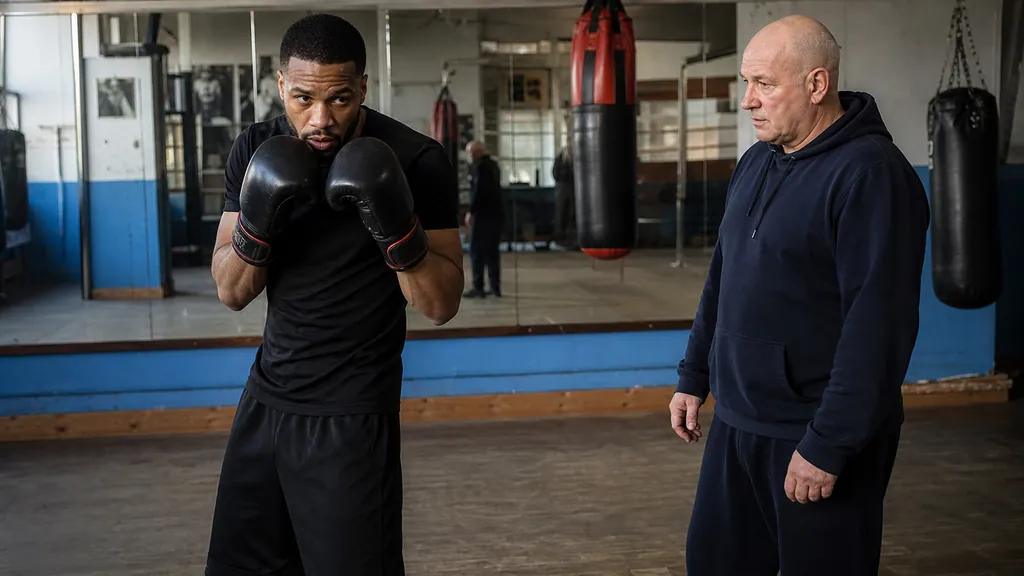
Choose the range before you throw
The overhand is not a substitute for footwork. It needs a real distance.
At the far edge of range, a full overhand often becomes a reach. The hand may brush the target, but the feet have not carried the body close enough to recover. At close range, the same punch can become crowded and smothered. You may need a short hook, uppercut, frame or exit instead.
The useful place is usually around long-to-middle range, where the opponent is committed enough to a lead-hand action that the rear hand can travel over it without you chasing. Your feet should be set well enough that you can take a small step, turn or cover immediately after the punch.
This is why the jab is still the foundation. A clean jab can show you the range, make the opponent react and give the rear hand a reason to exist. Our guide to building a proper boxing jab is the right starting point if the lead hand still feels unreliable.
Three simple set-ups
Use these as controlled pad patterns, not fixed sparring combinations.
Jab, read, overhand right
Throw a normal jab at a coach-held mitt. If the coach gives a clear lead-hand parry or reaches with the mitt, let the jab return and place the overhand right over that line. Keep it light at first.
The important part is the read. Do not decide that every jab must be followed by an overhand. If the line is not there, jab again, step out or reset.
Feint, draw the jab, overhand right
Use a small jab feint to invite a predictable lead hand. If the partner shows the agreed jab line, move your head only enough to stay off the centre and bring the rear hand over the lead side.
This needs discipline. A feint should not pull you into range with your chin exposed. Our guide to using feints in boxing explains how to make the first picture believable without falling in behind it.
Step back, let the jab fall short, return
With a trusted partner or coach, take one short step back as a slow jab arrives. If the jab has stretched the other boxer and the range remains sensible, return with a measured overhand right to a mitt. Then take an angle or bring both gloves home.
The step back is small. Do not leap away and fire from the far end of the gym. You want the other boxer to overreach by a little, not make them miss by metres.
A three-round drill for timing and recovery
Keep the contact light. This is a decision drill, not an excuse to throw hard shots at somebody's head.
Round one: build the path
Use one high focus mitt. Work from a settled stance and place the rear hand on a compact overhand route at half speed. After every repetition, bring both gloves back to guard and pause.
Check three things: the lead glove is home, the chin has not lifted and both feet can still move. If one of those has gone, make the motion smaller.
Round two: only on the cue
The coach now shows either a plain jab mitt or a lead-hand parry shape. Throw the overhand only when the parry shape appears. If the coach gives the plain jab, catch, block or reset instead.
This stops the punch becoming a habit. Good timing starts with knowing when not to throw.
Round three: finish with an exit
After the controlled overhand, choose one ending for the whole round: take a small angle step, bring both gloves to a tighter guard, or return a light jab to a second mitt. The exit should leave you ready, not pleased with the punch.
For the footwork behind that exit, work through the boxing side-step drill. The step should change the line while keeping the stance usable.
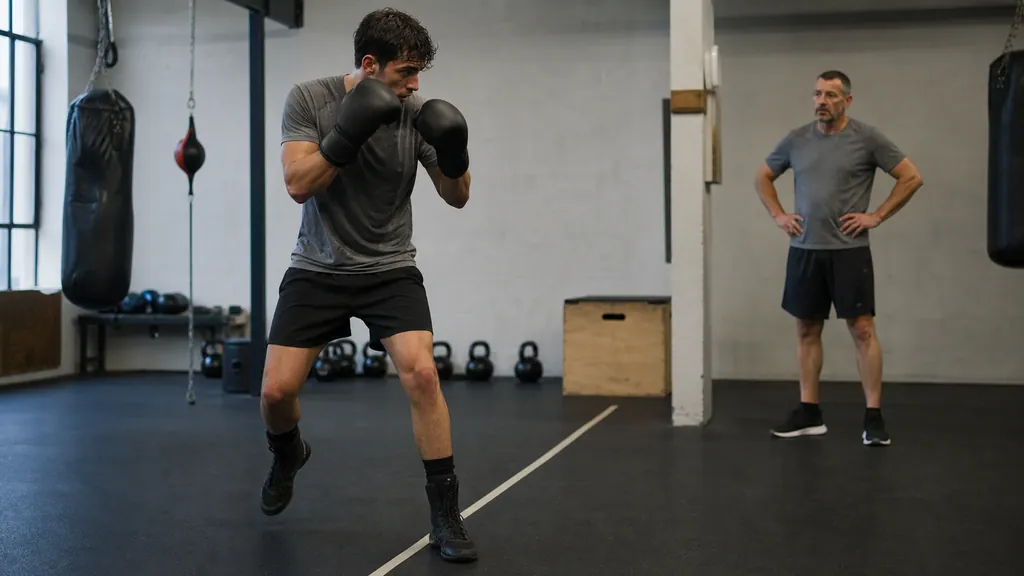
Four mistakes to stop early
The first is throwing it from too far away. If your head has to chase the punch, the opponent has already won the exchange. Bring the feet closer or leave the shot alone.
The second is winding the hand back. A big pullback gives away the punch and disconnects it from the hips. Keep the rear glove near a usable guard, then let the body create the path.
The third is forgetting the lead hand. The overhand can feel like a power punch, which tempts people to sacrifice the other glove for a bigger swing. Do not. The lead hand protects you while the rear side works.
The fourth is staying in front after missing. An overhand that misses can leave a clear lane for the opponent's jab, hook or straight right. Finish with a guard, a small turn or a reset. Do not stand and negotiate with the mistake.
England Boxing's coaching handbook puts balance, guard and controlled footwork at the centre of sound technique. That is a better standard than trying to make the overhand look dramatic. If the punch leaves you able to see, defend and move, it is doing useful work.
The coaching cue
See the lead hand, take the short route, finish ready.
An overhand right belongs after a clear invitation, not as a substitute for patience. Keep the path compact, keep the lead glove home and give yourself an exit after it lands or misses.
If you are in Kidbrooke, Greenwich or nearby, our Recreational Adults boxing classes use pads, bag rounds and controlled partner drills to teach timing without turning every technique into hard sparring.
H&G Team
Writer at Honour & Glory Boxing Club, a community boxing gym in Kidbrooke, South East London.
KEEP READING
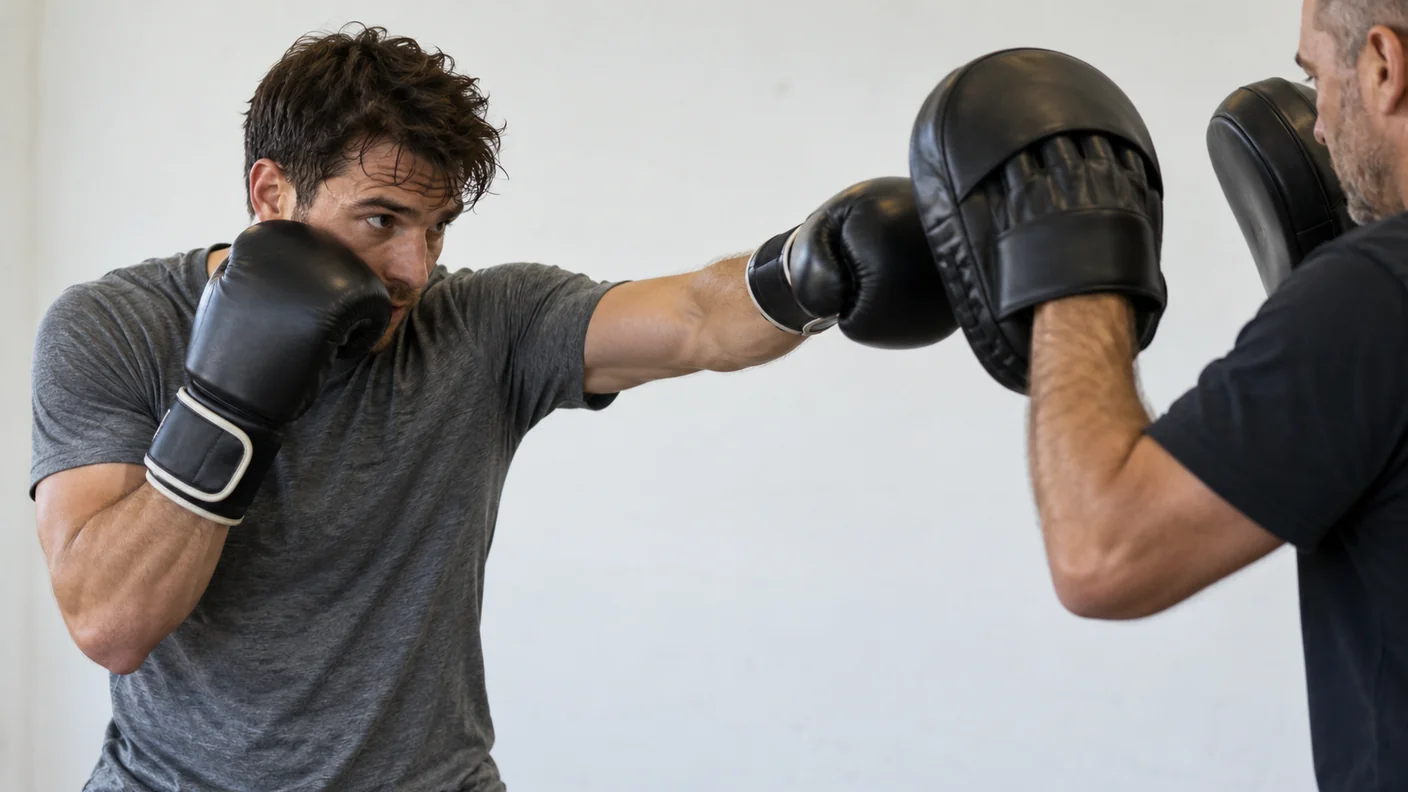
Double Jab to Overhand: A Controlled Boxing Drill
Use two purposeful jabs to test range and guard shape before throwing an overhand only when the position is honest.
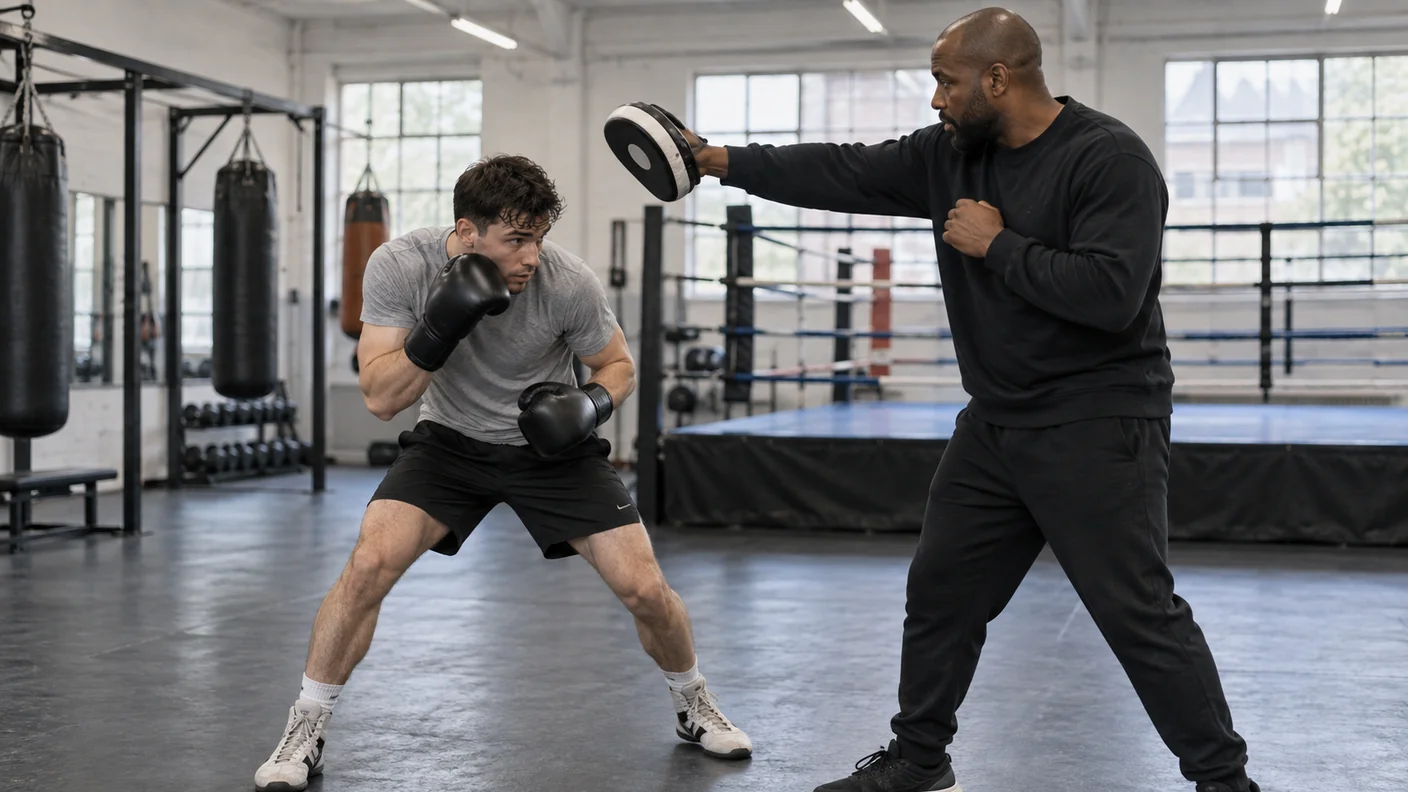
Inside Slip Overhand Right: A Boxing Counter
Use a compact inside slip to clear a jab and land a controlled overhand right only when timing, distance and guard make it safe.
How to Improve Your Boxing Timing: Drills That Actually Work
Timing separates a boxer who looks good on the bag from one who performs under pressure. Here is how to build it properly.
Was this page helpful?
It takes one tap, and it genuinely helps.
Choose your next step
Turn this article into the right action
Some readers are ready to book. Some need the class route first. Pick the route that matches what you actually want.