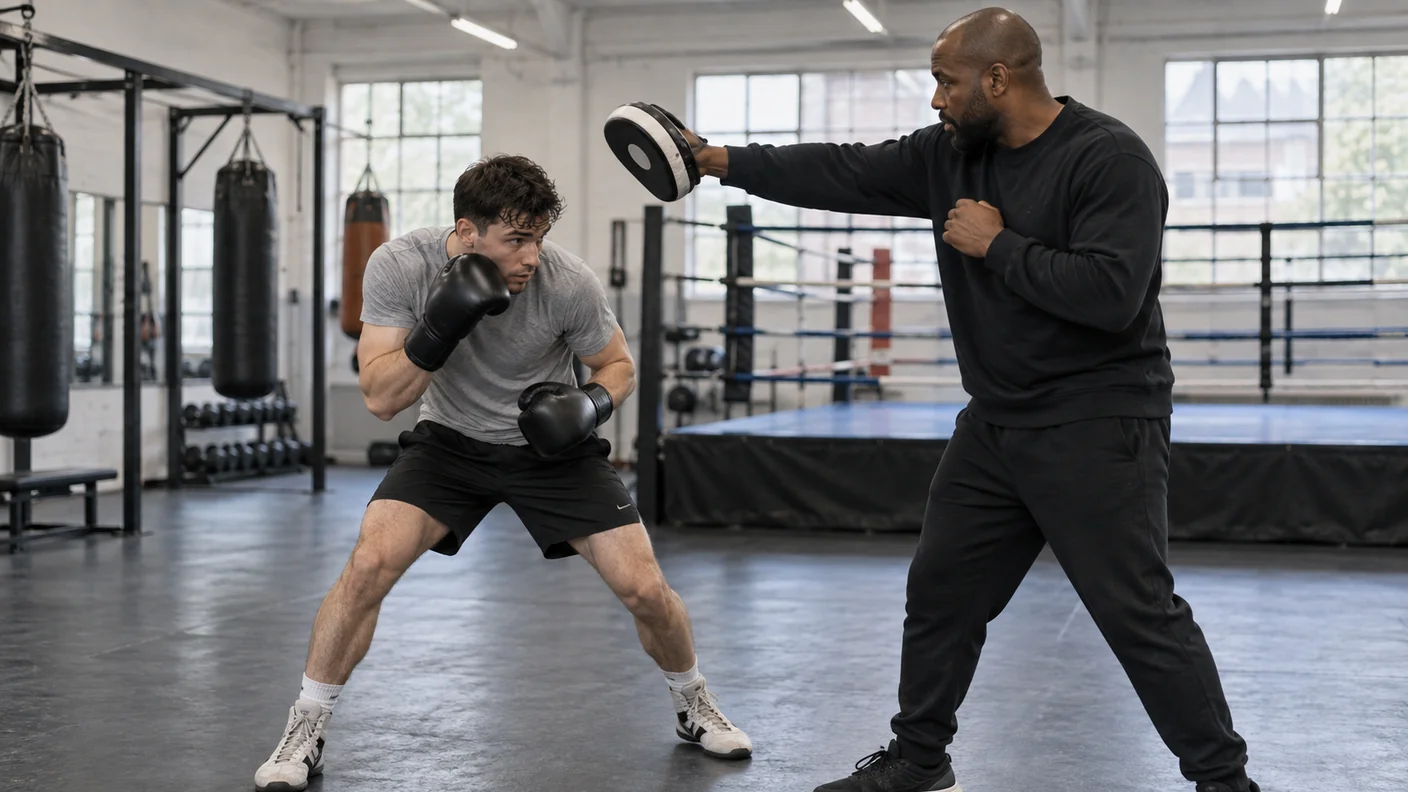
An inside slip can put the rear hand on a useful route. It can also put you directly in the path of the next punch if you make the movement too large or throw before the jab has truly committed.
That is why the inside-slip overhand right is an intermediate counter, not a shortcut for anyone who wants a dramatic punch. The job is narrow: read a single jab, move your head just far enough inside its line, then send a compact rear hand over the lead side only if the range and position are honest.
Watch the demonstration below once, then use the controlled progression here. The drill is about position first. Power can wait.
The slip needs to be small enough to recover from
For an orthodox boxer facing another orthodox boxer, an inside slip takes the head a small distance to the left of the opponent's jab. Southpaws reverse the picture.
The movement comes through the knees, hips and a small turn of the lead shoulder. It is not a deep bow at the waist. Keep your spine long, eyes on the other boxer and feet in their normal staggered relationship. You should be able to step, cover or punch again without first having to rebuild your stance.
A systematic review of anticipation in combat sports found that more skilled athletes make better use of early body cues. In gym terms, look at the shoulder, elbow and lead foot rather than staring at the glove when it is already travelling towards you. The earlier you see the jab, the smaller your defensive movement can be.
Do not try to slip every jab inside. A catch, a parry, an outside slip or a step can be the better choice depending on the line and distance. Our guide to defending the jab in boxing is the useful foundation before you add this counter.
Why the rear hand is available after an inside slip
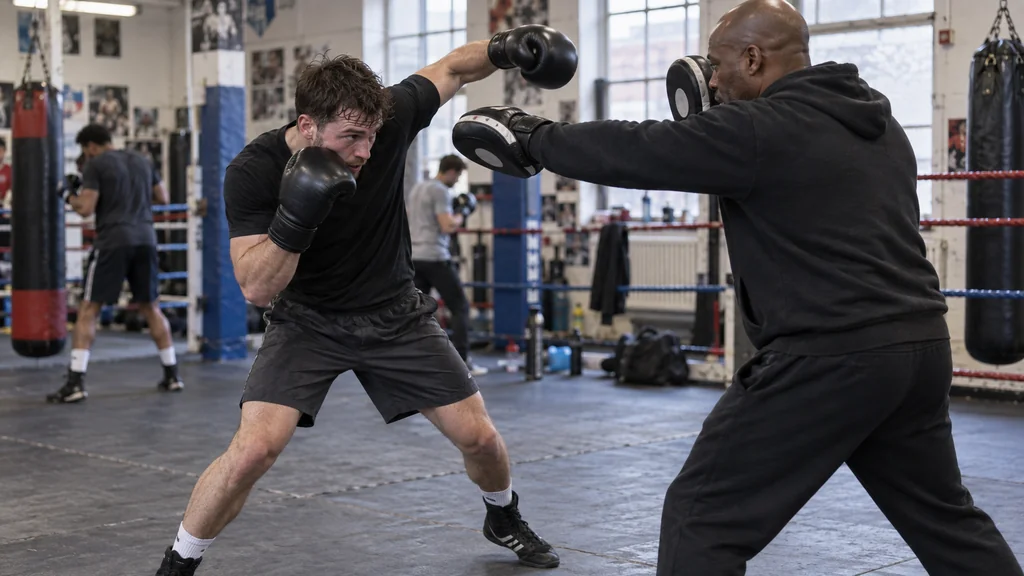
An inside slip moves your weight slightly towards the lead side and clears the jab line. That can give the rear shoulder a short path over the opponent's lead hand. The overhand is not a separate arm swing added after the defence. It comes from the position the defence has created.
That position is also where the risk sits. You are still close to the opponent's rear hand. If they have thrown a jab-cross rather than a single jab, if their jab was a feint, or if you have slipped before they committed, the overhand is no longer the sensible answer.
Think of the punch as a compact curve, not a long hook. Start with the rear glove close to the cheek. Turn the rear hip and shoulder through the route, keep the lead glove near your face and bring the rear hand home after the mitt touch. If your elbow is flying high behind you or your head is chasing forward, the shot has become too large.
A review of boxing punch mechanics describes effective punching as a coordinated action involving the legs, trunk and upper body. That is the practical test here. The overhand should have a stance underneath it. Your arm should not be trying to rescue a position that your feet have already lost.
Do not confuse an overhand with a reach
The overhand right belongs around long-to-middle range, when the jab has given you a real lane. At long range, it often becomes a lunge. At close range, it can be crowded before the hand has a route.
Start at a distance where a coach-held jab mitt can genuinely reach you and a second mitt can be touched without your chest passing the front knee. If the second mitt has to chase you after the slip, it is too far away. Reset instead of stretching the rear shoulder across the floor.
Keep the lead glove home while the rear hand moves. It is tempting to drop the left hand because the overhand feels like a big rear-side punch. That turns one open line into two. The lead glove protects the face and helps you stay organised while the right hand works.
For the standalone mechanics, our overhand right timing drill is the useful companion. The difference here is the trigger: this article starts with a defensive read of the jab, not a pre-planned swing.
Build the counter in three rounds
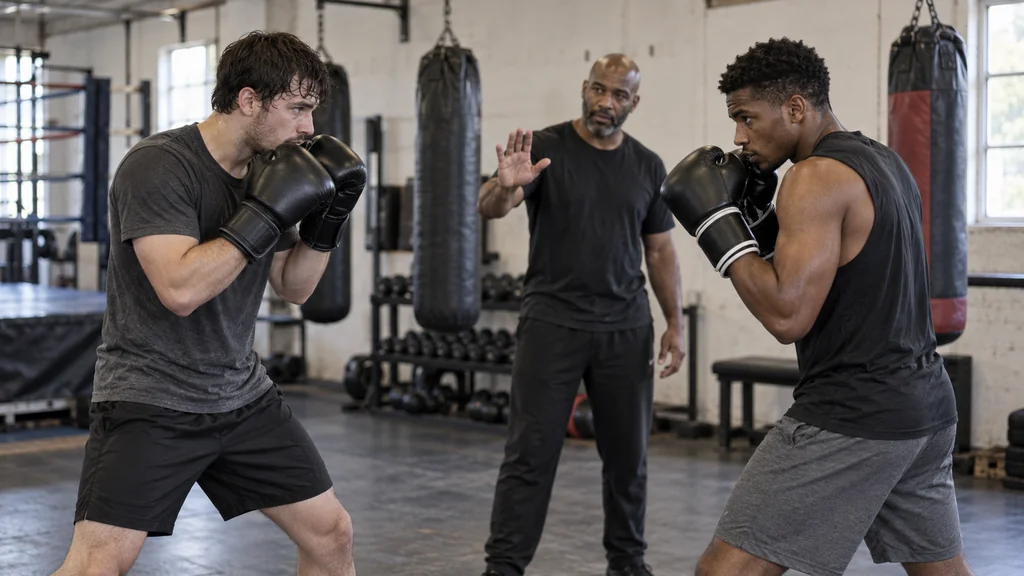
Use a coach and focus mitts, or a trusted partner who can feed a slow, agreed single jab. Keep the contact light. This is a technical counter drill, not sparring.
Round one: slip and hold
The coach extends one slow jab mitt towards the forehead line. Make a small inside slip and freeze for one count. There is no counter yet.
Check the finish before you repeat. Can you see the coach's chest and shoulders? Is the rear glove close to the cheek? Are both feet still beneath you? If the answer is no, reduce the movement. The aim is to remove your head from one line, not to disappear beneath the mitt.
Round two: slip and touch the second mitt
The coach gives the same single jab cue, then holds a second mitt above the lead-hand line only after the slip. Touch it with a controlled overhand right, bring the hand home and freeze again.
Use enough pace to feel the route but not enough to make the shoulders tense. The rear hand should travel from guard. If you have to load it behind your head, the shot is too wide or the timing has been lost.
Round three: choose whether the counter exists
Now the coach can show one of three pictures after the jab: the overhand mitt, a second controlled straight cue, or no second target.
If the overhand mitt appears at sensible range, take the counter and reset. If the second straight cue appears, bring both gloves home and cover or step out. If no target appears, simply return to stance. This is the part that stops the drill becoming choreography. The counter is an option, not a prize for slipping.
Four mistakes that make the counter unsafe
The first is slipping before the jab is real. If you move on every shoulder twitch, a patient partner can make you walk into the next line. Wait for a clear, agreed cue while you are learning.
The second is folding at the waist. A deep bend may clear the jab, but it can remove your view and leave the rear hand reaching upwards from a poor base. Use the knees and hips to move a few inches, then stay tall enough to see.
The third is throwing the overhand at empty space. If the opponent has stepped back, kept the guard tight or is still out of range, there is no need to make the punch bigger. Keep your shape and ask another question with the jab.
The fourth is standing in front after the right hand. Bring the glove home, take a small step out or recover behind a high guard according to the range. An overhand that lands cleanly has still left you close enough to be answered.
England Boxing's coaching handbook puts stance, balance and controlled technical progressions at the base of boxing development. That is a better target than trying to make a counter look heavy. If you can repeat the movement with your eyes up, guard useful and feet under you, speed can come later.
Where this drill fits in training
Use this after a warm-up and after the basic jab-defence choices are familiar. It suits a boxer who can already hold their stance under slow partner cues, but it does not require hard sparring.
Pads make the first version safer because the coach can show the single jab, give the overhand target only at sensible range and stop the sequence before it turns into a trade. Once the pattern is tidy, controlled partner work can add the decision of whether the counter is there at all.
If you are near Kidbrooke, Greenwich or nearby, our Recreational Adults boxing classes use pads and controlled partner drills to connect defence, balance and simple counters. You can learn the shape before speed and pressure make every loose movement expensive.
The coaching cue is simple: see the jab, slip small, throw only when the line is there.
H&G Team
Writer at Honour & Glory Boxing Club, a community boxing gym in Kidbrooke, South East London.
KEEP READING
Overhand Right in Boxing: Timing, Range and Drills
Learn when an overhand right belongs, how to throw it without falling in, and how to practise the timing with controlled drills.
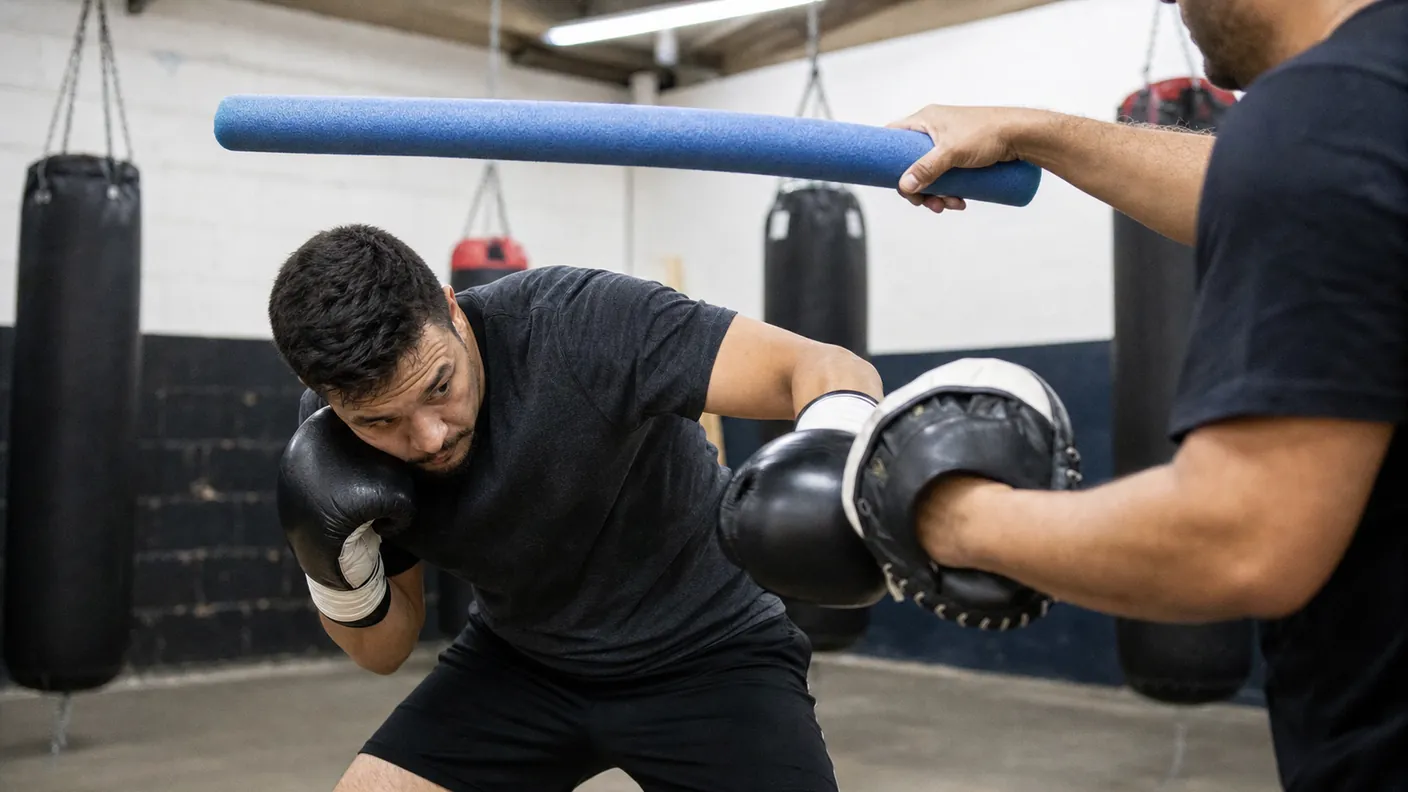
Slip Inside the Jab for a Body Hook
Use a small inside slip to move off the jab line, then build a compact lead hook to the body without losing your balance.
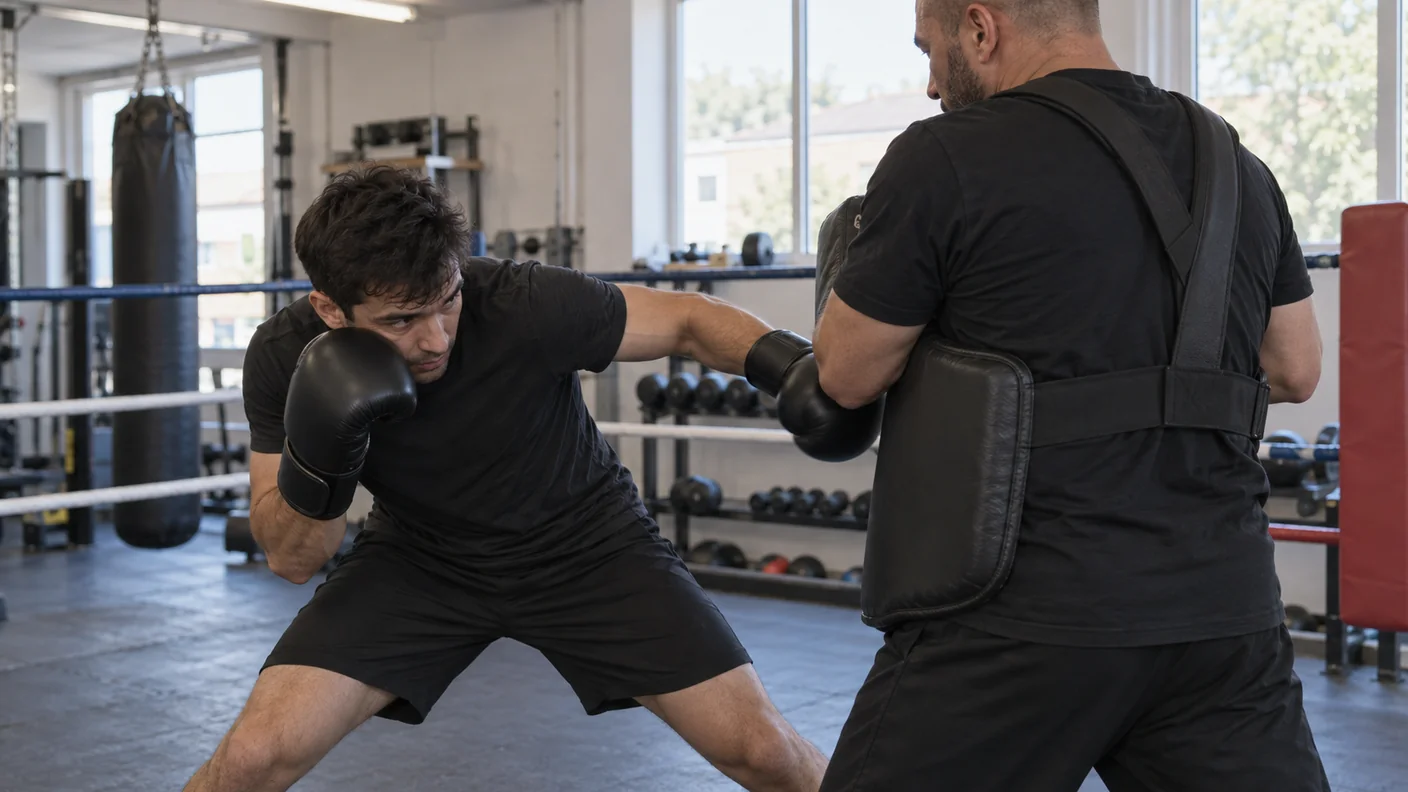
Inside Slip Lead Hook: A Controlled Jab Counter
Use a small inside slip and a compact lead hook only when the jab, range and guard make the counter an honest option.
Was this page helpful?
It takes one tap, and it genuinely helps.
Choose your next step
Turn this article into the right action
Some readers are ready to book. Some need the class route first. Pick the route that matches what you actually want.